博客

  • How autonomous AI can transform SVG’s future economy

    How autonomous AI can transform SVG’s future economy

    Thirty years ago, when a young computer scientist first wrote code on early Macintosh systems, computing resources like memory and processing power were scarce commodities that demanded careful, intentional management. Today, those same complex infrastructure-heavy tasks can be completed with a single line of code — a dramatic shift that underscores just how far digital technology has advanced in just three decades.

    Over the course of my career, I have watched paradigm-shifting technological transformations reshape global society. The mainstream adoption of the internet rewrote how humans connect and exchange information, while cloud computing eliminated the need for organizations to build and maintain their own bulky, expensive on-site physical server networks. Today, we stand on the cusp of a far more radical revolution: the rise of autonomous agentic artificial intelligence.

    Too often, public discussion of AI reduces the technology to little more than a generative chatbot that answers user questions. In reality, we have already entered the era of agentic AI: systems engineered not just to generate text or respond to prompts, but to carry out complex multi-step workflows, analyze real-time data streams, and act independently without continuous human oversight. This transformation carries well-documented risks to existing employment models, but for small island developing states like St. Vincent and the Grenadines (SVG), it also offers an unprecedented opportunity to leapfrog decades of incremental development and address longstanding structural gaps in the national economy.

    As a computer scientist based in SVG, I see this technological shift through a dual lens: I witness the breakneck speed of global innovation, while also seeing the stark digital gaps that hold my country back. Today, nearly every Vincentian carries a smartphone, connecting the population as digital consumers, but core national digital infrastructure lags dangerously behind. Most routine government transactions still require citizens to travel to the capital, Kingstown, and wait in long paper-based lines. Public administration remains overwhelmingly reliant on physical documentation, chronic traffic congestion worsens across the capital amid persistently high fuel prices, and game-changing digital solutions to these problems remain largely unused.

    Beyond streamlining public administration, agentic AI holds the potential to revolutionize the core sectors that anchor SVG’s long-term economic sustainability:

    **Agriculture and food sovereignty**: SVG currently relies heavily on food imports, leaving the country exposed to global supply chain disruptions and volatile price swings. Autonomous AI agents can integrate real-time data from soil sensors, weather forecasting models, and global market trends to guide precision agriculture practices, boosting crop yields. Smart AI-powered supply chain agents can also connect local producers directly to buyers including local hotels, regional markets, and export partners, cutting intermediary costs and drastically reducing the national food import bill.

    **Tourism and hospitality**: In an increasingly competitive regional tourism market, agentic AI can power 24/7 hyper-personalized concierge systems that handle end-to-end multi-island travel logistics, process instant bookings, and deliver custom guest experiences — all without the massive administrative overhead required by traditional service models.

    **The blue economy**: SVG’s marine territory is nearly 90 times larger than its total landmass, making sustainable management of ocean resources a national priority. Autonomous AI marine agents can process continuous streams of oceanographic data, track illegal fishing activity, monitor coral reef health, and support data-driven sustainable fisheries management to protect this critical national asset.

    **Government efficiency**: Routine public sector tasks from processing land transfers and issuing professional licenses to updating citizen records and answering public inquiries can be managed seamlessly by AI-powered digital agents. This would allow Vincentians across all parts of the multi-island nation to complete government transactions in minutes from their smartphones, eliminating the need for costly, time-consuming trips to the capital.

    Critics may dismiss these applications as out-of-reach futurism for a small island nation, but they are not unachievable pie-in-the-sky ideas. Fifty years ago, a prediction that most Vincentians would carry a personal connected phone in their pocket by 2024, and no longer need to visit a post office to send a letter, would have sounded equally implausible. In today’s digital age, the scope of technological possibility is effectively limitless. It is only a matter of time before these use cases become accessible, practical solutions even for small economies like SVG, including applications to address pressing local challenges such as crime.

    For all its opportunities, this AI transition also carries significant risks, particularly for small developing economies that fall behind in preparation. As AI becomes embedded across core sectors including banking, agriculture, healthcare, education, logistics, government services, and general commerce, the digital divide between technologically prepared nations and late adopters is set to widen dramatically. Caribbean nations already rely heavily on foreign-owned external systems for critical services including correspondent banking, digital payments, telecommunications, and international trade. As these systems evolve into AI-driven ecosystems that demand advanced technical integration and local expertise, nations that have not invested in readiness could find themselves locked out of full participation in the global economy.

    This raises a critical question that SVG and other Caribbean nations must answer now: Who will build and manage this local AI transition? If we delay modernizing our national digital infrastructure and training our local workforce, we will create a crippling skills gap. When the pressure to integrate autonomous AI systems becomes unavoidable, local institutions will be forced to look abroad for talent. Highly skilled foreign workers will fill these high-value local roles, leaving Vincentians sidelined in their own national economy. The early introduction of ATMs and coaxial cable computer networks in SVG holds a clear lesson: delayed preparation leads to missed local opportunities.

    This transition also poses an immediate challenge to SVG’s public sector, where the government is the nation’s largest employer in a system already widely recognized as bloated and resource-strained. What will happen when evolving international standards force the adoption of autonomous AI into government operations? Agentic AI systems prioritize speed and accuracy, and if they are forced onto an unprepared public sector without a human-centered transition strategy, the resulting disruption will be painful. But that outcome is not inevitable. If national leaders act proactively and early, AI does not have to equal mass job displacement. Early preparation allows for systematic retraining of existing civil servants to move into higher-value roles, shifting administrative workers into positions focused on data governance, digital system orchestration, and specialized citizen service management. Far from displacing the public workforce, automation can elevate it — but only if we lay the necessary foundational infrastructure and training today, rather than delaying action.

    Across the Caribbean, there are early encouraging signs of growing awareness of this moment. Trinidad and Tobago’s ongoing exploration of a large-scale national data center reflects a growing recognition that future economic power depends on data sovereignty and core digital infrastructure. But infrastructure alone is not enough. SVG urgently needs a coordinated national AI strategy focused on three core priorities:

    First, build inclusive digital public infrastructure: Transition all paper-based public services to secure, automated digital portals that eliminate mandatory trips to Kingstown and streamline processes to cut operational costs.

    Second, pursue sector-specific AI integration: Deploy AI-powered smart tools across agriculture, fisheries, and tourism to boost local production and reduce the nation’s reliance on costly foreign imports and services.

    Third, implement targeted workforce retraining: Update national technical education curricula and launch upskilling programs for current civil servants to equip them to manage autonomous AI workflows long before external forces force rapid adoption.

    The core concern for SVG is not that AI is coming — it is already here. The question is whether SVG and the wider Caribbean are moving fast enough to prepare, to ensure our citizens remain competitive, productive, and prosperous in a global economy increasingly shaped by data and autonomous intelligent systems. The choices we make today on digital infrastructure and workforce education will define our place in the modern global economy. Making only incremental, nominal changes to keep current systems running will not be enough. To let future generations of Vincentians claim their place as creators and managers of the emerging digital economy, we need bold, immediate action. If we delay, we risk spending the next 30 years playing catch-up, with a gap that will eventually widen beyond our ability to close it.

  • Regering wil heel Suriname in 2030 voorzien van 24-uurs stroom

    Regering wil heel Suriname in 2030 voorzien van 24-uurs stroom

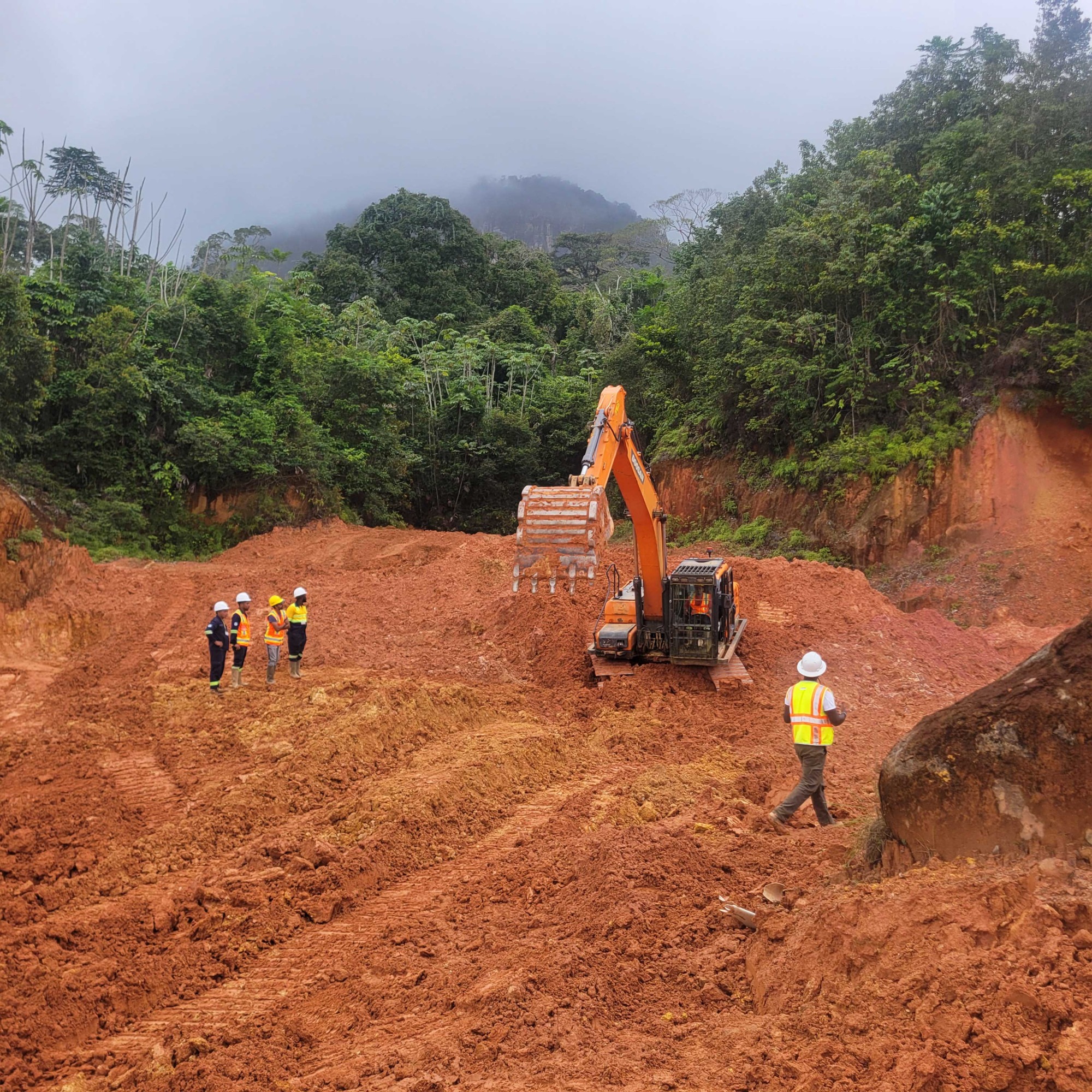
    Suriname’s government has laid out an ambitious national energy goal: by 2030, every resident across the country — including those living in the most remote inland villages — will have access to reliable 24-hour electricity, with a clear focus on sustainable energy solutions to power the expansion.

    Valerie Lalji, Director of Energy at Suriname’s Ministry of Natural Resources, outlined the strategy in official comments shared via the Suriname Communication Service, noting that solar power is currently the most cost-effective renewable option for bringing electricity to hard-to-reach inland communities. Over the past six years, working in partnership with international development partners, the government has already connected approximately 70 remote villages to round-the-clock power supply. Even with this progress, dozens of inland communities still remain without consistent access to electricity.

    “Our ministry’s core goal is to ensure that every person in Suriname, no matter where they reside, has access to electricity by 2030,” Lalji stated. Multiple new electrification projects have already been finalized and submitted for funding approval, and once financing is secured, work will begin to connect the remaining unpowered villages.

    To date, the solar energy systems installed in connected communities are currently sized only to meet the residential electricity demand of local households, leaving small local businesses without access to the grid. Lalji confirmed that the government notified local entrepreneurs of this limitation early in the rollout, and expanding system capacity to support commercial use will require additional targeted investment capital.

    A centerpiece of the government’s updated plan to address this gap and advance full electrification is the BioSweet initiative, an integrated development program designed exclusively for Suriname’s inland regions. Unlike earlier projects that focused solely on residential power, BioSweet will not only deliver continuous electricity access but also improve access to clean drinking water, expand telecommunications infrastructure, and strengthen local economic development. Critically, the program is engineered to accommodate connections for small local enterprises, a gap left by earlier electrification work. According to current planning, the BioSweet project is scheduled to officially launch in August.

    Lalji emphasized that meeting the 2030 full electrification target depends on coordinated collaboration across multiple stakeholders, including national oil company Staatsolie, utility provider Energie Bedrijven Suriname (EBS), the Ministry of Natural Resources, the Ministry of Oil, Gas and Environment, and the domestic private sector. Additional investment will also be required to expand EBS’ overall power generation and distribution capacity across the country.

    “If all planned projects proceed according to our timeline, we will be able to deliver sustainable, affordable electricity to every person in Suriname by 2030,” Lalji said.

  • Belmont mechanic fined for cocaine possession

    Belmont mechanic fined for cocaine possession

    A 29-year-old mechanic from Belmont has been handed a major financial penalty after admitting to illegal cocaine possession in Saint Vincent and the Grenadines, in a case that underscores law enforcement’s ongoing push to dismantle local drug networks.

    Mathew Alexus was ordered by the Serious Offences Court to pay a EC$1,700 fine within 30 days, after pleading guilty to the charge of possessing 29 grams of cocaine with intent to supply. The offense was committed in Arnos Vale during a Sunday operation that led to his arrest. If Alexus fails to meet the fine requirement, the court has ruled he will serve an automatic six-month prison sentence. Authorities have also ordered the immediate destruction of the seized narcotics.

    Following the court ruling Tuesday, the Saint Vincent and the Grenadines Police Force reaffirmed its unwavering commitment to rooting out illegal drug activity across the islands. In an official press statement issued the same day, law enforcement leaders emphasized that illicit drug trade remains a persistent threat to public order, driving widespread criminal activity that harms vulnerable families and destabilizes communities across the nation.

    To strengthen ongoing anti-drug efforts, police are calling for expanded public partnership in the fight against narcotics trafficking, possession and distribution. Community members are urged to share any information related to suspicious drug activity via established channels, including the closest local police station. “Together, we can build safer and healthier communities for all,” the statement concluded.

  • MP restates ‘business government’ position at training workshop

    MP restates ‘business government’ position at training workshop

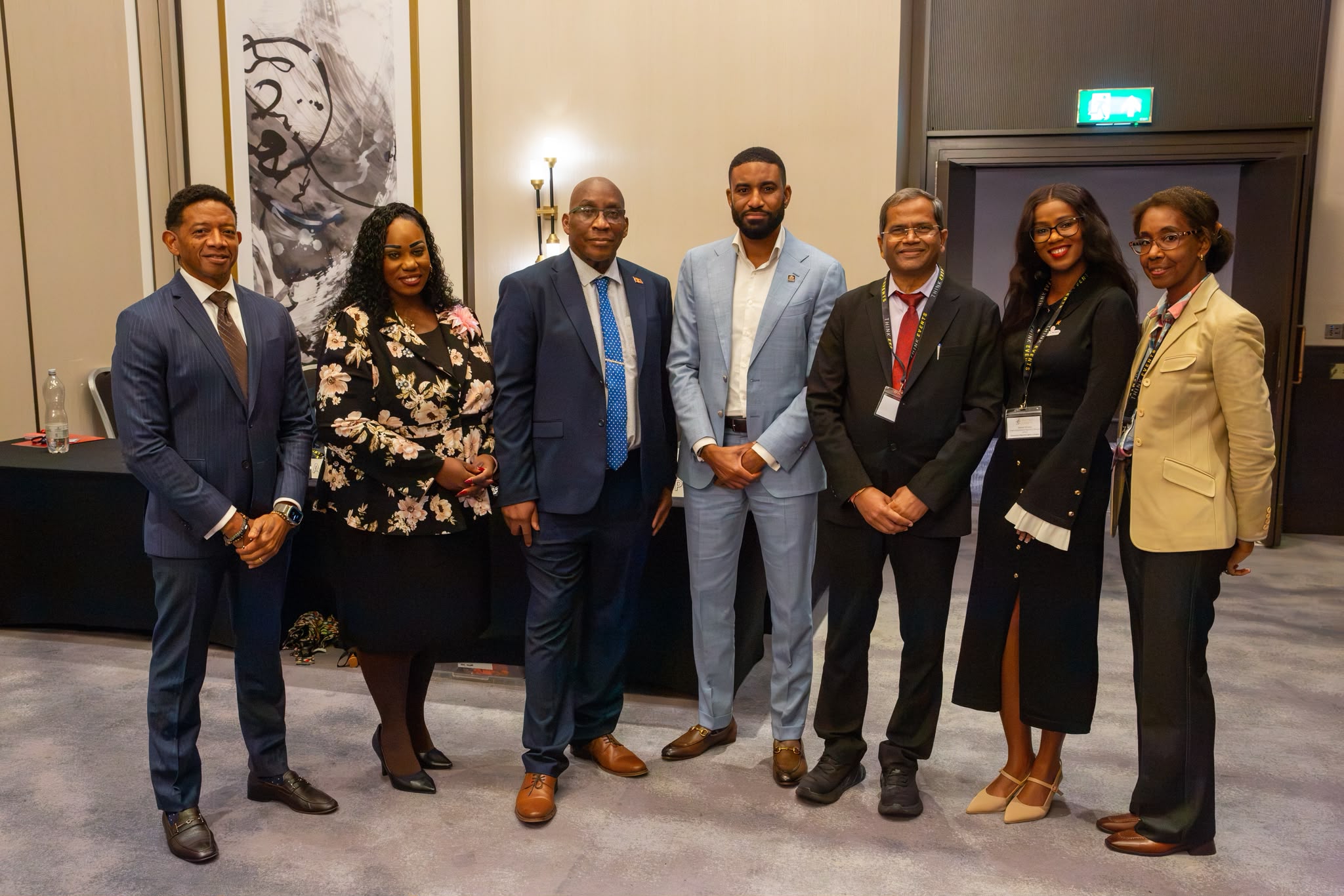
    Against a backdrop of expanding regional integration and shifting global trade dynamics, the government of St. Vincent and the Grenadines has reaffirmed its dedication to fostering a pro-business environment, positioning itself as what leaders call “a business government” that prioritizes private sector growth and trade opportunity. The commitment was laid out publicly by Dwight Fitzgerald Bramble, the country’s minister overseeing foreign affairs, foreign trade, foreign investment and diaspora affairs, during the opening ceremony of the Organisation of Eastern Caribbean States (OECS) Specialised National Services Sector Training Workshops, held in Kingstown.

    In his opening remarks to attendees spanning four days of programming, Bramble made clear that the administration stands fully behind the private sector, which drives actual trade activity. “I can assure you that you have our full support,” Bramble stated, adding that ongoing input from business leaders and industry stakeholders is critical to shaping effective policy. “Governments do not trade; it is individuals, organisations and businesses that do. Your input is therefore critical to ensuring that we continue to provide the support you need.”

    Delores Francis, a representative of the OECS Commission, echoed the significance of the training initiative, framing it as a core component of the regional body’s longstanding mission to lift up member states through targeted capacity building. The workshop, she explained, is designed to upgrade the technical expertise of a broad range of stakeholders, from trade policy specialists and public sector services officials to representatives of business support organizations and private service suppliers.

    “This investment is critical, as it equips participants to confidently navigate the rapidly evolving landscape of international trade in services,” Francis noted. Beyond building practical skills, the training helps stakeholders understand and leverage the trade commitments negotiated for their countries under regional and international agreements. Most notably, it supports the translation of pledges laid out in the Revised Treaty of Basseterre — the founding agreement that governs OECS economic integration — into tangible commercial opportunities that benefit local businesses and economies.

    The full workshop ran from an initial opening on Monday through to concluding activities on Thursday, with all interactive, hands-on sessions led by Audel Cunningham, a trade consultant commissioned by the OECS. Over the course of the four-day program, participants dived into a comprehensive slate of timely topics relevant to modern services trade. These covered rules and opportunities for services trade within both the OECS and the broader Caribbean Community (CARICOM) bloc, strategies for regulatory reform to support trade growth, frameworks for international services trade policy, best practices for services trade negotiations, methods for services statistics tracking and classification, WTO rules governing domestic regulation of services, and the fast-growing areas of e-commerce and digital trade.

    The workshop wrapped up with a dedicated sensitization session focused on two high-priority topics: market intelligence specifically tailored for the services sector, and the growing trend of “servicification” — the increasing integration of services into manufacturing production and value chains.

    The specialized training workshop is just one part of the OECS Commission’s broader ongoing push to strengthen institutional capacity and boost the competitiveness of the services sector across all its member states. For its part, the government of St. Vincent and the Grenadines says it will continue collaborating with both regional and international partners to build domestic trade capacity, advance a services-led growth model, and position the small island nation to capitalize on emerging opportunities in regional and global trade.

  • Who leaked the tape?

    Who leaked the tape?

    A newly leaked 15-minute audio recording, capturing what is reported to be an intercepted private phone conversation between Star Sabga and her niece Genevieve Hadeed, has triggered intense political upheaval in Trinidad and Tobago, with senior opposition figures sounding the alarm over potential misuse of state power and violations of constitutional law. The leak comes just days after Dominic and Genevieve Hadeed were released from police custody, while Sabga remains in detention without formal charges as she awaits a court hearing on her constitutional challenge to secure her release. In the private exchange, Sabga can be heard expressing sharp criticism of Prime Minister Kamla Persad-Bissessar, Attorney General John Jeremie, and other sitting members of the current government.

    Law enforcement officials have already confirmed that the unauthorized leak of the recording will be formally probed alongside the ongoing original criminal investigation into the Hadeed and Sabga case. Assistant Commissioner of Police Richard Smith told local outlet the Sunday Express that the leak will be investigated in coordination with the initial inquiry into the case. When pressed on whether investigators have identified potential suspects behind the leak, Smith acknowledged that no conclusions can be drawn at this stage, but added that a full probe will uncover details of how the recording was released to the public.

    Stuart Young, former prime minister and current opposition Member of Parliament, has condemned the leak and the underlying interception as clear evidence of abuse of public office. Young argued that if this private conversation was indeed the evidence used to justify issuing preventive detention orders (PDOs), which allowed the detentions to proceed without bail or access to habeas corpus, the situation raises grave constitutional questions for the country. He questioned whether the interception of the telephone call was legally authorized under the nation’s Interception of Communications Act, and demanded full transparency around how the confidential recording ended up in the public domain.

    “If that conversation is the basis of preventive detention orders being issued and persons being detained without access to bail and habeas corpus, it is a clear indication to all law-abiding citizens that the Government is violating the Constitution and misusing powers it has given itself in an unjustified state of emergency,” Young stated. He emphasized that the existing state of emergency (SoE) and PDO framework were never designed to replace the country’s established criminal justice system, noting that any person suspected of criminal activity should be formally charged and processed through standard court proceedings. Young further pressed for answers on who authorized the intercept, whether any cabinet members were privy to the recording before its leak, and what legal grounds justified the surveillance. Drawing on his own experience as a former minister of national security and former chairman of the National Security Council during his premiership, Young said he never once requested surveillance targeting any private individual. He went on to accuse the current government of using the state of emergency to target political opponents and crack down on dissent, weaponizing state institutions to silence people perceived as critical of the administration. Young also claimed emergency regulations have been deployed to block citizens from organizing peaceful protests against government policies, and called for the immediate revocation of the state of emergency, arguing it is unjustified and never was a viable solution to the country’s crime challenges. “The Constitution and democracy are under siege and the methodologies of dictatorship are present in Trinidad and Tobago,” he added.

    Marvin Gonzales, chairman of the opposition People’s National Movement (PNM), echoed Young’s calls, demanding a fully independent investigation into the unauthorized interception of private communications. In a public Facebook statement, Gonzales said the publication of intercepted private calls requires a “full, independent and transparent criminal investigation.” He pressed the government to confirm whether the required High Court warrants were obtained to legally authorize the surveillance, and asked how the confidential recording was leaked to the public if the interception was carried out lawfully. Gonzales called on the Commissioner of Police to launch an independent criminal probe without delay, warning that any failure by the government to address the situation will only deepen public fears that national security agencies have been politicized for partisan gain. He also urged Prime Minister Persad-Bissessar to address the nation directly on the controversy, and called on the police commissioner to exercise independent oversight to protect the national interest.

    Kareem Marcelle, the opposition Member of Parliament for Laventille West, issued an even sharper rebuke of the administration via social media, claiming “This UNC Government is the most dangerous in our nation’s history!” Marcelle argued that future investigations by international human rights bodies and domestic public commissions will likely confirm that the current administration has undermined constitutional checks and balances, and turned national security agencies into tools for political targeting of opponents. He also issued a warning to public officials still cooperating with the administration on what he called unlawful actions, noting: “The UNC has less than four years (MAX) again to protect you for wrongdoings and you to protect them in their wrongdoings! Be sure that your actions are lawful and can stand up to scrutiny when they’re no longer there! That’s all!”

    Former government minister Randall Mitchell, also an opposition figure, raised additional questions about the context and handling of the leaked recording, arguing that the content does not support claims of criminal conspiracy by the two women. Mitchell pointed out that the recording appears to capture nothing more than a private conversation in which one individual vented frustration over government policy, rather than evidence of any planned harmful action against any person. He questioned whether inflammatory language in the recording, including references to “revolution,” “bullets,” and threats against a Member of Parliament, has been taken out of context, noting such phrasing could simply reflect intense anger at unpopular government policies rather than a concrete threat. While Mitchell acknowledged that some of the language used in the call, particularly a racial reference, was offensive, he noted that open criticism of the prime minister and public expressions of personal dislike toward her have been made by other public figures before. Mitchell added that criticism of Attorney General Jeremie in the call should be understood against a backdrop of existing public controversies over Jeremie’s conduct, including previous criticisms from the Law Association over alleged interference in criminal prosecutions and threats to the independence of the Director of Public Prosecutions. He further questioned whether the selective release of the recording was intended to justify the controversial detentions, and whether state action taken against the women has been proportionate to the actual content of the conversation. Mitchell also noted that the public has only been given access to a portion of the full recording, and urged citizens to wait for the full context of the conversation to be released before drawing any final conclusions.

  • Alexander defends keeping Sabga behind bars

    Alexander defends keeping Sabga behind bars

    In a high-stakes constitutional legal challenge brought before the High Court, Trinidad and Tobago’s Homeland Security Minister Roger Alexander has publicly defended his controversial decision to maintain 70-year-old Star Sabga in preventive detention, disclosing newly unsealed intercepted communications that he argues confirm the severity of the threat posed to the country’s top government officials.

    The core of Alexander’s case rests on a 19-page sworn affidavit, filed July 24 and submitted to the court Friday, which outlines intercepted conversations between Sabga and her niece Genevieve Hadeed — wife of local businessman Dominic Hadeed — pulled from Sabga’s landline and Hadeed’s personal mobile device. The intercepted dialogue, captured amid an ongoing investigation into a suspected coordinated plot to assassinate Prime Minister Kamla Persad-Bissessar and her cabinet, includes explicit violent remarks from Sabga. After discussing a parliamentary address by Attorney General John Jeremie on a June 2026 state of emergency extension, Sabga allegedly made racist comments targeting the Prime Minister, stated “somebody getting ah bullet in dey head”, and argued that tensions would not subside “until the death of one of her Member for Parliament”, adding “the only way this thing going to end is when ah bullet fly”. Genevieve Hadeed reportedly responded by calling the comments “devil work” that would eventually cool down, a claim Sabga rejected outright.

    According to Alexander’s affidavit, national security agencies have interpreted Sabga’s remarks as confirmation of her advance knowledge of a pre-existing plot to harm senior government leaders. He told the court that agencies have advised keeping Sabga in custody while they complete a full risk assessment and a coordinated effort to “neutralize” the purported threat, a process that is expected to take another two weeks to wrap up. Releasing Sabga before this work is completed, Alexander warned, would put the lives of top government officials in unacceptable danger.

    The legal clash stems from Sabga’s June 25 arrest under a preventive detention order (PDO), issued alongside PDOs for both Genevieve and Dominic Hadeed, after intelligence uncovered alleged threats against senior government figures. Three days after her arrest, Sabga filed a request for her detention to be reviewed by an independent Review Tribunal. On July 19, the tribunal ruled there was “insufficient cause for the detainee’s detention” and found that holding her longer was not necessary or in the public interest.

    Alexander accepted the tribunal’s recommendation to lift PDOs for the Hadeeds, but rejected its ruling on Sabga, outlining multiple justifications for the decision in his affidavit. He argued the tribunal’s process was “procedurally and fundamentally unfair” because his office was never given an opportunity to respond to legal submissions made by Sabga’s defense team. He also noted that the tribunal provided no formal reasoning for its recommendation, did not have access to all classified intelligence available to his department (due to national security restrictions on public disclosure), and did not receive the expert security analysis that guided his decision.

    Beyond the immediate threat of violence, Alexander revealed that analysis of the Hadeeds’ electronic devices conducted by partner law enforcement agencies in the United States has uncovered a consistent pattern of communication between Genevieve Hadeed and individuals currently monitored by international and local intelligence agencies in connection with cross-border criminal activity. Alexander said he is confident Sabga has clear links to these individuals that would allow her to pass on her violent intentions to actors capable of carrying out an attack. Based on available evidence, he added, Sabga is the “main proponent of the violent acts” among the three detained suspects, with close family ties to the Hadeeds and direct access to individuals who could turn the threat into action.

    Over the past 29 days, Alexander said, security teams have been conducting extensive background checks on all individuals connected to Sabga both inside and outside her local community, part of a coordinated effort to prevent Sabga’s radical views from inspiring others to carry out attacks. This neutralization process, which has already been ongoing for roughly a month, is designed to eliminate any risk posed by Sabga’s contacts before release can be responsibly considered. Alexander warned that releasing Sabga before the process is complete could lead her to take actions that are even more dangerous to public safety than the violent remarks captured in the intercepted communications.

    Alexander also explained the separate decision to release the Hadeeds, noting that special circumstances apply to their case that do not extend to Sabga. A medical report received July 21 detailed severe health issues for Dominic Hadeed that require specialized treatment which cannot be adequately provided in a prison setting, and Genevieve Hadeed is his primary full-time caregiver. While Hadeed declined a request for an independent medical examination ordered by the state, his deteriorating health remained a “weighty consideration” that justified ending their detention, Alexander said. He also noted that the Judicial Committee of the Privy Council has scheduled October hearing dates for the state’s appeal of an earlier Court of Appeal ruling, creating further context that justified the exceptional decision to release the couple.

    Some details of the ongoing investigation cannot be disclosed publicly, Alexander added, because doing so would tip off persons of interest and derail the covert operation. The probe relies on complex intelligence gathering, analysis of devices not owned by Sabga, and investigative work conducted outside of Trinidad and Tobago that is not fully under the control of local agencies. Risk assessment and threat neutralization work remains incomplete, with some data retrieval dependent on third-party partners. Alexander acknowledged his legal obligation to conduct ongoing review of Sabga’s detention, but argued that the balance of public safety and legal obligation still favors keeping her in custody. He has asked the High Court to reject Sabga’s request for interim release. The case is scheduled to resume in court tomorrow.

  • Leaked Sabga/Hadeed audio  reveals angry attacks on PM

    Leaked Sabga/Hadeed audio reveals angry attacks on PM

    A politically explosive intercepted private phone conversation between prominent Trinidad and Tobago figure Star Sabga and her niece Genevieve Hadeed has been leaked to the public, igniting widespread debate across the Caribbean nation after its contents dominated social media conversations over the past 24 hours. The leak, which was first formally disclosed in a court affidavit filed last Friday by Minister of Homeland Security Roger Alexander as part of his defense for the preventive detention of Sabga, contains a series of vicious verbal attacks against sitting Prime Minister Kamla Persad-Bissessar, with Sabga openly calling for her immediate removal from office.

    In the hours following the leak’s spread across social platforms, the most inflammatory portions of the recording quickly drew public attention. Throughout the conversation, Sabga repeatedly lashes out at the Persad-Bissessar administration, claiming that government officials have unfairly targeted and falsely accused innocent citizens with no connections to criminal activity. When Hadeed interjected to reference comments from Attorney General John Jeremie — who recently switched parties from the long-standing People’s National Movement (PNM) to the ruling United National Congress (UNC) — claiming U.S. intelligence services would track down individuals engaged in criminal activity, Sabga dismissed the claim outright as a “damn lie.”

    Sabga went on to make the extraordinary and unsubstantiated claim that former U.S. President Donald Trump personally disliked Prime Minister Persad-Bissessar, refusing to take her calls specifically because of her race. She further alleged that the Prime Minister alienated new political opponents on a weekly basis, and was allowing her policy and decision-making to be completely controlled by Attorney General Jeremie. The conversation soon shifted to a recent controversy surrounding Jeremie’s comments about members of Trinidad and Tobago’s elite “one percent” who had their U.S. travel visas revoked. As Hadeed expressed concern that the country was moving toward a “nasty road” and noted that she and Sabga’s circle had been targeted because of their past support for the PNM, Sabga doubled down on her claim that innocent people were being unfairly targeted.

    The recording captures Sabga launching even more scathing attacks, accusing Persad-Bissessar of destroying the country with false claims and making additional racist remarks directed at the Prime Minister. She singled out hardworking local business owners — who she noted employ large numbers of Black Trinidadians — and called for prominent community leaders to publicly and aggressively condemn the Prime Minister. Sabga warned repeatedly that Persad-Bissessar was leading the nation down a “deadly, deadly, dangerous route” and demanded that Jeremie be removed from his position immediately. She also raised unfounded security concerns about the construction of the new U.S. Embassy on the former Country Club site, claiming its proximity to the Chinese Embassy made it an inherently dangerous location.

    Touching on the ongoing national state of emergency, Sabga claimed the measure was being extended solely to strip ordinary citizens of their fundamental civil rights, repeating her baseless claim that Trump disliked Persad-Bissessar because of her race while contradictorily asserting that the Prime Minister was under the control of U.S. government interests. Going further, Sabga described the democratically elected Persad-Bissessar government as one that Trinidad and Tobago “never should have” elected, openly calling for mass riots to force the Prime Minister out of office. When Hadeed noted that around 20 individuals had lost their U.S. visas, and that only her husband had publicly come forward as a “brave soul” (with Arab members of the group choosing to stay private), Sabga repeated her claims that the Prime Minister was putting the entire nation “in a state of danger.”

    When Hadeed attempted to calm the conversation, labeling the ongoing political chaos “devil work” and predicting tensions would eventually cool, Sabga pushed back sharply. “This will never cool down, Genna. Something have to happen for this to cool down. And what have to happen for this to cool down is the death of one of a member of Parliament,” she is recorded saying. Later in the conversation, she doubled down on the extreme rhetoric, stating that political conflict would only end “if a bullet fly.” Sabga also added criticism of U.S. foreign policy globally, claiming that widespread anger at American military intervention around the world had pushed people to the point where they were ready to “blow up” U.S. interests, and repeated her criticism of Trump’s policy toward neighboring Venezuela.

    The disclosure of the intercepted conversation through court documents has already reshaped the local political landscape, raising urgent questions about the use of government surveillance powers, the preventive detention of political opponents, and the growing polarization of Trinidad and Tobago’s political sphere ahead of any potential upcoming elections.

  • Fleet of boats given new life for Grenadine communities

    Fleet of boats given new life for Grenadine communities

    After spending more than a quarter of a century in storage at a British Army base, six sailing vessels have completed their long journey to new homes across the Grenadine islands of Canouan, Mayreau and Union Island, where they will open up new recreational and development opportunities for local sailing communities.

    This cross-continental community project would not have been possible without the generous backing and long-term commitment of David Barnard and Kestrel Liner Agencies UK, with critical on-the-ground support from Marlon Gibson of Kestrel SVG. Geoff Patton, the Resident British Commissioner to St. Vincent and the Grenadines (SVG), also played a key coordinating role, liaising extensively with the British Army to cut through logistical barriers and clear the way for the vessels to be imported and prepared for their new purpose.

    Speaking on the project, Patton emphasized his enthusiasm for the initiative’s long-term goals: “I am delighted to support the SVG Sailing Association in developing young sailors who will hopefully go on to represent SVG in international competitions. Great to see the enthusiasm from the young sailors.”

    Before the boats could set off for their final destinations across the Grenadines, volunteer members of Vincy Sailors dedicated two full days to comprehensive repairs, routine maintenance, and rigorous sea trials. This work was critical to returning the vessels to safe, seaworthy condition after decades spent idle in storage.

    On a Tuesday morning last week, the team of Vincy Sailors launched their 34-mile voyage from the main island of St. Vincent to Canouan, starting at 7 a.m. and guiding the restored fleet through Caribbean waters to their new home ports. The crossing took eight hours to complete, with additional members of the Vincy Sailing Club joining the convoy to provide extra support and foster a spirit of shared community celebration. Throughout the entire expedition, a dedicated safety team from Blue Lagoon Boat Charters accompanied the fleet, while the St. Vincent and the Grenadines Coast Guard conducted regular check-ins to monitor progress and ensure the safety of all participants.

    For the SVG Sailing Association, the successful arrival of the six boats marks the end of a months-long collaborative effort that brought together private donors, international shipping partners, diplomatic officials, volunteer groups, and local sailing enthusiasts. The project aligns directly with the association’s strategic goal of expanding equitable access to sailing across all the Grenadine islands, creating new developmental pathways for young people and residents in Canouan, Mayreau and Union Island.

    Jenny Trumble, president of the SVG Sailing Association, highlighted the project’s broader lesson about collective action: “This journey demonstrates what can be achieved when people come together with a shared vision. These boats have gone from sitting unused for more than two decades to becoming valuable resources that will benefit communities across the Grenadines for years to come.”

    The team of volunteers that made the delivery possible included: Scarlett Hadley, Akira Browne, Ila Mitchell, Zach McLawrence, Isaiah Blackett, Rio Marks Dasent, Kai Marks Dasent, Jordi Lewis, Benji Cyrus, Noe Dulac, Logan Banfield, Kishon Bruno, Joseph Hadley, Tai Mitchell, Elfie Holden, Rob Holden, Martin Ince, and Jenny Trumble.

  • ‘Kakkerlak’-protesten India: ‘We hebben het gedaan’

    ‘Kakkerlak’-protesten India: ‘We hebben het gedaan’

    It began with a single provocative question posted online: “What if all the cockroaches unite?” Thirty-six days later, that offhand social media post by activist Abhijeet Dipke has grown into a nationwide youth-led movement that scored a historic political victory: India’s Education Minister Dharmendra Pradhan announced his resignation on Saturday, bowing to relentless public pressure over a massive exam leak scandal that has rocked Prime Minister Narendra Modi’s sitting cabinet. Pradhan’s stepping down was the central demand of the months-long cross-country protests that have put Modi’s ruling Bharatiya Janata Party (BJP) under unprecedented political strain.

    The movement that brought down a cabinet minister took its unlikely name and identity from a insult. When India’s top judge publicly compared unemployed Indian youth to “cockroaches” and “parasites”, dismissing widespread youth frustration as the griping of lazy, unproductive people, Dipke leaned into the slur to found the Cockroach Janta Party (CJP), a satirical grassroots opposition movement that tapped into deep-seated anger over systemic failures in India’s education sector.

    That anger boiled over after a large-scale exam leak affected millions of Indian students, forcing widespread exam cancellations that upended young people’s academic and career plans. The crisis pushed dozens of desperate students to die by suicide, a tragedy that became a rallying cry for the movement. When Pradhan’s resignation was announced, Dipke stood before thousands of cheering supporters gathered at New Delhi’s iconic Jantar Mantar protest site — where local authorities had already shut down internet access to disrupt the movement — and shouted “We did it, we did it!” He read aloud the names of the students who had died by suicide amid the scandal, dedicating the movement’s victory to their memory. The announcement sparked jubilant celebrations across the protest camp, with crowds dancing and waving homemade signs.

    Nineteen-year-old protester Lavanya Bharti, who has spent weeks at the New Delhi camp, embraced the movement’s anti-establishment identity with a laugh. “They called us lazy and unemployed. We are lazy enough to camp out and sleep on Parliament Street for days; we are unemployed, brother,” she said. “But we have wiped out the fear that Modi built up over years. Cockroaches crawl all over you, Modi.”

    The protest movement gained national traction after violent police crackdowns on peaceful demonstrators went viral online. On July 20, a peaceful march to India’s parliament turned violent when police and paramilitary forces attacked protesters with batons and tear gas, leaving more than 100 people injured. Footage of the crackdown spread rapidly across social media, sparking outrage and drawing tens of thousands of new protesters to demonstrations in major cities including Bengaluru, Jaipur, Lucknow, Mumbai and Patna.

    After the government conceded to all of the movement’s core demands — which include compensation for the families of deceased students, amnesty for all participating protesters, and a public apology from police and paramilitary forces for the violent crackdown — CJP organizers called on demonstrators to return home peacefully. For many who traveled hundreds of kilometers to join the protest, the resignation marks a watershed moment for youth power in India. Twenty-five-year-old Mehdi Hasan traveled more than 1,120 kilometers from his home in Begusarai, Bihar, to camp at Jantar Mantar for a month. “I am going home happy now,” he said, holding a sign demanding government accountability. “We are the people of this country, and we have shown the government that its power is not absolute.”

    Not all protesters are ready to declare the fight over, however. Eighteen-year-old Shruti Bedi, one of the young movement organizers, warned that Pradhan’s resignation, while a critical win, is only a first step. “We need total systemic reform; the government needs to be fully accountable to the people,” she said, noting that deep public anger against the ruling establishment remains unaddressed. She pointed out that the most important achievement of the Gen Z-led movement is that it has given ordinary citizens their voice back. “How much longer will we accept that politicians send their own children to study abroad while we get beaten by police on the streets for demanding our basic rights?” she asked. Bedi and other protesters carried copies of the popular Japanese manga *One Piece*, a global symbol adopted by Gen Z protest movements fighting inequality, mass unemployment, and outdated authoritarian leadership.

    As the protest camp slowly emptied, the CJP’s official social media account posted a public response to Dipke’s original viral question, writing: “And today, friends, we have discovered what happens when the cockroaches unite.”

    Pradhan’s resignation marks an unprecedented rebuke to Modi, who has held power for 12 years and carefully cultivated an image as an unassailable strongman. That image has been increasingly tested by the widespread, viral organizing of Gen Z activists across Indian social media. Since Pradhan stepped down, the Indian government has moved forward with new measures to address the exam leak crisis and rebuild student trust, including pledged improvements to exam oversight mechanisms and greater transparency around testing processes. The CJP and allied youth movements say they remain vigilant, and continue to demand full systemic education reform to prevent similar scandals from happening again.

    Local and national media are continuing to monitor the ongoing situation, as youth organizations across India keep pushing for greater accountability and equity in the country’s education system. The protest movement has cemented its place as a landmark moment for youth political power in India, marking a shift as the country’s largest demographic increasingly organizes to demand tangible political change.

  • UWI Extends Deadline for Online Postgraduate Programme Applications

    UWI Extends Deadline for Online Postgraduate Programme Applications

    Aspiring graduate students seeking flexible, career-focused advanced study have gained extra time to submit their applications, after the University of the West Indies (UWI) International School for Development Justice announced a major extension to its application window for fully online postgraduate programs, pushing the final deadline back to 31 July 2026.

    In an official statement released by the institution, school leaders explained that the decision to extend the deadline was crafted to remove barriers for qualified candidates across the globe. By extending the cutoff date, the school aims to open doors for a more diverse pool of prospective learners who may need additional time to prepare application materials, arrange financing, or align their enrollment plans with personal and professional commitments. Unlike in-person programs that require relocation or strict on-campus attendance, all of the school’s postgraduate offerings can be completed 100 percent remotely, meaning enrollees can advance their education from any location with an internet connection, fitting their studies around existing work, family, or community obligations.

    The suite of available programs covers a wide range of high-demand, impact-focused fields, catering to students interested in addressing some of the most pressing global challenges of the 21st century. Prospective enrollees can choose from multiple credential levels to match their goals: Master’s of Science degrees, postgraduate diplomas, and postgraduate certificates are all available. Focus areas of study include Public Health and Informatics, Sustainability and Data Analytics, Climate and Development Studies, Sustainable Development and Justice, and Sustainable Leadership and Development. This diverse lineup reflects the school’s core mission of advancing development justice, combining technical skill-building with training in equitable, sustainable global development.

    As of the announcement, the institution’s online application portal remains active and accepting submissions, with no changes to the existing application review process. Candidates who submit successful applications will retain full access to the fully online study format, retaining all the flexibility and geographic freedom that remote learning offers to non-traditional and international students.