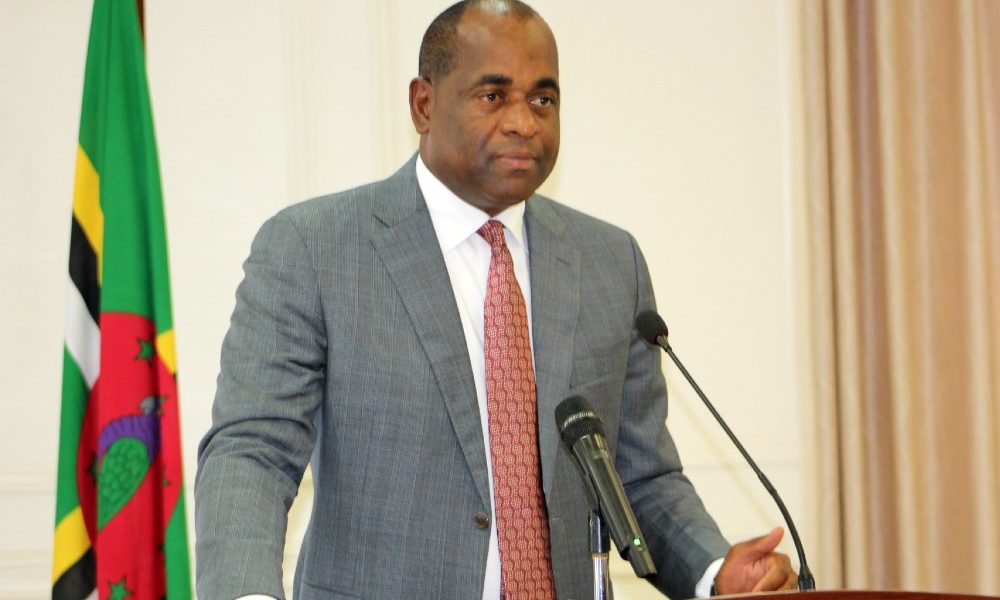
In a formal press briefing held Wednesday, Dominican Prime Minister Roosevelt Skerrit announced the successful conclusion of the first iteration of his country’s third-country national resettlement arrangement with the United States, confirming that all five Colombians admitted to the Caribbean nation under the deal have voluntarily returned to their home country.
The program, which calls for Dominica to accept between five and seven third-country migrants per quarter at the request of the U.S. government, faced an early hurdle when Washington’s first candidate list failed to meet the Dominican government’s vetting requirements. Skerrit explained that Dominica’s administration requested additional background information on the individuals included in the initial submission, which U.S. authorities were unable to provide at that time, leading the Dominican government to reject the entire first slate of candidates.
A second revised list, which included the full background details Dominica required, was subsequently shared by U.S. officials. From that list, Dominica’s government selected five candidates, all of whom were Colombian nationals, and confirmed that none of the selected individuals carried any criminal records.
During their stay in Dominica, the five Colombians were housed in a local hotel, provided with three meals a day, and given full access to basic public and commercial services, Skerrit detailed. He noted that the group was even able to move about freely for leisure, including shopping trips and visits to local personal service providers such as barbers. Upon their arrival in Dominica, the government offered all five the immediate option to return to Colombia, and every person unanimously chose to repatriate, according to Skerrit. The entire process from admission to departure unfolded much faster than anticipated, the prime minister added.
As of the press conference, there are no third-country nationals currently staying in Dominica under the bilateral arrangement. To oversee the logistical and operational components of the agreement, the Dominican government has contracted the International Organisation for Migration (IOM) to manage all resettlement and repatriation activities on its behalf. Skerrit also confirmed that the United States has covered all costs associated with the care and processing of the five migrants during their stay in Dominica.
Looking ahead, Skerrit stressed that all future U.S. requests for resettlement will be reviewed on a case-by-case basis, in line with the terms of the existing bilateral agreement and Dominica’s established vetting criteria for admitting individuals.