博客

  • Government to hand over 16 new homes in Woodford Hill

    Government to hand over 16 new homes in Woodford Hill

    As the Dominican administration advances its flagship national affordable housing initiative, 16 households across Woodford Hill are just days away from receiving keys to brand-new, three-bedroom residential units, marking the latest milestone in the country’s effort to expand access to safe, secure housing for all citizens.

    Prime Minister Roosevelt Skerrit confirmed the upcoming September 11 handover during a Wednesday press briefing, noting that this latest distribution follows closely on the heels of a recent transfer that put 11 completed housing units into the hands of eligible families in the Canefield East area. The Canefield East development is one segment of a much larger planned rollout that will see 204 total homes and apartments distributed to qualifying residents across nine separate communities across the country.

    Skerrit outlined that the government’s national housing framework is rooted in a core guiding principle: every Dominican, regardless of their income level or personal background, deserves the chance to reside in a home that keeps them safe and secure. To advance this goal, program administrators have prioritized vulnerable groups for housing access, including at-risk families, single-parent households, elderly residents, people displaced by natural disasters, and individuals who lack the means to secure adequate housing on their own.

    The Prime Minister openly acknowledged that unmet demand for housing support remains high across the country, with thousands of eligible applicants still waiting for assistance through the programme. “As resources become available, we will continue to respond in a fair and systematic manner, ensuring that assistance reaches those with the greatest need,” Skerrit stated.

    In addition to the construction of new units, the national initiative also includes ongoing work on housing repair programs and other forms of residential assistance for low- and middle-income Dominican households. Skerrit emphasized that the administration will not scale back the programme despite facing public criticism, pointing to the proven social and economic benefits of stable housing, which he said strengthens family units, reduces vulnerability, and raises overall quality of life for communities across the nation.

  • LETTER TO THE EDITOR: Abortion saw, the High Court, and Society

    LETTER TO THE EDITOR: Abortion saw, the High Court, and Society

    The Caribbean region faces a stark, decades-long paradox when it comes to abortion policy: it boasts the highest abortion rate globally, according to data from the Guttmacher Institute, yet has some of the world’s most strict, criminalized abortion laws on the books. For local reproductive justice advocates, this disconnect offers clear evidence that punitive, outright bans on abortion have been an unmitigated failure. Criminalization has never stopped abortions from occurring, meaning it has failed to uphold the very commitment to the sanctity of life that conservative opponents of reform often cite.

    Despite this documented failure, conservative religious leaders across the region continue to defend the status quo, arguing that legalizing abortion would send an unacceptable moral message to the public. But advocates with ASPIRE, a pro-choice Caribbean reproductive health NGO registered in Dominica and five other neighboring nations, push back on this reasoning: opponents prioritize ideological dogma over actual protection of life, given that research and real-world experience from countries including Barbados and Guyana confirm that liberalizing abortion laws correlates with a reduction in total abortion rates.

    Recently, ASPIRE won a landmark constitutional challenge to Dominica’s existing abortion ban, securing a favorable ruling from the nation’s High Court. Justice Zainab Jawara-Alami, who presided over the case, took a measured, incremental approach to reform rather than scrapping the country’s restrictive abortion laws entirely. Where ASPIRE had asked the court to strike down the existing laws as fully unconstitutional, clearing the way for the Dominican government to draft new, permissive legislation, the justice opted for a narrower ruling.

    Instead of declaring sections 56 and 57 of Dominica’s abortion law outright unconstitutional, Justice Jawara-Alami ruled that the provisions cannot remain in force in their current form, and ordered the Dominican government to amend the laws to resolve their constitutional inconsistency. The ruling specifically identifies four circumstances where continuing a pregnancy violates a pregnant person’s constitutional rights: cases of rape, incest, severe fetal anomaly, and situations where the pregnant person’s physical or mental health is at risk.

    ASPIRE acknowledges that Justice Jawara-Alami’s ruling is legally sound: it is well-supported by existing legal precedent, aligned with the long legal tradition of incremental judicial reform, and stays firmly within the bounds of the court’s constitutional authority. Advocates applaud the step forward for reproductive rights that the ruling represents.

    Even so, the organization argues that the narrow scope of the decision fails to address the grim on-the-ground reality of unsafe abortion in Dominica, disconnecting sound legal reasoning from the harsh experiences of pregnant people across the country. ASPIRE’s own data collected for the case shows that at least 83 percent of the reasons that compel Dominican women to seek abortions are not covered by the new ruling, and will remain criminalized under current law.

    Breakdown of the data shows that 40 percent of abortions are sought for timing-related reasons, such as having recently given birth, needing to complete an education, or other personal timing concerns. Another 24 percent are driven by socioeconomic instability: patients simply do not have the financial or social resources to support a child at the time of pregnancy. An additional 20 percent of abortions are sought due to patient age, whether the patient is too young or too old to safely carry a pregnancy to term. None of these cases will be decriminalized under the High Court’s ruling.

    Worsening the contradiction, ASPIRE notes, is the fact that the court has tasked the Dominican government — which opposed the constitutional challenge and has repeatedly refused to engage in open dialogue about abortion reform — with updating the legislation to align with the ruling. Advocates question what meaningful progress can be expected from a government that has already made its opposition to abortion liberalization clear.

    ASPIRE is a non-governmental advocacy group focused on advancing fair and just reproductive health policy across the Caribbean. The organization frames itself as pro-motherhood and pro-family while supporting expanded access to safe, legal abortion, and works to conduct research and facilitate dialogue between civil society and governments across the region.

  • Bouw nieuwe 140 meter lange kade Jules Sedney Haven gestart

    Bouw nieuwe 140 meter lange kade Jules Sedney Haven gestart

    Suriname’s key maritime infrastructure is undergoing a major upgrade, as construction work officially kicked off this week for a 140-meter new quay expansion at the Dr. Jules Sedney Harbour. The first foundation pile was driven into the ground on Wednesday, marking the formal start of a project designed to boost the port’s overall handling capacity to meet rising demand driven by the fast-growing offshore oil and gas sector in the region.

    Preparations for the expansion followed the contract signing for the project on July 24 this year, after which pre-construction site work was completed to clear the way for piling operations that began on September 9. Once completed, the new quay will have a load-bearing capacity of 20 tonnes per square meter, enabling it to accommodate larger, heavier vessels and cargo associated with offshore energy operations. Local firm Haukes Construction N.V. has been appointed as the main contractor for the build, while another Surinamese institution, Hakrinbank N.V., is providing full financing for the initiative. The project is commissioned by N.V. Havenbeheer Suriname, the country’s port management authority, and is scheduled for completion within 12 months of the start of construction.

    The core goal of the expansion is to allow the port authority to proactively respond to projected growth in demand for port and logistics infrastructure. The project is specifically tailored to accommodate the increasing need for maritime and logistics services spurred by rapid development in Suriname’s offshore oil and gas industry, a sector that has emerged as a key driver of the country’s economic growth in recent years.

    Beyond adding capacity, the expansion will strengthen Dr. Jules Sedney Harbour’s role as a critical logistics link that supports Suriname’s broader long-term economic development, according to port management. A key feature of the project’s delivery model is its intentional focus on partnering with local Surinamese companies, suppliers and industry stakeholders. Port authorities note that this approach not only delivers the new required infrastructure but also leverages and builds up local technical expertise and project delivery capacity, creating lasting benefits for the domestic industry.

    Port management also emphasizes that the growth of new emerging economic sectors like offshore energy should create opportunities for domestic Surinamese businesses and skilled professionals to claim a larger share of the related industrial activity. Andreas Talea, General Manager of N.V. Havenbeheer Suriname, expressed confidence in a smooth, accelerated delivery of the project, citing strong alignment between all participating parties. If construction stays on the approved 12-month timeline, the new quay is set to open to commercial operations one year after piling work got underway.

  • Sherman Boston calls for action on poverty following Roseau North by-election

    Sherman Boston calls for action on poverty following Roseau North by-election

    Following the finalization of vote counting for the Roseau North By-Election held on September 7, 2026, Sherman Boston — a Dominican building contractor, local municipal politician and long-time community organizer — has reaffirmed his commitment to pushing for heightened public focus on entrenched poverty and expanded social empowerment across the Commonwealth of Dominica.

    Despite the end of his electoral campaign, Boston made clear in post-election comments that his advocacy work on the issues he frames as make-or-break for Dominica’s long-term future will not slow down, regardless of his final position in the poll results. He emphasized that his mission to share his message with the Dominican public will continue as long as he is able, declaring forcefully: “As long as I have life and breath, I have a message to spread.”

    Boston argued that Dominica’s current policy trajectory demands far more public scrutiny than it currently receives, saying the severity of the country’s most pressing challenges has flown under the radar of both national leadership and many ordinary citizens. As an independent candidate in the by-election, he singled out widespread poverty as his top policy priority, framing the issue as far more than a purely economic failing.

    In striking remarks, Boston called poverty “not just a crime, it is a sin,” and issued a direct appeal to the Dominica government to treat growing economic hardship among the population with the urgency it deserves. He pushed back against the practice of forcing citizens into precarious economic positions then exploiting that vulnerability for political gain, stressing that “that is not the function of a government.”

    Instead, Boston said, the core responsibility of elected leadership is to build accessible pathways that allow all citizens to lift themselves out of hardship and make tangible contributions to national development. “We are supposed to be there to empower people and uplift citizens,” he added.

    Beyond economic inequality, Boston also questioned the morality of a national landscape marked by widespread systemic poverty and chronically limited access to quality educational opportunities for low-income communities. He closed by urging all Dominican citizens to educate themselves on the challenges facing their local communities, and to reflect critically on the direction of the country’s leadership.

  • Govt eyes aggregator for creators’ online earnings

    Govt eyes aggregator for creators’ online earnings

    Barbados is advancing a groundbreaking policy intervention to address a longstanding barrier to creative income: geo-blocking, the common digital practice that locks content creators out of monetization tools and revenue streams based on their geographic location. Culture Minister Senator Shane Archer has revealed the government is finalizing a proposal to establish a homegrown third-party revenue aggregator, designed to collect owed earnings on behalf of local creative professionals locked out by major international digital platforms.

    Geo-blocking is not a unique challenge for small island nations, Archer emphasized. While major global economies also grapple with the restrictive practice, it has disproportionately hurt emerging creative sectors in Barbados and the broader Caribbean, cutting off talented creators from global audience revenue. The government has continued diplomatic and industry advocacy pushing major platforms to eliminate arbitrary geographic restrictions on monetization, but policymakers are proactively pursuing alternative solutions to deliver immediate relief for local creators.

    The aggregator initiative is being developed by the Division of Culture and is scheduled to be presented to the Barbadian Cabinet for review in the near future. The plan responds to widespread concerns raised by the Barbados Coalition of Service Industries (BCSI), a leading industry group that flagged systemic barriers preventing Barbadian creators from earning income from content hosted on global platforms including Google, Facebook and TikTok. Back in 2025, BCSI Executive Director Michelle Smith-Mayers announced the formation of a specialized working group to investigate and address the issue, creating momentum for government action.

    Archer noted that third-party revenue collection services already exist for creators affected by geo-blocking, but most of these existing options carry prohibitive costs that put them out of reach for most independent Barbadian creatives. To solve this gap, the government’s proposal centers on launching a locally owned aggregator that would offer significantly more affordable, competitive rates for local content creators, enabling them to access revenue they are currently owed from global viewership of their work. The initiative marks a rare targeted government intervention to level the playing field for small independent creators in an increasingly globalized digital creative economy.

  • Residents question water outages, tanker response

    Residents question water outages, tanker response

    Across three rural districts of Barbados, thousands of residents have spent up to a full week grappling with no running water, as critical infrastructure upgrades and unexpected technical failures shut down local water supplies – and left many questioning the delayed response and long-term planning of the island’s water authority. The outages, which hit communities in St George, St John, and St Philip starting last week, stemmed from two overlapping issues: a required pump replacement at the Bowmanston Pumping Station and an unplanned electrical fault at the separate St John Pumping Station. But for many families already dealing with chronically low water pressure, the extended outage and slow arrival of emergency water tankers have amplified long-simmering frustrations over misaligned water distribution infrastructure.

    Barbados TODAY sent reporters to central and southeastern parts of the island earlier this week to document the ongoing crisis, speaking with dozens of residents who detailed daily disruptions to work, family care, and basic household needs. In the small St George community of Sweet Vale, long-time resident Adrian Brewster told reporters his neighborhood had been without consistent water for four full days, with one neighbor on higher ground facing persistent outages for as long as two months. Brewster explained that low water pressure prevents any meaningful flow to homes positioned uphill, forcing those households to trek down to the community’s public standpipe to collect every drop of water they need. For his uphill neighbor, who keeps livestock to support his family, the situation is particularly dire: only in the earliest hours of the morning, around 3 a.m. when most of the community is asleep, does pressure climb high enough to allow him to fill containers and bathe alongside his family. If he waits even until 5 a.m., the water stops flowing entirely.

    Brewster noted that a single emergency water tanker visited the area two days after his pipes ran dry, and no additional trucks have been seen since. He lives adjacent to the public standpipe, which has only operated intermittently through the outage, running for just a few hours at a time before cutting out completely. “I’ve timed it – sometimes you’ll have water for three hours, other times nothing at all,” he told reporters, laughing bitterly at the unreliable service. While water did trickle back into his home late Sunday, the pressure remains far too low for normal use. “It runs, but it runs so slow. Just yesterday it didn’t come on at all until around 6 in the evening,” he said.

    After decades of reliable service in the area, Brewster said these persistent water problems only started recently, following government-led pipe replacement work in the region. He added that what confuses him most is the area’s assignment to the Bowmanston water system, when Sweet Vale sits much closer to the Golden Ridge Pumping Station. “I can’t understand why our water has to come all the way from Bowmanston when Golden Ridge is right here,” he said. The Golden Ridge reservoir actually draws its water from the same Bowmanston aquifer, but local residents argue connecting local homes directly to Golden Ridge would resolve many of their pressure issues.

    Not all residents in the area have been equally affected: one Sweet Vale resident who installed a private water tank years ago to adapt to inconsistent supply told reporters she did not face a full outage, but she recalled past outages when emergency trucks never arrived, forcing her to call friends for water to care for her elderly household member. She also echoed Brewster’s confusion over the fragmented distribution system, noting that different sections of the small Sweet Vale community are split between the Bowmanston and Golden Ridge systems for no clear reason.

    In Bayley Alley, a community that only just received its first official piped water connections after years of relying on shared community water tanks serving roughly 50 households, residents spent four days without running water. Resident Jeremy told reporters that while the community sits lower on the hill, allowing them to retain a small amount of water, pressure remained extremely low through the outage, even after a single tanker visit.

    Similar stories of extended outages and rare emergency assistance came from St John’s Sherbourne community, where the Shorey family told reporters they had been without water since the previous Thursday, with only a single water tanker arriving at midday the previous day – the only emergency support they had seen since the outage began. Like many other residents affected, the Shoreys already had a private water tank on their property to store water amid increasingly frequent outages in recent years. In Four Roads, one resident reported going almost a full week without water, and never seeing an emergency tanker at all.

    Multiple residents confirmed that the outage was caused by two technical issues: an electrical fault at the St John Pumping Station and a faulty pump that required replacement at Bowmanston. The Barbados Water Authority (BWA) released its first official statement on the outage at 5:46 p.m. on Monday, confirming that the St John Pumping Station had been brought back online after crews discovered and repaired a leaking joint on the facility’s main pipe. Reporters also confirmed that a full pump replacement was required to restore full service to the affected districts. In a follow-up update released Wednesday, the BWA announced that all technical issues affecting the St John facility had been fully resolved. The authority noted that water service would return to normal gradually as the distribution system repressurizes, with customers in the affected areas of St George, St John, and St Philip seeing a progressive restoration of supply over the coming days. The BWA also issued an apology for the widespread disruption and thanked affected customers for their patience and understanding through the outage.

  • Dominica Football Association unveils squad for CONCACAF Nations League 2026

    Dominica Football Association unveils squad for CONCACAF Nations League 2026

    The Dominica Football Association (DFA) has officially announced its 22-player roster for the upcoming 2026 CONCACAF Nations League during an event held at the association’s headquarters in Bath Estate, Roseau. The selected group strategically blends seasoned homegrown talent with Dominican players plying their trade at professional and semi-professional clubs across North America and the Caribbean, marking a deliberate approach to leveraging the full breadth of the nation’s available football talent.

    The final squad features players drawn from multiple domestic Dominican sides including South East, Portsmouth Bombers, Dublanc, WE United, Middleham United, and Mahaut Soca Strikers. Beyond the country’s borders, the roster also includes athletes competing in Grenada’s Grenades FC, Canada’s York University, and several clubs across the United States such as Orlando City and Pinellas County United Pelicans. The full list of called-up players is as follows: Taran George, Reon Cuffy, Javid George, Savio Anselm, Troy Jules, Lyan Edwards, Jervanie Xavier, Jahil Alexander, Audel Laville, Nicholas Harve, Marcus Bredas, Eustace Marshall, Jaylan Jno Ville, Sidney Lockhart, Titus Sandy Jr, Tobi Jno Hope, Donte Newton, Dwight Eloi, Dhamario Challenger, Dale Dangleben, and Briel Thomas.

    This roster composition underscores the DFA’s long-standing strategy to cast a wide net for Dominican talent, regardless of where players are currently based. By integrating both domestic-based athletes who maintain consistent match fitness in local leagues and those who have developed their skills in more competitive overseas competitions, the association aims to field a competitive side for the regional tournament.

    With the official announcement now public, all selected players have shifted focus to intensive pre-tournament preparations, as they gear up to represent the Caribbean nation on the CONCACAF regional stage. The unveiling formally kicks off Dominica’s 2026 Nations League campaign, and local football supporters across the country and the broader Dominican diaspora are already gearing up to follow the national team’s progress as the competition gets underway in the coming weeks.

  • Platform for creative sector work ‘coming’

    Platform for creative sector work ‘coming’

    Barbados is moving forward with a targeted government initiative to transform its creative sector into a sustainable, year-round economic driver, with plans to launch a dedicated digital platform connecting local creative practitioners with paid gig opportunities, Culture Minister Senator Shane Archer has announced.

    The project, which has been in development following extensive input from young creative workers across the island, aims to address longstanding barriers in the sector, including inconsistent income streams, difficulty matching practitioners with clients, and low uptake of national social security contributions among independent creative workers. Senator Archer emphasized that creative professionals spanning writing, spoken word performance, visual arts, music and other disciplines are already poised for expansion, but require structured support to turn their natural talents into stable, long-term businesses.

    “I honestly believe that all sectors in our creative industry are ready for the next step, and are ready to earn all year round,” the minister said. “The point that we have to make is that we need to upscale our young people and our people that are involved in these industries.”

    The concept for the digital platform grew out of a recent gig economy workshop hosted by the Division of Youth and Culture at the Lloyd Erskine Sandiford Centre, where hundreds of young creative workers shared their experiences and needs with policymakers. Once developed, the platform will streamline connections between two groups: creative workers seeking steady projects, and local businesses in need of creative services – from a guitarist for a St Lucy restaurant to a live performer for an east coast hotel event. Beyond matching, the platform will include a built-in “gig calculator” that helps practitioners set competitive, fair service rates while accounting for required National Insurance (NIS) contributions.

    This new initiative aligns with a broader national strategy first outlined by Prime Minister Mia Mottley, who called for collaboration between government technology bodies and local young software developers to build a digital framework for the National Portable Benefits Programme back in 2025. Mottley’s original plan centered on supporting gig and non-traditional workers to access National Insurance and Social Security Service (NISSS) benefits, a priority the creative sector platform will advance by encouraging consistent contributions from independent creatives.

    Senator Archer noted that the COVID-19 pandemic highlighted just how critical social security coverage is for workers in irregular employment, making NIS participation a core focus of the new programme. “We will have to encourage our persons within the creative sector to also pay the NIS, to also invest in their future because, as we saw through COVID, NIS was important,” he said.

    The ultimate objective of the platform, the minister added, is to empower existing creative professionals to scale their businesses while creating new pathways for emerging talent to build careers in the creative industries, supporting broad-based year-round economic growth across the sector.

  • Two football players shine at DFA unveiling of its senior men’s squad for 2026/27 CONCACAF Nations League

    Two football players shine at DFA unveiling of its senior men’s squad for 2026/27 CONCACAF Nations League

    The Dominica Football Association (DFA) has officially pulled back the curtain on its senior men’s national team roster for the upcoming 2026/27 CONCACAF Nations League, building a balanced squad that blends veteran campaigners, players based outside the Caribbean nation, and exciting up-and-coming youth prospects.

    One of the most high-profile names on the team list is Titus Sandy Jr., a young talent who made history earlier this year when Orlando City SC selected him as the 46th overall pick in the 2025 MLS SuperDraft. Currently plying his trade with Orlando City B in MLS NEXT Pro, Sandy Jr. has already gotten a taste of top-flight North American soccer, after joining the senior Orlando City squad on a short-term Major League Soccer deal in 2025.

    Another selection that marks a key milestone for Dominican football is the inclusion of 16-year-old Taran George, a prospect from the local Sagicor South East FC. The teenage talent is set to step into a senior national team setup for the first time, a breakthrough moment that underscores the DFA’s proactive approach to nurturing local emerging talent and giving young players opportunities to compete on the international stage. George’s addition injects even more youthful energy and untapped potential into a squad already gearing up for a grueling six-match group stage.

    Beyond the two breakout prospects, the roster also features a handful of Dominican footballers currently plying their trade at overseas clubs and academies. Standouts among this group include Nicolas Harve of York University, Troy Jules of Grenades FC, and Tobi Jno Hope of Pinellas County United Pelicans.

    For this edition of the Nations League, Dominica has been drawn into League B Group A, where it will face off against three opponents: Guyana, Puerto Rico, and the Cayman Islands. Per CONCACAF’s competition structure, each side will play every other team in the group home and away, meaning Dominica will compete in a total of six group-stage matches as it vies for the top spot.

    Dominica’s campaign kicks off on September 24, 2026, with an opening home fixture against the Cayman Islands at Roseau’s Windsor Park. Three days later, on September 27, the team will stay in Roseau to host Puerto Rico for their second group match. The national side will then travel to Mayagüez, Puerto Rico, for consecutive away fixtures against Guyana, scheduled for October 1 and October 4.

    The final two matches of Dominica’s group stage, against Puerto Rico and the Cayman Islands respectively, are set to take place during the November FIFA international window, though exact match dates and host venues have yet to be finalized by the DFA and CONCACAF. With only the group winner earning a spot in the League B Championship, every fixture will carry high stakes, as Dominica aims to turn heads and deliver strong results throughout the tournament.

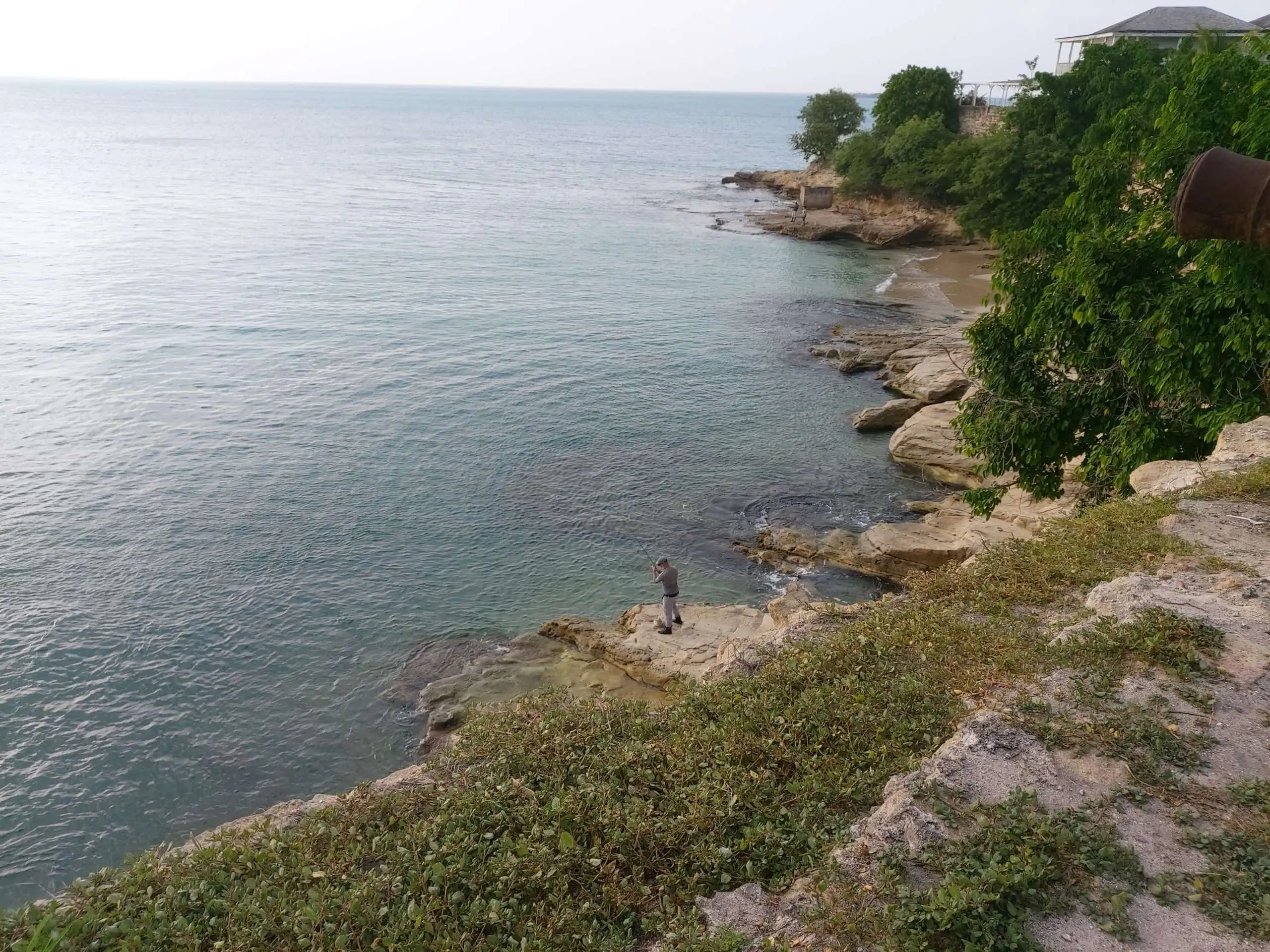
  • Antigua and Barbuda Drafts Laws to Prepare for Possible Deep-Sea Mining

    Antigua and Barbuda Drafts Laws to Prepare for Possible Deep-Sea Mining

    The Caribbean nation of Antigua and Barbuda has begun advancing draft legislation designed to regulate and govern emerging deep-sea mining activities within its maritime territory, marking a proactive step as global interest in extracting mineral resources from the deep ocean continues to grow.

    As international debates over the environmental risks and economic opportunities of deep-sea mining intensify, the small island developing state is moving ahead to establish clear legal guardrails before any large-scale exploration or extraction projects can move forward. The legislative package is expected to outline requirements for environmental impact assessments, stakeholder consultation, revenue sharing, and liability protocols for potential ecological damage linked to seabed mining.

    Deep-sea mining targets polymetallic nodules, hydrothermal vent deposits, and other mineral-rich formations on the ocean floor, which contain critical metals like cobalt, nickel, and manganese that are key inputs for manufacturing electric vehicle batteries and renewable energy technologies. For small coastal states like Antigua and Barbuda, the emerging industry offers the possibility of new economic revenue streams to support national development, but also carries significant risks to fragile deep-sea ecosystems and existing ocean-dependent industries such as tourism and commercial fishing.

    Environmental advocacy groups have repeatedly warned that deep-sea mining could cause irreversible harm to biodiversity, as deep-sea habitats are home to many unique, undiscovered species and play a critical role in global ocean carbon cycles. The drafting process in Antigua and Barbuda is being closely watched by both industry proponents, who see the move as a step toward unlocking untapped mineral resources, and conservationists, who are calling for strict precautionary measures to protect marine ecosystems before any operations are approved.