博客

  • Ramadhin: De dubbele moraal van Silvana Afonsoewa

    Ramadhin: De dubbele moraal van Silvana Afonsoewa

    A significant political controversy has emerged in Suriname involving parliamentarian Silvana Afonsoewa, who serves as chair of the Standing Committee on Public Health. Former Health Minister Amar Ramadhin has publicly accused Afonsoewa of improperly receiving government salary without performing work between June 2020 and February 2023 while she was a civil servant at the Ministry of Health.

    The case originated when Afonsoewa, having lost her parliamentary seat in the May 2020 elections, applied for a position at the Health Ministry. She was appointed to a non-existent position by then-Minister Antoine Elias and placed on the ministry’s payroll without a fixed workplace or formal documentation of her employment terms. According to ministry records, she received regular salary payments despite never reporting for work during this nearly three-year period.

    In early 2023, ministry leadership discovered Afonsoewa’s continued presence on payroll despite her absence from work since June 2020. Her salary was suspended in March 2023, and she was instructed to defend her position. Her defense failed to convince officials that ministry leadership should have been aware of arrangements made with the previous minister.

    Afonsoewa subsequently filed an emergency lawsuit against the State of Suriname, demanding payment of back wages from March to November 2023, continuation of salary, and reimbursement of legal costs. The state argued she had no right to compensation since she performed no work, never reported to perform duties, and no written records existed documenting any special arrangements.

    The court ruled that while employees generally retain salary rights when unable to work due to employer-related circumstances, they must demonstrate willingness to work. The judge determined Afonsoewa failed to prove she actively and systematically offered to work, thus preventing the conclusion that her inactivity was solely attributable to the state.

    The court rejected all of Afonsoewa’s claims and ordered her to pay the state’s legal costs. Despite these judicial findings, Afonsoewa has publicly denied the allegations and presented what Ramadhin characterizes as a complete distortion of facts regarding her ministry tenure.

  • Nutritious Wambugu apple takes root in SVG

    Nutritious Wambugu apple takes root in SVG

    A transformative agricultural initiative is unfolding across the Caribbean as St. Vincent and the Grenadines becomes the latest nation to adopt Kenya’s innovative Wambugu apple variety. This development marks a significant shift in intercontinental agricultural cooperation, moving beyond historical paradigms to embrace knowledge exchange and technological transfer between African and Caribbean nations.

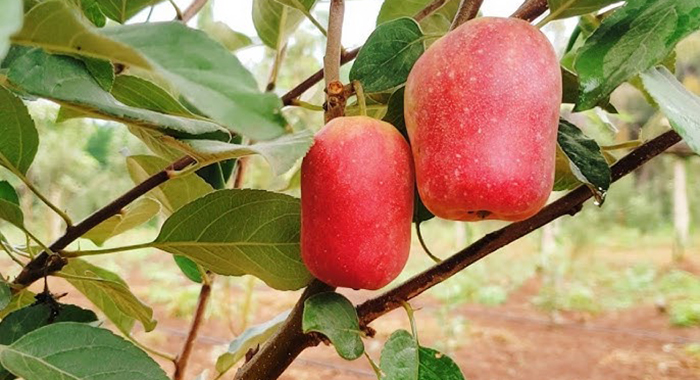
    The Wambugu apple, developed by Kenyan farmer Peter Wambugu twenty-five years ago, represents a breakthrough in fruit cultivation. Unlike traditional apples requiring cold climates, this variety thrives in tropical conditions, making it ideally suited for Caribbean agriculture. Cherio Farms, a forward-thinking agricultural enterprise in SVG, is spearheading the distribution of Wambugu saplings to experienced local farmers, signaling a new era of food sovereignty initiatives.

    Prominent agricultural experts including Kemston Cato, holder of a master’s degree in food science, and Hubert “Shaka” Williams, a seasoned farmer with decades of experience, are among the first to implement this innovative cultivation. The project also involves Roosevelt John, a pineapple specialist in Mesopotamia Valley, and Marlon da Silva, whose twenty-five years of citrus farming experience provides valuable comparative insight.

    The economic implications are substantial. SVG currently imports approximately 165,000 kilograms of apples annually at a cost exceeding EC$1 million. This initiative aims to significantly reduce that import bill while creating local agricultural value. The Wambugu apple’s nutritional profile—low-calorie, fat-free, and rich in vitamin C, dietary fiber, and antioxidants—positions it as a health-conscious alternative to imported fruits.

    Beyond economic benefits, this collaboration represents a philosophical shift in North-South relations. As Che Connell of Cherio Farms notes, this exchange emphasizes “the brains, not the bodies, the tech, not the toil” of African agricultural innovation. The project has already demonstrated success in Jamaica and Trinidad, suggesting broader regional potential.

    Looking forward, Cherio Farms envisions expanded partnerships with Taiwan’s agricultural sector and further African collaborations, potentially including apricots, strawberries, citrus, and grapes. This neo-agricultural revolution aims to achieve food sovereignty for SVG by 2030, transforming both agricultural practices and international relationships through sustainable, knowledge-based development.

  • Pastor urges Chance to play ‘two-fold’ role in Taiwan

    Pastor urges Chance to play ‘two-fold’ role in Taiwan

    In a significant send-off ceremony at the Rillan Hill Church of the Nazarene on February 22, Reverend Chiefton Charles delivered a powerful commissioning sermon for Kenton X. Chance, St. Vincent and the Grenadines’ newly appointed ambassador to Taiwan. The retired educator and pastor emphasized the diplomat’s unique dual responsibility—representing both his nation and his Christian faith in the Asian territory.

    Reverend Charles, who officiated the Chances’ wedding thirteen years ago, drew parallels between secular diplomacy and spiritual representation using scriptures from 2 Corinthians chapter 5. He highlighted that Ambassador Chance—a distinguished journalist and founder of iWitness News—becomes the first Nazarene church member appointed to such a diplomatic position, making his assignment particularly noteworthy.

    The pastor detailed the substantial demands of ambassadorial work, noting it requires exceptional skills in management, negotiation, public speaking, and cultural fluency—qualities he confirmed Chance possesses from his previous studies in Taiwan. Charles specifically commended Foreign Minister Dwight Fitz Bramble, who attended the service, for making an exemplary choice in the appointment.

    Addressing the politically charged environment back home, Charles reminded the congregation that ambassadors represent all Vincentians regardless of political affiliations. He specifically noted that Chance represents neither the ruling New Democratic Party nor opposition parties but the entire population of St. Vincent and the Grenadines.

    The service also recognized Symantha Chance, the ambassador’s wife, who resigned from her position to support her husband’s mission. Charles urged her to provide strong spousal support while reminding the couple to maintain work-life balance despite the demanding nature of diplomatic duties.

    The church community pledged ongoing spiritual support through prayers that “are not hindered by distance,” ensuring the couple remains connected to their religious foundation while serving abroad. Chance departed for Taipei on Friday and is expected to assume his duties immediately upon arrival.

  • St. Kitts Music Festival 2026 set to light up Basseterre with global stars – WIC News

    St. Kitts Music Festival 2026 set to light up Basseterre with global stars – WIC News

    The Warner Park Stadium in Basseterre will transform into a Caribbean cultural epicenter from June 25-27, 2026, as the 28th annual St. Kitts Music Festival prepares to showcase an extraordinary fusion of musical excellence. This premier event will feature Grammy Award-winning artist Kehlani leading an impressive roster of both international superstars and regional Caribbean talents.

    Tourism Minister Marsha T Henderson heralded the festival as a “bold statement of our cultural power and our relentless drive to remain the Caribbean’s premier music destination.” The announcement underscores the nation’s commitment to cultural tourism and its growing reputation as a must-visit destination for music enthusiasts worldwide.

    The comprehensive lineup represents a diverse spectrum of musical genres including reggae, soca, dancehall, R&B, and contemporary Caribbean sounds. Alongside Kehlani, the festival will showcase performances by Fantasia, Beres Hammond, Machel Montano, Mavado, Tarrus Riley, and Steel Pulse, among numerous other acclaimed artists.

    Minister Henderson extended a heartfelt invitation to both residents and international visitors, emphasizing the festival’s role as “the heartbeat of our tourism” and encouraging attendees to experience the “authentic Kittitian soul that sets us apart.” The event promises to deliver not only world-class musical performances but also an immersive cultural journey through St. Kitts and Nevis’s vibrant heritage.

    Ticket availability has been announced through the festival’s official website, with general admission priced at $175 per day and VIP experiences offered at $540 daily. Sunrise Airways has been confirmed as the official travel partner, ensuring convenient access for international attendees seeking to participate in this extraordinary musical celebration.

  • Ayatollah Ali Khamenei: De leider die Irans verzet vormgaf

    Ayatollah Ali Khamenei: De leider die Irans verzet vormgaf

    In a seismic geopolitical development, Iranian Supreme Leader Ayatollah Ali Khamenei was confirmed killed during coordinated U.S.-Israeli airstrikes targeting his residential compound on Saturday. President Donald Trump announced that Khamenei and several high-ranking officials “could not evade American intelligence agencies and advanced tracking systems.” Iranian state television subsequently verified the death hours later, confirming the simultaneous fatalities of Khamenei’s daughter, son-in-law, and granddaughter. Iran has declared 40 days of national mourning.

    Khamenei’s political trajectory was fundamentally shaped by wartime leadership and profound Western skepticism. Assuming power in 1989 following Ayatollah Ruhollah Khomeini’s death, he transformed from ideological successor to strategic architect of Iran’s military and paramilitary infrastructure. His presidency during the devastating Iran-Iraq War (1980-1988) cemented his distrust of Western powers, particularly the United States, after their support for Saddam Hussein’s regime.

    According to Vali Nasr, Iran expert and author of ‘Iran’s Grand Strategy: A Political History,’ Khamenei operated as “a wartime president who emerged from conflict recognizing Iran’s vulnerability and need for security.” This perspective fueled his development of the Islamic Revolutionary Guard Corps (IRGC) from paramilitary force into a dominant security, political, and economic institution. His “resistance economy” concept aimed to achieve self-sufficiency amid crushing Western sanctions.

    Khamenei’s tenure faced significant challenges, including the violent suppression of 2009 election protests (the Green Movement) and nationwide demonstrations over women’s rights in 2022. The greatest crisis emerged in January with widespread economic unrest triggering calls to overthrow the Islamic Republic, met by the most severe state violence since the 1979 revolution.

    Born in 1939 in Mashhad to an Azerbaijani family, Khamenei began Quranic studies at age four. His theological education in Najaf and Qom brought him under Khomeini’s mentorship, shaping his revolutionary activism against the Shah’s regime. Multiple arrests and exile to Iranshahr preceded his return during the revolution that toppled the Pahlavi monarchy.

    Post-revolution, Khamenei served as Defense Minister (1980) and IRGC supervisor before narrowly surviving an assassination attempt and becoming Iran’s first clerical president in 1981. His appointment as Supreme Leader in 1989 occurred despite not meeting traditional qualifications, focusing instead on rebuilding a war-torn nation and strengthening military capabilities.

    Khamenei demonstrated occasional pragmatism, supporting the 2015 nuclear deal as tactical arrangement rather than normalization with the U.S. Following America’s withdrawal from the agreement in 2018, he intensified anti-American rhetoric and expanded nuclear activities.

    Regionally, Khamenei constructed the “axis of resistance” network including Hezbollah, Assad’s Syria, and Hamas. This alliance recently weakened after intensified strikes on Iranian targets, culminating in the June 2025 U.S.-Israeli attacks on nuclear facilities and military leadership that precipitated retaliatory missile strikes against Israel and American bases.

    Khamenei’s legacy remains defined by perpetual resistance to Western influence, unwavering prioritization of national security, and consequential isolation that exacted heavy economic costs on Iran’s population. Despite widespread criticism regarding human rights and suppression of dissent, he established an indelible imprint on contemporary Iranian politics and Middle Eastern geopolitics.

  • Accountability: Luis Abinader reveals that 53% of new formal jobs in the Dominican Republic are held by women

    Accountability: Luis Abinader reveals that 53% of new formal jobs in the Dominican Republic are held by women

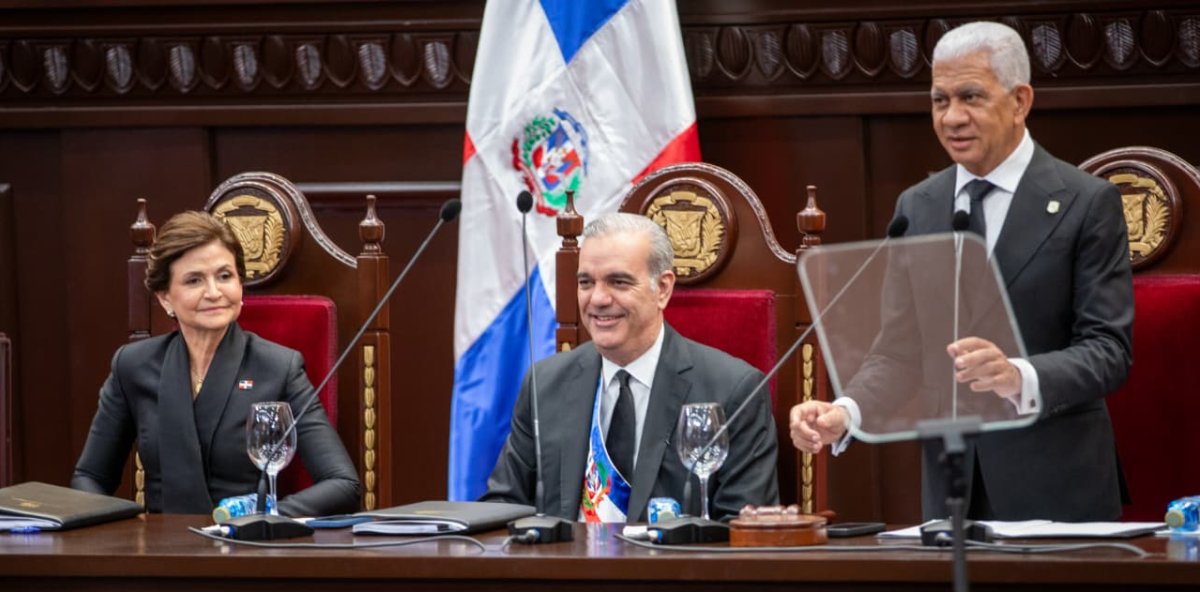
    SANTO DOMINGO – In a landmark address before the National Congress commemorating the nation’s 182nd Independence Anniversary, President Luis Abinader unveiled exceptional employment figures for 2025. Official data from the National Continuous Labor Force Survey (ENCFT) reveals the creation of 133,915 new jobs throughout the year, elevating the country’s total employed population to 5,139,951. Notably, the national open unemployment rate remains anchored at a historic low of 5.0%.

    President Abinader championed decent employment as the cornerstone transformative social policy of his administration. He emphasized the government’s unwavering priority to generate formal, well-compensated job opportunities, stating that each new position represents ‘peace of mind for a home’ rather than a mere statistic.

    A pivotal achievement highlighted in the report is a decisive reduction in labor informality, which dropped to a record low of 54.2%. This formalization is evidenced by several key indicators: the integration of 74,000 new workers into the Integrated Labor Registry System (SIRLA), a 3.15% year-on-year expansion in active Social Security contributors reaching 2,426,350, and a significant stride in gender equity with women securing 53% of all new formal jobs.

    The government credits this success to a synergistic strategy developed in concert with the private sector, focusing on high-growth areas such as nearshoring, logistics, advanced free zones, agro-industrial modernization, and sustainable tourism. This was supported by over 140 formalization and inspection operations. Initiatives like the ‘RD-Trabaja’ program and its ‘Tu Empleo Está Aquí’ platform further bolstered these efforts, successfully registering 12,648 individuals, with a particular focus on youth and women.

    Concluding his address, President Abinader affirmed that this robust job expansion has been paralleled by a consistent rise in workers’ real income, signaling the consolidation of a more resilient and socially equitable economy.

  • Suriname en Brazilië gaan voor moderne landbouw en grotere voedselproductie

    Suriname en Brazilië gaan voor moderne landbouw en grotere voedselproductie

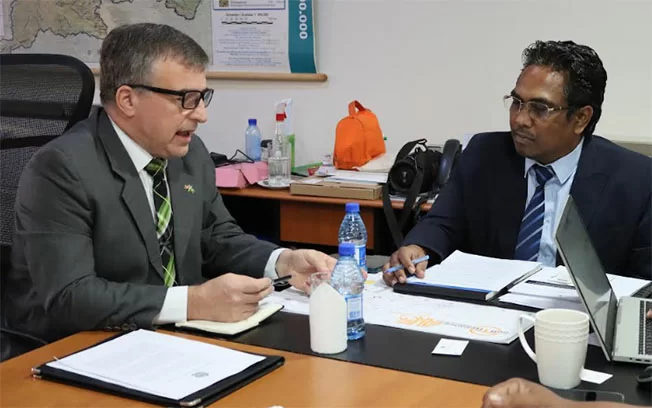
    Suriname and Brazil are embarking on an ambitious agricultural partnership aimed at enhancing food security, technological advancement, and trade expansion. The collaborative initiative emerged during high-level discussions between Mike Noersalim, Suriname’s Minister of Agriculture, Livestock, and Fisheries, and Brazilian Ambassador Felipe Costi Santarosa.

    The diplomatic exchange sets the stage for a technical mission scheduled for late March, where both nations will develop concrete cooperation projects. A primary focus involves strengthening Suriname’s livestock sector, which currently depends heavily on Brazilian poultry imports. While beef imports remain limited, Minister Noersalim emphasized that expanding local production would reduce consumer prices and increase national self-sufficiency.

    Beyond livestock, the partnership explores opportunities in horticulture, particularly passion fruit cultivation. Despite having processing facilities for passion fruit pulp, Suriname struggles with insufficient fruit supply. Both countries are investigating the legal introduction of premium Brazilian varieties, including the Giant F1 strain, to scale production capabilities.

    Rice cultivation represents another priority area. Through knowledge exchange with Brazil’s Agricultural Research Corporation (EMBRAPA), Suriname aims to increase yield per hectare while advancing its dryland rice project as part of broader agricultural modernization efforts.

    The collaboration also targets production cost reduction in livestock and aquaculture. Suriname is exploring strategies to replace imported soy and corn with domestic production, with Brazil providing technical expertise in establishing sustainable supply chains. Additional opportunities exist in developing freshwater cage culture systems for fisheries.

    Minister Noersalim highlighted Suriname’s potential to become Brazil’s strategic gateway to European markets, leveraging its logistical advantages and connections to the Surinamese community in the Netherlands.

    The upcoming technical mission on March 26-27 is expected to yield detailed project proposals and potential financing arrangements for passion fruit cultivation, poultry sector development, and rice production. This bilateral cooperation marks a significant step toward creating a more productive and sustainable agricultural sector in Suriname.

  • Guyana bringing robotic surgery- Ali

    Guyana bringing robotic surgery- Ali

    In a landmark announcement that positions Guyana at the forefront of medical innovation, President Irfaan Ali declared the nation’s commitment to implementing robotic surgery systems during the inauguration of Balwant Singh Hospital’s Outpatient Pavilion and East Street Promenade in Georgetown on Saturday.

    President Ali revealed he has directly challenged Health Minister Dr. Frank Anthony and his team to establish Guyana as the Western Hemisphere’s pioneer in transatlantic robotic surgeries. “We are going full robotics. No turning back,” the President stated emphatically, highlighting how robotic systems would overcome human surgical limitations and fatigue that compromise procedural quality after multiple operations.

    The technological advancement aligns with global medical trends documented by institutions like the Mayo Clinic, which confirms robotic assistance enhances surgical precision, flexibility, and control during complex procedures performed through minimally invasive techniques.

    Beyond surgical robotics, President Ali outlined additional healthcare innovations including AI-powered drug supply chain management systems to eliminate shortages and reduce waste. The government further plans to establish an integrated medical manufacturing platform positioned to serve the entire Caribbean region.

    This initiative complements existing regional efforts by the Caribbean Community (CARICOM), supported by the European Union through Lithuanian facilitation, to develop medicine and vaccine production capabilities in Guyana and Barbados.

    The newly opened Balwant Singh Hospital facility itself represents a significant healthcare upgrade, with CEO Dr. Madhu Singh reporting approximately 400 daily patients across specialized floors dedicated to women’s health, dermatology, ophthalmology, surgical services, and a state-of-the-art IVF center meeting international standards.

    The accompanying East Street Promenade development, created in collaboration with First Lady Arya Ali, signals additional urban infrastructure partnerships between government and private entities aimed at community enhancement.

  • Puerto Rico records second consecutive week of influenza cases below epidemic threshold

    Puerto Rico records second consecutive week of influenza cases below epidemic threshold

    Puerto Rico’s public health landscape shows significant improvement as health authorities confirm influenza cases have remained below the epidemic threshold for the second consecutive week. During epidemiological week 6 (February 8-14, 2026), the island documented 2,070 new influenza infections, bringing the seasonal total to 52,713 cases in the 2025-2026 season.

    Health Chief Víctor M. Ramos Otero celebrated the milestone, stating this trend represents a crucial step toward officially declaring an end to the epidemic. ‘If we continue this trend into the fourth week, we will meet the other epidemiological criteria,’ Ramos Otero announced in an official statement.

    The substantial vaccination campaign appears to be driving this positive development, with 426,008 doses administered this season—representing 76,332 more inoculations than the same period last year. This increased participation reflects strengthened public health strategies and community engagement efforts.

    Despite overall improvement, authorities reported concerning data points: 47.8% of cases occurred in the pediatric population (ages 0-19), while the hospitalization rate held steady at 4.2%. The season has accumulated 162 confirmed influenza fatalities, including 12 new deaths reported in the latest weekly data. Additionally, 23 school outbreaks were identified during week 6, primarily concentrated in the Bayamón (8), Arecibo (4), and Mayagüez (3) regions.

    The Health Department’s community-focused approach has included 103 outreach events across municipalities, bringing vaccines directly to vulnerable populations. New vaccination initiatives are scheduled for March 2-6 across various island regions.

    Health officials continue emphasizing preventive measures including frequent handwashing, respiratory etiquette, mask-wearing when symptomatic, and avoiding close contact with infected individuals.

  • Rijstboeren krijgen padieprijs aangeboden van SRD 500–550 per baal

    Rijstboeren krijgen padieprijs aangeboden van SRD 500–550 per baal

    In a significant development for Suriname’s agricultural sector, rice farmers have secured substantially improved pricing following government-mediated negotiations. Minister Mike Noersalim of Agriculture, Livestock, and Fisheries (LVV) successfully facilitated an agreement that will see rice millers offering between SRD 500–550 per bale, a notable increase from the previously proposed SRD 300–400 range.

    The breakthrough emerged from comprehensive consultations involving multiple stakeholders, including Agriculture Minister Noersalim, Economic Affairs Minister Andrew Basaaron, parliamentary representative Ebu Jones, and Edmund Duiker, Chairman of the NOFA Fund. The discussions focused not only on immediate pricing concerns but also on establishing sustainable solutions for subsequent harvesting seasons.

    Ashwin Jagmohansing, President of the Nickerie Rice Farmers Interest Group Association (VBPN), expressed satisfaction with the outcome, stating he would return to his members with positive news. Approximately 20,000–22,000 hectares of rice have been planted for the current season.

    Minister Noersalim emphasized that while LVV maintains a mediator role in price determinations, the rice sector operates under a free-market system where prices are ultimately determined by supply and demand dynamics. The ministry’s intervention aims to streamline negotiations ensuring both producer satisfaction and continued rice production stability.

    Infrastructure improvements were also addressed, with Minister Noersalim confirming resolution of pumping station issues at Wakay and ongoing efforts to upgrade irrigation systems through public tenders.

    The pricing dispute represents a longstanding challenge in global agricultural markets, as noted by Economic Affairs Minister Basaaron, who highlighted regional developments influencing price structures. The current administration has committed to establishing comprehensive cost-calculation methodologies with broad stakeholder support.

    Parliamentarian Ebu Jones praised the collaborative approach, contrasting it with previous administrations’ priorities. He emphasized that fair pricing for farmers would ultimately benefit consumers through potentially lower market prices for rice products, creating a win-win scenario for both producers and the broader society.