博客

  • Bellevue Estate Shooting Marks Second Attempt on Alvin Spencer’s Life

    Bellevue Estate Shooting Marks Second Attempt on Alvin Spencer’s Life

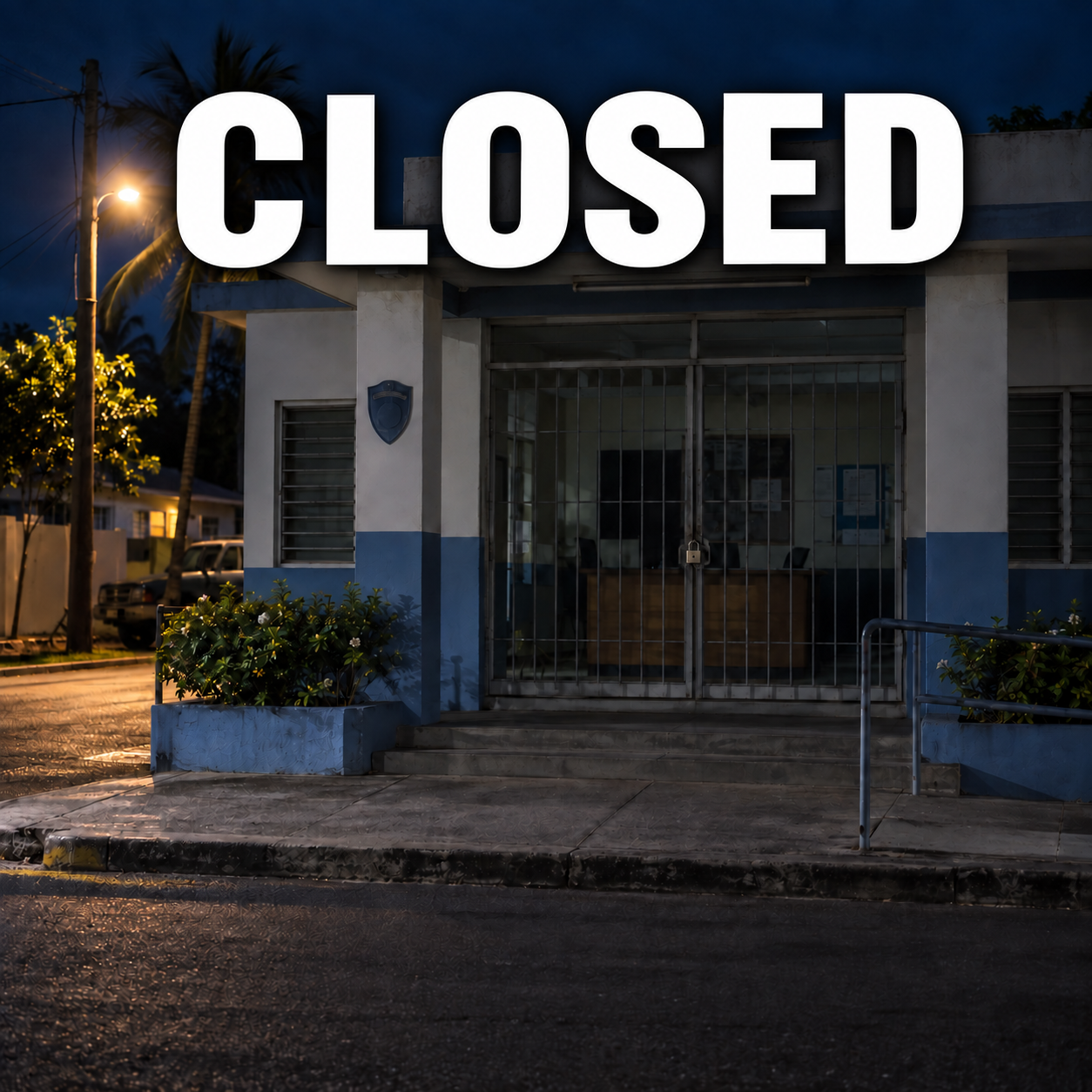
    A resident of Antigua and Barbuda has escaped death for the second time in a pre-planned gun attack, more than seven years after he first survived a targeted shooting. Alvin Spencer, who previously survived a 2019 assassination attempt, was struck by a bullet to the neck in Monday evening’s attack outside his Bellevue Estate home.

    Local law enforcement accounts detail that the shooting unfolded shortly after 9:30 p.m., as Spencer pulled his vehicle into his residential driveway. Moments after he arrived, a second vehicle blocked access behind his car. A masked attacker emerged from the suspect vehicle, discharged multiple rounds in Spencer’s direction, then quickly retreated to the getaway car, which fled the scene at high speed immediately after the shooting.

    Emergency responders transported Spencer to the territory’s main public hospital, Sir Lester Bird Medical Centre, where he underwent urgent emergency surgery to treat his injury. As of the latest official update, hospital and police officials confirm that Spencer is in stable condition, with no immediate threat to his life.

    This most recent incident mirrors a 2019 attack that also targeted Spencer, occurring on June 17 of that year in Perry Bay. In that earlier shooting, Spencer sustained multiple gunshot wounds, and investigators at the time also categorized the incident as a deliberate, targeted attack. No motive for either attack has been publicly released by authorities to date.

    The Royal Police Force of Antigua and Barbuda has launched a full criminal investigation into Monday’s attack and is actively calling on members of the public to come forward with any details that could help identify and apprehend the attackers. Investigators with the Criminal Investigations Department have asked that any witnesses who were in the Bellevue Estate area around the time of the shooting, or any person with knowledge of the attack or the suspects’ movements, contact the department directly at 462-3913 or 462-3914.

    For community members who wish to share information without revealing their identity, officials note that anonymous tips can be submitted through the regional Crime Stoppers hotline at 800-TIPS (8477). Investigators stress that even seemingly insignificant details can provide critical breaks in the case, and all information shared will be handled confidentially.

  • Nevis Premier Mark Brantley Says Gaston Browne Should Not Fight EU CBI Ultimatum Alone

    Nevis Premier Mark Brantley Says Gaston Browne Should Not Fight EU CBI Ultimatum Alone

    The European Union’s demand that five Eastern Caribbean nations end their Citizenship by Investment (CBI) programs has sparked a push for collective regional action, with Nevis Premier Mark Brantley arguing that Antigua and Barbuda Prime Minister Gaston Browne should not face the bloc alone. In a wide-ranging interview with Caribbean Business Review, Brantley laid out a case for coordinated pushback through existing regional bodies, warning that the loss of CBI revenue poses an existential threat to small island economies across the Eastern Caribbean.

    Five Caribbean nations – Antigua and Barbuda, Dominica, Grenada, St. Kitts and Nevis, and St. Lucia – currently run CBI initiatives that grant citizenship to qualifying foreign investors in exchange for economic contributions. According to interview host Joseph Cox, the EU delivered an official correspondence to all five countries on June 25, setting a firm June 1, 2028 deadline for the permanent discontinuation of these programs. Browne has already publicly rejected the EU’s demand, stating that Antigua and Barbuda will not shut down its program until the bloc presents viable plans to replace the billions in lost annual revenue the initiative generates for the country.

    Brantley expressed full alignment with Browne’s opposition to the EU mandate, but emphasized that individual nations carry far less negotiating weight when facing large global blocs like the EU alone. “I do not believe that Prime Minister Gaston Browne should be speaking for Antigua and Barbuda by himself,” Brantley noted. “What we should see is the OECS having a clear position in relation to this. What we should see is CARICOM stepping forward to tell the EU that this is an existential threat to some of our member states, and that we are ready to negotiate this as a collective.”

    Currently, only Browne has taken a public, forceful stance against the EU’s demand, while the other four CBI-operating countries have remained largely silent on the issue. Brantley pushed back against framing the revenue loss as a mere strategic risk, arguing that it would upend economic stability across the region. All five affected nations rely on CBI inflows to fund critical public services and infrastructure, with dependence ranging from moderate to severe across the group. “In every country there is a high degree of dependence on citizenship-by-investment inflows,” Brantley explained. “We have a crisis on our hands because the question then would be, what do we do to substitute for that loss of revenue?”

    A key point of criticism from Brantley was the omission of the CBI dispute from the agenda of the most recent CARICOM Heads of Government meeting, a gap he called a major cause for concern. He pointed to the widespread regional collective support extended to Guyana amid its ongoing territorial dispute with Venezuela as evidence that CARICOM has a precedent of rallying around members facing external threats to their stability.

    Brantley argued that small sovereign Caribbean states face inherent practical limitations when negotiating independently with larger global powers. While Caribbean nations hold sovereign status and representation at the United Nations, he noted that their small size leaves them at a structural disadvantage. Echoing a natural analogy, he argued that unity is the only path to survival: “A great white shark may swim alone, but if you have minnows that swim together, their chances of survival are enhanced when they do that. We already have the regional institutions and infrastructure to speak with one voice on this issue.”

    Moving forward, Brantley proposed a two-pronged strategy for the region: first, OECS member states should collectively request extended deadline from the EU beyond the current 2028 timeline, arguing that a longer transition is more reasonable than a earlier phase-out. Second, the region must accelerate efforts to diversify its economies away from heavy reliance on CBI revenue, shifting CBI models to prioritize value-added investment rather than just expanding the number of new program entrants.

    Brantley identified renewable energy development as a core pillar of economic diversification that can reduce Caribbean vulnerability to global energy shocks. He highlighted Nevis’ largely untapped geothermal energy potential, noting that the island could eventually export low-cost clean electricity to neighboring islands including Antigua and Barbuda. This shift would reduce regional dependence on imported fossil fuels, insulating local economies from global price volatility caused by geopolitical conflicts in major energy producing regions.

    In addition to renewable energy, Brantley called on regional governments to deepen engagement with the Caribbean diaspora, tapping into the community’s capital, expertise, and business development experience to drive new economic growth. He emphasized that Caribbean nations cannot rely on external powers to solve their economic challenges, warning that the global operating environment for small states is only growing more difficult. “Nobody’s coming to save the Caribbean,” Brantley said. “We have to save ourselves.”

    Brantley concluded by reaffirming that individual claims to sovereignty do not make up for the increased negotiating power that comes with collective action. “A collective approach is a far better approach, particularly when we’re dealing with middle and large powers,” he said. “Our leverage is much, much better when we engage together.” He closed by repeating his regret over the omission of the CBI issue from the recent CARICOM agenda, calling the gap a failure that regional leaders must correct at their next summit.

  • PM Browne Apologizes to Works Employees, Says Those Responsible Dropped The Ball

    PM Browne Apologizes to Works Employees, Says Those Responsible Dropped The Ball

    When hundreds of unpaid Ministry of Works employees staged a public protest outside the ministry’s St. John’s Street headquarters in St. John’s on Tuesday, their demonstration quickly forced a direct response from the country’s top leader. Prime Minister Gaston Browne personally addressed the gathered workers, extending a public apology for the administrative failure that left many waiting months — and in some cases years — for owed salaries, wages and overtime pay, while issuing a binding commitment that all outstanding funds would be disbursed by the end of the workweek on Friday.

    In frank remarks to the crowd, Browne acknowledged the government agency had fundamentally failed in its core responsibility to its workforce. “I apologize for the fact that Public Works dropped the ball,” the prime minister said, pushing back against widespread assumptions that the unpaid wages stemmed from a broader government cash shortage. He clarified that the full funds required to cover all outstanding compensation were already available in government accounts, but the payment had been held up by a critical administrative backlog: ministry leaders had failed to compile and submit the required payroll documentation to the national Treasury, which cannot legally issue payments without complete, processed paperwork.

    Browne placed direct accountability for the delay at the feet of the ministry’s senior leadership, noting that the agency director was tasked with collecting employee rosters and finalizing the necessary paperwork to send to Treasury. He told reporters and assembled workers that he had already issued formal instructions to relevant officials to cut through red tape and resolve the backlog by the end of the week. Setting a clear internal deadline, Browne explained that if the completed documentation reaches the Treasury by no later than Thursday, all employees will see their owed funds deposited in time for Friday, a timeline that carries extra urgency due to the upcoming Carnival holiday weekend that many workers had planned to celebrate with their families.

    Shop steward Mr. Peters, who spoke on behalf of the protesting employees ahead of the prime minister’s address, outlined the scope of the unpaid wage crisis that prompted the demonstration. He confirmed that some frontline workers had been owed overtime compensation dating as far back as 2014, while newer employees hired as recently as this past April had not received a single paycheck since joining the ministry. “We want our money — all our money,” Peters emphasized, summing up the unified demand of the protesting workforce.

    The demonstration gained additional momentum when government truck drivers joined the gathering in solidarity with their colleagues at the Ministry of Works. The coordinated action led to noticeable traffic congestion along the busy St. John’s Street corridor outside the ministry building, amplifying public attention to the workers’ grievances. In a subsequent statement issued after the protest, the Ministry of Works acknowledged that management was already fully engaged in processing the outstanding payments. Ministry officials confirmed that work to resolve the backlog has been ongoing since internal inquiries into the issue were first raised on July 14, but the agency had not committed to a firm public payment deadline prior to the prime minister’s Tuesday announcement.

  • A $33 Bottle of Mayo and the Bigger Story Behind Defense Spending

    A $33 Bottle of Mayo and the Bigger Story Behind Defense Spending

    In an investigation that has cast a harsh spotlight on Belize’s defense procurement practices, leaked tender documents have exposed exorbitant overcharging for everyday goods, leaving taxpayers on the hook for tens of thousands of dollars in unnecessary overspending. The most striking example documented in the investigation is a single bottle of mayonnaise that cost the Belize Defense Force (BDF) nearly $34, a price that dwarfs both competing bids and local market rates.

    The investigation, conducted by News Five’s Paul Lopez, focuses on procurement activity for the 2023-2024 fiscal year, when just four suppliers secured the vast majority of BDF supply contracts: A&Y Fresh Vegetables, J&J Imports, Kukulcan Company Limited, and Mount Pleasant Fresh Produce. While contract awards to these firms have raised questions, the far more alarming issue is the gap between what taxpayers paid and what these basic goods actually cost.

    Take the mayonnaise pricing for example. Local market data from the Statistical Institute of Belize (SIB) puts the average 2023-2024 price of a 32-ounce bottle of mayonnaise at $9.20. Competing supplier Mount Pleasant Fresh Produce offered BDF a half-size bottle for just $6.98. But J&J Imports’ winning bid came in at $33.87 for a comparable bottle — nearly five times the price Mount Pleasant quoted, and almost four times the cost of a larger bottle sold to regular consumers across Belize. If defense officials had accepted the lower bid from Mount Pleasant, taxpayers would have saved nearly $40,000 on this single item alone.

    Mayonnaise is not the only overpriced commodity in the leaked documents. Another surprising entry comes from Hugo Engineering and Construction Company, a firm with no background in food production, distribution or meat processing, that was awarded a contract to supply thousands of pounds of assorted meat to BDF, ranging from beef steak and chicken breast to lamb and pork chops.

    Even a seemingly small markup on chicken breast adds up to substantial overspending. Hugo Engineering charged the defense ministry $5.06 per pound of chicken breast over the full fiscal year, 33 cents above the national average of $4.73 per pound recorded in April 2024. With the firm supplying 1,000 pounds of chicken breast monthly (12,000 pounds per year), that tiny per-pound markup translates to almost $4,000 in unnecessary annual spending.

    Vegetable oil tells a similar story. SIB data from July 2023 recorded an average national price of $6.39 per liter of vegetable oil. Yet BDF paid Mount Pleasant Fresh Produce $7.30 per liter for 300 liters monthly, and paid A&Y Fresh Vegetables an even higher $8.50 per liter for 600 liters monthly. Combined, the markup on vegetable oil alone added up to more than $18,400 in excess spending over the fiscal year.

    When adding up the overcharging across just these three basic items, a preliminary analysis shows Belizean taxpayers overpaid by more than $43,000 — and that is before reviewing the hundreds of other goods and services included in the full defense procurement budget. The investigation continues as officials and the public push for answers about how these inflated prices were approved, and whether systemic reforms are needed to crack down on waste and overcharging in public defense spending. Reporting for News Five, Paul Lopez delivered the on-the-ground investigation into the questionable contracting practices.

  • Dickie Bradley says Public Service Must Be Part of Procurement Reform

    Dickie Bradley says Public Service Must Be Part of Procurement Reform

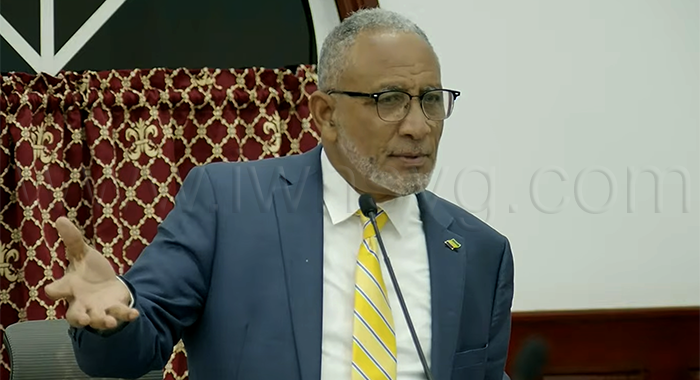
    July 28, 2026 – The ongoing “Mira Millions” corruption controversy has reignited national conversation about financial accountability in Belize’s government, with a long-serving former senior public official arguing that meaningful procurement reform cannot succeed without first fixing gaps within the country’s public service itself. Richard “Dickie” Bradley, who has held top leadership roles across multiple government departments including education and the national postal service, and served as a chief executive officer under both of Belize’s major ruling parties – the People’s United Party (PUP) and the United Democratic Party (UDP) – says the Mira Millions scandal exposes deep, systemic flaws in how public funds are managed. Bradley argues that procurement irregularities like those at the center of the controversy could not occur without failures in internal oversight, institutional accountability, and the core systems designed to track government spending.

    In comments captured during an evening television broadcast, Bradley laid out his blunt assessment of the current system, noting that existing legal frameworks already require rigorous vetting for any government invoice exceeding $50,000. He explained that improper practices often take root from seemingly small, convenience-driven shortcuts that over time escalate into corrupt arrangements. Public servants processing payment claims face consistent pressure from contractors frustrated by slow disbursement timelines, a dynamic that creates openings for bribes and kickbacks. What starts as a small incentive to speed up a single payment can gradually normalize corrupt exchanges, leading to larger illicit arrangements over time.

    “Politicians will be politicians – you cannot change that nature,” Bradley stated. “But the public service is meant to be the safeguard, the protector of the public purse. Its employees are the ones on the ground who know exactly where waste, corruption, and mismanagement are occurring.” Bradley pointed out that the current institutional structure of Belize’s public service is rooted in outdated colonial-era frameworks that are ill-equipped to manage the government’s annual $1.7 billion budget. With no consistent, effective internal checks in place, he argued, systemic gaps allow irregular spending to go undetected.

    Bradley emphasized that solutions to procurement corruption start with strengthening the public servants tasked with stewarding taxpayer money. Any outdated or ineffective procedures can be updated and reformed, he noted, but accountability must start with the public officials who control budget processes: accountants, finance officers, and agency chief executives. “The buck stops at the public service,” he said. “That is where the problem can be resolved.” This report is a transcript of a televised evening newscast, with Kriol language speech rendered using a standardized spelling system for accuracy.

  • The Decisive Role of Women in the National Economy

    The Decisive Role of Women in the National Economy

    In late July 2026, high-level gender and economic policy leaders from across the Americas and the Caribbean gathered in Panama City for the Regional Policy Dialogue focused on “Women, Productivity and Growth”, an event convened with support from the Inter-American Development Bank (IDB). The three-day convening brought together 101 attendees spanning cabinet ministers, senior government officials, leading development experts, and technical partners from 24 nations, all united by a shared goal: to reframe women’s economic participation as a foundational driver of broad-based productivity, transformative innovation, and long-term sustainable development across the region.

    Over the course of the dialogue, delegates tackled a range of interconnected strategic priorities central to advancing gender-inclusive economic growth. Key topics included expanding equitable women’s participation in formal economies, designing public policies that accelerate women’s economic empowerment, scaling investment in the undervalued care economy, expanding women’s access to affordable formal finance, integrating women into digital transformation and innovation ecosystems, and building robust frameworks for economic formalization and inclusion for marginalized women.

    Speaking on behalf of the Haitian government, Pedrica Saint Jean, Haiti’s Minister for the Status of Women and Women’s Rights (MCFDF), shared on-the-ground insights into Haiti’s unique economic context. She emphasized that despite facing overlapping systemic challenges – widespread economic informality, persistent national insecurity, repeated political and humanitarian crises, and systemic barriers to accessing formal financial services – women remain the backbone of Haiti’s national economy, sustaining local communities and driving informal and small-scale economic activity across the country. Saint Jean also outlined the Haitian government’s forward-looking policy vision: to invest in expanding women’s human capital, foster the growth of women-led entrepreneurship, and embed a gender equity perspective across all national economic planning and policy frameworks.

    The second day of the dialogue deepened discussions on underaddressed aspects of gender-inclusive growth, including sustainable financing for gender equality policies, replicable successful experiences from across the region, strategies for effective cross-government inter-institutional coordination, the critical link between public health investment and women’s economic participation, and binding government commitments to advance inclusive economic growth. This high-level plenary session included participation from Guatemala’s Vice President, alongside seven cabinet ministers representing Barbados, Belize, El Salvador, Guatemala, Guyana, Suriname, and Haiti.

    For Haiti, Saint Jean’s participation in the regional dialogue underscores the national government’s explicit commitment to placing gender equality at the center of all national development strategies. By engaging with global and regional peers to exchange solutions, the Haitian Ministry for the Status of Women and Women’s Rights aims to advance initiatives that boost national productivity, reduce systemic economic and gender inequalities, and cement women’s position as core leaders of Haiti’s ongoing economic and social transformation.

  • Temporary Bridges Built for One Way Traffic Flow

    Temporary Bridges Built for One Way Traffic Flow

    Starting in roughly one month, Belize City’s transportation network will undergo a dramatic, years-long transformation as contractors prepare to demolish and replace two of the city’s most iconic river crossings: the historic Swing Bridge and the busy Belcan Bridge. The simultaneous two-and-a-half-year construction project will force commuters, commercial drivers, and local residents to completely rearrange their daily travel routines, with officials warning of extended congestion and route changes that will test the patience of anyone navigating the old capital.

    While overall construction is running several weeks behind the original schedule, work on the first of two new temporary one-way crossings is progressing steadily, according to Evondale Moody, Chief Engineer at Belize’s Ministry of Infrastructure Development and Housing. The first temporary span, built to accommodate the Belcan Bridge replacement, will be positioned behind the Save-U supermarket, stretching from Evergreen Street behind the Belize Water Service facility to connect directly to the Phillip Goldson Highway, Moody confirmed. This crossing will exclusively handle northbound traffic from the city’s south side.

    For drivers needing to travel from the north side to the south side during construction, two alternative routes will be available: the already heavily congested BelChina Bridge, or a second temporary crossing being built near Bottom Dollar, the site of one of Belize’s deadliest transportation disasters. This second temporary span will run from Hyde’s Lane across Haulova Creek, landing on Regent Street West at the former location of Mike’s Club.

    The original timeline for the project has already been adjusted: taxi operators who were supposed to relocate their stands by July 26 will not need to move until the temporary bridges officially open to traffic, a delay that gives local stakeholders extra time to prepare for the new traffic pattern.

    The Bottom Dollar area carries heavy historical significance for Belize: the last temporary crossing installed in this location was a pontoon bridge erected after Hurricane Hattie destroyed existing infrastructure in 1961. That bridge infamously capsized in June 1962, killing multiple people. Moody emphasized that the new temporary structure is engineered for long-term, reliable use over the multi-year construction period, unlike the emergency 1961 pontoon span.

    In total, officials estimate that Belize City residents and visitors will face travel disruptions for approximately three years. In a statement shared through local outlet News Five, Moody urged commuters, pedestrians, and local businesses to practice patience as the infrastructure upgrades are carried out, framing the short-term inconveniences as a necessary step toward long-term progress for the city. The report was filed by News Five correspondent Shane Williams from Belize City.

  • Peru: Keiko Fujimori beëdigd als president na krappe verkiezingswinst

    Peru: Keiko Fujimori beëdigd als president na krappe verkiezingswinst

    LIMA, PERU – In a pivotal moment for Peruvian politics, 51-year-old conservative leader Keiko Fujimori has been officially inaugurated as the country’s new president, closing out a tightly contested election season shaped overwhelmingly by public anxiety over soaring criminal violence. Fujimori secured a narrow victory over her left-wing rival Roberto Sanchez in June’s presidential runoff, winning by a margin of fewer than 50,000 votes. Her inauguration makes her the ninth president to lead Peru in just 10 years, a stretch defined by persistent political instability that has left the Andean nation hungry for consistent governance.

    Speaking from Congress in Lima during Tuesday’s inauguration ceremony, Fujimori took her oath of office, promising to “faithfully carry out the duties of President of the Republic.” She immediately outlined an aggressive, hardline agenda to tackle the country’s spiraling security crisis, which has been fueled by widespread extortion, murder, and other violence perpetrated by domestic and transnational criminal gangs. In what she described as an “iron fist” response to the threat, she announced a series of sweeping policy proposals, including the construction of a large-scale maximum-security prison modeled after the facility system implemented in El Salvador, anonymous judges for high-risk criminal cases, mass expulsions of undocumented migrants, and a mandate requiring incarcerated people to work in exchange for food provisions.

    Fujimori’s political party, Fuerza Popular, holds the largest single bloc in Peru’s Congress, and together with her center-right allies, she controls half of all seats in the newly formed Senate. This representation gives her coalition enough power to make impeachment efforts far more difficult to execute, though the bloc falls short of the absolute majority needed to pass her full policy agenda without opposition support.

    Fujimori’s ascent to the presidency marks the return of one of Peru’s most polarizing political dynasties. She is the daughter of former president Alberto Fujimori, who ruled the country through the 1990s with aggressive authoritarian-leaning policies. While her father’s administration is credited with defeating the Maoist Shining Path insurgency and ending crippling hyperinflation, it also left a dark legacy: Alberto Fujimori was ultimately convicted of widespread corruption and systematic human rights violations, a divided history that continues to split Peruvian public opinion today.

    Critics have raised urgent alarms that Keiko Fujimori’s tough-on-crime agenda will echo her father’s authoritarian tactics, warning that the crackdown on criminal activity will come at the cost of core civil liberties for Peruvians. On the eve of her inauguration, relatives of victims of state violence gathered in central Lima to protest her incoming administration and demand long-delayed justice for atrocities committed during her father’s time in office. Opposition groups are also pushing to roll back recent legislation they argue has weakened efforts to combat organized crime, and are demanding the reopening of investigations into the deaths of dozens of protesters during widespread anti-government demonstrations that took place in 2022 and 2023.

    As Keiko Fujimori begins her presidential term, Peruvian society remains deeply divided. While many voters frustrated by rising crime supported her hardline platform, the country’s deep historical wounds and widespread concerns over potential authoritarian overreach have left the nation navigating a fragile balance between a hunger for political stability and vigilance against abuse of power.

  • Thirteen Reforms Proposed for Political Financing

    Thirteen Reforms Proposed for Political Financing

    For decades, political leaders and policy analysts in Belize have repeatedly discussed the urgent need to overhaul the country’s outdated campaign financing framework, but meaningful regulatory reform has never materialized. Today, a groundbreaking new study from the Belize Policy Research Institute (BELPRI) at the University of Belize has reignited this critical conversation, putting the pervasive role of unregulated money in Belizean politics back under public scrutiny.

    Titled *Money in Belizean Politics: Breaking the Regulation Deadlock*, the report details how the country’s near-total lack of formal political finance laws has created a breeding ground for public corruption, entrenched the harmful practice of patronage handout politics, and barred small, alternative political groups from competing fairly against established parties. To address these systemic flaws, the institute has put forward 13 concrete, actionable recommendations to bring transparency and accountability to both political party operations and election campaign financing.

    In an interview following the report’s launch, BELPRI Executive Director Dr. Dylan Vernon drew attention to a largely overlooked channel of unofficial political financing: existing public funds that are already being misused for political gain, most notably constituency development funds. “While Belize has no formal system of official public funding for political candidates, public resources are frequently abused to sway voters,” Dr. Vernon explained. “Constituency development funds are intended to support local community projects, but the power to allocate resources almost always rests with the sitting elected representative for that district. Even official assistance programs, from seasonal Christmas aid to back-to-school support before the academic year opens, are controlled by politicians. When an elected official or political party holds sole power to decide who gets public support, that public money functions as political financing, regardless of its stated purpose.”

    At the report’s launch event in Belize City, Allan Pollard Jr., the People’s United Party (P.U.P.) mayoral candidate for Belize City, weighed in on the push for reform, acknowledging that overhauling political finance rules is a major challenge but not an unachievable goal. When asked directly whether he supports binding political finance legislation and if he would be willing to publicly disclose the identities of donors bankrolling his mayoral campaign, Pollard expressed full openness to transparency measures.

    Pollard argued that reform would help rebuild public trust in government, which has eroded steadily over decades due to widespread lack of accountability in political spending. “A lot of Belizeans are frustrated by the lack of transparency and accountability in how politics is funded,” he said. “Reforming these rules is the perfect first step to fix that broken trust. For me, there is nothing to hide. Unlike national-level ministers, my local government campaign doesn’t rely on large, undisclosed donations. I have no issue disclosing my donors, and the people supporting my campaign have the best interests of Belize City at heart, so they would have no problem with public disclosure either.”

    When asked whether campaign donors would expect political favors in return for their financial support after election day, Pollard framed his donors’ contributions as investments in the future of the city rather than quid pro quo arrangements. “I don’t see it as donors expecting favors,” he said. “I see it as local businesspeople investing in their country and their city. They just want to make sure the right leadership is in place to create a stable, fair environment for doing business in Belize City. That’s all they’re looking for.”

    Looking ahead, BELPRI has already scheduled an official meeting with Prime Minister John Briceño to formally present the report’s findings and 13 reform recommendations, opening the door for potential policy action on an issue that has been deadlocked for decades.

  • Pollard Faces Tight Race to Secure P.U.P. Support

    Pollard Faces Tight Race to Secure P.U.P. Support

    With the People’s United Party (PUP) of Belize locking in a late August date for its crucial municipal nomination convention, mayoral hopeful Allan Pollard Jr. is navigating a compressed campaign timeline amid growing speculation over the future of fellow party member Evan Thompson’s candidacy.

    Scheduled to take place just weeks from now, the convention – expected to be formally announced by party leadership later this week – leaves all candidates vying for a spot on the Belize City municipal slate, and the mayoral nomination in particular, with only a narrow window to court delegates and build winning momentum. For Pollard, however, the shortened timeline does not represent the chaotic last-minute rush many political observers have predicted.

    In an interview with local media, the longtime PUP aspirant pushed back on framing the compressed schedule as an unfair obstacle. Pollard noted that convention delegates are not unfamiliar faces to longstanding party members like himself: these are lifelong PUP supporters who have been active in constituency work and backed local candidates for years. For him, the campaign simply requires reconnecting with established contacts, sharing his policy vision for Belize City, and reinforcing relationships that have been built over years of party work, not starting from scratch to introduce himself to a new electorate.

    When asked about whether he has sufficient financial backing to compete, and addressing circulating rumors that candidates pay up to $200 per delegate to secure support, Pollard rejected the claim outright. He emphasized he does not buy delegate support, and credited his years of on-the-ground party work with giving him an advantage that money cannot replicate. Thanks to the deep relationships he has built with delegates over time, Pollard said his campaign costs are far lower than other candidates might face, and he remains confident he has enough time to lock in the support he needs to win the nomination.

    Pollard added that all PUP candidates vying for Belize City municipal positions gathered earlier this week to walk through the official rules and process for the upcoming convention, aligning all contenders on party expectations ahead of the vote.

    Beyond the timeline debate, the PUP is facing internal controversy surrounding sitting Belize City Councilor Evan Thompson, a fellow party member who is reportedly at risk of being barred from running in the upcoming municipal election. News Five has confirmed that senior PUP leaders are currently discussing whether to block Thompson’s candidacy, though no official explanation for the internal review has been released to the public. A final decision and public statement from the party is expected alongside the formal convention announcement later this week.

    Pollard, who previously endorsed Thompson in the last election cycle, told reporters he first learned of the discussion through media reports, and is not privy to the high-level internal party talks that are evaluating Thompson’s future. He said the full reasoning behind the review will likely be made public in the coming days, and he cannot comment on details he has not been informed of.

    When asked whether he supported Thompson running for re-election, Pollard said he has long backed greater participation from younger political candidates, and believes open democratic competition for party nominations is a healthy practice. That said, he acknowledged that the party’s leadership has institutional prerogatives to make decisions it believes serve the best interests of the PUP, and he will respect whatever final call they make.

    Repeated attempts by media to get comment from Thompson on Wednesday went unanswered, with the sitting councilor saying he could not provide any statement or clarity on his candidacy status at this time.