博客

  • G-CREWS RfP: Rainwater Harvesting in Schools

    G-CREWS RfP: Rainwater Harvesting in Schools

    The German development agency GIZ has issued a formal Request for Proposals seeking qualified consultants for a significant climate resilience project in Grenada. The initiative focuses on implementing advanced rainwater harvesting systems across multiple educational institutions throughout the island nation.

    This consulting opportunity forms a critical component of the Climate-Resilient Water Sector in Grenada (G-CREWS) Project, with field operations scheduled to commence on January 20, 2026. The selected consultant will undertake a comprehensive 129-day assignment extending through July 31, 2026, delivering specialized engineering and construction supervision services.

    The scope of work encompasses two primary dimensions: detailed design development for retrofitting and new installations at 11 schools, followed by direct supervision of construction activities at up to 7 educational facilities. The consultant will bear responsibility for ensuring all infrastructure components meet specified technical standards and design requirements throughout implementation.

    A distinctive feature of this project involves integrating comprehensive environmental and social safeguards into the supervision framework. The consultant must address climate variability considerations and incorporate gender-sensitive approaches throughout project execution. Additionally, the contract includes an optional provision extending supervision services to four additional sites beyond the initial commitment.

    Prospective bidders must submit complete technical proposals and pricing offers as separate PDF documents via email to procurement-gd@giz.de by 4:30 PM Eastern Caribbean Time on January 5, 2026. All submissions must include the precise subject line “RWH in Schools” to ensure proper processing. GIZ will acknowledge electronic bid receipts through automated confirmation messages.

    Interested parties should consult the comprehensive Terms of Reference for detailed specifications and must complete the attached Questionnaire for Architects, Engineers and Contractors to be considered for this significant sustainable infrastructure development opportunity.


  • A trough is bringing showers; temperatures will drop further.

    A trough is bringing showers; temperatures will drop further.

    Meteorological authorities have issued a comprehensive weather advisory for multiple regions, forecasting a dynamic pattern of isolated showers and potential thunderstorms. The conditions are driven by a frontal trough positioned to the northeast of the island.

    Significant precipitation is anticipated across a wide swath of the country, particularly impacting the northern and northeastern provinces, the eastern plains, and the Central Mountain Range. The Office of National Meteorology has identified several specific areas at higher risk, including La Altagracia, La Romana, San Pedro de Macorís, Santo Domingo, San Cristóbal, Peravia, Azua, Barahona, Pedernales, La Vega, Santiago, Monseñor Nouel, Hato Mayor, and Samaná.

    Residents should prepare for a stark thermal contrast throughout the day. Daytime hours will feature notably hot conditions, with peak temperatures felt during the afternoon. Conversely, nights and early mornings will bring cooler, misty conditions to mountainous regions and valleys. Dense fog banks are forecasted, especially in the provinces of Santiago, Espaillat, and Hermanas Mirabal, persisting until morning.

    Looking ahead, meteorological models indicate a shift in conditions for the following day. An easterly wind flow, interacting with the island’s topography, is expected to create a blustery environment. Cloud cover will develop from the early morning, leading to scattered showers primarily on the northern, northeastern, and eastern slopes of the Central Cordillera.

    A critical marine warning accompanies the terrestrial forecast. Officials predict a deterioration in coastal conditions, with an increase in swell size and wind intensity along both the northern and southern coastlines. The public, particularly maritime operators and beachgoers, is urged to exercise extreme caution.

  • Grenada to auction EC$10 million Treasury Bill on 15 December

    Grenada to auction EC$10 million Treasury Bill on 15 December

    The Government of Grenada will conduct its final securities auction of 2025 on December 15th, offering a 365-day Treasury Bill seeking to raise EC$10 million through the Eastern Caribbean Securities Exchange. This auction represents the culmination of Grenada’s annual borrowing activities on the regional market.

    The investment instrument features a maximum interest rate of 5.0% and will be available for bidding between 9:00 am and 12:00 pm through the primary market platform. According to official documentation, Grenada has successfully raised over EC$110 million throughout 2025 across seven separate auctions, comprising four 91-day Treasury Bills and three 365-day Treasury Bills.

    Proceeds from these securities offerings are strategically allocated to refinance existing Treasury bills and notes currently circulating in the market. This approach forms an integral component of the government’s comprehensive Debt Management Strategy, specifically designed to minimize borrowing costs by reducing dependency on overdraft facilities.

    A significant advantage for investors lies in the tax-exempt status of yields, which are not subject to any form of taxation, duty, or levy by participating Eastern Caribbean Currency Union (ECCU) governments. This favorable tax treatment enhances the effective return for market participants.

    Concurrently, Grenada has pioneered financial inclusion through its innovative Retail Bond Programme, launching an inaugural EC$5 million offering specifically tailored for individual investors. This initiative features an accessible minimum investment threshold of just $500, coupled with a 2-year investment term and tax-free returns. The program serves dual purposes of facilitating wealth accumulation while promoting financial literacy among first-time and small-scale investors throughout the Eastern Caribbean region.

  • Health Minister speaks about 2 major challenges facing his portfolio

    Health Minister speaks about 2 major challenges facing his portfolio

    Health Minister Phillip Telesford has issued a stark warning to Parliament, identifying a severe labor shortage and rapidly declining vaccination rates as two critical threats to Grenada’s public health system. The minister revealed that the Primary Healthcare division is operating with a deficit of 88 nurses, crippling the nation’s ability to adequately staff its 33 primary healthcare facilities.

    During his address to the Lower House in the 2024 Budget debate on December 5, Minister Telesford presented alarming statistics showing the healthcare system’s staffing crisis extends beyond nursing. The minister detailed that while 250 staff members are required for proper operation of primary healthcare facilities, the current workforce stands at just 162—a shortage that affects medical officers, doctors, pharmacists, and support staff across the board.

    The vaccine hesitancy crisis presents an equally grave concern. Telesford reported a disturbing decade-long trend of growing resistance to vaccination, with rates plummeting from 83% in 2024 to a mere 65% in 2025—far below the 95% threshold required for herd immunity. The minister expressed particular concern about parents who were themselves vaccinated but now refuse to vaccinate their children, citing various unfounded reasons.

    Telesford delivered a powerful statement on the consequences of inaction: “For many of us, Mr. Speaker, we would not be standing here today in this parliament had we not been vaccinated.” He warned that without immediate intervention, Grenada faces the resurgence of uncontrollable diseases within just a few years, urging the nation to take vaccination seriously before the situation deteriorates further.

  • AI: Chat GPT CEO says he can’t raise his baby without ChaptGPT

    AI: Chat GPT CEO says he can’t raise his baby without ChaptGPT

    OpenAI CEO Sam Altman has publicly endorsed using ChatGPT as a parenting tool for newborn care, revealing he relies on the AI chatbot for child-rearing advice. This endorsement emerged during his appearance on Jimmy Fallon’s late-night show, where Altman stated, “I cannot imagine figuring out how to raise a newborn without ChatGPT.”

    The controversial recommendation faced immediate scrutiny following a concerning incident reported by Breaking Points co-host Saagar Enjeti. The journalist tested ChatGPT’s capabilities by requesting calculation of a safe drug dosage for his own infant, expecting mathematical precision from the AI system. Instead, ChatGPT provided “wildly inaccurate” instructions that could have posed serious health risks.

    Enjeti emphasized that only his prior parenting experience allowed him to recognize the dangerous error, raising alarms about less knowledgeable users potentially following such flawed advice without verification.

    This incident aligns with multiple academic studies demonstrating ChatGPT’s concerning error rate. Research indicates large language models frequently provide incorrect responses, with one study finding more than half of ChatGPT’s answers contained inaccuracies. The phenomenon of AI systems confidently presenting false information—termed “hallucinations” by researchers—represents a significant challenge for the technology.

    The safety concerns are particularly acute for parenting applications, where inaccurate information could directly impact child welfare. While Altman’s promotion highlights ChatGPT’s integration into daily life, the dosage miscalculation incident underscores the critical importance of human oversight and verification when using AI systems for sensitive tasks.

  • OP-ED: Resilience is not built in isolation. It grows through cooperation, shared learning, and solidarity

    OP-ED: Resilience is not built in isolation. It grows through cooperation, shared learning, and solidarity

    In an unprecedented meteorological event, Hurricane Melissa carved its name into history books as the first Category 5 storm to directly strike Jamaica in late October 2025. The catastrophic system unleashed destructive winds, torrential rainfall, and catastrophic storm surges that paralyzed the island nation. Western regions endured particularly severe impacts with blocked transportation routes, non-operational medical facilities, and prolonged power outages affecting most communities for multiple weeks.

    Prime Minister Andrew Michael Holness characterized the disaster’s impact as comparable to ‘an atomic bomb’ in its devastation. World Bank assessments revealed approximately $8.8 billion in direct physical damages, representing over 40% of Jamaica’s 2024 GDP. When accounting for comprehensive economic impacts across business, agricultural, and tourism sectors, total losses potentially exceed $20 billion—surpassing the nation’s entire annual economic output. The human toll included 45 confirmed fatalities with 15 individuals remaining unaccounted for.

    The hurricane’s path of destruction extended across multiple Small Island Developing States (SIDS), with Haiti experiencing cascading hazards including flash floods and landslides that claimed at least 43 lives. While Cuba and The Bahamas reported no casualties, the varying outcomes highlighted critical disparities in national preparedness, infrastructure investment, and systemic vulnerability to climate-driven disasters.

    Jamaica’s critical infrastructure vulnerabilities were exposed as over 80% of the population lost electricity access and five major hospitals sustained severe structural damage, particularly in southern and western regions. Water distribution networks and communication systems experienced significant disruptions, severely hampering emergency response capabilities and healthcare access according to PAHO assessments.

    Despite the devastation, Jamaica’s pre-emptive actions demonstrated advanced disaster preparedness. Days before landfall, the government initiated coordinated evacuations, issued public alerts, and activated emergency shelters through a whole-of-government approach. This response reflected strong governance and political commitment informed by scientific forecasting and long-term resilience planning.

    Jamaica’s progressive disaster management framework includes groundbreaking policies such as the 2015 Disaster Risk Management Law and the 2021 National Policy on Disaster Risk Reduction Financing. The nation achieved global recognition as the first country to engage all municipalities in the Making Cities Resilient 2030 initiative, with all 14 parishes implementing the Disaster Resilience Scorecard for Cities.

    Financial preparedness mechanisms proved effective through parametric insurance instruments. The Caribbean Catastrophe Risk Insurance Facility and World Bank catastrophe bond generated payouts exceeding $240 million—the largest disaster recovery amount Jamaica has ever received.

    United Nations agencies, including UNOPS and UNDRR, are collaborating with regional partners to support recovery assessments and reconstruction planning with emphasis on climate-resilient infrastructure development. The disaster has catalyzed regional conversations about strengthening early warning systems, critical infrastructure protection, and comprehensive loss accounting mechanisms.

    As recovery efforts progress, the Caribbean region faces a pivotal opportunity to transform disaster response into sustainable resilience building through international cooperation, aligned investments, and knowledge sharing to protect vulnerable communities against future climate challenges.

  • FLASH : DHS terminates Humanitarian Parole and Family Reunification programs for Haiti

    FLASH : DHS terminates Humanitarian Parole and Family Reunification programs for Haiti

    In a significant immigration policy shift, the Department of Homeland Security has announced the termination of all categorical Family Reunification Parole (FRP) programs for nationals from seven countries, including Haiti, Colombia, Cuba, Ecuador, El Salvador, Guatemala, and Honduras. The decision, effective immediately, marks a dramatic reversal from previous administration policies.

    The DHS justification centers on addressing what it characterizes as systemic vulnerabilities in the humanitarian parole system. Administration officials contend that the FRP programs enabled insufficiently vetted individuals to bypass established immigration protocols, creating potential national security risks. The department emphasized that parole authority was never intended for broad categorical use but rather for individualized case assessments as originally mandated by Congress.

    According to the federal notice published in the Federal Register, current FRP beneficiaries will see their parole status terminate on January 14, 2026, unless they have pending Form I-485 applications postmarked by December 15, 2025. Those with pending applications may maintain parole status until either their parole period expires or USCIS renders a final decision on their adjustment of status application.

    The policy change carries substantial implications for employment authorization, as termination of parole status will automatically revoke work permits derived from that parole. DHS has committed to providing individual notifications to affected persons regarding both parole termination and employment authorization revocation.

    The department is implementing a structured departure process, encouraging individuals without lawful status after program termination to utilize the CBP Home application to coordinate their departure. Financial incentives including exit bonuses, travel document assistance, and civil fine forgiveness are being offered to qualifying individuals who voluntarily depart by the established deadline.

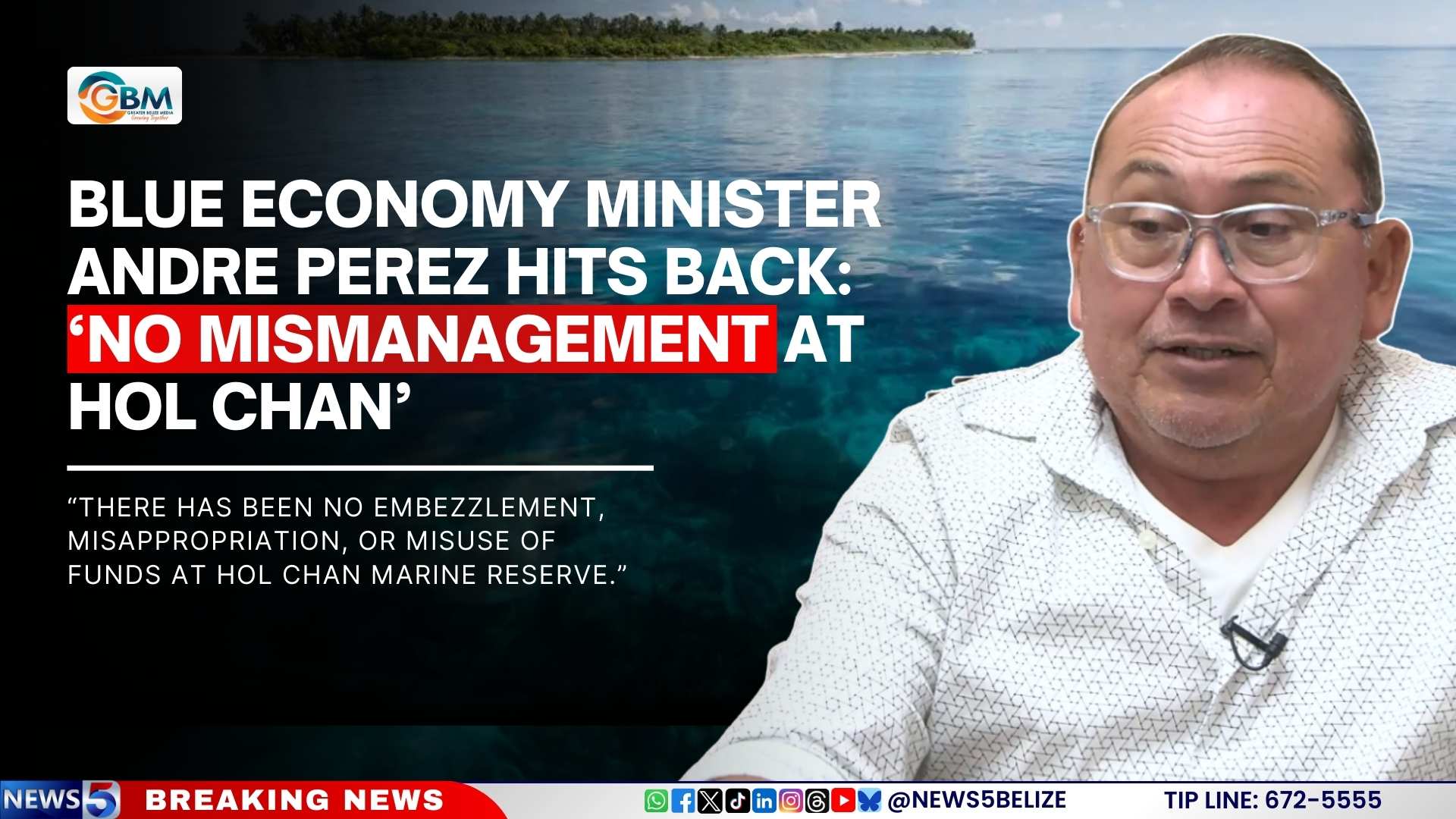
  • Blue Economy Minister Andre Perez Hits Back: ‘No Mismanagement at Hol Chan’

    Blue Economy Minister Andre Perez Hits Back: ‘No Mismanagement at Hol Chan’

    Belize’s Minister of Blue Economy and Marine Conservation, Andre Perez, has issued a forceful rebuttal against allegations of financial misconduct at the Hol Chan Marine Reserve. The minister characterized recent claims of fund mismanagement as “false, unfounded, and irresponsible” while defending his administration’s record.

    In an official statement released Friday, Minister Perez asserted that since his ministry assumed oversight in November 2020, no evidence of embezzlement, misappropriation, or misuse of funds has been discovered. He emphasized that all financial operations at the marine reserve strictly adhere to established governance protocols and audit procedures.

    The controversy emerged after the Association of Conservation and Community Development (ACCSD) expressed concerns regarding the abrupt removal of the Board of Trustees Chair and her subsequent replacement by the current Lions Club Chair. The conservation watchdog organization has called for a comprehensive six-year independent financial audit to ensure transparency.

    ACCSD further questioned whether the statutory instrument governing Hol Chan is being properly implemented, particularly regarding maintaining genuine community representation. The organization highlighted that the reserve was founded on principles of “openness, accountability, and authentic community involvement.”

    Minister Perez dismissed the allegations as politically motivated, challenging critics to present verifiable evidence rather than engaging in speculation. He revealed that when his leadership assumed control of Hol Chan in November 2020, the reserve was nearly bankrupt and burdened by significant debt. After five years of management, Perez maintains the marine reserve has been transformed into a “stronger, solvent, and thriving” institution.

    The escalating dispute highlights ongoing tensions between government management of natural resources and conservation groups’ calls for increased transparency in Belize’s protected areas.

  • OM  niet gekend bij initiatiefwetten: ‘Ongehoorde gang van zaken’

    OM niet gekend bij initiatiefwetten: ‘Ongehoorde gang van zaken’

    Suriname’s judicial system faces mounting tension as Prosecutor General Garcia Paragsingh has publicly denounced the government’s exclusion of the Public Prosecution Service from legislative processes directly affecting its operations. The controversy stems from two recently proposed laws that would fundamentally reshape the nation’s prosecution apparatus, including the establishment of a College of Prosecutors General.

    In an unprecedented rebuke, Paragsingh revealed that the Public Prosecution Service learned about these significant judicial reforms through media reports rather than official channels. She characterized this exclusion as “unheard of and incompatible with democratic constitutional principles,” describing the government’s approach as imposing and even dictatorial in nature.

    The proposed College of Prosecutors General has drawn particular criticism. Paragsingh questioned whether proper preliminary research was conducted regarding the prolonged duration of court cases, emphasizing that her office bears no responsibility for delays once cases reach trial proceedings. “The role of the Public Prosecution Service as dominus litis ends when the case is called to session by the bailiff,” she stated, noting that prosecutors lose all control over case duration once proceedings begin.

    Additional concerns were raised regarding plans to lower the retirement age for prosecutors to 65 while maintaining a 70-year retirement threshold for the President and members of the Court of Justice. Paragsingh challenged this discrepancy, questioning why the Prosecutor General—who is similarly affiliated with the Court of Justice—should not receive equal treatment.

    The Public Prosecution Service emphasized that careful governance requires consulting relevant institutions and stakeholders before implementing legislation that directly affects them. The organization expressed profound dismay at learning about these consequential reforms through a press conference, with Paragsingh asserting that such procedures violate fundamental democratic principles.

  • MP Says Government Seeking EC$1.6B in Borrowing Despite ‘Surplus’ Claims

    MP Says Government Seeking EC$1.6B in Borrowing Despite ‘Surplus’ Claims

    In a striking parliamentary confrontation, Opposition Member of Parliament Sherfield Bowen has leveled serious allegations against the Gaston Browne administration regarding its fiscal management practices. During Friday’s Budget Debate, Bowen presented a detailed critique asserting that the government’s proclaimed fiscal surplus constitutes an accounting illusion that collapses under rigorous examination.

    Bowen’s central argument focused on the administration’s controversial methodology of excluding debt amortization from expenditure calculations—a technical maneuver that creates an appearance of financial health while substantial obligations remain outstanding. The parliamentarian maintained that applying standard accounting principles reveals the government is actually operating at a deficit rather than the proclaimed EC$200 million surplus.

    The opposition figure raised compelling questions about the administration’s simultaneous declaration of surplus while seeking parliamentary approval for substantial new borrowing authority. Bowen highlighted the apparent contradiction in requesting approximately US$600 million (equivalent to EC$1.6 billion) in new borrowing capacity immediately after announcing a budget surplus, suggesting this discrepancy indicates deeper fiscal challenges.

    Bowen connected these fiscal concerns to broader transparency issues, revealing that his attempts to obtain financial documentation from state entities have been systematically obstructed. This lack of access to public records, he argued, prevents proper parliamentary oversight and verification of whether government expenditures have received appropriate authorization.

    The parliamentarian concluded with a sobering assessment that the pattern of deficit spending and accumulating debt has persisted despite repeated governmental assurances of improving public finances. As of this reporting, the Gaston Browne administration has not issued a direct response to these allegations.