博客

  • Saint Lucians aim to progress at Chess Olympiad in Uzbekistan

    Saint Lucians aim to progress at Chess Olympiad in Uzbekistan

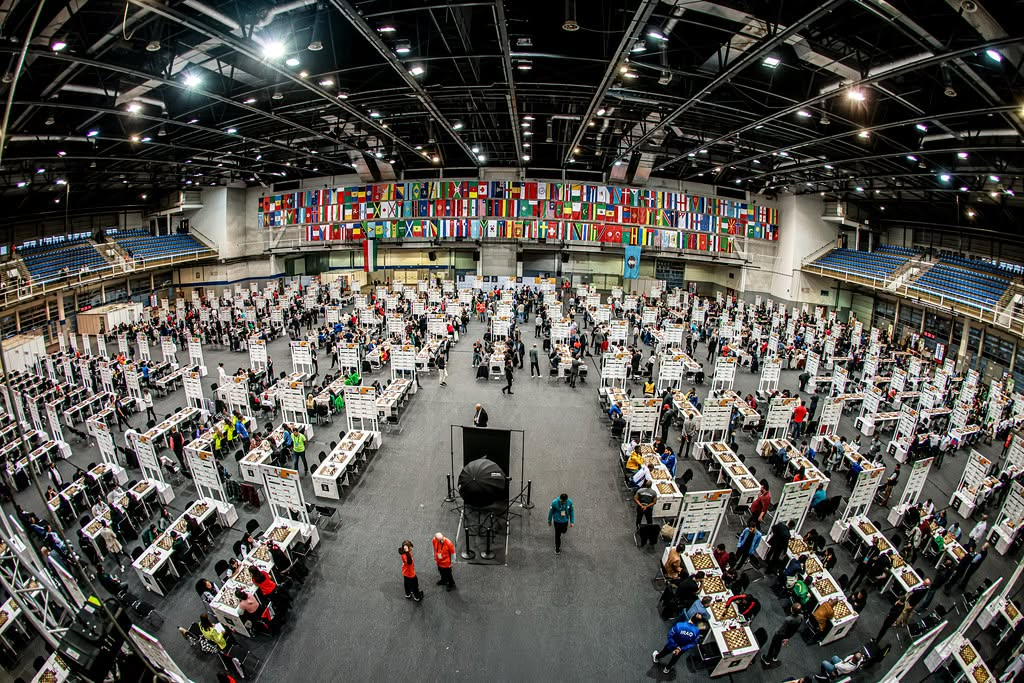
    The 46th edition of the global Chess Olympiad is set to kick off in the historic Central Asian city of Samarkand, Uzbekistan, and a small but mighty delegation from the Caribbean island nation of Saint Lucia is ready to test their skills against the world’s top amateur and professional chess players. Running from September 16 to 27, this year’s tournament sees Saint Lucia fielding full rosters for both the open and women’s divisions, marking the latest milestone in the country’s steadily growing reputation in international competitive chess.

    Eight of the 11-member delegation departed the island for Central Asia this past Saturday, with the full group led by head of delegation Tesa St Ange. The squad boasts significant international experience, with seven of its eight competing players having already competed in high-stakes global tournaments. The open division roster includes Candidate Master Kaieem Elisee, Saint Lucia Chess Federation (SLCF) President Sixtus Gabriel, Justin James, Arvin Nicholas, and Daniel Nunez. Competing in the women’s division are Woman Candidate Masters Tris-Ann Richards and Chelsea Wahid, joined by Sibani Elumalai, Vernesa James and Kiara Lambert.

    This year’s Olympiad appearance builds on two years of strong showings for Saint Lucia’s national chess program, following their well-received campaigns at the 2022 Olympiad in Chennai, India, and an early 2024 event in Budapest, Hungary. During the 2022 Chennai tournament, Saint Lucia held higher-seeded national teams including Nicaragua and Cape Verde to hard-fought 2-2 draws, turning heads among international chess observers with their disciplined play. At the 2024 Budapest competition, the Saint Lucia open squad delivered a standout performance, climbing 23 spots above their initial seeding to finish 146th overall. The delegation also earned an official honor at the event, taking home the award for Best Sports Team Uniform.

    Individual player achievements have also lifted the national team’s competitive standard in recent years. In Budapest, Tris-Ann Richards notched an impressive 7.5 points from a possible 9 competing on the first board, while Chelsea Wahid secured 6.0 points across 11 matches – a result that earned her the Woman Candidate Master (WCM) title directly from the tournament results.

    These experienced players, led by Elisee in the open division and Richards and Wahid in the women’s draw, give Saint Lucia a solid competitive foundation for the 11 rounds of classical chess that will unfold across the two-week tournament in Samarkand.

    Saint Lucia’s continued participation in top-tier international chess competition would not have been possible without the backing of key local corporate sponsors. This year’s delegation receives support from the Saint Lucia National Lotteries Authority (NLA), Computer and Business Services Ltd (CBS), Saint Lucia Electricity Services (LUCELEC) and Bank of Saint Lucia Ltd (BOSL).

  • Fate of 92 Cuban Medical Professionals Working in Belize Expected by Month’s End

    Fate of 92 Cuban Medical Professionals Working in Belize Expected by Month’s End

    In a public announcement made on the local program *Open Your Eyes*, Belize’s Minister of Health and Wellness Kevin Bernard has confirmed that a final decision on the continued employment of 92 Cuban medical professionals currently serving across the Central American nation will be reached by the close of September 2026.

    The Cuban medical brigade covers a wide spectrum of critical healthcare roles, ranging from tertiary-level specialists and general medical officers to diagnostic technicians, radiologists, and rural community nurses. Per Bernard’s breakdown, a small cohort of these specialists is based at the country’s main tertiary care hub, the Karl Heusner Memorial Hospital (KHMH), while the majority are deployed to underserved rural communities that have long struggled to attract domestic healthcare workers. The brigade also includes Belize’s only currently serving Cuban psychiatrist, filling a key gap in the country’s mental health services.

    Bernard emphasized that any departure of the Cuban professionals would place unprecedented additional strain on Belize’s already overstretched healthcare system, which is grappling with a persistent nationwide workforce shortage—a challenge the minister noted is not unique to Belize, but a global crisis hitting small developing nations particularly hard. Worldwide, wealthier countries actively poach trained medical personnel from lower-income states, leaving small nations like Belize unable to fill critical frontline and specialist roles.

    He highlighted the southern Toledo District as a stark example of how integral the Cuban medical staff are to local care delivery. Of the 16 doctors serving the district, fully half are Cuban nationals. For years, Belize has faced consistent difficulty recruiting local doctors to work in remote southern communities, and the Cuban professionals have stepped in to close that critical gap. Removing them from the system would immediately collapse access to routine and emergency care for thousands of rural residents, Bernard warned.

    Discussions around the future of the medical arrangement are being coordinated through Belize’s Ministry of Foreign Affairs, with Bernard confirming that early talks have been productive, even as he acknowledged he does not have access to all details of bilateral diplomatic negotiations. The Belizean health ministry has submitted detailed input on the country’s staffing needs, mapping the distribution of Cuban professionals and outlining the gaps that would open up across the country—particularly in rural southern regions—if the workers depart. Officials are currently restructuring the bilateral medical worker agreement, with the goal of wrapping up negotiations and resolving the status of the 92 professionals by the end of September. Bernard’s statement also directly refuted unsubstantiated earlier claims that the Cuban doctors were already set for imminent departure.

  • COMMENTARY: The ballot cannot defend itself – confronting Dominica’s declining voter turnout

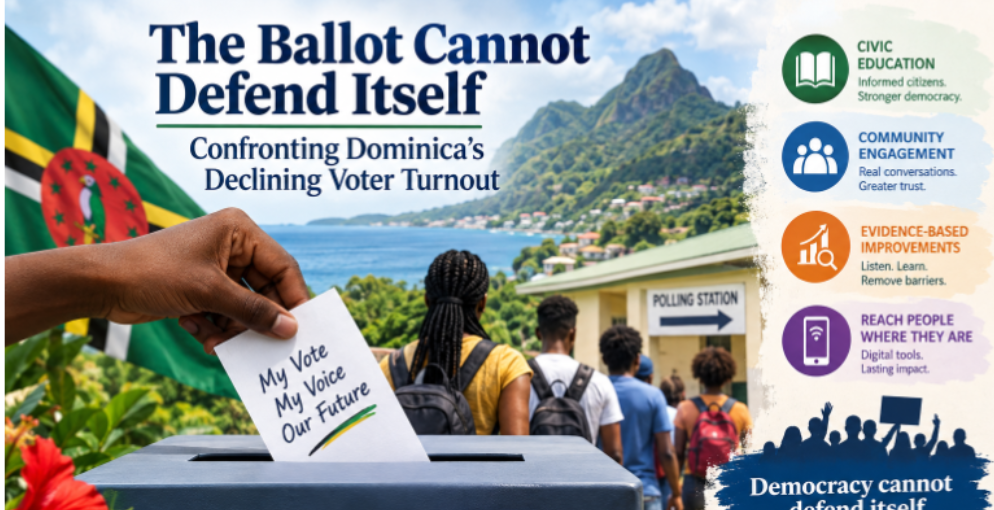
    COMMENTARY: The ballot cannot defend itself – confronting Dominica’s declining voter turnout

    The recent Roseau North by-election delivered a clear victory to the Dominica Labour Party (DLP) over the United Workers Party (UWP) candidate Danny Lugay, a win that carries extra weight after the opposition framed the contest as a moral struggle between good and evil, wrapped in rhetoric of advancing democracy and social justice. For the UWP, this contest was far more than just another parliamentary by-election—it was a make-or-break moment for the party’s political future.

    Having boycotted the 2022 general elections, the Roseau North vote marked the UWP’s first electoral contest since 2019, and the first major test of new party leader Dr. Fontaine’s leadership and campaign coordination. Plagued by internal divisions, inconsistent policy messaging, and a lack of a clear, credible vision to unseat the long-ruling DLP, the UWP had pinned its hopes on this by-election as a launching pad for a political comeback, a stepping stone to re-establishing its presence in parliament. That makes its defeat even more devastating: the result signals that the UWP’s path back to electoral relevance is far more difficult and uncertain than party leaders had anticipated, potentially spelling an existential threat to the opposition party’s future.

    Beyond the partisan win-loss narrative, the most critical takeaway from the by-election lies in what it reveals about voter participation in Dominica. While many observers have decried the low voter turnout recorded in the contest, this is far from an isolated issue. Data shows that voter turnout—a core metric of democratic engagement—has declined steadily in every national election since 1985, falling by an average of 4.02% per electoral cycle. Following independence in 1978, Dominica saw its highest turnout in 1980 at 80.31%, but just one cycle later in 1985, that number dropped to 75.56%, a 4.75% decline. The steepest drop on record came in 1990, when turnout fell by 8.92%, though a rare uptick was recorded in 2014—coinciding with two major political milestones: the DLP’s 15th consecutive year in power, and the appointment of Lennox Linton as UWP leader and head of the official opposition.

    This long-running downward trend paints a worrying picture: Dominica now has a voting population that is increasingly disengaged and reluctant to turn out to the polls, a pattern that undermines the very foundations of the country’s democracy. Fixing this issue requires confronting more than just widespread voter apathy. Academic research from scholars André Blais (2006) and Mark N. Franklin (2004) demonstrates that electoral participation is shaped by a combination of institutional structures, the intensity of political competition, voters’ sense of political efficacy, access to accurate information, and the public’s belief that their vote actually matters. While low turnout does not automatically invalidate an election’s democratic legitimacy, it does erode its representativeness. When large numbers of citizens skip voting, political leaders are more likely to make assumptions about voter preferences that may be incorrect, leading to policy decisions that do not reflect the actual will of the public.

    Worse still, when only a small subset of the electorate participates in elections, political parties have little incentive to address the needs of non-voting groups. If specific demographic groups or geographic communities consistently turn out at lower rates, their interests are pushed to the political margins, social divides widen, and public disenchantment with politics deepens. The cumulative impact of these trends poses a severe threat to social stability and long-term national development. For this reason, Dominica cannot continue to treat low voter turnout as a problem that only needs attention during election season. It must be recognized for what it is: a critical threat to the country’s socio-economic progress that requires deliberate, long-term strategic intervention.

    Three key strategic shifts can help address this growing crisis. First, Dominica must institutionalize permanent electoral and civic education across the country. There is a critical difference between the two: voter information teaches citizens how to cast a ballot, while civic education helps them understand why casting that ballot matters. The Ministry of Education, in partnership with the national Electoral Office, should establish a fully funded, adequately staffed Electoral and Civic Education program that operates year-round, not just during campaigns. This program should be introduced to students long before they reach voting age, incorporating activities like mock elections, parliamentary simulations, student-led debates, student councils, and hands-on constitutional education to build democratic participation as a lifelong civic habit, rather than a once-every-few-years chore.

    Through this program, citizens will learn the role of parliament, the responsibilities of elected representatives, how votes translate into legislative representation, how to evaluate competing political claims, and how to hold elected officials accountable for their promises. This approach has already proven successful elsewhere in the Caribbean: Jamaica’s Electoral Commission has implemented similar voter and civic education initiatives designed to boost public understanding and engage young and first-time voters. The lesson for Dominica is clear: waiting until citizens reach voting age to teach them about democracy is waiting far too long.

    Second, civic and electoral education must meet citizens where they are, at the community level. The Electoral Office should partner with local community groups, schools, churches, youth organizations, and civil society groups to host regular Community Democracy Forums in every constituency and village across the country. These forums will address the practical questions voters often have: How do I register to vote? Where is my polling station? What does a Member of Parliament actually do on a day-to-day basis? What happens to my ballot after I cast it? How can I evaluate political promises and identify misinformation? This local outreach is particularly effective in Dominica’s tight-knit communities, where existing social networks can either reinforce disengagement or build a shared culture of participation. The Electoral Office can guarantee neutral, accurate information, while local community organizations bring the trust and on-the-ground reach to connect with residents.

    Third, all efforts to boost turnout must be rooted in empirical evidence and continuous improvement. After every election, the Electoral Office should conduct a systematic survey to identify why eligible citizens chose not to vote. Was it due to distrust in politicians, political alienation, out-migration, difficulties with voter registration, lack of transportation, inaccessible polling locations, or a general belief that voting would not change anything? When administrative barriers are identified, they should be addressed immediately through improved voter information, more accessible polling arrangements, simplified registration processes, and targeted outreach to groups that consistently have low turnout rates. Digital communication should also be a permanent part of the program: short-form videos, social media content, podcasts, and shareable messaging for platforms like WhatsApp can reach citizens who do not engage with traditional electoral advertising.

    At its core, the crisis of low turnout in Dominica raises an uncomfortable question that goes far beyond simple voter apathy: have democratic institutions, political parties, and civic organizations done enough to make participation meaningful for ordinary citizens? A democracy where increasing numbers of citizens choose to stay home on election day may still function legally, but it becomes less representative with every cycle. When citizens do not express their will through the ballot box, politicians end up speaking for them. That is the real danger: the most consequential vote in any election may not be the one cast for the wrong candidate, but the vote that is never cast at all.

    If Dominica is serious about advancing electoral reform and modernization to strengthen its democracy, electoral and civic education cannot remain an afterthought only addressed during election campaigns. It must become a permanent national institution, and increasing voter participation must be treated as a core democratic priority on par with economic development and national resilience. The Roseau North by-election should push the country to confront questions larger than just which political party won or lost. Its deeper meaning lies in what it reveals about the relationship between Dominica’s citizens and their democracy.

    Political parties will always frame elections as existential battles for their own survival, but democracy ultimately depends on something far more fundamental than the electoral fortunes of any single party: it depends on whether citizens still believe that their participation matters. Dominica does not need another cycle of last-minute campaigns just telling citizens to “go out and vote.” It needs a permanent, embedded culture of democratic participation. After all, democracy cannot defend itself. It requires active, engaged citizens to show up and protect it.

  • Santana Village Receives Equipment for Water, Community Maintenance

    Santana Village Receives Equipment for Water, Community Maintenance

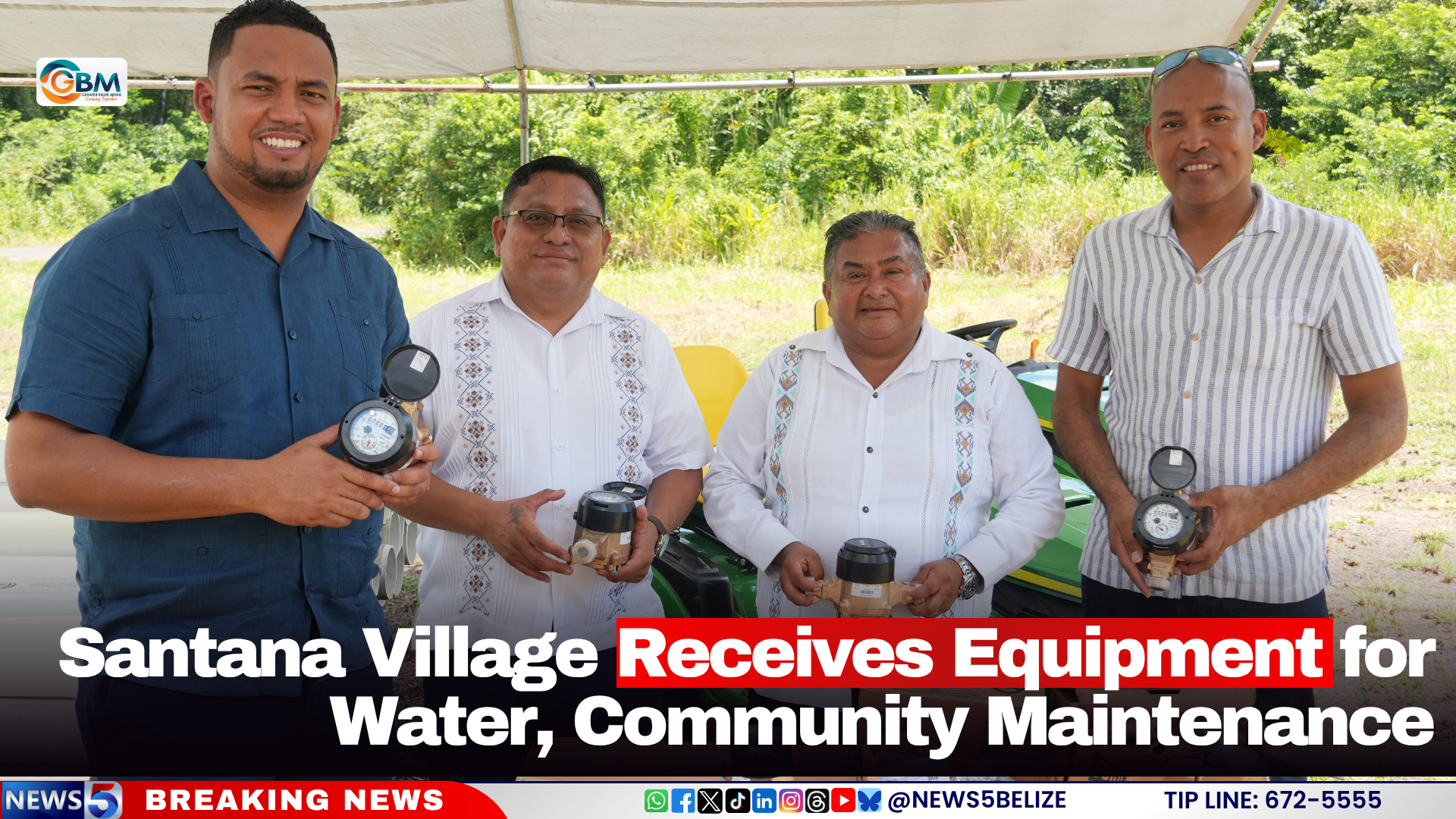
    In a targeted push to upgrade rural infrastructure and quality of life across the Belize District, Santana Village has taken delivery of critical materials and equipment from the Ministry of Rural Transformation, aimed at shoring up local water services and boosting public space maintenance. The handover to the small rural community forms a slice of a broader $60,000-plus package of resources distributed to underserved rural areas nationwide, with supplies ranging from water distribution pipes and usage meters to landscaping tools including weed eaters and riding mowers.

    Speaking at the handover event, Rural Transformation Minister Oscar Requena outlined the government’s core goal for the water infrastructure investment: partnering with local communities to build more robust, long-lasting water management systems that can serve residents for decades. To ensure the new water meters deliver on their promise of fair, transparent usage-based billing, Requena emphasized that local water boards must follow a structured, community-centered process before rolling out meter-based charges. This includes full consultation with village residents and mandatory testing of all installed meters to guarantee accurate readings.

    “We are providing these meters to empower your communities to take ownership of your water services,” Requena stated. “Our goal is to see you implement fair usage-based pricing that aligns with actual consumption, which helps fund ongoing system maintenance long-term.”

    The minister added that the ministry has already documented successful community-led water management models across other rural parts of Belize, and urged the newly equipped water boards in Santana Village and other recipient communities to adopt these proven best practices to improve their own service delivery. Beyond water infrastructure, Requena stressed the importance of proper care for the new landscaping equipment, reminding local leaders that regular servicing and cleaning will extend the lifespan of the tools, maximizing the public value of the government’s investment.

    Valentino Shal, Chief Executive Officer of the Ministry of Rural Transformation, noted that the landscaping equipment fills a key gap for the community. By giving local teams the tools to regularly clear overgrowth and maintain public spaces, the government is helping foster cleaner, more welcoming villages that boost resident morale. “When communities are well-kept and clean, it cultivates a deeper sense of collective pride among the people who live there,” Shal explained. The investment is part of the government’s ongoing commitment to addressing unmet infrastructure needs in rural Belize and supporting local self-governance of critical community services.

  • Police Condemn Young People Displaying Firearms on Social Media

    Police Condemn Young People Displaying Firearms on Social Media

    In a strongly worded public statement released on Monday, September 14, 2026, the Royal Police Force of Antigua and Barbuda has drawn a firm line against the growing trend of open firearm display and the glorification of gun culture, particularly among the nation’s young people.

    Police administration officials have condemned this lawless, deviant behavior in unambiguous terms, warning that authorities will not treat such actions lightly. In a reassurance to the public, the force confirmed that it is deploying all available resources and legal tools to root out this troubling trend, emphasizing that any individual found to have committed criminal offenses related to illegal firearms will face full investigation and prosecution when sufficient evidence is gathered.

    Police Commissioner Everton Jeffers made a direct appeal to the country’s youth, urging them to reject the dangerous narrative that frames illegal gun ownership and public display as a marker of status, power, or social acceptance. Commissioner Jeffers stressed that this reckless behavior puts innocent lives at unnecessary risk and fosters a culture of violence that has no place in Antigua and Barbuda’s society. “We will continue to use every lawful means available to identify those involved, recover illegal firearms, and hold offenders accountable,” Jeffers said.

    Beyond law enforcement action, the police administration is calling on collective societal action to address the issue at its root. Parents, guardians, educators, community leaders, and all responsible residents are being asked to publicly condemn gun glorification and actively guide young people away from criminal activity and harmful associations that can destroy lives, fracture families, and destabilize local communities.

    The public is also being urged to take an active role in combating illegal firearm activity by not ignoring any information — including photos, videos, and messages — that points to the possession, movement, concealment, or use of illegal guns. Authorities emphasize that any such information must be reported to police immediately to prevent potential violence.

    Members of the public with information about illegal firearms, ammunition, or any suspicious criminal activity can submit tips through multiple channels: contact the Criminal Investigations Department at 462-3913 or 462-3914, reach Crimestoppers anonymously at 800-TIPS (8477), or visit the nearest local police station to share information directly.

  • 66 New Rooms, Sea Views and More: Fort George Hotel Expands

    66 New Rooms, Sea Views and More: Fort George Hotel Expands

    Belize City’s iconic Fort George Hotel & Spa is gearing up to launch its most ambitious expansion in its history this fall, transforming the waterfront skyline of the historic Fort George neighborhood with the all-new six-story Signature Sea View Tower.

    The development adds 66 well-appointed guestrooms and suites to the property, including two exclusive Signature Sea View Penthouses, that will nearly double the hotel’s total room count to 130. But project leaders emphasize the expansion is far more than just extra accommodation: it is designed to elevate the entire visitor experience, giving travelers a premium vantage point to soak in the culture, scenery, and charm of Belize’s former capital from new heights.

    Every element of the new tower has been crafted to lean into the property’s prime coastal location. Guests will be greeted by a redesigned arrival plaza and expanded lobby upon entry, where expansive floor-to-ceiling windows frame sweeping unobstructed views of the Caribbean Sea. Interior design integrates natural, locally sourced materials and original artwork inspired by Belize’s coastal heritage, weaving the country’s unique cultural identity into every detail of the space.

    Beyond accommodation, the expansion brings a suite of new guest amenities. A second waterfront swimming pool joins the hotel’s existing Courtyard Plunge Pool, giving visitors more space to relax under the tropical sun. A new retail boutique showcasing local crafts and goods, plus multiple new indoor and outdoor event gathering spaces, round out the new public offerings.

    Culinary offerings are also getting a major boost: a new Mediterranean-inspired restaurant will open alongside the existing Treehouse Restaurant, while a new all-day lobby bar and specialty coffee concept will transition into a craft cocktail destination in the evening. This flexible space is designed to serve guests starting their day with a warm brew before exploring Belize, or unwinding with a nightcap after a day of adventures around the country.

    For business and event travelers, the new tower adds 4,500 square feet of flexible meeting and event space, including a 1,300-square-foot main meeting room, an 800-square-foot open-air meeting deck, and a 2,400-square-foot fourth-floor event venue with panoramic views of Belize City and the Caribbean. The scenic backdrop turns routine work trips and corporate events into memorable, one-of-a-kind experiences. The new facilities complement the hotel’s existing meeting spaces, as well as its established on-site amenities including the SeaViche Bar, K’IN Spa, and BurnBox Gym.

    The hotel’s coveted location in the heart of historic Fort George remains a core draw for visitors. Staying at the property puts guests steps away from Belize City’s top cultural and historic landmarks, while serving as a convenient home base for exploring the rest of the country. From the world-famous Belize Barrier Reef for diving and snorkeling, to ancient Maya archaeological sites, lush inland rainforests, and charming rural communities, travelers can easily plan day trips across Belize before returning to the calm waterfront to relax at the end of the day.

    “This expansion represents one of the most significant milestones in Fort George’s history,” shared Scott McArdle, vice president of hospitality at Fort George Hotel & Spa. “Our vision has never been simply to add more guestrooms. We’re building on Fort George’s legacy while creating new ways for travelers to experience the culture, character and hospitality of Belize City as an essential part of their Belize journey.”

    Reservations for stays in the new Signature Sea View Tower are already open for bookings, with openings starting in fall 2026. Travelers interested in learning more or securing a reservation can visit the hotel’s official website at www.fortgeorgebelize.com.

  • Dominican writer Zephrine Royer wins 2026 Elizabeth Nunez Award

    Dominican writer Zephrine Royer wins 2026 Elizabeth Nunez Award

    The Brooklyn Caribbean Literary Festival (BCLF) has capped off its 2026 edition by naming Dominican writer and documentary producer Zephrine Royer the winner of the prestigious BCLF Elizabeth Nunez Award for Writers in the Caribbean. The announcement was made official on Saturday, September 12, during the festival’s annual Short Fiction Story Celebration, held this year in Brooklyn, New York, from September 9 to 13 under the overarching theme “One Hand Don’t Clap: Caribbean Worlds, Writing Towards the Future.”

    Royer took home the top honor for her evocative short story *River Mouth*, joining fellow Dominican writer Kwame Labassiere, who earned a finalist spot for the parallel BCLF Elizabeth Nunez Caribbean-American Writer’s Prize for his work *What Cannot Be Done Alone*. The dual representation from the small Caribbean island drew glowing praise from BCLF Founder and Executive Director Marsha Massiah during the award ceremony.

    “Dominica has been the silent dark horse in this race from day one,” Massiah remarked. “I don’t know what is taking place in Dominica, whatever writing incentives is happening in that little ecosystem there, but it’s absolutely spectacular, and we can’t get enough of it.”

    Currently based in Martinique, Royer has built a creative career deeply rooted in Caribbean storytelling and identity. Prior to this win, her fiction earned two longlist placements for the Commonwealth Short Story Prize: *Alé-Viré* in 2024 and *Witness* earlier this year. *River Mouth* marks her first recognition from BCLF, and the award spotlights her growing reputation as a leading voice in contemporary Caribbean literature.

    Founded to center Caribbean literary work and indigenous storytelling traditions, the Brooklyn-based festival launched its short fiction contest in 2019 as the Emergent Writers Contest. A regional award for creators based in the Caribbean was added in 2020, responding to overwhelming interest from writers across the region. Today, the two linked prizes honor two cohorts of creators: one for writers living and working within the Caribbean, and one for Caribbean diaspora creators based abroad. The regional award, which Royer won, is open to writers born, raised, or holding nationality in any Caribbean nation who currently reside and work in the region. All entries are original short fiction pieces capped at 3,000 words, judged anonymously by a panel of established Caribbean authors. This year’s panel included celebrated authors Kevin Jared Hosein and Carol Mitchell, who highlighted the exceptional quality of 2026’s submitted work during the ceremony.

    Both awards are named in honor of Dr. Elizabeth Nunez, a Trinidadian-American novelist and Distinguished Professor of English at Hunter College, CUNY, who spent decades advocating for underrepresented Caribbean and African-American writers throughout her career.

    Unable to travel to Brooklyn to accept the award in person, Royer delivered her acceptance remarks via pre-recorded video, where she also read a standout excerpt from *River Mouth*. She shared that the story draws directly from her childhood growing up in Dominica, where she spent full moon nights gathering on a neighbor’s front steps to listen to elder community members share traditional local folktales. Those childhood stories included tales of a great-grandfather who confronted a *lajabless*, a neighbor who outsmarted a *soukouyan*, and a local figure who kept a *Moose*—a mythic small creature said to hatch from an egg and survive only on a diet of green bananas.

    In her acceptance speech, Royer offered gratitude to her mother, who she credited with nurturing her lifelong love of storytelling, her sister who inspired the story’s central character Val, her beta reader Mel, Celeste Mohammed, and her fellow writers from the Bocas-Jacarandas Short Story Intensive. She closed her remarks in Kwéyòl, the French Creole language of the Eastern Caribbean: “Mèsi an pil, mèsi an chay,” which translates to “thank you very much, thank you so much.”

    As this year’s award recipient, Royer receives a $1,750 USD cash prize, a custom BCLF trophy, branded festival merchandise, a curated collection of books from independent publisher Akashic Books, and a custom gift from stationery brand Moleskine. Additional professional opportunities include a feature episode on the BCLF *Cocoapod* podcast, an author profile and interview on the BCLF official website, and publication of her winning story in three prominent Caribbean literary platforms: MOKO Magazine, PREE, and Carib News.

    Beyond her literary work, Royer holds an Associate’s degree in Modern French Literature and a PhD in Bilingual Education from the Université des Antilles. As a documentary producer, she has earned recognition as an IF/Then alumna, HotDocs Cross Currents fellow, Caribbean Film Academy fellow, Brown Girls Doc Mafia Black Director’s Fellow, and European Film Market Toolbox alumna.

    The dual short fiction prizes are a core component of BCLF’s broader organizational mission: to narrow the gap between industry resources and opportunities for Caribbean writers, whose voices have historically been sidelined in mainstream global literary spaces, regardless of whether they create from the region or the diaspora.

  • 22-year-old motorcyclist dies in St James collision

    22-year-old motorcyclist dies in St James collision

    A devastating road accident has claimed another life on Barbados’ road network, marking the island’s latest traffic fatality. The fatal incident unfolded just after midday on Sunday at the intersection of the Ronald Mapp Highway and Westmoreland, located in the parish of St James.

    The victim of the collision was identified by local law enforcement as 22-year-old Kahlil Nash, a resident of Cave Hill in St Lucy. Emergency response teams were dispatched to the crash site immediately after reports of the collision, which involved two vehicles: a motorcycle operated by Nash and a private motorcar. The crash was first logged by emergency services at 12:33 p.m.

    Despite rapid first responder intervention, Nash succumbed to his injuries at the location of the incident. Authorities have confirmed that the case remains open, with active investigations ongoing to determine the full sequence of events, contributing factors, and any potential liability surrounding the collision.

  • CARICOM Group Raises Alarm Over Election Prep

    CARICOM Group Raises Alarm Over Election Prep

    As Haiti prepares to hold its first national election in more than a decade, a senior observer mission from the Caribbean Community (CARICOM) has sounded an urgent alarm over unresolved systemic and security challenges that threaten the credibility of the upcoming poll. The CARICOM Eminent Persons Group, which conducted an on-the-ground assessment of election preparations across Haiti between September 2 and 9, 2026, held wide-ranging consultations with key national stakeholders, including major political parties, civil society organizations, private sector leaders, and commanders of the country’s newly formed Gang Suppression Force. The vote is currently scheduled to hold its first round on December 13, 2026, marking a pivotal step toward ending Haiti’s years-long period of transitional, unelected governance.

  • Antigua and Dominica Record No US Tourist Visa Issuances in Early 2026 Data

    Antigua and Dominica Record No US Tourist Visa Issuances in Early 2026 Data

    Newly released official visa statistics have revealed stark variations in the number of U.S. B1/B2 temporary visitor visas issued across Caribbean and nearby South American nations during the first two months of 2026. Two Eastern Caribbean island nations — Antigua and Barbuda and Dominica — stand out with a recorded total of zero visas issued in this period, an outlier that has drawn attention amid otherwise uneven distribution across the region.

    At the opposite end of the spectrum, Trinidad and Tobago logged the highest volume of approvals, with 4,431 B1/B2 visas issued to its applicants. Neighboring Guyana followed with a total of 2,777 issued visas, while Barbados ranked third with 865 issuances recorded over the two-month window.

    For most other Eastern Caribbean territories, the number of issued visas fell far below the counts seen in larger regional economies. St. Kitts and Nevis recorded 238 approved visas, with St. Lucia close behind at 192. Grenada followed with 164 issuances, and St. Vincent and the Grenadines rounded out the regional count with 144.

    For context, the B1/B2 combined visa is the most common U.S. travel document for temporary entry, allowing eligible holders to travel to the United States for business purposes, leisure tourism, or a mix of both activities during their stay.

    Experts and immigration analysts caution against jumping to conclusions about the zero-issuance figures for Antigua and Barbuda and Dominica, noting that the raw data does not inherently mean all visa applicants from the two countries were rejected outright. Multiple administrative factors can impact how issuance statistics are compiled: classification conventions for pending or transferred applications can shift reported numbers, and many applicants choose to submit their applications at processing centers outside their home country, which can reallocate counts to other jurisdictions. Further official clarification is required to pinpoint the exact cause of the zero recorded figures and what they indicate for travel trends between the two nations and the U.S.