博客

  • Collado breaks ground on waterfront renovation project to boost tourism in Baní

    Collado breaks ground on waterfront renovation project to boost tourism in Baní

    In the coastal province of Peravia, Dominican Republic, a transformative infrastructure initiative has officially kicked off to elevate one of the region’s most beloved public coastal spaces. On Wednesday, Tourism Minister David Collado launched the RD$136.9 million redevelopment project, which targets Los Almendros Beach and the iconic Baní waterfront boardwalk as part of the national government’s broader strategy to restore public shoreline access and drive inclusive tourism growth across the island nation.

    Overseen by the Ministry of Tourism’s specialized Executive Committee for Infrastructure in Tourist Zones (Ceiztur), the ambitious renovation will reshape nearly 10,000 square meters of underdeveloped public coastal land. The planned upgrades extend far beyond basic repairs: the project will introduce fully new public plazas for community gatherings, elevated outdoor terraces with panoramic ocean views, meticulously designed landscaped green belts, expanded multi-use recreational zones, and purpose-built vendor kiosks to support local small business owners. Complementary upgrades include a complete overhaul of existing public lighting, upgraded utility systems to support year-round visitor activity, and fully rebuilt pedestrian walkways to improve accessibility for visitors of all mobility levels.

    Additional key amenities outlined in the project scope include dedicated off-street parking lots to reduce street congestion, modern accessible public restrooms, a fenced children’s playground, publicly accessible outdoor fitness equipment, shaded picnic areas for family outings, on-site security facilities to ensure visitor safety, and a comprehensive integrated waste management system designed to protect the local coastal ecosystem.

    During the launch event, Minister Collado emphasized that the project has been years in the making, answering repeated calls from local residents and business owners for improved coastal infrastructure. He noted that the redevelopment will breathe new life into Peravia province’s top coastal recreational destination, creating a space that balances public access, environmental responsibility, and visitor appeal. Once completed, the upgraded beach and boardwalk will serve as a safe, welcoming, and environmentally sustainable space that benefits both local residents seeking high-quality public recreation and domestic and international tourists exploring the Dominican Republic’s less developed southern coastal region. Officials project that the revitalized site will drive increased visitor spending in Baní, support local job creation in the tourism and hospitality sector, and strengthen the province’s position as a emerging coastal tourism destination outside the country’s established northern and eastern resort hubs.

  • Dominican foreign minister warns organized crime is exploiting trafficking victims in new ways

    Dominican foreign minister warns organized crime is exploiting trafficking victims in new ways

    Santo Domingo – On the Dominican Republic’s national commemoration of the 2026 World Day Against Trafficking in Persons, the country’s top foreign affairs official has sounded a fresh alarm over the shifting, increasingly dangerous landscape of modern human trafficking. Dominican Foreign Minister Roberto Álvarez told attendees Thursday that traffickers are progressively coercing their victims to take part in a range of profitable organized criminal operations, from financial fraud and cybercrime to transnational money laundering, all held together by constant threats and psychological or physical coercion.

    This evolving character of human trafficking, Álvarez emphasized, creates unprecedented new hurdles for the nation’s justice, public security, and migration agencies tasked with disrupting trafficking networks. He stressed that one of the most critical shifts in policy must be a faster, more targeted approach to identifying trafficking victims, paired with a commitment to avoid prosecuting people who were forced to commit crimes against their will.

    Minister Álvarez used the occasion to reaffirm the Dominican Republic’s unwavering commitment to combating human trafficking across four core pillars: proactive prevention of trafficking networks, rigorous prosecution of traffickers, centered support and protection for survivors, and enhanced collaboration with international partners. He highlighted the leading role of the Dominican Ministry of Foreign Affairs in steering the national Inter-Institutional Commission against Trafficking in Persons and Smuggling of Migrants, as well as the country’s active participation in regional anti-trafficking efforts led by the Organization of American States.

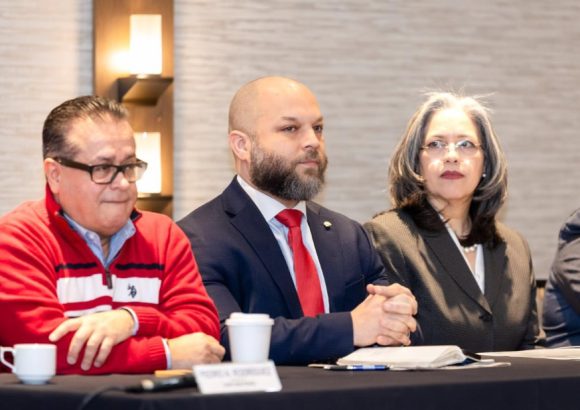
    Expanding on the nation’s ongoing work to adapt to modern trafficking threats, Vice Minister for Consular and Migration Affairs Opinio Díaz outlined new expanded initiatives targeting the rise of cyber-facilitated trafficking. These efforts include the launch of a permanent Cybercrime Roundtable to coordinate cross-agency responses, the establishment of a specialized Cybercrime Unit with dedicated training and resources, and a targeted collaborative project with the International Organization for Migration to reinforce technology-driven prevention strategies and investigative capacity.

  • Geologist urges regional disaster response and seismic risk mapping in Dominican Republic

    Geologist urges regional disaster response and seismic risk mapping in Dominican Republic

    Leading Dominican geologist Osiris de León has launched a call for a comprehensive restructuring of the Dominican Republic’s national disaster readiness system, arguing that the current centralized model fails to deliver the rapid response needed to save lives during catastrophic events. Speaking on the popular current affairs program *Aquí Hablamos Claro*, de León laid out a clear alternative blueprint that prioritizes three core pillars: updated, localized land-use planning, granular seismic risk mapping, and decentralized regional emergency response units.

    Under de León’s proposed framework, specialized multidisciplinary response teams would be permanently stationed across four key regions: the country’s eastern corridor, the broader Santo Domingo metropolitan area, the Cibao region in the north, and the northern Atlantic coastline. The geologist emphasized that the first minutes following a disaster are the most critical for rescuing survivors, and waiting for authorization from a single central leadership body creates dangerous delays that can turn avoidable fatalities into a tragedy. Disasters ranging from powerful earthquakes and destructive hurricanes to seasonal flooding and sudden building collapses require on-the-ground decision-making that only localized teams can provide, he argued.

    A key component of de León’s proposal is a mandate for all local municipalities to adopt detailed geological risk maps tailored to their unique geographies. He highlighted that the broader Santo Domingo region alone hosts dozens of distinct soil types, each of which reacts very differently to seismic activity. One soil type may absorb seismic energy relatively well, while another can amplify shaking and increase the risk of structural collapse, even for a quake of moderate magnitude.

    De León also issued a sharp rebuke of current permitting practices, where many construction projects are routinely approved without conducting thorough assessments of local seismic hazards. He warned that applying a one-size-fits-all national building code across geologically diverse regions with wildly varying soil conditions dramatically increases the country’s vulnerability to deadly earthquake damage in future events, calling the current approach a ticking time bomb that must be addressed before it is too late.

  • Ministry of Culture reviews renovation progress at Fine Arts Schools and Manuel Rueda Hall

    Ministry of Culture reviews renovation progress at Fine Arts Schools and Manuel Rueda Hall

    In a progress inspection tour this week, Dominican Republic’s Culture Minister Roberto Ángel Salcedo visited the country’s national Schools of Fine Arts complex and the iconic Manuel Rueda Hall to check the status of ongoing renovation and maintenance projects designed to elevate the quality of the nation’s artistic education facilities.

    Accompanied by Marinela Sallent, the executive director of the Fine Arts system, Salcedo walked through all active work sites across the campus, which is located in Parque Iberoamérica. The portfolio of improvements being rolled out includes updated, energy-efficient lighting and cutting-edge technical equipment for the Manuel Rueda Hall, a key venue for performances and cultural events. Additionally, the project encompasses exterior and interior repainting across the entire complex, refreshed landscaping for public and student spaces, comprehensive general repairs to aging infrastructure, and full refurbishment of both academic classrooms and administrative office areas.

    Once completed, the upgrades will directly serve the complex’s four constituent schools: the School of Music, School of Dance, School of Visual Arts, and School of Performing Arts. By modernizing outdated facilities, the project will deliver a safer, more functional, and inspiring learning and working environment for thousands of current and future students, as well as for faculty and administrative staff across all programs.

    Minister Salcedo noted that project planners intentionally scheduled all construction and renovation work to take place during the institution’s annual vacation break, a strategic choice that limits disruptions to regular classes and campus operations. The renovation work, he explained, is not a standalone project but a core component of a broader, long-term strategy rolled out by the Ministry of Culture to modernize the country’s entire national cultural infrastructure and strengthen the quality of professional artistic training available to young Dominicans.

    Salcedo also used the tour to reaffirm the national government’s commitment to expanding this type of infrastructure rehabilitation to art education institutions across every region of the Dominican Republic. The rollout of these distributed projects is part of wider national efforts to strengthen cultural education across the country and decentralize access to high-quality arts training, bringing improved opportunities to aspiring artists outside the capital’s central cultural institutions.

  • NexGen mentorship programme graduates nine young men

    NexGen mentorship programme graduates nine young men

    A landmark graduation ceremony unfolded at Nassau’s Word of Truth Ministries this week, where nine young men between the ages of 14 and 19 crossed the stage to mark the end of a four-month intensive leadership and life skills development journey through the NexGen Young Men Mentorship Programme. As the fourth cohort of participants to complete the nation-focused initiative, these trainees built foundational capabilities over 10 skill-building workshops and two orientation sessions held between March and June 2024.

    The program’s curriculum was crafted to address gaps in youth preparation for adulthood, covering far more than standard academic learning. Workshop topics ranged from core professional competencies like leadership, communication, and financial literacy to practical life skills including etiquette, home maintenance, basic automotive care, and personal health and wellness. The curriculum is intentionally designed to equip participants for both long-term career success and active community engagement, aligning with the program’s core theme: “Serve Locally, Lead Globally, Building Character, Capacity, and Commitment to Country”.

    Founded by former Bahamian senator Ronald Duncombe, NexGen operates as an entirely nonpartisan initiative, open to young men from all political backgrounds with no party affiliation requirements for entry. Duncombe explained that every applicant undergoes a rigorous vetting interview to confirm their genuine commitment to personal growth before being accepted into the cohort. This selective process has cultivated a group of driven young people with clear, ambitious career goals spanning high-demand and public-facing fields, from neurosurgery and aviation to engineering, politics, and other areas of public service.

    Duncombe praised the cohort’s clarity of purpose, noting that unlike many teens their age who may be uncertain about their future paths, these graduates spoke with unwavering conviction about their intended careers. “I am so proud to say to you that we have some future leaders and future men coming in our country,” he shared in his address to attendees. The graduation event drew high-level government representation, including three sitting Bahamian Cabinet ministers: Fred Mitchell, Pia Glover-Rolle, and Keith Bell. Senator Clint Watson delivered official remarks on behalf of Prime Minister Philip Davis, reinforcing the government’s recognition of the program’s value for national youth development.

    During the ceremony, each graduate received a professional briefcase, a symbolic gift representing their readiness to enter professional spaces and pursue new opportunities. Duncombe urged the new graduates to prioritize three core principles as they move forward: protecting their personal reputations, building intentional professional and community relationships, and always showing up prepared for interviews, meetings, and unexpected opportunities that will shape their futures. He also highlighted the long-term impact of the program, noting that previous NexGen cohorts have gone on to build successful careers across a wide range of critical national sectors, including the Royal Bahamas Police Force, Royal Bahamas Defence Force, media and communications, accounting, professional sports, and aviation.

    In his remarks, Senator Watson emphasized that professional preparedness and presentation are only the first step to lasting success. He stressed that consistent character, intentional action, and reliable commitment to fulfilling responsibilities are far more critical to achieving long-term goals. Cabinet Minister Fred Mitchell centered his keynote address on a pressing public issue facing Caribbean youth: pervasive interpersonal violence among young men. He urged the graduates to reject cycles of conflict and make deliberate, forward-thinking choices that will allow them to build long, productive lives that contribute to their communities.

    Speaking on behalf of the 2024 graduating cohort, class representative Fisk Burrows Jr. reflected on the transformative impact of the program. He shared that the four-month journey had not only built critical practical skills but also strengthened the graduates’ overall confidence, fostered greater personal independence, and deepened their understanding of what ethical, effective leadership requires for community and national progress.

  • Mom questions police search after missing son found dead

    Mom questions police search after missing son found dead

    For Ingrid Francois, a rainy Sunday morning in July began like any other. When bad weather derailed her 27-year-old son Antonio Cartwright’s usual skateboard commute to his job, she offered him a ride, still with no idea that it would be the final time she would see him alive. Four days later, her worst fears were confirmed when Cartwright’s body was discovered hanging from a tree in dense brush near Hacio Point Close, in what authorities are investigating as a suspected suicide.

    The tragedy has sparked sharp questions from Francois about both law enforcement’s handling of her missing person report and the quality of mental health care her son received in the months before his death. Cartwright, a hardworking and ambitious painter with a side business planning event decorations, had received a formal schizophrenia diagnosis earlier in 2024. Just two days before he vanished, he attended a routine psychiatric appointment that left Francois deeply unsettled about the direction of his treatment.

    According to the official missing person filing, Cartwright was last spotted around 8:30 a.m. on July 19 at his workplace, CBS Bahamas, located in Southwest Plaza. His typical routine after work saw him clock out at 5:30 p.m. and make the 30-minute skateboard trip home. When he failed to arrive that evening and did not respond to repeated calls and texts, Francois knew something was wrong. She immediately filed a missing person report with local police, but walked away frustrated when officers told her the official search process would not begin for another 24 hours.

    “I told them he’d already been missing for 25 hours,” Francois said in an interview. “Y’all have to move faster than that.” Beyond the initial delay, Francois claims that law enforcement failed to follow through on critical information she provided that could have led to an earlier discovery of her son’s body. She told officers that Cartwright often spoke about the brush-lined track road where his body was eventually found, and explicitly urged them to search the dense vegetation along the route. But according to Francois, officers only drove past the area on Monday and never actually entered the bushes to conduct a thorough search.

    It was not until last Thursday that the search ended with the grim discovery: Cartwright’s nephew, part of a family search party that returned to the area after police called off their initial sweep, ventured into the brush and found the body. The young man remained on scene in a state of shock until other relatives called him out of the vegetation.

    To his mother, Cartwright was far more than a statistics on a missing person list or a name in a tragedy report. He was a driven, creative young man constantly chasing new opportunities to build a better life. A skilled commercial painter, he regularly took on high-risk jobs scaling the exterior walls of tall buildings to complete work — once sending his mother a photo taken from such a great height that pedestrians on the ground looked no bigger than ants.

    Never content to stick to one line of work, Cartwright was also building his own small business renting decorative lighting for parties and special events, choosing to carve out a niche separate from the more common balloon decoration ventures that dominate the local market. Just days before his disappearance, he asked his mother for a power drill to work on another new side project. But Francois said her son’s string of entrepreneurial ventures had hit a series of devastating setbacks in recent months, leaving him struggling to regain his financial footing.

    “He started to do a lot of different jobs and everything crumbled,” Francois said. “To get back on his feet, I think it was a struggle, and he probably didn’t want to face all of that.” Even after his schizophrenia diagnosis earlier this year, Cartwright remained determined to keep working and pursue his goals, a resilience his mother remembers fondly. It was the Friday before his disappearance that the family attended the troubling medical appointment, where providers discussed adjusting the frequency of Cartwright’s medication. Francois left the appointment deeply unhappy with the interaction, and says she plans to launch a private review of what transpired during the visit.

    “That session was not good and that’s something I’m going to look into because I didn’t like the session at all,” she said. She questioned why medical staff did not take more urgent action when Cartwright displayed signs of irrational speech during the appointment, noting that she left the meeting with a deep sense of unease that something bad would happen.

    That Sunday rain that led Francois to drive her son to work ended up giving the pair one last unexpected moment together. She fixed him breakfast before the drive, and as she dropped him off, she reminded him not to fill up on snacks before she made dinner that evening. “I said, ‘Antonio, don’t eat anything heavy. Mommy’s going to cook today,’” she recalled. “But this time, he didn’t say anything back.”

    Francois now sees that rainy morning as a final gift, giving her one last chance to care for her son before he died. She also views the way he left his skateboard, propped neatly against the family lawn, as a quiet farewell, a sign that he had found peace in his final moments. Even weeks after the tragedy, she says she still struggles to process what happened. “To this day, I still can’t believe it,” she said. “I feel like he could walk through the door, but I know he’s gone.”

  • PHA chief: ‘we will learn from tragedy’

    PHA chief: ‘we will learn from tragedy’

    A high-profile medical negligence case in the Bahamas has concluded without further legal challenge, after the nation’s Public Hospitals Authority (PHA) announced it would not appeal a Supreme Court ruling that found a public hospital’s 27-minute gap in foetal monitoring directly caused the death of a newborn baby in 2022.

    In his findings, Acting Justice Raynard Rigby, KC, determined that staff at Princess Margaret Hospital (PMH) and lead consultant obstetrician Dr Agatha Foulkes-Mackey failed to uphold the required standard of care when treating expectant mother Widline Guillaume. While awaiting an emergency caesarean section in a corridor outside the operating room between 4:10 a.m. and 4:37 a.m., Guillaume’s unborn daughter, who had already been diagnosed with foetal distress, was left completely unmonitored. Justice Rigby confirmed that the 27-minute lapse in monitoring cut off the baby’s oxygen supply, leading to fatal brain injury. The newborn, named Elizabeth Lundy, died just two hours after her birth on August 2, 2022.

    The judge rejected the defense’s core argument that Elizabeth’s death was caused by an undiagnosed congenital heart condition, instead siding with expert testimony that attributed the death to perinatal asphyxia resulting from oxygen deprivation. He also clarified that there was no unreasonable delay in the decision to perform an emergency caesarean or in executing the procedure once approved. The negligence, he ruled, stemmed entirely from the gap in monitoring while Guillaume waited for the results of a mandatory pre-surgery COVID-19 test. No medical staff could provide evidence of the unborn baby’s condition during that 27-minute waiting period, despite clear clinical guidelines requiring continuous monitoring after foetal distress is detected.

    In addition to the finding of negligence, Justice Rigby levied sharp criticism at multiple procedural failures during the defense’s case. He highlighted the absence of medical records detailing Elizabeth’s care immediately after birth, the decision not to conduct a post-mortem autopsy to clarify the cause of death, and the failure to call multiple key medical witnesses to testify. He also noted that PMH never produced its official COVID-19 testing protocols during the trial, even though the testing requirement was the direct reason for Guillaume’s pre-surgery wait. The judge ordered that final compensation damages for Guillaume be assessed by the Supreme Court Registrar, and ruled that the PHA must cover Guillaume’s legal fees if the two sides cannot reach a mutual agreement on total damages.

    In the days following the ruling, PHA Managing Director Aubynette Rolle, herself an attorney, confirmed the authority would not challenge either the court’s finding of negligence or the eventual damage award. Rolle explained that the PHA had no interest in extending the legal process or forcing Guillaume’s family to relive the trauma of losing their child, a statement echoed by Health and Wellness Minister Dr Michael Darville, who extended formal condolences to the family on behalf of the government and public health system.

    Both Rolle and Darville emphasized that the case will serve as a critical turning point to improve care standards across the nation’s public hospital system. Rolle said the PHA will use the ruling to review and strengthen adherence to existing clinical policies and procedures, identify gaps where standards need to be raised, and expand targeted training for medical staff to prevent similar tragedies. Darville noted that medical malpractice incidents occur in hospitals across every country, and each case offers a key opportunity for systemic learning. He added that the PHA had already begun implementing service delivery improvements across all antenatal care and hospital-wide services well before the case concluded, with a focus on full transparency when adverse events occur. “We need to make sure things like this do not happen at our hospitals,” Darville said, “And once they do happen, for us to be completely transparent in the process.”

  • BPL employee electrocuted working on Grand Cay pole

    BPL employee electrocuted working on Grand Cay pole

    A devastating workplace accident has shaken the tight-knit community of Grand Cay in the Bahamas, where a 35-year-old Bahamas Power and Light (BPL) employee and small business owner died from electrocution while on the job Tuesday evening.

    Lawrence Cooper, who had served BPL for more than five years and ran his own ferry service on the island, was performing maintenance on a high-voltage utility pole shortly before 9 p.m. when the incident occurred. First responders rushed the injured worker to Grand Cay’s local clinic, but he was pronounced dead just an hour after arriving at the facility.

    The sudden loss has left Cooper’s family and neighbors reeling, with his uncle Maxwell Cooper describing the tragedy as an unexpected blow. Maxwell, who raised Lawrence and taught him most of his technical skills while the pair lived in the same family compound for years, spoke to local outlet The Tribune while waiting to transport his nephew’s remains off the island. “Everybody liked him. The whole community liked him. He was a nice boy. He liked boats,” Maxwell shared, noting that the entire community is struggling to process the sudden passing.

    In an official statement released the day after the incident, BPL confirmed that formal investigations into the fatal accident are already underway, and offered its full condolences to Cooper’s family, friends, and colleagues. The utility company added that it is prioritizing support for affected staff and will release further details as the investigation progresses. Energy Minister JoBeth Coleby-Davis also announced that BPL CEO Toni Pratt will lead an official delegation to Abaco to meet with on-island staff and coordinate support for the team in Grand Cay. “We remain deeply grateful to BPL’s teams for continued dedication to restoring electricity for consumers. However, this tragedy serves as a reminder that the safety and security of our employees must remain our highest priority,” the minister said.

    Kirk Cornish, the Member of Parliament for North Abaco, echoed the national mood of mourning, remembering Cooper as a deeply dedicated public servant. “This tragedy was a solemn reminder of the risks faced by the men and women who work daily to keep the country’s electricity system running,” Cornish said. “As we mourn this heartbreaking loss, let us keep his family and all who knew and loved him in our thoughts and prayers.”

    Cooper’s death marks the second fatal electrocution in the Bahamas in the span of just one month, and it comes amid a growing string of deadly workplace accidents across the country that have reignited widespread public concern over national industrial safety standards. Just one week prior to the Grand Cay incident, 68-year-old painter and contractor John Walkes was killed by electrocution while working at the Bimini Blue Water Marina, when he made accidental contact with energized high-voltage equipment.

  • PHA buys Harborside clinic for $29m to expand capacity

    PHA buys Harborside clinic for $29m to expand capacity

    In a landmark public-private collaboration aimed at transforming healthcare access in The Bahamas, the Public Hospitals Authority (PHA) has completed a $29 million purchase of Doctors Hospital’s Harborside medical facility, marking a key milestone in the government’s national healthcare redevelopment strategy.

    The deal adds 46 private inpatient beds to the country’s public healthcare system, and the multi-purpose site is designed to deliver a wide range of critical services, including urgent care, advanced diagnostic testing, full-service laboratory work, emergency dialysis, rehabilitation therapy, on-site pharmacy services, and clinical training for future healthcare professionals. A core goal of the acquisition is to ease overwhelming pressure on the emergency department of Princess Margaret Hospital (PMH), the nation’s main public tertiary care facility, by diverting non-life-threatening urgent care patients to the new site.

    Health and Wellness Minister Dr. Michael Darville told reporters following the official handover that the facility will begin operations as a dedicated urgent care center in the short term, with full integration into the PHA system scheduled after major renovations and the installation of new diagnostic and laboratory infrastructure. The initial upgrade work to ready the site for urgent care services carries an estimated price tag of $215,000, and the government has already awarded a contract for all necessary renovations to Inline Project Company. Construction work is on track to kick off as early as next week, according to official timelines.

    “We purchased this property from Doctors Hospital for approximately $29 million,” Darville confirmed. “We signed the contract with Inline Project Company today. Renovations and upgrades to a portion of the facility will align it with the long-term vision laid out by the Ministry of Health and Wellness and the Public Hospitals Authority.”

    Once fully operational, the site will not only expand service access for residents but also create new training opportunities for nurses, physicians, and allied healthcare workers across The Bahamas, addressing a critical gap in clinical professional development.

    PMH Managing Director Aubynette Rolle emphasized that diverting urgent care patients away from PMH’s overstretched emergency department will allow the hospital’s care teams to treat patients with life-threatening conditions more efficiently and reduce wait times for all patients. She framed the acquisition as clear evidence of the national government’s commitment to upgrading public healthcare infrastructure and ensuring all facilities can deliver safe, high-quality patient care. The official handover ceremony to transfer ownership of the facility from Doctors Hospital to PHA was held on Wednesday.

    Darville noted that the Harborside purchase is one component of a broader government initiative to redevelop the national healthcare system, which includes plans to build new hospitals and community clinics, as well as upgrade aging infrastructure at existing public facilities. The new site will directly help address long-standing operational challenges at PMH, he added, while serving as a model for how strategic public-private partnerships can rapidly expand national healthcare capacity.

    Charles Diggis, chief executive officer of Doctors Hospital, noted that the transfer extends a decades-long collaborative relationship between the private hospital network and the Bahamian government. Discussions around the Harborside property first began more than 10 years ago, and Doctors Hospital purchased the site in 2017 with the goal of expanding regional healthcare access. Transferring ownership to PHA, Diggis explained, reflects the private hospital’s long-standing commitment to working alongside government to expand affordable, accessible healthcare for all Bahamian residents.

    Diggis reaffirmed Doctors Hospital’s commitment to supporting future healthcare development and innovation across the country, emphasizing that coordinated public-private cooperation is an essential tool for improving health outcomes and service access for the Bahamian public. A full opening for all services at the redeveloped Harborside facility is expected once all renovations and upgrades are finalized.

  • DIGESETT urges alternate routes after truck accident on Kennedy Avenue

    DIGESETT urges alternate routes after truck accident on Kennedy Avenue

    Early Thursday morning, a traffic incident brought gridlock to one of Santo Domingo’s busiest urban intersections, after a semi-trailer hauling construction materials flipped at the crossing of John F. Kennedy Avenue and Núñez de Cáceres. The crash caused the vehicle’s full cargo load to spill across multiple lanes of the roadway, immediately halting through traffic and creating long backups for commuters across the capital city.

    Following the overturn, westbound movement along John F. Kennedy Avenue was completely blocked by the crashed vehicle and scattered construction debris, most of which consisted of loose wooden building materials. In response to the emergency, the General Directorate of Traffic Safety and Land Transportation (DIGESETT) quickly issued public alerts urging motorists traveling through the area to re-route their trips. The agency specifically advised drivers moving between the west and east sides of the city to avoid the affected corridor entirely and use alternative side streets or major arteries until cleanup operations were complete.

    As of the latest update from local authorities, no people have been injured and no fatalities have been recorded connected to the incident. Cleanup crews remain on site working to clear the spilled materials, remove the damaged semi-trailer, and restore full traffic flow to the busy intersection.