博客

  • BWU head stresses job security, fair treatment in public service

    BWU head stresses job security, fair treatment in public service

    During a parliamentary session on Tuesday, Barbados government backbencher Toni Moore delivered a critical assessment of the nation’s public service compensation system, acknowledging governmental progress while highlighting persistent administrative failures affecting contracted workers. The St George North MP, who also serves as general secretary of the Barbados Workers Union, characterized these issues as creating widespread discontent within the public sector.

    Moore recognized the current administration’s advancements compared to what she described as “nine years of zero movement” under previous leadership. However, she emphasized that fundamental problems continue to plague the system, particularly regarding delayed payments for acting positions, temporary appointments, and other entitled compensations.

    The parliamentarian illustrated the systemic nature of these failures by recounting specific instances where contractual employees experienced payment disruptions due to inter-ministerial oversights. “These are situations that are not acceptable,” Moore stated, “and they are situations in which the people who are responsible should be held accountable.”

    Moore joined opposition leader Ralph Thorne in criticizing the excessive reliance on contractual arrangements for positions that clearly require permanent staffing. She referenced approximately 720 workers who have remained on service contracts for over five years despite performing essential ongoing functions. This practice, initially justified during Barbados’ IMF program, now requires urgent reconsideration according to the MP.

    The legislator detailed how this contractual instability creates cascading consequences, denying workers job security, access to credit facilities, and proper national insurance coverage. She particularly emphasized how financial institutions hesitate to extend loans to workers without guaranteed income streams, creating additional financial hardships during periods like Christmas.

    Moore further warned that these practices undermine the sustainability of Barbados’ National Insurance system, potentially jeopardizing retirement security for thousands of workers. She questioned how the system could remain viable while excluding contractual workers from proper coverage.

    The MP concluded by expressing hope for prompt resolution of these issues, emphasizing that the current situation fails both workers and the national interest.

  • PM Briceño Eyes Breakthrough in Sugar Negotiations

    PM Briceño Eyes Breakthrough in Sugar Negotiations

    Prime Minister John Briceño has expressed cautious optimism regarding the resolution of ongoing negotiations between cane farmers and Belize Sugar Industries (BSI), despite the absence of a finalized commercial agreement. The delayed sugar crop season approaches amid mounting concerns over labor shortages and escalating production costs that threaten the industry’s stability.

    In an exclusive statement, PM Briceño revealed that while substantive progress has been made, both parties remain engaged in determining the duration of the agreement. The Belize Sugar Cane Farmers Association (BSCFA) has advocated for a seven-year contract term, while BSI prefers a shorter commitment period. The Prime Minister emphasized the presence of ‘goodwill on both sides’ to reach a mutually beneficial arrangement that serves farmers, millers, and the national economy.

    A critical challenge identified involves the acute shortage of manual labor, exacerbated by bureaucratic delays in work permit approvals rather than increased charges. Briceño acknowledged that government ministries require improved efficiency in processing labor applications to address immediate harvesting needs.

    Looking beyond immediate negotiations, the Prime Minister outlined a comprehensive modernization strategy derived from recent commission of inquiry recommendations. This includes transitioning toward mechanized harvesting, introducing new fungus-resistant cane varieties, and implementing advanced agricultural techniques. These long-term solutions aim to create gradient fields that facilitate water runoff during rainfall, ultimately enhancing operational efficiency and profitability across the industry.

    The government has committed to facilitating financial support for farmers to undertake replanting initiatives and adopt technological innovations. This holistic approach seeks to transform Belize’s sugar sector into a more resilient, productive, and competitive industry capable of withstanding environmental and economic pressures.

  • PM Briceño Eyes Transparency Law After Budna Investigation Fallout

    PM Briceño Eyes Transparency Law After Budna Investigation Fallout

    In response to mounting public criticism over the mishandled investigation into Joseph Budna’s abduction case, the Belizean government under Prime Minister John Briceño is advancing legislative measures to enhance governmental accountability. Cabinet-level deliberations have focused on establishing an independent investigative mechanism, drawing inspiration from successful Caribbean models, with Jamaica’s system receiving particular attention.

    Prime Minister Briceño emphasized the administration’s commitment to developing a transparency framework that avoids political weaponization. “We’ve conducted extensive Cabinet discussions recognizing the need to examine effective Caribbean models rather than exclusively American approaches,” Briceño stated. “While many Belizeans are familiar with American television portrayals of law enforcement, we’re particularly interested in Jamaica’s successful implementation of independent oversight.”

    The proposed legislation aims to create safeguards preventing current and future governments from exploiting the investigative process for political targeting. Briceño reiterated this critical balance, noting that the system must maintain independence while preventing partisan manipulation against political opponents. The initiative represents a direct response to the Budna investigation fallout, which exposed significant deficiencies in current accountability mechanisms.

    This policy shift signals the administration’s attempt to restore public confidence through institutional reforms rather than temporary measures, potentially establishing new standards for governmental transparency in Belize’s political landscape.

  • Captain Soberanis Named Acting Coast Guard Commandant

    Captain Soberanis Named Acting Coast Guard Commandant

    In a significant leadership transition within Belize’s national security apparatus, Captain Gregory Soberanis has been designated as the Acting Commandant of the Belize Coast Guard. This interim appointment follows the reassignment of Rear Admiral Elton Bennett, the former Commandant, who has been elevated to the position of Chief Executive Officer within the Ministry of Home Affairs and Enterprise.

    The Ministry of National Defense and Border Security formally announced the strategic personnel shift this week, emphasizing its commitment to maintaining operational continuity. Captain Soberanis, who previously served as Vice Commandant, will helm the coast guard’s operations pending a formal confirmation process by Prime Minister John Briceño’s administration.

    Government officials expressed unequivocal confidence in Captain Soberanis’s capabilities to ensure both stability and effectiveness during this transitional phase. The ministry’s statement highlighted the critical nature of seamless leadership changes within institutions fundamental to Belize’s maritime security and border protection framework. This development represents the latest in a series of strategic appointments aimed at strengthening national security governance under the current administration.

  • U.S. Air Force establishes temporary air base at Las Américas International Airport

    U.S. Air Force establishes temporary air base at Las Américas International Airport

    In a strategic demonstration of rapid deployment capabilities, specialized units from the United States Air Force have successfully established a temporary air operations base at Las Américas International Airport (AILA) in Santo Domingo, Dominican Republic. The operation saw personnel from the 921st Contingency Response Squadron and the 621st Contingency Response Wing utilize runway 17-35 to create a functional airfield under contingency conditions.

    The 921st Contingency Response Squadron took the lead in conducting comprehensive assessments of the airport’s infrastructure, subsequently conditioning the facilities for immediate operational readiness. Their expertise in rapidly activating airfields in challenging environments enabled the seamless arrival and deployment of military aircraft, personnel, and essential cargo.

    Complementing these efforts, the 621st Contingency Response Wing provided integrated operational support encompassing multiple critical domains. Their contributions included meteorological services, perimeter security protocols, logistical coordination, and specialized air traffic control operations. This multi-faceted support framework ensured the safe and efficient functioning of the temporary installation throughout the duration of the operation.

    These specialized units represent the Air Force’s premier rapid response teams, specifically trained and equipped to establish operational airfields in austere or potentially hostile environments where existing infrastructure may be compromised or nonexistent. The successful execution at AILA demonstrates the continuing evolution of military contingency response capabilities in the Caribbean region.

  • Historic Swing Bridge Secures $28M Upgrade Thanks to Japan

    Historic Swing Bridge Secures $28M Upgrade Thanks to Japan

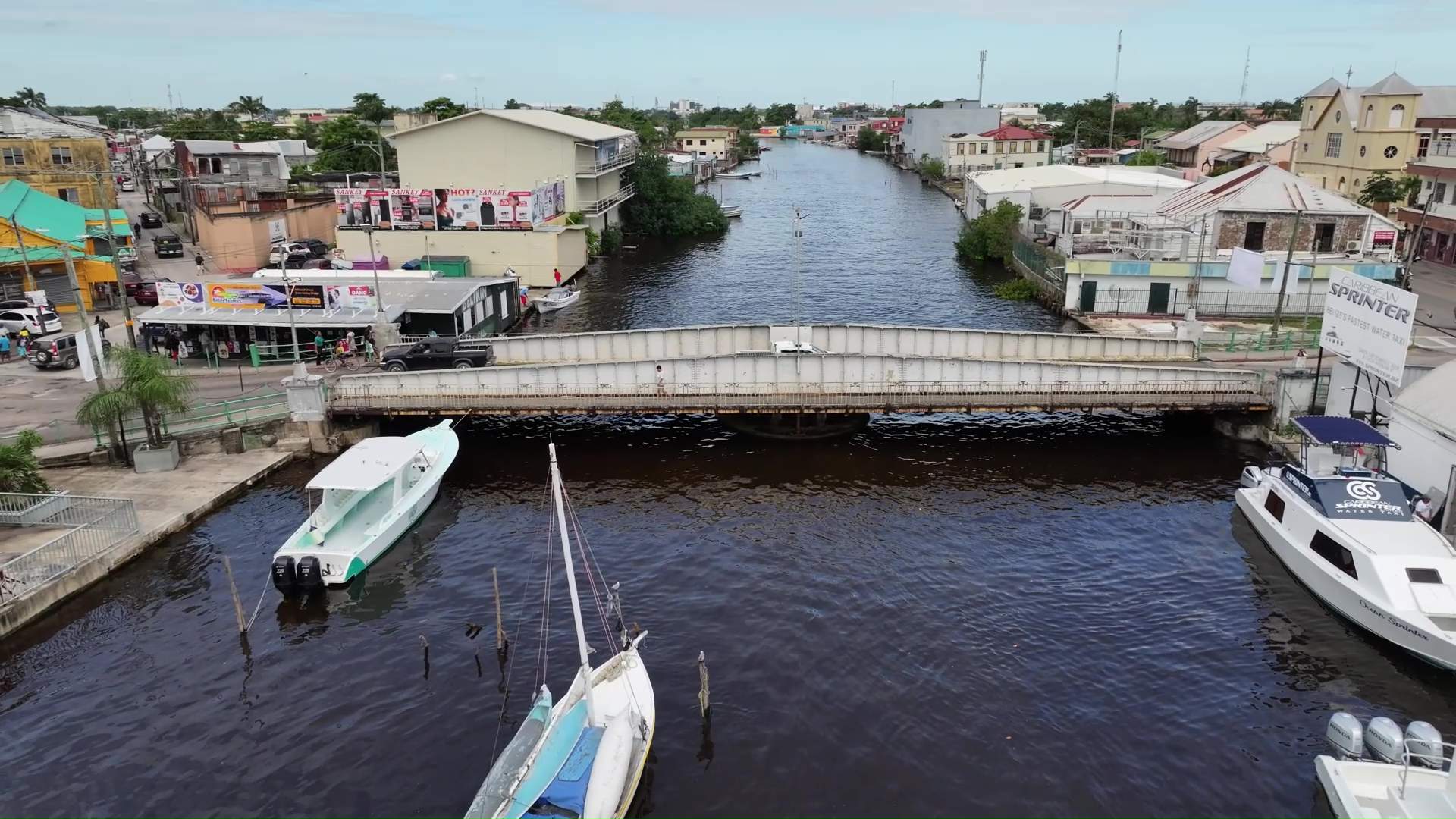
    In a significant bilateral development, the Governments of Japan and Belize have formalized a $28 million Belize dollar agreement to reconstruct the iconic Belize City Swing Bridge—the last manually operated swing bridge in Central America. The funding, provided through Japan International Cooperation Agency (JICA), marks a major milestone in cultural preservation and climate-resilient infrastructure development.

    The ceremonial signing occurred in Belize City with Japanese Ambassador H.E. Kenichiro Tanaka and Belize’s Foreign Minister Francis Fonseca exchanging notes, while Prime Minister John Briceño signed alongside JICA’s Chief Representative Hiromi Nai. The project represents one of the most substantial preservation investments in Belize’s recent history, targeting a structure originally installed in 1923 that has become both functional infrastructure and cultural artifact.

    Prime Minister Briceño emphasized the project’s dual significance: “We are preserving a rich cultural relic while anticipating the harsh realities of construction in a flood-prone area. Although the new bridge won’t mechanically swing, its identity remains intact—connecting our past with future priorities of public safety, economic continuity, and climate resilience.”

    Infrastructure Minister Julius Espat contextualized the bridge within the broader George Price Rehabilitation Project, noting that planning began immediately after the current administration took office in 2021. The Swing Bridge constitutes the fourth segment of this comprehensive infrastructure initiative.

    JICA’s regional representative Hiromi Nai, operating from El Salvador, highlighted the project’s alignment with Japan’s development priorities: “This grant agreement commemorates JICA Belize’s 26th anniversary while advancing our focus on climate resilience. Our commitment extends beyond infrastructure to human resource development and agricultural industry promotion.”

    Belize City Mayor Bernard Wagner celebrated the agreement as “the convergence of vision, partnership, and political will,” describing the bridge as “the beating heart of downtown Belize City” that connects both geographic communities and historical eras. During the anticipated two-year construction period, traffic will be rerouted via a temporary bridge at Hyde’s Lane and North Front Street.

    The project represents a sophisticated balance between historical preservation and modern engineering, ensuring this symbol of national pride will continue serving Belizeans for generations while withstanding environmental challenges.

  • Politic : Towards a strong and forward-looking Haitian diplomacy

    Politic : Towards a strong and forward-looking Haitian diplomacy

    PORT-AU-PRINCE, Haiti – In a landmark gathering at the Kinam Hotel on December 17, 2025, Haiti’s top leadership convened the nation’s entire diplomatic corps for a transformative conference aimed at reshaping the country’s international engagement. Prime Minister Alix Didier Fils-Aimé inaugurated the two-day 4th Conference of Haitian Ambassadors, themed “Haitian Diplomacy Serving National Priorities,” which brought together the highest echelons of Haiti’s transitional government and foreign service.

    The high-level assembly featured Laurent Saint Cyr, President pro tempore and Coordinator of the Transitional Council, alongside Council Advisors Leslie Voltaire, Smith Augustin, and Régine Abraham. Foreign Minister Jean-Victor Harvel Jean-Baptiste joined government officials, state dignitaries, and the complete roster of Haitian ambassadors, chargés d’affaires, and consuls stationed abroad. Representatives from the diplomatic corps accredited to Haiti also participated in the strategic dialogue.

    This conference initiates a comprehensive 25-year strategic roadmap for Haiti’s foreign policy, seeking to enhance coordination between the central administration and overseas missions while modernizing operational standards across diplomatic posts. Prime Minister Fils-Aimé opened proceedings by acknowledging the challenging environment in which diplomats operate, recognizing their efforts to maintain Haiti’s international standing amid severe security, humanitarian, and political crises.

    The Prime Minister delivered a forceful address outlining his administration’s methodical approach to national security, declaring: “My government is acting methodically, courageously, and consistently. Security remains the cornerstone of our actions—the fundamental prerequisite for national survival and dignity. Without security, there can be no functional state, viable economy, genuine democracy, or human dignity. Armed gangs represent not social actors but enemies of the Republic.” He challenged diplomatic personnel to embrace an active, strategic approach centered on mutually beneficial international partnerships.

    Transitional Council Coordinator Laurent Saint-Cyr echoed these sentiments while emphasizing the critical need for collective mobilization. He issued an urgent appeal to ambassadors to vigorously defend national interests through strengthened alliances and sacrificial commitment. Saint-Cyr identified four paramount priorities: security restoration, credible elections, humanitarian response, and economic recovery. He explicitly called for diplomats who demonstrate active engagement rather than passive observance, emphasizing solidarity and mission-focused dedication to restoring Haitian confidence and dignity.

    Foreign Minister Jean-Baptiste reinforced the vision for a coherent, proactive diplomacy aligned with national priorities, highlighting specific objectives including enhanced mission management, improved international perception, and consolidated global presence. The conference agenda addressed additional critical themes such as immigration policy, diaspora integration, diplomatic service reform, youth engagement, and increased women’s leadership within foreign policy decision-making.

  • Instelling beheersraad centraal bij overleg over Waterkant

    Instelling beheersraad centraal bij overleg over Waterkant

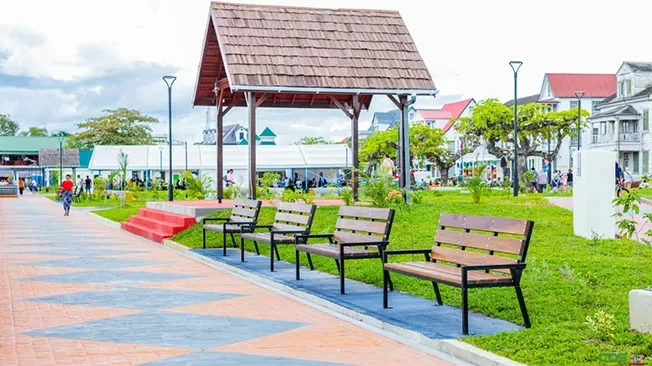
    Suriname’s Presidential Tourism Commission has initiated decisive action to address the deteriorating conditions at Waterkant, the capital’s prominent waterfront tourist area. During a recent stakeholder assembly, commissioners unanimously advocated for establishing a formal management authority to oversee the district’s rehabilitation and sustainable development.

    Commission Chair Rachel Pinas revealed that the organization has received numerous complaints regarding Waterkant’s declining state. Local residents, vendors, artisans, and business operators have reported widespread vandalism, inadequate waste management, insufficient lighting, and lack of security patrols throughout the area.

    The meeting highlighted how fragmented responsibilities among various agencies have hindered effective management. Minister Raymond Landveld of Transport, Communication, and Tourism has been formally requested to establish a Waterkant Management Council that will centralize oversight and coordination.

    This new governing body will serve as the central contact point for all stakeholders, coordinate between involved institutions, and develop unified policies for maintenance, security, and aesthetic enhancement. Pinas emphasized that such centralized authority is essential for preserving Waterkant’s tourism value and ensuring its sustainable protection. She expressed hope that the council could be operational before year’s end.

    Participants also agreed to organize a follow-up session with all involved parties to develop a comprehensive action plan. The commission chair appealed to the public to exercise greater care for the waterfront area, stating, “Let us be loving and good to our country.”

    The stakeholder meeting included representatives from multiple government entities including the Ministry of Transport, Communication and Tourism, SMS Pier, Public Green Spaces and Waste Management, the Paramaribo Middle District Commission, the Paramaribo Urban Rehabilitation Program, and local residents.

  • Belcan Bridge Project Advances; Bids Open January

    Belcan Bridge Project Advances; Bids Open January

    The protracted Belcan Bridge initiative in Belize has entered a new phase of development, with the bidding process scheduled to commence in January 2025. This critical infrastructure project has been officially restored under the jurisdiction of the Ministry of Infrastructure Development and Housing (MIDH) following what Minister Julius Espat characterizes as persistent and successful lobbying efforts.

    Minister Espat clarified the ministerial transition, emphasizing that the project’s relocation from Belize City Council oversight to MIDH control resulted from strategic advocacy rather than protest. “We call it lobbying,” Espat stated during press inquiries. “We are proud that MIDH is the ministry responsible for infrastructure. We have proven that with time. We have the capability, we have experience, we have working relationships with external partners.”

    The project, originally conceived in 2021 as an MIDH initiative, encountered complications during the City Council’s tenure as executing agency, including allegations of design plagiarism involving a Lebanese firm. Minister Espat confirmed that MIDH would revert to utilizing its original bridge design to circumvent ongoing copyright concerns, stating firmly: “I only defend the Belizean professional and I stand with that at all times.”

    When questioned about potential intergovernmental friction with city authorities, Espat dismissed such notions, noting that the Belize City Council remains appreciative of the infrastructure investment. “We started this from 2021. It was our initiative to look out for the city, and we started it from scratch. I don’t think they can be unhappy,” Espat remarked, emphasizing the dual benefit for both Belize City and the nation at large.

    The Minister acknowledged Prime Minister Dean Barrow’s ultimate authority in the jurisdictional decision, confirming that the project’s green light must originate from the executive level before MIDH can commence implementation.

  • Biggest Road Project Yet? $86M Upgrade from City to Hattieville

    Biggest Road Project Yet? $86M Upgrade from City to Hattieville

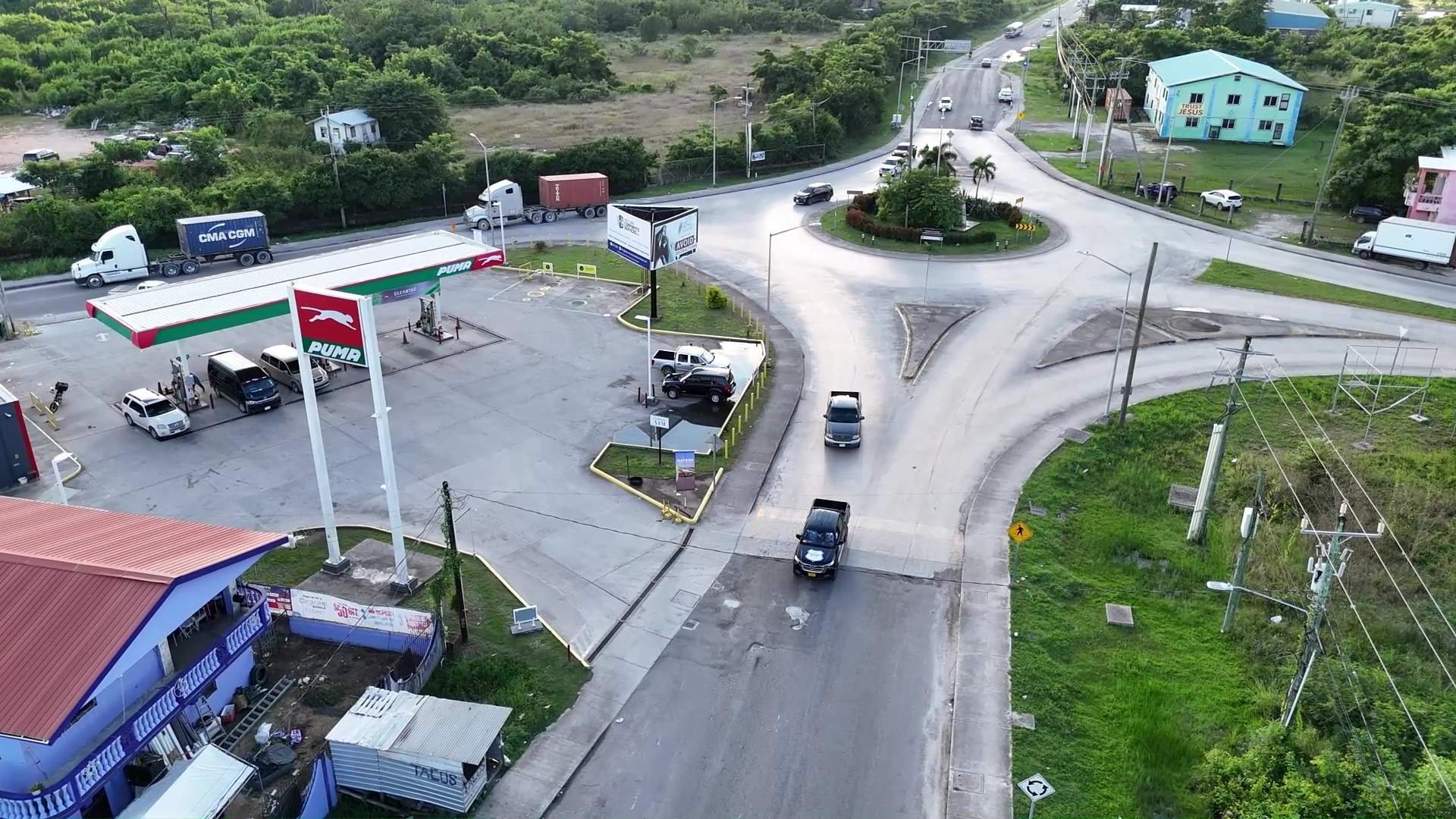
    The Belizean government has unveiled plans for a transformative infrastructure initiative: an $86 million comprehensive upgrade of the critical 25-kilometer roadway connecting Belize City to Hattieville. This ambitious project represents one of the most significant transportation investments in recent national history, targeting enhanced road safety, improved drainage systems, and structural reinforcement along this heavily trafficked commuter corridor.

    Financed through a collaborative funding model, the project secures $69 million via loan arrangements with the Caribbean Development Bank, supplemented by a $17 million contribution from the Government of Belize. Chief Engineer Evondale Moody of the Ministry of Infrastructure Development and Housing confirmed the project’s exceptional scale, acknowledging it may constitute the most expensive per-mile road construction endeavor in contemporary Belizean infrastructure development.

    Engineer Moody elaborated on the financial structure, clarifying that the Caribbean Development Bank loan encompasses not only primary construction costs but also incorporates provisions for ancillary social programs mandated under the loan agreement. The government’s allocation will primarily facilitate utility relocation and land acquisition procedures—essential components for project implementation.

    The procurement process is currently underway, with contractor bids scheduled for submission on January 21st. An independent consultant will conduct rigorous evaluation of all proposals before the ministry presents final recommendations to the Caribbean Development Bank for formal approval. This transparent bidding and evaluation framework aims to ensure optimal contractor selection for this nationally significant infrastructure enhancement.