博客

  • The youth of Latin America and the Caribbean deserve to have books in their hands, not just in display cases

    The youth of Latin America and the Caribbean deserve to have books in their hands, not just in display cases

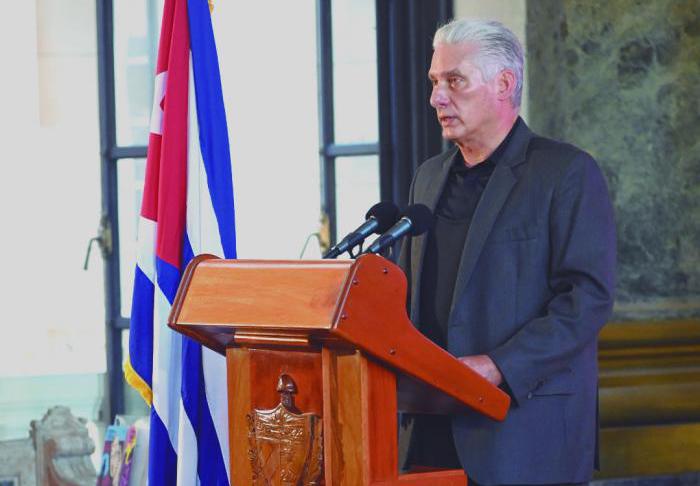
    In a significant cultural initiative bridging Latin American nations, Cuban President Miguel Díaz-Canel has officially launched “Project 25 for 25” from Havana’s National Capitol, simultaneously with Mexican President Claudia Sheinbaum’s parallel ceremony in Mexico City. The ambitious literacy project aims to distribute 25 classic Latin American books to young readers aged 15-30 across the region completely free of charge.

    The project, conceived by the Mexican government and coordinated through Cuba’s Casa de las Américas cultural institution, represents a strategic effort to combat the dominance of digital entertainment and social media among younger generations. President Díaz-Canel emphasized the initiative’s importance in preserving printed literature as a fundamental tool for knowledge acquisition and cultural preservation.

    The Cuban leader drew historical parallels to Fidel Castro’s revolutionary literacy campaigns, noting how Cuba’s first cultural institution established in 1959 was the National Printing House. Its inaugural publication was Cervantes’ “Don Quixote,” followed by educational materials for the nationwide Literacy Campaign that eliminated illiteracy within a year.

    The selected works include 20th century Latin American literary classics, with Gabriel García Márquez’s documentation of Cuba’s African engagements among the featured titles. Distribution will occur through educational institutions, cultural centers, and public reading spaces across participating countries, deliberately bypassing commercial channels to ensure accessibility regardless of economic barriers.

    President Díaz-Canel characterized the project as a “bridge of paper and ink” strengthening historical ties between Mexico and Cuba, nations that have shared centuries of cultural exchange and parallel revolutionary struggles. The initiative specifically targets youth who have never owned physical books by Latin American authors, providing tangible access to literary works that explore regional identity, historical memory, and social justice themes.

    The Cuban government has committed to integrating the collection into educational programs, reading workshops, and community discussion groups, framing literature as both a right and tool for critical thinking rather than merely academic obligation.

  • The foreign exchange market in Cuba is undergoing transformation

    The foreign exchange market in Cuba is undergoing transformation

    The Central Bank of Cuba has initiated a comprehensive transformation of its foreign exchange market with the implementation of a three-segment exchange rate system effective December 18, 2025. Under the leadership of President Juana Lilia Delgado Portal, the monetary authority has designed this gradual approach to address longstanding economic distortions while avoiding severe macroeconomic shocks.

    The new structure establishes two fixed exchange rates—Segment I operating at 1:24 and Segment II at 1:120—alongside a third segment featuring a daily floating rate determined by market forces. This multi-tiered system aims to bridge the gap between official rates and the real value reflecting Cuba’s foreign currency shortage while protecting essential transactions from sharp devaluation.

    Central Bank officials emphasized that immediate unification without transition could trigger excessive inflation and further erosion of the Cuban peso’s purchasing power. The strategy instead focuses on gradual correction of accumulated imbalances through controlled mechanisms that connect state and non-state economic actors in production, export, and marketing operations.

    The floating rate segment specifically targets increased foreign currency inflows by offering competitive prices to exporters and remittance senders. This approach intends to discourage informal market activities while creating incentives for export sector development and higher wage payments to skilled workers.

    Complementing these measures, the government will strengthen MLC accounts and guarantee operability of foreign currency transactions for non-state enterprises. The reforms form part of broader macroeconomic stabilization efforts aligned with Cuba’s socialist development objectives, prioritizing reduced inflation, currency convertibility, and economic growth.

    The Central Bank will publish daily exchange rates on its official website, with full regulatory details appearing in the Official Gazette. Additional information regarding implementation mechanisms will be released in coming days.

  • The point at which the chain of history was reassembled

    The point at which the chain of history was reassembled

    Beneath the overcast skies of December 1956, a pivotal moment in Cuban history unfolded within a remote clearing known as Cinco Palmas. Following the devastating ambush at Alegría de Pío and subsequent days of scattered retreat through Oriente’s sugarcane fields, Fidel Castro arrived not with a formidable army but with what would become the foundational core of revolutionary perseverance.

    At midnight, amidst Mongo Pérez’s palm-studded cane field, the sound of approaching footsteps signaled a long-awaited reunion. The Castro brothers—Fidel and Raúl—embraced with restrained emotion, their meeting charged with both the anguish of recent days and the ferocity of survival. From this historic encounter emerged a brief yet monumental exchange that would define their revolutionary trajectory.

    ‘How many rifles do you have?’ Fidel inquired. Raúl’s response came: ‘Five.’ With characteristic determination, Fidel declared, ‘And I have two, seven! Now we will win the war!’

    This statement represented far more than blind optimism—it constituted a strategic assessment that with this nucleus of moral fortitude, tactical intelligence, and mountainous terrain, achieving victory remained entirely possible. It embodied Fidel’s most crucial lesson: never surrender, even when confronting extreme adversity.

    The subsequent days validated this conviction as expeditionaries including Efigenio Ameijeiras and Ramiro Valdés joined the original group, soon followed by local campesinos who collectively formed the embryonic Rebel Army. By December 25, this strengthened contingent—now better armed and fortified with unwavering resolve—commenced its definitive advance into the Sierra Maestra.

    This moment exemplified the Cuban Revolution’s extraordinary capacity for regeneration. Cinco Palmas thus transcended its geographical significance to become the foundational moment of an enduring principle: victory awaits not perfect conditions but emerges through collective determination and unwavering will.

  • Lazard akkoord met ontbinden schuldherstructureringscontract

    Lazard akkoord met ontbinden schuldherstructureringscontract

    Suriname’s Ministry of Finance has formally dissolved its contentious debt restructuring agreement with financial advisory firm Lazard, marking the end of a five-year partnership that has cost the South American nation nearly $9.5 million. Finance Minister Adelien Wijnerman confirmed to Starnieuws that the termination follows mutual consent through official correspondence, though Suriname still owes approximately $3 million in outstanding fees to the New York-based investment bank.

    The original 2020 contract, amended in 2025, stipulated Lazard would receive a $120,000 monthly retainer fee plus a 0.25% success fee on restructured or swapped foreign government debt and state-guaranteed commercial obligations—covering both principal and interest portions. However, several contractual provisions remained unenforced, including requirements mandating Lazard’s involvement in all debt negotiation phases and payment of $109,000 for legal advisory services regarding the Value Recovery Instrument (VRI).

    The VRI—a debt financing mechanism that would have pledged future oil royalties to creditors in exchange for debt reduction—has been rendered obsolete by Suriname’s recent bond issuance that redeemed outstanding debts. Former government officials had promoted the VRI as potentially reducing Suriname’s debt by over $300 million, but financial experts condemned it as an oppressive agreement that would have indefinitely mortgaged the nation’s future oil revenues.

    Background reveals Lazard was selected through a 2020 tender process that included five prestigious firms: Moelis & Company, Morgan Stanley, Credit Suisse, Rothschild, and Lazard Frères. A special committee appointed by former Finance Minister Armand Achaibersingh chose Lazard for its low bid and global reputation, despite the controversial terms.

    Contract termination clauses allow either party to exit with thirty days’ notice, after which obligations cease except for specific provisions. The agreement also stipulates that if Suriname resumes debt management strategies within twelve months with previously involved parties, Lazard must be reengaged under identical terms. Minister Wijnerman assured that outstanding payments to Lazard will be settled, noting the firm—as a publicly traded company—must report client payment obligations to regulatory authorities.

  • Homicides In Saint Kitts And Nevis Falls Sharply As Public Health Approach To Crime Takes Hold – The St Kitts Nevis Observer

    Homicides In Saint Kitts And Nevis Falls Sharply As Public Health Approach To Crime Takes Hold – The St Kitts Nevis Observer

    The Federation of Saint Kitts and Nevis is witnessing a remarkable transformation in public safety, with official data revealing a dramatic 78% reduction in homicides during 2025. This significant achievement stems from the government’s pioneering implementation of a public health approach to crime prevention, which has fundamentally reshaped the nation’s security landscape.

    According to the Royal St. Christopher and Nevis Police Force, the current year has recorded only six homicides—a stark contrast to the 28 cases documented throughout 2024. This impressive decline positions the small Caribbean nation favorably against larger Western Hemisphere counterparts in terms of violent crime reduction. Law enforcement authorities have additionally confiscated 20 illegal firearms this year, while overall reported crime decreased by 11% at the end of 2024 compared to the previous year.

    Prime Minister and Minister of National Security, Dr. Terrance Drew, celebrated these developments during his recent Budget Address on December 16, 2025. He reflected on the nation’s progress from once being labeled ‘the murder capital of the world’ to now achieving the most substantial homicide reduction in two decades. The Prime Minister emphasized that this turnaround demonstrates the effectiveness of collaborative governance and community engagement.

    The groundbreaking public health strategy addresses crime through scientific methodology, focusing on underlying social determinants including poverty, unemployment, mental health challenges, and educational disparities. This holistic framework encourages society-wide participation and promotes proactive solutions rather than purely reactive measures.

    Central to this success is the Elevate program, which has provided former gang members and at-risk individuals with practical opportunities to develop skills, secure employment, or launch businesses. Prime Minister Drew highlighted that these initiatives have transformed previous offenders into productive economic contributors, while maintaining that sustainable peace requires continued collective effort without resorting to corrupt practices.

    The national security leader extended gratitude to security personnel for their dedicated service and acknowledged citizens for their ongoing participation in crime reduction efforts, underscoring that community involvement remains essential to maintaining this positive trajectory.

  • Cancer Society warns screening rates remain dangerously low

    Cancer Society warns screening rates remain dangerously low

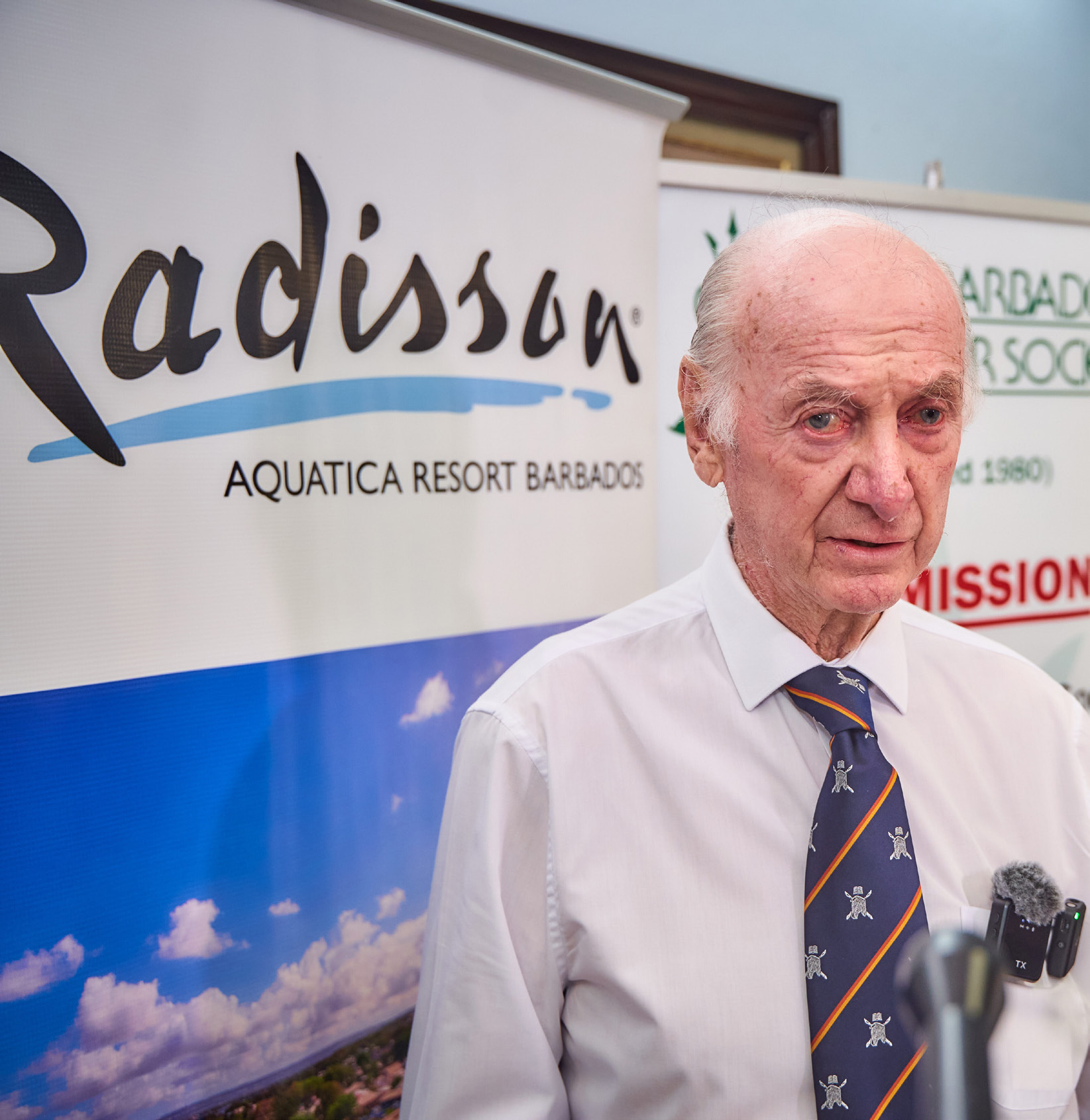
    Barbados has entered a new era of cancer treatment with the installation of a state-of-the-art linear accelerator at Queen Elizabeth Hospital, though health advocates caution that technological progress alone cannot overcome systemic screening deficiencies. Professor David Rosin, President of the Barbados Cancer Society, characterized the $10 million radiotherapy equipment as a transformative advancement that finally brings the nation’s radiation therapy capabilities to international standards.

    The newly implemented linear accelerator represents a significant technological leap from previous cobalt radiation methods, utilizing high-energy radiation to precisely target malignant cells while minimizing collateral damage to healthy tissue. This precision technology requires specialized operational expertise, prompting the hospital to bring in international experts to train local radiologists in its sophisticated operation.

    Professor Rosin emphasized the paradoxical challenge facing Barbados’ healthcare system: “While this equipment represents a monumental improvement in treatment capabilities, its impact will remain limited without addressing critical screening shortcomings, particularly among male patients.” He expressed particular frustration with low screening participation rates, noting that early detection remains the most crucial factor in successful cancer outcomes.

    Statistical evidence indicates approximately 70% of cancers become curable when identified at initial stages, potentially avoiding aggressive interventions like surgery, chemotherapy, or radiotherapy. Genetic factors contribute significantly to cancer risk, with about 20% of cases attributable to hereditary predisposition—making family history an important screening consideration.

    Barbados’ cancer epidemiology reveals prostate cancer as the most prevalent malignancy, despite men constituting only half the population. Colorectal cancer ranks second, followed closely by breast cancer. All three demonstrate high treatability rates with early detection.

    The Cancer Society continues supporting healthcare advancements through fundraising initiatives, recently concluding a raffle that awarded $25,000 to first prize winner Rebekuh Wood. Additional prizes included luxury hotel stays for runners-up Andrew King and Christina Johnson, reflecting ongoing community support for cancer care modernization.

  • APORDOM marks 55th anniversary with historic growth of Dominican ports

    APORDOM marks 55th anniversary with historic growth of Dominican ports

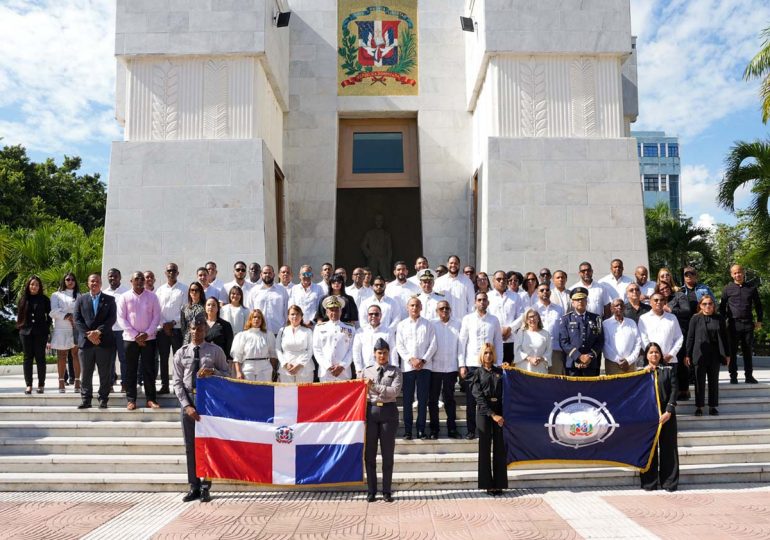
    The Dominican Port Authority (APORDOM) has unveiled transformative achievements in port infrastructure and institutional reform during its 55th anniversary celebrations, marking the most significant modernization of the national port system in over half a century. Under the strategic direction of Jean Luis Rodríguez since 2020, the authority has implemented comprehensive structural reforms that have dramatically enhanced port competitiveness while revitalizing coastal communities through substantial public and private investments.

    Substantial infrastructure investments exceeding US$531 million have been strategically allocated across key terminals including Puerto Plata, Barahona, Arroyo Barril in Samaná, Cabo Rojo in Pedernales, Manzanillo, Azua, and the pioneering green port development at Puerto Duarte. The cruise sector has experienced remarkable growth, with terminal capacity expanding from three to five facilities. Passenger projections indicate dramatic growth from 1.13 million visitors in 2019 to an anticipated 2.6 million by the conclusion of 2025. Taíno Bay in Puerto Plata exemplifies this success, welcoming over 800,000 cruise passengers in 2024 alone while generating substantial employment opportunities and stimulating local economic development.

    Logistics capabilities are undergoing parallel expansion, with Haina and Caucedo terminals preparing for additional US$300 million in investments that will elevate container handling capacity toward 3 million TEUs. This strategic development solidifies the nation’s position as the Caribbean’s premier logistics hub.

    Concurrent financial reforms have yielded extraordinary results, with APORDOM reducing labor liabilities from RD$1.3 billion to RD$120 million while simultaneously increasing monthly revenues and generating annual surpluses approaching RD$250 million. The institution has made significant progress in land regularization with over 60% of port territories now legally titled. International recognition from the Organization of American States, coupled with advanced development of the Santo Domingo Cruise Megaport, positions the Dominican Republic to achieve regional leadership in port operations, cruise tourism, and maritime logistics by 2026.

  • TDC partners with Excess J’Ouvert Troupe for Sugar Mas 54

    TDC partners with Excess J’Ouvert Troupe for Sugar Mas 54

    In a strategic move to bolster cultural preservation, the St. Kitts Nevis Anguilla Trading and Development Company Limited (TDC) has formalized its sponsorship agreement with the Excess J’Ouvert Troupe for Sugar Mas 54 celebrations. The partnership was cemented during a ceremonial event at TDC’s Home and Building Depot on Frigate Bay Road on December 18, 2025.

    Ms. Jhanelle Brown, TDC’s Client Relations and Marketing Manager, presented the silver package sponsorship to Troupe Co-Founders Mr. Eustace Hobson Jr. and Mr. Danya Phillip. This collaboration marks the second consecutive year of TDC’s support for the carnival group, following their initial partnership in 2024.

    Brown emphasized the thematic synergy between the troupe’s ‘Road Work’ concept and TDC’s core business operations as a leading construction materials supplier. ‘Our support extends beyond financial assistance to encompass operational needs for creating exceptional entertainment experiences during Sugar Mas,’ Brown stated during the presentation.

    Hobson expressed profound appreciation for TDC’s continued investment in carnival arts, acknowledging the sponsorship as validation of the company’s dedication to local talent development and cultural authenticity. The corporate backing enables the troupe to enhance their artistic offerings while maintaining traditional carnival elements that define the Federation’s cultural identity.

    This sponsorship reflects TDC’s broader corporate philosophy of community engagement and cultural stewardship, demonstrating how private sector support can effectively preserve and evolve traditional celebrations while fostering creative innovation among carnival participants.

  • Convict’s application for leave to appeal adjourned until March

    Convict’s application for leave to appeal adjourned until March

    In a significant development within Barbados’ judicial system, the Court of Appeal has postponed convicted murderer Haniyfa Reza White’s leave to appeal application until March 2026, granting her legal team additional time to rectify procedural deficiencies in their submission.

    While White received her criminal sentence in a nearby courtroom, appellate proceedings encountered a temporary halt as Chief Justice The Most Honourable Leslie Haynes identified multiple substantive issues requiring resolution. The court demonstrated judicial flexibility by allowing White’s attorney, Lalu Hanuman, to reorganize the application framework and ensure proper documentation of all case filings.

    White seeks to challenge the Caribbean Court of Justice’s endorsement of the Court of Appeal’s May 13th ruling, which previously dismissed her attempt to stay criminal proceedings in the No. 5 Supreme Court. The defendant, represented by Hanuman, has pursued multiple legal avenues including constitutional motions arguing that extensive trial delays—dating back to the 2007 murder of Julene Bryan—have compromised her right to a fair hearing.

    Principal State Counsel Jared Richards represented the prosecution during these proceedings. The court has established a revised timeline requiring White’s legal team to file written submissions by February 13, 2026, with the state’s response due by February 27th. The case will reconvene on March 19, 2026.

    This development follows earlier judicial disagreements regarding trial continuity. Justice Corlita Babb-Schaefer previously recommended case dismissal due to constitutional violations, while Justice Pamela Beckles elected to proceed with trial proceedings—a decision upheld by the appellate court comprising Chief Justice Haynes and Justices Francis Belle and Jacqueline Cornelius-Thorne.

  • Own a Piece of Power: Hydro Belize Shares Go Public

    Own a Piece of Power: Hydro Belize Shares Go Public

    The Government of Belize has initiated a groundbreaking public share offering for Hydro Belize Limited, marking a significant milestone in national energy sector democratization. Starting December 18, 2025, Belizean citizens will have the unprecedented opportunity to acquire ownership stakes in the nation’s critical hydroelectric infrastructure, comprising the Mollejon, Chalillo, and Vaca power facilities along the Macal River.

    This transformative initiative follows the government’s recent acquisition of these assets from Canadian utility Fortis Inc. The offering presents 50% of Hydro Belize’s total shares exclusively to the Belizean public at $29 per share, representing a total valuation of $119 million. Prime Minister John Briceño emphasized this strategic move enhances national energy security while enabling citizens to participate directly in essential economic infrastructure.

    The initial 30-day offering period prioritizes individual investors, including teachers, military personnel, and ordinary citizens seeking investment opportunities. The remaining 50% government-held shares will subsequently become available to institutional investors, including the Social Security Board and credit unions, pending regulatory approval from the Financial Services Commission.

    Prime Minister Briceño characterized the offering as a deliberate wealth distribution mechanism, stating: ‘We want the Belizean public to benefit from these shares. This represents a conscious effort to democratize ownership of national assets while strengthening our energy independence.’ The tiered investment approach ensures primary access for individual citizens before expanding to institutional participants, creating a unique model of public-private asset management in the Caribbean region.