博客

  • Díaz Canel: “We are making history every day, right now”

    Díaz Canel: “We are making history every day, right now”

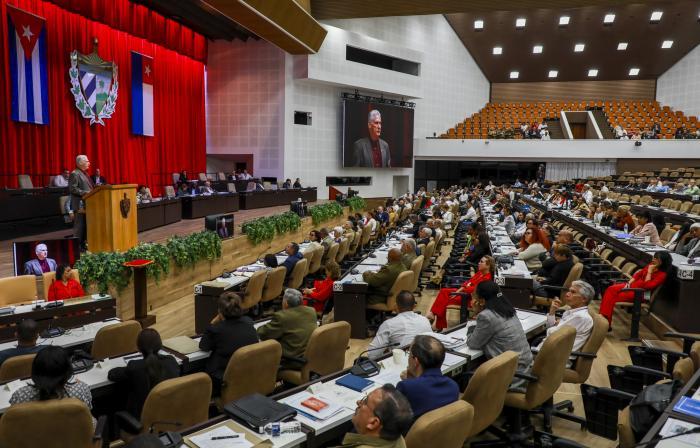
    In a comprehensive address concluding the Sixth Ordinary Session of Cuba’s National Assembly, President Miguel Díaz-Canel presented a stark assessment of the nation’s challenges while outlining a path forward through economic reforms and strengthened national unity. The President characterized Cuba’s current situation as an accumulation of structural distortions exacerbated by what he described as an “extremely aggressive external siege” from the United States.

    Díaz-Canel condemned U.S. foreign policy approaches, particularly what he termed the doctrine of “peace through strength,” which he argued represents imperialist ambitions threatening international law and regional stability. He specifically highlighted concerns about U.S. military presence in the Caribbean and threats against Venezuela, while reaffirming Cuba’s solidarity with the Bolivarian Republic.

    The address detailed several approved measures including the Economic Plan, National Budget, and a Government Program designed to correct economic distortions. The President emphasized that these initiatives are interconnected and essential for addressing both domestic challenges and regional threats. A significant focus was placed on the newly approved Science, Technology and Innovation Law, which aims to bridge the gap between research and production while fostering technological sovereignty.

    Economic reforms will prioritize food production through guaranteed inputs and incentives, accelerate investments in the national electricity system combining thermal plant repairs with renewable energy expansion, and regulate foreign currency allocation to favor import substitution sectors. The President called for drastic reduction in unproductive spending and greater territorial responsibility in revenue collection and resource management.

    Díaz-Canel acknowledged the postponement of the 9th Party Congress as a strategic decision to allow focus on economic recovery and implementation of necessary structural adjustments. He proposed designating 2026 as the “Year of the Centennial of Commander-in-Chief Fidel Castro Ruz” to inspire national unity and revolutionary commitment.

    The President concluded by emphasizing that solutions would require “concrete work, systematic control, and active popular participation,” asserting that “the task is complex, but the will of this people is invincible.”
  • Today’s complexity demands deeper, faster, and more responsible responses

    Today’s complexity demands deeper, faster, and more responsible responses

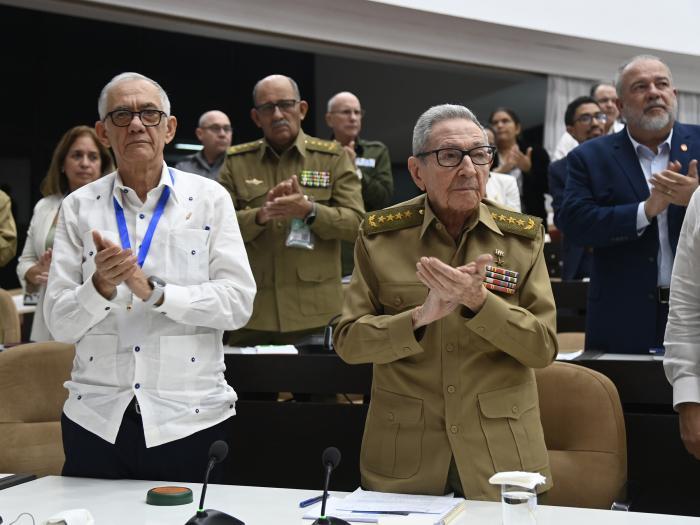
    Cuba’s National Assembly has officially declared 2026 as the “Year of the Centennial of Commander-in-Chief Fidel Castro Ruz” during its fifth regular session, attended by Revolutionary leader Army General Raúl Castro Ruz. The designation, proposed by President Miguel Díaz-Canel Bermúdez, comes as the Caribbean nation confronts severe economic challenges while maintaining its revolutionary legacy.

    President Díaz-Canel delivered a critical assessment of Cuba’s economic situation, describing it as “an accumulation of distortions, adversities, difficulties, and mistakes of our own, exacerbated by an extremely aggressive external blockade.” Despite these challenges, the President emphasized that resigned crisis management was unacceptable, calling instead for “greater creativity, greater discipline, greater control, and a relentless fight against bureaucracy, indolence, and corruption.”

    The parliamentary session resulted in significant legislative advancements, including approval of the 2026 Economic Plan and State Budget Law. Díaz-Canel characterized the economic strategy as “a plan of offensive and readjustment” rather than mere technical adjustments, describing it as “a revolutionary necessity to perfect socialism under construction, to make it more prosperous, sustainable, and fair.”

    A landmark achievement of the session was the passage of the General Law on Science, Technology, and Innovation. This comprehensive legislation introduces modern concepts to stimulate economic innovation through Technology-Based Companies (TBCs), High-Tech Companies (HTCs), science parks, and interface organizations. The law establishes tax incentives, financial benefits, and incubation systems for new enterprises, while creating a Science and Innovation Financial Fund supported by a 10% contribution from TBC profits.

    The assembly also witnessed significant leadership changes, including the election of José Luis Toledo Santander as secretary of the National Assembly, the appointment of Rosabel Gamón Verde as Minister of Justice, and the selection of Oscar Manuel Silvera Martínez as president of the People’s Supreme Court. Eight new deputies joined the assembly, expanding popular representation in Cuba’s highest state authority.

    President Díaz-Canel reiterated concerns about U.S. government hostility, highlighting “relentless economic aggression against Cuba” and similar pressures on Venezuela. He framed these actions as part of a broader regional doctrine seeking “to impose arbitrary will and domination through threats, coercion, and even direct aggression.”

    The session demonstrated Cuba’s dual commitment to honoring its revolutionary heritage while implementing structural reforms to address contemporary economic challenges, setting the stage for a transformative period leading to Fidel Castro’s centennial celebrations.

  • A separate currency market: a means or an end to stabilizing the economy?

    A separate currency market: a means or an end to stabilizing the economy?

    Cuba has launched a groundbreaking monetary reform initiative establishing three official exchange rate segments as part of a comprehensive strategy to address critical macroeconomic challenges. The Central Bank of Cuba confirmed the implementation of this multi-tier system designed to gradually converge toward a unified exchange rate while stimulating foreign currency earnings through exports.

    The newly structured framework creates distinct segments with varying exchange mechanisms: Segment I maintains the current 1:24 rate for exporting entities; Segment II introduces a 1:120 rate for certain foreign income generators; while Segment III establishes a floating exchange rate for individuals and non-state management forms. This phased approach represents a significant departure from previous monetary policy and aims to create a legal, transparent exchange market accessible to both state and non-state actors.

    According to Ian Pedro Carbonell Karell, Director of Macroeconomic Policy at the Central Bank of Cuba, these reforms address the country’s urgent need to organize foreign currency flows through formal banking channels. “These changes give legal access to foreign currency to many actors who did not have it until now and who resorted to the informal market,” Karell stated, emphasizing the measure’s role in combating speculation and volatility.

    The reform specifically incentivizes export-oriented enterprises by allowing them to exchange retained foreign currency at Segment III’s more favorable floating rate, potentially increasing their Cuban peso earnings. This designed advantage aims to strengthen Cuba’s export sector—the nation’s primary foreign currency generator—while supporting essential population needs through central treasury revenues.

    For non-state management entities, the reforms introduce unprecedented access to foreign currency for investment and restocking purposes, though purchasing power will be limited to 50% of average gross income reflected in fiscal accounts. The banking system will expand exchange services nationwide, with 41 branches currently operational and more planned as market consolidation progresses.

    Authorities acknowledge that eliminating Cuba’s illegal currency market will require time and sustained implementation. The success of these measures ultimately depends on their ability to generate increased foreign currency liquidity and translate into tangible improvements in Cuban citizens’ quality of life amid prolonged economic challenges.

  • Ten U.S. C-17 Globemaster aircraft operate from Las Américas International Airport

    Ten U.S. C-17 Globemaster aircraft operate from Las Américas International Airport

    SANTO DOMINGO – The United States Air Force has established a significant military presence at Las Américas International Airport (AILA) in the Dominican Republic, deploying ten C-17 Globemaster III strategic transport aircraft to support regional security operations. This strategic deployment forms the operational backbone of Operation Southern Spear, a comprehensive initiative directed by the United States Southern Command (SOUTHCOM) to disrupt transnational criminal networks.

    The temporary airbase, established on runway 17-35, represents a critical logistical node for U.S. Department of Defense missions across the Caribbean basin. According to official statements, the primary objectives of this military mobilization are to dismantle illicit narcotics trafficking routes and enhance the security of U.S. territorial borders, aligning with current presidential directives on national security.

    Specialized units including the 921st Contingency Response Squadron and the 621st Contingency Response Wing are managing the expeditionary operations. The 921st Squadron, specializing in rapid airfield activation and preparation, collaborated with the 621st Wing—a component of Air Mobility Command—which provides integrated capabilities in security operations, advanced logistics, meteorological support, and expeditionary air traffic control. This joint effort demonstrates the U.S. military’s capacity for rapid global mobility and strategic response to emerging security challenges in the Western Hemisphere.

  • Pg en hofpresident kritisch over ingrijpende wijzigingen rechterlijke macht

    Pg en hofpresident kritisch over ingrijpende wijzigingen rechterlijke macht

    Suriname’s National Assembly witnessed a dramatic clash of perspectives on Thursday as Attorney General Garcia Paragsingh delivered stern criticism of proposed judicial reforms while Court President Iwan Rasoelbaks advocated for cautious implementation with clear preconditions.

    The contentious legislation, aimed at fundamentally restructuring the judicial system, faced its most vigorous opposition from Paragsingh during hearings before the parliamentary committee preparing the bills for public debate. The Attorney General expressed particular concern about proposals to establish a college of attorneys general, questioning whether the initiative adequately identified specific problems it intended to solve.

    Paragsingh emphasized that any comprehensive restructuring must first clearly define deficiencies within the current prosecution framework. She argued that the existing system has proven its practical value, with no compelling evidence demonstrating the necessity for its replacement by a college of two to four attorneys general. The prosecutor further warned that such a model raises serious questions about appointment procedures, internal relationships, and most critically, the potential compromise of the Public Prosecutor’s Office independence.

    Drawing comparative analysis, Paragsingh referenced the Netherlands’ college system but emphasized fundamental contextual differences. While the Netherlands operates multiple prosecutor’s offices, courts, and appellate courts on a much larger scale, Suriname maintains only one prosecutor’s office with relatively limited organizational capacity, making direct implementation of the Dutch model impractical.

    The Attorney General also addressed case delay concerns, asserting that prosecution apparatus cannot be held responsible for courtroom delays once cases reach trial stages. She identified capacity constraints and expertise shortages within investigative services, coupled with practical resource limitations, as primary causes for pretrial delays. Paragsingh advocated for strengthening the entire judicial chain, particularly police capabilities, rather than creating multiple attorney general positions.

    In contrasting testimony, Court President Rasoelbaks expressed support for introducing cassation (supreme judicial review) as a third legal instance but emphasized its exclusive purpose should be reviewing proper legal application rather than reassessing facts. The judiciary leader highlighted Suriname’s regional落后 in implementing cassation while acknowledging the need for additional citizen legal protections.

    Rasoelbaks cautioned about experienced judge shortages, warning that establishing a cassation body could trigger expertise drainage from the Court itself. He proposed utilizing specialized ad-hoc judges for specific legal domains such as environmental, administrative, or tax law, potentially requiring constitutional revisions regarding nationality and residency requirements.

    Initiatiefnemer Ebu Jones defended the proposed reforms as measures to enhance judicial effectiveness and efficiency. He argued that an attorneys general college could improve priority coordination within prosecution services and establish internal guidelines, including public prosecution policy rules that would promote uniformity in sentencing recommendations for similar cases.

    Committee Chairman Rabin Parmessar stated the proposed laws aim to establish improved checks and balances. Both officials suggested Paragsingh had prematurely expressed public criticism before formal parliamentary procedures, noting that initiative laws typically undergo committee review and stakeholder consultation before media discussion.

    The comprehensive dialogue also addressed general prosecution policy frameworks residing with the government, with participants emphasizing the necessity for clear policy guidelines to promote uniformity. Paragsingh noted the Public Prosecutor’s Office has already developed publicly accessible guidelines regarding containment policy and sentencing recommendations.

  • Oakhouse Project in La Cuaba is not a landfill, says geologist Osiris de León

    Oakhouse Project in La Cuaba is not a landfill, says geologist Osiris de León

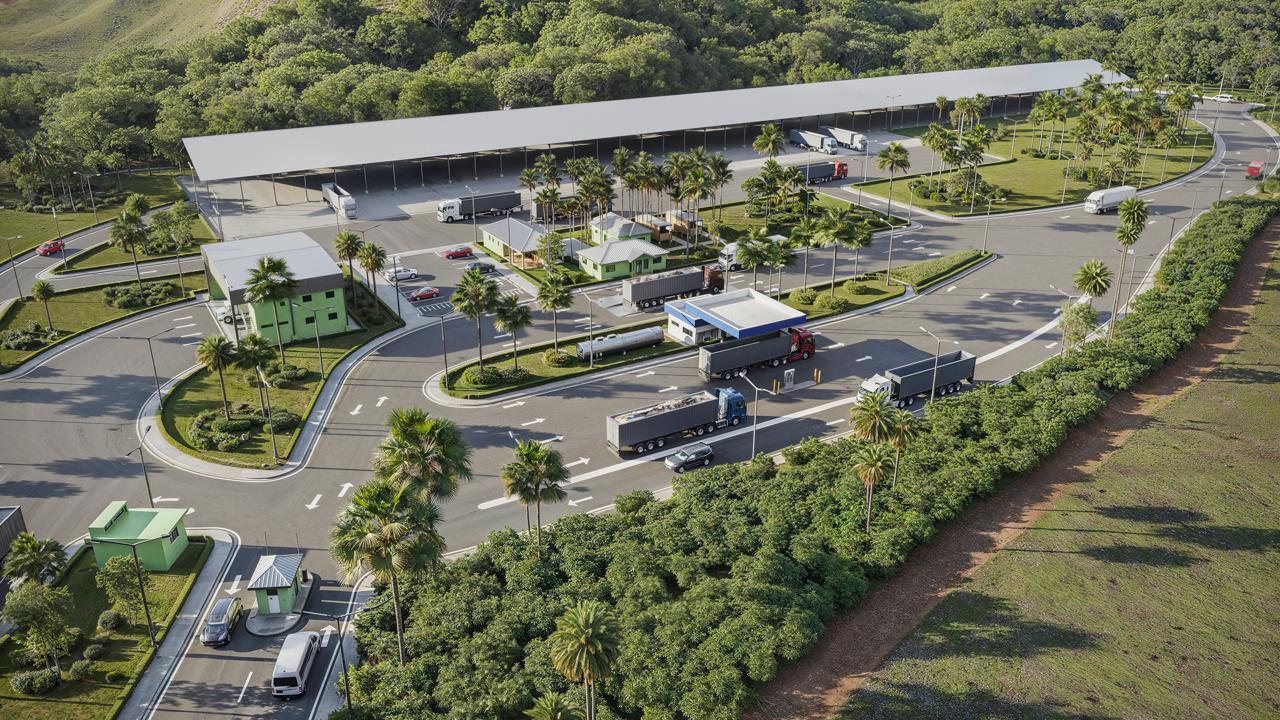
    SANTO DOMINGO – Prominent geologist Osiris de León has provided detailed clarifications regarding the nature of the Oakhouse project planned for La Cuaba, emphasizing its advanced industrial design rather than conventional waste management approaches. According to de León, the facility represents a fully enclosed industrial waste recovery plant specifically engineered to process and valorize diverse materials through controlled technological methods.

    The project aims to transform materials including glass, plastics, paper, cardboard, metals, and organic waste into valuable resources, generating significant economic benefits while maintaining strict environmental safeguards. De León stressed that unlike traditional open-air landfills, all operations at Oakhouse will be conducted indoors, preventing exposure to rainwater and eliminating the generation of contaminated leachates that could potentially harm soil and aquatic systems.

    De León further revealed that the initiative serves as a foundational step toward establishing a future industrial free zone dedicated to both local and regional development. This vision seeks to harmonize industrial activity with ecological preservation and community welfare.

    The site selection process followed rigorous technical criteria, with the facility situated atop naturally impermeable basaltic volcanic rock formations that provide an additional layer of environmental protection. The project design incorporates comprehensive rainwater management systems, perimeter drainage infrastructure, and four permanent groundwater monitoring wells to ensure continuous oversight and operational transparency.

    In his concluding remarks, de León characterized Oakhouse as a scientifically grounded, environmentally responsible project that welcomes ongoing supervision from both public stakeholders and institutional authorities.

  • Column: 51 stemmen voor schrappen muilkorfartikelen…

    Column: 51 stemmen voor schrappen muilkorfartikelen…

    A coalition-led legislative initiative in Suriname has reignited the decades-long debate over the nation’s controversial ‘gag laws’ – articles within the Criminal Code that critics argue systematically suppress freedom of expression. The proposed bill, aimed at abolishing these provisions, has received formal endorsement from the Surinamese Association of Journalists, an organization that has petitioned successive governments for reform since the 1990s.

    Despite surface-level political consensus, deep-seated skepticism permeates civil society. The fundamental issue transcends mere legal technicalities: Suriname’s constitutional framework and international commitments already provide robust protections for free speech. The nation has voluntarily bound itself to the International Covenant on Civil and Political Rights (ICCPR), the American Convention on Human Rights, and OAS human rights treaties. Yet implementation remains persistently inadequate.

    The administration of President Chan Santokhi—who once positioned himself as a champion of rule of law—has paradoxically intensified the application of these restrictive articles. Documented cases reveal citizens facing arrest for critical remarks, detained without preliminary judicial review, and released days later without formal charges. This pattern creates a chilling effect that normalizes self-censorship, precisely the laws’ intended function.

    These gag provisions demonstrate selective enforcement: while citizen disputes rarely trigger legal action, criticism targeting politicians, authorities, or foreign dignitaries promptly activates police intervention. This dichotomy reveals the laws’ true purpose—not societal protection, but power preservation.

    The current legislative effort demands measured scrutiny. Surinamese society has witnessed numerous failed reform attempts where political promises evaporated when confronted with practical implementation. Meaningful reform requires complete elimination without loopholes or replacement clauses that maintain the status quo.

    The core challenge remains political will rather than legal awareness. As the bill moves toward parliamentary consideration—requiring 51 votes for passage—civil society maintains vigilant skepticism. True progress will be measured not by rhetorical support but by concrete legislative action that transforms constitutional principles into lived reality for every Surinamese citizen.

  • Nearly half of Haiti’s population going hungry daily, says UN

    Nearly half of Haiti’s population going hungry daily, says UN

    The United Nations has issued a dire warning regarding Haiti’s escalating humanitarian catastrophe, revealing that nearly half the nation’s population now faces daily hunger amid rampant gang violence and mass displacement. This alarming assessment coincides with the launch of the UN’s 2026 Humanitarian Needs and Response Plan, which seeks $880 million to assist 4.2 million vulnerable Haitians.

    According to UN officials, the security situation has deteriorated dramatically over the past year, with internal displacement doubling to approximately 1.4 million people by September 2025—representing 12% of Haiti’s total population. Farhan Haq, Deputy Spokesperson for the UN Secretary-General, confirmed that widespread insecurity in the Port-au-Prince metropolitan area has progressively spread to regional zones, severely crippling economic activity and restricting access to essential food supplies.

    The statistics paint a grim picture: 5.7 million people currently experience daily hunger, with projections indicating this number will surge to 5.9 million during the upcoming lean season from March to June 2026. The crisis has disproportionately affected women and girls, with UN partners documenting an average of 27 new gender-based violence cases daily between January and September 2025. Shockingly, over half these cases involved sexual violence, with nearly two-thirds constituting collective rapes.

    Humanitarian Coordinator for Haiti Nicole Kouassi emphasized the critical funding shortfall, noting that the 2025 appeal for $908 million remains only 23% funded with just $206 million secured. She urgently appealed for sustained international support, cautioning that without immediate intervention, Haiti’s humanitarian situation will continue its rapid deterioration.

  • Residents lament unreliable bus service in Martins Bay

    Residents lament unreliable bus service in Martins Bay

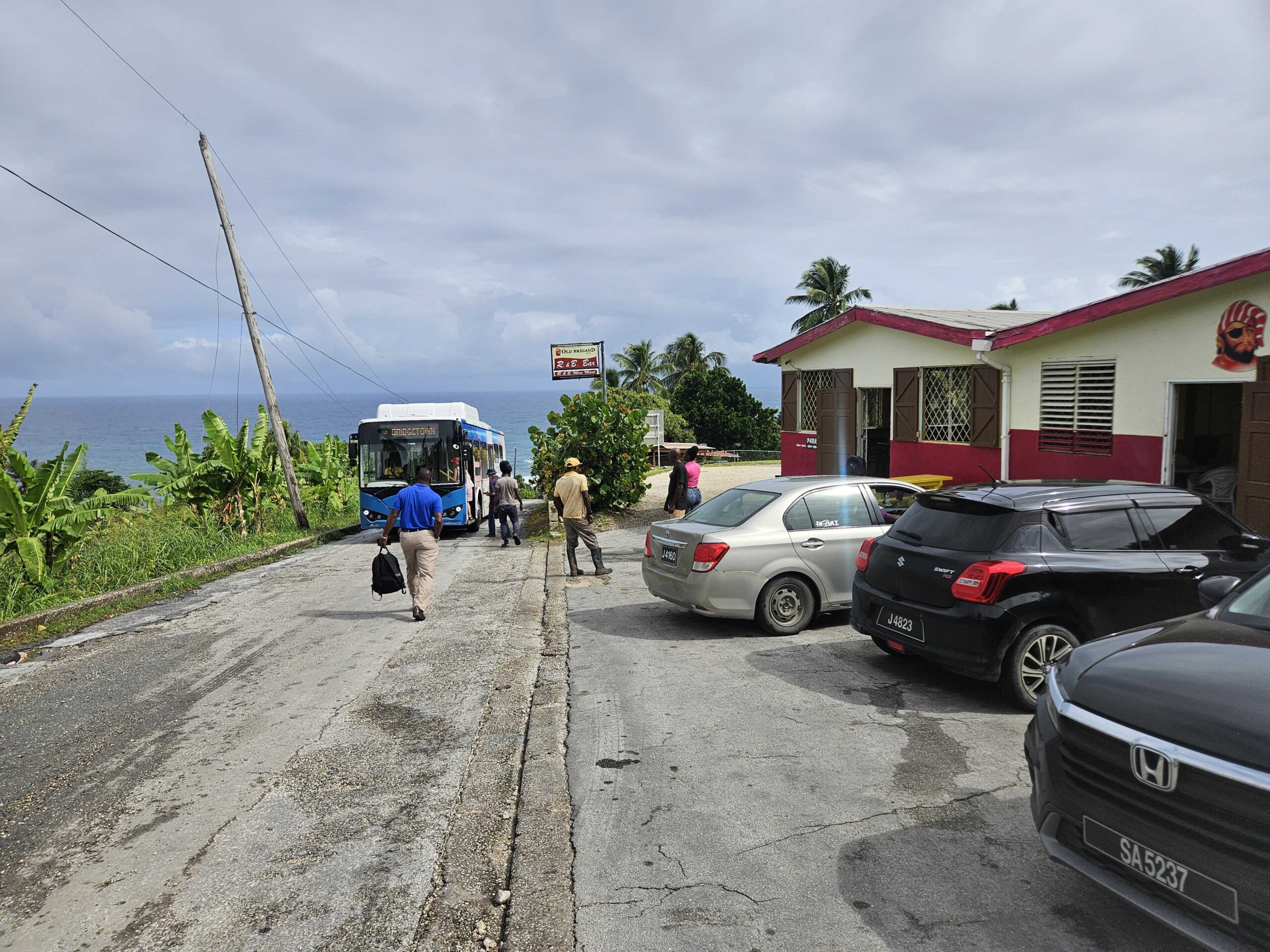
    The community of Martins Bay in St John faces severe disruption to daily life due to chronically unreliable bus services, forcing residents to adopt extreme measures for basic mobility. Workers and commuters report leaving home hours early and incurring substantial expenses for alternative transportation amid complete uncertainty about bus arrivals.

    Local resident Danesha Maxwell, 26, characterized the service as ‘exceptionally poor,’ particularly during daytime and evening operations. ‘There are days with two-hour gaps between buses,’ Maxwell explained. ‘This creates tremendous frustration for workers with fixed schedules, requiring us to depart at least an hour earlier than necessary since missing one bus doesn’t guarantee another will arrive.’

    Multiple residents interviewed near Newcastle junction detailed systematic service failures. Buses supposedly scheduled hourly often fail to materialize, with particularly severe gaps between 2:00 PM and 7:30 PM. The transportation breakdown creates safety concerns and severely restricts mobility, with commuters sometimes not reaching home until 7:30 PM despite theoretically earlier departures.

    The inadequate service forces residents into difficult choices: walking long distances, seeking rides from neighbors, or paying exorbitant taxi fares exceeding $100 for trips from Bridgetown to Martins Bay. Some residents allege certain drivers refuse to service the Martins Bay route despite instructions, a claim Transport Board Chief Operations Officer Lynda Holder says will undergo internal investigation.

    While road conditions in the area show gradual improvement through the Scotland District Road Rehabilitation project—funded by a BDS$230 million loan from China’s Export-Import Bank—residents emphasize that transportation reliability remains the immediate crisis. Beyond infrastructure, community members advocate for enhanced social facilities, including parks and youth engagement programs to address broader community needs.

  • Centrale Bank haalt SRD 400 miljoen uit de economie via nieuwe spaarcertificaten

    Centrale Bank haalt SRD 400 miljoen uit de economie via nieuwe spaarcertificaten

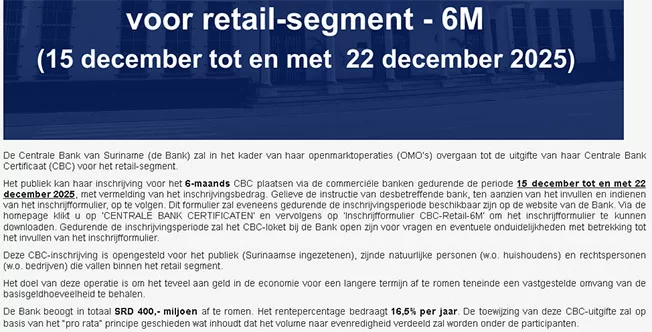
    The Central Bank of Suriname has initiated a new issuance of Central Bank Certificates (CBCs) aimed at temporarily withdrawing SRD 400 million from circulation. This monetary policy intervention seeks to regulate money supply and maintain economic stability by encouraging both individuals and businesses to deposit funds with the central bank, effectively reducing liquidity in the open market.

    The certificate offering, available through commercial banks from December 15 to December 22, carries a 16.5% annual interest rate with a six-month maturity period. In cases of oversubscription, the available amount will be distributed proportionally among all participants. Application forms are available at commercial banks and can also be downloaded from the Central Bank’s official website.

    This move represents a strategic shift in monetary policy following the conclusion of Suriname’s IMF program. The current interest rate of 16.5% is notably lower than rates during the IMF program period, reflecting the central bank’s adjusted approach to economic management. Simultaneously, authorities are developing a new monetary framework and preparing for the issuance of Treasury bills as complementary measures.

    The dual-purpose initiative not only provides a secure investment vehicle for citizens and corporations but also serves as a mechanism for the central bank to better balance economic conditions and stabilize foreign currency demand. By temporarily absorbing excess liquidity, the central bank aims to create a more controlled monetary environment while offering attractive returns to investors.