博客

  • Sandals Foundation gives over 5,000 toys, school supplies to children in SVG

    Sandals Foundation gives over 5,000 toys, school supplies to children in SVG

    In a monumental holiday outreach effort, the Sandals Foundation has transformed the Christmas season for thousands of Caribbean children through an expansive toy distribution initiative across nine islands. More than 50 dedicated volunteers from Sandals Foundation and Sandals St. Vincent and the Grenadines meticulously wrapped and delivered over 5,000 educational supplies and toys to 13 communities and schools throughout St. Vincent.

    The program reached its festive climax with a Christmas Treat Party in the Buccament Bay community last Sunday, where children enjoyed an afternoon filled with recreational games, traditional carols, festive meals, and playful activities. This coastal community, which hosts the Sandals Saint Vincent resort, has been formally adopted as part of the organization’s extended family network.

    Tamon Allen, General Manager of Sandals St. Vincent, emphasized the resort’s commitment: “Our mandate centers on investing in the wellbeing of Caribbean families, and we remain dedicated to supporting sustainable social development within our communities.”

    Marking its thirteenth anniversary, the foundation’s annual toy drive has established itself as a beloved regional tradition. This year’s effort achieved unprecedented scale through strategic partnerships with three major U.S. toy manufacturers: Spin Master, Jazwares, and The Toy Foundation™. Together, they distributed 45,000 toys across the Caribbean region.

    Heidi Clarke, Executive Director of the Sandals Foundation, captured the initiative’s spirit: “The holiday season embodies hope—the assurance that every child feels seen, valued, and profoundly loved. We extend our deepest gratitude to our partners for helping spread joy to 45,000 young lives throughout the Caribbean.”

    The comprehensive distribution network benefited numerous institutions including Auntie Helen’s Methodist Preschool, Little Eagles Preschool, Sandy Bay Government School, Barrouallie Government School, Spring Village Methodist School, Salvation Army Children’s Home, children of inmates at Belle Isle Correctional Facility, the Pediatric Ward at Milton Cato Memorial Hospital, SVG Coast Guard families, and the communities of Paul’s Avenue, Layou, and Barrouallie.

    This landmark collaboration represented the inaugural Caribbean outreach for all three toy companies. Children received an array of gifts including puzzles, Rubik’s Cubes, PAW Patrol figurines, and plush toys from Spin Master; building blocks and dinosaur figurines from The Toy Foundation; and popular Squishmallows plush toys from Jazwares.

  • Agriculture Ministry Launches ‘Plant2Plate’ Initiative With Backyard Gardening Competition

    Agriculture Ministry Launches ‘Plant2Plate’ Initiative With Backyard Gardening Competition

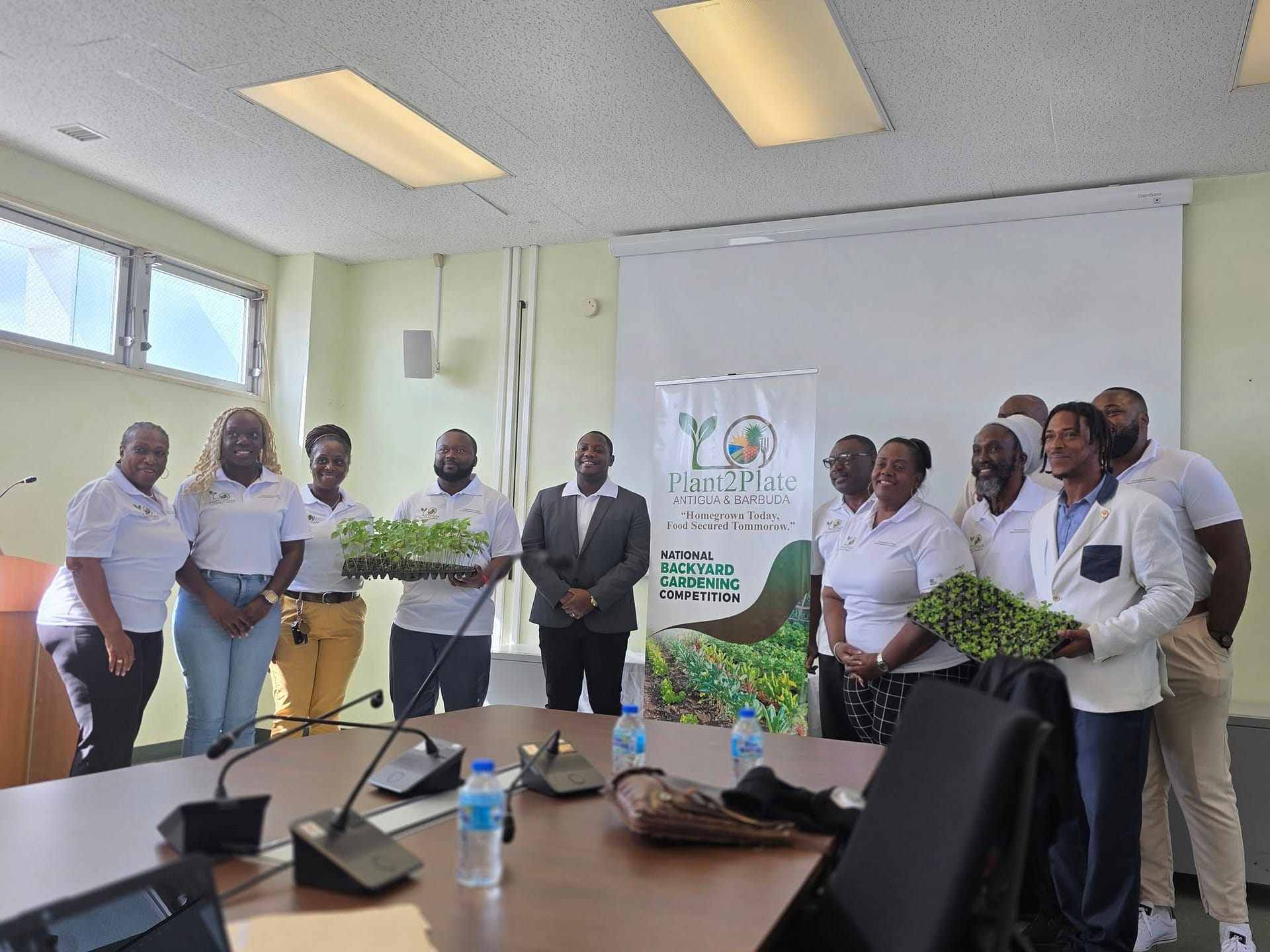
    The Ministry of Agriculture in Antigua and Barbuda has unveiled an ambitious national program titled ‘Plant2Plate Antigua and Barbuda Initiative,’ spearheaded by Agriculture Minister Anthony Smith Jr. This comprehensive strategy centers on revitalizing the annual Backyard Gardening Competition with the explicit goal of enhancing domestic food production capabilities and fortifying the nation’s food security framework.

    Minister Smith, in an official proclamation, expressed profound enthusiasm for the initiative’s launch, emphasizing its dual focus on immediate agricultural engagement and long-term nutritional sustainability. The program’s foundational theme, ‘Homegrown today, food secure tomorrow,’ serves as both a motivational slogan and a strategic directive, highlighting the critical connection between individual household gardening efforts and broader national food resilience.

    ‘Each planted seed represents a tangible contribution to our collective food security,’ Smith asserted, framing backyard cultivation as both a civic duty and a practical solution to import dependency challenges.

    Innovating beyond traditional gardening competitions, the Ministry has introduced a complementary ‘Cook What You Grow’ Culinary Showcase. This gastronomic component will feature prepared dishes utilizing exclusively home-grown ingredients, creating a farm-to-table continuum that celebrates agricultural achievements through culinary artistry.

    The government is actively mobilizing citizen participation across both program elements, encouraging residents to demonstrate horticultural expertise while embracing sustainable food preparation practices. Minister Smith concluded with a galvanizing appeal: ‘Let’s dig in, plant those seeds, and cultivate a food-secure Antigua and Barbuda,’ positioning national food sovereignty as an achievable objective through coordinated grassroots engagement.

  • COMMENTARY: Is There Rule of Law In Antigua and Barbuda

    COMMENTARY: Is There Rule of Law In Antigua and Barbuda

    A profound examination of Antigua and Barbuda’s constitutional framework has revealed critical vulnerabilities in the nation’s governance structures, raising urgent questions about the equitable application of rule of law principles. Political commentator Yves Ephraim has initiated a compelling discourse on constitutional reform, highlighting how the current document contains provisions that ostensibly guarantee citizen rights while simultaneously creating legal loopholes enabling state overreach.

    The foundational concept of rule of law, historically established through the Magna Carta, asserts that no individual or institution should be above legal accountability. This principle requires uniform application of justice regardless of status or position—whether ordinary citizen or high-ranking official. Recent developments, however, suggest troubling disparities in law enforcement practices that undermine this fundamental democratic tenet.

    A particularly concerning incident involves the destruction of property belonging to the opposition leader at Morris Bay, which prompted the Prime Minister to publicly suggest police investigation of the opposition figure. While the police subsequently initiated questioning, observers note a contrasting lack of urgency in addressing the Prime Minister’s own allegations of widespread fraud within the public sector regarding unauthorized vehicle purchases.

    This selective enforcement pattern raises critical questions about the independence of the Police Commissioner’s office, previously believed to operate as an autonomous entity free from political influence. The apparent discrepancy in investigating different allegations—despite comparable evidentiary basis—suggests either institutional weakness or political manipulation of law enforcement mechanisms.

    The emerging pattern indicates systemic issues that could fundamentally erode public trust in democratic institutions if left unaddressed. The situation demands comprehensive constitutional review to establish clearer safeguards against state overreach and ensure consistent application of legal principles to all citizens equally.

  • ABDF Honours Soldiers, Cadets and Civilians at Annual Christmas Luncheon

    ABDF Honours Soldiers, Cadets and Civilians at Annual Christmas Luncheon

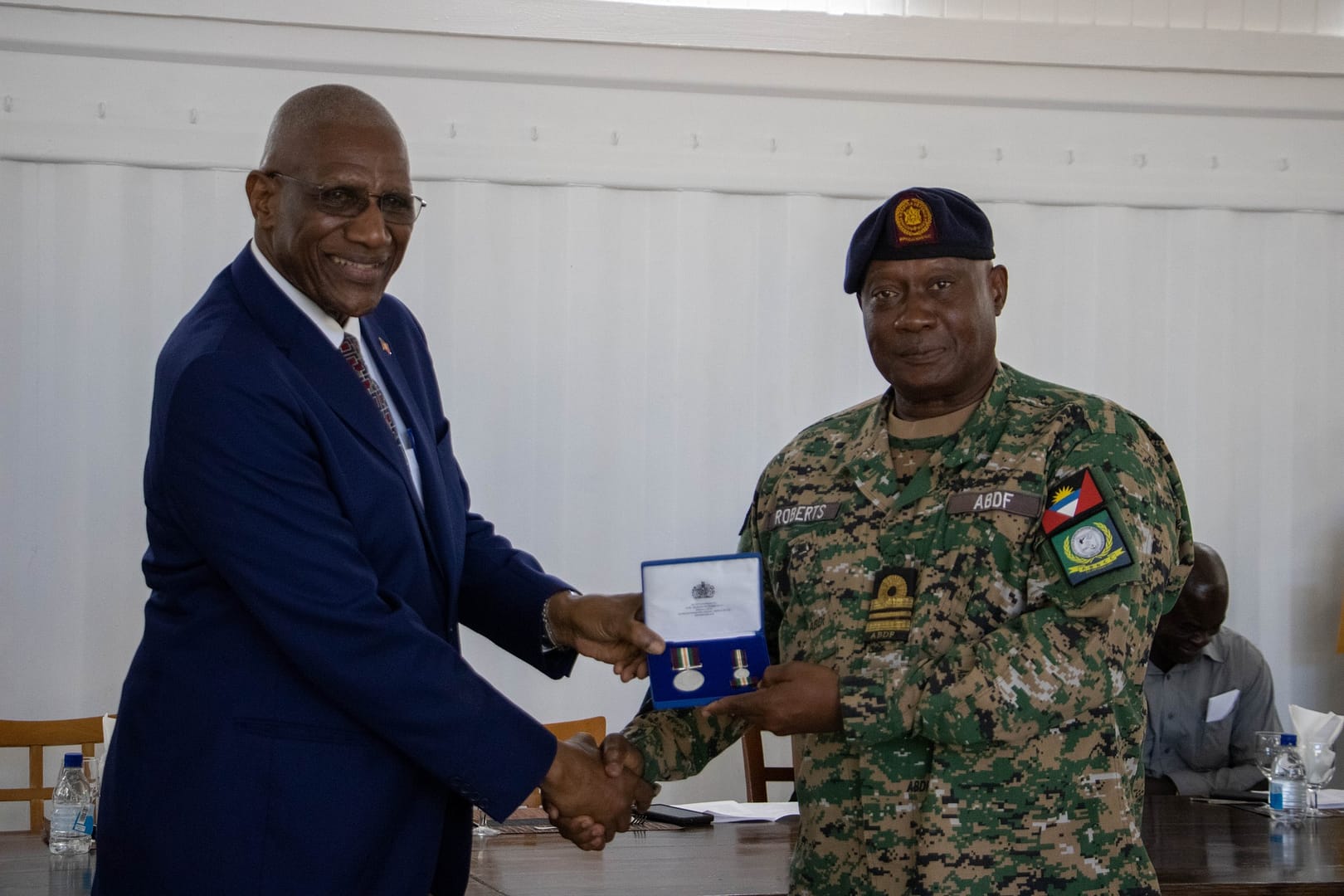
    The Antigua and Barbuda Defence Force (ABDF) hosted its annual Christmas Luncheon on December 17, 2025, in a ceremony attended by His Excellency Sir Rodney Williams and Her Excellency Lady Williams. The event, blessed by Lieutenant Dr. Rev. Olson Daniel, showcased military tradition as ABDF Officer Corps members personally served attendees, reinforcing camaraderie within the force.

    The ceremony featured prestigious awards recognizing exceptional service and achievements. Caribbean Cadet Medals were conferred upon five distinguished personnel: retired Lieutenant Colonels Ivor Walker and Alando Michael, retired Majors Herman Blackman and Samuel Roberts, and retired Lieutenant Joseph Richards. Thirteen force members received Long Service and Good Conduct Medals for their dedicated service.

    Special individual honors included Lance Corporal Rivaldo Bartley’s induction into the elite 300 Club for achieving a perfect Physical Training score. Additional annual awards recognized Ms. Dena Baltimore as Civilian of the Year, Lance Corporal Tehrique Mason as Soldier of the Year, Private First Class Charlene Jeremy as Reserve of the Year, and Lance Corporal Monica Wright as Cadet of the Year.

    The luncheon served as both a celebration of annual accomplishments and a testament to the unity and commitment within the ABDF community, ending the year on a note of pride and collective achievement.

  • Staatsraad presenteert eerste schriftelijke jaarverslag aan president

    Staatsraad presenteert eerste schriftelijke jaarverslag aan president

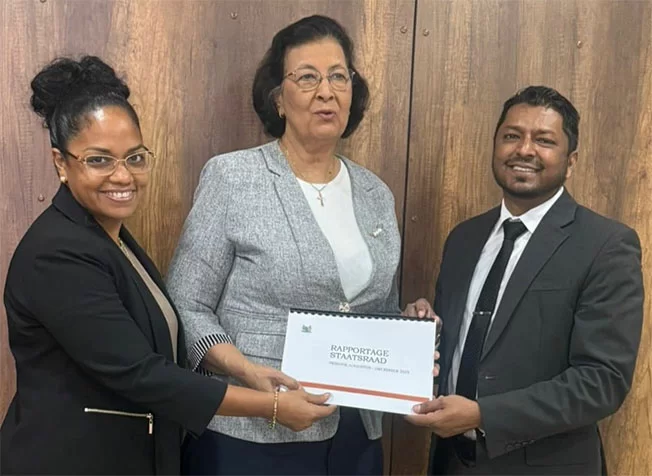
    In an unprecedented move signaling governmental transparency, Suriname’s Council of State presented its inaugural written accountability report to President Jennifer Simons during Thursday’s year-end assembly. The comprehensive document chronicles the Council’s operational transformation from August through December 2025, marking a significant departure from traditional practices within this highest advisory body.

    The report meticulously details the Council’s initial operational challenges upon assumption of duties, implemented corrective measures, and current operational status. Vice Chairman Amzad Abdoel revealed to StarNews that a preliminary assessment exposed critical staffing deficiencies that hampered the Council’s ability to fulfill presidential mandates. The institution lacked essential financial management personnel, operated with an understaffed secretariat, and had inadequate cleaning facilities.

    Within existing budgetary constraints, the Council initiated strategic personnel reinforcement without burdening public finances. Operational workflows underwent significant optimization, resulting in enhanced efficiency. Financial management systems underwent comprehensive restructuring, with all monthly financial reports from January through September completed and submitted to the presidency. Budget utilization is now systematically monitored, outstanding payments have been reconciled, and resource allocation strategies have been optimized.

    Administrative procedures have been rigorously streamlined, with correspondence to the Council now addressed within three working days. The advisory body has processed one draft law, five draft state decrees, and one legislative proposal within the four-month period, with seven new initiative proposals currently under consideration.

    The Council is actively developing enhanced public accountability mechanisms, including plans for citizens to monitor proceedings online through collaboration with the E-Government Directorate. For 2026, the institution has formulated an ambitious operational plan focusing on procedural documentation, facility renovation, legislative revision, and the potential establishment of an internal audit department to further strengthen transparency frameworks.

    Abdoel emphasized the report’s significance in demonstrating the Council’s transformation journey: “As a High College of State, we aim to exemplify transparency and accountability. With presidential support, we’re making substantial progress toward this objective.”

  • Why roads, ports, and airports matter more than ever for Expats in the Dominican Republic

    Why roads, ports, and airports matter more than ever for Expats in the Dominican Republic

    Beyond its renowned sun-drenched beaches and relaxed Caribbean lifestyle, the Dominican Republic is undergoing a transformative infrastructure renaissance that is fundamentally reshaping the nation’s economic landscape. This strategic development initiative represents a deliberate, long-term investment in the country’s future rather than superficial improvements, creating unprecedented opportunities for expatriates, returning nationals, and international investors alike.

    The comprehensive infrastructure overhaul encompasses three critical dimensions that collectively enhance the nation’s connectivity and economic vitality. A massive highway expansion program has dramatically reduced transit times between urban centers, tourist corridors, and previously isolated secondary markets. These transportation arteries have transformed remote areas into viable locations for daily commuting, logistics operations, and residential development, effectively decentralizing growth opportunities beyond traditional urban hubs.

    The nation has simultaneously emerged as a Caribbean logistics powerhouse through strategic investments in port infrastructure. Modernized facilities at Caucedo and Haina now support robust import/export operations, manufacturing activities, and nearshoring ventures targeting the U.S. market. This enhanced maritime capacity attracts multinational corporations, entrepreneurial ventures, and foreign capital, generating employment opportunities and stabilizing local economies.

    Aviation infrastructure has received equal attention, with significant expansions at Punta Cana, Santo Domingo, and Santiago airports. These upgrades extend beyond accommodating tourist traffic to include increased cargo capacity, additional direct international routes, and modernized terminals that facilitate global connectivity. The improvements effectively bridge geographical divides, enabling seamless business travel and supporting remote work arrangements for the expatriate community.

    For those considering relocation or investment, these developments signal profound implications. The infrastructure renaissance provides expanded housing options, enhanced mobility, diversified economic opportunities beyond tourism, and improved access to services. Most significantly, it demonstrates both public and private sector confidence in the nation’s sustainable development trajectory, positioning the Dominican Republic as an emerging hub for strategic living and investment in the Caribbean region.

  • New Arajet route connects Punta Cana with Rosario, Argentina

    New Arajet route connects Punta Cana with Rosario, Argentina

    DOMINICAN REPUBLIC – Caribbean aviation leader Arajet has unveiled ambitious expansion plans with the establishment of a new direct air corridor connecting Punta Cana International Airport (PUJ) with Rosario, Argentina (ROS), marking a significant enhancement in transcontinental air travel infrastructure. Scheduled to commence operations on June 16, 2026, the route will feature three weekly flights utilizing the airline’s modern Boeing 737 MAX fleet.

    This strategic move elevates Rosario to Arajet’s third Argentine destination, substantially strengthening the carrier’s footprint in the Southern Cone region. The expansion propels Arajet’s international network to over 28 destinations spanning 15 countries across North, Central, and South America. The Rosario connection will provide passengers with seamless access to Arajet’s Punta Cana hub, facilitating convenient transfers to 13+ international destinations including major North American cities (Miami, Orlando, New York), Latin American capitals (Lima, Cancún), and Caribbean hotspots (Kingston).

    Airline executives emphasized that this development aligns with Arajet’s core mission of delivering affordable air travel options without compromising service quality or operational punctuality. ‘This new route represents our commitment to bridging Latin American communities through accessible air transportation,’ stated an Arajet spokesperson during the announcement ceremony.

    To stimulate initial demand, the airline launched a limited-time promotional offer providing 25% discount on base fares using booking code ‘Vamos ROS’. The promotional window runs from December 18-26, 2025, for travel between June 16, 2026 and March 21, 2027. Industry analysts note this expansion reflects growing demand for Caribbean-South American connectivity and demonstrates the Dominican Republic’s emerging role as a strategic aviation hub in the Western Hemisphere.

  • DGP presents new electronic passport featuring over 70 security measures

    DGP presents new electronic passport featuring over 70 security measures

    SANTO DOMINGO – In a significant advancement for national security and international travel, the Dominican Republic’s General Directorate of Passports (DGP) officially unveiled its new electronic passport this Friday. This next-generation travel document represents a technological leap forward, integrating cutting-edge security features to combat fraud and streamline border control processes.

    The cornerstone of the new e-passport is an embedded secure microchip that contains the holder’s critical biometric information. This includes fingerprint data, facial recognition biometrics, a digital photograph, and an electronic signature. The data page, constructed from resilient polycarbonate material, incorporates over 70 sophisticated security elements. These range from complex holographic imagery to specialized inks that are exceedingly difficult to replicate, providing a formidable barrier against forgery and tampering.

    Beyond its security prowess, the passport is engineered for efficiency. Its compliance with stringent international standards, including those advocated by the International Civil Aviation Organization (ICAO), is designed to expedite processing at electronic immigration gates globally, significantly reducing wait times for travelers. Furthermore, the document serves as a cultural ambassador; its interior pages are adorned with vibrant imagery and designs that celebrate the rich tapestry of Dominican history, heritage, and national identity, offering a glimpse into the country’s unique story to the world.

    The launch was promoted through the official Instagram account of Pasaportes RD (@pasaportesrd), signaling a modern outreach effort to inform citizens about the upgraded document, which aims to bolster both the security of Dominican citizens abroad and the integrity of the nation’s identity verification systems.

  • President Abinader inaugurates final phase of Avenida Ecológica in Santo Domingo

    President Abinader inaugurates final phase of Avenida Ecológica in Santo Domingo

    SANTO DOMINGO – President Luis Abinader officially inaugurated the completed Avenida Ecológica on Friday, marking a transformative milestone in the Dominican Republic’s infrastructure landscape. The newly opened 12-kilometer thoroughfare, constructed under Abinader’s administration, is designed to function without a single traffic light, ensuring seamless vehicular movement across key zones including Santo Domingo East, Boca Chica, La Caleta, and major national highways.

    The president underscored the avenue’s role as a critical economic artery, significantly enhancing the nation’s logistical framework and foreign trade capabilities. By bridging the country’s primary ports in Greater Santo Domingo, the project substantially reduces travel duration and freight expenses, directly benefiting an estimated 850,000 residents. Abinader framed the avenue as more than a road—it is a cornerstone of a comprehensive strategy integrating mass transit, water management, and energy systems to foster sustainable urban development.

    Complementing this initiative are ongoing expansions of the Santo Domingo Metro and Cable Car systems, upgrades to aqueducts, and bolstered energy production, collectively forming a holistic model for growth. Minister of Public Works Eduardo Estrella detailed the avenue’s sophisticated engineering, including a new toll plaza and an overpass that alleviates congestion from the Port of Caucedo and improves traffic flow to Las Américas International Airport—a vital upgrade expected to stimulate tourism and job creation.

    Dio Astacio, Mayor of Santo Domingo East, applauded the national government’s sustained investment in infrastructure, citing observable improvements in daily commute times and overall quality of life for constituents. The Avenida Ecológica now stands as one of the Caribbean nation’s most advanced logistics corridors, reinforcing the Dominican Republic’s position as a competitive player in regional trade and economic resilience.

  • Na druk: EU stelt Mercosur-deal uit

    Na druk: EU stelt Mercosur-deal uit

    The European Union has postponed the signing of a landmark free trade agreement with South American nations following intense farmer protests and last-minute opposition from France and Italy. The EU-Mercosur pact, which would create one of the world’s largest free trade zones covering 780 million people and a quarter of global GDP, now faces uncertain prospects after 26 years of negotiations.

    EU officials had anticipated finalizing the agreement this weekend in Brazil, but Commission spokeswoman Paula Pinho confirmed the delay until January. The decision emerged during emergency talks between European Commission President Ursula von der Leyen, European Council President Antonio Costa, and Italian Prime Minister Giorga Meloni, with Italy’s conditional support secured for January’s vote.

    The postponement came hours after dramatic scenes unfolded in Brussels where hundreds of farmers from across Europe staged violent protests. Agricultural workers blocked streets with tractors, launched fireworks, and burned tires along with a symbolic coffin labeled “Agriculture.” Police responded with tear gas and water cannons as protesters threw potatoes and eggs, leading to the evacuation of European Parliament staff.

    French President Emmanuel Macron emerged as the agreement’s most prominent critic, citing concerns about unfair competition for European farmers already struggling with high production costs and animal disease outbreaks. Macron’s centrist government, wary of growing far-right opposition, demands stronger safeguards including rigorous import inspections, pesticide restrictions in Mercosur countries, and mechanisms to prevent economic disruption.

    Italian Premier Meloni called any immediate signing “premature,” insisting on adequate mutual guarantees for Italy’s agricultural sector. This opposition potentially gives France sufficient votes to veto the agreement, which requires support from two-thirds of EU members.

    Proponents argue the pact represents a crucial geopolitical move that would counter Chinese influence in Latin America and provide alternatives to U.S. trade restrictions. German Chancellor Friedrich Merz warned that further delays would damage EU credibility in global trade policy. Agathe Demarais of the European Council on Foreign Relations noted the agreement’s strategic importance in preventing Latin American economies from moving closer to Beijing.

    In South America, Brazilian President Luiz Inácio Lula da Silva expressed frustration over the delay, which undermines what he hoped would be a major diplomatic achievement ahead of next year’s elections. Both Lula and Argentina’s libertarian President Javier Milei remain committed to the agreement despite their political differences, viewing Mercosur as a spear rather than a shield in global trade relations.