博客

  • Students Could Lose Their Ride as School Bus Payments Stall

    Students Could Lose Their Ride as School Bus Payments Stall

    Weeks into the 2026 academic year, thousands of K-12 students across southern and western Belize face sudden uncertainty over their daily commute to school, after multiple contracted school bus operators announced plans to suspend service over three weeks of unpaid dues from the national Ministry of Education. With operational costs like diesel and driver wages piling up with no government compensation, carriers say they can no longer keep their fleets on the road, leaving families scrambling for alternative ways to get children to class.

    Dalmon Ritchie, owner of Ritchie’s Bus Company, one of the largest private carriers contracted to serve regional schools, told reporters his four vehicles transport roughly 50 students to and from campus every day. To keep the buses running through the delayed payment period, Ritchie has already accumulated more than $3,000 in credit-based diesel purchases — a financial burden his small business can no longer absorb, he said. The debt has already reached a breaking point for independent operators like him, after months of mounting financial strain.

    “We’ve been dealing with this for a long time. We’ve sat down with all our member operators, talked through every possible option, and we’ve run out of road,” Ritchie explained in a phone interview, speaking in Belizean Kriol. “I’m already hundreds of dollars in debt just for fuel. I can’t go back to the gas station asking for more credit when prices are already so high. I’ve got no choice but to stop running.”

    With service suspensions imminent, Ritchie and other operators have floated an emergency workaround: asking parents to cover temporary daily fares to cover fuel and driver costs until the government resolves the payment backlog. Many families already pay additional costs for water crossings or alternate routes, Ritchie noted, but the temporary arrangement would be the only way to keep buses running while waiting for official payment. When asked how long operators expected to wait for the Ministry of Education to settle the outstanding funds, Ritchie noted that officials have promised payment by midweek, but that the commitment remains only a verbal guarantee.

    In an official statement responding to the impending disruption, the Ministry of Education explained that delays in finalizing updated annual service contracts led to the missed payments. Ministry officials confirmed they are currently coordinating with the Ministry of Finance to process all outstanding payments and clear the backlog by the midweek timeline that has been shared with operators. Principals and school administrators along the affected bus routes have already been notified of the potential service interruption, and have been instructed to put support systems in place for students who may face barriers to attending class if service is suspended. The ministry issued a public apology for the uncertainty and potential disruption to the school year, and emphasized that its top priority is maintaining consistent, safe, and reliable transportation for all students across the country.


  • Who Is Driving Up Prices at Michael Finnegan Market?

    Who Is Driving Up Prices at Michael Finnegan Market?

    By September 14, 2026, vendors at Belize’s iconic Michael Finnegan Market are grappling with an unprecedented cost crisis that is pushing small food retailers to the brink of collapse. While shoppers across the country already face sticker shock from steadily climbing grocery prices, the vendors who serve these communities say they are actually walking away with thinner profits than ever before — caught in a vice between skyrocketing wholesale costs and cash-strapped customers who can no longer afford higher price tags.

    Reported by News Five’s Paul Lopez from the market floor, the unfolding crisis traces its root back to price hikes implemented by the Belize Marketing and Development Corporation (BMDC), a government-linked agency that controls much of the produce supply chain for local vendors. Multiple vendors and wholesalers spoke on the record about the cascading effect of BMDC’s new pricing structure, explaining that higher rates at the wholesale level force them to pass costs onto consumers — who in turn walk away from purchases entirely when prices climb too high.

    “ What’s the cost of a pound of potato? The value is not in what you pay, but what these vendors are able to take home as a profit to make ends meet,” Lopez reported from the site, where growing frustration among small business owners has paralleled the steady rise in food costs across the country.

    One vendor laid out the thin margins that make operating nearly impossible: for a 65-pound sack of potatoes purchased for $250 from wholesalers, that works out to a $3 per pound wholesale cost. Vendors can only afford to mark the price up to $3.50 per pound to attract buyers, netting just $37 in profit for the entire sack after covering the initial investment. White onions tell a similar story: vendors pay $4 per pound wholesale, meaning they have to sell at the same price just to break even, with no room for profit after covering transport, labor, and market stall rental. On slow days, many vendors report going an entire workday without selling an entire sack of core produce like potatoes or onions.

    When asked what would happen if vendors raised prices further to match rising costs, one vendor summed up the dilemma: “If I take up my price, nobody will stop and buy from me.” Customers, already tightening their own household budgets amid broader inflation, simply leave when they see higher prices, vendors confirm. Many report that even regular customers are walking away without making purchases after seeing sticker prices.

    The price chain starts at the top, vendors and wholesalers agree: BMDC has raised the rates it charges wholesalers for bulk produce, and those increases get passed down through every level of the supply chain. “We can’t help pay our [market stall] rent, because everything goes back to the marketing board. The government is taking back everything from us,” one vendor explained.

    Wholesalers echo these grievances, noting that before BMDC took over control of imported produce like onions, cabbage and carrots, they were able to source goods at far lower prices. Now, forced to purchase all stock from the state-linked agency at inflated rates, wholesalers have no choice but to add a small markup to cover their own costs including fuel for transport. “If we pay two twenty-five for the onion and only get sixty-five pounds, we have to sell it for two thirty [per pound] just to break even,” one wholesaler explained. “To get the stuff all the way [from] the marketing board we have to burn gas [for transport], [cover] this that. Like people [will] go under after this, we won’t eat. And it is true, because you see the cabbage, four dollars a pound — [prices have never been this high].”

    The growing crisis has sparked anger among small business owners who say the current government has failed to address their struggles. One vendor harshly criticized Prime Minister Briceño and his administration, saying officials make empty promises but do nothing to ease the burden on working-class vendors and their customers. “[Briceño and his team] sit down and talk a whole lot of [empty promises], but they don’t give a damn about nobody. They just lie and lie and lie to the people, and our children and grandchildren end up paying the price. They don’t worry about us — they only worry about themselves.”

    As food inflation continues to eat into household budgets and small business margins across Belize, vendors warn that the true cost of the crisis extends far beyond the higher checkout prices consumers see. Small, family-owned market operations that have served local communities for generations are at risk of closing permanently, leaving working-class families with fewer affordable food options and hundreds of small business owners out of work. Reporting for News Five, Paul Lopez.

    *Note: This report is adapted from a transcript of an evening television broadcast, with original Kriol language translated and adapted for clarity.*

  • Violence Goes Viral, but Who Is Paying the Price?

    Violence Goes Viral, but Who Is Paying the Price?

    In an era where every public altercation can become overnight social media content, a 2026 investigation out of Belize is unpacking a growing cultural crisis: as violent street brawls are packaged and consumed as cheap entertainment, society is slowly losing its ability to recognize aggression as a harmful, unacceptable outcome rather than viral clickbait.

    What starts as a few seconds of scuffling between two people can spiral into days of online circulation, with thousands of views, shares, and laughing emojis fueling its reach. Instead of intervening to de-escalate conflict or contacting emergency services, bystanders now more often reach for their smartphones, prioritizing content creation over public safety. This trend has experts sounding the alarm that widespread consumption of violent viral content is desensitizing audiences to real harm, eroding core empathy and normalizing aggression as a go-to response to frustration.

    Local mental health counselor Aimee Jex told News Five reporter Paul Lopez that the roots of this normalization stretch back to childhood socialization in many Belizean communities. “When we look at violence in our community, it starts at home. That child needs lashing. When that child grows up that is how they will discipline,” Jex explained. “So from a very young age, we are normalizing that hitting is normal. Shouting at someone is normal.”

    This early conditioning creates a cycle where conflict becomes automatic: instead of processing complex emotions like hurt or disappointment when wronged, people default to anger and aggression. Jex noted that many people now react to even minor inconveniences — a stranger bumping them on the street, an offhand comment — with verbal abuse or physical force before they even stop to name what they are feeling. “It is always looking for retribution, and we are not actually figuring out what we are feeling,” she said.

    The harm of this trend extends far beyond the people directly involved in a fight. Innocent bystanders often suffer unintended injuries, public spaces are thrown into chaos, and already strained local law enforcement resources are diverted to investigate incidents that could have been de-escalated before turning violent. Assistant Commissioner of Police Hilberto Romero, head of Belize’s National Crime Investigation Branch, confirmed that authorities do investigate publicized violent incidents, including a high-profile brawl that went viral over a recent weekend. “Once those are brought to our attention, we see them on Facebook, we carry out an investigation,” Romero said. “Once the persons are identified, we bring them into custody and they will be charged.” The Cyber Crime Unit is currently handling the investigation into that specific viral incident.

    Compounding the issue is the way social media audiences frame this violence as a form of leisure. Jex pointed out that most viewers consume viral fight clips purely as entertainment, rarely stopping to consider the broader context of the conflict — including whether it is rooted in longstanding community harm or domestic abuse. Jex, who opts out of receiving or viewing these clips personally, emphasized that the cycle of normalization only continues as long as audiences engage with the content for amusement.

    Mental health experts say breaking this dangerous cycle requires two key shifts: first, teaching people to identify and process their emotions before they escalate into aggressive responses, and second, a collective refusal to treat real-world violence as social media entertainment. As viral violent content continues to spread across platforms, the question remains: how long will society continue to let the demand for clicks erode community safety and collective empathy? Reporting for News Five, Paul Lopez contributed to this report.

  • They Stopped to Help, but Never Made It Home

    They Stopped to Help, but Never Made It Home

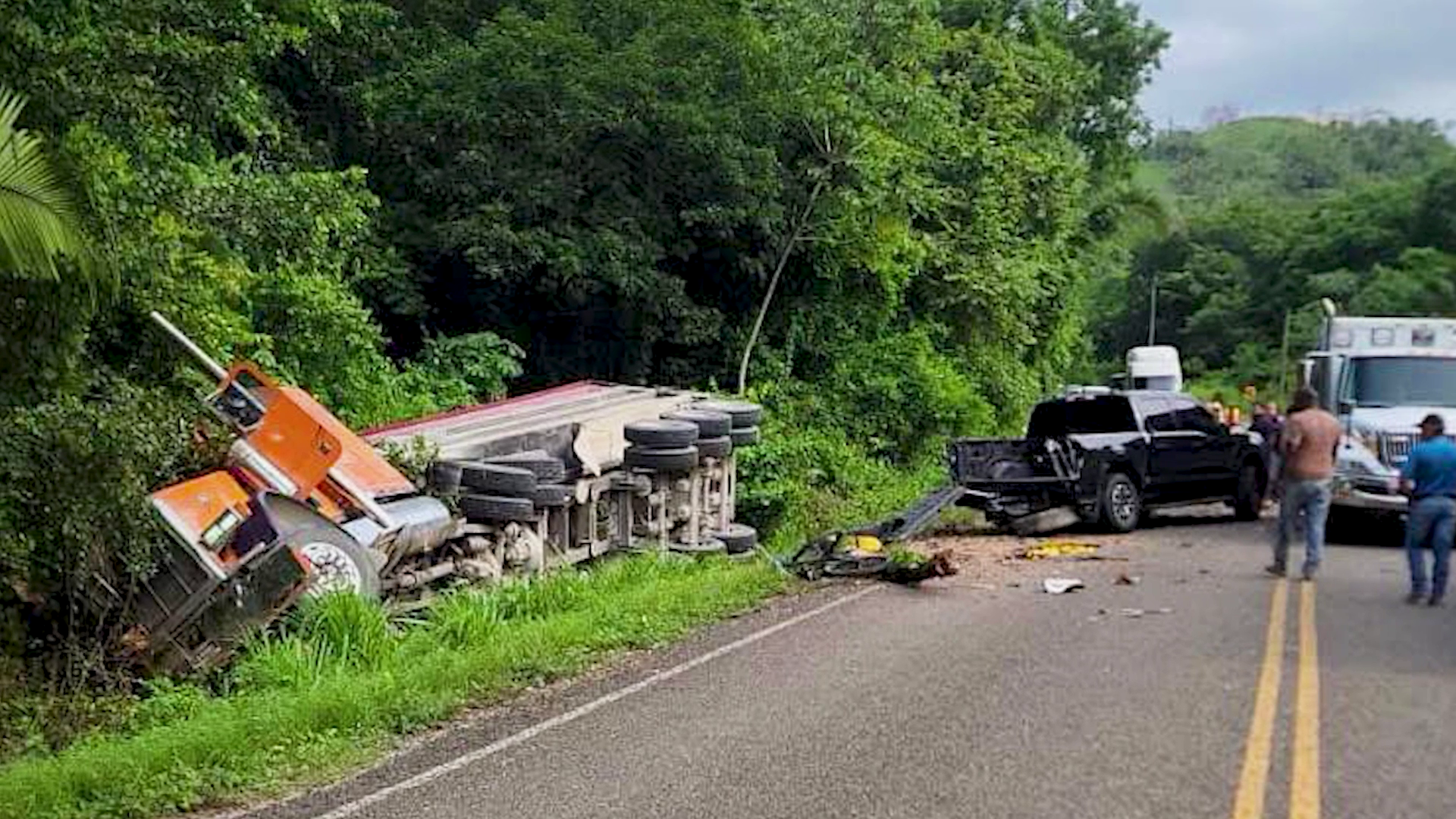
    In the wake of a severe storm that swept across Belize’s Cayo District this week, an act of public-spirited kindness has ended in devastating loss of life, leaving the small community reeling from an unthinkable tragedy. On Wednesday, as storm damage left roadways blocked and hazardous for passing drivers, Jaheed Lopez and Ervin Gutierrez pulled over to the side of the Hummingbird Highway between mile markers 51 and 52 to remove a fallen tree from the pavement, working to make the route safer for every motorist that would follow behind them. What began as a selfless act ended in a deadly collision that has claimed both of their lives.

    Assistant Commissioner Hilberto Romero, head of Belize’s National Crime Investigation Branch, has detailed the sequence of events that led to the fatal crash in an official briefing on the incident. According to Romero, when law enforcement officers arrived at the accident site just after the collision, they found the involved truck overturned across the highway, with four additional parked vehicles heavily damaged in the impact. Initial investigation confirmed that the truck, operated by driver Melvin Chinchinilla, was traveling toward the city of Belmopan when it failed to stop in time to avoid the vehicles parked by Lopez and Gutierrez as they cleared debris. The truck crashed directly into the parked cars, flipping itself and trapping the two good Samaritans underneath.

    Initial reports after the crash noted that Lopez died immediately at the scene, while Gutierrez was rushed to medical care with critical injuries. In the days following the incident, authorities have confirmed that Gutierrez has also succumbed to the wounds he sustained in the collision. Romero confirmed that both men were officially pronounced dead at the site after first responders arrived.

    The official investigation into the crash is currently ongoing. Law enforcement teams have already collected multiple witness statements, taken on-site forensic measurements, and obtained required toxicology samples from the truck driver. All relevant permits and investigative notifications have been served as required by Belizean law. Once the investigation is fully completed, the full case file will be submitted to the Director of Public Prosecutions for final review and guidance on next steps, including any potential legal action against the driver.

    This report is a transcribed account of an evening television news broadcast, adapted for online publication. All statements from public officials have been preserved accurately for the record.

  • Deadly Collision Claims Motorcyclist’s Life in Orange Walk

    Deadly Collision Claims Motorcyclist’s Life in Orange Walk

    A routine commute along a residential Orange Walk District street has ended in fatal tragedy, after a van turning across a travel lane collided head-on with an oncoming motorcyclist who later succumbed to his injuries in hospital care.

    The September 14 crash occurred on Munoz Street, where 52-year-old Antonio Novelo, operating a white van, pulled into the path of Lorenzo Castro’s moving motorcycle, according to senior law enforcement officials overseeing the investigation. Castro, who police confirmed was operating an unlicensed, uninsured motorcycle, suffered catastrophic internal and blunt force trauma in the impact. He was rushed immediately to a local medical facility for emergency intervention, but medical teams were unable to save him, and he was pronounced dead shortly after arrival.

    Following an initial on-scene probe, investigators from Belize’s National Crime Investigation Branch served Novelo with an official Notice of Intended Prosecution, a standard pre-charge document that documents the preliminary findings of the crash investigation. Senior officials confirmed they have also collected a urine sample from the van driver to test for the presence of alcohol or controlled substances, a routine step in fatal traffic collision probes.

    “We are still working to map out every detail of what led to this crash, from road conditions to driver actions and any potential contributing factors,” stated Assistant Commissioner of Police Hilberto Romero, head of the National Crime Investigation Branch, in an on-record briefing following the incident. “Once our full investigation file is compiled, it will be sent to the Director of Public Prosecutions for final review and directives on what formal charges, if any, will be pursued.”

    When asked by reporters whether Castro was wearing a required safety helmet at the time of the crash, Romero confirmed that investigators have not yet confirmed that detail as of the latest update.

    This report is adapted from a transcript of an original evening television news broadcast, with unedited local Kriol language quotations adjusted to standard English spelling for clarity.

  • Thieves Beat Security in Second Blake Building Burglary

    Thieves Beat Security in Second Blake Building Burglary

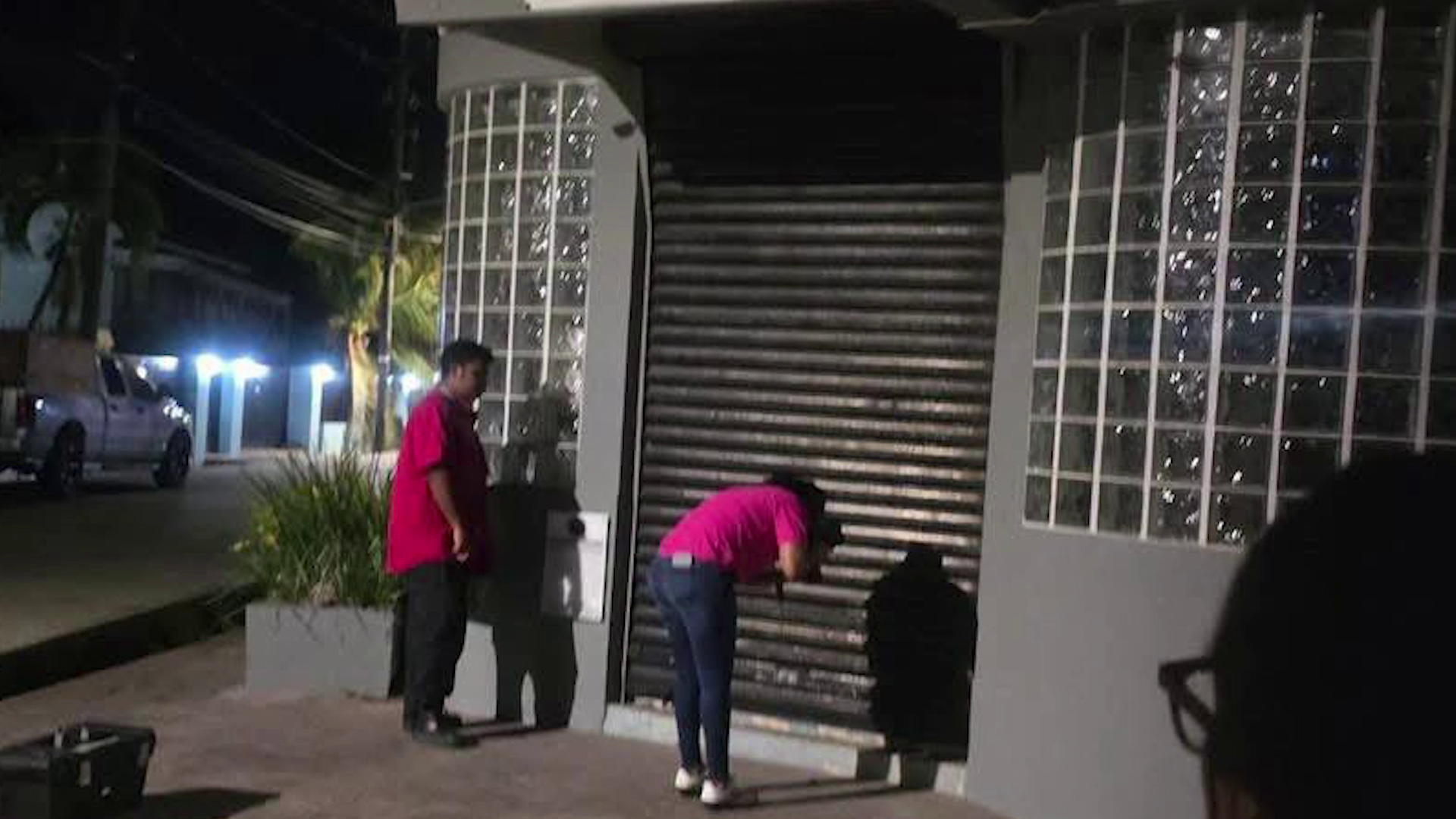
    Two weeks, two targeted break-ins at a commercial space inside Belize City’s Blake Building on Eyre Street — and the second incident has left local business owners and residents deeply unsettled, after perpetrators defeated on-site security and made off with thousands of dollars worth of consumer electronics.

    The latest burglary was reported to Belizean law enforcement on Sunday by Shanda Thompson, the owner of the targeted business. According to official accounts from the Belize Police Department, Thompson was alerted to a potential breach by her facility’s security alarm. When she conducted an initial inspection of her shop, she confirmed the break-in and found that multiple cell phones, laptops and tablets had been stolen by the intruders.

    Assistant Commissioner of Police Hilberto Romero, who leads the department’s National Crime Investigation Branch, confirmed that a full-time security guard was posted on the premises at the time of the incident. Romero told reporters that after the alarm triggered, the guard conducted a sweep of the building and ultimately discovered the burglars had forced their way in by damaging the establishment’s entry locks.

    Local community members say the pattern of repeat break-ins at the same location has raised significant concerns about public safety and commercial security in downtown Belize City. Many business operators report they are now reviewing their own security protocols to prevent similar incidents at their properties.

    Right now, investigators are working through the Blake Building’s closed-circuit surveillance footage to identify potential suspects and track the stolen electronics. No arrests have been announced as of the September 14, 2026 reporting date, and the investigation remains ongoing.

    This report is based on a transcript of an evening television news broadcast from Belize.

  • Lightning Strike Leaves Otoxha Family Homeless

    Lightning Strike Leaves Otoxha Family Homeless

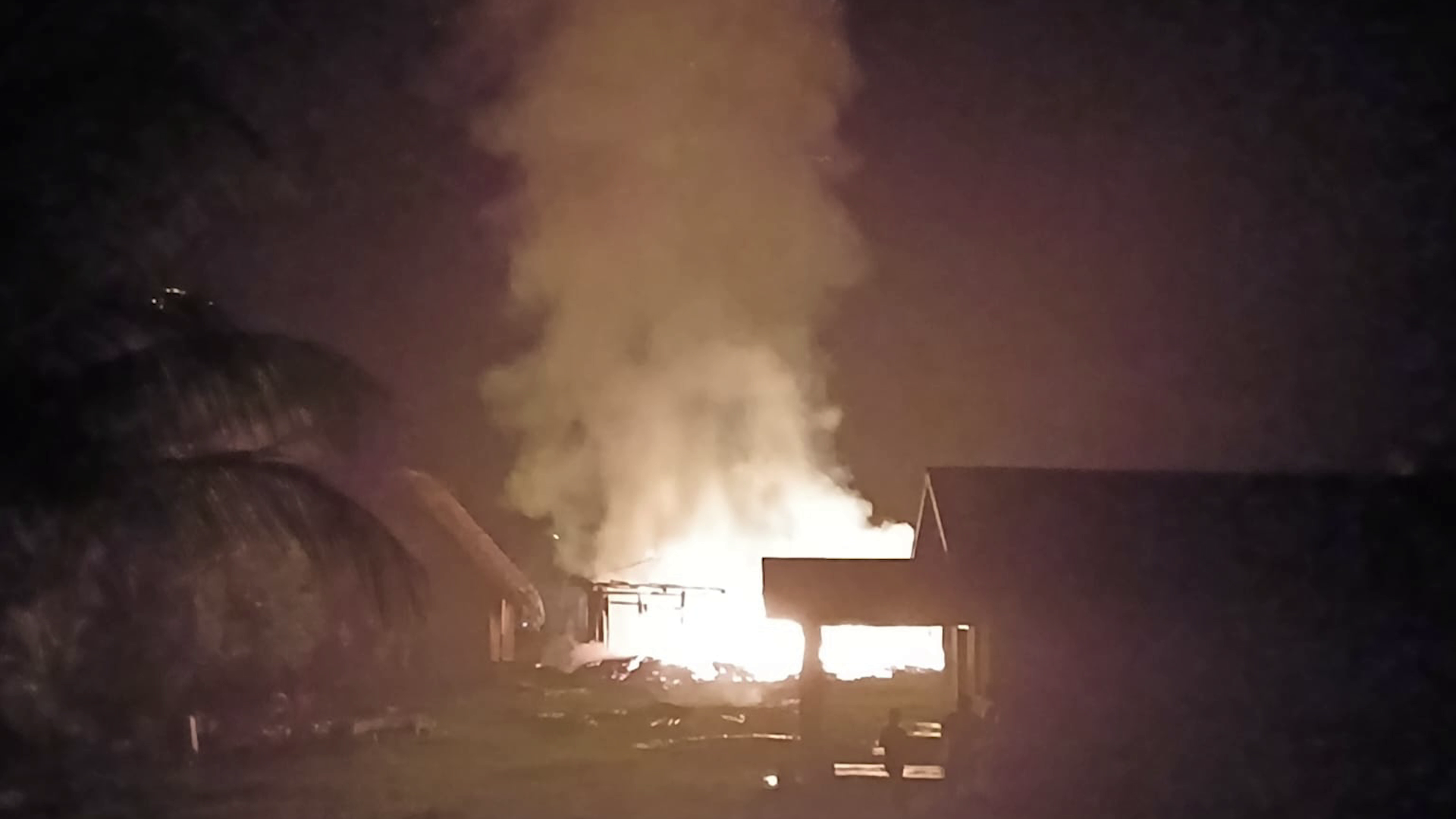
    A destructive blaze sparked by a lightning strike during a severe weekend thunderstorm has left a family of five without shelter and nearly all their possessions in Otoxha Village, Toledo District, just months ahead of the 2026 rainy season. The incident unfolded in the early hours of Sunday, September 14, 2026, when a lightning bolt hit the thatch-roofed home of 48-year-old Alejandro Ack, igniting an inferno that quickly consumed the entire structure.

    Miraculously, all family members—Ack, his wife, and their three children—escaped the fire without physical harm. But the escape came down to a last-minute effort, according to neighbor Olario Ical, who is now spearheading a community donation drive to support the displaced family. Ical shared his firsthand account of the disaster in a phone interview with local reporters, recalling how he was woken by panicked screams from the Ack property in the middle of the night.

    “When I woke up and I heard it. I heard screaming and I heard like shouting. So I went quickly, I went quickly to my window to see what happened and I saw nothing. So I quickly opened my door and came on the veranda. That’s when I see the fire and I saw it’s for him, it is his house,” Ical described. By the time he reached the property, the entire home was already engulfed in flames, which lit up the entire night sky. Ack’s wife had struggled to rouse her husband and children, who were left groggy and disoriented by the loud clap of thunder that accompanied the lightning strike. She had to physically shake the family awake in their hammocks, and by the time everyone evacuated, the fire had already spread too far to save any belongings.

    With most village residents still asleep when the fire broke out, emergency response from the community was delayed. By the time most neighbors arrived to lend a hand, the home was completely swallowed by flames, leaving no chance to recover furniture, clothing, documents, or any of the family’s personal possessions.

    Now, Ical is coordinating donations to help the Ack family get back on their feet. When asked what the family needs most urgently, Ical outlined that top priorities include non-perishable food, articles of clothing for all five family members, and financial donations to cover long-term rebuilding costs. While local villagers have already committed to helping construct a new shelter for the family, they lack the supplies and funds to complete the project without outside support.

    Any community members or members of the public wishing to support the Ack family can contact Alejandro Ack directly via WhatsApp at 502-4503-9281 to coordinate donations. This report is a transcript of an evening television broadcast, with words originally spoken in Kriol transcribed using a standardized spelling system for publication.

  • Family Home Reduced to Ashes, Husband Held for Questioning

    Family Home Reduced to Ashes, Husband Held for Questioning

    A weekend arson attack has left a family’s residence in Paraiso Village, Corozal District completely destroyed, and investigators are probing long-standing domestic unrest as a potential motive for the deliberate blaze. The incident, which unfolded on Saturday, September 13 2026, left a one-story 18-by-20-foot home reduced to ash, and has placed the female witness — the owner’s wife — at the center of the ongoing investigation.

    According to official statements from Assistant Commissioner of Police Hilberto Romero, who leads the National Crime Investigation Branch, the victim’s spouse, Gregorio Espiritu, entered the property moments before flames engulfed the structure. Espiritu’s wife, Brenda, told first responders she was watching from nearby when her husband entered the home, and within minutes, heavy flames had consumed the entire building.

    By the time local law enforcement arrived at the scene, the residential structure was already fully engulfed, leaving no salvageable belongings for the family. What makes the case particularly disturbing to investigators is the documented history of repeated domestic violence incidents between the couple, a detail that has emerged early in the probe and given authorities reason to treat the fire as an intentional act linked to relationship conflict.

    As of the latest update on September 14, 2026, Gregorio Espiritu remains in police custody, where he is being held for formal questioning as investigators work to confirm the cause of the fire and build a criminal case. This report is adapted from a transcribed evening television newscast covering the developing incident. Investigators have not yet announced formal charges, and the inquiry remains active as of press time.

  • Massive Expo Turnout Renews Call for Indoor Venue

    Massive Expo Turnout Renews Call for Indoor Venue

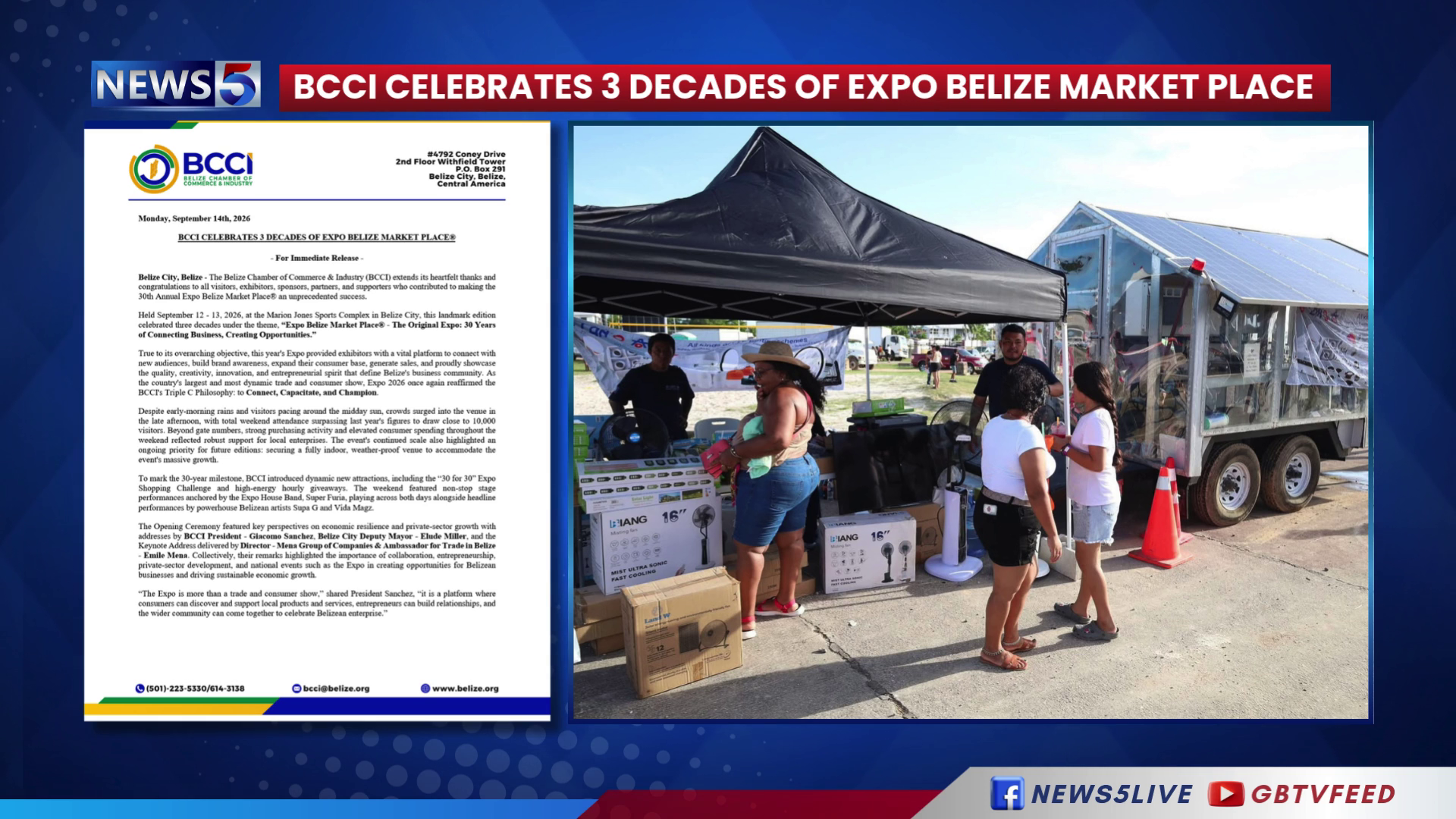
    Despite unstable weather that included heavy rain and sweltering heat, organizers of the 30th annual Expo Belize Marketplace never anticipated the overwhelming turnout that would reshape conversations around the event’s future. Held over the September 12-13 weekend in 2026 at the open-air Marion Jones Sports Complex, the iconic local trade expo drew nearly 10,000 attendees across the two days. That figure marks a clear increase over the previous year’s visitor count, defying forecasts that poor conditions would keep shoppers at home.

    For the small businesses, local artisans, and domestic producers that set up booths at the expo, the huge crowd translated into far stronger sales than many had projected. The Belize Chamber of Commerce and Industry, which hosts the annual event, marked its 30th year organizing the expo, a milestone that coincided with the record-breaking turnout to underscore the event’s enduring importance to Belize’s domestic small business ecosystem.

    For decades, Expo Belize Marketplace has served as a critical accessible platform for local entrepreneurs to showcase their goods and connect directly with consumers, filling a gap that larger commercial retail spaces often do not address for small, emerging producers. Its growing popularity year over year has become a clear signal of both its cultural and economic value to the nation, but that success has also brought a long-simmering infrastructure challenge to a head.

    Exhibitors and organizers alike have long noted that the current outdoor-only venue leaves vendors and attendees vulnerable to Belize’s tropical weather, with rain and heat often disrupting operations and forcing some small businesses to lose out on sales. This year’s turnout, which came despite poor weather conditions, has proven that demand for the expo has outgrown the existing space. Industry leaders and business advocates are now renewing longstanding calls for the development of a larger, fully enclosed indoor event facility that can protect vendors, shoppers, and valuable inventory from the elements, allowing the expo to continue growing and supporting Belize’s local economy for decades to come.

  • Junior cricketers get $10 000 boost

    Junior cricketers get $10 000 boost

    Two primary schools in Barbados’ St John parish have been given a major boost to their grassroots cricket programs, after accepting a $10,000 donation of professional cricket equipment through a cross-sector partnership between public officials and private industry. \n\nMount Tabor Primary and St Margaret’s Primary took ownership of the new gear during an official presentation ceremony held Monday at the Gall Hill Community Centre, bringing to fruition a collaborative effort between the non-profit Cricket Impact Group, regional financial firm RBC Barbados, and Barbados’ Ministry of Sport. \n\nMinister of Sport Charles Griffith opened the event by praising the two private organizations for their uncommon commitment to nurturing young athletic talent in the country. Noting that targeted investments in youth cricket are rare from the corporate sector in Barbados, Griffith emphasized that the donation does more than just provide gear—it gives aspiring young players the foundational resources they need to refine their skills and build confidence on the pitch. \n\n“I hope this donation inspires the students at both schools to excel in the sport,” Griffith said in his address. “On behalf of all the young people that will benefit from this, I want to extend my sincere gratitude for this incredibly generous gesture.” \n\nFor Adam Hall, Chief Executive Officer of the Cricket Impact Group, the project aligns directly with the organization’s core mission of centering community engagement in cricket development. Hall highlighted that the partnership between public and private stakeholders sets a strong model for growing grassroots sports in the country, adding that this donation is only the first step in the group’s long-term work in Barbados. \n\nHe also made a key announcement: the initiative will return annually to support more youth cricket programs across the island. “Community is at the heart of everything we do at Cricket Impact Group, and that means building meaningful shared value between government and private entities,” Hall explained. “Working with the RBC Barbados team has been an absolute pleasure, and we see this donation as just the starting point for growing cricket’s community across Barbados.” \n\nShimon McIntosh, Managing Director of RBC Barbados, echoed Hall’s enthusiasm for the partnership, framing the investment as a way to preserve a beloved cultural institution for future generations. For many Barbadians, cricket is far more than a recreational activity—it is a core part of national identity, McIntosh said. To keep that legacy alive, he added, stakeholders must actively pass the sport on to young people by giving them access to the resources they need to thrive. That is exactly what this donation sets out to accomplish, he noted. \n\nJulian Pierre, physical education teacher at St Margaret’s Primary, thanked the partnering organizations for their forward-thinking investment, pointing out that primary school is where the next generation of international cricket stars build their foundational skills. Many of the students benefiting from this donation could one day go on to represent Barbados, the West Indies, or even play professionally for county teams in the United Kingdom, Pierre noted, given the far-reaching global reach of the sport. “This is an incredible opportunity for our students, and we are so grateful for this support,” he added.