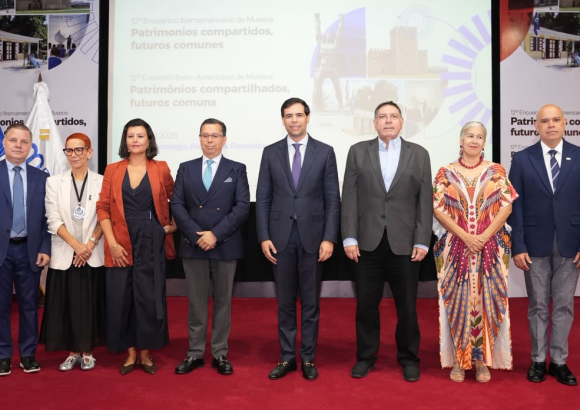
SANTO DOMINGO – Leading cultural heritage experts, museum administrators, and cultural policy specialists from across the Ibero-American region have gathered in the Dominican Republic for the 12th edition of the Ibero-American Meeting of Museums (EIM), a landmark event dedicated to unpacking the most pressing challenges and untapped opportunities that will define the future of cultural institutions and heritage preservation.
Hosted jointly by the intergovernmental Ibermuseums Program and the General Directorate of Museums under the Dominican Ministry of Culture, the three-day summit runs from September 14 to 16 in the capital city of Santo Domingo, anchored by the unifying theme “Shared Heritage, Common Futures.” The official opening ceremony was held at the city’s Indotel Digital Culture Center, drawing dozens of senior representatives from regional cultural cooperation bodies to kick off the cross-border dialogue.
Against a backdrop of rapid global change, the conference frames collective cultural heritage as both an ongoing shared construction and a living connection to collective memory, while guiding participants through critical conversations about how museums must adapt to shifting social norms, accelerating technological innovation, and escalating environmental disruption. According to Mônica Barcelos, coordinator of the Ibermuseums Program’s Technical Unit, the summit brought together more than 80 designated participants from 18 Ibero-American countries, all convened to debate the evolving role and core responsibilities of museums in relation to the communities they serve.
The full conference agenda is structured around three core thematic pillars, with dedicated sessions covering a wide range of pressing topics including public engagement and social ownership of heritage, expanding representation of diverse cultural identities, integration of cutting-edge emerging technologies, and building resilience against environmental threats. Two topics stand out as central priorities for this year’s gathering: the transformative impact of artificial intelligence on how museums frame and share cultural narratives, and the urgent need to protect biocultural territories as climate change amplifies environmental risks across the region.
Beyond panel discussions and keynote addresses, the three-day meeting serves as a collaborative platform for cultural professionals and their institutions to exchange on-the-ground experiences and proven best practices. The ultimate goal of these exchanges is to strengthen regional public policy frameworks for cultural heritage and co-develop actionable strategies that empower museums to tackle emerging challenges across the social, technological, and environmental spheres.
Founded in 2007, the Ibermuseums Program is an intergovernmental cooperation initiative focused explicitly on advancing the museum sector across Ibero-America. Its core mission centers on strengthening national public policies for cultural institutions, building professional capacity among heritage workers, and advancing protections for at-risk museum collections and heritage sites. Today, the program connects 22 member countries and supports a vast regional network that includes more than 10,000 museums and cultural institutions across the region.