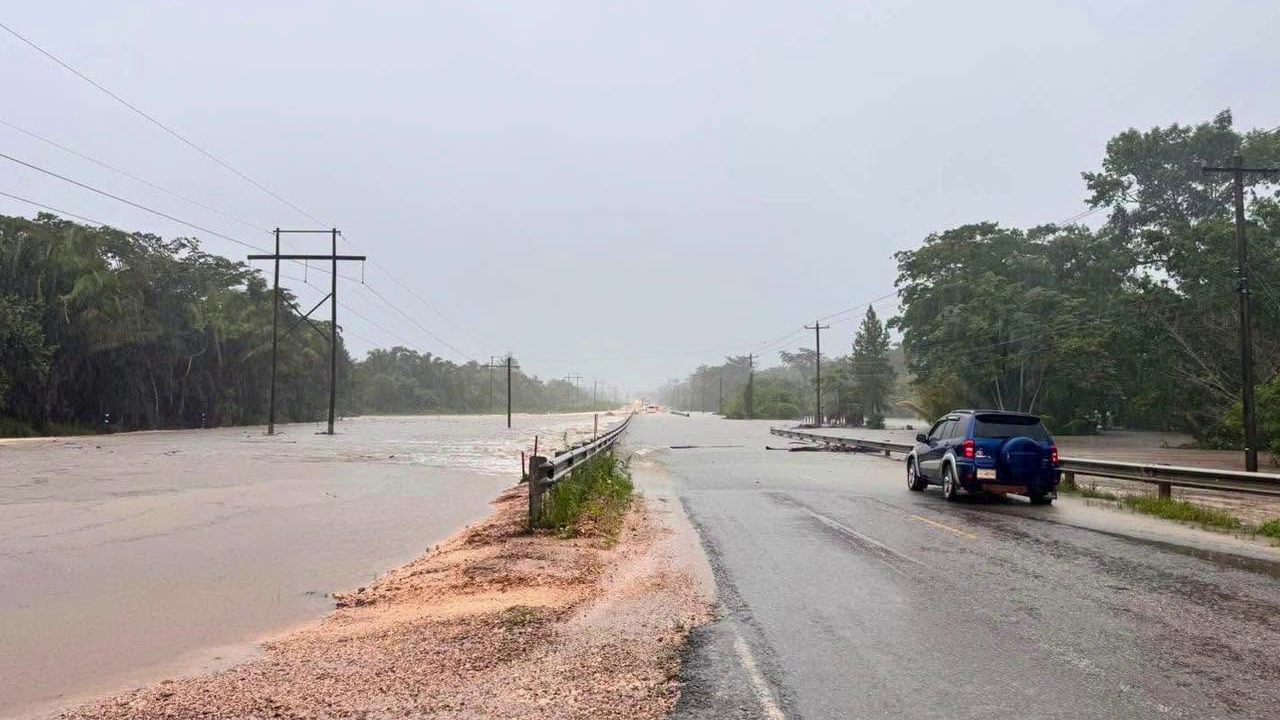
In the wake of an unprecedented historic flood that submerged large swathes of Belmopan over the weekend, Mayor Pablo Cawich has publicly pushed back against local accusations that clogged city drainage infrastructure was the primary cause of the disaster. Speaking to local media on the evening after floodwaters peaked, Cawich explained that the catastrophic event was triggered by an extraordinary surge of floodwater originating from nearby Armenia Village that overwhelmed the capital’s drainage network beyond its design capacity. The mayor emphasized that the scale of this flood is unmatched by any event the city has experienced in nearly three decades, with natural runoff channels completely unable to accommodate the massive volume of water moving through the urban area.
“This was not a failure of Belmopan’s own drainage maintenance, as some have claimed by saying blocked drains stopped water from moving,” Cawich stated in his address. “The root cause was extreme, unrelenting rainfall across the entire Belmopan-Armenia region that brought rainfall totals we have never recorded before. Rain began falling steadily Friday night and continued nonstop through all of Saturday, swelling both the Belize River and local creeks past their banks. Our city’s drainage system feeds runoff into Ten Cents Creek, Mount Pleasant Creek, and ultimately the Belize River, but the final outflow point along the highway is narrow and cannot handle massive flood surges. I can confirm that the Ministry of Infrastructure Development and Housing (MIDH) already has plans to build a new expanded bridge at that bottleneck, which we hope will improve drainage capacity for future extreme weather events.”
As emergency crews worked to contain the flood and assist displaced residents, the Belmopan City Council initially launched a WhatsApp-based emergency hotline to allow residents to request aid directly. However, the sheer volume of pleas for assistance overwhelmed the platform, leading to the hotline being automatically flagged and suspended by the messaging service due to the high rate of incoming messages. The national ministry quickly intervened to launch a dedicated online emergency portal, giving residents a secondary channel to submit requests for help. By combining reports from both platforms, the city council has been able to map affected areas and coordinate on-the-ground response efforts more effectively.
To date, the combined reporting system has gathered 150 individual assistance requests from affected residents. “This morning, I confirmed that approximately 70 of those requests have already been processed, with affected households assessed and receiving support from the Belize Emergency Management Organization (BEMO),” Cawich added. The mayor noted that the last time the city saw a flood of this magnitude along the main highway was during Hurricane Mitch in 1998, a catastrophic storm that hit the region nearly 28 years prior. While the city has faced heavy rainfall events in recent years – including a flood last February that cut off the J&W area and turned it into a temporary island – a recently completed MIDH-funded bridge on John Saldivar Boulevard held up through the recent extreme conditions. “That bridge took a tremendous beating from the surging water, but thank goodness it remained fully functional throughout the event,” Cawich said.
Meteorological records show rainfall finally stopped around 11 a.m. Saturday, and floodwaters across the entire city had receded to pre-flood levels by 3 p.m. the same day, allowing crews to begin full damage assessments and cleanup operations. This report is a transcribed version of an evening television newscast, with words originally spoken in Kriol transcribed using a standardized spelling system.