博客

  • Harnarine claims innocence as CoE report goes public

    Harnarine claims innocence as CoE report goes public

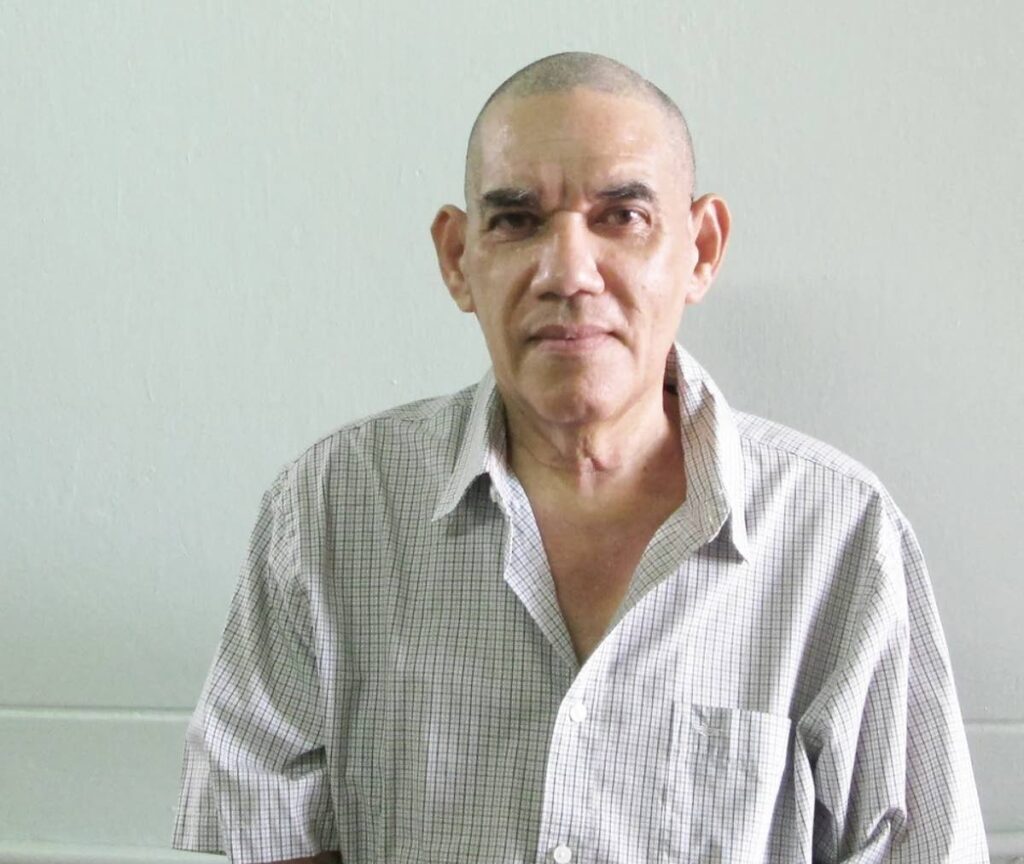
    In the aftermath of Trinidad and Tobago’s financial crisis, former Hindu Credit Union (HCU) president Harry Harnarine has publicly asserted his innocence regarding the findings of the Commission of Enquiry (CoE) into the collapse of both Colonial Life Insurance Company (Clico) and HCU. Harnarine’s declaration on January 17 came directly in response to Attorney General John Jeremie’s presentation of the CoE reports before the House of Representatives.

    During a telephone interview, Harnarine maintained his position stating, “I haven’t done anything wrong,” emphasizing his full cooperation with the enquiry process by attending all hearings when summoned as a witness. Other prominent figures including former finance minister Karen Nunez-Tesheira and former Finance Ministry permanent secretary Vishnu Dhanpaul also testified during the proceedings.

    The CoE report outlined potential civil remedies for affected HCU depositors, noting that those receiving government relief up to $75,000 would assign their entitlements to the state. The commission identified legislative provisions enabling the Commissioner for Cooperative Development to investigate possible misfeasance or breach of trust by HCU officers.

    However, the CoE acknowledged limitations in evidence gathering, stating insufficient oral and documentary evidence was available by the conclusion of hearings. This evidentiary gap prompted recommendations for the Director of Public Prosecutions to examine potential criminal proceedings against unnamed individuals who declined to participate voluntarily despite ample opportunity.

    Harnarine reiterated his longstanding position that HCU was not insolvent at the time of its winding up, claiming he had petitioned three separate labour ministers between 2020 seeking appeal hearings. While former minister Errol McLeod couldn’t recall such requests, Jennifer Baptiste-Primus indicated the matter fell under the Commissioner for Cooperative Development’s jurisdiction.

    The parallel investigation into Clico’s collapse attributed the failure to a fundamentally defective business model within the CL Financial Group, citing senior management’s inability to implement necessary changes despite external auditor recommendations. The commission notably cleared the Central Bank of any misconduct while criticizing late CLF chairman Lawrence Duprey’s actions, suggesting potential criminal proceedings.

    Both institutions collapsed in 2009 following aggressive investments in high-risk foreign real estate assets financed through unsustainable high-interest strategies, creating one of the Caribbean’s most significant financial crises.


  • Children create own soca at Spirit Mas workshop

    Children create own soca at Spirit Mas workshop

    PORT OF SPAIN – More than 100 children from three Trinidadian children’s homes experienced an immersive introduction to Carnival arts during Spirit Mas’ second annual Children’s Carnival Workshop at the National Academy for the Performing Arts (NAPA) on January 11.

    The event brought together youth from St Mary’s Children’s Home, Credo Foundation, and Rainbow Rescue for a comprehensive exploration of Carnival’s creative dimensions. Participants engaged in both theoretical and practical sessions across multiple disciplines including songwriting, costume design, deejaying, stilt-walking, and traditional soca and cultural dance.

    Guiding the young participants were nationally recognized practitioners in each field. The songwriting segment, led by Freetown Collective’s lead singer Muhammad Muwakil alongside music producers Kitwana Israel, Kyle Phillips, and Mevon Soodeen, provided deep insights into musical creation. Facilitators demonstrated fundamental songwriting techniques, vocal dynamics, and the transformation of creative concepts into polished productions.

    The workshop culminated in a collaborative achievement as participants composed and performed their own unofficial soca composition. Fifteen-year-old Aliyah emerged as the lead vocalist, recording verses while other children contributed supporting vocals and additional lyrics. The emotional impact was palpable when participants heard their collective work played back for the first time.

    “It was shocking. It sounded amazing, and I didn’t even recognise my own voice,” Aliyah expressed, adding with hopeful anticipation, “Maybe one day I’ll be a singer.”

    The program featured specialized instruction across multiple Carnival disciplines: Marvin Dowridge led cultural dance sessions, Rocstars Deejay Academy provided DJ instruction, Nkwame Martin taught soca dance, and the National Steel Symphony Orchestra introduced steelpan fundamentals. Costume design was facilitated by Nakitah Hyatali and Deshaune Fitzwilliam, while stilt-walking instruction came from the Kaiso Kai Valencia Cultural Group, with makeup artistry handled by Madame Maharaj Beauty School.

    Aliyah highlighted the workshop’s significance for cultural preservation, noting: “This is a way of passing down knowledge and experience so the next generation will be educated on our culture and heritage. It’s important that Spirit continues this.”

  • Veronica Callender, dancing her way to the top

    Veronica Callender, dancing her way to the top

    An 11-year-old dance sensation from Trinidad and Tobago is poised to make her mark on the global stage following a spectacular debut performance at the All Dance World Championships in Orlando. Veronica Callender, a student at Newtown Girls’ RC School, achieved the remarkable feat of securing dual victories in the Dancehall and Afro dance categories within the All New Dancer division for ages 11-14 last April.

    The young prodigy, representing both her nation and the Lil Angel of Dance academy, demonstrated extraordinary talent during her first international competition and overseas journey. Despite initial challenges with complex choreography crafted by her instructor Roxanne Augustine-Charles, Callender’s perseverance transformed uncertainty into confidence through rigorous training.

    Her pre-performance strategy involves mentally transforming the stage into her personal dance space, eliminating nervousness by imagining herself dancing alone in her room. This psychological technique proved effective until the awards ceremony, where anxious moments turned to exhilaration as she discovered her dual victories.

    Beyond the competition, Callender embraced cultural exchange, introducing international peers to Trinidadian culture while experiencing American fast food and shopping. Her triumph has unlocked an invitation to the International Dance Open in Italy, where she aims to replicate her success.

    The journey to Italy requires substantial financial backing, prompting Lil Angel of Dance to seek corporate and public sponsorship. Callender balances her dance career with academic commitments at Newtown Girls’ RC School and musical involvement in the TT Cadet Force Steel Orchestra and Highlanders Junior Steel Orchestra.

    With six years of dance experience spanning Dance Dynamix of TT and her current academy, Callender specializes in Dance Hall, Afrobeats, Reggaeton and Hip hop, while expressing interest in exploring traditional Indian dance. As preparations intensify for the 2026 competition, the young ambassador anticipates Italian cuisine and cultural exploration alongside her competitive objectives.

  • Artist Sarah Beckett bids goodbye to Trinidad and Tobago

    Artist Sarah Beckett bids goodbye to Trinidad and Tobago

    After more than five decades of artistic dedication, renowned artist and poet Sarah Beckett prepares to depart Trinidad and Tobago with a profound final exhibition that mirrors her lifelong connection to the nation. ‘Echoes of a Lifetime,’ hosted at Horizons Art Gallery on Mucurapo Road from January 21-24, serves as both a retrospective and heartfelt farewell before her relocation to the United Kingdom.

    The exhibition assembles approximately 100 works spanning 25 years of creative output, including oils, drawings, acrylics, and gouache pieces ranging from monumental canvases to intricate miniatures. While some works have been previously exhibited, others will debut publicly for the first time. Accompanying these pieces will be a selection of Beckett’s personal sketchbooks, offering visitors an intimate glimpse into the genesis of her artistic ideas.

    At nearly 80 years old and following a year of health challenges, Beckett acknowledged her children’s encouragement to relocate closer to family in the UK. She embraces this transition as an opportunity to ‘learn a new song in my 80s,’ maintaining optimism about establishing her own flat while remaining near loved ones.

    Despite this geographical shift, Beckett emphasizes this does not mark the conclusion of her creative journey. While conceding that large-scale works requiring physical endurance may become impractical, she intends to continue painting on a reduced scale. Additionally, she remains engaged in developing an illustrated poetry book, a project she plans to advance within her new environment.

    Beckett’s connection to Trinidad defies simple explanation. First arriving at age 20 from Southampton with her three children and Trinidadian husband, she subsequently lived elsewhere but consistently returned to the island. A 2015 relocation attempt to the UK lasted merely nine months before she recognized her unreadiness to leave Trinidad permanently, describing the nation as ‘entwined in my blood.’

    Her profound affection found expression in the 2024 poetry collection ‘Iere: Living in the Land of the Humming Bird,’ where she reflected that Trinidad nurtured her development as both poet and artist. The publication stands as her lyrical tribute to the island’s beauty, cultural complexities, and enduring spirit, while also acknowledging its struggles.

    The current transition inspired her newest poem ‘My Song,’ which opens with the verses: ‘Do not call this ending,/do not name it closure,/I know how to carry the sun/in the palms of my hands,/dye drab walls with color.’ These lines encapsulate her perspective that this departure represents transformation rather than termination.

    Beckett acknowledges the emotional complexity of preparing her final exhibition while dismantling decades of life in Trinidad. She expresses gratitude for her extraordinary experiences and artistic opportunities while acknowledging the inherent sadness of farewell. Nevertheless, she affirms the timeliness of this decision and anticipates familial connections in her next chapter.

    Her parting wisdom encourages focusing on life’s small blessings rather than lamenting circumstances, emphasizing appreciation over longing for alternatives. The exhibition not only showcases artistic legacy but embodies Beckett’s philosophical approach to transitions—honoring the past while embracing new beginnings.

  • Isabel Dennis on crusade to create safe learning places

    Isabel Dennis on crusade to create safe learning places

    Educator Isabel Dennis has pioneered an innovative educational framework rooted in Caribbean cultural heritage that is demonstrating remarkable success in transforming the school experience for students. Her groundbreaking Village System, currently being implemented at St. Anthony’s College in Diego Martin, represents the culmination of two decades of research into holistic education methods across multiple countries.

    The system draws inspiration from indigenous Caribbean wisdom preserved through traditional practices like kalinda (stickfighting) from the Bois Academy of Trinidad and Tobago. This approach has been adapted into four foundational pillars: culture, leadership, identity, and values, forming what Dennis describes as ‘restorative discipline.’ Rather than punitive measures, this method emphasizes accountability through constructive dialogue, asking students: ‘What happened?’ ‘Who was affected?’ and ‘How can we make it right?’

    Beyond conflict resolution, the comprehensive program integrates taekwondo, permaculture, and specialized leadership sessions directly into the curriculum. The initiative actively involves both parents and teachers through workshops addressing contemporary parenting challenges and providing educators with practical restorative tools for classroom management.

    Dennis’s motivation stems from personal childhood experiences of emotional insecurity in educational environments, driving her lifelong commitment to ensuring no child feels unsafe in schools. The program has already shown significant impact, with student participation expanding from 35 to 102 participants across three classes following demonstrated success in its initial pilot phase.

    Parental feedback has been overwhelmingly positive, with reports of improved confidence, communication, and attitude toward school among participants. The program’s community-led approach demonstrates how educational transformation can occur without massive budgets or infrastructure changes, utilizing existing resources more effectively through culturally relevant methodologies.

    Looking forward, Dennis envisions expanding this model across 50 Caribbean schools within five years, fundamentally shifting educational conversations from exam performance to leadership development and cultural identity. The initiative represents a grassroots movement toward educational systems that honor Caribbean heritage while preparing students to shape their future with confidence and cultural pride.

  • O’Neil Odle, stickfighting in my blood

    O’Neil Odle, stickfighting in my blood

    In the traditional arena of Trinidadian stickfighting, known as the gayelle, 35-year-old O’Neil Odle from New Grant has established himself as a living legend. The four-time National Carnival Commission’s King of the Rock champion continues his dominant streak in 2026, securing victories at both the Debe Junction and Moruga competitions in January.

    Odle’s connection to the sport runs deeper than mere competition—it represents a profound family legacy. His late grandfather, Middle ‘Congo Bara’ Odle, and father, Middle Jr Odle, were both revered figures in the stickfighting community. Despite this heritage, Odle initially pursued boxing during his school years, maintaining an undefeated record across regional matches.

    The transition to stickfighting at age 18 came after boxing coaches rejected his aggressive training style. His mother expressed concerns about the violent nature of the sport, but Odle remained determined to follow his destiny. Sixteen years later, he has sustained numerous injuries, including four significant head wounds, yet his passion remains undiminished.

    Beyond the physical aspects, Odle emphasizes the mental discipline required for success. ‘You must control frustration and anger. Complete focus is essential—any distraction or emotional turmoil makes you vulnerable to strikes,’ he explains, noting how top fighters maintain remarkable calmness in the arena.

    Odle’s life outside the gayelle reflects similar resilience. Forced into maturity at 13 when his father passed away, he worked cutting cane to fund his education while supporting his six siblings. Now working in construction and father to two daughters, Odle views stickfighting as cultural preservation. ‘This tradition comes from our Merikin ancestors in the 1800s conflicts. It’s about lineage—it’s in our blood,’ he states, connecting his personal journey to broader historical narratives.

    With the National Stickfighting Finals approaching on February 9, Odle stands as the competitor to beat, embodying both athletic excellence and cultural continuity in Trinidad’s traditional martial art.

  • Chief Secretary: THA aims to provide greater transparency

    Chief Secretary: THA aims to provide greater transparency

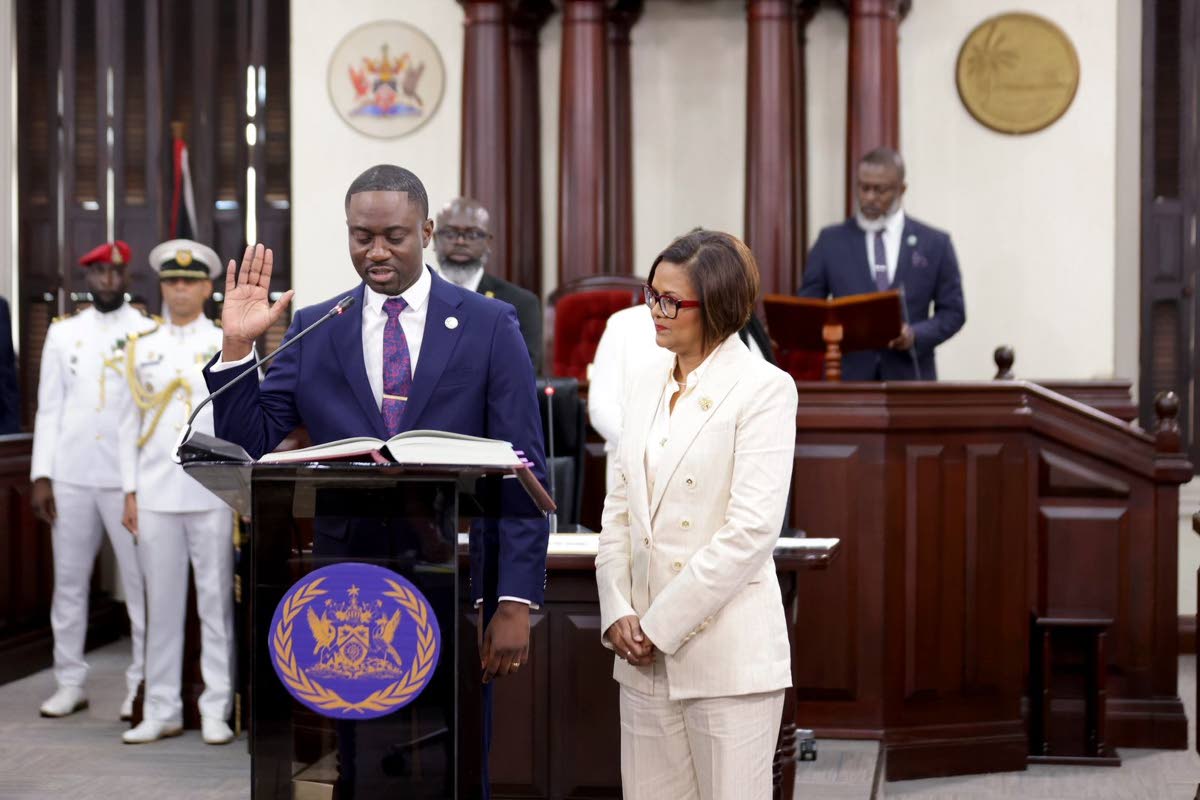
    In a landmark move toward governmental transparency, the Tobago House of Assembly (THA) is poised to implement radical democratic reforms during its inaugural session on January 22. The assembly’s first ordinary meeting will feature comprehensive amendments to parliamentary procedures designed to foster unprecedented public accountability.

    Chief Secretary Farley Augustine, whose Tobago People’s Party achieved a historic electoral sweep by capturing all 15 seats in the January 12 elections, unveiled these transformative measures during his inaugural press briefing at the Hochoy Charles Administrative Complex. The administration’s reform agenda represents a fundamental restructuring of Tobago’s governance model.

    The cornerstone reforms include restructuring the Public Accounts Committee to be chaired by non-executive members or assistant secretaries—a dramatic departure from previous conventions where minority leaders held this responsibility. This structural change ensures continuous oversight despite the absence of opposition members in the assembly.

    Augustine has initiated formal communications requiring all government administrators, department heads, board chairs, and CEOs of THA-state companies to publicly account for their execution of governmental policies before the reconstituted committee. Additionally, the assembly will introduce e-governance platforms enabling citizens to directly submit questions for parliamentary proceedings.

    Most notably, the reformed standing orders will mandate live broadcasting of committee meetings, excluding only security-sensitive matters requiring confidentiality. This media accessibility initiative empowers citizens to monitor governmental operations in real-time and form evidence-based opinions.

    Concurrently, Augustine instituted a rigorous performance evaluation system for all appointed secretaries, establishing a nine-month probationary period to demonstrate competency. Officials failing to meet delivery benchmarks will face immediate replacement, as the Chief Secretary emphasized his ultimate accountability for administrative performance.

  • Isaiah ‘Bongo’ Leacock brace steers Jabloteh past Eagles

    Isaiah ‘Bongo’ Leacock brace steers Jabloteh past Eagles

    In a thrilling TT Premier Football League encounter at Phase 2 La Horquetta recreation ground on January 16, San Juan Jabloteh secured a decisive 4-2 victory against Eagles FC, largely powered by former Defence Force striker Isaiah “Bongo” Leacock’s exceptional performance. The recently transferred forward demonstrated his scoring prowess with two crucial goals, bringing his personal tally to four since joining Jabloteh earlier this month.

    The match dynamics unfolded with Leacock initiating the scoring in the 19th minute with a precise finish past Eagles goalkeeper Akiel Seifert. Jabloteh strengthened their position when Jadel Carter’s unfortunate own goal doubled their advantage in the 27th minute. Leacock further cemented Jabloteh’s dominance just before halftime, calmly converting a 44th-minute penalty to establish a commanding 3-0 lead.

    Eagles FC displayed resilience in the second half as Josiah Edwards narrowed the deficit with a 61st-minute strike. However, Jabloteh’s strategic recruitment continued to pay dividends when another new signing, Caden Trestrail—also formerly of Defence Force—restored the three-goal margin in the 68th minute. Despite a late consolation goal from Eagles’ prolific winger Dominic Douglas in the 88th minute (his eighth of the campaign, making him joint-top league scorer), Jabloteh secured all three points, climbing from eighth to seventh position in the standings.

    In the accompanying double-header fixture, Miscellaneous Police FC missed a critical opportunity to draw level with league leaders Defence Force, settling for a 1-1 draw against fourth-placed Prisons FC. Jabari Mitchell’s 23rd-minute opener for Police was neutralized by Kevon Williams’ 48th-minute equalizer, replicating his Boxing Day heroics when he secured Prisons’ previous 1-0 victory against the same opponents.

    The TTPFL action was scheduled to continue on January 17 at Tobago’s Dwight Yorke Stadium, featuring bottom-placed 1976 FC Phoenix against Caledonia AIA, followed by leaders Defence Force confronting last season’s runners-up MIC Central FC Reboot.

  • Promoter sues Vybz Kartel over cancelled Trinidad festival

    Promoter sues Vybz Kartel over cancelled Trinidad festival

    Prominent Jamaican dancehall artist Vybz Kartel (legal name Adidja Azim Palmer) is facing a substantial breach-of-contract lawsuit filed by Trinidad-based event promoter Jacho Entertainment Ltd. The legal action, submitted to the High Court of Justice on January 13, alleges the artist wrongfully canceled his headline performance at the One Caribbean Music Festival in Port of Spain despite receiving over US$1.1 million in advance payments.

    The dispute centers around a performance agreement executed on November 22, 2024, which stipulated Kartel would headline the festival for a total fee of US$1.35 million. According to court documents, the event was initially scheduled for February 28, 2025, before being rescheduled to May 31, 2025, though no formal amendment to the payment schedule was executed.

    Jacho Entertainment claims it had fulfilled approximately 81% of its financial obligation prior to the event date, with the remaining US$250,000 scheduled for payment upon the artist’s arrival in Trinidad. The promoter attributes the delayed final payment to temporary foreign exchange restrictions in Trinidad and Tobago, which they maintain were properly communicated to Kartel’s management team.

    The lawsuit alleges that Kartel failed to board his scheduled flight to Trinidad on May 30, 2025, with his management subsequently demanding full payment before his arrival—a condition allegedly not stipulated in the original contract. The artist then publicly announced the cancellation on the day of the event through social media channels.

    Jacho Entertainment is seeking significant compensation for incurred expenses exceeding TT$7.3 million covering staging, production, marketing, and logistical costs. The claim includes demands for special damages, general damages for reputational harm and lost opportunities, restitution, and interest. The filing additionally references allegedly defamatory statements made by Kartel on social media that the promoter claims falsely attributed blame for the cancellation.

    Legal representatives Criston Williams and Anthea Smith are representing Jacho Entertainment in proceedings that highlight the complex financial and contractual dynamics within the international music performance industry.

  • Figuera: More oversight neededto prevent repeat of Clico collapse

    Figuera: More oversight neededto prevent repeat of Clico collapse

    A prominent criminologist has issued a forceful appeal for comprehensive reform of Trinidad and Tobago’s financial regulatory systems following the official release of the Sir Anthony Colman Commission of Enquiry report. The extensive investigation into the catastrophic collapse of insurance giant Clico and its parent company CL Financial was formally presented to Parliament by Attorney General John Jeremie on January 16.

    The report’s publication marks a significant milestone seventeen years after former Central Bank governor Ewart Williams first disclosed that the Patrick Manning administration would intervene to rescue the financially troubled CL Financial Group. Attorney General Jeremie confirmed that while civil litigation efforts have been discontinued, criminal investigations remain actively underway under the jurisdiction of the Director of Public Prosecutions.

    Criminologist Daurius Figuera characterized the protracted investigation into the conglomerate’s failure as profoundly inadequate, noting the expenditure of billions in taxpayer funds over the past decade. Jeremie himself described the collapse as the most substantial case of financial fraud and economic disaster in Trinidad and Tobago’s history, with repercussions extending throughout the Caribbean region.

    Figuera raised critical questions regarding the initial pursuit of civil litigation, stating, ‘The fundamental lesson from this entire affair is that Trinidad and Tobago’s supervisory structure for Colonial Life failed catastrophically.’ He asserted that proper regulatory oversight would have identified financial irregularities long before the collapse, potentially holding executive chairman Lawrence Duprey accountable before the empire’s disintegration.

    The criminologist emphasized that the Duprey business empire was fundamentally built upon Colonial Life’s operations, suggesting that rigorous regulatory enforcement could have prevented both the financial debacle and the substantial taxpayer-funded bailout that followed. Figuera pointedly noted that regulatory inaction effectively facilitated an outcome that severely damaged national economic interests, including the loss of significant industrial assets at Point Lisas.

    Figuera challenged the prevailing narrative by shifting focus from individual culpability to systemic failure: ‘While fingers point at Duprey, who addresses the catastrophic failure of the oversight structure itself?’ He questioned whether political interference compromised regulatory bodies and whether existing legislation governing financial institutions would be comprehensively revised to prevent future collapses.

    The expert also highlighted concerning patterns in white-collar crime enforcement, observing that elite financial offenders consistently evade meaningful accountability compared to other segments of society. He concluded that strengthened regulatory enforcement mechanisms and rigorous implementation of existing oversight laws represent urgent necessities for Trinidad and Tobago’s financial system.