博客

  • International team reactivates excavations to locate Enriquillo’s remains

    International team reactivates excavations to locate Enriquillo’s remains

    A multinational team of distinguished archaeologists and historical researchers has relaunched excavations in Azua, Dominican Republic, as part of the ambitious “Following the Remains of Enriquillo” initiative. Spearheaded by the Macarrulla Foundation in partnership with the General Directorate of Strategic and Special Projects of the Presidency (Propeep), the project aims to physically locate the burial site of Enriquillo, a legendary 16th-century Taíno cacique revered as a seminal figure of dignity and resistance against colonial forces.

    The fieldwork, centered on the ruins of Pueblo Viejo, represents the latest phase in a decade-long investigative process. Project executive director Lidia Martínez de Macarrulla revealed an estimated investment of $1.5 million, funding a multidisciplinary approach that integrates historical archival research, cutting-edge archaeological digs, laboratory analysis, and sophisticated technology.

    The scientific methodology employs satellite imagery to identify subsoil anomalies for precise excavation targeting, carbon-14 dating for chronological verification, and extensive reviews of international historical records to corroborate data. Martínez de Macarrulla emphasized the project’s profound cultural significance, stating it transcends pure archaeology to touch upon national historical memory and identity.

    Robert Polanco, Director of Propeep, characterized the endeavor as a crucial move to fill a historical void in the material preservation of Enriquillo’s legacy. He underscored its role in fostering a more inclusive narrative of the Dominican Republic’s pre-Hispanic history, highlighting Enriquillo’s strategies of resistance and political negotiation.

    Renowned Dominican archaeologist Kathleen Martínez, famed for her work in Egypt, is providing technical coordination for this phase. She leads a diverse team of specialists from the Dominican Republic, Egypt, and Spain, whose expertise spans archaeology, anthropology, osteology, and funerary studies. The project is anticipated to yield substantial contributions to academic scholarship and the safeguarding of the nation’s cultural heritage.

  • Opmerking Jarbandhan over ‘politieke kleur’ pg leidt tot commotie in DNA

    Opmerking Jarbandhan over ‘politieke kleur’ pg leidt tot commotie in DNA

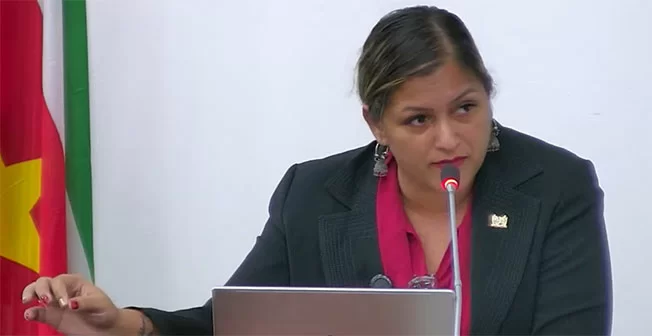
    A political firestorm engulfed Suriname’s National Assembly (DNA) on Tuesday following controversial remarks by VHP Assembly member Ameerani Jarbandhan regarding the Prosecutor-General’s alleged political leanings. The parliamentary session, initially convened to debate judicial reform bills, rapidly devolved into heated exchanges concerning the politicization of independent state institutions.

    Jarbandhan’s commentary emerged during deliberations on legislative amendments concerning the Public Prosecutor’s Office. While addressing case backlogs attributed to resource constraints, expertise shortages, and operational limitations within law enforcement, the assembly member questioned whether proposed changes—including adjustments to the Prosecutor-General’s retirement age—concealed ulterior motives. She explicitly suggested these amendments might represent a subtle effort to remove the official, potentially linked to her political convictions.

    The controversy deepened with revelations that ruling coalition members (BEP, ABOP, PL) had previously supported raising the retirement age from 65 to 70 in 2024, only to reverse their position through current legislative initiatives. Jarbandhan framed this reversal as a threat to separation of powers, warning that implementing drastic judicial changes without broad national consultation jeopardizes constitutional integrity.

    Assembly Chairman Ashwin Adhin intervened decisively, declaring any discussion of the Prosecutor-General’s political affiliation fundamentally unacceptable. “The Prosecutor-General exists outside political discourse,” Adhin asserted. “As an independent institution lacking representation in this chamber, she merits protection rather than political characterization.” His admonition to maintain technical and policy-focused debate was reinforced by cross-party objections, including suspension requests from VHP member Cedric van Samson and neutrality reminders from NDP leader Rabin Parmessar.

    Post-recess, acting VHP leader Dew Sharman attempted damage control by distancing his party from Jarbandhan’s phrasing. Attributing her comments to “juvenile enthusiasm,” Sharman emphasized institutional rather than personal scrutiny should guide deliberations. He proposed retracting or reformulating problematic statements to preserve parliamentary decorum.

    Tensions reignited when PL leader Bronto Somohardjo explicitly associated the Prosecutor-General with VHP affiliations, prompting VHP member Krishna Mathoera to demand corrective action. Mathoera condemned political labeling of absent independent officials as “unacceptable, improper, and inappropriate,” urging audio review of contentious statements—a request ultimately denied as Somohardjo refused retraction.

  • DEA praises Dominican Republic’s cooperation against organized crime

    DEA praises Dominican Republic’s cooperation against organized crime

    In a significant demonstration of international security cooperation, Michael A. Miranda, Special Agent in Charge of the Drug Enforcement Administration’s Caribbean Division, has publicly acknowledged the Dominican government’s steadfast support for joint initiatives targeting narcotics trafficking, financial crimes, and transnational criminal organizations. During high-level discussions with Dominican authorities, Miranda specifically highlighted President Luis Abinader’s unwavering dedication to eradicating corruption as fundamental to enhancing judicial integrity, institutional accountability, and national security effectiveness.

    The high-level working session with Vice Admiral José M. Cabrera Ulloa, who leads the National Directorate for Drug Control (DNCD), served as a platform to recognize the Dominican Republic’s operational partnership in investigating, apprehending, and dismantling sophisticated criminal networks specializing in synthetic narcotics. This bilateral engagement occurred under the umbrella of the United States’ comprehensive ‘Protect, Prevent and Support’ initiative, designed to counter the devastating regional and global consequences of fentanyl and analogous synthetic substances.

    Both nations reaffirmed their strategic partnership and mutual dedication to coordinated programs, including the Fentanyl Free America campaign, underscoring the critical importance of intergovernmental coordination in preserving lives and fortifying hemispheric security architectures. The meeting included comprehensive evaluations of joint operational achievements throughout the previous year and established strategic objectives for 2025 to intensify efforts against drug trafficking, money laundering, and associated criminal activities.

  • Atompai lijnrecht tegen fractieleider: geen CCJ en wel college van pg’s

    Atompai lijnrecht tegen fractieleider: geen CCJ en wel college van pg’s

    In a significant parliamentary debate on judicial reform, Surinamese Assemblymember Poetini Atompai of the National Party of Suriname (NPS) has articulated a controversial position regarding the nation’s judicial future. During Tuesday’s session, Atompai explicitly rejected joining the Caribbean Court of Justice (CCJ) as Suriname’s final appellate court, instead proposing an alternative arrangement with the Supreme Court of the Netherlands featuring a specialized Surinamese chamber.

    Atompai’s argument centered on historical and substantive legal alignment, noting that Suriname’s judicial system fundamentally derives from Dutch legal traditions. He emphasized that Surinamese courts already routinely reference Dutch jurisprudence in practice. The parliamentarian shared firsthand experiences from his tenure as former chairman of the Surinamese Police Union, alleging political interference in the Public Prosecutor’s Office by former President Chan Santokhi.

    The NPS representative characterized the CCJ option as politically motivated and pragmatically challenging for many Surinamese citizens due to geographical distance and substantial costs. While acknowledging that a fully independent Surinamese Supreme Court remains a long-term aspiration, Atompai maintained that this would only become viable after substantial organizational and substantive strengthening of the domestic judicial system.

    Additionally, Atompai vigorously advocated for establishing a College of Attorneys-General to replace the current single Attorney-General structure. He argued that concentrated power in one individual poses significant risks to judicial independence and oversight. A multi-member governance model based on the primus inter pares principle would, in his view, enhance transparency and prevent political influence.

    These positions notably diverge from those expressed by NPS faction leader Jerrel Pawiroredjo just one day earlier, creating visible tension within the coalition. VHP acting faction leader Dew Sharman immediately questioned whether Atompai represented personal opinions or official party policy, noting contradictory messages from the same political faction.

    Atompai responded sharply to the interruption, defending intra-party diversity of thought. He asserted that his party maintains space for individual viewpoints without enforcing uniform positions, contrasting this with what he implied were more rigid disciplinary approaches in other parties. The parliamentarian emphasized NPS’s tradition of internal debate and open opinion formation, which he credited for the party’s historical significance in national governance.

  • Leeward Islands, Jamaica Emerge Victorious from Action-Packed Women’s Regional Season

    Leeward Islands, Jamaica Emerge Victorious from Action-Packed Women’s Regional Season

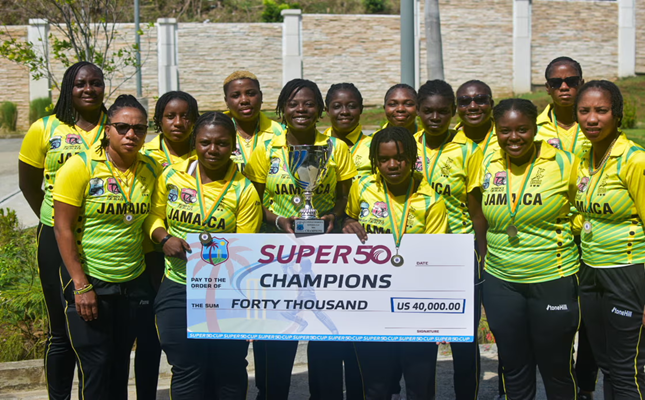
    ST JOHN’S, Antigua – Cricket West Indies has officially crowned two champions following the conclusion of an electrifying 2026 women’s regional season. The Leeward Islands secured their historic first title in the CWI T20 Blaze, while Jamaica staged a remarkable comeback to claim the CG United Women’s Super50 Cup in a dramatic finale.

    The T20 Blaze tournament witnessed the emergence of the Leeward Islands as an unstoppable force, completing a perfect campaign without a single defeat. Their championship clash against Barbados at Arnos Vale Playing Field delivered high drama amid challenging weather conditions. After being put into bat, the Leewards posted 111-6, powered by opener Shawnisha Hector’s magnificent 58 runs from 44 deliveries. When rain interrupted play during Barbados’ chase, the Duckworth-Lewis-Stern method confirmed the Leewards’ victory by six runs, triggering euphoric celebrations among the first-time champions.

    Meanwhile, Jamaica engineered one of the most spectacular turnarounds in recent cricketing history to capture the 50-over championship. Entering the final round in fifth position, the Jamaicans capitalized on favorable results elsewhere before delivering a commanding performance against the Leeward Islands. Their bowlers dismantled the opposition for 146 runs, with Chedean Nation claiming four wickets. The chase was masterfully guided by a 94-run opening partnership between Chrishana McKenzie and Lena Scott, securing an eight-wicket victory that propelled Jamaica to the top of the standings with 21 points.

    The final league table reflected an extraordinarily competitive season, with merely two points separating the top four teams. Windward Islands and Guyana finished tied on 20 points each, while Trinidad and Tobago closed with 19 points after defeating Barbados in their final match.

    Individual excellence shone throughout both tournaments, with Shawnisha Hector earning the T20 Blaze Most Runs and Best All Rounder awards. The Super50 Cup recognized Jannillea Glasgow as both leading run-scorer and premier all-rounder, while bowling honors went to Ashmini Munisar (T20) and Anisa Mohammed (50-over).

    Cricket West Indies praised all six participating teams for exhibiting exceptional skill and sportsmanship throughout the season, noting that these tournaments significantly strengthen the foundation for women’s cricket development across the Caribbean region.

  • PUC Holds the Cards as BTL–Speednet Deal Shrinks and Retruns for Review

    PUC Holds the Cards as BTL–Speednet Deal Shrinks and Retruns for Review

    BELIZE CITY – A major telecommunications acquisition hangs in the balance as Belize’s Public Utilities Commission (PUC) confirms it is awaiting a substantially revised application from Belize Telecommunications Limited (BTL) regarding its proposed buyout of Speednet. The regulatory body has broken its silence on the protracted matter, albeit with limited disclosure, citing the ongoing judicial nature of the proceedings.

    Initial plans, first submitted in January 2026, envisioned BTL acquiring four separate companies. However, the deal’s scope has contracted dramatically, with three of those original targets having since withdrawn from negotiations. This fundamental shift necessitates that BTL completely restructure its proposal and present a new submission to regulators for the process to continue.

    PUC representatives emphasized their legally constrained position during a recent briefing. Stacy Grinage, Internal Legal Counsel for the PUC, stated, ‘This remains a current and active matter before the commission. We are prohibited from public discussion, but I can confirm that what is before the PUC is an agreement for the purchase of shares.’

    Sheena Garnett, Communications Affairs Manager, elaborated on the procedural roadmap. She indicated that the PUC’s review process is strictly governed by the Telecommunications Act. Upon receiving the final, updated documentation from BTL, the commission will undertake a thorough examination. This could potentially include mandatory public consultations, depending on regulatory requirements. Garnett clarified the current status, noting, ‘We had received a document and there has been a lot of changes from that initial document. We need to just receive whatever is that final submission from the party.’

    The ultimate authority to approve or deny the now-downsized merger rests solely with the PUC, placing the future of Belize’s telecom landscape in its hands. All parties now await BTL’s next move.

  • Druk op Guyanese parlementsvoorzitter om mediabeperkingen op te heffen

    Druk op Guyanese parlementsvoorzitter om mediabeperkingen op te heffen

    Guyana’s parliamentary authorities have ignited widespread condemnation from media organizations and journalists after implementing stringent new regulations that severely limit press access to legislative proceedings. The controversial measures, enacted by Parliamentary Speaker Manzoor Nadir, impose dual restrictions: drastically reducing the number of journalists permitted in the chamber while simultaneously banning all television cameras from news organizations.

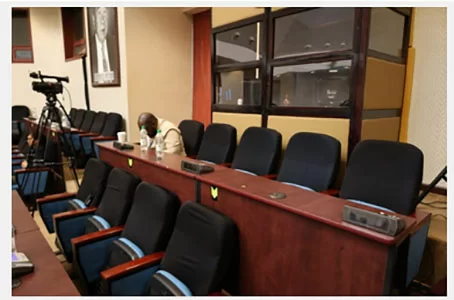
    The backlash erupted immediately following Tuesday’s announcement, with particularly fierce criticism emerging across social media platforms. On an official Facebook post by Guyana’s Parliament, media professionals challenged the institution’s justification for the new rules. Parliament officials had claimed that designated press seating remained consistently unoccupied, supporting their decision with a late-night photograph showing empty chairs. Journalists quickly refuted this assertion, explaining that the image was captured after reporters had left to file their stories, calling the representation deliberately misleading.

    Further objections center on the prohibition of independent video recording. Journalists now depend exclusively on the legislature’s official livestream, which they describe as technically unreliable with frequent interruptions and substandard quality. Additionally, promised video clips of debates have consistently failed to materialize, leaving news organizations without crucial visual documentation.

    Former executives of the Guyana Press Association have joined the chorus of dissent, accusing Parliament of deliberately misleading the public and openly characterizing the restrictions as censorship. The institution’s reference to 2020 COVID-19 protocols as justification has been dismissed by critics as both inappropriate and deceptive.

    Multiple journalists report that these measures represent not temporary adjustments but systematic limitations on media access. They warn that excluding cameras and minimizing physical presence of independent media establishes a dangerous precedent that fundamentally undermines democratic oversight and transparency in governmental operations.

  • PUC Warns: BTL Can’t Sign Before Approval

    PUC Warns: BTL Can’t Sign Before Approval

    In a significant regulatory development, the Public Utilities Commission (PUC) has issued a stern warning to Belize Telemedia Limited (BTL) regarding its proposed merger with Speednet. The commission’s internal legal counsel, Stacy Grinage, has clarified that executing any binding agreement prior to obtaining formal PUC approval would constitute a direct violation of the Telecommunications Act.

    The legal framework specifically prohibits license holders from entering into agreements that could facilitate anti-competitive practices. Grinage emphasized that the PUC possesses regulatory authority to intervene, establish compliance mechanisms, and take enforcement action when such violations are suspected.

    The clarification emerged during press inquiries about how far BTL can proceed with merger discussions before crossing legal boundaries. While BTL’s board may theoretically make preliminary decisions about their strategic direction, any formal share acquisition agreement without PUC endorsement would be unlawful.

    Addressing questions about the commission’s reactive stance to ongoing developments, Grinage explained that the PUC operates within specific procedural constraints. The commission currently awaits revised formal submissions from the involved parties before making determinations, rather than intervening based solely on public discourse or media reports.

    The regulatory body has consequently adopted a watchful waiting position, monitoring developments while emphasizing that premature contractual commitments would breach telecommunications regulations. This stance places the ball firmly in the court of the merging entities to comply with proper regulatory channels before advancing their consolidation plans.

  • PUC Confirms BTL Dominance, Separates Study from Merger Decision

    PUC Confirms BTL Dominance, Separates Study from Merger Decision

    In a significant development within the telecommunications sector, the Public Utilities Commission (PUC) has officially confirmed Belize Telemedia Limited (BTL) as the dominant market player following an extensive year-long investigation. The regulatory body conducted a press conference on February 3, 2026, to present its comprehensive market analysis while explicitly distancing these findings from the pending BTL-Speednet merger evaluation.

    PUC representatives emphasized the distinct nature of these parallel proceedings. Internal Legal Counsel Stacy Grinage outlined that the dominance determination enables the commission to implement specific regulatory remedies designed to maintain market competition and protect consumer interests. These measures would be activated should the commission formally designate BTL as dominant based on the study’s findings.

    Communication Affairs Manager Sheena Garnett provided further clarification, stating unequivocally that the market assessment ‘does not approve, reject, or impose any penalties regarding mergers, acquisitions, or transactions.’ She emphasized that the consultation process began well before the proposed BTL-Speednet acquisition emerged, establishing it as an independent regulatory exercise.

    Director of Regulated Services Abraham Tech confirmed the investigation commenced approximately twelve months prior, establishing a timeline that predates the merger proposal. This chronological separation forms the foundation of the PUC’s position that the dominance study should not be interpreted as signaling any predisposition regarding the merger decision.

    The commission’s careful delineation between these matters reflects its commitment to transparent, evidence-based regulatory oversight while maintaining procedural integrity in evaluating the potentially transformative market consolidation.

  • Independent Senators Urge PUC Action on Telecom Buyout

    Independent Senators Urge PUC Action on Telecom Buyout

    A coalition of independent senators in Belize has intensified their opposition to Belize Telemedia Limited’s proposed acquisition of Speednet, warning the transaction could permanently damage competition in the nation’s telecommunications sector. Senators Kevin Herrera, Louis Wade, Glenfield Dennison, and Janelle Chanona argue regulatory intervention is occurring too late in the process, despite existing legal provisions designed to prevent monopolistic market dominance.

    The senators contend that the Public Utilities Commission (PUC) should have exercised its authority earlier in the approval process rather than waiting until the potential finalization of the deal. Their central argument maintains that regulation should follow competitive market failure rather than precede it through premature approval of consolidation.

    Union Senator Glenfield Dennison delivered particularly forceful remarks, challenging the PUC’s regulatory philosophy. “I invite the members of the PUC to shift your lens away from thinking that the answer is regulating a dominant actor in telecoms,” Dennison stated. “The starting point should and must always be that competition and rivalry is what should be driving the telecoms industry.”

    Dennison employed colloquial examples familiar to Belizeans, referencing the consumer detriment of “double up” and “triple up” pricing scenarios that emerge without competitive pressure. He emphasized that the PUC’s primary role should be fostering competitive market conditions rather than creating dominant entities that subsequently require intensive regulation.

    The senators’ intervention highlights growing concerns that the merger could fundamentally reshape Belize’s telecommunications landscape to the detriment of consumer choice and pricing structures. They maintain that regulatory power should only be exercised after genuine market competition has been exhausted, not as a substitute for competitive safeguards during merger evaluations.

    With the deal potentially nearing finalization, the senators are urging immediate PUC action to preserve market competition before what they characterize as irreversible consolidation occurs.