博客

  • Penny: T&T remains a  First Peoples homeland

    Penny: T&T remains a First Peoples homeland

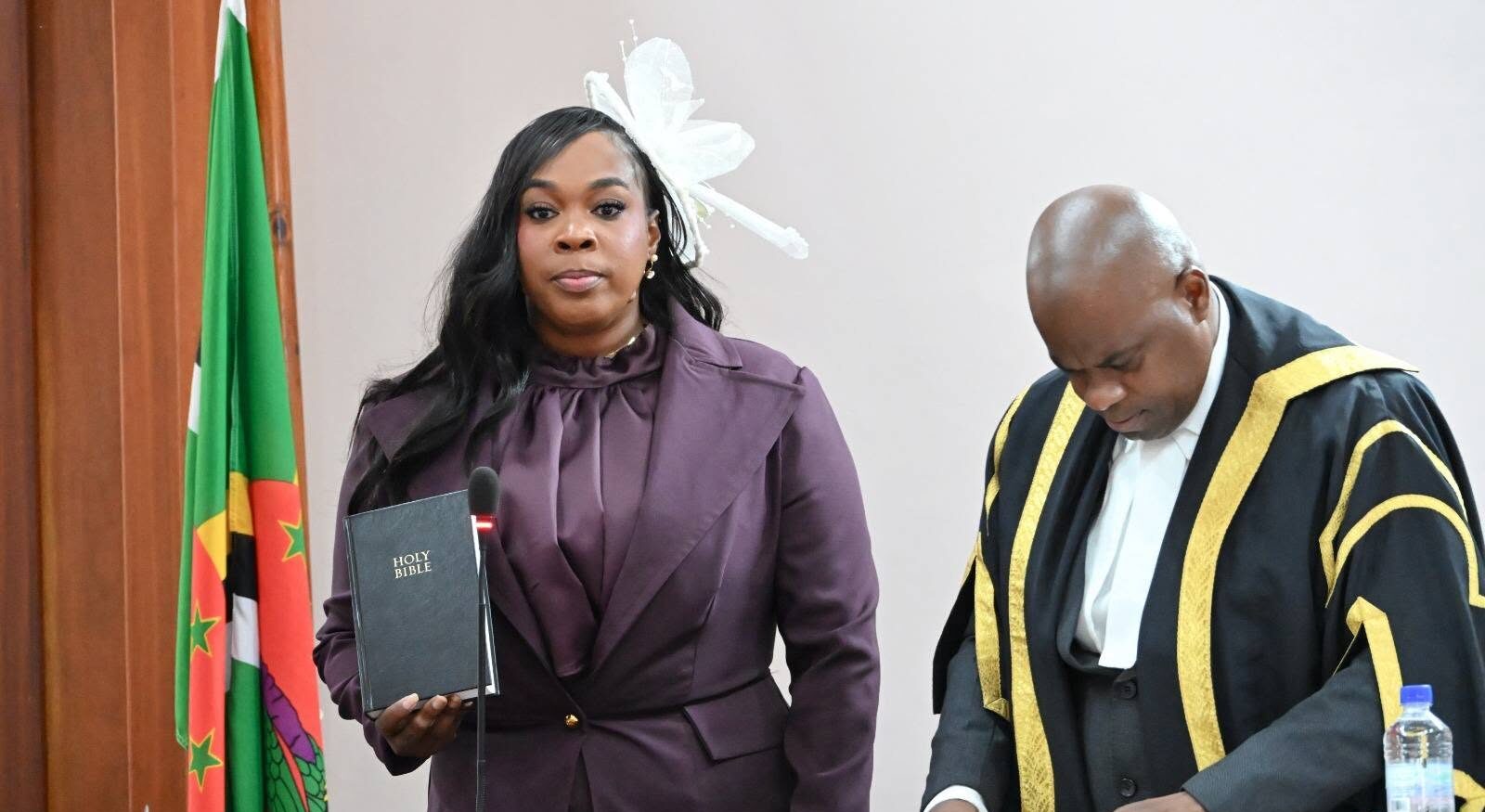
    On the occasion of the United Nations International Day of the World’s Indigenous Peoples, Trinidad and Tobago’s Opposition Leader Pennelope Beckles has reaffirmed a long-overdue foundational truth of the nation: the twin islands were first a homeland for Indigenous peoples, and remain that homeland to this day.

    As the Member of Parliament for Arima, a district that is home to the country’s prominent Santa Rosa First Peoples Community, Beckles emphasized that this annual observance is not a symbolic gesture disconnected from daily life in her constituency. Over years of engagement, she has walked alongside the community through its core cultural traditions, including the annual Santa Rosa Month celebrations, the sacred Water Ritual, and the historic reburial of ancestral Indigenous remains at Trinidad’s Red House government building. Far from being just a community hosted by Arima, Beckles noted, Indigenous culture and history are core to what defines the district’s identity.

    Beckles extended specific praise to Chief Ricardo Bharath Hernandez, the community’s leader, whose decades of relentless advocacy have carried Indigenous Trinidadian voices to leading global institutions including the Inter-American Development Bank (IDB), the Caribbean Development Bank (CDB), and the United Nations. Throughout his work, Chief Bharath Hernandez has consistently called for formal national recognition of Indigenous rights aligned with the UN Declaration on the Rights of Indigenous Peoples.

    Beyond the Santa Rosa community, Beckles also acknowledged the full breadth of Indigenous descendants across the Republic of Trinidad and Tobago. This includes Warao communities that have formed kinship ties in the country, people connected to the ancient Banwari Trace archaeological site in San Francique, and the thousands of ordinary citizens whose Indigenous ancestry is woven into their names, traditional cuisine, and national cultural heritage.

    Challenging outdated narratives that relegate Indigenous peoples to a marginal footnote in national history, Beckles stressed that First Peoples are the very foundation of Trinidad and Tobago’s national story. Long before the first European vessels arrived in the Caribbean, Indigenous communities cultivated the land of the twin islands and established the region’s first permanent settlements more than 7,000 years ago. Every subsequent wave of migration to Trinidad and Tobago came to land that was already stewarded and inhabited, Beckles noted.

    While the government has taken incremental positive steps, including the 2017 establishment of a public holiday for Indigenous peoples and the 2019 Red House ancestral reburial, Beckles argued that partial progress does not equal full justice. “Recognition without redress is not enough,” she said.

    Drawing on her own long history of engagement with the issue across multiple senior government roles, Beckles recalled her early work as Minister of Social Development and later Minister of Culture and Tourism in the Manning Cabinet, portfolios that put her at the center of shaping national cultural and community policy. She also highlighted her time as Minister of Planning and Development under Prime Minister Rowley, where she stood alongside Chief Bharath Hernandez at the Red House reburial and successfully advocated for IDB recognition of Trinidad and Tobago’s First Peoples at the bank’s Ottawa meeting, bringing their story to a global audience.

    Beckles confirmed that advancing Indigenous rights and recognition will be a core priority under her leadership, outlining five key policy commitments:

    First, her administration will advance permanent legal recognition of the Santa Rosa First Peoples Community and align all national policy with the UN Declaration on the Rights of Indigenous Peoples. Second, it will complete and fully fund the stalled First Peoples Heritage Village project in Arima, positioning it as a respected national heritage site rather than an abandoned initiative. Third, the government will establish a permanent, adequately resourced consultation protocol between the state and Indigenous communities for all decisions related to heritage, land management, and cultural policy. Fourth, it will embed accurate Indigenous history and cultural knowledge into the national education curriculum to ensure all Trinidadian students learn the true foundational story of their nation. Fifth, it will support the community’s regional and international advocacy efforts as a genuine equal national partner.

    Closing her statement, Beckles offered a firm pledge to Chief Bharath Hernandez, the Santa Rosa First Peoples Community, and all Indigenous descendants across Trinidad and Tobago: “Your rightful place at our nation’s foundation will be defended.”

  • Camille says sorry to  UDeCOTT chairman

    Camille says sorry to UDeCOTT chairman

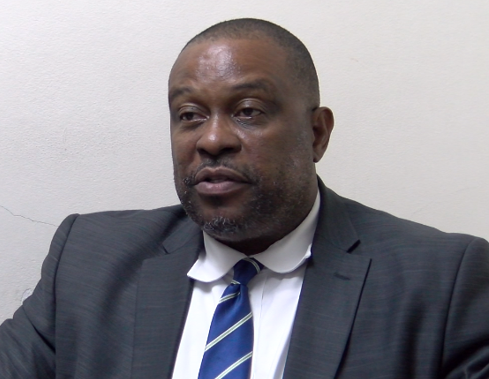
    A high-profile political controversy in Trinidad and Tobago took a swift turn this week, when opposition Member of Parliament Camille Robinson-Regis issued a public apology to Shankar Bidaisee, chair of the country’s Urban Development Corporation (UDeCOTT), over incorrect statements she made during a Thursday press briefing. The apology came on the heels of a public warning from Bidaisee that legal action would be launched if Robinson-Regis did not retract and apologize for her remarks linking him to two controversial housing development contracts, a threat that was first reported in the *Sunday Express*.

  • Call for probe into CCJ allegations

    Call for probe into CCJ allegations

    A prominent regional legal organization is sounding the alarm over unaddressed governance concerns at the Caribbean Court of Justice (CCJ), demanding that regional leaders launch an immediate, transparent investigation to prevent lasting damage to public trust in the court’s work.

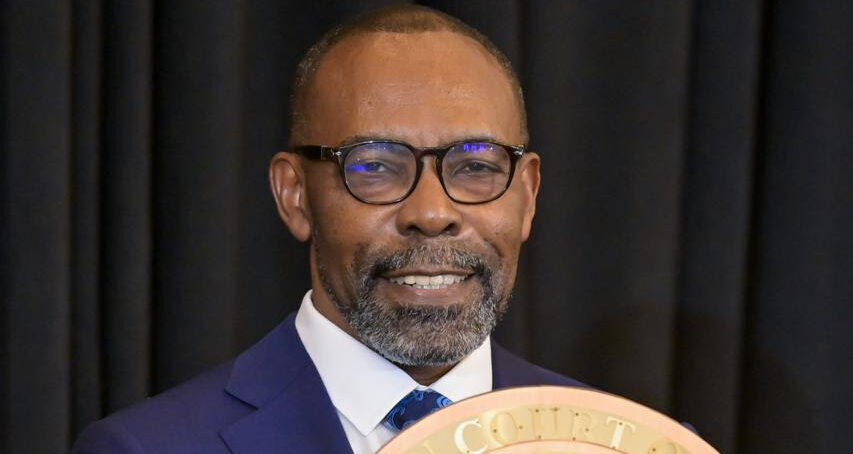
    The call for action comes from Kiel Taklalsingh, chairman of the Assembly of Central Legal Practitioners (ACLP), after he reviewed leaked internal correspondence between CCJ judges that was first reported by the Sunday Express. According to Taklalsingh, the exchange contained troubling red flags that raise serious questions about how the regional court is managed and hints at inappropriate efforts to sway judicial rulings.

    In remarks outlining the organization’s position, Taklalsingh said the document left him with deep foreboding about the court’s internal operations. He argued the correspondence suggests the court could be at risk of authoritarian-style management, and pointed to what he described as possible improper interference with the independent decision-making of sitting judges.

    Specifically, Taklalsingh highlighted the targeting of Justice Jamadar, a Trinidad and Tobago judge widely respected across the legal community. He noted that anyone with experience practicing law in the jurisdiction knows Jamadar as a fiercely independent, intellectually rigorous jurist and a dedicated defender of the rule of law — making any allegations of interference with his work particularly alarming.

    These concerns cannot be brushed aside or left unaddressed, Taklalsingh emphasized. He is urging all Caribbean prime ministers and the Caribbean Community (Caricom), the regional governing body that oversees the CCJ, to move forward with a formal probe without delay.

    “Having seen and read what has been brought to light, I have no choice but to call upon Caribbean prime ministers and Caricom as a whole to launch an immediate investigation into these matters,” Taklalsingh said. He stressed that any probe must be conducted quickly, comprehensively, and openly to rebuild public trust in the institution, if that trust has already been shaken.

    Taklalsingh acknowledged that the CCJ has spent years building a strong reputation and earning the trust of Caribbean populations, with long-term goals of becoming the final appellate apex court for all regional territories. The current allegations, if left unresolved, threaten to erase all of that hard-won progress, he warned.

    If the issue is allowed to fester without a thorough public investigation, the consequences will stretch far beyond the immediate questions of court administration, he added. “If this problem is not dealt with thoroughly, if it is allowed to fester, unfortunately all of the hard work that the CCJ has done in the past will go to waste,” Taklalsingh said.

  • US deputy Secretary of State Landau in T&T

    US deputy Secretary of State Landau in T&T

    The second-highest ranking diplomat at the U.S. Department of State, Deputy Secretary Christopher Landau, touched down in Trinidad and Tobago on Wednesday for an official working visit centered on deepening long-standing bilateral ties between the two nations. High on his meeting agenda are key collaborative areas: cross-border energy strategy, joint security initiatives, and expanded economic partnership.

    Upon his arrival at the port of entry, Landau was formally welcomed by Sean Sobers, Trinidad and Tobago’s Minister of Foreign and Caricom Affairs, alongside Philip Kern, the U.S. Chargé d’Affaires based in the country. Over the course of his two-day stop, Landau is scheduled to hold high-level talks with Prime Minister Kamla Persad-Bissessar. The two leaders are set to align on mutual energy and security objectives, as well as map out new pathways to grow mutually beneficial economic cooperation between Washington and Port of Spain.

    On the second day of his stay, Landau will also take part in a formal ribbon-cutting inauguration for Ibis Steel Company T&T Ltd, marking the opening of the new regional industrial operation.

    According to official statements from the U.S. State Department, Landau’s stop in Trinidad and Tobago is just one segment of a broader multi-country regional tour that will run through August 12. Following his engagements in the twin-island nation, the deputy secretary will travel onward to Guyana for the next leg of the trip.

    In Guyana, Landau is set to hold official meetings with President Irfaan Ali and senior members of the Guyanese cabinet. The discussions there will center on broadening bilateral economic collaboration, unlocking new cross-border investment opportunities, and ramping up joint work in high-priority strategic sectors, including energy development and critical mineral supply chains.

    The State Department emphasized in its release that the regional tour underscores the Biden administration’s sustained commitment to strengthening diplomatic and economic partnerships across the Western Hemisphere. The trip is structured to advance shared priorities for all participating nations, from bolstering regional security frameworks and strengthening global energy resilience to driving inclusive economic prosperity across the Caribbean and South American region.

  • Japan reaffirms ICC support as US pushes to dismantle court

    Japan reaffirms ICC support as US pushes to dismantle court

    In the wake of the United States launching a coordinated, whole-of-government campaign to undermine and dismantle the International Criminal Court (ICC), Japan has publicly reaffirmed its unwavering commitment to supporting the tribunal’s critical operations in upholding global justice and international order.

    Founded in 2002 and headquartered in The Hague, Netherlands, the ICC is the world’s first permanent international judicial body tasked with prosecuting individuals for four of the gravest crimes recognized by the international community: genocide, war crimes, crimes against humanity, and the crime of aggression. The institution traces its origins back to a 1989 proposal put forward by Arthur NR Robinson, former Prime Minister and President of Trinidad and Tobago, during a United Nations General Assembly address. Today, the ICC is led by President Tomoko Akane, a Japanese jurist elected to the role in 2024.

    The statements of Japanese support came during an official visit to Port of Spain, the capital of Trinidad and Tobago, by Japanese Foreign Minister Toshimitsu Motegi. In remarks at the Trinidad Hilton, Toshihiro Kitamura, Director General for Press and Public Diplomacy at Japan’s Ministry of Foreign Affairs, addressed questions regarding Japan’s stance on the U.S.-led push to dismantle the court. Kitamura acknowledged that member states hold a range of differing perspectives on the ICC’s work, but emphasized the institution’s irreplaceable role in sustaining a rules-based international order.

    “Japan maintains a very strong commitment to support ICC in its operation. We also maintain close discussion and communication with the US government, but at the same time, we always say to other countries that the role of ICC is very important to maintain the international order,” Kitamura said, noting the national ties through the ICC’s current Japanese president.

    For Trinidad and Tobago, the connection to the ICC runs deep: as the originator of the initial proposal for a permanent global criminal tribunal, the Caribbean nation was among the first group of countries to ratify the Rome Statute, the foundational treaty that formally established the court. Even as the country has deepened bilateral alignment with the United States in recent initiatives, including joining the U.S.-led Americas Counter Cartel Coalition (ACCC) and U.S. Southern Command’s Joint Task Force Western Hemisphere (JTF-WHEM), local stakeholders have publicly pushed for Trinidad and Tobago to retain its ICC membership. This call comes in the wake of neighboring Venezuela announcing its formal withdrawal from the court earlier this year.

    The U.S. campaign against the ICC was first announced in mid-July by U.S. Secretary of State Marco Rubio, who framed the tribunal as a direct threat to American sovereignty. The State Department argues the ICC has overstepped its authority by claiming jurisdiction to prosecute and imprison American service members and public officials acting in pursuit of U.S. national interests, noting that the U.S. never ratified the Rome Statute and has long rejected the court’s jurisdiction over American citizens. All U.S. presidents since the ICC’s founding have maintained this position, and the court remains under fire from Washington for refusing to close a previously opened investigation into alleged misconduct by U.S. service members and intelligence personnel.

    Under the whole-of-government strategy, senior U.S. officials including Secretary Rubio, U.S. ambassadors, and other top leaders have been directed to engage with foreign governments to highlight what the U.S. frames as institutional abuses by the ICC. The administration has also called on all nations that partner with U.S. law enforcement and the U.S. military to reject the ICC’s claimed authority to prosecute American officials and service members.

  • Vakbond rapporteert 108 aanvallen op Palestijnse journalisten in juli

    Vakbond rapporteert 108 aanvallen op Palestijnse journalisten in juli

    A new report from the Palestinian Journalists’ Syndicate has documented 108 separate violations against Palestinian journalists and media personnel committed by Israeli military forces and Israeli settlers across the occupied West Bank during the month of July 2026. The syndicate’s Freedom Committee published the findings on Sunday, outlining a wide spectrum of abuses that range from arbitrary short-term detentions and physical assault to coercive interrogation, obstruction of on-the-ground reporting, and the seizure or destruction of professional journalistic equipment. The report details a consistent, escalating pattern of intimidation that has made it increasingly dangerous and difficult for journalists to carry out their core work: documenting Israeli military incursions and settler violence in Palestinian territories. According to the findings, short-term detentions and restrictions on reporting were the most common violations, with 58 confirmed cases recorded in July alone. Of the documented incidents, 11 were direct physical attacks on journalists carried out by settlers, including physical assault, shoving, and death threats. Most of these attacks occurred while reporting teams were covering settler incursions and military operations in other areas of the occupied West Bank. The report also notes 12 separate incidents in which Israeli military forces fired tear gas or flash grenades at groups of working journalists, leaving multiple media workers with respiratory distress and other injuries. Six journalists were beaten, and four others sustained open, bleeding injuries – including shrapnel wounds from ordnance – while covering developments in the Gaza Strip. Two additional journalists were detained, and four more were subjected to interrogation over the content of their reporting. The syndicate also recorded four raids on the private homes and media offices of journalists, one of which resulted in the permanent closure of a local media outlet. Three incidents involved the seizure or destruction of journalistic equipment, two cases involved the deletion of on-site recorded footage, and two more incidents saw journalists forcibly expelled from areas surrounding the Al-Aqsa Mosque compound. In response to the findings, the Palestinian Journalists’ Syndicate has issued an urgent call for international intervention to protect press freedom, demanding that journalists be allowed to carry out their professional work “free from threats, attacks, and prosecution” and holding that all perpetrators of these abuses must be held accountable under international law. The July death toll adds to a sharply rising cumulative total that has already made this period the deadliest on record for journalists operating in the region. Human rights organizations have confirmed that Israeli actions have killed more than 270 journalists since October 2023, as part of a widespread, systematic campaign of arbitrary detention and targeting of press personnel operating in Palestinian territories. Al Jazeera, one of the largest international news outlets covering the conflict, has confirmed that 12 of its own journalists have been killed in Gaza since the launch of Israel’s full military campaign in 2023 – a higher death toll for staff than any other news organization operating in the region. One high-profile recent incident, documented in photojournalism by Agence France-Presse, saw Israeli forces attack a group of journalists with a flash grenade during a military incursion into the Balata Palestinian refugee camp, located east of Nablus in the occupied West Bank, on June 7, 2026.

  • Cuba doesn’t have to indoctrinate anyone. It doesn’t have to export ideas. History teaches us lessons

    Cuba doesn’t have to indoctrinate anyone. It doesn’t have to export ideas. History teaches us lessons

    Against the backdrop of the centennial celebration of Fidel Castro Ruz’s birth, Cuban President and First Secretary of the Communist Party of Cuba Central Committee Miguel Díaz-Canel Bermúdez delivered a searing, urgent address to delegates at the closing ceremony of the 24th International Meeting of Communist and Workers’ Parties in Havana this August 8. Opening by welcoming delegates who braved global pressure, disinformation, and blackmail to attend the gathering in what he called Cuba, “an island of dignity and lifelong resistance to imperialism”, Díaz-Canel framed the current global moment as one of unprecedented peril, echoing warnings issued by parties at the 2022 Havana meeting that have only grown more acute in the intervening years.

    Díaz-Canel grounded this crisis in core Marxist-Leninist analysis, arguing that today’s cascading global crises—from widening wealth inequality and accelerating ecological collapse to open wars of aggression over resources and influence—are not random misfortunes, but inevitable outcomes of the structural contradictions of monopoly imperialist capitalism. He pointed to the ongoing war in Eastern Europe, the unimpeded genocide in Gaza, the unmitigated climate catastrophe, systemic global hunger, and the crippling, systemically exploitative external debt burden of the Global South as a “perfect storm” unleashed by capitalism’s unaddressed internal tensions. He further warned of the resurgent global rise of fascism, which has adapted its public face while retaining its core violent essence, a development Fidel Castro presciently warned of decades ago.

    Turning to Cuba’s own experience, Díaz-Canel directly tied the island’s current crisis to a decades-long, increasingly aggressive U.S. policy of economic suffocation designed to destroy the Cuban socialist project. He emphasized that the ongoing blockade, which he described as a deliberate act of collective punishment, deprives Cubans of life-sustaining basic resources and services to stoke public exhaustion, political disillusionment, and social division—all to advance long-standing U.S. regime change goals. “Those who sadistically devise an energy blockade against an entire nation, leaving a humanitarian toll of alarming proportions that deprives Cuban children of their lives at birth, reduces the life expectancy of cancer patients, and denies our people access to medicine, food, electricity, water, transportation, and many other resources for a full life, can be called nothing less than criminals and fascists,” he told delegates.

    Díaz-Canel shared on-the-ground data detailing the catastrophic human cost of the blockade: 1,400 megawatts of recovered electricity generation capacity currently sits idle due to a lack of imported diesel and fuel oil, extending daily blackouts from the projected 3 hours to 20+ hours that Cuban families currently endure. In the country’s world-renowned universal public healthcare system, the blockade has created life-threatening shortages: more than 98,500 patients, including 12,000 children, wait for necessary procedures Cuba’s surgeons are fully qualified to perform, but lack the fuel and supplies to operate; 34,000 pregnant people cannot access consistent prenatal ultrasound care; 67,000 infants have not received complete, up-to-date vaccination schedules; more than 118,000 cancer patients (117,000 adults and 1,200 children) are forced to rely on less effective secondary and tertiary treatments; only 30% of the country’s essential medicines are available, even though Cuba has the capacity to produce all domestically; just 22% of the national ambulance fleet is operational; and U.S. pressure has blocked the import of cobalt-60 for cancer treatment and delayed shipments of critical medical supplies at ports worldwide. Once a point of national pride comparable to high-income nations, with an infant mortality rate held between 4 and 5 per 1,000 live births, the blockade has pushed Cuba’s rate to more than double that, at 9.8.

    Díaz-Canel emphasized that this carefully calibrated campaign of suffering is no accident: it has been a core plank of U.S. policy for more than 60 years, designed to force the Cuban people to turn against their revolution and surrender to imperial control. He noted that the blockade, a clear violation of international law and fundamental human rights, has been repeatedly condemned by the global community, most recently when 136 United Nations member states supported Cuba’s condemnation of the policy. Despite this global consensus, he argued, a rules-based international order has collapsed, replaced by the raw domination of powerful states that prioritize their own geopolitical interests over the survival of poor nations. He warned that Cuba is currently facing the most dangerous period since the 1962 Cuban Missile Crisis, with the economic blockade complemented by a full-scale unconventional war: digital subversion, funding for domestic mercenary groups, coordinated media smear campaigns, and disguised intervention framed as “humanitarian aid”. Recent revelations of expanded CIA operations to destabilize Cuba in major U.S. media are not accidental leaks, he said, but a deliberate component of a U.S. psychological warfare campaign against the island.

    He called out recent comments by U.S. Secretary of State that sanctions would be tightened to close all “escape valves” for Cuba as an open admission of the country’s self-inflicted humanitarian crisis, and an unapologetic threat of extermination against the entire Cuban people for refusing to submit to U.S. dictates. Beyond economic pressure, the U.S. has ramped up military threats, updated its formal regime change doctrine, kept Cuba on a fraudulent list of state sponsors of terrorism, and manufactured baseless accusations of Cuba being a hub of “subversive espionage” to justify additional aggression. Independent UN experts have repeatedly confirmed that the U.S.’s illegal unilateral coercive measures violate Article 2 of the UN Charter and form a core component of decades of regime change efforts, and have called for the UN Security Council and General Assembly to urgently address the threat to international peace and security the measures pose.

    Díaz-Canel rejected U.S. claims of moral authority to judge Cuba, noting that Cuba is the most heavily surveilled country in the world by the U.S., and the target of more funding for ideological and economic subversion than any other nation. He condemned the complicity of global actors who remain silent in the face of U.S. aggression, arguing that every act of silence weakens international law, every acceptance of illegitimate U.S. sanctions erodes the principle of national non-intervention, and every corporate retreat under U.S. pressure strengthens a global economic dictatorship dominated by a single superpower. “The world cannot become complicit in another genocide,” he stressed.

    Despite the unprecedented pressure, Díaz-Canel stressed that Cuba has not surrendered. The Cuban people have continued to deliver innovative progress: self-developed COVID-19 vaccines, expanded agroecological food production to offset scarcity, growth in renewable energy generation, deep grassroots community participation, and a whole population mobilized to defend the country’s right to self-determination. While the country openly faces severe challenges, including extended blackouts, water scarcity, inflation, and long supply lines, Díaz-Canel said no material scarcity has extinguished the culture of solidarity Fidel Castro cultivated, nor has the country renounced José Martí’s core principle that “homeland is humanity”. He pointed to the recent graduation of more than 30,000 new young professionals from Cuban universities, including 735 students from 62 countries—among them 23 new Palestinian doctors and 5 new American doctors—as proof of Cuba’s ongoing commitment to international solidarity even amid crisis.

    Under the leadership of the Communist Party of Cuba, Díaz-Canel said the national response has been one of firm, creative resistance, unity, defense of revolutionary gains, and iterative updating of Cuba’s economic and social model—never abandoning core socialist principles, never yielding to external pressure. He clarified that ongoing economic reforms are not a transition to capitalism: there will be no mass privatization, core means of production will remain under public ownership, and national sovereignty will always be protected as the country builds a prosperous, sustainable socialism that meets the needs of the Cuban people. The Communist Party, he said, remains the supreme leading force of the Cuban state and society, and a vigilant guardian of working class and popular interests, never a party of elites or special interests.
    “In a world where global power structures try to convince people there is no alternative to capitalism, our shared task is to prove with concrete action that another path exists: socialism remains the only realistic, humane way out of capitalist barbarism, as scientific Marxism has long taught,” Díaz-Canel said.

    Marking the centennial of Fidel Castro’s birth, Díaz-Canel said the revolutionary leader’s legacy remains a guiding light for global left and progressive forces: he taught that dreams are won through unapologetic defense of principle, that internationalism is not a slogan but a core practice, and that socialism is the only path to pull humanity back from the brink of catastrophe. Fidel was the first world leader to denounce neoliberal globalization as an empire of death, he noted, and the first to raise a clear call for a more just world for all. He taught that the fight for climate and environmental protection is a core socialist struggle, that science must serve people not profit, and that revolutionary unity matters more than tactical differences.

    Díaz-Canel called on global communist and workers’ parties to turn the momentum of the Havana meeting into coordinated, concrete action rather than just symbolic declarations. He urged parties to break the coordinated media blockade to spread the truth about Cuba, Palestine, and all peoples facing imperial aggression; to mobilize parliaments, unions, and social movements in solidarity with Cuba’s fight to end the blockade; to expand economic and technological cooperation between progressive states and organizations; and to advance theoretical work to adapt Marxist-Leninist principles to 21st century challenges, including the digital revolution and the climate crisis, with the core goal of advancing full human dignity for all.

    He also called for collective self-criticism, noting that condemning imperialism is not enough: parties must build popular power from the grassroots, organize in streets, neighborhoods, factories, and schools, and build broad, flexible unity with all progressive sectors. “Unity is not uniformity; unity is the shared will to fight and win together,” he said. Díaz-Canel stressed that in the face of rising imperial aggression and capitalism’s structural crisis, communist parties have a historic vanguard role to play—not just in electoral or institutional politics, but in organizing, politicizing, and mobilizing the working class under the new conditions of 21st century exploitation, shaped by digitalization, automation, and the platform economy.
    “Despite the overwhelming military power of the United States, the international communist movement does not back down. It resists, and it stands firm,” he told cheering delegates. “We cannot predict how long this imperial offensive will last. We may face more aggression, more blockades, but we carry the certainty from our own history: the future belongs to those who dream and build, not those who destroy and lie.”

    Closing, Díaz-Canel framed the defense of Cuba as a global struggle: defending Cuba means stopping the advance of white supremacist, xenophobic, elitist, exclusionary ideology that is the enemy of true freedom and human emancipation; defending Cuba means fighting 21st century colonialism and opposing the idea that one nation has the right to dictate the destiny of the entire world. He called on delegates to redouble their efforts in the year of Fidel’s centennial, to build a world where solidarity is not just a decorative slogan, but the core driving force of global politics: a world where no child dies of hunger while food is destroyed to prop up prices, where science heals rather than generates profit, and where politics, as Che Guevara taught, is the art of serving others.
    The closing address concluded with three resounding cheers: “Always onward to victory, always! Long live Fidel on his Centennial and forever! Long live the unity of the communists! Long live the struggle of our peoples!”

  • In the face of the economic blockade against Cuba, solidarity awakens

    In the face of the economic blockade against Cuba, solidarity awakens

    Against a backdrop of long-standing U.S. economic and energy sanctions that have crippled Cuba’s public health and social services system, delegates from the 4th Continental Assembly of the ALBA Movement have turned words of solidarity into tangible action, delivering critical donations to vulnerable Cubans while facing a coordinated smear campaign on social media.

    On Sunday morning, August 10 2026, the first cohort of delegates traveled to Havana’s National Institute of Oncology and Radiobiology, Cuba’s leading facility for complex cancer care. Stuffed into suitcases and duffel bags were urgently needed supplies: prescription medications, healing creams, sterile bandages, and small treats for the hospital’s young patients. While the donation may appear modest to outside observers, it fills critical gaps created by resource shortages that have plagued the institution for years. Hospital staff welcomed the gift, noting it directly eases the strain on patients who already bear the burden of systemic scarcity.

    In an informal meeting with delegate leadership, institute deputy director Misleidiy Nápoles Morales laid bare the daily reality of practicing oncology under blockade. “Cancer is a chronic, terminal illness for many, and a diagnosis often feels like a death sentence to patients,” she explained, her words resonating with the listening delegates. “Our mission is to buy time for patients, to give them years of life and the highest quality of life possible. Thirty extra years of life is life-changing for a child – it’s the chance to grow up, to experience all the things we take for granted.”

    Nápoles Morales did not shy away from the hardship imposed by the U.S. sanctions: “It hurts more than anyone can say when we don’t have the tools to do our work. We have to postpone life-saving surgeries and delay treatments because we don’t have electricity, because we don’t have medications, because our equipment breaks and we can’t get spare parts. Our patients suffer for political decisions they have no part in, and we show up every day to navigate this crisis alongside them. Saving lives is our responsibility, no matter how hard the conditions get.”

    Emotions ran high as delegates shared their own perspectives on the struggle. A Venezuelan delegate, unable to hold back tears, spoke to the shared history of solidarity between the two nations. “Cuban doctors have saved thousands of lives in my country and across the globe,” she said. “To see imperialism bearing down on you with all its force only leaves me with two feelings: anger at the injustice, and unwavering solidarity. You can count on me, always, for both.”

    A young Colombian delegate removed his cap before speaking, a quiet gesture of respect for the hospital’s work. “So many victims of paramilitarism in my country found life-saving treatment here in Cuba, when our own government abandoned them,” he said. “This small island gave them a place to reclaim their human dignity. You are living proof that only the people can save the people, and love is always repaid with love.”

    The final speaker, an Argentinian delegate with a tattoo of Che Guevara on her shoulder, pushed back against warnings she received before traveling to Cuba. “Many people told us not to come, said this country wasn’t what it used to be – and here we are, standing with you,” she said. “Thank you for being that project of humanity we all dreamed of. Where I’m from, children with cancer die every day because life-saving medications are locked away in private clinic warehouses, only available to people who can pay. That’s why your work, your national project of care for all, matters so much to the world.”

    After the meeting, delegates dropped off the donations at the hospital’s storage facility for distribution to the most vulnerable patients. Before leaving, they were invited to meet three young cancer patients, with one simple instruction: do not cry inside the room. Most delegates quickly found that rule nearly impossible to follow. For visitors, the quiet resilience of the hospital’s staff – who show up every day with smiles despite unthinkable hardship – stands as a frontline of resistance against what the report calls a “silent genocide” imposed by political elites in suits who prioritize geopolitical gain over human life.

    A second contingent of delegates split off to visit the Víbora 2 Children’s and Youth Shelter, another institution strained by U.S. sanctions. Director Danay Sánchez Hernández told delegates the facility currently houses eight children, with a mission to prepare them for societal integration and, more importantly, to give them the love and sense of worth every child deserves. The children welcomed delegates, sharing their toys, posing for photos, and showcasing their learning through educational activities led by shelter specialists. Laughter and the bright, curious energy that defines childhood filled the facility’s small terrace, where a portion of the one ton of donations brought by delegates was unloaded.

    Brazilian delegate Tica Moreno emphasized that the solidarity would continue, despite political pressure. “No one will stop the global solidarity movement with the Cuban people,” she said. “Aid will keep coming, no matter what.” Sánchez Hernández acknowledged the impact of the U.S. sanctions on Cuba’s most vulnerable: “It’s no secret how much this country prioritizes the care, protection, and education of children. The U.S. sanctions and oil embargo hit minors the hardest, so this donation means more than we can say.”

    While bad-faith actors on social media have amplified a hate campaign targeting the 4th Continental Assembly of the ALBA Movement, delegates have rejected that rhetoric by showing up directly in Cuban communities, where need is greatest. Crossing the lines drawn by imperial blockade, they have extended a hand of friendship and support to the Cuban people, turning cross-border solidarity into tangible change.

  • 3-Term ‘Rigo’ Vellos Retains PUP Mayoral Nomination

    3-Term ‘Rigo’ Vellos Retains PUP Mayoral Nomination

    On August 9, 2026, a closely contested internal party convention in Corozal Town delivered a decisive victory for three-term incumbent Rigoberto “Rigo” Vellos, who defeated political newcomer Shajerie Rogers to secure the People’s United Party (PUP) mayoral nomination for the 2027 municipal elections.

    Over 3,400 registered Corozaleño voters participated in the high-stakes intra-party vote, a turnout that reflected intense local interest in the race for the PUP’s mayoral candidacy. As counting got underway, early indicators quickly showed Vellos holding a steady lead across most polling stations, a trend that held through the final tabulation.

    Even before the official results were released, jubilant crowds of Vellos supporters took to celebrating, confident in their candidate’s lead. One long-time backer of the incumbent told local reporters that the final outcome proved Vellos’ broad grassroots support was strong enough that he never should have been forced to compete in an internal convention at all.

    When the final votes were counted, PUP Chairman Henry Charles Usher officially announced the results: Vellos secured 1,799 votes, while Rogers earned 1,175 votes. Rather than framing the competitive race as a sign of division within the party, Usher praised the contest as a constructive development for the PUP, noting that having two engaged, willing candidates step forward to represent the party was a major success in itself.

    The convention also drew a high-profile appearance from Corozal Bay Area Representative Thea Garcia-Ramirez, who cast her ballot amid ongoing speculation that she had privately thrown her support behind Rogers. In an on-the-record interview with local outlet News 5, Garcia-Ramirez pushed back on the swirling questions about her alignment. She emphasized that as the elected Area Representative, her core responsibility is to collaborate with whichever candidate the party’s voters choose, and that she will fully honor that obligation moving forward.

    With the nomination now secured, Vellos will carry the PUP banner into next year’s municipal election, where he will launch his campaign to win a fourth consecutive term as mayor of Corozal Town, extending his tenure leading the coastal community.

  • Fidel: Legacy and Future, a dialogue from Havana

    Fidel: Legacy and Future, a dialogue from Havana

    As Cuba prepares to mark the 100th anniversary of the birth of its iconic revolutionary leader Fidel Castro, the island nation’s capital is set to welcome global participants for the opening of the inaugural international colloquium titled *Fidel: Legacy and Future* this Monday at the Havana Convention Center. Organized by the Fidel Castro Ruz Center in partnership with leading Cuban academic and cultural institutions, the four-day gathering will run through August 13, bringing together a diverse cross-section of global stakeholders to examine the lasting impact of Castro’s life work and ideological framework.

    Attendees will include historians, social science researchers, university academics, current and former political and social leaders, diplomatic representatives, international journalists, university students, and longstanding allies of Cuba from every region of the world. Over the course of the event, participants will engage in structured discussions focused on unpacking the enduring relevance of Castro’s legacy, and exploring how his core ideas can be applied to the most pressing social, political and economic challenges facing the world today and in the years ahead.

    The event’s full programming covers a wide range of structured engagements beyond plenary discussions. A dedicated convening of Fidel Castro Ruz Chairs will bring together leading scholars who hold academic positions focused on Castro’s work, while a standalone symposium will examine the broader historical legacy of the Cuban Revolution. Targeted sectoral forums have also been organized to center the perspectives of youth, women, parliamentary representatives, artists, intellectuals, and global social movements that advocate for human-centered progress.

    Key thematic topics on the colloquium’s agenda span multiple dimensions of Castro’s ideological contributions. Sessions will dive into his political, social, internationalist, and humanistic thought; trace his far-reaching influence on 20th and 21st century global geopolitics, national liberation movements, and the development of collective identity across the Global South; and assess how his ideas remain a critical framework for confronting modern challenges including imperial aggression, systemic global inequality, accelerating climate change, and the ongoing fight to defend global peace and national sovereignty for all nations.

    Unlike traditional historical conferences that focus solely on retrospective analysis, this inaugural colloquium is designed to create a deliberate dialogue between Castro’s century-old ideas and 21st century global struggles. Organizers emphasize that the event’s core goal is to preserve Castro’s thinking as a living, actionable reference point for contemporary movements advancing social justice, national self-determination, international solidarity, and universal peace through open cross-border exchange.