博客

  • No husband, no problem

    No husband, no problem

    A provocative social media exchange has ignited widespread discussion about evolving attitudes toward marriage and partnership. In a viral video clip, an older woman confronted with a choice between marital commitment to an “average man” or becoming a football player’s “side piece” unhesitatingly selects the latter option. Her reasoning reveals deeper societal currents: having already fulfilled traditional expectations of marriage, she now prioritizes freedom from domestic responsibilities and the appeal of unattached luxury.

    This seemingly casual response has resonated profoundly across digital platforms, with relationship counselor Angela Dacres identifying the underlying theme as “fatigue”—the exhaustion of women who have carried decades of household responsibility and no longer wish to serve as family backbones. The incident reflects a broader cultural transformation where women are increasingly questioning the traditional narrative that positions marriage as life’s ultimate achievement.

    The conversation extends beyond the viral moment through testimonies from women across relationship stages. Bethany, 37 and married for two years, describes marriage as “unpaid labour” that leaves her exhausted and nostalgic for pre-marital freedom. April, 26 and engaged for three years, expresses greater attraction to personal autonomy—self-directed travel, financial independence, and freedom to exit relationships—than to wifely obligations.

    Renee, 30 and currently dating, values her unattached status despite occasional loneliness, appreciating control over parenting and finances without long-term compromise. Jhanielle, 28 and separated, compares marriage to a “bad business plan” from which she opted out, emphasizing that modern women’s independence eliminates the necessity of accepting average partnerships. Valrie, 45 and widowed, having completed her “family chapter,” now chooses singleness not from inability to commit but from rejection of obligation to relive conventional roles.

    Collectively, these perspectives signal a significant reevaluation of women’s expectations from relationships, prioritizing self-determination over societal conventions.

  • So sorry, Madame Ambassador

    So sorry, Madame Ambassador

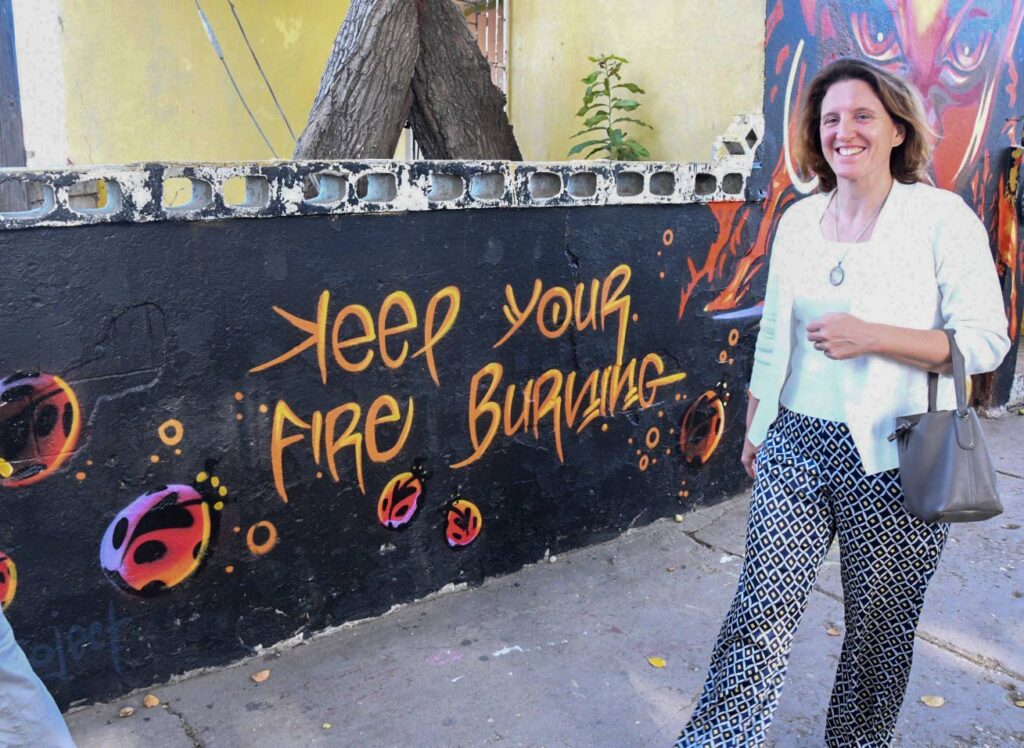
    During an official visit to the University of Technology, Jamaica (UTech) on February 8, 2026, Her Excellency Marianne Ziss, France’s Ambassador to Jamaica, explored the renowned Caribbean Sculpture Park. This cultural landmark, inaugurated on December 10, 1999, has attracted diverse visitors through its remarkable transformation from a barren ‘dust bowl’ into an environmentally conscious green space showcasing artistic expressions from Caribbean and international sculptors.

    The park’s creation realized the visionary aspirations of several key figures: Pat Ramsay, the university’s inaugural director for the Centre for Arts; David Harrison, former dean of the Faculty of the Built Environment; and the late President Emeritus Dr. Rae Davis.

    The visit prompted reflection on France’s global reputation as a vanguard of heritage preservation, notably as headquarters of the International Council of Museums (ICOM). This legacy includes the historic decision during Germany’s invasion of France to surrender without resistance, primarily to protect the nation’s architectural treasures from destruction.

    This historical context connects to UTech’s own heritage through its predecessor institution, the Hope Farm School/Jamaica School of Agriculture (1910-1957). Historical records from Veront Satchell’s ‘Hope Transformed: A Historical Sketch of the Hope Landscape’ reveal that during 1916-1917, the entire third-year student cohort enlisted for war service, with numerous staff members similarly volunteering. Despite extensive efforts, the complete roster of these individuals remains undocumented.

    Joan Francis, Museum and Heritage Preservation Officer and Lecturer in archival appraisal and access at UTech, expressed regret that Ambassador Ziss was not informed about this significant historical connection, which would have warranted solemn recognition during her visit.

  • From clutter to clarity

    From clutter to clarity

    Kingston and St. Andrew Municipal Corporation (KSAMC) has initiated a comprehensive campaign to address the growing problem of unregulated signage throughout the municipality. Mayor Andrew Swaby emphasizes that while signage serves as vital communication for businesses and organizations, uncontrolled proliferation has created visual pollution, compromised public safety, and diminished the area’s distinctive character.

    The three-month regularization initiative, running from January to March 2026, offers temporary concessions on outstanding fees while providing entities with a structured opportunity to comply with existing regulations. This awareness-first approach recognizes that many operators were previously unaware of legal requirements, particularly those operating within commercial complexes who mistakenly believed private property signage was exempt from regulation.

    All publicly visible signage—including store signs, awnings, banners, billboards, and building-mounted displays—falls under the jurisdiction of the Town and Country Planning (Control of Advertisement) Regulation (1978) and the Kingston and St. Andrew Building Act (2018). Compliance requires formal approval from KSAMC before installation, ensuring signage doesn’t obstruct sightlines, interfere with traffic visibility, or negatively impact residential areas.

    The campaign specifically addresses common misconceptions, clarifying that directory signs remain property owners’ responsibility while individual businesses must still seek approval for their signage. The municipal corporation has engaged in direct outreach with both private entities and government agencies, including communications with permanent secretaries to ensure ministries and departments comply with the same standards.

    Beyond aesthetic concerns, improperly placed signage creates genuine safety hazards by distracting drivers, obstructing visibility, and creating dangerous conditions for pedestrians. The regularization effort represents KSAMC’s broader vision for a modern, orderly urban environment where commercial activity thrives without compromising public safety or visual harmony.

    The corporation maintains that this concession period doesn’t constitute an amnesty nor guarantee approval for non-compliant signage. Rather, it provides a practical reset opportunity for assessment and correction before intensified enforcement actions potentially lead to removal of unlawful displays. KSAMC compliance teams are currently conducting field engagements to clarify processes and address questions while planning quarterly consultations with advertising agencies for improved future coordination.

    Signage regulation remains an ongoing requirement with annual fees payable beyond the campaign period. Mayor Swaby encourages all entities with publicly visible signage to utilize this opportunity to settle outstanding obligations and contribute to shaping a safer, more visually balanced Kingston and St. Andrew.

  • Education only the gateway

    Education only the gateway

    Jamaica’s millennial generation faces unprecedented employment challenges as they navigate a constricted job market characterized by rising living costs and increasingly stringent qualification requirements. The pursuit of stable employment that can sustain basic household needs has become an elusive goal for many young professionals, creating a national crisis that demands innovative solutions.

    During the recently observed National Career Week in February 2026, Jamaica embraced the theme ‘Fuelling Growth: Creating Opportunities through Career Development,’ shifting the national conversation toward more holistic approaches to workforce development. This initiative highlighted how career advancement transcends individual achievement, serving instead as a critical component in building a resilient national economy capable of competing in the global marketplace.

    The traditional belief that formal education automatically translates to career success has been fundamentally challenged. While academic qualifications remain valuable, they must be complemented by practical skills, adaptability, and entrepreneurial thinking. This paradigm shift reflects the evolving reality that degrees alone no longer guarantee employment in an increasingly competitive landscape.

    Historical perspectives, including the widely recited Jamaican primary school poem emphasizing that ‘learning is better than silver and gold,’ have shaped generational attitudes toward education. However, contemporary economic realities require a re-evaluation of this mindset, recognizing that while education remains valuable, its application must extend beyond conventional employment pathways.

    Entrepreneurship emerges as a particularly promising alternative, offering financial independence and creative fulfillment while simultaneously contributing to national economic growth. Practical skills development through institutions like Jamaica’s HEART/NSTA Trust provides critical training in high-demand sectors including hospitality, construction, and digital technology, creating new avenues for professional advancement.

    This economic transformation represents not merely a career option but an essential survival strategy for Jamaican millennials and future generations. By embracing entrepreneurial initiatives and skill-based training, young professionals can build sustainable livelihoods while driving national progress in an increasingly competitive global economy.

  • It’s Women’s Month!

    It’s Women’s Month!

    As March dawns each year, global attention turns to commemorating the extraordinary accomplishments, steadfast resilience, and profound societal impact of women worldwide. While International Women’s Day on March 8 serves as the centerpiece of these observances, the entire month represents a broader call to action—a sustained period for reflection, celebration, and renewed dedication to creating meaningful change in the lives of women and girls across all spheres of society.

    From corporate leadership to academic institutions, agricultural fields to scientific laboratories, and domestic settings to government chambers, women of diverse backgrounds continuously shape communities through both visible and unseen contributions. Meaningful observance of Women’s Month demands deliberate intention and concrete action rather than mere symbolic gestures.

    The path to substantive celebration begins with genuine understanding. Developing awareness of women’s multifaceted experiences and the systemic challenges they confront transforms appreciation from superficial acknowledgment to substantive support. This foundational knowledge informs subsequent actions that truly honor women’s contributions.

    While renowned figures provide inspiration, Women’s Month equally emphasizes recognizing everyday heroes—mothers, educators, entrepreneurs, caregivers, and community leaders who form the backbone of societies. Practical recognition methods include personal appreciation notes, award nominations, and social media spotlights that amplify their stories.

    Economic and social support mechanisms represent crucial components of meaningful observance. This encompasses volunteering time and resources to educational initiatives, service organizations, and health programs specifically designed to empower women and girls. Such practical engagement creates tangible impact beyond rhetorical support.

    The commemorative period also serves as an opportunity for creating inclusive spaces where women can share experiences openly through forums and dialogue sessions. These platforms foster mutual understanding and emphasize that genuine recognition requires collaborative partnership between all members of society.

    Most significantly, effective observance requires commitment extending beyond March’s conclusion. Gender equity represents an ongoing imperative rather than a seasonal cause. Women’s Month should function as a catalyst for sustained advocacy, mentorship, and support throughout the entire year.

    When societies consistently uplift women’s initiatives and maintain support beyond designated periods, everyone benefits. Women’s advancement creates ripple effects that strengthen entire communities, making sustained commitment not just a moral imperative but a practical necessity for comprehensive social progress.

  • National Bus Company says Routes Remain the Same

    National Bus Company says Routes Remain the Same

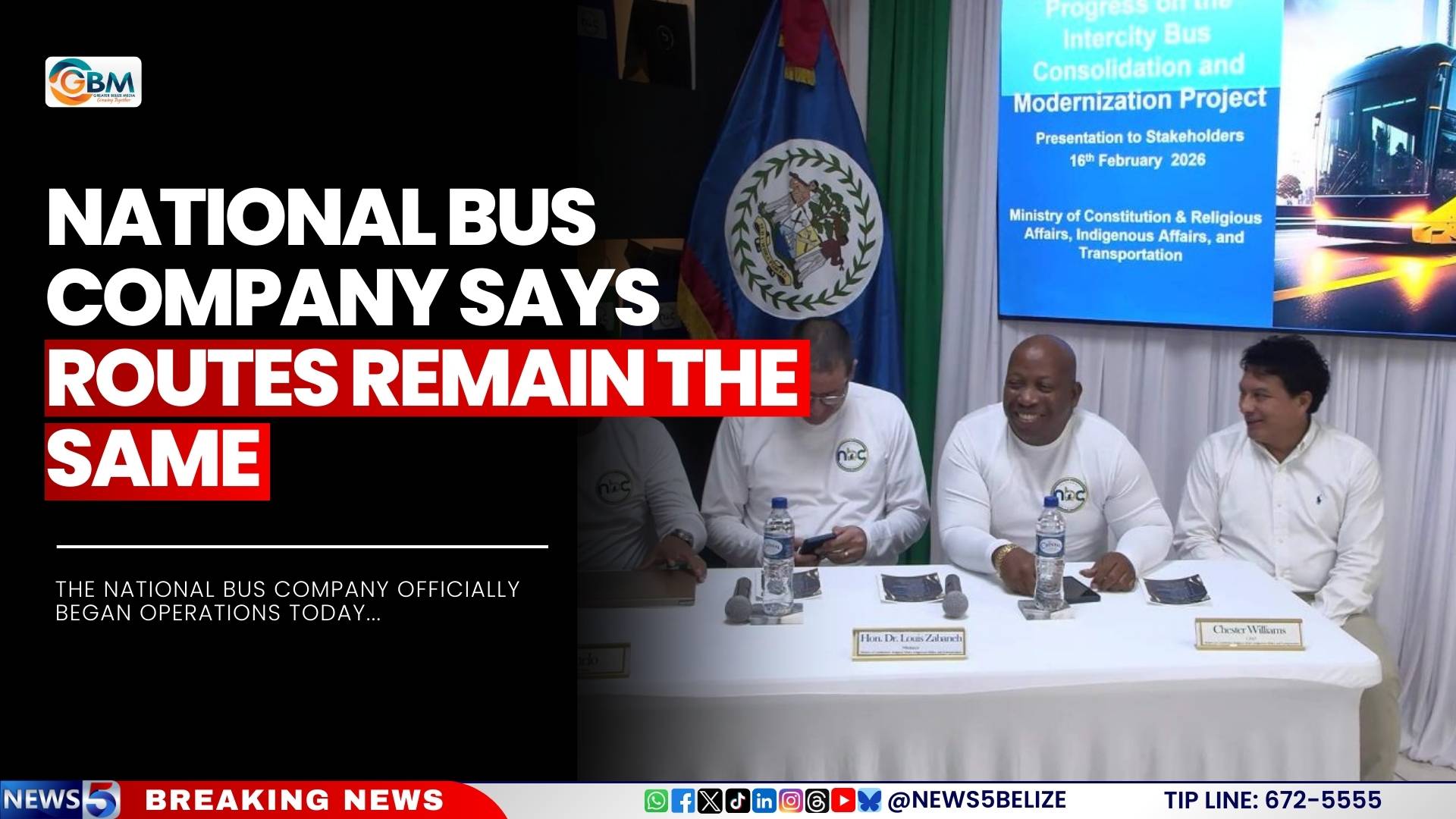
    The newly established National Bus Company commenced operations on March 1, 2026, marking a significant milestone in the government’s Transport Modernisation Initiative. Transportation authorities have confirmed that existing bus routes, schedules, and service frequencies will remain predominantly unchanged, with minor adjustments only applied to eliminate duplicate routes and closely timed departures.

    The Ministry of Transportation emphasized that the transition aims to enhance operational reliability and efficiency without disrupting current services. Officials pledged transparent communication regarding any future modifications to the bus network, ensuring passengers receive timely updates about service improvements.

    Despite governmental assurances, the launch has generated substantial skepticism among commuters. Social media platforms have become arenas for public criticism, with many questioning the tangible benefits of the rebranding initiative. One commentator noted, ‘Merely changing the names on buses hardly constitutes improved services,’ while another criticized the persistence of ‘old outdated buses’ within the new system.

    Commuters have specifically challenged whether the organizational restructuring will address fundamental concerns regarding vehicle standards, safety protocols, and punctuality—issues that remain under the management of existing operators. While transportation officials promote the initiative as progress, the traveling public maintains cautious expectations, awaiting evidence of substantive improvements rather than superficial changes.

  • Prosecutors mull options as student dies 16 months after being stabbed

    Prosecutors mull options as student dies 16 months after being stabbed

    The Caribbean nation of St. Vincent and the Grenadines is grappling with profound legal and social questions following the tragic death of 17-year-old student athlete Alia Mc Dowall on Sunday. Mc Dowall succumbed to complications from a severe throat stabbing that occurred outside her Central Leeward Secondary School on November 28, 2024, allegedly perpetrated by a student from Campden Park Secondary School.

    Her passing came precisely as her school community was conducting its annual athletic meet—an event where Mc Dowall would have showcased her running talents. The Central Leeward Secondary School memorialized her on social media, stating: “Today, we express our deepest condolences on the loss of our student-athlete. On a day such as this, you would have been prepared to showcase your talent through running. Rest in peace, young one.”

    The case has ignited serious scrutiny of the nation’s justice system. Prosecutors had instructed investigators just three days before Mc Dowall’s death to charge the alleged assailant with ‘wounding with intent.’ However, investigators have expressed frustration over procedural delays within the prosecution service.

    Complicating the legal proceedings is the unoperationalized Child Justice Act of 2019, which restricts investigators from charging minors without explicit instructions from the National Prosecution Service. Additionally, Section 169 of the Criminal Code presents a significant barrier, stating that a person cannot be deemed to have killed another if death occurs more than ‘a year and a day’ after the alleged act.

    Legal experts suggest prosecutors may now pursue charges of grievous bodily harm (GBH), which carries a maximum penalty of life imprisonment—the same as murder in a jurisdiction where capital punishment has been abolished. The case continues to develop as prosecutors weigh their options amid growing public concern about youth violence and judicial efficiency.

  • RvC EBS: Leo Brunswijk moet schriftelijk reageren na escalatie binnen directie

    RvC EBS: Leo Brunswijk moet schriftelijk reageren na escalatie binnen directie

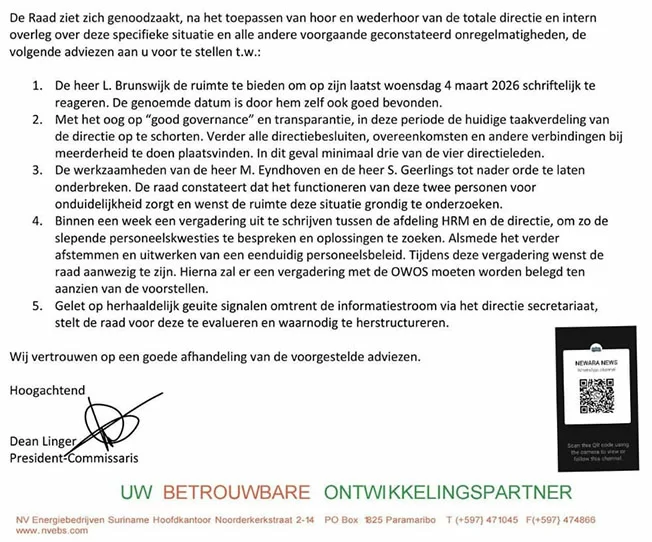
    The Supervisory Board of NV Energiebedrijven Suriname (EBS) has issued an ultimatum to director Leo Brunswijk, demanding a written response by Wednesday, March 4, 2026, addressing the escalating leadership crisis within the state-owned energy company. This development follows a February 27, 2026 letter obtained by DTV Express, revealing a complete breakdown in executive communications.

    The supervisory body described the situation as ‘untenable,’ citing a critical escalation on February 16 that has paralyzed management operations and halted all executive meetings. The current intervention comes after a previous warning letter dated February 24, 2026, titled ‘Conditional Participation in Executive Meetings,’ specifically addressed to Brunswijk.

    Following thorough internal consultations and examination of earlier irregularities, the Board has proposed radical governance reforms. In the interest of transparency and good governance, the current executive division of responsibilities would be temporarily suspended. All future management decisions, contracts, and commitments would require majority approval from at least three of the four executive members.

    In a significant move, the Board recommended the immediate suspension of M. Eyndhoven and S. Geerlings pending further investigation. Their continued involvement has allegedly created operational ambiguity requiring urgent resolution.

    The proposed measures include convening emergency meetings within one week between HRM departments and executive leadership to address persistent personnel issues and establish consistent employment policies. The Supervisory Board intends to observe these sessions directly. Subsequent discussions with the OWOS (likely a workers’ organization) will address the implemented measures.

    Additionally, the Board highlighted recurring concerns regarding information flow bottlenecks through the executive secretariat, proposing comprehensive evaluation and potential restructuring. Signed by President-Commissioner Dean Linger, the letter expresses confidence that these recommendations will be meticulously implemented to restore organizational stability.

  • COMMENTARY: Bats – Flying pest controllers for some! A delicacy for others!

    COMMENTARY: Bats – Flying pest controllers for some! A delicacy for others!

    The Caribbean island of Dominica, known as the Nature Isle, harbors an extraordinary biological treasure: twelve distinct species of bats that represent the island’s only indigenous mammals. While many residents assume only one or two species exist, scientific documentation reveals a diverse chiropteran population that surpasses larger neighboring islands in biodiversity significance.

    Unlike introduced species such as agouti, wild pigs, and opossums, bats have inhabited Dominica for millennia. The island’s bat community includes six insectivorous species that perform aerial acrobatics under streetlights, three frugivorous species that feed on fruits like mangoes and soursop, two nectarvorous species that pollinate night-blooming flowers, and the impressive piscivorous greater bulldog bat that uses specialized talons to catch fish.

    Notably, Dominica hosts several endemic species found nowhere else on Earth. The Dominican Myotis (Noctilio leporinus mastivus) shares exclusive island status with the Sisserou parrot and other endemic wildlife. Additionally, the Antillean Tree Bat (Ardops nichollsi nichollsi) and Yellow-shouldered Bat (Sturnira lilium angeli) exist as Dominica-specific subspecies.

    These flying mammals provide crucial ecosystem services. Insectivorous bats consume between 1,000-8,000 insects nightly, offering natural pest control and mosquito management. Frugivorous bats assist in seed dispersal by carrying fruits to feeding perches, while nectarvorous species contribute to plant pollination. Their guano (known locally as ‘kaka chouchòt’) serves as valuable natural fertilizer.

    Bats are deeply woven into Dominica’s cultural heritage. Kalinago pottery historically featured bat designs, while traditional Carnival costumes include the ‘souswèl souwi’ bat-inspired outfits. Culinary traditions in villages like Dublanc maintain bat stew (‘chouchòt épi donmbwé’) as a Christmas delicacy, though recent bat poaching incidents have prompted forestry officials to issue conservation warnings.

    The island’s geological features support numerous bat habitats, including coastal caves like Anba Chouchòt at Massacre and the remarkable Stinking Hole (Tou Santi)—a collapsed lava tube near Middleham Falls that hosts approximately 65,000 bats of three species. Local nomenclature reflects cultural connections, with Kwéyòl names like ‘souswèl souwi,’ ‘djenbo,’ and ‘wat volan’ varying by community.

    Globally, bats demonstrate remarkable biological adaptations. With over 1,400 species worldwide, they represent 20% of all mammal species. They give birth upside down, produce typically single offspring called pups, and can live over 30 years. Contrary to the ‘blind as a bat’ myth, they possess excellent low-light vision alongside sophisticated echolocation capabilities.

    Dominica’s bat conservation story represents a microcosm of broader biodiversity protection challenges, balancing ecological significance with cultural traditions while ensuring the survival of these unique mammalian aviators.

  • CARICOM backs plan to replace UWI Royal Charter with regional treaty

    CARICOM backs plan to replace UWI Royal Charter with regional treaty

    In a landmark decision signaling a decisive break from colonial legacy, Caribbean Community (CARICOM) leaders have unanimously endorsed a proposal to supersede the University of the West Indies’ British Royal Charter with a regionally ratified treaty. The pivotal agreement was formalized during the 50th Regular Meeting of the Conference of Heads of Government, convened in Saint Kitts and Nevis.

    Chairing the conference, Prime Minister Terrance Drew of Saint Kitts and Nevis announced the move, characterizing it as a monumental stride toward indigenizing the premier academic institution. “This action propels us a step closer to fully indigenize that institution,” Dr. Drew stated, underscoring the achievement’s significance for regional sovereignty.

    Established under a Royal Charter granted by the British Crown, the University of the West Indies (UWI) has historically operated under this imperial framework, which defined its operational protocols and authority to confer degrees. The newly ratified proposal will supplant this colonial-era instrument with a binding treaty integrated into CARICOM’s legal architecture. This transition is meticulously designed to uphold the university’s established autonomy, existing governance model, and cherished academic freedoms.

    The strategic shift has garnered longstanding advocacy from UWI Vice-Chancellor Hilary Beckles, who views it as integral to comprehensive regional reform. Professor Beckles had previously cautioned that rescinding the Royal Charter without a robust alternative legal foundation could jeopardize the institution’s very continuity, highlighting the critical nature of this structured transition.

    This week’s endorsement effectively moves the proposition from theoretical policy deliberation to concrete, collective action, marking a new chapter of self-determination for Caribbean academia.