博客

  • Iran fully closes Strait of Hormuz over US blockade and fires on ships

    Iran fully closes Strait of Hormuz over US blockade and fires on ships

    Tensions around the strategically vital Strait of Hormuz reignited dramatically on Saturday, as Iran backed away from its recent partial reopening of the waterway and launched attacks on passing commercial vessels. The escalation comes in direct retaliation for the United States’ ongoing maritime blockade of Iranian ports, a core pressure tactic in the eight-week conflict between the two nations.

    In an official statement Saturday, Iran’s Revolutionary Guard Navy announced that the strait will remain fully closed to commercial traffic until the U.S. blockade is permanently lifted. The force issued a stark warning to global shipping: “no vessel should make any movement from its anchorage in the Persian Gulf and the Sea of Oman, and approaching the Strait of Hormuz will be considered as cooperation with the enemy” — a designation that puts any errant vessel at risk of being targeted.

    The United Kingdom’s United Kingdom Maritime Trade Operations center confirmed the attacks, reporting that Revolutionary Guard gunboats fired on a tanker, while an unknown projectile struck a container ship, damaging cargo containers on board. India’s foreign ministry has since escalated the diplomatic fallout, summoning Iran’s ambassador to New Delhi to protest the incident: two of the vessels hit were flying the Indian flag, a particularly provocative move after Iran had recently allowed multiple India-bound ships to pass through the strait unimpeded.

    This latest escalation comes at a precarious moment for regional diplomacy: a fragile temporary ceasefire is set to expire this coming Wednesday. Iranian officials confirmed that Tehran has received a new set of negotiating proposals from Washington, with Pakistani mediators currently working to arrange a new round of direct talks between the two adversaries.

    Just days before Saturday’s attacks, Iran’s joint military command had announced that control of the strait had “returned to its previous state … under strict management and control of the armed forces,” signaling a partial easing of restrictions that had raised hopes for de-escalation.

    For Iran, controlling access to the Strait of Hormuz — through which roughly 20% of the world’s daily oil supplies transit — remains its most impactful leverage in the conflict. The current conflict began on February 28, when the U.S. and Israel launched military operations amid stalled negotiations over Iran’s nuclear program. Closing the strait puts immediate pressure on the global economy, inflicting political strain on Western leaders while the U.S. naval blockade aims to cripple Iran’s already fragile economy.

    Iran’s newly installed supreme leader, Ayatollah Mojtaba Khamenei, delivered a defiant address Saturday, asserting that Iran’s navy stands “ready to inflict bitter defeats on its enemies.” Khamenei, who assumed the role following his father’s death in Israel’s opening offensive of the war, has not been seen in public since he took office.
  • Teachers Given Formula to Calculate Final Retroactive Pay for 2018–2023 Period

    Teachers Given Formula to Calculate Final Retroactive Pay for 2018–2023 Period

    Public sector teachers across Antigua and Barbuda who are eligible for long-awaited final retroactive payments from the 2018 to 2023 collective bargaining contract period now have step-by-step guidance to calculate their outstanding owed amounts, released this week by the Executive of the Antigua and Barbuda Union of Teachers (ABUT).

    The guidance is split into two distinct frameworks based on a teacher’s start date within the contract period, to ensure every eligible educator can accurately verify their entitlement. For educators hired between January 1, 2019 and December 31, 2023, the calculation follows a four-step process. First, multiply the teacher’s substantive salary (as recorded on January 1, 2019) by 0.05, then multiply that total by 12 to account for the full 2019 calendar year. Second, calculate the 2020–2023 component by multiplying the teacher’s substantive salary as of January 1, 2020 by 0.092, then multiply that by the total number of months the teacher worked between 2020 and 2023. Third, add the results of the first two calculations to get a subtotal, then sum up the value of all extra monthly salary payments received in 2022, 2024, and 2025. The final retroactive amount owed equals the subtotal minus this sum of previously received extra payments.

    To illustrate this first framework, ABUT provided a sample calculation for a hypothetical Teacher A, who was hired in January 2019 and remained employed beyond the end of 2023. With a 2019 starting substantive salary of $2,754, 48 months worked between 2020 and 2023, and extra payments totaling $9,154 across 2022, 2024, and 2025, the final retroactive payout comes out to $4,660.

    For educators hired between January 1, 2020 and December 31, 2023, a simplified framework applies. Teachers in this group calculate their base amount by multiplying their January 1, 2020 substantive salary by 0.092, then by the total number of months worked between 2020 and 2023. They then subtract the sum of their extra 2022, 2024, and 2025 salary payments from this base to get their final owed amount, with results rounded to the nearest whole dollar. ABUT’s sample for this group, Teacher B, also hired with a $2,754 salary and 48 months of work, ends up with a final retroactive payment of $3,008 after rounding.

    ABUT’s leadership emphasizes that this public guidance is designed to promote full transparency around the retroactive payment process, allowing every eligible teacher to independently confirm their expected payout rather than relying solely on government calculations. The union has advised both members and non-members who identify any discrepancies between their own calculation and the payment issued by the government to report inconsistencies to either the Accounts Department at the Ministry of Education or the Treasury Department for review.

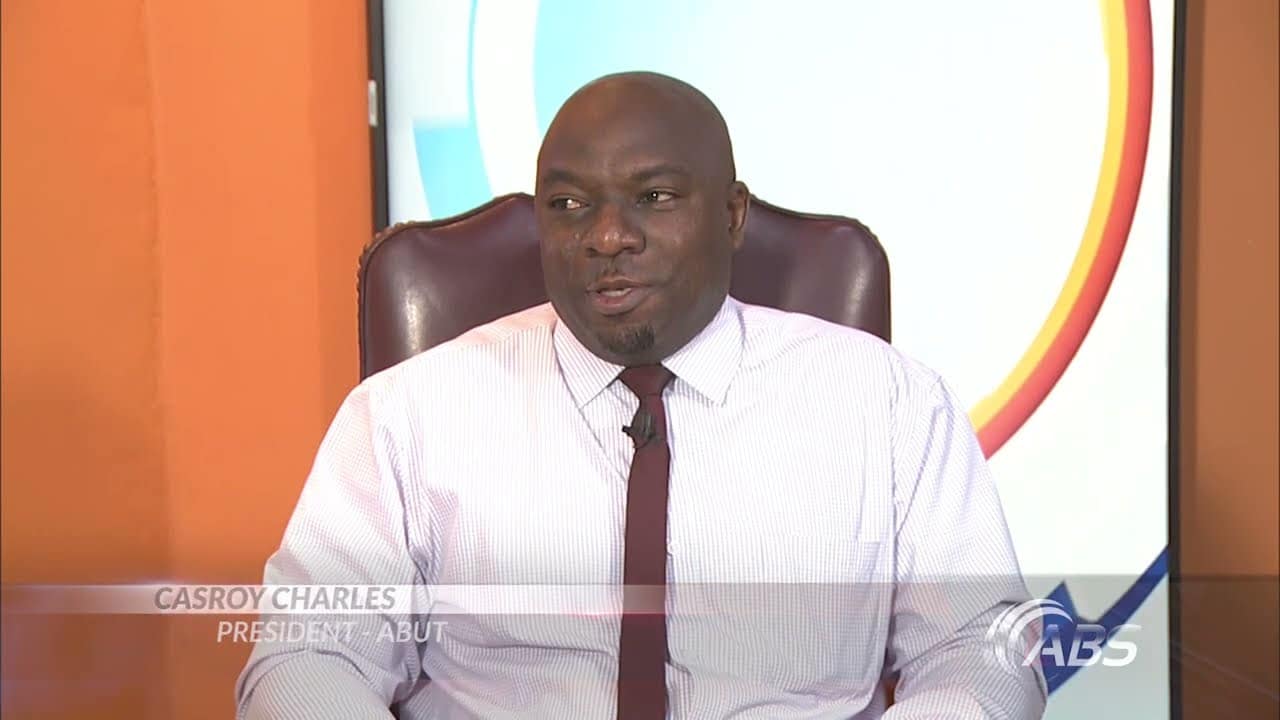
    In closing the announcement, ABUT President Casroy Charles reaffirmed the union executive’s ongoing commitment to keeping all teaching staff updated on any new developments related to the retroactive payment process. The organization says it will continue working to ensure every educator receives the full and fair compensation they are entitled to under the 2018–2023 collective agreement.

  • Govt opens Crop Over events to private sector as Cohobblopot returns

    Govt opens Crop Over events to private sector as Cohobblopot returns

    Barbados is embracing a bold new strategy for its iconic annual Crop Over festival, opening production rights for the event’s flagship activities to qualified private sector organizations. The progressive policy shift is designed to inject fresh creative energy into the cultural celebration, lift production standards, expand its international footprint, and protect the festival’s core cultural heritage, according to government officials.

    The official announcement was made by Senator Shane Archer, Minister of State in the Prime Minister’s Office with oversight for Youth and Culture, during the festival’s official media launch hosted Saturday at the Hilton Barbados Resort. Archer confirmed that eligible domestic and international entities will be invited to submit competitive bids to manage and produce Crop Over’s most high-profile events, including the wildly popular Party Monarch competition and the classic Cohobblopot showcase.

    Archer emphasized that this public-private partnership model is not a withdrawal of government commitment to the festival, but a forward-thinking evolution of how the cultural event is governed. “This is not a step back from responsibility. It is a step forward into partnership,” he stated, noting that the new framework will drive creative innovation and strengthen the festival’s ability to compete on the global cultural tourism stage.

    Beyond boosting the festival itself, Archer explained that the policy creates a pathway for local Barbadian businesses to expand their operational capacity, scale their creative enterprises, and position themselves as exporters of Barbadian culture, rather than just local participants in the annual celebration.

    A key highlight of the 202X Crop Over plans is the long-awaited return of Cohobblopot, which is making a comeback after more than 10 years off the official festival calendar. Government officials plan to stage the reimagined event on a large scale, with direct support from private sector production partners. Archer noted that the revival comes after years of consistent public calls to bring back the beloved event, but stressed that the decision is rooted in strategic cultural planning, not nostalgia alone.

    Addressing potential pushback from observers who question the relevance of reviving a legacy event, Archer pushed back on the idea that cultural renewal requires rejecting the past. “Being youthful is not about rejecting the past… youth know how to recognise value, refresh it, and make it matter again,” he said.

    The minister explained that the return of Cohobblopot will center on intentional renewal, not simple replication of the historic event. “There’s nothing new under the sun, but there’s always room for renewal. Real freshness is knowing what was good and having the vision and capability to present it in a way that belongs fully to the cultural environment we live in now,” he added.

    Far from being a static “museum piece” or a carbon copy of the earlier iterations of the event, the new Cohobblopot will be framed as a re-energized cultural experience crafted to resonate with a new generation of festival-goers, while still delivering the nostalgic magic that long-time attendees remember fondly.

    For decades, Cohobblopot stood as a cornerstone of the Crop Over festival, blending live music, elaborate costume design, and theatrical performance into one of the calendar’s most anticipated showcases. “For many Barbadians, Cohobblopot was never just another event on the calendar. It was a spectacle, it was performance, it was culture,” Archer said. “It was the meeting point of music, design, and national excitement in one place.”

    Archer confirmed that the 202X revival will be guided by contemporary creative thinking, upgraded production standards, and a intentional alignment with the modern Crop Over festival structure, setting the stage for a refreshed cultural experience that honors the past while embracing the present.

  • Nederland activeert eerste fase van energiecrisisplan

    Nederland activeert eerste fase van energiecrisisplan

    The Netherlands is set to put into motion the first phase of its contingency energy crisis plan starting Monday, according to reports from Dutch national news agency ANP, which cited anonymous government sources in a Saturday briefing. This activation marks the first time the pre-approved emergency framework has been deployed since it was drafted in 2022, following Russia’s full-scale invasion of Ukraine that upended global energy markets and triggered a continent-wide energy crisis across Europe.

    As of Saturday, official government spokespersons had not issued an immediate on-the-record confirmation or comment on the planned activation to independent media outlets.

    Under the structure of the multi-phase emergency plan, triggering the first phase indicates that fuel markets are currently experiencing disruption, but no immediate supply shortages are being recorded across the country. In this initial stage, national energy regulators and market watchdogs will ramp up continuous, close monitoring of supply and pricing dynamics across all fuel and energy segments. At the same time, national government agencies and private sector energy stakeholders will coordinate preparations to respond quickly if market conditions worsen in the coming weeks.

    The move comes just one day after Dutch Prime Minister Rob Jetten announced on Friday that the cabinet would unveil a new package of measures on Monday to offset rising energy costs for households and commuters. Early indications suggest the support package will include targeted tax benefits for private vehicle owners, though current planning does not include a cut to national fuel excise duties, multiple sources familiar with the plan have confirmed.

    Officials have framed the activation of the emergency energy plan as a proactive step to address persistent pressures on global and regional energy markets, and to limit the spillover impact of ongoing global geopolitical and economic developments on domestic energy supply security across the Netherlands.

  • Premier’s Trip To St Kitts & Nevis Cost $3,736.10 – Bernews

    Premier’s Trip To St Kitts & Nevis Cost $3,736.10 – Bernews

    Newly released public travel records posted to Bermuda’s official government travel transparency webpage have revealed the total cost of Premier David Burt’s February 2026 working trip to St. Kitts and Nevis, totaling exactly $3,736.10 — all of which covered the premier’s transoceanic air travel for the engagement.

    The four-day official visit ran from February 24 to February 27, 2026, and centered on Burt’s attendance at the 50th Meeting of the Conference of Heads of Government of the Caribbean Community (CARICOM), a landmark regional gathering marking five full decades of CARICOM’s work advancing integration across the Caribbean. This historic session was also the first CARICOM heads of government conference held under the new chairmanship of Dr. Terrance Drew, Prime Minister of host nation St. Kitts and Nevis. Burt was joined on the trip by Bermuda’s Minister of Home Affairs, Alexa Lightbourne.

    Over the course of the conference, Premier Burt took part in every scheduled plenary and working session, where regional leaders centered talks on pressing priorities for the bloc: deeper cross-border cooperation, improved coordinated security responses, broad-based economic diversification across member states, and expanded intra-regional trade flows. A key topic for Bermuda’s delegation was the territory’s ongoing accession process toward full membership in CARICOM; Bermuda currently holds associate member status and has steadily expanded its institutional and diplomatic engagement with the bloc in recent years.

    On the sidelines of the formal conference proceedings, Burt also held a series of one-on-one bilateral meetings with leaders from other Caribbean Overseas Territories, focusing on shared priorities and collaborative initiatives for smaller territories.

    Burt’s participation in the 50th CARICOM summit follows his attendance at the 49th heads of government meeting, a consistency that underscores Bermuda’s long-term commitment to active engagement in the highest levels of Caribbean regional governance, per the official government description of the trip.

    The St. Kitts and Nevis leg of Burt’s travel came immediately after a separate working visit to San Francisco, where he was invited to lead a high-profile session at NEARCON 2026. Titled “The ‘Bermuda Triangle’ Approach to Innovation and AI as the Next Regulatory Frontier,” the session explored how Bermuda’s unique tripartite collaboration framework between government, industry regulators, and private sector stakeholders can be adapted to build fit-for-purpose regulatory regimes for artificial intelligence in global financial services. While in San Francisco, Burt also held closed-door meetings with C-suite executives from leading digital asset and artificial intelligence firms.

    Following the conclusion of the CARICOM summit, Burt returned to Bermuda on February 27, 2026, in time to take his seat in the House of Assembly for the scheduled General Economic Debate.

    The full public disclosure of travel costs follows a growing pattern of proactive release of official travel expenses by the Bermuda government, with recent disclosures also published for other ministerial trips to destinations including Switzerland, Dubai, Barbados, and other global locations. The release also comes as the territory’s Auditor General carries out a broader review of official government travel expenses.

  • COMMENTARY: Why should Antiguans and Barbudans vote for the right to keep their own property?

    COMMENTARY: Why should Antiguans and Barbudans vote for the right to keep their own property?

    As Antigua and Barbuda enters another national election cycle, a long-simmering debate over land ownership and property rights has moved to the center of national discourse, rooted in the nation’s complex history of emancipation and post-independence governance.

    Writer Yves Ephraim recently sparked this conversation after drawing a throughline from historical accounts of land access to modern policy failures in the island nation. Opening with a reflection on Agnes Meeker’s *Plantations of Antigua*, Ephraim highlights a striking observation from the text: in the early days following emancipation, the most pressing desire of newly freed people was to secure permanent, individual ownership of land — a goal that remained frustratingly out of reach for most.

    This historical reality resonates deeply with ongoing inequities in 2026, Ephraim argues. Property ownership is not merely a personal convenience; it is a foundational pillar of human freedom, economic stability, and national prosperity. Economically, land stands as one of the four core factors of production, alongside capital, labor, and entrepreneurship. Without access to secure land tenure, individuals cannot build homes, launch businesses, or achieve long-term financial security. Historically, concentrated land ownership has always equated to concentrated power, from the feudal systems where monarchs controlled all territory to the colonial era where enslaved labor generated massive wealth from Antigua and Barbuda’s fertile sugar lands, while those who did the work were barred from owning any land themselves.

    In a democratic society built on the principles of individual freedom, the protection of private property rights is a non-negotiable obligation of government. Land ownership and personal liberty are inextricably linked: without secure claim to a plot of land, people face homelessness, systemic abuse, and constant vulnerability to state action. Yet 180 years after emancipation and more than four decades after independence in 1981, Ephraim questions why successive governments have failed to deliver widespread land access to the descendants of formerly enslaved people.

    Simple arithmetic underscores the feasibility of broad land distribution, he notes. Antigua alone holds roughly 3 billion square feet of total land mass. Allocating a 5,000 square-foot plot to each of the nation’s 100,000 citizens would require just 500 million square feet — less than a fifth of the total available area, and an amount that fits easily within the footprint of the publicly acquired Syndicate Lands alone. Decades ago, the nation took on debt to purchase these lands, a debt that was repaid by ordinary taxpayers. Instead of distributing these plots broadly to ordinary citizens, however, past administrations limited cheap land grants to political cronies and sold off vast swathes of public land to foreign investors, treating the finite resource as if it were unlimited.

    This mismanagement has created the current housing crisis, where low-income families struggle to find affordable land and homes. Rather than address the legacy of poor stewardship of public land, the current government has turned to seizing privately held land from citizens who lawfully purchased and paid taxes on their property, framing the seizures as necessary to build low-income housing. Ephraim calls this action a fundamental violation of individual freedom and constitutional principles, arguing that overreach by the state has always been the greatest threat to personal liberty in the nation’s history — from the legal enshrinement of slavery to today’s arbitrary property confiscation.

    Secure property rights are also the backbone of a growing, stable economy, he emphasizes. No investor will commit to a mortgage or business venture if there is a constant threat that the government will seize their property for arbitrary reasons. As voters head to the polls in the upcoming election, Ephraim urges Antiguans and Barbudans to make property rights a core voting issue. He challenges all citizens to support only candidates and administrations that explicitly pledge to protect private property rights, laying the groundwork for a free, prosperous nation where all citizens can thrive.

  • Family Demands Answers as Search Continues for Bree

    Family Demands Answers as Search Continues for Bree

    Three weeks have passed since 37-year-old Belize City resident Deborah “Bree” Arthurs vanished without a trace, and her loved ones are increasingly demanding answers from law enforcement, amid a stalled investigation with no confirmed breakthroughs in the case.

    Arthurs, a call center worker and devoted mother to one child, was last spotted in public on Friday, March 27, near the well-known La Popular Bakery in Belize City. Multiple witness accounts confirm she got into a silver Chevrolet Equinox that day, and no one has heard from her since that contact, leaving her family and community in a state of agonizing limbo.

    Local law enforcement has maintained that the investigation remains active, with officers continuing to work through potential lines of inquiry. In the most recent official statement, issued on Monday, April 13, Assistant Superintendent of Police Stacy Smith confirmed that investigators are prioritizing the silver vehicle Arthurs was seen entering. “Unfortunately I do not have any major update to share at this time; however, efforts are still being made to move this case forward,” Smith told reporters. “We have located the vehicle we believe Ms. Arthurs entered that day, and we are following up on multiple lines of investigation connected to it, as well as seeking to interview several persons of interest.”

    Despite police assurances of ongoing work, Arthurs’ family says they have grown deeply frustrated with the slow pace of the probe and the lack of transparent communication from authorities. Arthurs’ sister has publicly criticized the Belize City Police Department via social media, calling for greater openness about the case’s progress. She questioned how many more young women in the region must disappear before law enforcement takes more aggressive, visible action, and pressed authorities to publicly name persons of interest connected to the disappearance to encourage community tips.

    To incentivize public cooperation, the family has upped the reward for any information that reveals Arthurs’ whereabouts or breaks the case open to 10,000 Belize dollars, a significant increase from the original offer that signals their desperation to find the missing mother. As the search enters its fourth week, the community remains on alert, with local residents sharing Arthurs’ story across social media to keep the case in the public eye.

  • Newmont voert nieuw rooster in om vermoeidheid te verminderen; werktijden blijven gelijk

    Newmont voert nieuw rooster in om vermoeidheid te verminderen; werktijden blijven gelijk

    Paramaribo, Suriname – April 18 – Leading gold mining firm Newmont Suriname is set to implement a revised employee work rotation schedule from April 20 as the centerpiece of a company-wide Fatigue Risk Management program. The initiative is explicitly designed to cut workplace fatigue, strengthen overall site safety, and elevate the long-term wellbeing of the company’s on-site workforce.

    The most substantial change brought by the policy is an overhaul of the existing rotation structure. Previously, workers followed a 28-day cycle that split into two consecutive two-week blocks: 14 days of day shifts followed immediately by 14 days of night shifts. Under the new framework, the rotation will shorten each work block to one week, following a 21-day repeating cycle: 7 days of scheduled day shifts, 7 consecutive days of night shifts, and a full 7-day period of rest for employees between rotations.

    In addition to the adjusted block scheduling, the new policy requires employees to arrive at the work site one full day before their rotation is set to begin. This extra buffer time is intended to allow workers to acclimate to the site environment and get sufficient rest before starting their first shift, helping to reduce transition fatigue. Core daily shift hours will remain unchanged under the new plan, so workers will not face adjustments to the length or timing of their individual on-the-job shifts.

    Company leadership noted that the new roster was not developed in isolation. The policy went through an almost three-year consultation process, which included ongoing discussions with frontline employees and the official Newmont Employee Organization. Throughout the process, multiple competing scheduling models were evaluated for their impacts on worker health, operational output, and regulatory compliance. After reviewing all feedback and test data, the company selected the 7-7-7 rotation model for its balanced ability to support three key priorities: safety performance, employee health, and consistent production continuity across the mine’s operations.

    As compensation for the change to the rotation schedule, Newmont is also introducing tangible benefits for participating employees. All workers will receive a higher rotation-based allowance, along with additional paid time off days to offset the scheduling adjustments. The company has emphasized that the new full rotation structure meets all Surinamese labor laws and industry safety regulations. To ensure the new policy delivers on its intended goals, Newmont will closely monitor outcomes, worker feedback, and safety metrics after the policy goes into effect, adjusting elements of the program if needed to protect both worker interests and operational stability.

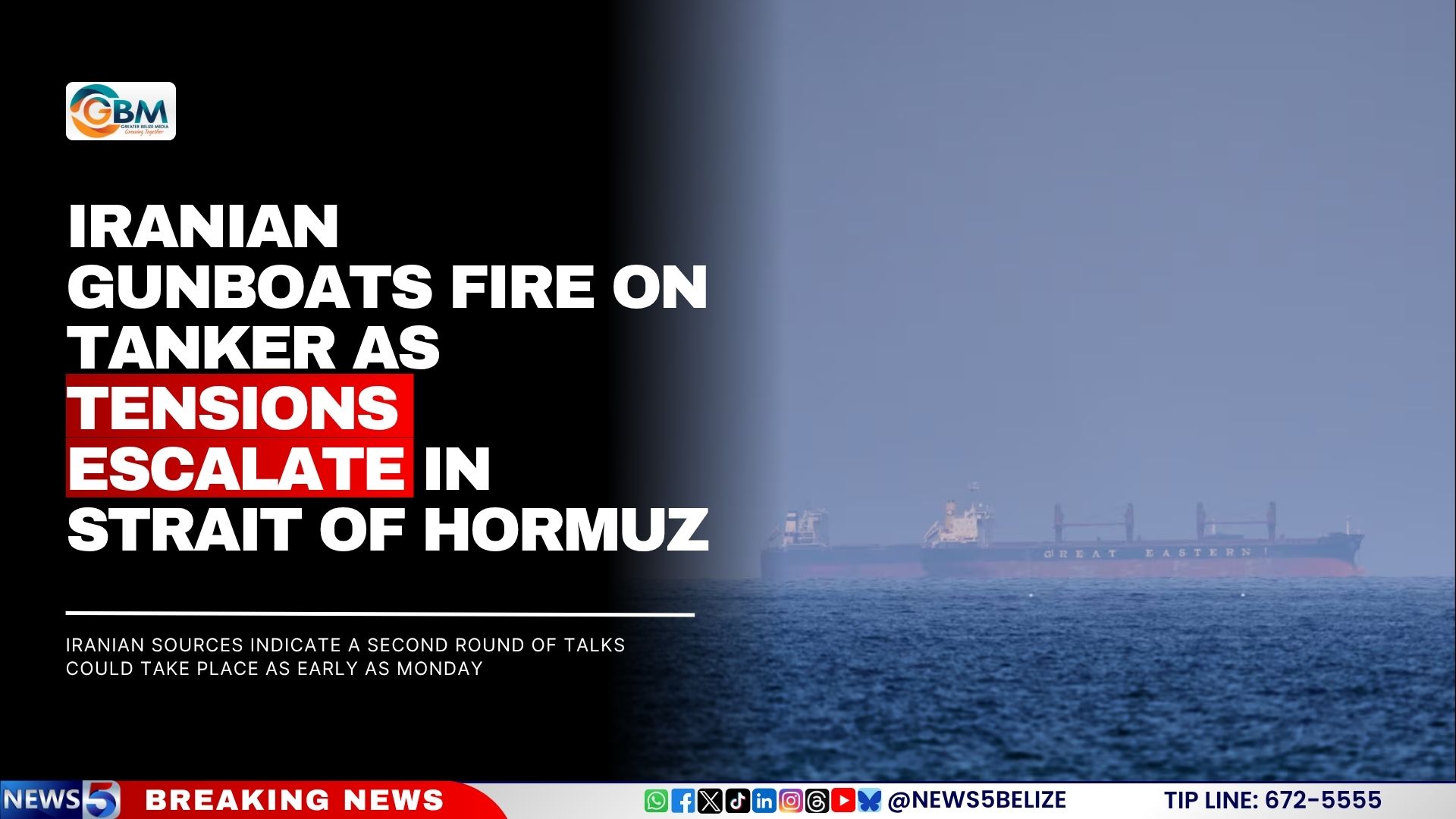
  • Iranian Gunboats Fire on Tanker as Tensions Escalate in Strait of Hormuz

    Iranian Gunboats Fire on Tanker as Tensions Escalate in Strait of Hormuz

    Escalating geopolitical friction in one of the world’s most critical energy chokepoints boiled over on Saturday, after Iranian gunboats fired on a commercial tanker attempting to traverse the Strait of Hormuz, while a second merchant vessel reported being hit by a projectile, multiple maritime sources confirmed to CNN.

    The hostile confrontations came just days after Iran’s military reinstated sweeping navigation restrictions across the strategic waterway, a move Tehran justified by citing repeated “breaches of trust” by the United States in ongoing diplomatic negotiations. This latest escalation has already thrown global maritime traffic into disarray: public vessel tracking data shows dozens of oil tankers have either altered their course to avoid the strait or remained anchored in nearby waters, grinding movement through the key corridor to a near halt in some areas.

    Diplomatic relations between Tehran and Washington remain near a breaking point, even as backchannel talks continue. Recent negotiations mediated by Pakistan have put new U.S. proposals on the table, which Iranian officials confirm are currently under review by Tehran’s leadership. U.S. President Donald Trump acknowledged that talks are progressing in public remarks, but made clear his administration’s growing frustration, warning that Washington would not accept what he called “Iranian blackmail” over control of the waterway.

    Iranian diplomatic sources have suggested a second round of direct negotiations could convene as early as Monday, though no U.S. officials have stepped forward to confirm the timeline. Core disagreements over navigation rights, sanctions relief, and regional security remain unaddressed, leaving the future of talks uncertain.

    In a revealing new development, a senior Iranian government official told CNN that Tehran is also considering implementing a new fee system for commercial vessels: ships that pay the required charge will receive priority passage through the strait, while vessels that refuse to comply will face extended, arbitrary delays. More than 20% of the world’s daily crude oil and refined petroleum product shipments pass through the 21-mile-wide strait, meaning any prolonged disruption to navigation risks sending shockwaves through global energy markets, driving up fuel prices for consumers and businesses worldwide.

  • Commonwealth Sport to kick off regional engagement with board meeting in Barbados,

    Commonwealth Sport to kick off regional engagement with board meeting in Barbados,

    In a move that redefines how a global sports organization engages with its member communities, the Commonwealth Sport Executive Board is set to travel to Barbados next week as the latest stop on its itinerant meeting program. This initiative, designed to move away from the tradition of hosting all key governance gatherings at a single fixed headquarters, aims to deepen connections between the organization’s leadership and stakeholders across the diverse 56-nation Commonwealth bloc.

    According to an official press release from Commonwealth Sport, the upcoming Barbados visit is a core component of the organization’s ‘Board on the Road’ strategy. The agenda balances formal strategic governance sessions with targeted outreach: board members will hold working discussions with Barbadian government officials, participate in immersive cultural experiences, and cap the visit with a public showcase of Road Tennis, the Caribbean island’s homegrown grassroots sport that has grown in popularity across the region.

    Once the formal sessions in Barbados conclude, Commonwealth Sport President Dr. Donald Rukare will lead a smaller delegation on a follow-up visit to Antigua and Barbuda. During that leg of the trip, the delegation will meet with senior national government leaders and representatives from local Commonwealth Games Associations. The visit is specifically tailored to lay preliminary groundwork for the 2026 Commonwealth Heads of Government Meeting (CHOGM), scheduled to take place in the region this coming November.

    Dr. Rukare emphasized that the traveling meeting model is central to Commonwealth Sport’s identity as a truly global, member-centric organization. ‘Taking our Board meetings on the road is an essential part of who we are as a truly global sports organization,’ he explained. ‘It allows us to connect directly with our members, understand local contexts and challenges, and build the relationships that are vital to delivering meaningful impact through sport.’

    He added that the Caribbean stop carries particular strategic and cultural weight. ‘By meeting in Barbados, we are not only advancing our strategic work, but also strengthening our partnership with the Caribbean region. Celebrating cultural and indigenous sports, such as Road Tennis, is a vital part of the Commonwealth Sport Movement, recognizing the unique sporting traditions that bring communities together and define our shared identity.’

    Sandra Osborne, Vice-President of Commonwealth Sport and a representative of the host nation, echoed that enthusiasm, noting that Barbados views hosting the executive board as a significant privilege. ‘It is a great honour for Barbados to host the Commonwealth Sport Executive Board and to welcome colleagues from across the Commonwealth to our island,’ Osborne said. ‘This visit is an opportunity to showcase not only our strong sporting culture, but also the richness of our heritage, which reflects the creativity, resilience and community spirit that defines our nation. We’re looking forward to welcoming everyone, sharing a bit of what makes Barbados special, and giving them a real sense of how important sport is to everyday life here.’