博客

  • Public Schools dominate at Classique Lighting Caribbean Communal Invitational

    Public Schools dominate at Classique Lighting Caribbean Communal Invitational

    Grenada’s young track and field stars took center stage on Saturday, April 25, 2026, for the second annual Classique Lighting Caribbean Communal Invitational, the only competitive athletics event on the national calendar that pits elite young runners from the country’s public and private primary school systems against one another directly.

    Co-hosted for the second consecutive year by Classique Lighting Caribbean and the Communal Cooperative Credit Union, the invitational brought together the top four qualifying athletes from two of the nation’s biggest primary school athletics championships: the Huggins Private Primary School Championships and the GUT National Primary Schools Championships. Designed to foster friendly cross-sector rivalry while elevating youth athletic development, the 2026 iteration delivered packed, high-energy competition across four age divisions and six sprint distances.

    Young competitors took to the track in the Under-7, Under-9, Under-11, and Under-13 age groups, contesting the 60m, 80m, 100m, 150m, 200m, and 400m sprints. Throughout the afternoon, athletes turned in consistent, high-quality performances that kept spectators engaged and highlighted the depth of young running talent across both public and private school networks.

    By the close of competition, public school athletes claimed a decisive lead in the overall medal standings, racking up 15 gold medals, 8 silver medals, and 11 bronze medals to secure the overall team advantage. Private school competitors finished with 1 gold, 8 silver, and 5 bronze medals total.

    Multiple standout performances and podium sweeps from public school athletes anchored their commanding lead. In the Under-7 division, Kalyssa Phillip claimed top honors in both the girls’ 60m and 80m, while Leonardo Alexander took gold in the boys’ 60m. Private schools earned their only gold of the day in the Under-7 boys’ 80m, where Xayden DeCoteau Pierre pulled off a resilient final push to cross the finish line first.

    The Under-9 division saw another sweep for public schools, with Kaylee Abraham taking gold in the girls’ 80m and 150m, and Dimari Paul claiming both boys’ sprint titles. In the Under-11 division, Taniyah Gibbs LaTouche dominated the girls’ 100m and 200m, while Kellie Howell matched the feat for public schools in the boys’ events. The senior Under-13 division delivered the most impressive individual performances of the day: Jammie Smith swept the girls’ 100m, 200m, and 400m to claim three gold medals, while Jediel Andrew took gold in the boys’ 100m and 200m, and Tyrone Alexis closed out the sprint slate with a gold in the boys’ 400m.

    Organizers emphasized that despite the lopsided final medal count, the event achieved its core mission beyond the podium. The invitational was created not just to crown winners, but to give promising young athletes access to high-level competitive experience that will help them grow in the sport, while also creating shared community engagement opportunities for local corporate teams and grassroots community groups.

    With two consecutive successful stagings under its belt and consistent backing from local corporate sponsors, the Classique Lighting Caribbean Communal Invitational has solidified its status as one of Grenada’s flagship youth athletics events. More than a competition, the meet has become a celebrated annual tradition that honors athletic excellence, strengthens community bonds, and reinforces the power of collaborative communal development in Grenada.

  • Huggins outshines competition at Classique Lighting Communal Invitational

    Huggins outshines competition at Classique Lighting Communal Invitational

    The second annual Classique Lighting Caribbean Communal Invitational wrapped up its two-day competition over the weekend of April 25-26, with corporate track and field squad Geo. F Huggins and Company Ltd. delivering an unforgettable dominant performance, headlined by star sprinter Tisha Checkley who claimed two individual gold medals. Held in Grenada, the 2026 iteration of the invitational drew 12 competing teams across all categories, with senior corporate sprint events emerging as the most anticipated attractions of the tournament.

    Checkley’s standout run came first in the women’s 100m dash, where she led a historic full podium sweep for the Huggins team. Crossing the finish line in a winning time of 14.10 seconds, Checkley finished well ahead of her competitors, with teammates Lanaya Woodroofe and Jaydee Samuel taking silver and bronze respectively with times of 14.83 seconds and 15.04 seconds. The 1-2-3 finish cemented the Huggins squad’s dominance, putting a substantial gap between the team and its closest corporate rival, Jonas Browne & Hubbard Ltd.

    Not content with one gold medal, Checkley returned to the track later the same day to compete in the women’s 60m dash final, which was split into two timed sectional heats. Earlisha Prescott of Digicel Grenada set an early fast pace in the first heat, clocking 9.28 seconds to hold the top position going into the second heat. But Checkley delivered a powerful, explosive performance out of the starting blocks, pulling away from the second heat field to stop the clock at 8.88 seconds — fast enough to secure the overall gold medal. Digicel rounded out the 60m podium, with Prescott taking silver and Corene Procope claiming bronze in 9.32 seconds.

    Martin Bedeau, Managing Director of event organizer Classique Lighting Caribbean (Grenada) and the creator of the invitational, highlighted the strong corporate participation as a key milestone for the growing competition. “I am incredibly proud of the performance from Team Huggins,” Bedeau said in comments following the event. “We look forward to seeing even more corporate partners participating in future editions of the invitational as we continue to grow this event.”

    Organizers confirmed that the corporate competitive category will remain a core centerpiece of the annual invitational moving forward, following the success of the 2026 staging and the high level of competition displayed by teams like Geo. F Huggins.

  • Sarah Ann Gill remembered as champion of faith, freedom and equality

    Sarah Ann Gill remembered as champion of faith, freedom and equality

    As the Methodist Church in Barbados celebrates 236 years of continuous operation on the island, community leaders have gathered to honor the enduring legacy of Sarah Ann Gill, the country’s beloved National Hero and a groundbreaking champion of religious freedom who rose to prominence during an era of violent persecution against dissenting faith communities.

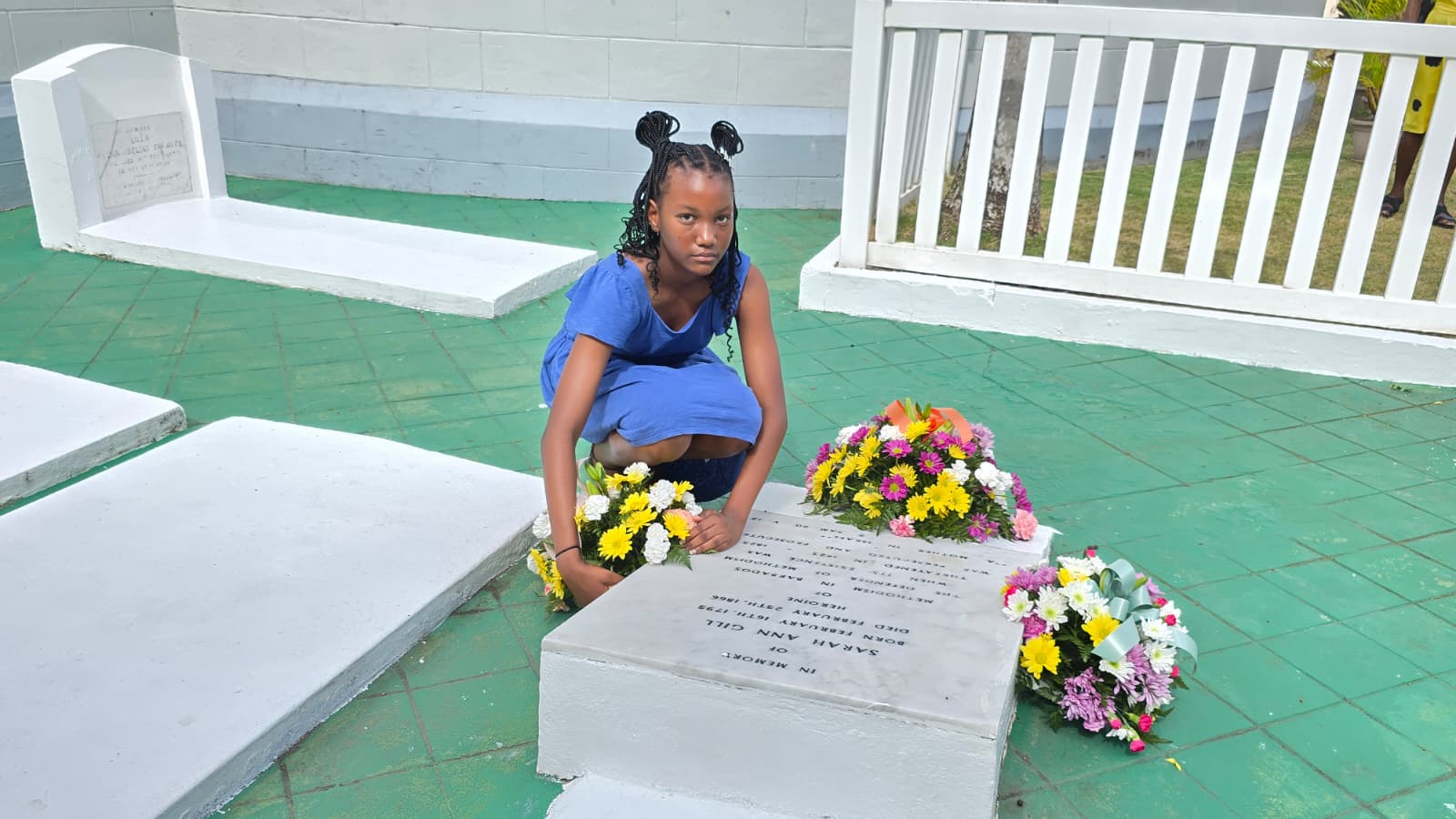
    The commemoration took the form of a quiet, respectful wreath-laying ceremony held Sunday at Bridgetown’s James Street Methodist Church, where senior Methodist preacher Natalie Phillips delivered a reflective address exploring Gill’s lifelong work and its ongoing relevance to the church’s core mission of advancing equal rights and unhindered freedom of worship.

    “Even when she faced brutal persecution and open death threats, Sarah Ann Gill never abandoned the Methodist cause,” Phillips told attendees. “She kept the spirit of our faith alive, provided critical education to enslaved people at great personal risk, and spent her life pushing for greater religious and racial tolerance across Barbadian society.”

    Phillips emphasized that Gill’s contributions stretched far beyond her own individual acts of courage, pointing to the broader, trailblazing role the early Methodist Church played in challenging systemic racial injustice during the height of chattel slavery in the Caribbean. “At a time when every legal and social institution on the island — including the government-established church — openly classified African people as property to be bought and sold, this denomination stepped straight into the heart of Bridgetown’s oppressive power structure to defend the full humanity of enslaved and free African people across the region,” she said.

    Against this backdrop of deadly systemic oppression, Gill remained unwavering in her deeply held convictions, Phillips noted. “Strengthened by her Christian faith and the church’s mission of justice, she never bowed to threats of violence or death, even when those threats were carried out against her. She refused to step back from the work that mattered most.”

    Gill did more than just provide spiritual support to marginalized communities; she actively challenged the legal and institutional systems that perpetuated chattel slavery, all while expanding access to education and religious instruction for enslaved Africans across the island. “She took on the most powerful, self-interested defenders of slavery that sat in the colonial parliament, and she won,” Phillips explained. “By expanding access to religion and education for the enslaved, she accelerated the movement toward full emancipation that would eventually end slavery in Barbados.”

    Phillips also reminded the audience of the severe legal risks Gill took to carry out this work. “We have to remember that in that period, colonial law explicitly criminalized educating enslaved people. Every lesson she gave was an act of open rebellion against an unjust system.”

    Beyond her immediate impact on the fight against slavery, Gill left a lasting physical and symbolic legacy across Barbados that endures to this day. Multiple houses of worship, including the Gill Memorial Church, bear her name, and she is buried in the James Street Methodist Churchyard — a plot of land that was Gill’s own private property, which she donated to build the church in the first place.

    Even though her final resting place is a modest, unassuming site, its meaning far outstrips its simple appearance, Phillips said. “Her grave is quiet and understated, a stark contrast to the monumental, transformative contribution she made to both religious life and the broader social fabric of Barbados.”

    In closing, Phillips noted that Gill’s legacy remains a critical guiding example for faith communities across the world grappling with modern social justice challenges. Her message of unyielding hope and resilience has stood the test of time, and her extraordinary courage and commitment to justice have secured her an immortal place in Barbadian history.

  • DLP marks 71 years with call for renewal

    DLP marks 71 years with call for renewal

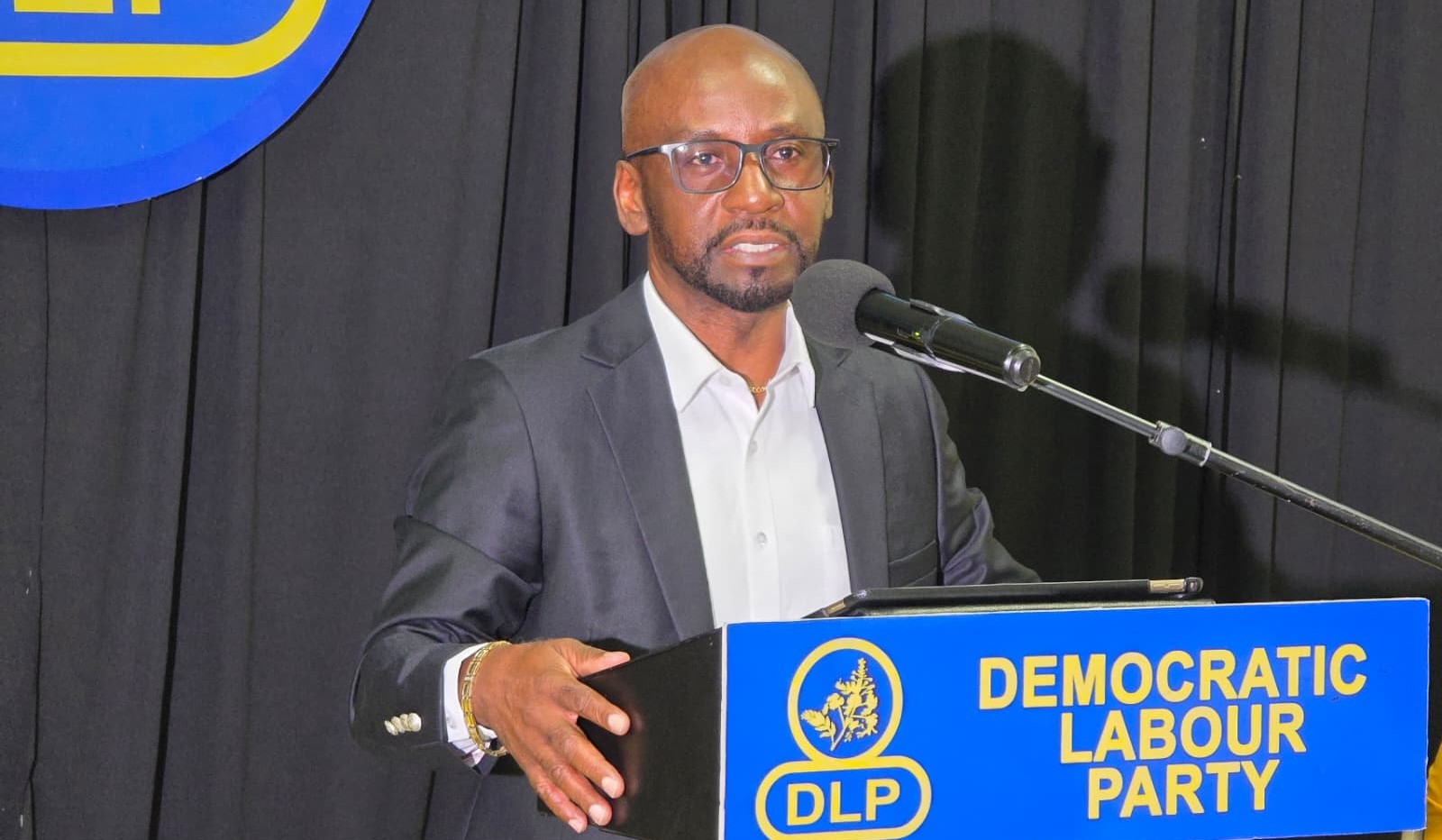
    On the 71st anniversary of its founding, Barbados’ historic Democratic Labour Party (DLP) has used its annual Founders Day observance to invite members to celebrate its seven-decade legacy of public service while issuing a rallying cry for organizational renewal and community reconnection. The commemoration, outlined in an official media statement published Sunday, opened with reflections from acting DLP President Stephen Lashley, who walked through the party’s origins rooted in the vision of a more equal, justice-centered Barbados when it was first established on April 27, 1955.

    From its earliest days, Lashley emphasized, the DLP has never been just a political organization — it emerged as a grassroots movement driven by courage and a deep commitment to building a fair, inclusive society anchored in the principles of social justice. Over its 71 years of existence, the party has played an unparalleled role in shaping the modern Barbadian nation, delivering a series of transformative, long-lasting achievements that continue to shape daily life for Barbadians today.

    Among the most foundational contributions Lashley highlighted is the 1972 establishment of the Central Bank of Barbados, an institution created to protect the country’s monetary stability and insulate the national economy from external shocks. Beyond financial governance, the DLP spearheaded far-reaching public investments in accessible education that have unlocked opportunity for multiple generations of Barbadians, built robust social protection systems that guarantee basic dignity for citizens facing hardship, and strengthened core public institutions to embed greater accountability and effective governance across the state.

    These milestones were not random policy wins, Lashley argued: they were deliberate, interconnected steps in a coordinated nation-building project designed to construct a modern Barbadian social democracy centered on equal opportunity, shared fairness, and collective national pride. Crucially, he added, the DLP’s most lasting contribution goes beyond individual policy achievements — the party led Barbados to full independence, then built the entire institutional framework required to sustain sovereign self-governance, laying the groundwork for decades of national stability, resilience, and long-term growth.

    Decades after those foundational structures were put in place, they have stood the test of time, Lashley noted. “It was this party that laid that foundation, establishing the structures that have enabled Barbados to endure, adapt, and thrive,” he said.

    Shifting focus from the party’s historic legacy to its current path, Lashley stressed that commemoration must go hand in hand with renewal and recommitment to the DLP’s core mission. “We are called not only to remember, but to renew. Our history is a source of strength, but it is also a responsibility. It reminds us that we are heirs to a proud legacy and the custodians of a future yet to be fully realised,” he said.

    To advance that future, Lashley urged DLP members to rebuild direct ties with local communities, repair public trust, and reposition the party as the leading political voice for ordinary Barbadians. “The call now is for unity, for recommitment, and for action, guided by the clear wishes of our people. Let us reconnect with each other. Let us re-engage with our communities. Let us bring forward the full measure of our talent, our ideas, and our energy in service of Barbados. The task before us is not simply to rebuild, but to reimagine, to rekindle trust and confidence in who we are as a people, to once again position this great party as the voice of the people and a voice for national progress,” he said.

    Acknowledging openly that the DLP has faced significant setbacks and challenges in recent years, Lashley insisted that the party’s founding spirit remains unbroken. “Though we have faced recent challenges, the spirit of the Democratic Labour Party remains unbroken. Our mission endures with you, the people of Barbados, as our anchor; our purpose is clear,” he said.

    Expressing firm confidence that the DLP can achieve a full revival through intentional hard work, humble service to citizens, and abiding faith in the Barbadian people, Lashley closed by noting that the celebration of past founders must also lift up the next generation of party leaders who will carry the movement forward. The party’s future, he emphasized, will be built collectively through shared service and unwavering commitment to the DLP’s core mission.

  • Paus Leo waarschuwt voor oorlog, plundering van aarde en gebruik van kernenergie

    Paus Leo waarschuwt voor oorlog, plundering van aarde en gebruik van kernenergie

    On the 40th anniversary of the Chernobyl nuclear disaster, Pope Leo XIV delivered a sharp, wide-ranging address criticizing armed conflict, the exploitation of Earth’s natural resources, and the unregulated risks of nuclear power, speaking from the Vatican during his weekly Sunday address following the Angelus prayer.

    The 1986 Chernobyl accident, still recognized as the worst nuclear catastrophe in human history, occurred on April 26 when a safety test gone wrong triggered an explosion at the Chernobyl Nuclear Power Plant’s fourth reactor. A massive cloud of radioactive material spread across much of Europe, leaving a devastating and long-lasting legacy: it caused thousands of excess cancer cases and other chronic health conditions, forced tens of thousands of residents to permanently abandon their homes, and left the vast majority of the surrounding region uninhabitable to this day.

    This year’s global commemorations of the disaster are taking place against a uniquely tense backdrop, as the ongoing four-year conflict between Ukraine and Russia has sparked widespread, persistent fears that fighting near Ukraine’s existing nuclear facilities could spark a second catastrophe on par with the 1986 disaster.

    In his address, Pope Leo framed the Chernobyl accident as a permanent warning to global conscience about humanity’s reckless pursuit of increasingly powerful, unregulated technologies. He called for wisdom and accountability to guide policy decisions at every level of governance, saying, “I hope that at all decision-making levels, wisdom and responsibility will always prevail, so that atomic energy can always be deployed to support life and peace.”

    Drawing on the day’s Gospel reading, which centers on the metaphor of a thief who steals sheep, Pope Leo argued that “thieves” who rob the world of a peaceful future take many forms. Beyond open conflict and resource exploitation, he named consumerism-driven superficial lifestyles, systemic prejudice, and harmful ideologies as additional threats to collective well-being. “And let us also not forget those thieves who, by plundering the earth, waging bloody wars, or nurturing evil in whatever form, take from all of us the chance for a future of peace and serenity,” he added.

    Pope Leo, the first American to hold the papacy, has drawn sharp criticism from former U.S. President Donald Trump for his increasingly forceful public stances against war and authoritarian rule, a conflict that has drawn global attention to the Vatican’s evolving role in contemporary international politics.

  • Lamontagne defends Sports Academy’s track record amid public debate

    Lamontagne defends Sports Academy’s track record amid public debate

    Public debate over the performance and future of the Gros Islet-based Saint Lucia Sports Academy (SLSA) has intensified in recent weeks, sparked in part by recent coverage from local outlet St Lucia Times. While most public contributors to the conversation have expressed cautious optimism about the institution’s untapped potential, little has been shared about the on-the-ground challenges of steering the country’s sporting development under constant public attention. Now, a top SLSA leader has broken his silence to share an inside perspective on the academy’s progress and its path forward.

    Anthony Lamontagne, SLSA’s Programme Director, brings decades of sports sector experience to his role, with prior leadership roles including president and secretary of the Saint Lucia Basketball Federation, coaching coordinator, and physical education teacher. Speaking exclusively to St Lucia Times, Lamontagne noted that as the academy marks its sixth year of operation, it has stayed firmly on course to meet its founding mission of nurturing athletic talent for the island nation. Even so, he emphasized that complacency has no place in the push for excellence, stressing that the institution is far from reaching its full potential.

    “Comfort is not a characteristic of performance,” Lamontagne said. “It is useless to believe and assume that we have arrived and are seated on top.” To drive ongoing improvement, he called for a sharp focus on boosting productivity, cutting waste across all operations, and regular reviews of internal policies and workflows to support continuous growth. Lamontagne also called for greater cross-departmental alignment across the academy’s three core functional areas: academics, athletic training, and residential dormitory operations. He noted that while structural separation is necessary for day-to-day functionality, all teams must work collaboratively to support whole-person development for student-athletes. Non-sports administrative and academic staff should be open to taking on sports-related tasks, Lamontagne said, while coaches must recognize their role extends far beyond building physical skill — they are also positioned to shape athletes’ communication skills, personal conduct, respect for others, and social boundaries through their daily influence.

    Most critically, Lamontagne argued that lasting, meaningful improvement and long-term success for SLSA will require collective buy-in and collaboration across Saint Lucia’s entire sports ecosystem, not just work from the academy’s internal team. He called for moving past symbolic support for the institution to tangible cross-sector partnership that can unlock SLSA’s full potential and deliver cascading benefits to the entire nation. Key stakeholders that must have a formal seat at the table for strategic planning, Lamontagne said, include the Saint Lucia Olympic Committee, government departments for education, sports and health, the Saint Lucia National Lottery, sports science experts, and all national sports federations.

    This inclusive collaborative approach, he explained, will build widespread investment in the academy’s success, align all stakeholders around clear shared goals, and leverage overlapping institutional mandates. “We can only become a better sporting nation when we pull resources and work together for success,” Lamontagne said. He added that a culture of accountability is foundational to building a high-performance program, with strong, values-driven leadership required to inspire teams and set positive examples for emerging athletes. If these steps are taken, Lamontagne affirmed, a stronger SLSA will deliver widespread, long-term benefits that lift the entire country’s sporting standing and future.

  • UNICEF Raises Red Flag Over High Child Abuse Cases in Belize

    UNICEF Raises Red Flag Over High Child Abuse Cases in Belize

    In a stark public warning released in late April 2026, UNICEF has declared grave concern over a sharp uptick in disturbing child-related violence and abuse incidents across Belize over the preceding 30 days. The documented cases uncovered in this period range from missing teenage minors and the deaths of abused children, to the spread of non-consensual abuse content across digital platforms, and repeated accounts of sexual exploitation committed by individuals the child victims know and trust.

    In an official statement, the United Nations children’s agency emphasized that these repeated, high-profile incidents expose a deeply alarming reality: far too many young people in Belize are suffering harm in the very environments that are supposed to guarantee their safety. Sajid Ali, UNICEF’s top representative for Belize, stressed that violence against children constitutes a severe violation of fundamental human rights, and that this abuse must never be normalized or dismissed under any circumstances. He reiterated a critical message that children hold no blame for the harm inflicted on them, and that the full responsibility to act promptly and prioritize children’s well-being rests entirely with adults.

    UNICEF has also drawn attention to an underreported hidden crisis: while a small number of high-profile cases have gained national traction after being circulated on social media, a vast majority of abuse incidents are never brought to public attention or formally reported to authorities. Findings from the most recent seventh round of the Multiple Indicator Survey (MICS7) back this assessment, confirming that violence against children most frequently occurs in familiar settings — within homes, schools and local communities — perpetrated by people the victims already know and rely on.

    Moving beyond awareness-raising, UNICEF has partnered with Belize’s National Commission for Families and Children to roll out the Blue Teddy Bear Campaign, a community-focused initiative designed to equip local residents with the knowledge to identify warning signs of abuse and report suspected cases to relevant authorities. The agency notes that child protection is not a responsibility that falls exclusively to government agencies or law enforcement; every adult in Belize has a role to play in keeping young people safe.

    Looking forward, UNICEF says it will maintain close collaboration with the Government of Belize to strengthen the country’s national child protection framework, advance urgently needed legislative reforms, and ensure that adults tasked with safeguarding children are held fully accountable for failures to act. Even as it works to upgrade formal systems, the agency stresses that institutional changes alone cannot end the crisis. Sustainable, meaningful change to protect Belize’s children must start with shifting norms and practices at the community level.

  • VIDEO: Effects of flooding from heavy rain in some areas of Dominica’s east coast

    VIDEO: Effects of flooding from heavy rain in some areas of Dominica’s east coast

    A severe bout of heavy rainfall has swept across Dominica’s eastern coast, triggering destructive flooding that has left significant damage in multiple communities across the island region. Local news outlet Dominican News Online has published a collection of firsthand visual materials—including user-submitted and on-the-ground videos and photographs—that document the widespread impact of the extreme weather event across four affected districts.

    The hardest-hit locations confirmed so far include Concord, Deux Branches, and the Dam neighborhood of Marigot, each of which has seen floodwaters inundate residential and public spaces, per the visual evidence shared. Two additional videos captured in the Antrizzle area of Atkinson further illustrate the scope of the flooding, showing rising water levels and disrupted daily life for local residents. As of the publication of this initial report, no official updates on casualties or full estimations of total property damage have been released to the public. Emergency response teams are expected to begin conducting damage assessments across the affected coastal areas as soon as floodwaters begin to recede.

  • Shot dead at home: Family alleges “execution” by police

    Shot dead at home: Family alleges “execution” by police

    In the quiet neighborhood of Old Train Line in Corinth, a early-morning police response to a reported altercation has left a community in mourning and sparked urgent questions about the appropriate use of deadly force by law enforcement. Early Sunday morning, 45-year-old laborer Shivnath Jogie was fatally shot by officers inside his own residence, and pronounced dead shortly after arriving at San Fernando General Hospital.

    According to initial official accounts from police, the team was dispatched to Jogie’s property around 1:30 a.m. to probe a report that Jogie had attacked a neighbor with a cutlass, inflicting chop wounds, during a dispute on his own land. During what police describe as a confrontation with the suspect, officers opened fire, striking Jogie. He was immediately transported to the regional hospital for emergency care, but medical staff were unable to save him.

    However, Jogie’s family and neighbors have rejected the official narrative, pushing back hard on the circumstances that led to his death, and alleging that the encounter escalated unnecessarily and unjustly ended an innocent man’s life. Britney Francis, a relative of Jogie, has openly questioned why law enforcement resorted to lethal force when they arrived only to investigate a reported incident. Francis clarified that the incident prompting the visit was a dispute between Jogie and another resident on the street earlier that evening.

    Francis has also raised a critical legal question rooted in Trinidad and Tobago’s 2025 Home Invasion (Self-Defence and Defence of Property) Act, popularly referred to as the nation’s “Stand Your Ground” legislation. The law explicitly grants people on their own property the legal right to defend themselves without a duty to retreat, and permits the use of reasonable force — including lethal force — when a person reasonably believes it is necessary to protect their life or property from criminal harm. Francis questioned whether Jogie was within his legal rights to act in self-defense if he perceived a threat to his property.

    In blunt terms, Francis described the shooting as an extrajudicial killing: “This was an execution. It was a straight shot to his face. If the police did their job properly, he might not have been dead today. They shot him in his face, a single gunshot wound.”

    By Sunday morning, dozens of neighbors had gathered near Jogie’s home to express solidarity with his family and back their calls for a full, independent probe of the officers’ actions. One witness to the confrontation called the shooting a heartless, cruel injustice and a fundamental failure of policing. “It was traumatising to see someone getting killed in their own home for defending themselves,” the neighbor said.

    Another long-time resident who has known Jogie since childhood described the fatal shooting as “unjust,” pushing back against any implication that Jogie was a habitually violent person. “I grew up with him and when he drink alcohol, he would talk plenty. He was not a violent guy at all, he didn’t keep no grudges. He was a good fella,” the resident said. “This is the first time that we have experienced something like this in his district. We want a proper investigation.”

    In addition to calling for a full investigation, Francis also urged policy change, saying that mandatory body camera use for all police officers should be required to add transparency and accountability to law enforcement interactions. The community remains united in its demand that every detail of the shooting be brought to light to deliver justice for Jogie.

  • Mottley calls for renewed commitment amid global challenges

    Mottley calls for renewed commitment amid global challenges

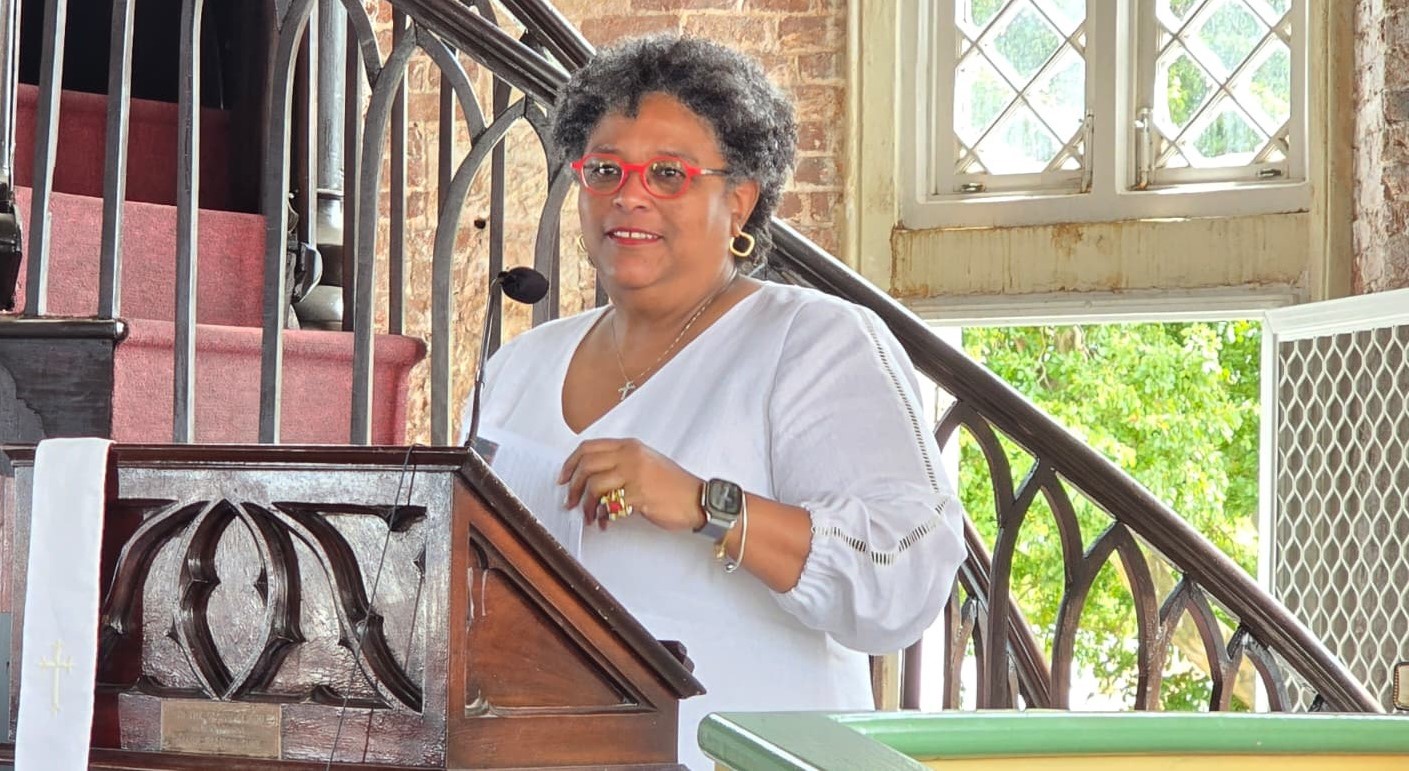
    On Sunday, during a commemorative Founder’s Day service held at Bethel Methodist Church on Bay Street, Mia Mottley – Prime Minister of Barbados and leader of the Barbados Labour Party – issued a heartfelt call for a renewed collective commitment to national progress, emphasizing that the work of building a stronger nation extends far beyond the responsibilities of elected officeholders.

    Mottley opened her remarks by framing the gathering as both a moment to seek spiritual guidance and a public appeal for widespread recommitment to the country’s development. “The work will not be done by members of parliament or ministers alone,” she told attendees, underlining that every Barbadian has a role to play in driving national growth.

    The Prime Minister highlighted three core pillars that remain critical to advancing the party’s founding mission: political education, grassroots mobilization, and unwavering dedication to public service. She argued that these values are non-negotiable for stabilizing Barbados’ long-term growth trajectory and upholding the original purpose that guided the party’s establishment. “If ever there was a time for this political institution to redouble its efforts in political education, in political mobilisation and in political commitment, in order to stabilise this nation’s growth and to stabilise our commitment to the renewal of the purpose for which we were established,” she stated.

    Acknowledging the widespread fatigue many Barbadians feel amid ongoing global and domestic challenges, Mottley noted that periods of difficulty are the ultimate test of a nation’s collective resolve. “It may seem like some to be a call to those who are already weary, and yes, I acknowledge that the distance sometimes can be long and it can carry but it is when you are tired, more often than not, that we see through history that you are tested the greatest,” she explained.

    Mottley also stressed the importance of cross-community unity, bridging both religious and political divides to pursue shared national goals. She pointed out that the gathering brought together people of all faith backgrounds, united by the understanding that political work does not override individual spiritual missions. Looking ahead to the coming year, she warned that Barbados will likely face continued headwinds, but expressed confidence in the country’s ability to navigate these challenges – a success that she says depends entirely on collective action, not just top-down leadership.

    Drawing a powerful historical parallel, Mottley connected today’s climate of global uncertainty to the era in which the Barbados Labour Party was founded, on the eve of World War II. That period, like today, was defined by widespread instability and systemic inequality: “We were founded at a time when fascism was raising its head. We were founded at a time when people were not seen and people were not heard, and the majority of the people of this country had to do as they were told, not as they wished to do.”

    She emphasized that the party’s founding mission – advancing economic enfranchisement and social justice for all Barbadians – remains just as urgent today as it was nearly a century ago. Amid rising global unpredictability, she warned that vulnerable communities are once again at risk of being left behind: “The transformation needed to resist the winds of change that allow the mighty to dominate is urgent. The least, the last and the lost are once again fighting to be protected.”

    Mottley also referenced recent conversations with progressive political leaders across the globe, where participants shared growing concern that long-held core values of equity and justice are no longer universally upheld. She urged supporters to persevere, reminding them that the fight for social progress has always demanded sacrifice. “We will not be the first to be asked to carry a heavy burden to fight injustice, nor the first to be asked to complete the journey of transformation,” she said.

    Closing her remarks, Mottley paid tribute to a deceased member of the host church before repeating her call for both individual and collective recommitment to national progress. She acknowledged that the Barbados Labour Party and the country as a whole have achieved significant gains over the years, but stressed that sustained, collaborative work remains essential to secure a prosperous future for all Barbadians.