博客

  • Cartel claims fly in Parliament

    Cartel claims fly in Parliament

    Trinidad and Tobago’s parliamentary session descended into chaos yesterday as Prime Minister Kamla Persad-Bissessar and Opposition MPs exchanged explosive allegations of connections to international drug cartels. The heated exchange occurred during the Prime Minister’s address regarding her recent participation in President Donald Trump’s Shield of the Americas summit in Florida.

    Prime Minister Persad-Bissessar launched a scathing attack against the former People’s National Movement (PNM) administration, directly accusing them of exacerbating the nation’s crime epidemic through alleged ties to narcotics and weapons trafficking networks. In a dramatic allegation, she stated that PNM’s headquarters, Balisier House in Port of Spain, was constructed using drug proceeds, describing the building as ‘a gravestone to drug money, paedophilia and theft.’

    The Opposition responded with vehement denials and counter-accusations. Opposition MP Colm Imbert questioned whether the Prime Minister was aware that two United National Congress (UNC) operatives had allegedly diverted funds from the Piarco International Airport construction project to Colombian drug cartels, a case that previously attracted U.S. extradition requests.

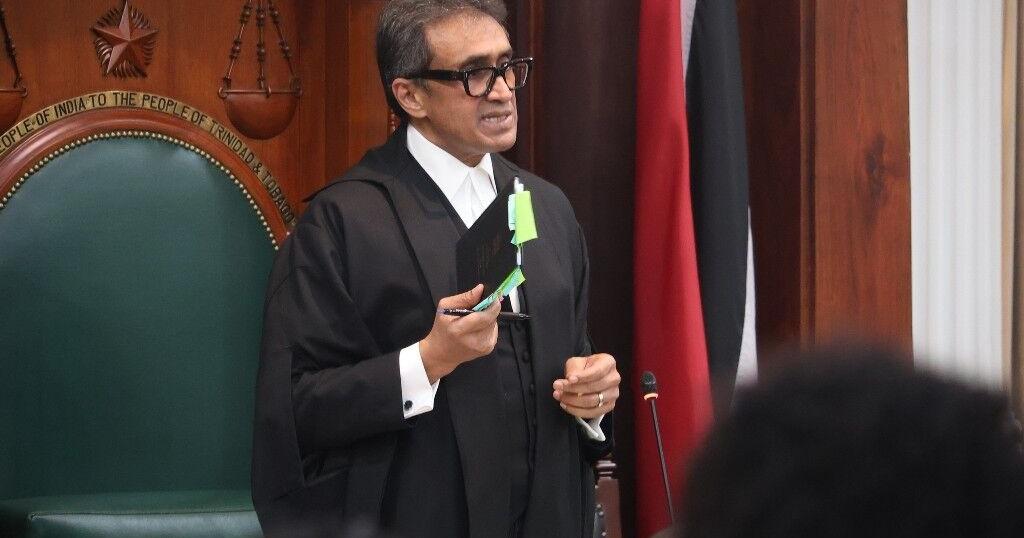
    The parliamentary decorum deteriorated as Government MPs expressed support through loud desk-thumping while Opposition members repeatedly invoked Standing Order 48(4) against using offensive language about fellow members. House Speaker Jagdeo Singh intervened multiple times, requesting neutral language from the Prime Minister, who maintained she had not specifically named any individuals.

    Prime Minister Persad-Bissessar presented stark crime statistics from the previous administration’s tenure, reporting 124,062 recorded crimes between 2015-2025, including over 5,000 murders, 9,000 sexual assaults, and 11,000 robberies. She accused PNM leadership of enriching themselves while their constituencies suffered from high crime rates, unemployment, and poor infrastructure.

    The Prime Minister defended her government’s participation in the Americas Counter Cartel Coalition as essential to combating transnational crime networks, suggesting that expanded American anti-crime presence in the region had made Opposition members apprehensive about potential exposure of their alleged connections.

  • Moonilal, Young clash

    Moonilal, Young clash

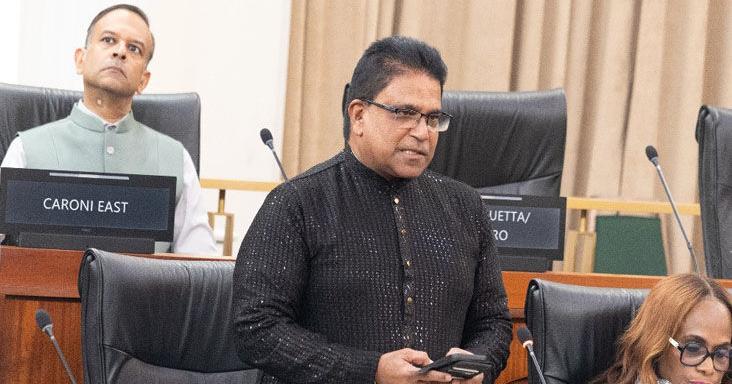
    A heated parliamentary exchange unfolded yesterday between Energy Minister Dr. Roodal Moonilal and Opposition MP Stuart Young concerning Heritage Petroleum Company Limited’s awarding of a lease operatorship agreement to TN Ramnauth & Co Ltd.

    The confrontation began when Young demanded disclosure regarding how many Lease Operator Agreements or Farm Out Agreements Heritage Petroleum had granted to TN Ramnath and Company Ltd or its affiliated entities since May 1, 2025. Minister Moonilal initially noted he had previously addressed this inquiry on March 6, prompting Young to question whether the minister was deliberately withholding information about contracts awarded to “his friend, TN Ramnath.”

    After House Speaker Jagdeo Singh intervened, directing Moonilal to provide a substantive response, the energy minister confirmed Heritage Petroleum had issued exactly one lease operatorship agreement to the specified company. Moonilal vehemently denied any personal relationship with TN Ramnath, asserting the company had no special connections to anyone within the government.

    The minister then launched a counteroffensive, accusing Young of harboring malicious intentions against TN Ramnath while favoring his own associates. Moonilal revealed that on May 6, 2021, while Young served as energy minister, the Legal Department had forwarded recommendations for lease operatorship agreements to six companies including TN Ramnath & Co.

    According to Moonilal’s account, Young approved five of the six companies on May 10, 2021, withholding only one sub-licence due to unspecified concerns requiring further investigation. Moonilal criticized Young for apparently continuing these inquiries three years later into 2025, characterizing this delay as evidence of “malice, vindictiveness and wickedity.”

    The minister detailed that upon assuming office on May 3, 2025, he approved TN Ramnath’s agreement on July 14 after a three-month review process. Moonilal emphasized that legal authorities confirmed Young had never formally raised any concerns about the company during this period.

    The exchange concluded with Young attempting to reference an ongoing corruption case involving both Moonilal and TN Ramnath, but the Speaker promptly ruled this question out of order.

  • Gunmen ambush Guerra

    Gunmen ambush Guerra

    In a brazen daylight assassination, prominent Trinidad businessman Danny Guerra, owner of DG Homes real estate company, was fatally shot yesterday afternoon outside his corporate headquarters in Sangre Grande. The meticulously planned attack occurred around 5 p.m. on Oropouche Road as Guerra was preparing to depart from his office.

    According to police reports and CCTV evidence, the 50-year-old entrepreneur had just entered his black Toyota Hilux pickup truck when assailants in a white Nissan Tiida pulled alongside his vehicle. Two masked gunmen emerged from the car and approached Guerra’s driver-side window, firing multiple shots at point-blank range before delivering a final execution-style gunshot to the head.

    Despite immediate efforts by DG Homes employees to transport him for medical attention, Guerra was pronounced dead at Sangre Grande Hospital. Eastern Division Senior Superintendent Christopher Paponette confirmed the investigation is ongoing with no immediate suspects in custody.

    The murder occurs against a complex backdrop of legal controversies. Guerra had recently been released from detention under a state of emergency preventive order that accused him of leading an organized crime gang involved in arms trafficking, money laundering, and illegal quarrying operations. The now-revoked detention order, signed by Homeland Security Minister Roger Alexander, had alleged Guerra’s organization planned to assassinate a government minister and escalate gang violence using high-powered firearms.

    Despite these serious allegations, family members remembered Guerra as a community benefactor. His uncle Charles Guerra stated, ‘He helped a lot of people in Sangre Grande and didn’t deserve to die like this,’ noting the businessman had recently shifted his housing projects to more affordable two-bedroom homes to assist local families.

    The killing marks the 68th homicide recorded in Trinidad this year, raising concerns about ongoing criminal violence despite government security measures.

  • Ex-SoE detainees back in detention

    Ex-SoE detainees back in detention

    Trinidad and Tobago’s ongoing state of emergency has led to significant law enforcement actions, with authorities reporting 373 total arrests during the initial ten-day period. Police officials confirmed dozens of preventive detentions, including individuals who had been previously held during earlier emergency measures, though specific numbers remain undisclosed.

    Deputy Commissioner of Police Suzette Martin provided operational updates from the Police Administration Building in Port of Spain, revealing that 39 individuals have been subjected to preventive detention orders, with judicial approval granted for 16 of these cases. Investigators are examining potential gang affiliations among detainees, including those with prior emergency detention history.

    “Our investigations into gang activities are ongoing, and it would be premature to definitively identify gang leaders at this stage,” Martin stated, emphasizing the early phase of the emergency period.

    The Trinidad & Tobago Police Service has executed 943 nationwide operations, resulting in 66 criminal charges. Security forces have seized 18 firearms, 949 rounds of ammunition, and substantial drug quantities including 720 grams of cocaine, over 230 kilograms of marijuana, 88 marijuana trees, and 1.45 grams of ecstasy.

    Addressing community reports of unofficial curfews, Martin clarified that no official curfews have been implemented. However, she explained that emergency powers authorize police to conduct road checks, patrols, and enforcement operations in areas where intelligence indicates public safety threats. Enhanced police presence in Sangre Grande and Eastern Division communities responds to intelligence regarding gang movements, illegal firearms activity, and emerging criminal networks.

    Regarding potential international cooperation, Martin declined to comment on whether US officials provided a ‘persons of interest’ list to Homeland Security Minister Roger Alexander. The Minister previously acknowledged US support while citing national security concerns preventing detailed disclosures. Martin emphasized that such operational intelligence falls within the Police Commissioner’s purview and remains confidential during ongoing investigations.

  • 4 cops jointly charged get $725,000 bail

    4 cops jointly charged get $725,000 bail

    Four Trinidadian police officers have been released on bail following charges of official misconduct related to the alleged concealment of a loaded firearm. The officers—PCs Mervyn Eligon, Daawuud Mohammed, Alexsi Harripersad, and Akiel Smith—appeared before Master Delicia Bethelmy at the San Fernando High Court on Wednesday, facing accusations of conspiring to pervert the course of justice.

    The case stems from an incident on December 31, 2005, when the officers conducted a late-night search at a property in South Trinidad. During the operation, authorities allege the officers discovered a firearm and ammunition concealed within a black plastic bag inside a garage storage box. Despite this discovery, the officers reportedly filed a false station diary entry indicating no illegal items were found.

    According to police investigations, the officers later created another falsified report claiming they had recovered the firearm during a subsequent operation at the same location. This discrepancy triggered an internal investigation after a formal complaint was filed with the Professional Standards Bureau (PSB) on January 5.

    Following consultation with Director of Public Prosecutions Roger Gaspard, SC, criminal charges were recommended. PC Eligon faces additional charges for falsely claiming he recovered the firearm. The court set bail at TT$275,000 for Eligon and TT$150,000 for each of his colleagues. The case has been adjourned until April 23 for further proceedings.

    The investigation was coordinated by senior police officials including DCP Intelligence and Investigations Natasha George, with supervision from Assistant Superintendent Bacchus and other PSB members. The case highlights ongoing efforts to address police accountability and procedural integrity within Trinidad’s law enforcement system.

  • Oekraïne vindt nieuwe rol als beschermer van VS en Golfstaten

    Oekraïne vindt nieuwe rol als beschermer van VS en Golfstaten

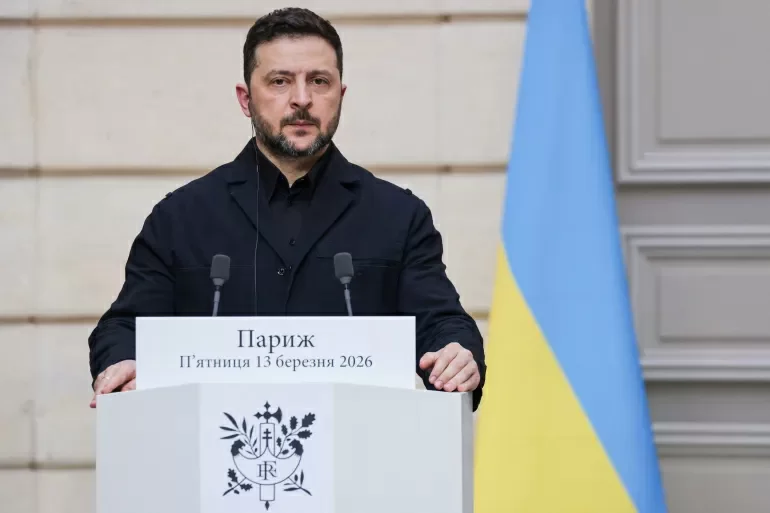
    In a significant geopolitical shift, Ukraine has positioned itself as a critical defense partner for the United States and Gulf nations following a formal request for assistance against Iranian retaliatory strikes. The development comes after Washington, which had suspended military aid to Kyiv under the Trump administration, sought Ukrainian expertise in protecting its bases across the Gulf region.

    Andriy Kovalenko, head of Ukraine’s Center for Countering Disinformation, revealed the formal request on March 6th. President Volodymyr Zelensky responded by announcing the deployment of military experts to the Gulf two days later, followed by chief negotiator Rustem Umerov’s mission to sell Ukrainian interception drones to regional partners on March 9th.

    Zelensky confirmed that the U.S. and more than ten European and Middle Eastern countries have approached Ukraine seeking support for their defensive capabilities. “Those now asking for Ukraine’s help must continue supporting our own defense,” Zelensky stated, emphasizing that regional stability directly benefits Ukrainian security interests.

    The strategic partnership offers multiple advantages for Kyiv. According to Washington Post reports from March 6th, Russia’s alleged cooperation with Iran in targeting American interests could help Ukraine shift Washington’s perception of Moscow. Additionally, Ukraine’s drone warfare expertise addresses a critical need for Gulf states, who have been using expensive Patriot interceptors against inexpensive Iranian drones.

    General Ben Hodges, former commander of U.S. forces in Europe, questioned the efficiency of such defense tactics: “Why use Patriots against Shahed drones? There are technologies Ukrainians have developed that are better for intercepting drones.”

    The cooperation also carries significant economic implications. With Iran disrupting oil shipments through the Strait of Hormuz, global oil prices have surged approximately $20 since the conflict began. This price increase has paradoxically benefited Russia, with Financial Times estimating Moscow has already received $1.3-1.9 billion in oil export taxes. India’s imports of Russian oil have increased by 50%, with 30 tankers carrying 19 million barrels awaiting Asian buyers as of March 13th.

    Ukraine’s defense capabilities have been honed through extensive experience. Defense Minister Mykhailo Fedorov revealed that Ukrainian forces intercepted 90% of 1,250 Russian-launched drones and more than half of 34 missiles in recent operations. The country is now automating drone feedback systems through its Mission Control command system, enabling real-time operational tracking and data-driven procurement decisions.

    In a demonstration of its growing capabilities, Ukraine successfully struck the Kremniy El microchip factory in Bryansk on March 10th using Storm Shadow/SCALP missiles reportedly guided by drones—marking a significant advancement in precision strike capabilities.

  • AFC, PNCR-APNU support Cuban Medical Brigade

    AFC, PNCR-APNU support Cuban Medical Brigade

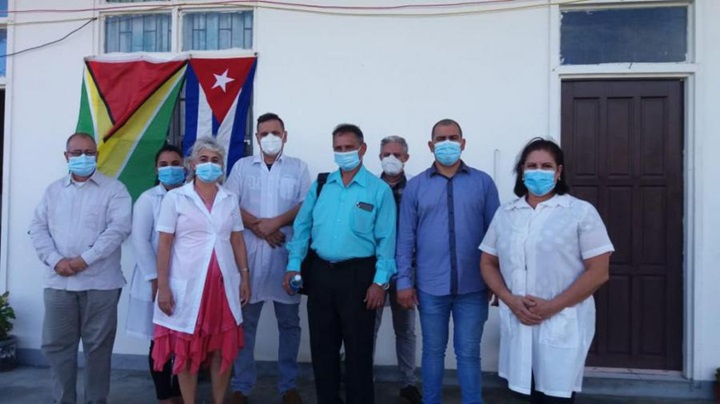
    In a significant political development, Guyana’s main opposition parties have voiced strong support for continuing the Cuban Medical Brigade program, despite mounting pressure from the United States to terminate the initiative. The Alliance For Change (AFC) and the People’s National Congress Reform-led A Partnership for National Unity (APNU) have issued separate statements advocating for the preservation of this decades-long healthcare partnership.

    The AFC characterized the Cuban medical presence as “a critical pillar of Guyana’s healthcare system,” emphasizing its role in addressing specialized personnel shortages, strengthening rural and hinterland medical services, and providing otherwise unavailable care to thousands of Guyanese citizens. The party described the bilateral relationship as being built on “solidarity, mutual respect, and a shared commitment to improving the well-being of their peoples.”

    APNU Chairman Aubrey Norton, a Cuban-trained political scientist, expressed profound disappointment with the government’s apparent capitulation to US demands. “I have grave difficulty with us abandoning people who helped us sincerely,” Norton stated, referencing historical periods when Caribbean nations faced severe doctor shortages. He questioned the ethical implications of discontinuing assistance from those who provided crucial support during times of need.

    This political stance emerges alongside diplomatic developments at the United Nations, where Secretary-General Antonio Guterres welcomed renewed talks between the US and Cuba. UN spokesperson Stéphane Dujarric acknowledged the potential for dialogue to “peacefully resolve bilateral disputes” while expressing concern about Cuba’s ongoing fuel crisis and its negative impact on health systems and basic necessities.

    The Cuban government, through President Miguel Diaz-Canel Bermudez, has confirmed discussions with US officials covering bilateral issues and potential cooperation areas. The Cuban leadership emphasized conducting these “sensitive” negotiations based on principles of equality, respect for sovereignty, and adherence to international law, while acknowledging the complexity of moving away from decades of confrontation.

  • Preparations for the May 18th celebration and the qualifications of our Grenadiers

    Preparations for the May 18th celebration and the qualifications of our Grenadiers

    Port-au-Prince, Haiti – In a comprehensive strategy session led by Joseph Innocent, Chief of Staff to Youth, Sports, and Civic Action Minister Pythagore Dumas, Haitian officials outlined ambitious plans for national celebrations and athletic support programs. The high-level meeting focused on two primary objectives: orchestrating successful Flag Day commemorations on May 18, 2026, and coordinating unprecedented support for Haiti’s multiple national football teams competing in various World Cup tournaments.

    The working session brought together directors from across the Ministry of Youth, Sports, and Civic Action (MJSAC) to address logistical challenges that hampered previous celebrations. Officials committed to developing a structured project document with detailed budgetary requirements to ensure proper procurement processes and compliance with national standards. This document will be submitted to the Prime Minister’s office for approval.

    Minister Dumas, through his Chief of Staff, emphasized that the Flag Day celebrations must transcend symbolic significance to become a genuinely unifying national event. The initiative aims to mobilize youth and institutions around core civic values and national unity, particularly crucial given Haiti’s ongoing security, economic, and social challenges. The celebrations are strategically positioned to foster a peaceful environment conducive to the general elections scheduled for late 2026.

    Simultaneously, the ministry addressed Haiti’s extraordinary sporting achievements. The nation is preparing for its historic participation in two FIFA World Cups (senior men’s and U-17 men’s) while competing for qualification in three additional tournaments (senior women’s, U-17 women’s, and U-20 men’s). This unprecedented sporting success was described as a phenomenal achievement against substantial odds, given the country’s current climate.

    The MJSAC intends to leverage these events as symbols of national resilience and hope. The coordinated approach seeks to highlight Haitian youth, sports excellence, and civic engagement as fundamental pillars for national renewal during this pivotal period in the nation’s history.

  • Risk Assessment Report on Money Laundering and Terrorism Financing

    Risk Assessment Report on Money Laundering and Terrorism Financing

    In a landmark development for Haiti’s financial governance, the government has formally presented its National Risk Assessment Report on Money Laundering and Terrorist Financing after an extensive 18-month collaborative effort. The comprehensive evaluation was unveiled this week at the Montana Hotel through a joint initiative led by the Ministry of Economy and Finance (MEF), the Bank of the Republic of Haiti (BRH), and the Ministry of Justice and Public Security (MJSP).

    The assessment process employed a participatory methodology that engaged over 35 multidisciplinary professionals spanning both public and private sectors, with technical guidance provided by the World Bank. This inclusive approach ensured a thorough examination of Haiti’s financial vulnerabilities and institutional capabilities.

    Serge Gabriel Collin, Haiti’s newly appointed Minister of Economy and Finance, emphasized that this assessment represents a critical milestone in fortifying the nation’s financial system integrity. The report identifies multiple systemic threats including organized criminal networks, arms trafficking operations, ransom kidnappings, corruption schemes, smuggling activities, and narcotics trafficking. These criminal enterprises exert continuous pressure on Haitian institutions and present substantial barriers to achieving socio-political stability, national security, and sustainable economic development.

    Minister Collin outlined that effective implementation of the report’s recommendations requires comprehensive adoption by both public and private entities. Organizations must integrate these guidelines into their operational frameworks and enhance internal compliance mechanisms to properly align resources, controls, and procedures with identified risk exposures.

    The ultimate objective of this initiative is twofold: to facilitate Haiti’s removal from the Financial Action Task Force’s (FATF) increased monitoring list (grey list) and to prevent potential designation as a non-cooperative jurisdiction (blacklist). Success in these efforts would significantly contribute to stabilizing the country’s financial sector, creating conditions favorable for economic revitalization, and accelerating social welfare and protection programs essential for national recovery.

  • Na felle discussies nieuw amendement over organisatie OM

    Na felle discussies nieuw amendement over organisatie OM

    In a significant legislative development, four members of Suriname’s National Assembly (DNA) have submitted a substantive amendment to the Judicial Status Act, proposing two major reforms to the country’s judicial system. The proposal, filed on Friday afternoon by assembly members Steven Reyme (A20), Xiaobao Zheng (PL), Ronny Asabina (BEP), and Rabin Parmessar (NDP), seeks to recalibrate both retirement protocols and administrative structures within the Public Prosecutor’s Office (OM).

    The central amendment aims to reverse the current retirement age for members of the Public Prosecutor’s Office, including the Attorney General, from 70 back to 65 years. According to explanatory notes accompanying the proposal, this adjustment seeks to reharmonize pension regulations across the magistracy, addressing inconsistencies that have emerged within judicial retirement policies.

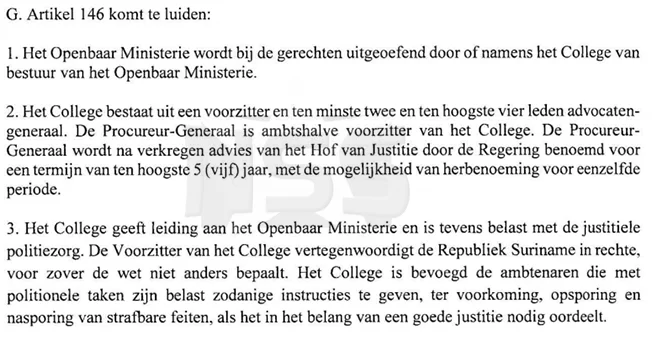
    Concurrently, the amendment proposes transforming the prosecutorial leadership model from a single Attorney General system to a collective Board of Prosecutors General. This new governance structure would consist of one Attorney General as chairperson complemented by two to four Advocates General. Proponents argue that this collegiate approach would enhance institutional balance, strengthen internal controls, and ensure greater continuity in prosecution policies.

    The proposed reforms emerge against the backdrop of intensive debates within legal and political circles regarding the organizational framework and leadership dynamics of the Public Prosecutor’s Office. The amendment also introduces fixed-term appointments for the Attorney General position, proposing a five-year term renewable once, replacing the previous lifetime appointment system.

    The National Progressive Party (NPS), while supporting the amendment, was unable to formally endorse the proposal due to time constraints affecting representative Jerrel Pawiroredjo. Meanwhile, the opposition Progressive Reform Party (VHP) has expressed reservations about the current amendment and is expected to present alternative proposals during Monday’s parliamentary session, where the amendments will undergo thorough public deliberation.

    These proposed changes represent part of broader institutional reforms aimed at strengthening Suriname’s judicial apparatus by reducing dependence on individual officials and creating more robust systems of checks and balances within the nation’s law enforcement infrastructure.