博客

  • YOUNG MAN’S GAME

    YOUNG MAN’S GAME

    The Wray and Nephew Jamaica Premier League (JPL) is undergoing a striking generational shift, with competition organizers laying out an ambitious long-term goal to cut the league’s average player age to 19 in the coming years. This push for youth integration comes as ongoing data already shows a steady downward trend in the competition’s average age over the past decade, signaling growing buy-in from club leadership across the country.

    Owen Hill, Chief Executive Officer of Professional Football Jamaica Limited (PFJL), the governing body that oversees the JPL, outlined that the strategic vision goes far beyond simply lowering age statistics. The dual core goals of the initiative are to accelerate elite player development and boost the market value of Jamaican talent for domestic and international transfer opportunities. As the 2025-26 season wraps up its regular round this Wednesday, the highly anticipated playoff phase is scheduled to kick off this Sunday, capping 39 weeks of competitive action across the league.

    New data compiled from official league registration rolls, analyzed by the Jamaica Observer, reveals just how far the youth shift has already progressed: of the 580 total registered players for the 2025-26 campaign, 162 are 20 years old or younger. This figure is actually conservative, as it does not account for players who turned 21 during the season, which runs from August through May. A decade ago, the league’s average age sat at 26, with every club’s roster averaging at least 24 years old. Today, that average has fallen to 24.5, a 1.5-year drop that reflects the growing commitment to giving young prospects minutes in top-flight competition.

    Current team breakdowns highlight the range of approaches across the league. Two-time defending champions Cavalier once again field the youngest roster in the JPL, with an average age of just over 20. Harbour View, Arnett Gardens, and Chapelton Maroons have also fully embraced the youth movement, boasting average ages below 24. At the other end of the spectrum, Tivoli Gardens and Spanish Town Police maintain the oldest squads, with an average age of 27.

    The success of young integrated players already speaks to the promise of the strategy. Twenty-year-old Christopher Ainsworth, a utility left-sided midfielder for Cavalier, has started every one of the club’s 38 regular season matches this campaign, notching nine goals and adding five assists. His standout performances have already earned him three call-ups and caps for Jamaica’s senior men’s national team, the Reggae Boyz. Ainsworth is far from the only young prospect making an impact: a wave of national under-17 and under-20 team players have stepped into key roles across the league, including Arnett Gardens’ Giovanni Taylor, Mount Pleasant’s Jabarie Howell, Chapelton Maroons’ Sean Leighton, Waterhouse’s Jamone Lyle, and Montego Bay United’s Nashordo Gibbs.

    Hill emphasized that the shift toward youth is not a top-down mandate, but a growing consensus among progressive club owners and administrators. “It’s a bigger vision that is shared by most forward-thinking football administrators and lovers,” he explained. “There is a cohort of us who believe that once you lower the average age of players competing in the top league, the opportunities for long-term success grow exponentially.” He added that the link between early senior exposure and higher market value is unambiguous: “Globally, when players matriculate into top-flight competition at an earlier age, their market value rises — that’s a direct relationship you can’t ignore. Beyond market value, early opportunities build young players’ confidence, and it expands the league’s fan base too: supporters from their high schools, local communities, and broader Caribbean networks follow their progress, growing the sport’s reach overall. We’re very grateful that clubs have embraced this vision and are now delivering on it.”

    Leijeigh Williams, a leading football analyst and JPL match commentator, traced the rising number of impactful under-20 players back to major investments in Jamaican grassroots football development over the past decade. Citing a long-held observation from legendary former Arsenal manager Arsene Wenger, Williams noted that “young players do not make astronomical gains in their technical ability after age 16 to 17. The biggest gains come from preparing them physically and mentally for the senior game.” That preparation, he argued, is now being delivered by the expanding network of elite youth academies across Jamaica. “The growth of academies has prepared younger players mentally, professionally, and physically to compete at the senior level,” he said. “That’s why we’re seeing an influx of young teenagers and under-21 players making a serious impact across the JPL right now.”

    When highlighting standout young talent from this season, Williams pointed to Mount Pleasant attacking midfielder Powell as his pick for young player of the season. “He’s notched five goals this campaign, and practically every one of them has been a spectacular finish,” Williams noted. “After finishing his run in the Manning Cup high school competition and rejoining Mount Pleasant in January, he’s made an immediate impact on a title-contending team in a crucial attacking midfield role. For me, he’s been the standout young prospect of the season.”

    For Hill and the PFJL, the current progress is encouraging, but there is still more work to do to hit the 19-year average age target. “Young players just need consistent opportunities and high-level exposure,” Hill explained. “The more minutes they log in top-flight competition, the brighter their transfer prospects become. Our strategy is clear: we work to empower and promote this approach across our club network. A number of clubs have fully bought into this vision, they’re executing it, and they’re already seeing strong results.” He added that the 19-year target is not an arbitrary number: “We’re dreaming of the day we can say our league’s average age is 19. That’s a goal we’ve deliberately set because if players are logging meaningful minutes at the senior professional level at that age, their future trajectory is set, and their value rises immediately.”

    Beyond domestic success, Williams argued that this intentional focus on youth integration will strengthen Jamaica’s pipeline of talent for international competition. “We saw the under-17 national team qualify for the U-17 World Cup, and the under-20 team currently has a strong chance of qualifying for their own World Cup,” he noted. “This early matriculation into senior football has been a missing link in Jamaican football for decades. Now, we’re getting players primed and ready for top competition at a younger age, and when they succeed in senior football this early, it can only bode incredibly well for their long-term development.”

  • Forensic gap

    Forensic gap

    A senior ballistics expert with nearly two decades of forensic experience has delivered key testimony in the high-profile murder trial of six current and former members of the Jamaica Constabulary Force (JCF), revealing that most expended bullet cartridges recovered from the scene of a 2013 fatal shooting failed to match any of the firearms submitted for forensic analysis. The January 12, 2013 incident on Acadia Drive in St Andrew left three men — Matthew Lee, Mark Allen, and Ucliffe Dyer — dead following what police reported as an armed shootout, with a fourth individual reportedly escaping the encounter. Now, more than a decade later, six JCF officers — Sergeant Simroy Mott, Corporal Donovan Fullerton, Constables Andrew Smith, Sheldon Richards, Orandy Rose, and Richard Lynch — stand trial on three counts of murder; Fullerton faces an additional charge of submitting a false statement to Jamaica’s Independent Commission of Investigations.

    Testifying before a seven-member jury at the Home Circuit Court on Monday, the testifying police superintendent, who has 16 years of service with the JCF and 19 years of specialized experience in ballistics analysis, detailed the chain of evidence and his forensic findings. A total of 11 firearms, a large collection of expended bullet casings, and multiple bullet fragments were collected from the shooting scene and sent to Jamaica’s government-run forensic laboratory for testing. Among the evidence submitted were three 5.56-caliber JCF service rifles, three 9mm service pistols, two illegally held firearms that investigators claimed were recovered from the three deceased men, and dozens of unused and expended ammunition rounds recovered from the scene.

    When processed through the laboratory’s computerized ballistics matching system, the vast majority of the expended cartridges recovered from the site failed to produce a positive match to any of the submitted firearms. The expert explained that a definitive ballistics match requires agreement on both class characteristics (general traits shared by weapons of the same model and caliber) and individual unique tool marks left by a specific weapon’s firing pin and barrel on each cartridge. For most of the casings in question, he said, there was insufficient matching of the unique individual marks to confirm a specific weapon fired the round.

    While the superintendent confirmed the unmatched cartridges were consistent with ammunition fired by M16-style 5.56 rifles, the standard service weapon for JCF officers involved in the operation, he could not tie them to any specific weapon submitted for testing. He outlined multiple plausible explanations for the lack of a match: poor quality reproduction of tool marks on the cartridge casings, irregularities in the ammunition itself, wear or damage to the firing weapon, or the possibility that the actual weapon that fired the casings was never turned over to investigators for examination. Notably, the expert did confirm that spent casings matching the two illegal firearms seized from the scene were found at the site.

    The testimony was not without procedural controversy. Attorney Hugh Wildman, who represents four of the six accused officers, raised a formal objection to prosecutor Kathy-Ann Pyke’s line of questioning regarding the firearms and cartridge evidence. Wildman argued that the evidence in question had never been formally tendered to the court, making it improper for the witness to testify about it. The objection stemmed from earlier testimony from the detective constable responsible for packaging the evidence, who admitted he could not definitively confirm that the items tested by the forensic lab were the same items presented in sealed packages to the court. The packages have never been opened in court, so their contents have never been formally entered into the official trial record. Despite Wildman’s objection, the presiding judge allowed Pyke to continue her questioning.

    The trial is scheduled to resume proceedings on the following day, with more testimony expected from prosecution witnesses as the case unfolds. The legal team for the accused also includes Althea Grant-Coppin and John Jacobs.

  • Guyana vraagt ICJ om bevestiging van grens met Venezuela

    Guyana vraagt ICJ om bevestiging van grens met Venezuela

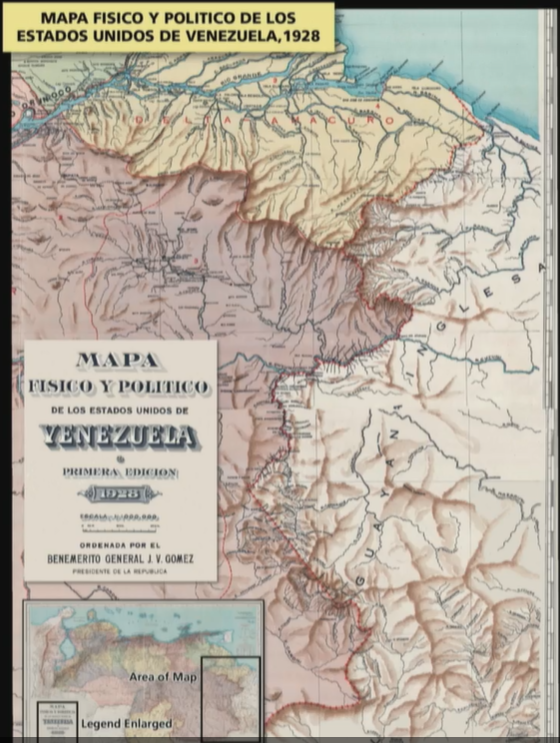
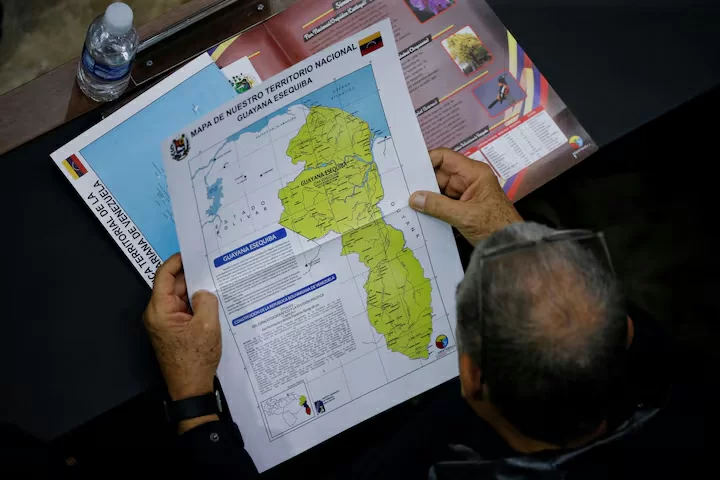
    One of Latin America’s longest-running border disputes, centered on the resource-rich Esequibo region, has moved into open oral hearings at the International Court of Justice (ICJ) in The Hague, with Guyana calling on the United Nations’ highest court to formally invalidate Venezuela’s territorial claims to the contested area.

    The 160,000-square-kilometer Esequibo region, a largely jungle-covered territory straddling the Esequibo River, plus its adjacent offshore waters, has been a source of tension between the two neighboring South American nations since the colonial era. The discovery of massive new oil and natural gas reserves in the offshore area in recent decades has turned the long-simmering conflict into a critical threat to regional stability, Guyana argues.

    Addressing the panel of ICJ judges at the opening of the week-long proceedings, Guyana’s Minister of Foreign Affairs Hugh Hilton Todd framed Venezuela’s claim as an existential threat to his country. “The territorial ambitions of a larger, more powerful neighbor have not only undermined our peace and security, they have held back our national development for generations,” Todd told the court. He added that Venezuela’s claim encompasses more than two-thirds of Guyana’s entire current sovereign territory, making the dispute a matter of survival for the small Caribbean nation.

    The roots of the conflict stretch back to an 1899 arbitration ruling that established the modern border between Venezuela and what was then British Guiana, a British colony. That ruling awarded the Esequibo region to British Guiana, a decision that Venezuela has repeatedly rejected as invalid since the early 20th century. In 2018, amid rising tensions over newly discovered offshore oil reserves, Guyana formally brought the case to the ICJ, asking the court to uphold the 1899 border settlement and confirm its full sovereignty over the entire Esequibo area.

    Tensions escalated dramatically in late 2023, when Venezuela held a national referendum on the dispute in which Venezuelan voters overwhelmingly rejected the ICJ’s jurisdiction over the case and backed the government’s plan to establish a new Venezuelan state covering all of Esequibo. In early 2024, Venezuela formally proclaimed the new state, a move that Guyana and much of the international community condemned as a violation of international law.

    A major shift in Venezuela’s political landscape occurred in January 2025, when former Venezuelan president Nicolás Maduro and his wife were detained by U.S. forces, leading to the installation of a new interim government that currently administers Venezuelan state affairs. This interim government will have the opportunity to present its formal position on the dispute to the ICJ later this week, court schedules confirm.

    Legal observers expect a final binding ruling from the ICJ within the next several months. While ICJ decisions are legally binding and irreversible under international law, the court itself does not hold independent enforcement power. Any implementation of the court’s final ruling will depend on intervention and support from the United Nations Security Council, leaving open questions about how the decision will be put into practice regardless of which side prevails.

  • Belize hosts sustainable tourism conference, concludes with regional awards ceremony

    Belize hosts sustainable tourism conference, concludes with regional awards ceremony

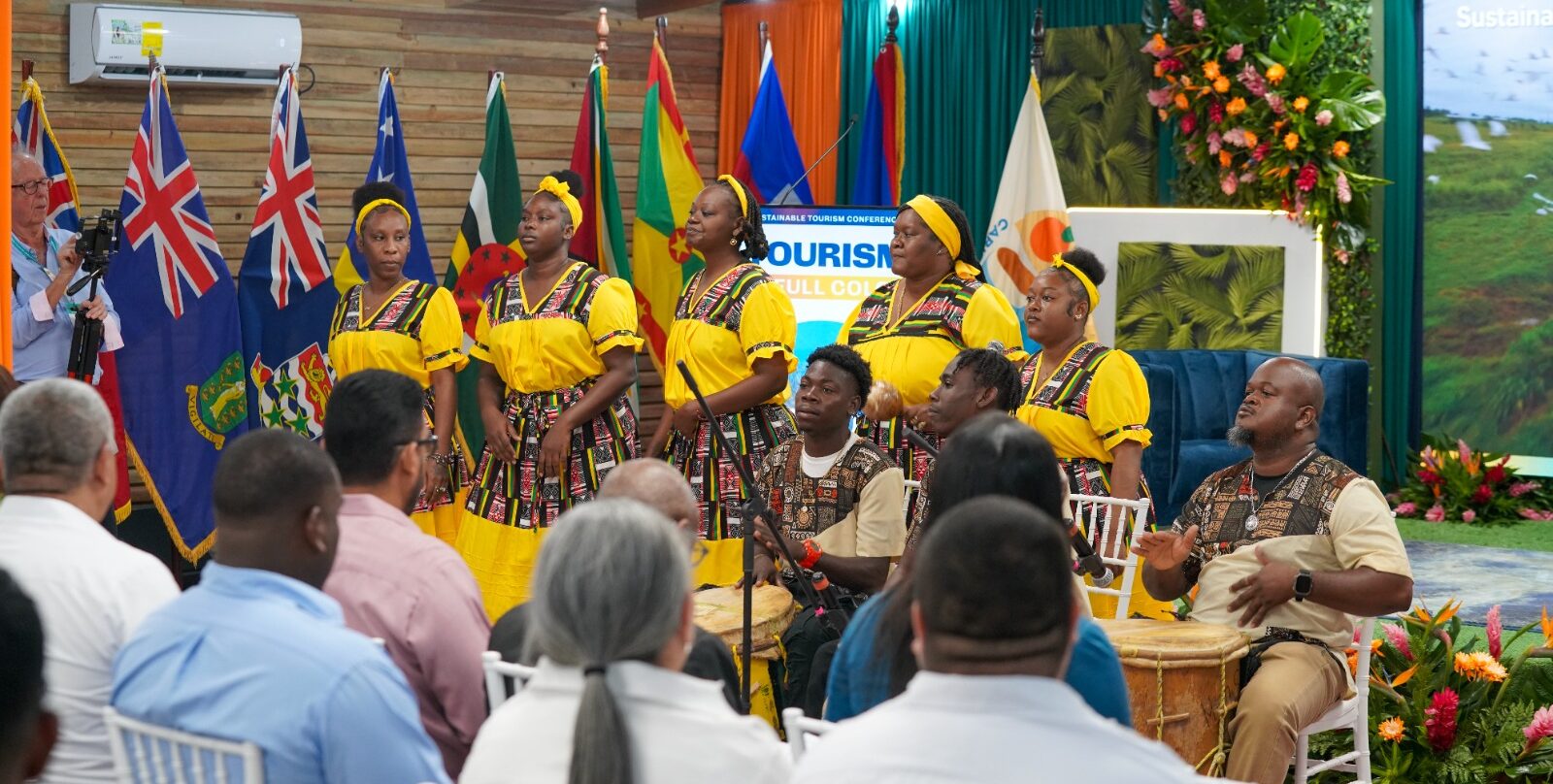
    Last week, one of the Caribbean’s most influential annual tourism industry gatherings came to a close on a note of collective optimism in San Pedro, Belize’s Ambergris Caye, after five days of robust collaboration and strategic exchange between regional and global tourism leaders.

    Organized around the forward-looking theme “Tourism in Full Color: Integrating Blue, Green, Orange and Beyond Economies into Sustainable Planning and Development”, the 2026 Sustainable Tourism Conference (STC 2026) brought together a diverse cross-section of tourism stakeholders from 30 countries around the world between April 26 and 30. Co-hosted by the Belize Tourism Board and the country’s Ministry of Tourism, Youth, Sports and Diaspora Relations, the event was designed as an open space for innovative thinking, cross-sector partnership, and solution-focused dialogue focused on shaping the future of travel across the Caribbean.

    The 350-plus delegates in attendance spanned every corner of the tourism ecosystem, from cabinet ministers and national tourism directors to senior policymakers, private sector investors, non-profit leaders, climate and sustainability researchers, and tourism students. Discussions centered on the most pressing challenges and transformative opportunities facing Caribbean tourism today: building climate resilience to protect vulnerable coastal destinations, safeguarding unique Indigenous and local cultural heritage for future generations, expanding economic empowerment for marginalized coastal communities, and unlocking accessible financing to scale up sustainable development projects across the region.

    Unlike traditional industry conferences that rely solely on closed-door panel discussions, STC 2026 blended high-level strategic dialogues with immersive on-site experiences. Delegates took part in hands-on field visits to Belize’s most iconic natural and cultural attractions, allowing them to see first-hand how community-led sustainability models work in practice, and connect abstract policy goals to on-the-ground impact. Throughout the entire event, a unifying message resonated across all sessions: the Caribbean region does not only hold the bold vision needed to reimagine global sustainable tourism — it already possesses the practical tools and local expertise needed to lead the world in this transition.

    Central to the conference’s “full color economy” framework was the focus on integrating interconnected economic sectors that drive inclusive, sustainable growth. Participants broke down silos between the blue (ocean-based), green (environmental), orange (cultural and creative), yellow (small business), purple (gender equity), silver (senior tourism), and black (Indigenous and Black diaspora-led) economies to develop concrete, actionable strategies that prioritize people and the planet alongside profit. A core priority throughout the event was turning idea-sharing into tangible progress, with a shared emphasis on cross-border partnership, effective on-the-ground implementation, and measurable, trackable sustainability outcomes.

    The conference concluded with the Caribbean Tourism Organization’s annual Sustainable Tourism Awards Ceremony, an event that celebrates outstanding environmental stewardship and sustainable innovation across the Caribbean region. The awards recognize excellence across four core categories: Excellence in Sustainable Tourism, Destination Stewardship and Resilience, Community-Based Tourism, and Regenerative Tourism. In a highlight moment for the host nation, Belize’s Turneffe Flats took home the top honor in the prestigious Excellence in Sustainable Tourism category.

    STC 2026 was held at Belize’s Grand Caribe and Sunset Caribe resorts, and marks a key milestone in the Caribbean’s collective push to position the region as a global leader in equitable, regenerative tourism development.

  • De Nully Calls for ‘Livable Pensions’ for Workers

    De Nully Calls for ‘Livable Pensions’ for Workers

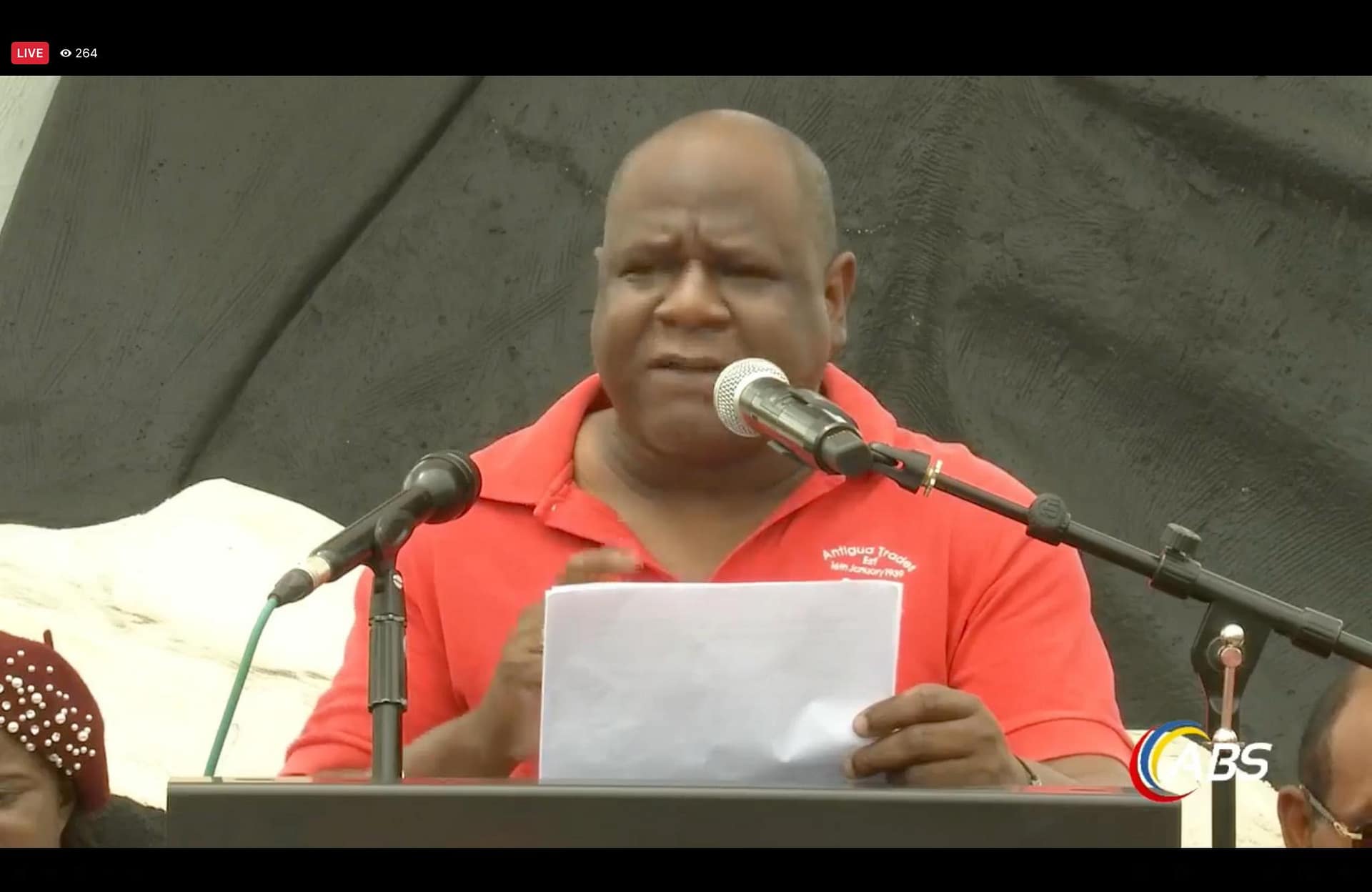
    As the Antigua and Barbuda Trades and Labour Union (AT&LU) marked its 75th year of advocating for working people, union president Bernard De Nully used the platform of a joint Labour Day rally with the Antigua and Barbuda Labour Party to center a critical demand: pension systems must deliver real, livable retirement benefits that guarantee long-term financial security for former workers.

    De Nully pushed back against the common treatment of pensions as an afterthought or bureaucratic formality, arguing that after decades of dedicated service to workplaces across Antigua and Barbuda, retirees deserve a meaningful safety net that supports their quality of life. For him, the conversation around pensions is never just about receiving regular checks — it is about ensuring benefits keep pace with rising cost of living, and allow retired workers to retain a dignified, reasonable standard of living that matches their years of contribution.

    The call for livable pensions was the centerpiece of a broader address focused on advancing workers’ rights and social welfare across all sectors of the national economy. De Nully used the 75th anniversary milestone to reaffirm the union’s core mission of standing up for working people, emphasizing that under his leadership, the AT&LU will not back down from pushing for tangible improvements to workplace conditions and employee benefits.

    “The AT&LU will fight for you until results are achieved,” De Nully told assembled rally attendees.

    He also signaled a shift toward a more aggressive, results-focused approach to advocacy, noting that the union is prepared to leverage stronger collective action when negotiations and public appeals fail to deliver progress. “All this talk… is finished. It is time for action,” he said.

    De Nully’s demand comes as workers and labor organizers across Antigua and Barbuda continue to advance a wider public conversation about fair wages, safe working conditions, and long-term financial stability that supports working people from onboarding through retirement.

  • Three Dead After Suspected Virus Outbreak on Cruise Ship

    Three Dead After Suspected Virus Outbreak on Cruise Ship

    A suspected hantavirus outbreak on the cruise vessel MV Hondius operating in the Atlantic Ocean has resulted in three passenger fatalities and left one British national in critical condition, international health authorities and the vessel’s operator have confirmed.

    Tour operator Oceanwide Expeditions, which manages the polar expedition cruise ship, confirmed the deceased include a Dutch couple and a single German passenger. Final official causes of death have not yet been released as laboratory investigations remain ongoing, leaving open questions about links between the deaths and the suspected outbreak.

    The timeline of the incident stretches back more than a month: the first passenger first showed signs of illness on board and died on April 11, per the company’s official timeline. Due to the ship’s remote voyage route, his body was retained on the vessel until it docked at the South Atlantic territory of St. Helena on April 24, when it could be transferred to local authorities. The man’s wife disembarked alongside him at the port, but developed severe symptoms during her return travel and later died, with no formal confirmation yet that her death is connected to the on-board virus event.

    The third fatality, the German national, was recorded on the Saturday preceding the official public announcement of the outbreak, with the cause still under active review by investigators. The situation escalated into a major public health concern on April 27, when the 69-year-old British passenger developed acute, life-threatening symptoms and required emergency medical evacuation to a specialized hospital in Johannesburg, South Africa. It was here that lab tests confirmed he had contracted hantavirus; as of the latest update, he remains in intensive care in critical but stable condition.

    In addition to the confirmed and suspected passenger cases, two crew members on the MV Hondius—currently anchored off the coast of Cape Verde with 149 total people still on board—have reported respiratory symptoms matching hantavirus infection. One of the crew members is classified as having a mild case, while the other is considered severe, but neither has received a formal positive test for the virus to date.

    Hantavirus, a rare pathogen most commonly carried by wild rodent populations, spreads to humans through direct contact with the urine, saliva, or feces of infected animals. While infection can lead to life-threatening respiratory failure, global health experts have repeatedly emphasized that person-to-person transmission is extremely rare, lowering the risk of large-scale community spread.

    The World Health Organization (WHO) has mobilized an urgent response team to support local and national health authorities managing the incident. Dr. Hans Henri P. Kluge, WHO Regional Director for Europe, released a public statement aimed at quelling unnecessary public anxiety: ‘While hantavirus infections can be serious, they are uncommon and not easily spread between people. The risk to the wider public remains low. There is no need for panic or travel restrictions.’

  • World Court receives evidence Venezuela consistently recognised1899 boundary settlement

    World Court receives evidence Venezuela consistently recognised1899 boundary settlement

    On Monday, May 4, 2026, Guyana launched the merits phase of its long-running border dispute case at the United Nations’ highest judicial body, the International Court of Justice (ICJ), by presenting what it calls irrefutable, decades of documentary proof that Venezuela accepted the 1899 Arbitral Tribunal Award establishing the two nations’ land boundary for more than six decades, without raising a single formal objection.

    Leading Guyana’s opening arguments before the court, Nilufer Oral, Director of the Centre of International Law at the National University of Singapore and a prominent international law expert, laid out a comprehensive case that contradicts Venezuela’s current claims challenging the award’s legal validity. Oral emphasized that the historical record is unequivocal: from the moment the 1899 ruling was issued 127 years ago, all the way through 1962, Venezuelan authorities consistently acknowledged, abided by, and enforced the boundary set out in the award.

    Oral pointed out that despite Venezuela’s current denials, historical records confirm the country was fully aware of any potential legal grounds to contest the award at the time of its passage. Far from opposing the outcome, top Venezuelan officials repeatedly publicly stated their satisfaction with the ruling, even framing it as a strategic victory that granted Venezuela control over the most strategically valuable portion of the contested territory: the mouth of the Orinoco River.

    To back these claims, Oral presented the ICJ judges with a wide range of authenticated primary sources, including official Venezuelan government maps, formal diplomatic correspondence, and public statements by high-ranking Venezuelan leaders. One key example she cited was a 1929 boundary protocol between Brazil and Venezuela, which explicitly recognized the 1899 award’s demarcation of the tripoint where the borders of Brazil, Venezuela, and what was then British Guiana converge.

    Oral also highlighted a specific incident that underscores Venezuela’s historic commitment to the award: when one official boundary marker along the border was destroyed by natural forces, Venezuelan authorities demanded the marker be replaced at the exact location specified in the 1899 ruling. She emphasized that Venezuela has long insisted the award be implemented precisely to its terms, rejecting even minor adjustments to the agreed boundary.

    Further, Oral referenced Venezuela’s 1948 Organic Federal Territorial Law, which formally defines the eastern boundary of the country’s Delta Amacuro Federal Territory as “the border between Venezuela and Great Britain” — the exact border established by the 1899 award. She also displayed an official map Venezuela itself submitted to the United Nations that clearly draws the Guyana-Venezuela border in line with the 1899 demarcation.

    Oral questioned the credibility of Venezuela’s current argument that it was forced into the 1900–1905 joint boundary demarcation process with British Guiana against its will. During that five-year process, Venezuelan surveyors and commissioners worked alongside British counterparts to demarcate the 825-kilometer border. Throughout the entire undertaking, Oral noted, Venezuelan officials never recorded a single objection, reservation, or protest regarding the alignment laid out in the 1899 award. In fact, Venezuelan representatives to the joint commission, who reported directly to Venezuela’s Ministry of Foreign Affairs, carried out their work with meticulous attention to detail and full commitment to upholding the terms of the 1899 ruling when the commission’s work concluded.

  • Daniel Warns Workers Not to Squander Their Money

    Daniel Warns Workers Not to Squander Their Money

    As the Antigua and Barbuda Trades and Labour Union (AT&LU) marks its 75th anniversary, the organization’s top leader is calling on the nation’s workers to build two critical foundations for navigating coming economic headwinds: intentional personal savings and continuous skills development through lifelong education.

    AT&LU General Secretary Alrick Daniel delivered the appeal during a joint Labour Day rally co-hosted by the union and the Antigua and Barbuda Labour Party, framing preparedness as non-negotiable for working people facing an unpredictable global economic landscape. He pressed attendees to leave reckless, wasteful spending habits behind, urging a shift toward deliberate, responsible financial planning that benefits both individual workers and their families.

    “Hardship is not a question of if—it is a question of when,” Daniel emphasized, explaining that consistent saving creates a critical financial buffer to weather unforeseen difficulties that can arise at any point in a person’s career. Beyond financial discipline, he placed equal weight on ongoing education, arguing that learning has no age limit and that workers of all backgrounds and life stages should prioritize expanding their skill sets.

    For those who left formal schooling early, Daniel pushed back against the idea that age or past circumstances create insurmountable barriers to continued learning. He also challenged workers to reframe their relationship with employment, moving beyond the narrow view of a job as simply a place to earn a paycheck. Instead, he described work as a foundational tool that supports family survival and drives long-term improvements in living standards.

    In the face of a rapidly evolving global economy, Daniel encouraged workers to cultivate professionalism, boost productivity, and pursue upward mobility—all of which make workers more competitive in shifting labor markets. His remarks anchored the union’s 75th anniversary Labour Day message, which centers on equipping working people to navigate uncertainty and build sustainable, long-term professional and financial growth.

  • Greene Predicts By-Election in All Saints East & St. Luke as Pressure Mounts on Pringle

    Greene Predicts By-Election in All Saints East & St. Luke as Pressure Mounts on Pringle

    In a fiery address to supporters at a joint Labour Day rally hosted by the Antigua Trades and Labour Union (AT&LU) and the ruling Antigua and Barbuda Labour Party (ABLP) this Monday, ABLP Chairman E.P. Chet Greene has made a bold prediction: a by-election will be called in the swing constituency of All Saints East & St. Luke within six months, driven by mounting internal unrest within the opposition United Progressive Party (UPP) that he claims will force UPP leader Jamale Pringle to step down from his parliamentary seat.

    Greene doubled down on his claim that the opposition bloc is entering a period of accelerating collapse, telling assembled rally attendees that internal factions within the UPP are growing increasingly vocal in their opposition to Pringle’s leadership. This growing pressure, he argued, will leave the UPP leader with no choice but to resign his parliamentary seat, triggering a fresh contest for the constituency that has remained a key battleground between the two major parties since the April 30 general election.

    In that general election, ABLP’s candidate Lamin “Lammy” Newton lost the All Saints East & St. Luke seat by only a narrow margin. Greene framed a potential by-election as a critical second chance for Newton, telling supporters he expects the ABLP candidate to secure victory in a fresh vote. This win, he added, would help the ruling party complete what he described as a “clean sweep” of parliamentary seats across the nation.

    Beyond his prediction of an imminent by-election, Greene used the high-profile Labour Day platform to launch a pointed critique of the UPP’s recent performance as the official opposition. He argued that the party has failed entirely to fulfill its core democratic role as a check on ruling party power, pointing to high-profile internal disagreements over key policy issues including the national government’s COVID-19 public health response and its cruise ship tourism regulations as evidence of the UPP’s ineffectiveness. “None of us in this country can honestly claim that the UPP has been an effective opposition,” Greene stated.

    Notably, even amid his sharp criticism of the current opposition, Greene stopped short of rejecting the role of opposing political voices in a functional democracy. He emphasized that robust democratic governance requires a credible, effective opposition, and rejected any push to eliminate dissenting political views from national discourse.

    Greene also used the rally to outline a new transparency and engagement pledge for the ruling ABLP, announcing that all elected ABLP parliamentary representatives will now be required to host quarterly public town hall meetings in their respective constituencies. The policy, he explained, is designed to keep elected officials directly connected to the constituents they represent, reinforcing the government’s commitment to democratic accountability. “That’s the balance we strike for democracy: constant engagement with the people,” Greene said.

    As of Tuesday, the UPP has not issued any public response to Greene’s claims and predictions, leaving open questions about the actual level of internal pressure facing Pringle and the party’s future in the constituency.

  • Editorial Independence at Risk in OECS as Political Influence Grows — 2026 Report

    Editorial Independence at Risk in OECS as Political Influence Grows — 2026 Report

    The 2026 World Press Freedom Index has delivered a mixed assessment of media freedom across the Organisation of Eastern Caribbean States (OECS), finding that the bloc continues to uphold broadly free working conditions for journalists while warning of accelerating threats to editorial independence from political interference, structural economic vulnerabilities and digital intimidation.

    While the report acknowledges that reporters in the region generally operate without the severe physical violence that endangers journalists in many parts of the world, it outlines a cascade of systemic challenges that are gradually eroding the core principles of independent media across OECS member states. One of the most pressing issues flagged in the analysis is concentrated media ownership, with multiple islands reporting that major political parties hold controlling equity stakes in leading local media companies. This direct financial ties have sparked widespread questions about whether outlets can deliver impartial, unbiased coverage, especially when reporting on the parties that own them. Beyond private ownership, the report documents that state bodies regularly exercise informal and formal influence over a wide range of media platforms, from traditional print newspapers and radio stations to digital and online news outlets.

    This political leverage becomes particularly acute during national election cycles, when control over media narratives can shape electoral outcomes. For many small regional media outlets, state advertising contracts represent one of the steadiest and most critical sources of operating revenue. The report highlights that governments can pull this funding abruptly if coverage is deemed unfavorable, creating chronic financial vulnerability that gives officials implicit power to sway editorial decisions.

    Concrete case studies from across the region illustrate how these pressures play out in practice. In 2024, Grenadian authorities faced widespread criticism after restricting press access to a public cabinet swearing-in ceremony, closing off a key government event to independent scrutiny. In a separate incident in the country, a local media outlet received formal legal threats over a published investigative story, ultimately forcing the outlet to remove the content from its platforms even after the outlet’s editorial team stood by the accuracy of the reporting.

    Outdated and overbroad legal frameworks also create persistent risks to press freedom in some member states. In Saint Vincent and the Grenadines, a 2016 national cybercrime law includes provisions tied to online defamation that critics argue grant authorities excessive power to restrict independent digital reporting, opening the door to arbitrary enforcement against critical outlets.

    Cultural and economic headwinds further weaken the sustainability of independent journalism across the bloc. In most OECS societies, the report finds that the public does not view journalism as a prestigious or financially viable career path, leading to high turnover and a lack of new talent entering the sector to support independent outlets.

    On the issue of journalist safety, the report offers one small positive note: while there have been no killings, long-term detentions or imprisonments of media workers in the OECS recorded so far in 2026, psychological and digital intimidation is on the rise. The growth of social media and digital news platforms has exposed journalists to sustained harassment, much of it orchestrated by individuals aligned with major political parties seeking to discredit critical reporting.

    In its concluding assessment, the report emphasizes that the OECS still ranks among the stronger regions globally for overall press freedom. But it warns that the cumulative impact of growing political influence, lingering economic instability and evolving digital pressures is putting the long-term independence and sustainability of regional journalism to an increasingly severe test.