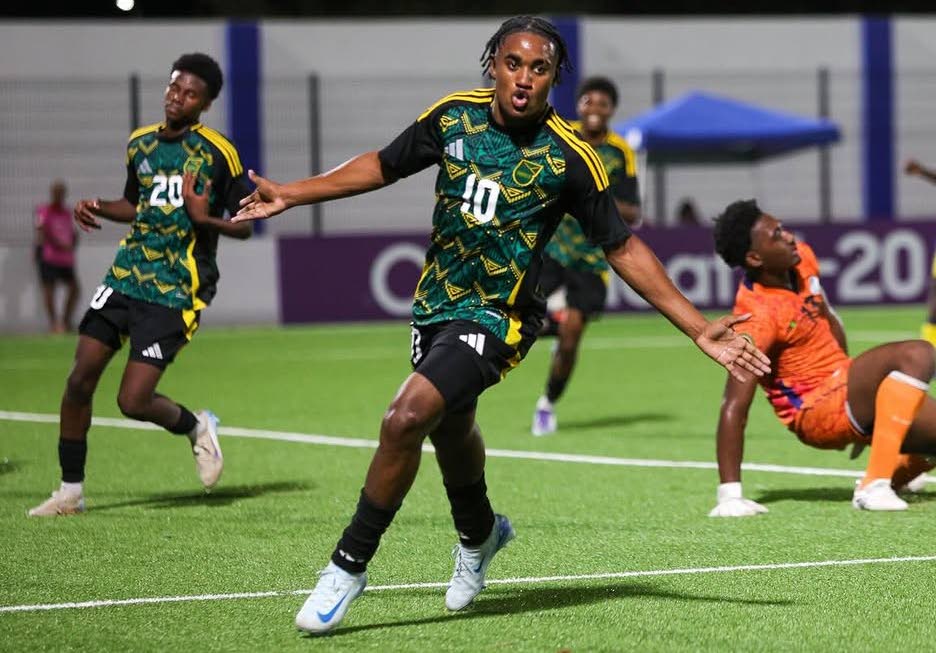
The Wray and Nephew Jamaica Premier League (JPL) is undergoing a striking generational shift, with competition organizers laying out an ambitious long-term goal to cut the league’s average player age to 19 in the coming years. This push for youth integration comes as ongoing data already shows a steady downward trend in the competition’s average age over the past decade, signaling growing buy-in from club leadership across the country.
Owen Hill, Chief Executive Officer of Professional Football Jamaica Limited (PFJL), the governing body that oversees the JPL, outlined that the strategic vision goes far beyond simply lowering age statistics. The dual core goals of the initiative are to accelerate elite player development and boost the market value of Jamaican talent for domestic and international transfer opportunities. As the 2025-26 season wraps up its regular round this Wednesday, the highly anticipated playoff phase is scheduled to kick off this Sunday, capping 39 weeks of competitive action across the league.
New data compiled from official league registration rolls, analyzed by the Jamaica Observer, reveals just how far the youth shift has already progressed: of the 580 total registered players for the 2025-26 campaign, 162 are 20 years old or younger. This figure is actually conservative, as it does not account for players who turned 21 during the season, which runs from August through May. A decade ago, the league’s average age sat at 26, with every club’s roster averaging at least 24 years old. Today, that average has fallen to 24.5, a 1.5-year drop that reflects the growing commitment to giving young prospects minutes in top-flight competition.
Current team breakdowns highlight the range of approaches across the league. Two-time defending champions Cavalier once again field the youngest roster in the JPL, with an average age of just over 20. Harbour View, Arnett Gardens, and Chapelton Maroons have also fully embraced the youth movement, boasting average ages below 24. At the other end of the spectrum, Tivoli Gardens and Spanish Town Police maintain the oldest squads, with an average age of 27.
The success of young integrated players already speaks to the promise of the strategy. Twenty-year-old Christopher Ainsworth, a utility left-sided midfielder for Cavalier, has started every one of the club’s 38 regular season matches this campaign, notching nine goals and adding five assists. His standout performances have already earned him three call-ups and caps for Jamaica’s senior men’s national team, the Reggae Boyz. Ainsworth is far from the only young prospect making an impact: a wave of national under-17 and under-20 team players have stepped into key roles across the league, including Arnett Gardens’ Giovanni Taylor, Mount Pleasant’s Jabarie Howell, Chapelton Maroons’ Sean Leighton, Waterhouse’s Jamone Lyle, and Montego Bay United’s Nashordo Gibbs.
Hill emphasized that the shift toward youth is not a top-down mandate, but a growing consensus among progressive club owners and administrators. “It’s a bigger vision that is shared by most forward-thinking football administrators and lovers,” he explained. “There is a cohort of us who believe that once you lower the average age of players competing in the top league, the opportunities for long-term success grow exponentially.” He added that the link between early senior exposure and higher market value is unambiguous: “Globally, when players matriculate into top-flight competition at an earlier age, their market value rises — that’s a direct relationship you can’t ignore. Beyond market value, early opportunities build young players’ confidence, and it expands the league’s fan base too: supporters from their high schools, local communities, and broader Caribbean networks follow their progress, growing the sport’s reach overall. We’re very grateful that clubs have embraced this vision and are now delivering on it.”
Leijeigh Williams, a leading football analyst and JPL match commentator, traced the rising number of impactful under-20 players back to major investments in Jamaican grassroots football development over the past decade. Citing a long-held observation from legendary former Arsenal manager Arsene Wenger, Williams noted that “young players do not make astronomical gains in their technical ability after age 16 to 17. The biggest gains come from preparing them physically and mentally for the senior game.” That preparation, he argued, is now being delivered by the expanding network of elite youth academies across Jamaica. “The growth of academies has prepared younger players mentally, professionally, and physically to compete at the senior level,” he said. “That’s why we’re seeing an influx of young teenagers and under-21 players making a serious impact across the JPL right now.”
When highlighting standout young talent from this season, Williams pointed to Mount Pleasant attacking midfielder Powell as his pick for young player of the season. “He’s notched five goals this campaign, and practically every one of them has been a spectacular finish,” Williams noted. “After finishing his run in the Manning Cup high school competition and rejoining Mount Pleasant in January, he’s made an immediate impact on a title-contending team in a crucial attacking midfield role. For me, he’s been the standout young prospect of the season.”
For Hill and the PFJL, the current progress is encouraging, but there is still more work to do to hit the 19-year average age target. “Young players just need consistent opportunities and high-level exposure,” Hill explained. “The more minutes they log in top-flight competition, the brighter their transfer prospects become. Our strategy is clear: we work to empower and promote this approach across our club network. A number of clubs have fully bought into this vision, they’re executing it, and they’re already seeing strong results.” He added that the 19-year target is not an arbitrary number: “We’re dreaming of the day we can say our league’s average age is 19. That’s a goal we’ve deliberately set because if players are logging meaningful minutes at the senior professional level at that age, their future trajectory is set, and their value rises immediately.”
Beyond domestic success, Williams argued that this intentional focus on youth integration will strengthen Jamaica’s pipeline of talent for international competition. “We saw the under-17 national team qualify for the U-17 World Cup, and the under-20 team currently has a strong chance of qualifying for their own World Cup,” he noted. “This early matriculation into senior football has been a missing link in Jamaican football for decades. Now, we’re getting players primed and ready for top competition at a younger age, and when they succeed in senior football this early, it can only bode incredibly well for their long-term development.”