博客

  • Fusion denies deteriorating conditions at movie theatre

    Fusion denies deteriorating conditions at movie theatre

    One of the Bahamas’ largest entertainment and cinema hubs is pushing back against growing customer complaints, pushing to reassure moviegoers ahead of a high-profile blockbuster debut that is expected to draw massive crowds this weekend.

    Fusion Superplex, which will celebrate its eighth anniversary of operations this November, has faced mounting criticism from patrons over declining conditions across its property. Customers have raised concerns about unkempt and poorly maintained auditoriums, limited food and beverage options at concessions, and the ongoing outage of the complex’s online ticketing platform that has forced all sales to be handled in-person at the box office.

    But in a recent statement to local media, Tecoyo Bridgewater, Fusion’s top legal officer, pushed back against claims of widespread facility deterioration, framing grievances as vastly overstated while acknowledging the natural effects of eight years of regular use. “Deterioration is a great exaggeration,” Bridgewater said. “As with all buildings and businesses that have been in operation for nearly a decade, fair wear and tear creeps in.” He added that despite minor aging, the complex still outperforms a vast majority of competing cinema facilities across the Caribbean region and globally.

    The company’s defense of its property comes as it wraps up last-minute negotiations to secure screening rights for Sony Pictures’ highly anticipated new release *Spider-Man: Brand New Day*, which will launch on the complex’s IMAX screen starting this Friday. Fusion Superplex was initially unable to secure the film for its global release date on August 7, a situation that confused the company even as it confirmed its account with Sony was fully in good standing with no unpaid balances outstanding.

    Bridgewater confirmed that the extended talks with the Hollywood studio ultimately reached a successful outcome, though the complex still has not received clarity on why it was locked out of the original release window. Bookings for major studio films are handled on an individual title-by-title basis, he noted, with final approval always resting with the distribution company.

    Fusion Superplex currently operates nine auditoriums including its signature IMAX theater, making it one of the biggest entertainment venues in the country. With buzz building around the new Spider-Man film, the complex is projecting a record busy weekend, and Bridgewater said the company is fully prepared to host the expected surge of guests. “IMAX is the home of Spider-Man,” he said. “There is not a better way to watch it, so of course we are confident in our conditions.”

    Despite that confidence, the facility is still navigating ongoing operational disruptions stemming from a previous cyber incident. The attack forced Fusion to take its online ticketing platform offline as a security precaution, and the service has remained unavailable ever since, even after most internal systems were restored with support from the Bahamas Telecommunications Company (BTC).

    Bridgewater apologized to customers for the extended disruption, explaining that the issue no longer originates from Fusion’s own ticketing infrastructure. “The cyberattack had a critical impact on our server and online ticketing system,” he said. After BTC and its cybersecurity team assisted with recovery, the Fusion-owned side of the ticketing platform is now fully functional. Current delays stem from a recently upgraded third-party banking processing system, he added.

    The company is working closely with its banking partners and technical teams to run full testing of the integrated platform, with a target to restore online ticket purchases within the next month. “We are working diligently with our bank and team testing the platform to get this resolved,” Bridgewater said. “In the coming month, we should be back online.”

    Beyond the ticketing issue, the complex is also preparing for potential power disruptions amid ongoing rolling blackouts across New Providence, the island where the venue is located. To avoid interruptions during peak attendance periods and ease pressure on the local grid, Fusion has scheduled planned generator changeovers for weekends to accommodate peak energy demand. Bridgewater said the arrangement lets the company act as a responsible corporate partner to Bahamas Power and Light (BPL), the national utility provider. “We intend to work along with BPL to be good corporate citizens, taking a load off of the grid,” he explained.

  • Bishop urges national survey as homeless crisis worsens

    Bishop urges national survey as homeless crisis worsens

    A long-running faith-based outreach organization in The Bahamas is sounding the alarm over a rapidly growing homelessness crisis, calling on the national government to launch an official count of unhoused residents and step up support for vulnerable populations left behind amid the country’s booming economic sectors.

    Great Commission Ministries, a non-governmental organisation that has supported low-income and unhoused Bahamians for decades, currently provides roughly 600 hot, freshly prepared meals each day to people in need, alongside free groceries and clothing for struggling families. The group is also the only non-state entity in the country that offers residential shelter for unhoused men, women, and children. But its president, Bishop Walter Hanchell, warns that the scale of unhoused populations has grown far beyond what private charity alone can address.

    In a recent public statement, Hanchell outlined a sharp deterioration in housing access across The Bahamas, noting that growing numbers of residents are now forced to sleep on public streets, in condemned and abandoned buildings, and inside broken-down derelict vehicles. He attributes the crisis to two interconnected issues: a widespread lack of affordable housing and a critical shortage of available rental units on the market. Many of these unhoused people, he added, including previously employed residents who have recently lost their jobs, cannot access the government assistance they qualify for and are simply bounced between different agencies without receiving meaningful support.

    Hanchell directly appealed to Prime Minister Philip “Brave” Davis to prioritize unhoused populations, arguing that it is morally indefensible for vulnerable Bahamians to suffer extreme deprivation while the country boasts of robust growth in its core tourism and financial services sectors. “Homeless people, street people and our unemployed should never be suffering at this level when we boast of so much prosperity and a tourism and financial boom,” he said.

    The bishop’s call follows a similar acknowledgment earlier this year from Social Services Minister Barbara Cartwright, who identified rising homelessness as one of the most urgent challenges facing her ministry back in June. While Hanchell conceded that the Department of Social Services has supported many unhoused people over the years, he argued that chronic underfunding for vulnerable populations has left the agency unable to meet the growing need, and far more action is required from national leaders.

    Hanchell also highlighted a troubling normalization of homelessness across Bahamian society, noting that many residents have grown accustomed to seeing unhoused people living in public—including those struggling with poor mental health, substance use disorders, and extreme poverty who often appear dishevelled or underdressed in public spaces. “These persons live on the streets like animals and they are being ignored and rejected by both the government and the church,” he said, adding that the population of unhoused people living without any fixed shelter continues to climb steadily.

    One major barrier to long-term solutions, Hanchell explained, is that Great Commission Ministries has spent more than 35 years attempting to secure government-owned land to build permanent supportive housing for unhoused people and vulnerable low-income families, with no success to date. The organization has already supported countless vulnerable groups, including evicted single mothers who are forced to live with their children in cars or abandoned structures. After decades of failed attempts to acquire land through government channels, the ministry has launched what it calls “Plan B”: it is currently working to acquire 20 acres of land via private donation to build its proposed Hope City Homeless Shelter, a permanent facility to expand services for unhoused populations.

    In addition to criticizing current and past national governments for inaction, Hanchell accused successive administrations dating back to 1973 of systemic inequity, arguing that political allies and cronies receive favourable access to resources and support, while outspoken non-partisan residents and those perceived to be aligned with the opposition face discrimination and exclusion. He also called out religious leaders and churches across the country for failing to do more, accusing many of hypocrisy for adjusting their public advocacy based on which political party holds power.

    For its part, Great Commission Ministries will continue expanding its direct support to people in need as far as its limited resources allow, including accepting referrals from the Department of Social Services and other community agencies. But Hanchell stressed that solving the worsening homelessness crisis will require coordinated, substantial action from the Davis administration, organized religious groups, and civil society at large to address the root causes of housing insecurity and get vulnerable Bahamians off the streets.

  • Taxi Cab Union threatens industrial action over unresolved airport dispute

    Taxi Cab Union threatens industrial action over unresolved airport dispute

    A months-long simmering conflict over ground transportation operations at the Bahamas’ Lynden Pindling International Airport (LPIA) has reached a boiling point, with the Bahamas Taxi Cab Union (BTCU) publicly stating it has lost all confidence in the Davis administration’s ability to resolve the dispute and warning that industrial action is now imminent.

    The core of the conflict centers on long-running disagreements between union-affiliated taxi drivers and unregulated or livery vehicle operators over access to the high-traffic arrivals door pick-up zone at LPIA. According to BTCU President Tyrone Butler, union leaders reached a tentative two-week trial agreement with senior tourism and transport government officials last Wednesday, which would have restricted exclusive access to the arrivals door to station taxi drivers only, while allowing just three livery vehicles to wait in the commercial lane behind the taxi queue. All prearranged passenger pick-ups would remain permitted at the existing zone near rental car facilities, and Road Traffic officials were scheduled to be on-site to enforce the arrangement starting Monday, August 10.

    But that agreed framework never went into effect, Butler claims. Livery drivers were never notified of the new terms, leading to a chaotic disruption at the airport on Monday when unknowing operators attempted to block the commercial lane reserved for taxi drivers. Nassau Airport Development Company called local police to respond to the standoff, which Butler says was incorrectly framed in early accounts as a direct confrontation between taxi and livery drivers. Obie Ferguson KC, president of the Bahamas Trade Union Congress (TUC), confirmed Butler’s account of the agreed deal, noting he was present at the negotiating meeting and left with clear assurances the pilot arrangement would launch Monday morning.

    The BTCU circulated an email Butler sent to Transport Minister Leon Lundy on the prior Sunday, which detailed all terms of the tentative agreement, but the union says it never received any official government confirmation that the arrangement would move forward. In sharp criticism of the Davis administration, Butler accused Minister Lundy of openly favoring livery operators, acting as their de facto spokesman and bargaining agent rather than serving as a neutral broker for all stakeholders. He noted the union has met with Lundy seven times since the minister took office, and three times with Tourism Minister Glenys Hanna Martin, with zero progress on resolving any of the union’s outstanding demands.

    Butler went so far as to call on Prime Minister Philip “Brave” Davis to remove Lundy from his post, arguing that a new minister is needed to deliver the meaningful reform the country’s transportation sector requires. The BTCU’s position rests on its interpretation of existing Bahamian transportation law, which it says reserves the LPIA arrivals door taxi stand exclusively for regulated taxi drivers and prohibits livery operators from soliciting walk-up passengers in that zone. Butler emphasized the union does not oppose legal prearranged luxury livery services, but argues that unregulated solicitation at the arrivals gate allows livery drivers to undercut fixed regulated taxi fares, creating an unfair playing field. He also noted the union would support formal legislative changes to properly license and regulate livery services, pointing out that the popular term “black car service” has no legal standing under current Bahamian law.

    The dispute is not limited to LPIA: Butler added that the union has unaddressed concerns about unapproved livery operations at the Atlantis resort’s Royal Towers and The Cove, and that the resort will be included in any upcoming industrial action after failing to respond to a union inquiry sent months ago. When asked about the potential negative impact of industrial action on the Bahamas’ critical tourism sector, Butler placed full responsibility on the Davis administration, saying government leaders should have prioritized preventing disruption to tourist experiences long before the conflict reached this stage.

    Ferguson has pledged full solidarity and support from the TUC for any collective action the BTCU approves, and has called on all taxi drivers – including non-union operators – to stand with the BTCU and follow Butler’s leadership if industrial action is called. “When the president says go, then everybody got to go,” Ferguson said, urging non-members to join the collective action to secure a fair resolution. Butler declined to share details on what form industrial action could take or when it would begin, saying the union will first hold consultations with its membership, supporters and TUC leadership before moving forward.

  • Ministry confirms Ferry Bridge needs replacement after video

    Ministry confirms Ferry Bridge needs replacement after video

    A viral social media post highlighting severe structural decay on the Ferry Bridge linking Great Exuma and Little Exuma has prompted official confirmation from the Bahamas’ Ministry of Works and Family Island Affairs that the aging crossing requires full replacement — though the government has yet to announce when construction on a new structure will get underway. The bridge is counted among nine high-priority infrastructure projects prioritized by the current Davis administration, after engineering assessments completed by the ministry verified the need for full replacement. In an official statement released Tuesday evening, the ministry noted that its technical teams have long been aware of the crossing’s deteriorating condition, and preliminary design work for the replacement bridge has already been finalized. Necessary pre-construction technical reviews and public planning processes are currently moving forward, according to the agency.

    Despite confirming the replacement plan, officials declined to address a key claim accompanying the widely shared viral video: that chunks of concrete break away and fall into the surrounding water when heavy trucks traverse the structure. The footage shows loose material dangling from the bridge’s underside, which the accompanying social media post identified as exposed reinforcing steel. Until the replacement project breaks ground, ministry engineers will conduct regular safety inspections of the existing structure to protect the thousands of motorists and local residents who depend on the inter-island connection. “In the interim, the Ministry’s engineers will continue to monitor the existing structure, and advise on any measures necessary to protect the safety of motorists and residents who rely on this critical connection between Great and Little Exuma,” the statement read. Officials added they recognize the Ferry Bridge’s central role in supporting daily life and local economic activity across the Exumas, and will publish additional updates as technical design, procurement, and implementation work progresses.

    Before the ministry released its formal statement, Glenn Davis, Chief Councillor of Exuma, told local outlet The Tribune that government assessments of the bridge had been completed previously, and replacement plans had already been drafted. “I don’t know if it’s a danger,” Davis said, “but I know that heavy vehicles or heavy loads shouldn’t cross the bridge.” He explained that government inspectors carried out a full review of the structure last year, and concluded that full replacement was the only viable solution, adding that the existing bridge has stood for decades and all required pre-planning work to scope the project has already been finished.

    Local perspectives on the bridge’s safety have been divided in the wake of the viral video. Cecil Smith, a long-time Exuma resident, warned against drawing conclusions about the bridge’s safety from social media footage alone. “I am not aware of any report by certified government engineers or otherwise that the bridge is unsafe,” Smith said. “However, there have been in the past some restrictions about certain tonnage going across the bridge.” Smith added that he does not know the official weight limit or whether those restrictions are still enforced, and stressed that only qualified government engineering professionals can properly assess the structure’s condition, arguing the viral video does not prove the bridge is at risk of collapse. Another local resident, who requested anonymity, told reporters that she believes the viral footage exaggerates the bridge’s current condition, though she acknowledged that critical repairs or replacement are long overdue.

    The renewed public scrutiny of the Ferry Bridge comes just one week after a sudden structural failure led to the immediate condemnation of the Fresh Creek Bridge on the nearby island of Central Andros, which cut off a critical transportation artery for the community. As The Tribune reported on August 5, an intermediate supporting pier on one of the Fresh Creek Bridge’s pile caps sank, shifting the entire structure’s weight to just two external supports and causing three concrete bridge slabs to subside. Officials ordered the bridge immediately closed to all vehicle traffic, announcing that the structure would be fully demolished rather than repaired due to the extent of the damage.

    The sudden closure severely disrupted travel across Central Andros, cutting off access to the island’s airport, government service centers, and local businesses. It also initially delayed restoration work by Bahamas Power and Light crews, who were unable to transport heavy equipment to repair outages in Cargill Creek and parts of South Andros. Officials noted that a prefabricated temporary bridge sourced from a supplier in New York will take approximately two months to be delivered and installed on Andros, leaving residents facing extended disruption to travel and commerce.

  • Traffic Calming Plan to begin in Santo Domingo’s Colonial City on August 17

    Traffic Calming Plan to begin in Santo Domingo’s Colonial City on August 17

    Starting this Monday, August 17, a new traffic calming pilot initiative will roll out across Santo Domingo’s iconic Colonial City, designed to cut down on cut-through traffic, ease chronic gridlock, and foster more orderly, people-centered use of the historic district’s public spaces.

    The project was developed in direct response to repeated feedback and requests from local residents and business owners who have long raised concerns about unmanageable congestion in the UNESCO-recognized neighborhood. It is being carried out through a coordinated cross-agency partnership, bringing together the National Institute of Transit and Land Transportation (Intrant), Digesett, the National District Mayor’s Office, the Ministry of Culture, the National Police, Politur, and several other organizations focused on the sustainable development of the Colonial City.

    Local transportation authorities note that the core problem the pilot aims to address is commuters and through drivers who treat the narrow streets of the historic district as a time-saving shortcut, especially during morning and evening peak travel windows. This constant through traffic has created persistent congestion, lengthy travel delays for both locals and visitors, and frequent dangerous conflicts between motor vehicles and pedestrians who share the district’s limited road space.

    Permanent daily access restrictions will be enforced within the boundaries of the pilot zone: the area is bordered by Arzobispo Meriño Street to the west, Padre Billini Street to the south, and Las Damas Street to the east. The new rules do grant exemptions to critical service vehicles, including emergency response units and municipal garbage collection trucks, to avoid disrupting essential public services.

    For visitors and residents seeking access to the Cathedral precinct at the heart of the district, approved entry points are limited to the northern side via Arzobispo Meriño Street, through Palo Hincado and Juan Isidro Pérez streets, or from Mella Avenue. Under the new regulations, no vehicles will be permitted to enter the restricted zone from Padre Billini Street, and all vehicles approaching the intersection of Padre Billini and Arzobispo Meriño will be required to turn right to exit the area.

    To reduce confusion and parking pressure within the district, local officials are actively encouraging all non-local visitors to make use of large public parking facilities located just outside the restricted zone. Two primary recommended lots are the Atarazana Parking Lot on Restauración Street and the larger Colonial Zone Parking Lot on Mella Avenue.

    Project leads emphasized that the overarching goal of the pilot is to shift how the Colonial City is viewed by through drivers: rather than a convenient shortcut between other parts of the city, the historic district is first and foremost a cultural, residential and tourism destination that deserves protection. Over the course of the pilot, traffic patterns and public feedback will be continuously monitored, and adjustments to the access rules will be made as needed to align with broader progress on the Colonial City’s long-term tourism and urban development initiative.

  • $20K overtime in one month

    $20K overtime in one month

    The Bahamas’ leading public electricity utility, Bahamas Power and Light (BPL), is facing a growing industrial dispute after an internal audit exposed staggering overtime payouts to just three senior staff in one department, triggering immediate regulatory changes from the utility’s board and a fierce pushback from the country’s electrical workers union.

    Internal BPL payroll records obtained exclusively by The Tribune reveal that between May 2025 and April 2026, three employees working in BPL’s Fuel and Performance Department accumulated a combined $601,295.16 in overtime pay. The two highest earners took home $265,551.83 and $217,729.70 respectively, accounting for more than 80% of the total three-person payout. When compared to their annual base salaries – listed as roughly $78,388 and $56,182 – their overtime earnings exceeded three times their regular annual pay. The third employee recorded $118,013.63 in overtime over the 12-month period.

    The overtime payments were tied to routine operational tasks including fuel transfers between storage facilities, tanker operations, and fuel pumping assignments. Monthly claim sheets show multiple months where individual staff earned more than $20,000 in overtime alone. For example, the employee who earned $217,729.70 over the year recorded $25,000.11 in overtime during February 2026, $22,400.51 in January 2026, and $20,890.30 in October 2025. The top overtime earner, meanwhile, was paid more than $24,000 in overtime in three separate months, peaking at $26,273.01 in October 2025.

    The records also raise significant questions about the plausibility of reported working hours. One entry from the Christmas holiday week shows one employee logged 18 hours of work on Christmas Day, followed by 24-hour shifts on December 26, 27, and 28 – totaling 90 hours of work across four consecutive days.

    Following the completion of the internal probe, BPL’s board of directors moved to implement immediate reforms to the utility’s overtime policies, though full details of both the existing framework and proposed changes have not been released to the public as of press time. The dispute comes at an already difficult time for BPL, which has faced widespread public anger over repeated, widespread power outages that have disrupted daily life across the country through the summer months.

    The Bahamas Electrical Workers Union (BEWU), which represents BPL frontline and administrative staff, has rejected the policy change outright, issuing a “high alert” notice to all members ordering them to work only their contracted regular hours and leave immediately after their shifts end. The union argues that BPL’s unilateral change to overtime rules directly violates Clause 30 of the existing industrial agreement between the utility and the union, and has accused BPL leadership of harassing and intimidating union officials and frontline staff.

    “We will not stand for these injustices,” the union’s official notice read, emphasizing the directive for members to limit work to “NORMAL WORKING HOURS ONLY” before leaving the workplace.

    BEWU President Kyle Wilson doubled down on the union’s opposition in an interview with The Tribune, arguing that BPL has no legal or contractual authority to unilaterally alter working arrangements outlined in the industrial agreement. Wilson noted that if overtime payouts were processed in line with previously negotiated terms and approved by BPL management, the total amount earned by workers is not a legitimate point of dispute. “If it’s in the industrial agreement, it must be respected,” he said.

    Wilson also stressed that overtime scheduling is entirely controlled by BPL management, not individual employees. “Overtime is only at the discretion of management,” he explained, a claim backed by the reviewed payroll records, which show all monthly overtime claim sheets include official management approval entries. The union leader rejected criticism of high-earning staff, saying BPL should raise any concerns through formal collective bargaining channels rather than imposing abrupt changes. “No one’s going to bully me or this union,” he said.

    Wilson also questioned why BPL did not raise overtime concerns during negotiations for a new industrial agreement, which was finalized and signed by both parties in June 2026, just months before the probe’s findings were released. “We just recently signed a new agreement in June and if they had any concerns why didn’t they come to the union and explain those concerns before signing off on an industrial agreement?” he asked.

    The union leader also launched a direct criticism of BPL Executive Chairman Christina Alston, accusing her of consistent disrespect for the union and implementing policies that directly contradict the terms of the industrial agreement. Wilson confirmed he has not seen the full text of the new overtime policy, and declined to characterize the union’s directive as a formal work-to-rule industrial action. “I encouraged people to come to work and do the jobs that they are paid to do, okay?” he said. “I don’t know what you’re referring to with work to rule.” Still, the union’s written notice explicitly instructs members to depart after completing their standard shifts.

    The potential impact of the union’s directive on electricity reliability remains unclear, in part due to recent sector restructuring on the island of New Providence, the country’s most populous. The newly created Bahamas Grid Company (BGC) now manages New Providence’s transmission and distribution network, while BPL retains responsibility for power generation and maintains a close working partnership with BGC. Wilson noted that despite the restructuring, BPL workers still regularly provide overtime support for BGC operations, particularly for specialized underground and overhead line work.

    “A lot of overtime that our workers are working is to help Bahamas Grid,” Wilson said. “We were told these people were coming with expertise that we don’t have. Yet still they’re relying on us, the former transmission and distribution workers, to assist BGC where they’re falling down.” Wilson’s comments suggest the restriction on overtime could leave BGC without critical support for urgent operations, though the full extent of any disruption is not yet known. The union leader also placed blame for recent widespread power outages squarely on BGC, saying “BGC can’t keep the light on. They need to focus on that and leave us alone.”

    Wilson also pushed back against the focus on Bahamian workers’ overtime earnings, pointing to large contracts awarded to external and foreign firms for electricity sector work. He claimed foreign contractors working on the system earn far higher hourly rates than domestic Bahamian staff, though The Tribune has not been able to independently verify those claims. Finally, Wilson addressed unpublicized allegations that he has personally benefited from large overtime payouts, saying no BPL leadership has ever raised the issue with him directly: “They never came to me,” he said.

  • Dominican Republic joins regional forum to combat drug trafficking

    Dominican Republic joins regional forum to combat drug trafficking

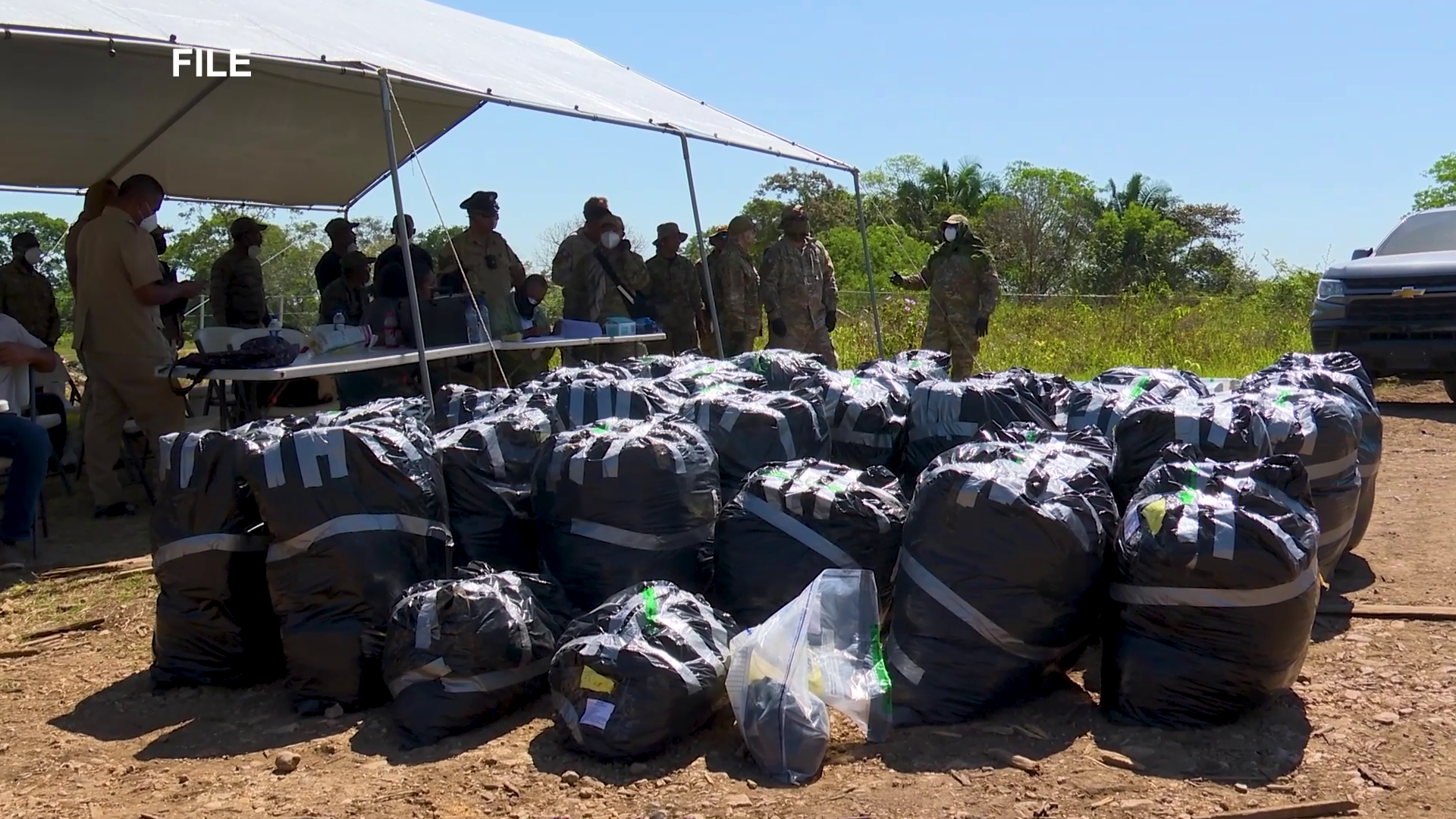
    Against a backdrop of growing transnational drug trafficking and organized criminal activity across the Americas, Panama played host this week to the high-stakes Forum of the Americas Coalition Against Cartels (A3C), bringing together top defense and security leaders from 18 countries across the region. The two-day gathering, held on August 11 and 12, centered on a core shared goal: forging more robust cross-border collaboration to dismantle criminal cartels and their sprawling networks, through targeted strategies including improved intelligence sharing, tightened border security protocols, and streamlined coordination between national security institutions.

    Leading the Dominican Republic’s official delegation to the forum was Lieutenant General Carlos Antonio Fernández Onofre, the country’s Minister of Defense. He was joined by a senior cross-agency team reflecting the Dominican government’s priority of addressing organized crime: Deputy Interior and Police Minister Edwin Eusebio Féliz Brito, Director of the National Investigations Department (DNI) Luis Soto, Defense Ministry Intelligence Director Brigadier General Enrique Armando Aguilera Trujillo, and Brigadier General Edgar Tiburcio, the Dominican Republic’s designated liaison for the U.S.-backed Shield of the Americas initiative.

    As the host nation, Panama structured the forum’s agenda to tackle the full scope of regional security threats, with focused discussions on disrupting every layer of cartel operations: from their financial infrastructure and cross-border logistics routes to their on-the-ground operational cells. Unlike isolated national enforcement efforts, forum participants emphasized that coordinated, collective action is the only viable path to weakening cartel influence across the hemisphere.

    Following the conclusion of the gathering, the Dominican government released a statement outlining the strategic benefits of its participation. Officials noted that the forum has already opened new doors for expanded partnership and real-time intelligence exchange with the United States and other participating nations. These new cooperative ties, the government added, will directly bolster the country’s ability to monitor and secure its land, maritime, and air territories, blocking criminal groups from using Dominican infrastructure to traffic drugs and carry out other illegal organized activities.

  • Iberostar advances coral reef conservation with research lab in Bávaro

    Iberostar advances coral reef conservation with research lab in Bávaro

    As climate change continues to drive rising ocean temperatures and widespread coral bleaching across the Caribbean, tourism giant Iberostar Hotels & Resorts is stepping up its commitment to marine ecosystem protection through an expanded portfolio of coral reef conservation and restoration initiatives in the Dominican Republic.

    At the company’s Playa Bávaro location, a dedicated on-site coral laboratory houses a specialized genetic bank preserving samples from nine distinct species of reef-building corals. The facility’s in-house team of scientific researchers carries out cutting-edge thermotolerance experiments, designed to map how different coral species react to elevated ocean heat levels. The data gathered from these studies will directly inform and strengthen future reef restoration projects across the region.

    All of these conservation efforts fall under the umbrella of Iberostar’s flagship sustainability program, “Wave of Change”, an initiative built to advance the principles of responsible tourism and safeguard vulnerable coastal ecosystems around the globe. To date, the company’s global nature conservation strategy has brought together more than 30 independent scientists and marine specialists, contributed to 13 peer-reviewed scientific publications, and developed two standardized restoration protocols that are now widely used by coral conservation professionals worldwide.

    In collaboration with the Dominican Republic’s Ministry of Environment and Natural Resources, with initial seed funding from the German Development Cooperation (GIZ), Iberostar has already completed the rehabilitation of roughly one hectare of degraded reef habitat within the Playa Bávaro tourism complex. This restored coastal zone now acts as a critical refuge for native endemic marine species, and functions as a natural seed source to support natural vegetation regeneration across nearby damaged ecosystems.

    Iberostar’s conservation footprint extends well beyond this single site in the Dominican Republic. Across the entire Caribbean region, the company operates seven underwater coral nurseries, where heat-tolerant coral fragments are grown before being outplanted to damaged reef sites. It also runs three land-based coral research laboratories, located in the Dominican Republic, Mexico, and Jamaica respectively.

    Most recently, the company laid the groundwork for long-term institutional collaboration on marine conservation: In February 2026, the Iberostar Foundation partnered with the Autonomous University of Santo Domingo to launch the Iberostar Sea Initiative, a program focused on advancing marine research, providing specialized conservation training, and facilitating cross-sector knowledge transfer. Just two months later, in April, Iberostar signed a formal partnership agreement with the Dominican Ministry of Environment to support coordinated conservation and restoration work for coastal and marine ecosystems in the popular tourist regions of La Altagracia and Puerto Plata.

  • Aerodom advances AILA modernization with new automated baggage system

    Aerodom advances AILA modernization with new automated baggage system

    Santo Domingo, Dominican Republic – Aeropuertos Dominicanos Siglo XXI (Aerodom), a member of the global Vinci Airports network, has activated the first stage of a cutting-edge Automated Baggage Handling System (BHS) at Las Américas International Airport (AILA), backed by a total investment of more than RD$900 million (approximately 16 million U.S. dollars).

    The initial phase of the infrastructure modernization project, which has been fully operational since the start of June, focuses on the southern zone of AILA’s main passenger terminal. Construction and installation work is now advancing in the terminal’s northern section, with project managers projecting full completion of the entire system by the final quarter of this year.

    Aerodom officials outlined that the newly deployed system is designed to transform the entire outbound baggage journey, from passenger check-in through to final loading onto departing aircraft. Beyond boosting the speed, security, and consistency of baggage processing, the phased rollout strategy was intentionally structured to allow ongoing construction work to proceed without interrupting daily flight operations or inconveniencing traveling passengers.

    The full BHS upgrade incorporates a suite of advanced industry technologies, including next-generation computed tomography (CT) baggage scanning devices for enhanced security screening, a centralized SCADA monitoring and control platform that gives operators full visibility over system performance, high-speed automated sorting machinery, and 360-degree label reading capabilities that reduce the risk of misrouted luggage.

    Once the entire system goes online at the end of 2024, Aerodom projects that AILA’s hourly baggage processing capacity will double compared to the legacy infrastructure the upgrade replaces. The new system will also raise the overall level of automation across airport operations, and build in greater operational redundancy across terminals and baggage carousels, reducing the risk of widespread disruptions if one component experiences technical issues.

    In addition to processing improvements, the modernization project will strengthen the airport’s capacity for preventive maintenance and ensure greater accessibility to critical spare parts. These upgrades, in turn, will support more consistent, reliable operations and continuous service for the millions of passengers that pass through AILA each year.

  • ABHTA Launches Enhanced Customer Service and Cultural Awareness Training to Prepare Antigua and Barbuda for CHOGM

    ABHTA Launches Enhanced Customer Service and Cultural Awareness Training to Prepare Antigua and Barbuda for CHOGM

    As the Caribbean twin-island nation of Antigua and Barbuda gears up to host thousands of high-profile attendees — including heads of government, official delegates, international journalists, business leaders and leisure visitors from all 56 Commonwealth nations — the country’s leading hospitality industry body is rolling out a targeted training initiative to ensure every guest encounter exceeds global standards. The Antigua & Barbuda Hotels and Tourism Association (ABHTA) has upgraded its signature E.A.S.E. (Exceeding All Service Expectations) Customer Service Excellence Programme specifically for the upcoming Commonwealth Heads of Government Meeting (CHOGM), under the official theme “E.A.S.E. into CHOGM: Preparing Antigua and Barbuda to Welcome the Commonwealth.”

    Unlike generic hospitality training, this enhanced iteration integrates core customer service best practices with specialized Commonwealth Cultural Awareness and Intelligence training, equipping frontline workers with actionable tools to serve attendees from vastly diverse cultural backgrounds with confidence. The program is designed to upskill every professional who shapes a visitor’s experience in the country, from hotel staff and restaurant servers to taxi drivers, marina operators, airport workers, event volunteers and tour guides — any role that involves direct interaction with CHOGM attendees.

    Core learning outcomes for participants include mastering the delivery of memorable, high-quality guest experiences, recognizing and adapting to the unique cultural expectations of visitors from across the Commonwealth’s diverse regions, communicating effectively across cultural divides, demonstrating consistent cultural respect and sensitivity, professionally resolving conflicts and recovering from service missteps, building long-term destination loyalty through standout service, leveraging emotional intelligence to strengthen guest interactions, and positioning Antigua and Barbuda as a premium, welcoming global tourism destination.

    A defining highlight of the customized CHOGM-focused program is its dedicated focus on cultural intelligence, a critical component for hosting a diverse international gathering. Trainees will gain practical insight into regional cultural customs and traditions, varied cross-cultural communication norms, religious and cultural accommodation requirements, region-specific guest expectations, unwritten hospitality do’s and don’ts, and real-world service scenarios tailored to the CHOGM event. The curriculum emphasizes that exceptional hospitality cannot follow a one-size-fits-all model; intentional understanding and respect for cultural differences directly shapes how attendees perceive Antigua and Barbuda, and shapes long-term impressions of the destination after the conference concludes.

    The 6-hour training program is structured as a two-day online course delivered via Zoom, split into three-hour morning blocks (9 a.m. to 12 p.m.) and three-hour afternoon blocks (2 p.m. to 5 p.m.). The first cohorts of trainees will begin their sessions across September 7, 8, 9 and 11, 2026, with additional training dates added to the schedule based on industry demand. All registrants will be assigned to specific sessions once their registration is finalized. The program fee is set at EC$100 per participant, covering access to both days of training. Any participant who successfully completes all course requirements will receive an official E.A.S.E. Pin, a visible public marker of their commitment to delivering top-tier service that exceeds all guest expectations. Registration for the program closes on Friday, August 28, 2026, and interested participants can register directly through ABHTA by phone at 462-0374 or 462-4928 to coordinate their enrollment.

    Through the E.A.S.E. into CHOGM initiative, ABHTA is calling on all tourism businesses, industry organizations and other customer-facing sectors across the country to invest in upskilling their teams, to ensure Antigua and Barbuda delivers an unforgettable, seamless welcome to the entire Commonwealth. The association encourages all eligible frontline workers to register promptly to secure their spot and get fully prepared for the historic event.

    As the leading collective body for Antigua and Barbuda’s $1+ billion tourism sector — the country’s primary economic driver — ABHTA works to advance the industry through education, advocacy and destination promotion, with the core goal of increasing visitor arrivals and expanding the shared economic benefits of tourism across the nation. The association prioritizes the needs and interests of its membership, which is open to all hotels, restaurants, airlines and any other company directly or indirectly involved in the country’s tourism sector. Membership is framed as a tangible way to support Antigua and Barbuda’s tourism product and contribute to the long-term growth and development of the industry.