
博客

  • Sprinters Nurse and Brewster chasing history

    Sprinters Nurse and Brewster chasing history

    In a display of emerging track and field excellence, young Barbadian athletes Aniya Nurse and Jahkye Brewster are redefining sprint standards while pursuing legendary milestones at the Barbados Secondary Schools Athletic Championships (BSSAC).

    Aniya Nurse, representing St Michael School, delivered an electrifying performance during the Dasani Frank Blackman and Sada Williams zone competitions that initially appeared to shatter one of Barbados’ most enduring athletic records. The rising star clocked a remarkable 11.41 seconds in the Under-20 girls’ 100m event, seemingly surpassing Yolande Straughn’s 41-year-old record of 11.64 seconds established in 1985. However, the exceptional time was ultimately invalidated due to an excessive tailwind measuring 5.4m/s, significantly exceeding the legal limit of 2.0m/s.

    Despite this setback, Nurse’s 2026 season has demonstrated consistent excellence with repeated performances in the 11.5-second range, including an official personal best of 11.53 seconds. The versatile athlete further showcased her capabilities by establishing a new zonal record in the 200m with a dominant time of 24.03 seconds during the championship’s final day.

    In exclusive comments to Barbados TODAY, Nurse revealed her ambitious objectives: “My races so far have been pretty good. I really wanted to focus on execution and form, and I believe I achieved that. My goals for BSSAC this year are to finish healthy and to break the 100m record.” Her aspirations extend beyond national competitions to include medal contention at the upcoming CARIFTA Games and ultimately competing at the World Under-20 Championships and Olympic level.

    Parallel achievements emerged in the boys’ division where Jahkye Brewster of Lodge School has dominated Under-20 sprint events. Training under coaches Glen Williams and Juquan Beckles at Extreme Velocity, Brewster has exhibited significant progression throughout the season, culminating in a personal best of 10.56 seconds at the AAB National Junior Championships.

    At the zonal level, Brewster commanded both sprint events, securing victories in the 100m (10.77 seconds) and 200m (22.00 seconds) with the fastest qualifying times. Following last year’s narrow miss at CARIFTA sprint finals, where he nonetheless contributed to Barbados’ bronze medal in the Under-17 boys’ 4x400m relay, Brewster now targets record-breaking performances and international recognition.

    The determined athlete stated: “I would really like to break the 200m record. The races I ran were satisfactory, though somewhat affected by wind conditions. This year at CARIFTA, I intend to reach the finals and earn a medal. My ultimate ambitions include becoming a professional athlete and competing in the Olympics.”

  • Exclusive: Student speaks of fear, uncertainty

    Exclusive: Student speaks of fear, uncertainty

    A deadly meningitis B outbreak at the University of Kent has triggered an exodus of international students, including several from Barbados, following two fatalities linked to the bacterial infection. Health authorities confirm 29 cases connected to the escalating outbreak, with 18 confirmed and 11 under investigation. Thirteen confirmed cases involve the particularly severe meningitis B strain, all requiring hospitalization.

    Barbados Chief Medical Officer Dr. Kenneth George advised citizens to maintain rigorous hand hygiene and ensure vaccination status is current, while emphasizing that the risk to the island nation remains low. Meningitis transmission occurs through respiratory droplets from coughing, sneezing, or close contact, often from asymptomatic carriers.

    First-year international business student Dent Thomas provided exclusive testimony to Barbados TODAY, describing a climate of fear on campus. The outbreak reportedly originated at Canterbury’s Chemistry nightclub on March 5th, though university administration delayed official communication until days later. “I knew about this outbreak from news sources before my own university,” Thomas expressed with evident disappointment.

    The Harrison College alumnus revealed that campus facilities have transformed into a “ghost town” as students rapidly depart. Several Barbadian students have already returned home or relocated within the UK, with Thomas himself planning evacuation to Spain. While authorities haven’t mandated evacuation, they’ve advised those capable of leaving to do so promptly.

    Medical officials note meningitis begins with flu-like symptoms but can rapidly progress to high fever, severe headache, light sensitivity, and neurological complications potentially resulting in coma or death. Survivors may experience permanent effects including memory impairment or vision loss.

    The UK Health Security Agency continues to monitor the situation daily as case numbers rise, providing regular updates on the developing public health response to the university cluster.

  • Confusion as Charles F. Broome School reopens then shuts early over lingering odours

    Confusion as Charles F. Broome School reopens then shuts early over lingering odours

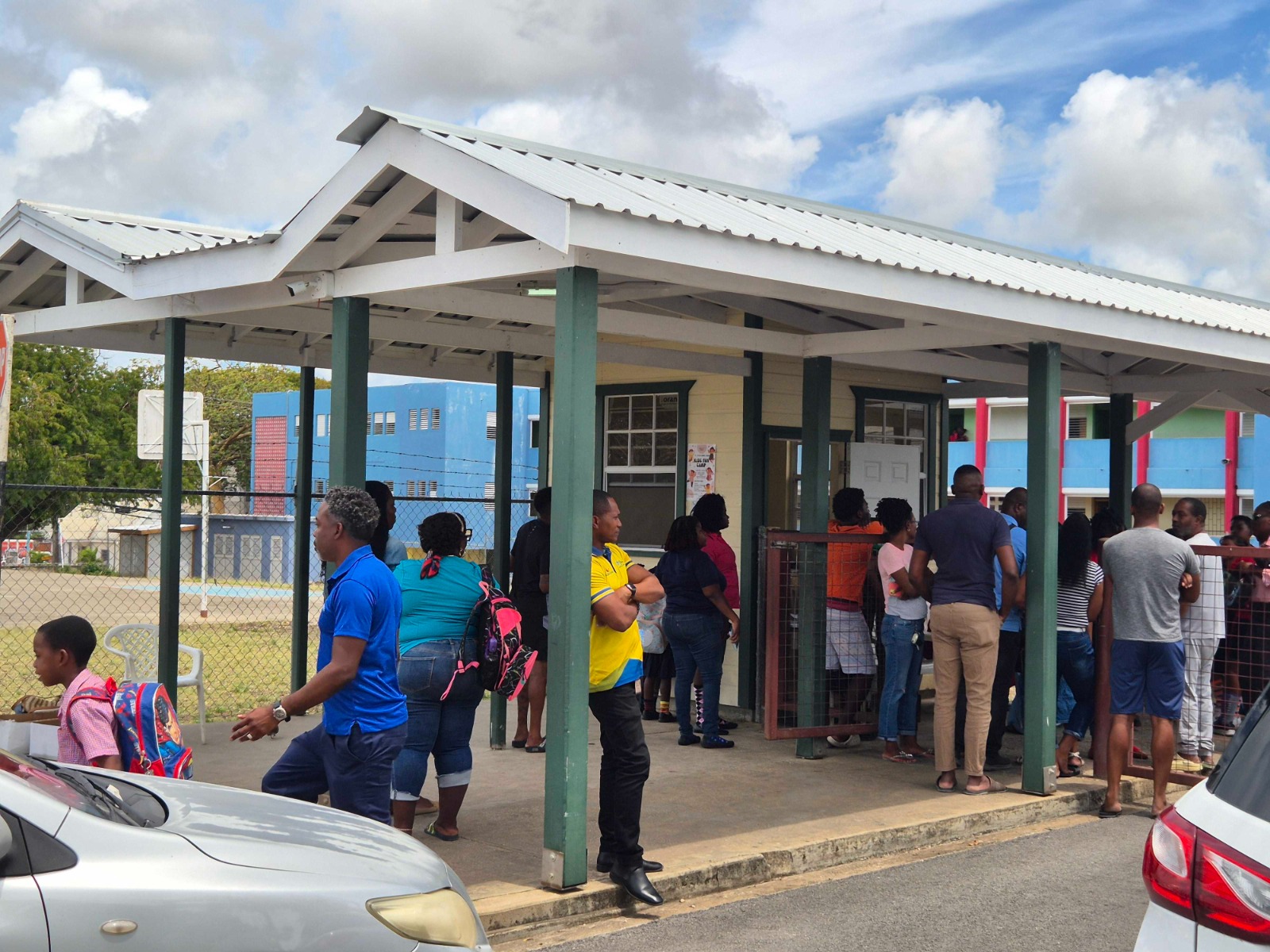
    A premature reopening of Charles F. Broome Memorial School in Barbados culminated in chaotic scenes Friday as parents scrambled to retrieve their children amid unresolved health and sanitation concerns. The institution had been shuttered Wednesday and Thursday following reports of rodent infestation, with education authorities claiming intensive cleaning had resolved the issues.

    Despite official assurances, the school’s compound became a scene of confusion and frustration by mid-morning. Parents arrived in increasing numbers after receiving informal alerts through social media and teacher communications, creating vehicle gridlock around the premises. The Ministry of Education’s declaration of successful remediation proved contradictory to conditions witnessed by staff and students.

    Multiple parents reported receiving no formal notification from administration, learning of the developing situation exclusively through WhatsApp groups and personal contacts. Albert Cornibert, one of the concerned parents, expressed sharp criticism: ‘I’m here to pick up my son who was outside for the past couple of hours. It’s nonsense—parents weren’t called or told anything.’

    The Barbados Union of Teachers (BUT) confirmed that health officials had actually recommended keeping the school closed Friday to complete outstanding remedial work. First vice-president Julian Pierre disclosed that staff complained of persistent odors, nausea, and skin irritation upon returning. ‘The Ministry of Health advised against opening today to allow continuation of work,’ Pierre stated, noting evidence of possible rodent droppings and inadequate pest treatment.

    Working parents faced particular hardship, with several describing the need to abruptly leave employment without official explanation from the school. One mother noted: ‘Our teacher called me 20 minutes ago. I had to ask permission from work to rush here. They said the school wasn’t ready, so I’m unsure why they’re open.’

    Students reported continuing sightings of rodents and cockroaches within classrooms, with one child describing rats scratching walls. Parents highlighted broader concerns about sanitary conditions in primary schools, particularly regarding bathroom facilities and pest control protocols.

    The Ministry of Education Transformation eventually announced an early closure at noon citing ‘lingering odours from industrial cleaning,’ apologizing for the inconvenience while maintaining the school had been properly prepared for operation. The incident has raised significant questions about communication protocols and health standards within Barbados’s educational system.

  • Teachers’ union demands probe after staff, pupils fall ill at Mount Tabor Primary

    Teachers’ union demands probe after staff, pupils fall ill at Mount Tabor Primary

    The Barbados Union of Teachers (BUT) has issued an urgent call for revised safety protocols following a hazardous agricultural spraying incident that caused multiple health emergencies at two educational institutions this week. The primary incident occurred at Mount Tabor Primary School in St. John on Wednesday when pesticide drift from a nearby field enveloped the school compound, resulting in numerous students and staff experiencing acute physical symptoms.

    According to Julian Pierre, First Vice-President of BUT, exposed individuals exhibited concerning symptoms including respiratory distress, persistent nausea, severe skin and eye irritation, and in at least one documented case, vomiting. The situation prompted serious concerns about environmental safety standards in school vicinities.

    The union has sharply criticized the Ministry of Education’s response, particularly the decision to keep Mount Tabor Primary operational following the incident. Simultaneously, Charles F. Broome Memorial School faced comparable environmental health concerns, leading to its premature closure on Friday as a precautionary measure.

    Pierre highlighted systemic issues in official response protocols, noting that school administrators frequently receive instructions to ‘monitor the situation’ rather than implement immediate protective measures. He emphasized that such responses violate both ethical standards and the provisions of the Safety and Health at Work Act, which mandates removal of individuals from hazardous environments.

    The BUT is now advocating for comprehensive reforms in incident management procedures, including automatic school closures during environmental health threats, established evacuation protocols, and clearer inter-agency coordination between educational and agricultural authorities to prevent future occurrences.

  • Oral Health : The Ministry Launches a Call for National Mobilization

    Oral Health : The Ministry Launches a Call for National Mobilization

    In a decisive response to a growing public health crisis, Haiti’s Ministry of Public Health has initiated a nationwide mobilization campaign targeting oral healthcare deficiencies. The initiative, unveiled on March 20, 2026, coincides with World Oral Health Day observances organized under the thematic banner “A Healthy Mouth for a Happy Life.”

    Recent epidemiological data reveals a dire dental health situation across the Caribbean nation, with epidemiological surveys indicating that over 60% of Haitian children currently suffer from untreated dental caries. The adult population demonstrates similarly concerning trends, exhibiting high prevalence rates of periodontal diseases primarily attributed to inadequate oral hygiene practices and severely limited access to professional dental services.

    Medical authorities have highlighted the established connection between poor oral health and the development of chronic non-communicable diseases. Scientific evidence confirms significant correlations with diabetes mellitus, cardiovascular pathologies, and certain oncological conditions, all sharing common behavioral risk factors including excessive sugar consumption, tobacco use, and alcohol intake.

    Public health officials emphasize that many oral health complications are preventable through straightforward interventions. Recommended preventive measures include maintaining rigorous oral hygiene protocols, adopting nutritionally balanced diets with reduced sugar content, and scheduling regular dental examinations.

    The Health Ministry has reaffirmed its institutional commitment to enhancing preventive dentistry frameworks and expanding accessibility to quality oral healthcare services, particularly targeting socioeconomically vulnerable demographics. Government authorities are urging coordinated action from all societal stakeholders to elevate dental health to national priority status.

    Dental professionals across Haiti are receiving specific directives to intensify their participation in public education initiatives and awareness-building campaigns. These efforts will particularly focus on pediatric populations and high-risk demographic groups, aiming to institute sustainable behavioral modifications and improve long-term health outcomes.

  • Dominican Republic improves in world happiness ranking and rises five positions in 2026

    Dominican Republic improves in world happiness ranking and rises five positions in 2026

    The Dominican Republic has demonstrated significant progress in national well-being, ascending five positions in the latest World Happiness Report from 69th to 64th place among 136 evaluated nations. This advancement coincides with global celebrations of the International Day of Happiness, highlighting the Caribbean nation’s improving quality of life metrics.

    The comprehensive report employs a multifaceted methodology that extends beyond subjective emotional states. Researchers analyze six critical indicators: GDP per capita, social support systems, healthy life expectancy, personal freedom in life choices, generosity within society, and perceptions of corruption. This data-driven approach provides an objective framework for comparing national well-being across diverse cultural contexts.

    Notably, Nordic nations continue to dominate the global happiness landscape. Finland maintains its top position for the seventh consecutive year, followed closely by Iceland and Denmark. Costa Rica emerged as the highest-ranking Latin American nation at an impressive fourth place, surpassing many wealthier European countries.

    The Dominican Republic joins several nations demonstrating remarkable happiness growth, including China, Mongolia, Philippines, Togo, Nicaragua and Vietnam. Meanwhile, the United States experienced minimal movement, advancing merely one position from 24th to 23rd place.

    Experts emphasize that sustainable national happiness stems from structural foundations and policy implementations rather than transient emotional states. The report underscores how institutional frameworks and governance quality directly influence citizen well-being. While the Dominican Republic’s progress indicates positive development in social and economic dimensions, analysts note continued challenges in maintaining this upward trajectory toward higher global rankings.

  • Cap

    Cap

    The municipal government of Cap-Haitien has launched a multi-faceted response initiative to address the devastating aftermath of the Cluny Market fire that recently engulfed the commercial hub. Since the catastrophic incident, local authorities have maintained continuous cleanup and debris removal operations throughout the affected market area and surrounding perimeter.

    In a significant step toward coordinated recovery, the Administration convened dual working sessions on March 19, 2026, with representatives from the merchants’ committee. These meetings aimed to enhance collaboration between municipal authorities and affected business owners regarding priority actions and sustainable solutions.

    Economic rehabilitation efforts include facilitating access to credit facilities and various financial support mechanisms to enable vendors to restart their commercial operations. Concurrently, the City Hall is engaging in high-level discussions with national government entities to establish an expedited support mechanism specifically tailored to fire-affected merchants.

    Infrastructure and security enhancements form another critical component of the recovery plan. Municipal technicians are developing comprehensive market usage regulations and implementing strengthened security protocols to prevent future incidents. Technical assessment teams, accompanied by partner organizations, continue to evaluate the damage scope through ongoing site visits.

    These coordinated efforts represent a forward-looking vision to reconstruct a more organized, secure, and modernized market facility that will better serve the community’s commercial needs while incorporating improved safety standards.

  • ABLP Selects Benjamin for St Mary’s North, Beazer to Contest Barbuda Seat

    ABLP Selects Benjamin for St Mary’s North, Beazer to Contest Barbuda Seat

    In a significant political realignment, the Antigua and Barbuda Labour Party (ABLP) has announced dramatic candidate changes for two crucial constituencies. The party has selected physician Dr. Philmore Benjamin to contest the St Mary’s North seat, replacing veteran parliamentarian Sir Molwyn Joseph. Simultaneously, environmental advocate Kendra Beazer has been nominated as the ABLP’s candidate for Barbuda.

    The political reshuffling comes amid mounting speculation about an impending snap general election, with both appointments scheduled for formal ratification at the party’s delegates convention on April 12th. Dr. Benjamin, who defected from the opposition United Progressive Party (UPP) last year, currently serves as a medical consultant to community clinics. His selection represents a strategic infusion of professional expertise into the ABLP’s electoral roster.

    Ms. Beazer, a former Barbuda Council member who previously represented the Barbuda People’s Movement (BPM), will now challenge long-serving MP Trevor Walker. This nomination marks a bold attempt to reclaim a seat the ABLP has not held since 2017. The BPM has maintained political dominance in Barbuda, demonstrated by their comprehensive victory in the recent 2025 Barbuda Council elections.

    Political analysts interpret these candidate changes as a calculated repositioning strategy by the ruling party. The selection of both figures—each with cross-party appeal and established community credentials—suggests the ABLP is pursuing a broader coalition-building approach ahead of potential electoral contests. The moves also indicate potential internal restructuring within the party’s leadership hierarchy as it prepares for possible political challenges.

  • Police Brace for Retaliation After Brutal San Pedro Triple Murder

    Police Brace for Retaliation After Brutal San Pedro Triple Murder

    The tranquil facade of Ambergris Caye has been shattered by a brazen triple murder that has plunged the island community of San Pedro into a state of heightened tension and fear. Authorities are now engaged in a critical race against time to prevent retaliatory violence between warring drug factions following the execution-style killings on March 20, 2026.

    The victims—identified as 29-year-old fisherman Karim Espat, 35-year-old carpenter Oscar Mas, and 21-year-old Honduran national Yerlin Alvarez—were ambushed inside a residence in the Mosquito Coast area by multiple assailants. According to police reports, three hooded gunmen approached the property through a nearby landfill around 9:30 p.m. before storming the yard and unleashing a barrage of gunfire in what investigators describe as a targeted attack.

    Assistant Commissioner Hilberto Romero, Head of the National Crime Investigation Branch, confirmed that Espat was the primary target of the assault, citing an ongoing and volatile rivalry between drug trafficking organizations operating on the island. The Espat family name has been repeatedly connected to violent incidents and gang-related investigations in San Pedro over recent years, with Karim Espat himself having faced multiple previous charges. His brother, Christian Espat, is currently remanded for a separate triple murder case.

    In response to the escalating crisis, police have implemented emergency security measures, including the deployment of additional personnel from the major crimes team and the establishment of intensified armed patrols across the island. Several suspects are already in custody as investigators work to unravel the precise circumstances surrounding the attack.

    The community remains gripped by apprehension, with residents expressing concerns about potential retaliation and further violence. Senior police commanders, including Deputy Commissioner Alden Dawson and Senior Superintendent Raymundo Reyes, have convened at the San Pedro Police Station to coordinate the security response and investigation efforts.

    This incident represents one of the most severe outbreaks of violence to affect the island in recent months, highlighting the persistent challenge of gang-related crime even in Belize’s popular tourist destinations. Authorities continue to urge calm while maintaining their heightened security presence across San Pedro.

  • Torengebouw Financiën wordt gerestaureerd

    Torengebouw Financiën wordt gerestaureerd

    The Surinamese government has allocated $2 million for the comprehensive renovation of the historic Finance Tower Building, with initial stabilization work scheduled to begin in April. This restoration forms a crucial component of the broader $30 million Paramaribo Urban Rehabilitation Program II (PURP-2), implemented in collaboration with the Inter-American Development Bank (IDB).

    The century-old structure, recognized as a significant heritage landmark in Paramaribo’s historic city center, will undergo extensive conservation efforts. According to the Ministry of Finance and Planning, the project transcends mere architectural restoration by incorporating sustainable repurposing strategies aimed at generating revenue streams and boosting tourism.

    KDV Architects has secured the design and supervision contract for the ambitious project. Simultaneously, government officials are conducting negotiations regarding the building’s future operational model, emphasizing economic viability as a primary consideration. The planning phase addresses multiple environmental factors including parking infrastructure, homelessness concerns in the vicinity, fire safety protocols, and crisis management preparedness.

    Temporary emergency measures will be implemented imminently to prevent further structural deterioration, based on technical assessments identifying urgent needs. These include sealing openings, repairing leaks, and stabilizing compromised structural elements. The full-scale restoration is slated to commence by April 2027, with project completion anticipated by April 2028. A comprehensive maintenance plan for the operational phase is currently in development.