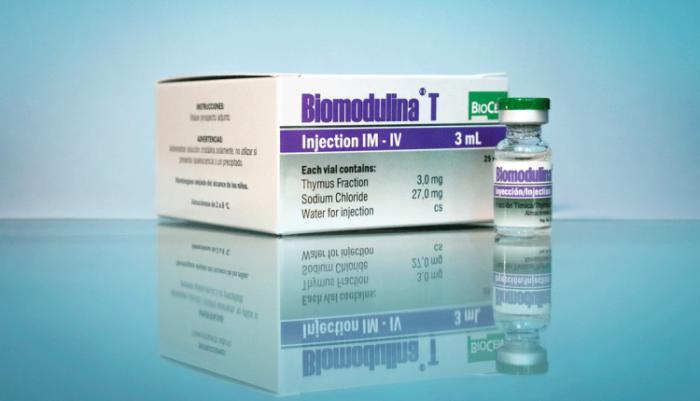
Cuban President Miguel Díaz-Canel Bermúdez emphasized on Tuesday the importance of integrating Biomodulin T into primary health care across Cuban communities. During a meeting with health experts at the Palace of the Revolution, he urged that medical professionals be adequately trained to prescribe this innovative treatment. The discussion highlighted the significant role of Biomodulin T, a bovine thymus extract-based drug, in addressing immune dysfunction and recurrent infections, particularly among the elderly. Clinical trials involving nearly 9,000 nursing home residents demonstrated a remarkable reduction in acute respiratory infections (ARI) by over five times, and a 50% decrease in mortality risk compared to those outside such facilities. The drug also showed a 70% reduction in respiratory infection incidence among the elderly, a leading cause of death in Cuban nursing homes. Additionally, Biomodulin T has proven effective in oncology, rejuvenating patients’ immune systems when combined with chemotherapy and immunotherapy. It has also been successful in treating thymic hypoplasia in children, with 83% of treated children achieving normalized thymus size and function, and 71% showing clinical improvement. Given these promising results, President Díaz-Canel called for expedited efforts to incorporate Biomodulin T into national health strategies, especially in light of Cuba’s aging population. The drug, which gained prominence during the COVID-19 pandemic with over 1.9 million units distributed and more than 238,000 patients treated, has been recognized with two awards from the Academy of Sciences in 2022 for its efficacy in treating lung cancer and its immunomodulatory effects in older adults.
博客
-

Cuba has never stood idly by
In a comprehensive interview with Spanish journalist Ignacio Ramonet, Cuban President Miguel Díaz-Canel addressed the pressing economic challenges facing Cuba, the impact of the U.S. blockade, and the nation’s efforts toward regional integration. The discussion, held at the Palace of the Revolution on May 11, 2024, delved into three key areas: domestic policy, the economy, and international relations.
**Domestic Policy and Economic Hardships**
Díaz-Canel acknowledged the severe difficulties faced by Cuban families, including food shortages, inflation, and public service deficits. He attributed these issues primarily to the U.S. economic blockade, which has been in place for over six decades. The President emphasized that the blockade has intensified under recent U.S. administrations, particularly with the inclusion of Cuba in the U.S. list of state sponsors of terrorism. This has further restricted Cuba’s access to international financial systems and foreign investment.The President highlighted Cuba’s resilience and creative resistance in the face of these challenges. Despite the blockade, Cuba has managed to maintain social programs and economic activity, albeit at a reduced capacity. Díaz-Canel pointed to the COVID-19 pandemic as a critical moment when Cuba prioritized saving lives, diverting limited resources to healthcare and vaccine development.
**Economic Measures and Future Plans**
Díaz-Canel outlined Cuba’s Macroeconomic Stabilization Program, aimed at addressing inflation, exchange rate issues, and fiscal imbalances. The program, which extends to 2030, focuses on stimulating domestic production, particularly in agriculture, to achieve food sovereignty. The President also discussed the role of micro, small, and medium-sized enterprises (MSMEs) in diversifying the economy and fostering innovation.**International Relations and Regional Integration**
On the international front, Díaz-Canel criticized the U.S. government for maintaining the blockade despite widespread global condemnation. He expressed Cuba’s willingness to engage in dialogue with the U.S. on equal terms but stressed that the blockade must be lifted unilaterally. The President also highlighted Cuba’s participation in regional alliances, such as the Eurasian Economic Union and its aspirations to join the BRICS group, as part of its strategy to counter U.S. hegemony and foster South-South cooperation.**Regional Challenges and Solidarity**
Díaz-Canel addressed the political and economic crises in Latin America and the Caribbean, emphasizing Cuba’s commitment to regional solidarity and integration. He condemned U.S. interference in the region and reaffirmed Cuba’s support for progressive governments and movements. The President also highlighted Cuba’s contributions to regional health and education, including the deployment of medical brigades to Haiti and other countries.In conclusion, Díaz-Canel expressed optimism about Cuba’s future, emphasizing the nation’s resilience, creativity, and commitment to social justice. He called for greater international cooperation and solidarity to overcome the challenges posed by the U.S. blockade and to build a more equitable world.
-
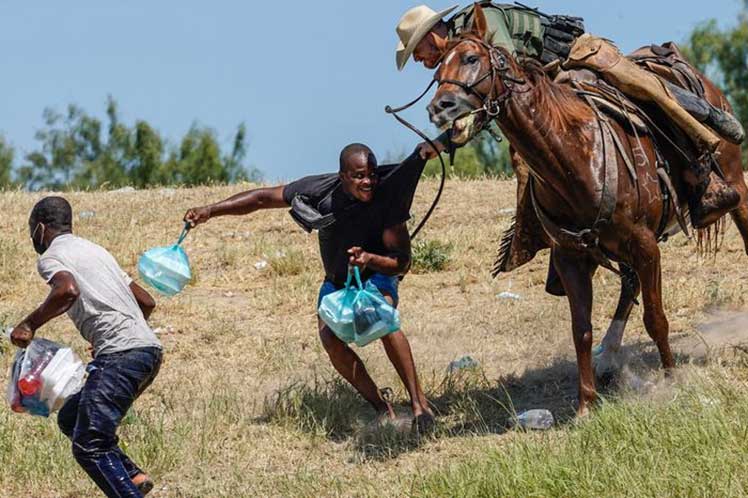
Cuba criticizes inhumane treatment of migrants on US southern border
The United States is confronting widespread international criticism following the emergence of disturbing images showing border patrol agents on horseback aggressively pursuing Haitian migrants near the Texas-Mexico border. The incident has sparked diplomatic protests and raised serious questions about America’s treatment of asylum seekers.
Cuban President Miguel Díaz-Canel launched a sharp critique via social media, posting photographs of the border operations with the pointed question: “Who spoke of Human Rights?” This sentiment was echoed by Cuban Foreign Minister Bruno Rodríguez, who characterized the treatment of Haitian migrants as demonstrating “racist contempt” among US border enforcement personnel.
The controversy centers around the Del Río sector where approximately 500 Haitian nationals had established a makeshift camp beneath the international bridge connecting Acuña, Mexico with Del Río, Texas. Following a significant border crossing attempt last Sunday, US authorities initiated mass deportations of the predominantly Haitian migrants.
The visual documentation of mounted border officers charging toward migrants triggered immediate international repudiation, with critics condemning the operation’s apparent brutality. Haiti’s state Office for Citizen Protection formally criticized the treatment and urged US authorities to collaborate with involved governments to develop humane solutions.
In response to the expulsions, a coalition of US-based Haitian lawyers announced plans to pursue legal action to halt what they characterize as summary removals that potentially violate asylum protocols.
The current migration surge stems from Haiti’s severe multidimensional crisis as the poorest nation in the Western Hemisphere. A combination of recent natural disasters, political instability following President Jovenel Moïse’s assassination, and pandemic-related economic collapse has created desperate conditions driving population displacement.
-
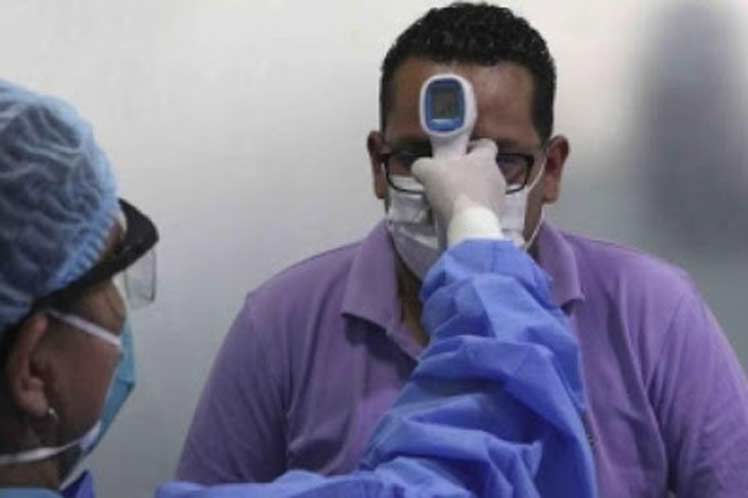
Cuba reported 7,151 Covid-19 cases and 59 deaths
Cuban health authorities have provided a comprehensive update on the nation’s COVID-19 situation, revealing significant epidemiological data since the pandemic’s onset. Dr. Francisco Durán, the National Director of Epidemiology at the Ministry of Public Health, delivered the latest statistics during his regular televised briefing, offering a detailed breakdown of the country’s pandemic response.
According to the official figures, Cuba has recorded a cumulative total of 825,351 confirmed coronavirus cases since March 11, 2020, with the pandemic claiming 6,978 lives on the island nation. The current hospitalization numbers present a complex picture of the pandemic’s status, with 90,027 individuals receiving medical care in hospitals across the country.
The hospitalization data reveals three distinct patient categories: 46,548 individuals are classified as suspected cases undergoing observation and testing; 3,162 people are under formal epidemiological surveillance due to confirmed exposure risks; and 40,317 are confirmed active patients receiving treatment for COVID-19.
Testing capacity remains a critical component of Cuba’s pandemic response. Health officials reported that 53,249 laboratory samples were processed this Tuesday alone to detect the SARS-CoV-2 virus. This daily testing effort contributes to a substantial national total of 9,165,377 real-time PCR tests conducted since the pandemic began, demonstrating the country’s extensive diagnostic capabilities.
The regular briefings by Dr. Durán have become a cornerstone of Cuba’s public health communication strategy, providing transparent data to citizens and international observers alike. These updates offer valuable insights into both the historical progression and current status of the pandemic within Cuba’s unique healthcare system.
-
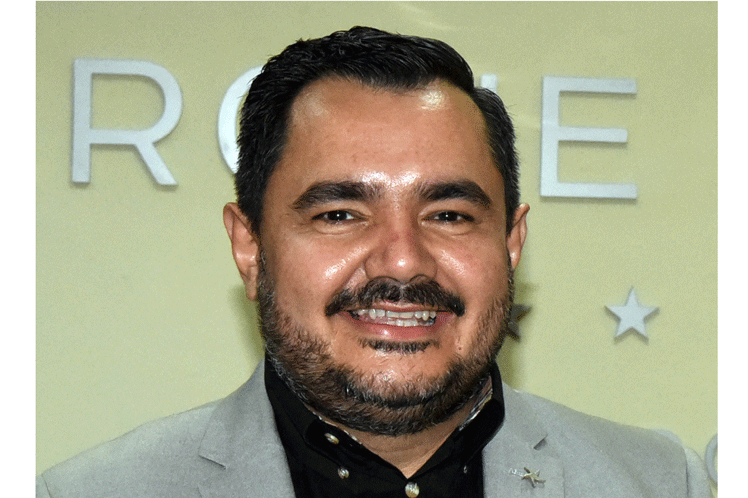
Iberostar consolidates operations in Cuba
In a strategic move to enhance the Caribbean tourism sector’s competitive edge, Iberostar Group has unveiled a comprehensive vertical integration strategy. Marketing Director Alexeis Torres disclosed to Prensa Latina that the hospitality giant established Caribbean Hotel Logistics, a specialized supplying company operating within Cuba’s Special Development Zone (ZEDM) two years ago.
This supply chain venture, while functioning as an independent entity, serves as a critical component in Iberostar’s value chain by providing diverse food, beverage, and raw material provisions not only to Iberostar properties but also to other hotel operators throughout the Caribbean region.
Torres emphasized that this logistical infrastructure represents a significant value-added enhancement that completes the tourism service ecosystem. The integration strategy extends beyond supply chain management with Wednesday’s scheduled inauguration of Worldtofly airline’s inaugural flight in Cuba. As another Iberostar-owned subsidiary, the aviation venture will further strengthen the group’s comprehensive service offering.
Addressing pandemic recovery challenges, Torres noted that the COVID-19 crisis had previously forced a global tourism pause, making reactivation a gradual process. He identified improved air connectivity as a crucial factor in facilitating the Caribbean tourism industry’s recovery, with Worldtofly positioned to contribute significantly to this revitalization effort.
-
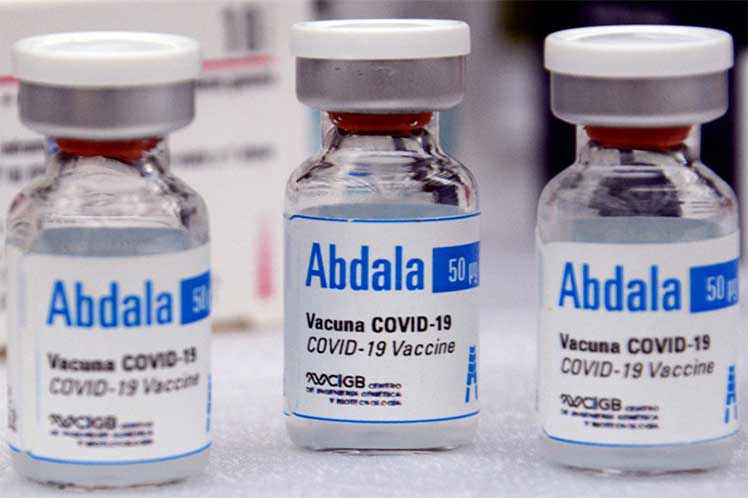
Cuban vaccine Abdala highly effective in severe Covid-19 cases
Cuba’s leading scientific institutions have achieved a significant breakthrough in COVID-19 vaccine development, with the Abdala immunogen demonstrating remarkable efficacy against the virus. According to official reports from Granma newspaper, the vaccine received emergency use authorization in July following rigorous clinical trials that established a 92.28% efficacy rate in disease prevention.
The vaccine’s effectiveness was confirmed during a critical period of Delta variant propagation across global populations, providing crucial data on its performance against this highly contagious strain. Dr. Marta Ayala, General Director of the Center for Genetic Engineering and Biotechnology (CIGB), provided important scientific clarification regarding the terminology: ‘Efficacy should not be confused with effectiveness, as the former is determined within the controlled environment of clinical studies under ideal research conditions, while effectiveness is analyzed in real-world circumstances.’
Cuban researchers from both CIGB and the Finlay Vaccine Institute have recently presented their comprehensive scientific findings to the World Health Organization. The submission includes complete documentation of the research methodology, formulation processes, production standards, testing protocols, and application results. This presentation marks a significant step toward obtaining international validation and WHO emergency use listing, which would facilitate global distribution and recognition of Cuba’s sovereign vaccine development capabilities.
-
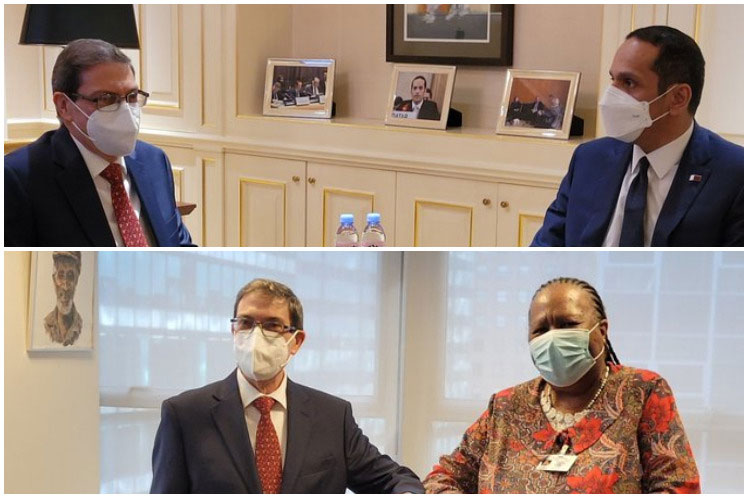
Cuban FM meets with counterparts from Qatar and S. Africa at UN
Cuban Foreign Minister Bruno Rodríguez has conducted a series of high-level diplomatic meetings during the 76th session of the United Nations General Assembly in New York. The senior diplomat engaged with prominent international counterparts, including Qatar’s Deputy Prime Minister and Foreign Minister Sheikh Mohammed bin Abdulrahman Al-Thani, and South Africa’s Minister of International Relations and Cooperation, Naledi Pandor.
Through his official Twitter account, Minister Rodríguez expressed considerable satisfaction with the current state of Cuba’s political relationships with both nations. The discussions, held within the framework of the UNGA’s high-level segment running through September 27th, focused on strengthening international cooperation and bilateral partnerships.
Regarding the meeting with Qatari officials, Rodríguez emphasized the positive development of political relations between Havana and Doha. In his separate engagement with South African representatives, the Foreign Minister highlighted the excellent condition of bilateral relations, noting the historical friendship and solidarity between the two nations that has been notably strengthened throughout the challenges presented by the global pandemic.
These diplomatic exchanges form part of Cuba’s ongoing efforts to maintain and enhance its international relationships through multilateral forums like the United Nations, where matters of global significance are addressed through diplomatic dialogue and cooperation.
-
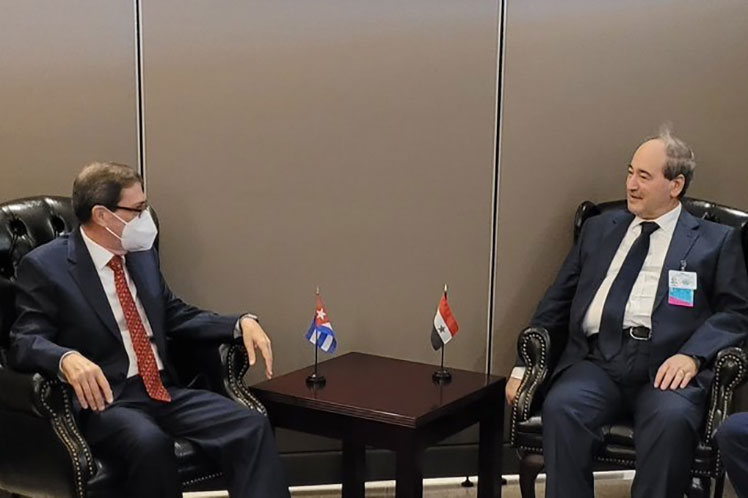
Cuba and Syria confirm positive political relations at the UN
Cuban Foreign Minister Bruno Rodríguez has utilized his official Twitter platform to announce a concerted diplomatic push to deepen economic and cooperative relationships with partner nations. The declaration comes as the minister participates in the high-level segment of the 76th United Nations General Assembly (UNGA) in New York, a premier gathering for global diplomacy set to conclude on September 27th.
Minister Rodríguez is actively engaging in a series of bilateral meetings with his counterparts from various nations on the sidelines of the assembly. This practice is a standard feature of the annual UN event, providing a critical forum for high-ranking dignitaries and diplomatic envoys to conduct in-person negotiations and strengthen multilateral ties.
The broader context of these diplomatic exchanges is the UNGA’s high-level general debate, where the international community’s focus is sharply trained on two paramount global challenges: the ongoing COVID-19 pandemic and the escalating climate crisis. These overarching themes are shaping discussions and fostering alliances aimed at crafting coordinated international responses.
-
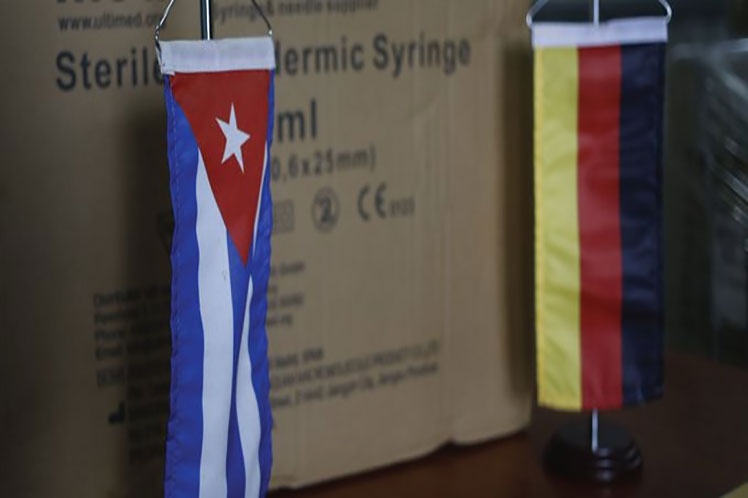
Cuba welcomes new donation of syringes from Germany
In a significant display of international solidarity, German travel agency AvenTOURa GmbH has delivered humanitarian assistance to support Cuba’s ongoing battle against the COVID-19 pandemic. The donation arrives as the Caribbean nation continues its immunization campaign amid challenging economic circumstances.
Aldo Grandal Sosa, Head of Medical Collaboration at Cuba’s Ministry of Public Health (MINSAP), confirmed that the medical supplies would be promptly distributed across vaccination centers nationwide. He emphasized the critical timing of this support, noting Cuba’s ongoing efforts to maintain adequate resource coverage against SARS-CoV-2 despite external pressures.
The official specifically referenced what Cuban authorities describe as ‘the genocidal and criminal economic, commercial and financial blockade’ imposed by the United States government, which they assert has been intensified throughout the pandemic period. This context, according to Sosa, magnifies the importance of international humanitarian cooperation.
Christoph Blaha, legal representative of AvenTOURa GmbH in Cuba, articulated the company’s philosophical approach to international relations. ‘Our mission centers on building bridges rather than walls, bringing cultures closer instead of separating them, and fostering mutual understanding,’ Blaha stated. The aid package specifically aims to enhance Cuba’s capacity to combat COVID-19 effectively.
Established in 1995, AvenTOURa GmbH specializes in organizing small-group and individual tourism experiences. The company has included Cuba as a destination since 1997, developing substantial ties with the country over nearly a quarter-century of operation. This donation represents an extension of their long-standing relationship with the Cuban people, transcending typical commercial interests to address urgent public health needs.
-
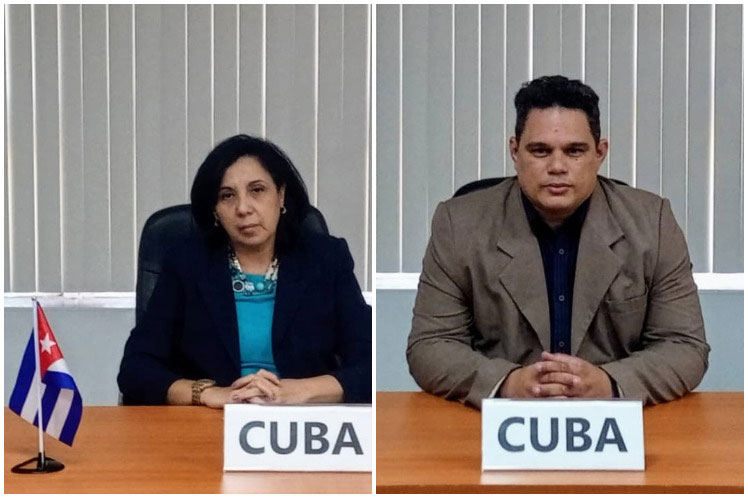
Cuba defends application of data science at PAHO
Cuban health officials presented the nation’s advanced digital health strategy during the 59th Executive Council meeting of the Pan-American Health Organization (PAHO), highlighting how technological innovation has strengthened pandemic response capabilities. Dr. Ileana Morales, Director of Science and Technological Innovation at Cuba’s Ministry of Public Health (MINSAP), detailed how digital tools have enabled real-time data processing for more effective epidemiological management throughout the COVID-19 crisis.
Dr. Morales emphasized Cuba’s comprehensive approach to health information systems development, which centers on specialized training for professionals in technology and university programs. The country has made significant advancements in cutting-edge medical fields including medical robotics, precision medicine, nanoscience, and neuroscience—all disciplines that demand sophisticated data processing capabilities for large-volume information assimilation.
Karel Barthelemy, MINSAP’s Director of Information Technology and Communications, addressed the substantial challenges of digital transformation in healthcare, stressing the necessity for tailored designs that accommodate each nation’s unique characteristics. He outlined several operational computer solutions currently deployed in Cuba, including research platforms, laboratory results monitoring systems, hospital bed availability trackers, clinical laboratory information management, and vaccinated population databases.
A critical component of Cuba’s strategy involves employing Big Data analytics and mathematical modeling to predict viral behavior patterns within populations. These predictive tools enable health authorities to refine national response plans and continuously update patient care protocols based on empirical evidence.
Both officials emphasized the importance of regional cooperation, noting that successful implementation of digital transformation roadmaps across the Americas requires strengthened collaboration between PAHO and member states. Such partnerships would facilitate knowledge exchange and accelerate progress toward developing shared technological platforms that benefit the entire region.