博客

  • CARICOM to Send Humanitarian Supplies to Cuba

    CARICOM to Send Humanitarian Supplies to Cuba

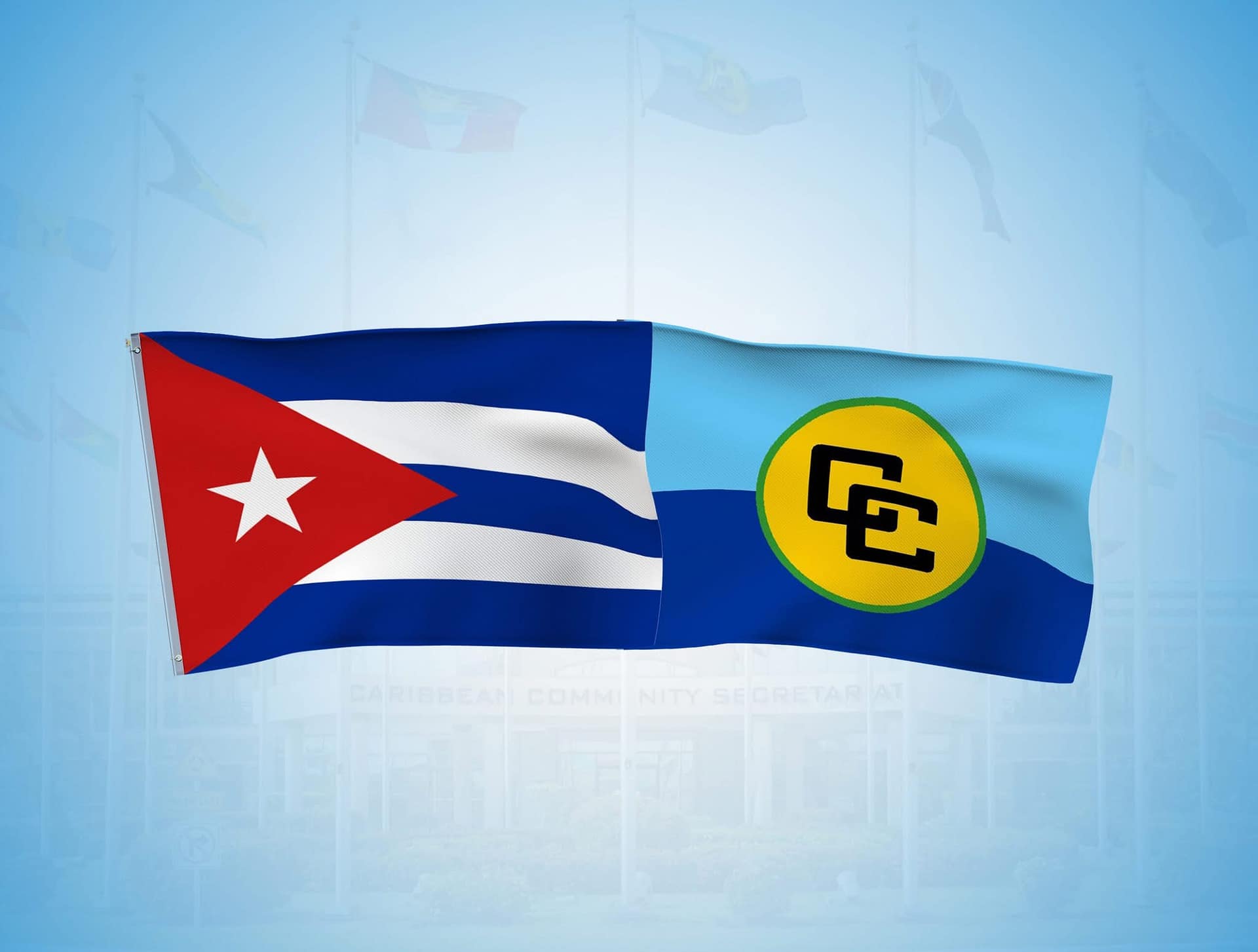
    In a significant demonstration of regional solidarity, Caribbean Community (CARICOM) nations have mobilized to deliver critical humanitarian assistance to Cuba. This coordinated effort was formally approved during the bloc’s 50th Regular Meeting of the Conference of Heads of Government, convened in St. Kitts and Nevis in February 2026.

    Under the leadership of CARICOM Chairman Dr. Terrance Drew, the initiative represents a comprehensive regional response to address pressing needs in Cuba. The CARICOM Secretariat, headquartered in Georgetown, Guyana, is coordinating the multinational operation to procure and transport essential supplies.

    The humanitarian consignment encompasses multiple categories of vital goods: nutritional supplements including powdered milk and infant formula; stable food commodities such as beans, wheat flour, rice, and canned provisions; fundamental medical materials; and sustainable energy equipment including solar panels, batteries, and water storage systems.

    Adding substantial logistical capability to the mission, the Government of Mexico has pledged strategic partnership in identifying reliable suppliers and facilitating complex transportation arrangements. Mexican authorities have further committed to covering all shipping costs for transporting the aid from Mexico to Cuban ports.

    This collaborative endeavor exemplifies the deepening ties within the broader Latin American and Caribbean region, forming part of ongoing multilateral cooperation initiatives designed to support Cuba during current periods of challenge. The operation highlights how regional blocs can effectively coordinate humanitarian responses through shared resources and diplomatic coordination.

  • Haiti Police Accused of “Summary Executions” Amid Rising Gang Violence

    Haiti Police Accused of “Summary Executions” Amid Rising Gang Violence

    A damning United Nations report has unveiled a catastrophic human rights situation in Haiti, documenting over 5,500 fatalities between March 2025 and January 2026 as criminal syndicates expand their territorial control beyond the capital. The comprehensive assessment from the UN Human Rights Office reveals that escalating violence has displaced approximately 1.4 million residents while gangs systematically consolidate authority over critical transportation corridors that fund their operations.

    Civilians face multidimensional threats including targeted killings, widespread abductions, child trafficking networks, and systematic extortion schemes. Particularly disturbing are accounts of victims being executed and subsequently burned. Those perceived as resisting gang authority face brutal retaliatory measures, including arbitrary detention under gang-organized judicial parodies and coercive financial demands for release.

    Alarmingly, the report documents nearly 250 instances of “actual or attempted summary executions” perpetrated by Haitian police forces, characterized by “unnecessary or disproportionate” application of force. The crisis has been further complicated by private military operations employing drone strikes and helicopter attacks that may constitute targeted killings without judicial oversight.

    Vigilante justice has emerged as another destabilizing factor, with self-defense groups conducting public lynchings of alleged gang members—actions sometimes allegedly facilitated by police collaboration. UN Human Rights Chief Volker Türk emphasized that sustainable security requires robust judicial mechanisms: “Gang suppression can only achieve lasting success through systematic identification, detention, and prosecution of those financing and organizing criminal activities in accordance with international standards.”

    The report concludes that without immediate accountability measures and institutional strengthening, all stabilization efforts remain fundamentally precarious.

  • “Let Cuba Live”: First International Aid Boat Reaches Cuba

    “Let Cuba Live”: First International Aid Boat Reaches Cuba

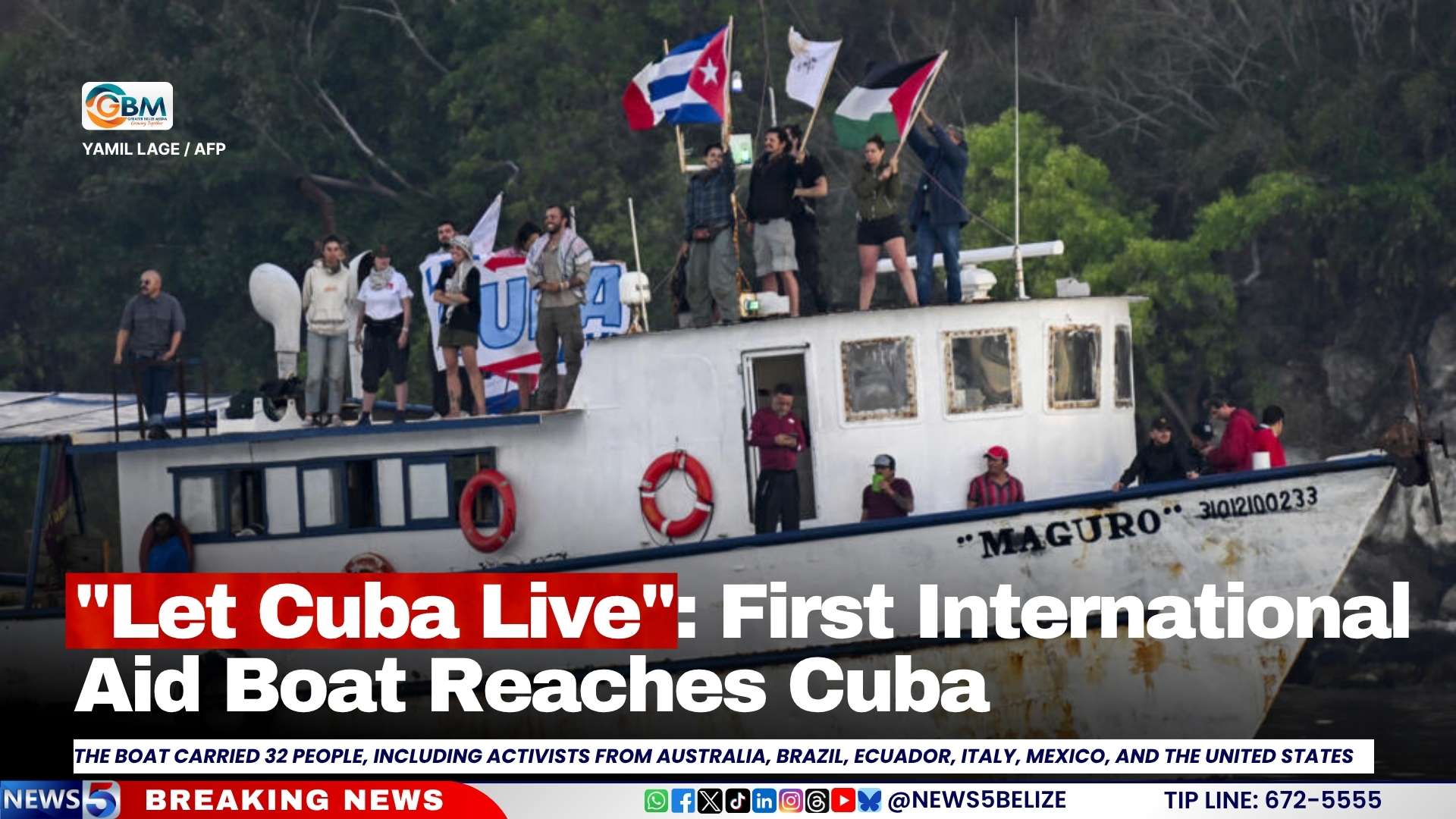
    In a significant humanitarian breakthrough, the first international aid vessel successfully docked in Havana on March 24, 2026, delivering crucial supplies to Cuba during its most severe energy crisis in decades. The Mexican fishing boat Maguro, ceremoniously renamed ‘Granma 2.0’ in homage to the historic vessel that transported Fidel Castro’s revolutionaries in 1956, arrived after navigating formidable maritime challenges including powerful winds, turbulent currents, and technical malfunctions.

    The symbolic arrival featured activists standing atop the cabin holding a banner proclaiming ‘Let Cuba Live’ as the vessel entered Havana’s harbor. This maritime delivery represents the seaborne component of the broader Our America Convoy initiative, which has already transported assistance via aerial routes from multiple continents. The mission carried 32 international volunteers from Australia, Brazil, Ecuador, Italy, Mexico, and the United States.

    Cuba’s current crisis stems from multiple nationwide blackouts caused by antiquated power infrastructure and critical fuel shortages. The situation deteriorated dramatically following January’s military operation ordered by U.S. President Donald Trump that resulted in the capture of Venezuelan leader Nicolás Maduro, effectively severing Cuba’s primary oil supply chain. The U.S. administration has further threatened tariffs against nations attempting to ship petroleum to the island.

    Regional response has intensified through coordinated efforts by CARICOM (Caribbean Community), whose member states have committed to delivering powdered milk, canned goods, medical resources, solar technology, and water storage systems. Mexico has additionally pledged logistical support and financial assistance for transportation costs, signaling growing international concern about Cuba’s deteriorating humanitarian situation.

  • Preliminary results for Roseau City Council Elections reported by Chief Elections Officer

    Preliminary results for Roseau City Council Elections reported by Chief Elections Officer

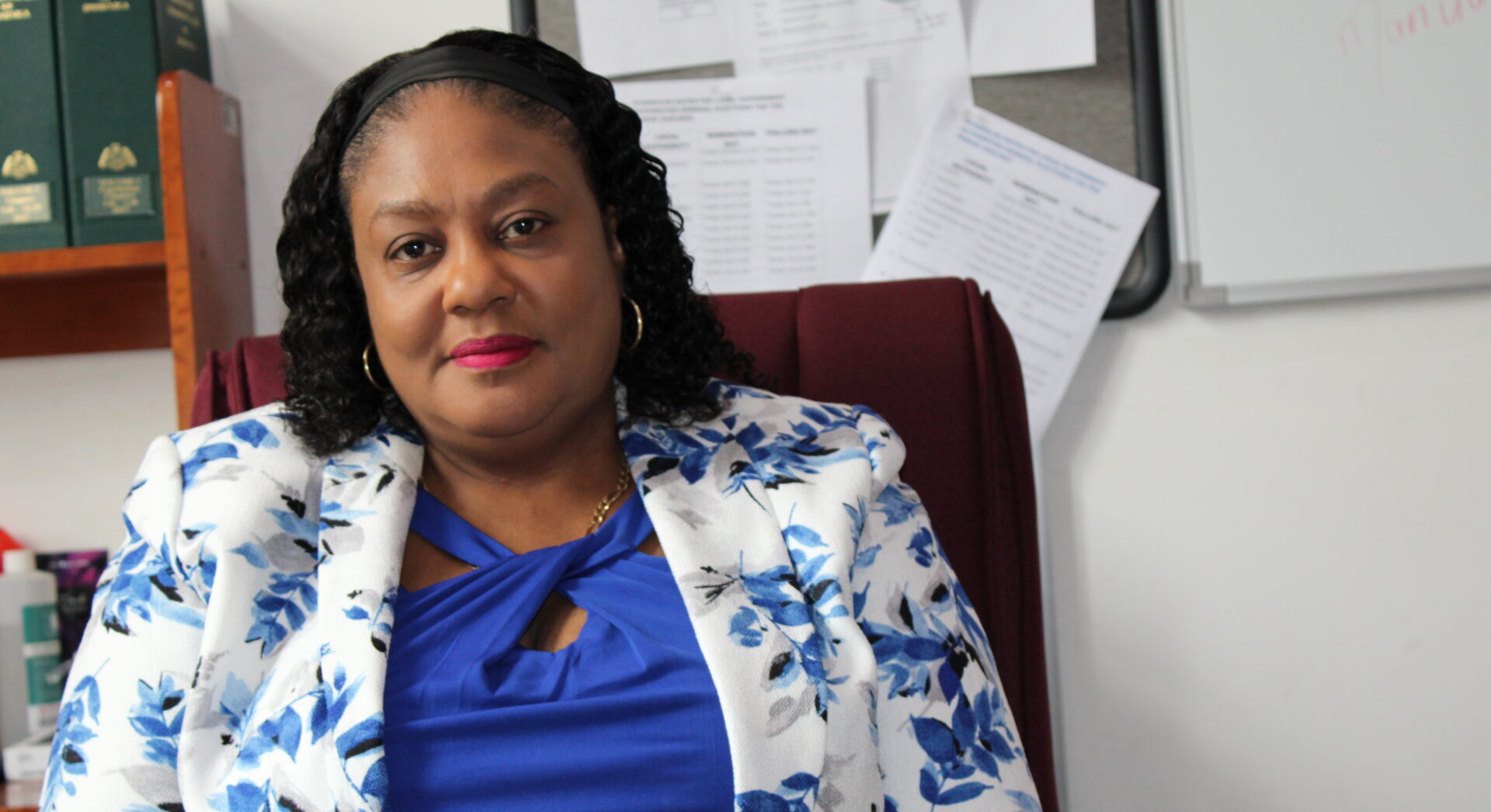
    Roseau, Dominica – Preliminary results from Monday’s Roseau City Council Elections reveal a clear frontrunner, with Chief Elections Officer Anthea Joseph announcing Lucy Belle-Matthew of Fond Cole as the election’s top vote-getter. Representing Ward 4, Belle-Matthew secured a commanding 408 ballots, significantly outpacing her competitors and setting a high bar across all constituencies.

    The electoral breakdown, presented by Joseph, detailed fiercely contested races across the city’s wards. In Ward 4, Belle-Matthew’s decisive victory saw her opponent, Sherman Boston, garner 267 votes, followed by Karleen Beaupierre with 196.

    Ward 1 witnessed an exceptionally tight race. Ermin Royer narrowly clinched the lead with 203 votes, a mere three-vote margin over Moesha Joseph’s 200. The remaining candidates trailed behind: Lenny Jno-Baptiste (185 votes), Samantha Robinson (129), and Kashma Richards (121).

    The Ward 2 contest delivered a more definitive outcome. Paloma Mark emerged victorious with a strong tally of 306 votes. Kenny Jno Baptiste secured second place with 235 votes, followed by Rhoda St. John (149), Kelvin Rolle (127), Jason Jno Baptiste (125), and Dunstan Peters (62).

    In Ward 3, a lower voter turnout was recorded. Quincy Angol led the field with 98 votes, followed by Michael Moreau with 80, and Christina Sobers with 31.

    The announcement of these preliminary figures marks a critical step in the democratic process, setting the stage for the formal certification of new council members. The results indicate diverse voter engagement levels across the different wards of the capital.

  • Police Constable Wins Constitutional Battle After Nine Years in Legal Limbo

    Police Constable Wins Constitutional Battle After Nine Years in Legal Limbo

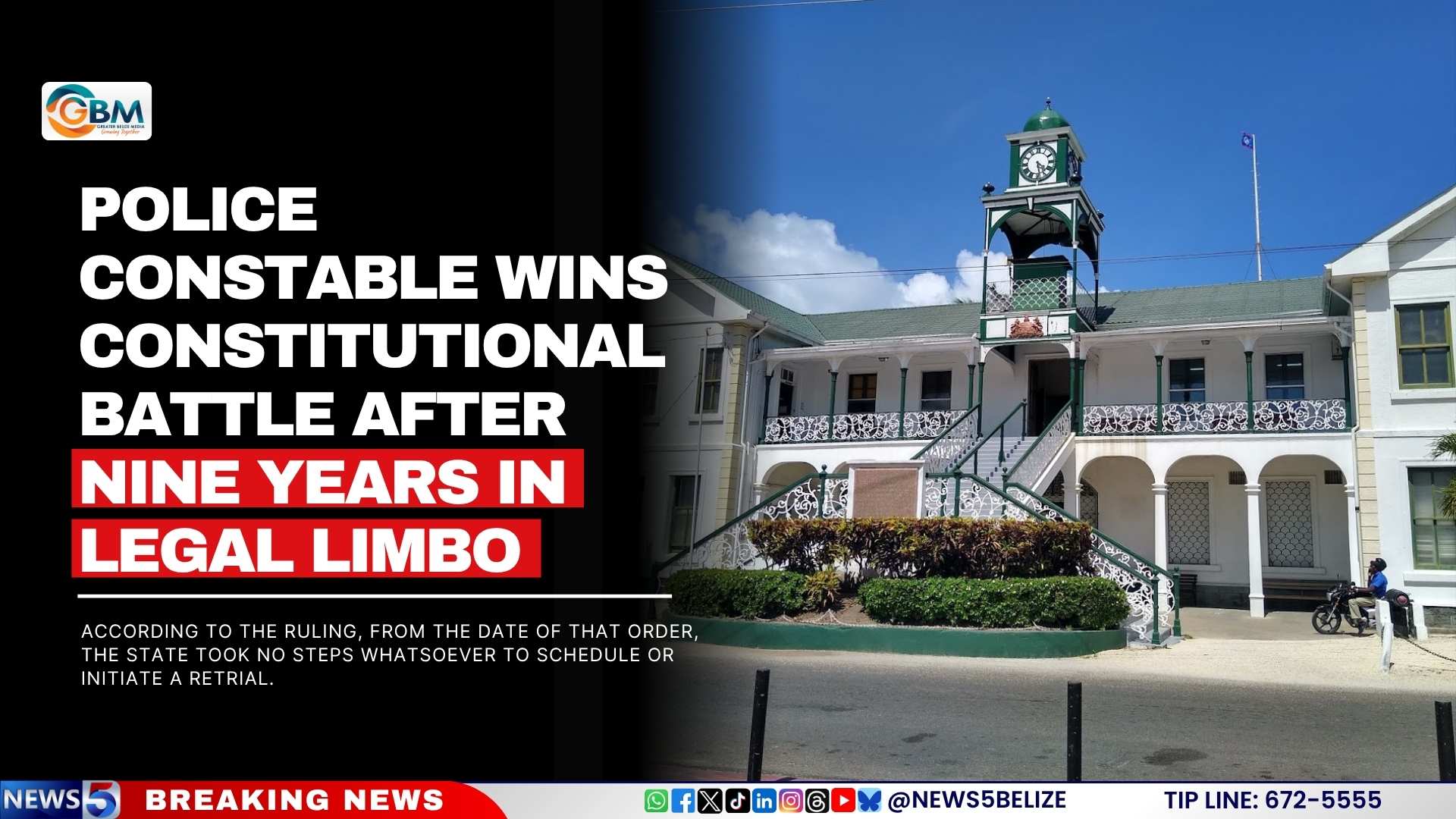
    In a landmark judicial ruling that underscores the critical importance of timely justice, Belize’s High Court has delivered a decisive victory to Police Constable Darrel Swaso after nearly a decade of professional suspension and legal uncertainty. The court determined that the State egregiously violated Swaso’s constitutional right to a fair hearing within a reasonable timeframe, bringing closure to a nine-year battle that left the officer in professional limbo.

    The case originated on August 9, 2013, when Constable Swaso was arrested alongside a passenger in his vehicle and charged with drug trafficking offenses. Following his arrest, he was immediately placed on interdiction—a form of administrative suspension that removed him from active duty while maintaining his nominal employment status.

    After being convicted at the Magistrate’s Court in San Ignacio on February 5, 2015, Swaso successfully appealed to the Supreme Court (now designated as the High Court). On May 25, 2015, the higher court overturned his conviction and mandated a retrial to be conducted “without undue delay.” Despite this clear judicial instruction, the State apparatus failed completely to initiate or schedule the ordered retrial over the subsequent nine years.

    When Swaso finally filed his constitutional claim on May 27, 2025—exactly nine years after the retrial order—the judicial system had taken no action whatsoever on his case. Throughout this prolonged period, Swaso remained under interdiction, compelled to adhere to strict court conditions that included regular police reporting and severe travel restrictions.

    In a significant development, the Attorney General’s office formally acknowledged on February 13, 2026, that Swaso’s constitutional rights had been violated and conceded that a permanent stay of proceedings was appropriate. However, the State contested the necessity of financial compensation, arguing that since Swaso had been on bail rather than incarcerated and had secured alternative employment, he had not suffered compensable prejudice.

    The presiding judge delivered a nuanced ruling that recognized the profound non-carceral impacts of the prolonged legal proceedings. While acknowledging Swaso had not been imprisoned, the court documented how his life had been substantially disrupted through mandatory reporting requirements, travel prohibitions, professional stigma as an interdicted officer, and the psychological burden of unresolved criminal proceedings—described in the judgment as “the sword of Damocles, hanging over him.”

    The court awarded nominal damages calculated at BZD $1,200 annually for the nine-year period of delay, totaling BZD $10,800. The judgment explicitly noted this award does not constitute full compensation, preserving Swaso’s right to pursue separate civil action with properly quantified damages.

    This ruling establishes significant jurisprudence regarding the state’s obligation to provide timely justice and recognizes that constitutional violations extend beyond physical imprisonment to include the substantial personal and professional consequences of prolonged legal uncertainty.

  • NBC’s Today show takes on Jamaica

    NBC’s Today show takes on Jamaica

    KINGSTON, Jamaica—NBC’s iconic morning program, the TODAY Show, has launched an extensive multi-day feature series from Jamaica’s picturesque coastline, featuring co-hosts Jenna Bush Hager and Sheinelle Jones. This comprehensive coverage offers viewers an unparalleled immersion into the island’s vibrant cultural tapestry, culinary excellence, and distinctive hospitality.

    The production, collaboratively sponsored by the Jamaica Tourist Board and Sandals Resorts, represents a significant endorsement of Jamaica’s tourism sector. Tourism Minister Edmund Bartlett expressed profound pride in the international showcase, noting that the presence of such a prestigious network reinforces global confidence in Jamaica’s unique destination offerings and authentic experiences.

    Donovan White, Jamaica’s Director of Tourism, characterized the island as possessing an infectious energy unmatched elsewhere in the world. “There’s an undeniable vibrancy in our people, our culinary traditions, and our musical heritage that captivates visitors,” White emphasized.

    Since its inaugural broadcast in January 1952, the TODAY Show has maintained its status as America’s premier morning news program, consistently drawing over three million viewers. The current special segments feature the popular hosts engaging with local chefs and street food vendors, sampling legendary jerk chicken and other indigenous cuisine, while experiencing premier accommodations at Sandals Dunn’s River resort.

    This cultural expedition allows audiences to virtually experience Jamaica’s rhythmic music scene and connect with the island’s charismatic residents, further solidifying Jamaica’s position as one of the world’s most cherished travel destinations.

  • #Champs2026: Ryan Achau learns lesson, lands 1500m gold

    #Champs2026: Ryan Achau learns lesson, lands 1500m gold

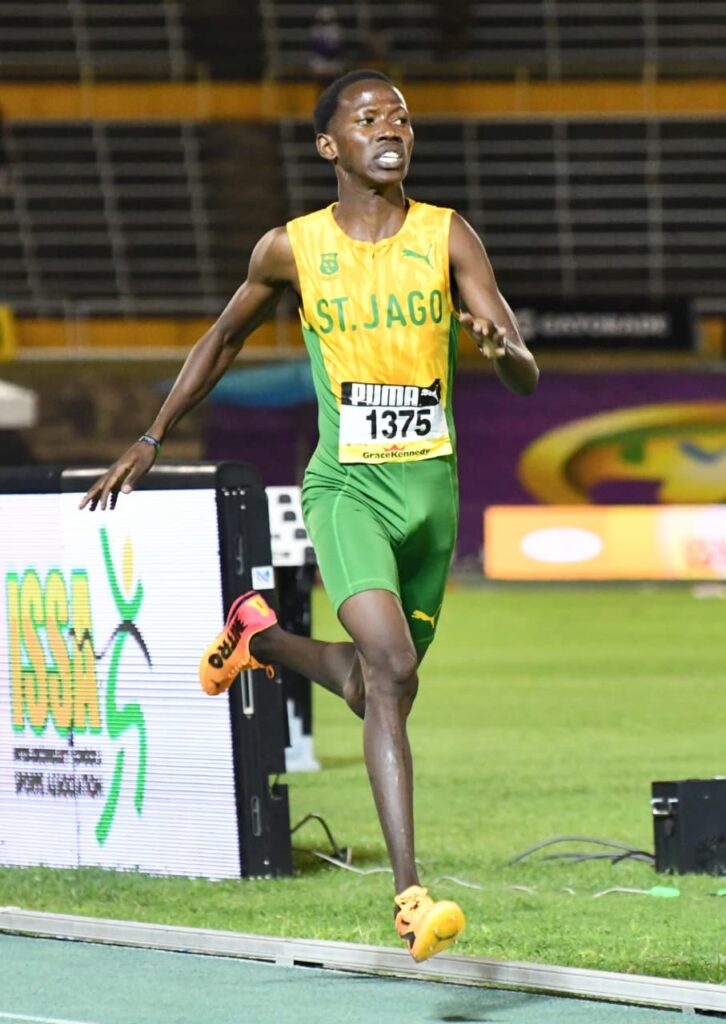
    KINGSTON, Jamaica—In a spectacular display of strategic middle-distance running, Ryan Achau of St Jago High secured a decisive victory in the Boys Class 1 1500m final during Wednesday’s proceedings at the ISSA/GraceKennedy Boys and Girls Athletics Championships. Clocking an impressive 3:50.70 seconds at the national stadium, Achau demonstrated significant growth from his disappointing fourth-place finish in the previous year’s event.

    The Kenyan athlete, who had faltered in last year’s race after an overly ambitious start, executed a perfectly paced performance this time. While maintaining a strong initial tempo, Achau conserved sufficient energy to dominate the final stretch, crossing the finish line with a substantial margin. Kingston College’s Nahashorn Ruto, another East African competitor, claimed silver with a time of 3:55.91 seconds, while Joel Morgan of Edwin Allen High earned bronze in 3:58.20 seconds.

    Meanwhile, in the Class 3 division, Kingston College’s Julius Itubo delivered an extraordinary solo performance, shattering his own previous record set just one year prior. Itubo completed the race in 4:00.76 seconds, significantly improving upon his 2023 mark of 4:05.15 seconds. Jamaica College athletes Rikardo Lee (4:18.42 seconds) and Ajovi Williams (4:25.11 seconds) finished second and third respectively.

    Additional middle-distance excellence was showcased in the Class 2 event, where St Jago High’s Phillip Palmer captured gold with a time of 4:09.91 seconds. Palmer executed a strategic overtaking maneuver against early leader Jevaughn Tomlin, who finished closely behind at 4:10.95 seconds. Dejaun Gray of STETHS secured the bronze medal position with 4:11.04 seconds.

  • #Champs2026: Edwin Allen’s Fowler dedicates win to fallen teammate Tanesha Gayle

    #Champs2026: Edwin Allen’s Fowler dedicates win to fallen teammate Tanesha Gayle

    KINGSTON, Jamaica—In a profoundly moving display of athletic excellence and personal tribute, Edwin Allen High School’s Kevongaye Fowler secured victory in the Girls Class 2 1500m event during Wednesday’s ISSA/GraceKennedy Boys and Girls Athletics Championships. Fowler’s triumphant performance, clocking 4:41.37 seconds at the national stadium, served as a heartfelt dedication to her former teammate Tanesha Gayle, who tragically passed away during a training session in September last year.

    The emotional weight of Fowler’s achievement was palpable as she reflected on her relationship with Gayle, whom she characterized as “my sister.” Gayle had previously placed fourth in the same Class 2 final just a year earlier. Fowler revealed to the Jamaica Observer that their close bond formed immediately when she joined Edwin Allen. “I did this all for her,” Fowler stated emotionally. “We were extremely close, and when she passed away during training, I was determined to honor her memory through my performance today.

    The competition featured impressive performances across multiple categories. Alikay Reynolds from Alphansus Davis High, the defending gold medalist, captured silver with a time of 4:44.79 seconds, while Alexia Palmer of Sydney Pagon earned bronze with 4:45.97 seconds.

    In parallel events, Jovi Rose of Holmwood Technical claimed victory in the Class 1 Girls 1500m, completing the course in 4:45.15 seconds and improving upon her silver medal performance from the previous year. Annataseca Blackwood of Sydney Pagon achieved second place with a personal best of 4:45.43 seconds, surpassing her previous Western Champs record. Rihanna Morgan from Hydel High secured third position with 4:47.55 seconds.

    The Class 3 division witnessed Clarendon College’s Alexjordan Hall capturing gold in 4:47.35 seconds, outperforming Alpha Academy’s Danoya Scott (4:48.54 seconds) and Edwin Allen’s Romeann Gray (4:48.72 seconds) who took silver and bronze respectively.

    The championships continue to showcase Jamaica’s exceptional young athletic talent while simultaneously highlighting the profound personal connections and emotional narratives that underscore competitive sports.

  • Caricom reiterates call for reparatory justice for slave trade

    Caricom reiterates call for reparatory justice for slave trade

    GEORGETOWN, Guyana – The Caribbean Community’s Reparations Commission (CRC) has proclaimed a pivotal turning point in the global movement for reparatory justice. In a powerful statement marking the International Day of Remembrance of the Victims of Slavery and the Trans-Atlantic Slave Trade, the commission emphasized unprecedented momentum building within Global Africa coalitions and international awareness.

    The CRC welcomed the African Union’s landmark declaration of the Decade for Reparations (2026-2035) as a transformative commitment that significantly strengthens worldwide reparations efforts. The commission simultaneously renewed its urgent call for comprehensive restitution programs and compensation mechanisms aimed at repairing centuries of structural damage.

    Historical crimes against humanity—including racialized chattel enslavement, systematic trafficking of Africans, and genocide—were identified as deliberately engineered systems that fueled European economic growth while systematically underdeveloping African and Caribbean nations. The commission underscored how these deeply entrenched exploitation systems continue to shape contemporary global inequalities.

    During Wednesday’s observance, the CRC honored the memory of 15 million African men, women, and children who endured three centuries of brutal enslavement in the Americas. The tribute acknowledged both the unimaginable suffering caused by the Middle Passage and slavery’s brutality, while celebrating countless acts of courage and defiance against European domination systems.

    The commission reaffirmed its commitment to advancing the CARICOM Ten Point Plan for Reparations, which outlines the region’s comprehensive vision for justice aligned with developmental priorities. This includes intensified dialogue, advocacy campaigns, and public education initiatives recognizing that reparatory justice represents both historical correction and essential humanitarian imperative.

    The CRC concluded that international communities must take decisive action to address slavery’s harmful legacies, asserting that justice for victims of African enslavement ultimately constitutes justice for all humanity.

  • UN General Assembly vote to recognise transatlantic African slave trade as ‘the gravest crime against humanity’

    UN General Assembly vote to recognise transatlantic African slave trade as ‘the gravest crime against humanity’

    In a historic move with profound implications for global justice, the United Nations General Assembly has formally designated the transatlantic African slave trade as the most severe crime against humanity in recorded history. The resolution, adopted on Wednesday at UN headquarters, received overwhelming support with 123 nations voting in favor, while only three countries—the United States, Israel, and Argentina—opposed the measure. Fifty-two member states, including Britain and several European Union nations, chose to abstain from the vote.

    The resolution represents more than symbolic recognition, explicitly calling upon nations historically involved in the slave trade to engage in comprehensive restorative justice measures. UN Secretary-General Antonio Guterres characterized the transatlantic slave trade as a fundamental assault on human dignity that systematically destroyed families and communities while generating a pseudoscientific racist ideology to justify its atrocities.

    The presence of Ghanaian President John Mahama, a prominent advocate for slavery reparations within the African Union, underscored the resolution’s significance. President Mahama described the adoption as both a safeguard against historical amnesia and a critical step toward healing and reparative justice for centuries of systematic oppression.

    The resolution further highlighted the enduring legacy of slavery through contemporary manifestations of racial discrimination and neo-colonial structures that continue to affect societies worldwide. This declaration establishes an important framework for future discussions regarding accountability, reconciliation, and substantive reparations for one of history’s most devastating chapters in human rights violations.