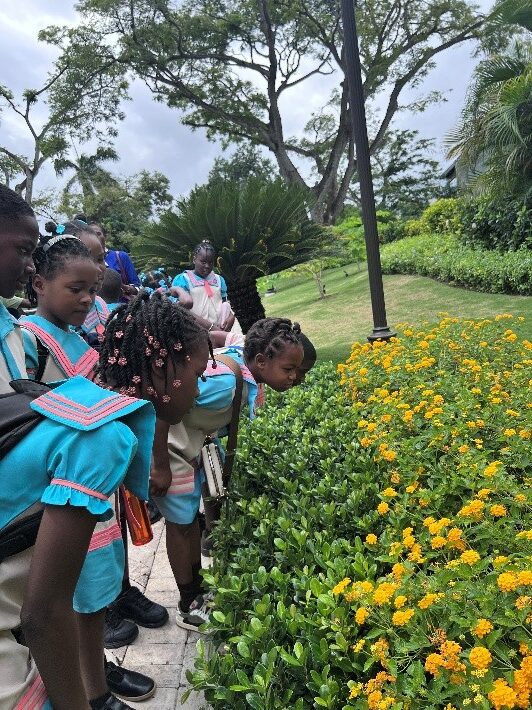
To mark this year’s Earth Day, the Sandals Foundation brought together more than 300 elementary school students from nine Caribbean nations and territories for a one-of-a-kind experiential program that merges environmental education with mindfulness practice, encouraging young people to step away from screens and form deep, meaningful connections with the natural world. One group of participants from Jamaica’s Chalky Hill Primary School gathered at the Sandals Dunn’s River Resort, where the day’s activities unfolded across the property’s lush, curated garden spaces. Over the course of the event, students took part in guided breathing exercises, self-led nature walks, sensory observation activities, and group discussions centered on local ecosystems, all designed to help them engage directly with the biodiversity around them. Beyond fostering appreciation for nature, the program also aims to support young people’s mental well-being by highlighting nature’s proven healing power for both the body and mind, while empowering participants to adopt small, daily habits that protect shared natural resources. “By combining mindfulness with environmental education, we wanted to encourage students to slow down, be present, reflect, and appreciate the beauty of nature which is around them,” explained Heidi Clarke, Executive Director of the Sandals Foundation. “We also wanted to share with students that sense of responsibility and power they each have to protect their community’s natural resources and the services those resources support.” Coordinated by local Sandals Foundation ambassadors and led by Ian Spencer, the foundation’s Regional Public Relations Manager, the event organizers reported that the day left a lasting impression on every participating student. “The students responded with tremendous excitement, curiosity, and enthusiasm throughout the nature tour. Seeing them actively engage with the environment, ask thoughtful questions, and develop a greater appreciation for the importance of protecting our planet was truly inspiring. Initiatives like these reinforce the value of experiential learning and the role we all play in nurturing environmentally conscious future leaders,” Spencer shared. For 10-year-old student Othneil Gayle, the day was a transformative experience that shifted his perspective on environmental protection. “I loved being part of the Earth Day nature tour at Sandals Dunn’s River because I learned how important plants, animals, and clean water are to our world. It was exciting to explore nature with my classmates, and now I want to help keep the Earth clean and beautiful for everyone,” he said. Christine Badal McBean, Principal of Chalky Hill Primary School, echoed that enthusiasm, emphasizing the critical role of early environmental education in building a sustainable future. “Earth Day is more than a celebration—it is a reminder that our children are the future guardians of our planet. Our nature tour allowed students the opportunity to connect with nature, appreciate the beauty of our environment, and understand the importance of protecting it for generations to come. Experiences like these inspire young minds to become responsible, environmentally conscious citizens,” she noted. The mindfulness program extended far beyond Jamaica: participating students across Antigua, Barbados, St Vincent & the Grenadines, Grenada, The Bahamas, Turks and Caicos Islands, and Curacao visited local national parks, mangrove forests, resort gardens, and protected conservation areas for their own experiential learning events. All activities were intentionally designed to pull participants away from digital devices, creating space for stress relief and unstructured connection with the natural world. The Earth Day mindfulness initiative was just one part of the Sandals Foundation’s broader 2024 environmental action across the region. On April 17, the organization’s philanthropic team mobilized 40 staff members from Sandals Ochi Beach Resort alongside members of the Jamaica Fire Brigade to plant 300 native trees in Jamaica’s Bogue II Forest Reserve. This tree-planting effort marks the first regional action under Jamaica’s national RE-LEAF program, an initiative led by the country’s Forestry Department that aims to restore landscapes degraded by extreme weather, including damage to natural coastal barriers caused by Hurricane Melissa. Environmental stewardship has long been a core priority for the Sandals Foundation, which supports conservation work across the entire Caribbean. To date, the organization has engaged more than 177,000 regional residents in environmental education programming, planted 28,117 native trees across island landscapes, outplanted more than 38,000 corals to restore damaged reef ecosystems, funded monitoring programs that have supported the safe hatching of more than 221,000 sea turtle eggs, and provided ongoing operational and community outreach support to 23 marine and terrestrial protected areas across the region.
博客
-
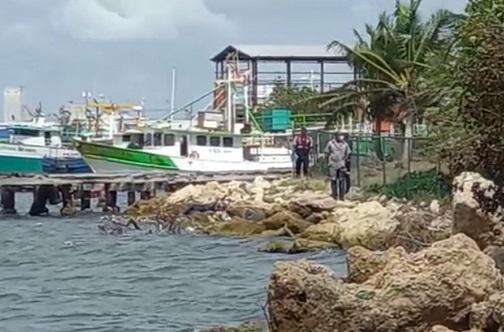
Police seek public’s help in identifying woman found dead in Kingston Harbour
On Tuesday, May 5, an unsettling discovery was made in waters off central Kingston, Jamaica, prompting local law enforcement to issue a public call for assistance to uncover the identity of a deceased woman found near the Bank of Jamaica. The incident unfolded shortly before 9 a.m. that morning, when a boater passing through Kingston Harbour spotted the woman’s body and immediately notified police officials of the find.
Responding officers from the Kingston Central Division moved quickly to retrieve the remains from the water, transporting the body to a local hospital for an initial assessment, where medical providers officially pronounced the woman dead. Her remains have since been moved to a public morgue, where an official post-mortem examination is scheduled to determine the exact cause of her death. Investigators have not yet released any details suggesting foul play, as the case remains in its early stages, pending autopsy results and identification.
Investigators have released a detailed physical description of the deceased to help members of the public match potential missing person reports. Based on preliminary assessments, the woman is estimated to be in her late 30s, stands approximately 5 feet 4 inches tall, has a medium build, dark skin, and short black hair. A distinct identifying marking has also been shared: she has a tattoo of a heart with wings inked on her back.
Law enforcement is urging anyone with information that could help identify the woman or contribute to the ongoing investigation to reach out immediately. Tips can be submitted to the Kingston Central Police tip line at (876) 922-5076, the anonymous Crime Stop hotline at 311, the national police emergency line at 119, or by visiting any local police station to speak with an officer in person.
-

Trinidad footballer dies after collapsing at match
In a devastating loss for Trinidad and Tobago’s local football community, beloved former professional midfielder Randy Ramcharan passed away suddenly on Saturday after experiencing an unexpected medical emergency late in an over-40 alumni match, local media has confirmed. He was just weeks away from celebrating his 46th birthday in June.
Ramcharan, who earned acclaim as one of the most talented midfielders to ever suit up for St Augustine Secondary’s celebrated “Green Machine” program, was competing alongside the school’s former players in the tournament’s final when his health took a sudden turn for the worse. Witness accounts confirm the fan-favorite athlete only managed 15 minutes of game play before signaling to the coaching staff that he needed to come off the pitch.
It was while Ramcharan sat on the substitution bench that his close childhood friend and former schoolmate Brian Bain noticed he had slumped over unresponsive. Play was immediately halted as fellow players, coaches and medical staff rushed to provide emergency resuscitation efforts in a desperate attempt to revive him. Those efforts ultimately failed, and Ramcharan was pronounced dead shortly after being transported to the Chaguanas Health Centre.
Nickella Ramcharan, the fallen footballer’s sister, has told reporters that an initial unofficial cause of death points to a sudden heart attack. Beyond his high school football career, Ramcharan went on to compete at the top level of Trinidadian football, lining up for top-flight TT Pro League clubs Caledonia AIA and Doc’s Khelwalaas. Tributes have poured in from across the local football scene, with friends and former teammates remembering Ramcharan as a spirited, kind-hearted person and a uniquely gifted athlete who dedicated his life to the sport he loved. He died doing what he loved most, surrounded by the teammates and friends he shared decades of football memories with.
-

PM promises sweeping reforms on election eve
As the Bahamas prepares for its hotly contested general election, the country’s two major political parties have wrapped up their final campaign events over the weekend, delivering starkly contrasting closing messages to voters ahead of polling day.
Incumbent Prime Minister Philip “Brave” Davis, leader of the Progressive Liberal Party (PLP), took the stage Saturday night before a crowd of thousands of energized supporters at Nassau’s Clifford Park, framing his administration’s bid for a second term as a chance to build on four years of progress. The rally opened with the entrance of Davis to the song *Goodness of God*, complete with celebratory fireworks, live performances from local artists, and speeches from all PLP candidates, as attendees repeatedly cheered on the party’s re-election bid.
During his keynote address, Davis laid out an ambitious policy agenda for a new term, centered on expanding access to opportunity across housing, workforce development, healthcare, and small business growth. A core pillar of the plan is upskilling: Davis committed that a returning PLP government would train 25,000 Bahamians through the Upskill Bahamas initiative by 2031, building on the existing National Apprenticeship Programme. The administration also plans to construct new campuses for the Bahamas Technical and Vocational Institute (BTVI) and a new Public Health Authority academy, while investing in the expansion of the domestic creative economy to retain local talent.
“For too long, we have watched some of our writers in this country get their education, build their careers and they don’t come back home because the opportunity was not here, because the path home was not clear,” Davis told the crowd. “So we are not just educating young Bahamians. We are building a country where people will stay and build both their careers and our country.”
On housing, Davis prioritized expanding affordable homeownership, specifically targeting essential workers including nurses, teachers, and law enforcement officers through an expanded rent-to-own programme. To protect renters, he pledged new national mandatory housing standards and the creation of a dedicated residential tenancy authority, alongside a programme to repurpose distressed properties for the affordable housing market. “For every Bahamian who wants a path to ownership, this government is going to offer significantly increased help in building that path,” he added.
For healthcare, Davis highlighted ongoing clinic renovations and new hospital projects, while announcing new reforms for a second term: full health insurance coverage for all public servants, including Bahamian contract workers, expanded prescription drug coverage under the National Health Insurance scheme, a permanent 24-hour suicide prevention hotline, and the rollout of telemedicine and mobile clinics to all Family Island health facilities within three years. He also confirmed an expansion of the catastrophic healthcare fund to shield families from crippling medical debt following unexpected serious diagnoses.
To cut red tape for local entrepreneurs, Davis announced a new unified digital one-stop application system that would allow business owners to register a company, obtain a business license, sign up for National Insurance Board coverage, and secure a tax identification number all through a single form. A unified development approval portal with legally binding mandatory decision timelines will also end the longstanding problem of development applications sitting unanswered for months, he said.
Davis closed his address by attacking the opposition Free National Movement (FNM), dismissing its leadership as petty, spiteful, and ill-suited for national office. Speaking directly to FNM leader Michael Pintard, he noted that the role of prime minister requires steady temperament and sound judgment that voters can trust, calling out the opposition’s recent campaign claims. “This not a job for those with anger management issues. But above all, people have to be able to trust your judgment,” he said. He also pushed back against FNM claims of shifting voter momentum after the opposition’s recent SOS rally, pointing to the massive turnout at Clifford Park as evidence of PLP’s support.
Meanwhile, at the FNM’s closing rally held at Savannah Sound Park on the island of Eleuthera, Pintard doubled down on scathing criticism of the PLP, framing the election as a chance to remove a dishonest, corrupt administration that has betrayed public trust.
Pintard opened by accusing the PLP of repeated lies to voters, including false claims about FNM policy. He refuted PLP assertions that the FNM would eliminate the popular national school lunch programme, noting the FNM originally created the policy when it held power. He also denied claims that an FNM government would mass fire public servants and postal workers, turning the accusation back on Davis, who he criticized for failing to intervene when dozens of women social services workers were fired from the Marathon constituency under a PLP MP. “Philip was in charge when the member of parliament for Marathon fired women in social services. What did Davis do? He did absolutely nothing to protect those Bahamian women, more than 90 percent of those in urban renewal, more than 95 percent were fired under Philip,” Pintard said.
On national sovereignty, Pintard called out the PLP for failing to address a rising tide of scam marriages designed to exploit Bahamian immigration law. He emphasized that the FNM welcomes legal immigrants and supports genuine cross-border relationships, but will crack down on fraud that undermines national borders. “If two persons fall in love, one from elsewhere, one from here, I celebrate love. They should be entitled to all the rights. But for those who fake love to make paper, we don’t rate you. We rate our laws,” he said. “And so tonight we have an opportunity to send a message to the PLP to let them know we need new leadership in the country that will protect the sovereignty of the country.”
Pintard laid out his own policy platform for voters, including commitments to restore reliable banking access to Family Islands by forgiving or reducing business license fees for commercial banks to incentivize their return to smaller islands. A FNM government would also modernize the national post office, introduce a new national lottery with proceeds directed to sports, culture, education, environmental protection, and youth development, increase agricultural subsidies, and expand educational access for students with disabilities including autism.
On corruption, Pintard said an FNM administration would root out graft in public agencies without mass layoffs of civil servants, noting he never fired staff during his tenure leading two government ministries. “We make no apology for wanting better for you. They can run as many ads as they want so you don’t have to see brothers and sisters arrested for putting their hand in the cookie jar. We will change it and we will make it better without one single person being fired,” he said.
He closed by attacking Davis’s call for early election, alleging the prime minister scheduled the vote before releasing a new budget to hide a widening national deficit. Pintard noted that under the PLP, even without the shocks of Hurricane Dorian or the COVID-19 pandemic, national debt has increased by $2 billion, and the extra billion dollars in annual Value Added Tax revenue that the government collected has not been accounted for. “The PLP with no Dorian and no COVID has added $2 billion on our national debt. The VAT was supposed to be collected to pay down the debt but it has grown. The country was earning a billion dollars extra under Davis and Chester but you don’t know where the money is,” he said. “Philip says we are desperate for power, I say he is desperate to keep power,” he added, also questioning the accounting of $120 million from the sale of Grand Lucayan and claiming Davis should retire rather than seek a second term.
-
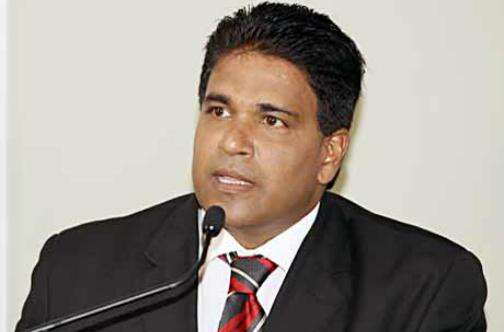
Trinidad says oil spill adequately dealt with, despite concerns from Venezuela
PORT OF SPAIN, TRINIDAD – A cross-border diplomatic dispute has broken out over an early May oil spill in the Gulf of Paria, with Venezuelan authorities decrying severe regional environmental damage and Trinidad and Tobago’s government insisting the incident was small, contained quickly, and properly addressed.
The spill was first detected on May 1 at Trinidad and Tobago’s Main offshore oil field. According to the nation’s Ministry of Energy and Energy Industries (MEEI), crews halted the leak the same day it was discovered, completed repairs, and restored full operations to the site by May 2. Heritage Petroleum Company Limited, the operator of the field, immediately notified local regulators, the coast guard, and the national Environmental Management Authority after identifying the spill, MEEI explained. After receiving official approval, chemical dispersants were deployed between six and eight nautical miles from the shared Trinidad-Venezuela border, a proactive step based on early spill trajectory modeling that showed untreated oil could cross into Venezuelan waters.
MEEI’s assessment confirms that the dispersant successfully broke down the hydrocarbon, with follow-up inspections using drone surveillance and surface vessels finding no visible trace of oil remaining on the water. Officials estimate the total spill volume at just 10 barrels, and note that daily monitoring of all offshore operations has not uncovered any additional leaks. The spill, Energy Minister Dr. Roodal Moonilal emphasized, was a minor event contained entirely within 48 hours with no major environmental impact. Moonilal added that the leak was tied to decades of neglected, aging oil infrastructure left behind by the former People’s National Movement (PNM) government, saying deteriorated pipelines have increased the overall risk of such incidents.
However, the incident has sparked international pushback from neighboring Venezuela, which says the spill has caused irreversible harm to coastal ecosystems in its Sucre and Delta Amacuro states. In a weekend statement, Venezuelan authorities reported that official environmental assessments found severe threats to the region’s mangroves, wetlands, marine wildlife, and hydrobiological resources critical to both local food security and regional ecological balance. The government added that the spill has already harmed vulnerable species and high-sensitivity ecosystems, prompting it to direct its foreign ministry to formally request full details on the incident, a copy of Trinidad and Tobago’s mitigation and containment plan, and immediate compliance with international environmental law obligations to provide reparations for the documented damage.
Domestically, the Trinidad and Tobago government is also facing pressure from opposition figures. Former energy minister Stuart Young of the PNM is calling for a full formal investigation, alleging that both Heritage Petroleum and the current administration deliberately covered up what he calls a major offshore spill, hiding critical information from the public for weeks. “It is clear that both Heritage and the Government sought to cover up and hide a major offshore oil spill, which is a significant environmental event,” Young said, demanding an inquiry to identify which officials were responsible for suppressing information about the May 1 incident.
Despite the disagreements, MEEI has reaffirmed its commitment to transparency and cross-border cooperation. The ministry says it stands ready to share all requested additional information with local and international authorities, and is open to collaborating with Venezuelan counterparts to develop a formal joint framework for responding to future transboundary oil spill incidents along their shared maritime border. “The Ministry of Energy and Energy Industries remains committed to ensuring that all of its stakeholders operate in a manner which advances the Government of Trinidad and Tobago’s commitment to protection of the environment in keeping with domestic law and international obligations,” the ministry’s statement concluded.
-

World has weeks to avert ‘humanitarian crisis’ over Hormuz fertiliser blockade, says UN official
In an exclusive interview with AFP in Paris on Monday, the head of a United Nations task force assembled to address an emerging global humanitarian catastrophe issued a stark, time-sensitive warning: without immediate action to reopen fertilizer shipments through the Strait of Hormuz, tens of millions of vulnerable people across the globe could be pushed into acute hunger and starvation. Jorge Moreira da Silva, who serves as both executive director of the UN Office for Project Services (UNOPS) and the leader of this crisis-response task force, emphasized that the international community has only a narrow window of just a few weeks to intervene and avert an unprecedented food security disaster. Delays in securing safe passage for critical agricultural inputs, he explained, will trigger a domino effect that pushes an additional 45 million people into conditions of hunger and life-threatening starvation, a crisis that would ripple through low-income and food-import dependent nations across multiple continents. The Strait of Hormuz, a strategic global shipping chokepoint that carries a significant share of the world’s fertilizer and related raw material shipments, has faced growing navigation disruptions in recent months, driving up input costs and leaving farmers in vulnerable regions unable to secure the supplies they need for upcoming planting cycles. Moreira da Silva’s warning comes amid escalating global concerns over persistent food insecurity, which has been compounded by ongoing shipping disruptions, rising commodity prices, and conflicting geopolitical priorities that have slowed targeted action to protect critical food supply chains.
-

Spain says final hantavirus ship evacuees to take plane to Netherlands
GRANADILLA DE ABONA, SPAIN – A last-minute change has been made to the evacuation plan for the final group of passengers stranded on a cruise ship rocked by a deadly hantavirus outbreak off Spain’s coast, the country’s top health official confirmed Sunday. Spain’s Health Minister Monica Garcia announced that all 22 remaining evacuees will depart for the Netherlands on a single chartered flight Monday, scrapping the original arrangement that would have split the group across two separate flights bound for different countries.
The adjustment came after Australian authorities notified Spanish officials that they could not ensure their chartered evacuation aircraft would reach the Canary Islands departure point on schedule. Under the revised plan, Australian citizens who were originally slated to travel on their country’s dedicated flight will now board the Netherlands-bound plane alongside other remaining passengers, Garcia confirmed.
The change comes amid ongoing public health protocols to contain the hantavirus outbreak that has already claimed lives on board the vessel, with officials working to speed up the repatriation of all remaining passengers while minimizing additional public health risks.
-

Vershon, A’Legends salute all mothers
Jamaican dancehall recording artist Vershon has reunited with Los Angeles-based producer Jenelle Alexia, head of A’Legends Productions, to launch his second heartfelt single titled *A Mother Like You*. The track is pulled from the artist’s highly anticipated upcoming extended play (EP), *To A Queen*.
The new single made its official debut on Wednesday, May 6 — a date that coincided with Jamaica’s annual national Teachers’ Day celebrations, and fell just four days ahead of the global observation of Mother’s Day on Sunday, May 10. According to Alexia, the overlapping release date with Teachers’ Day was an unplanned happy accident, rather than a pre-arranged marketing move.
“It was a mere coincidence that I had set the release date on Teachers’ Day in Jamaica. This goes to show that when the universe aligns all things work together for the good,” she shared in a post-release statement.
As a mother herself, Alexia brings a deeply personal perspective to the project. She explained that the tribute single extends beyond celebrating biological mothers, aiming to honor the diverse array of mother figures that play irreplaceable roles in communities and families across the world. From stepmothers and foster caregivers to aunts, teachers and mentors who step into maternal roles, the track is crafted to recognize all women who offer nurturing support.
“I decided it was needed at this time to inspire all mothers and all women to push on through the struggles and to let them know how loved they are and appreciated for all they do,” Alexia added, outlining the core mission behind the collaboration.
To complement the audio release, the official music video for *A Mother Like You* premiered in sync with Mother’s Day on May 10, giving audiences a visual companion to the heartfelt tribute just in time for their own family celebrations of maternal love.
-
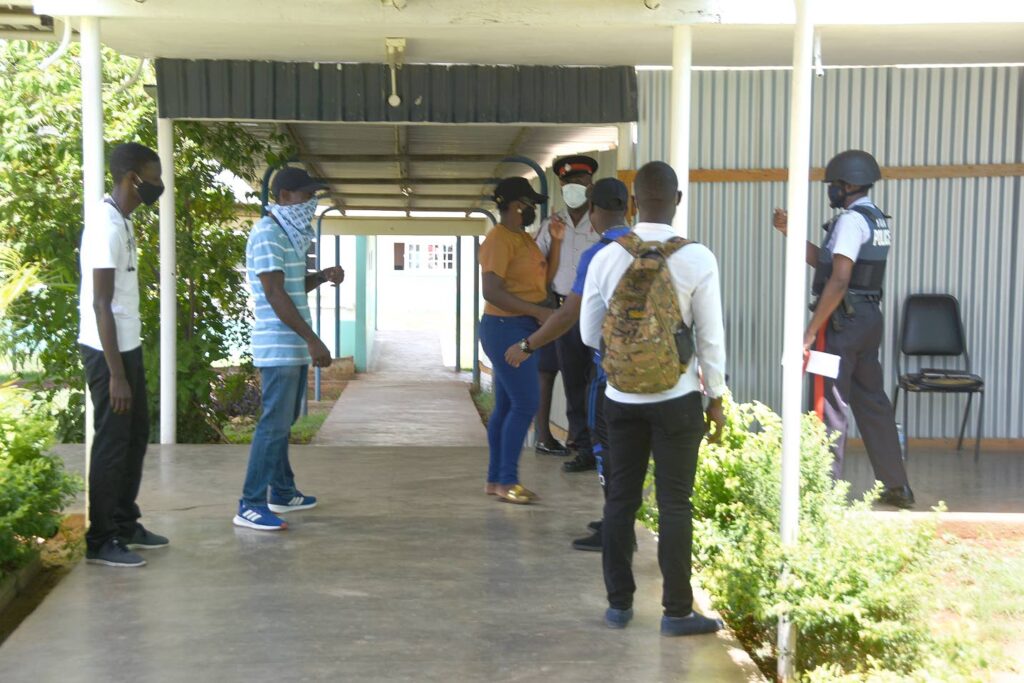
Parliament must lead changes to boost voter turnout, says EOJ
Jamaica’s top electoral body has pushed back against a high-profile call from the country’s Chief Justice to implement sweeping reforms to reverse decades of declining voter participation, saying it lacks the legal authority to enact such changes on its own.
Chief Justice Bryan Sykes first laid out his challenge to the Electoral Commission of Jamaica (ECJ) during the body’s Long Service Awards ceremony on April 29. In his remarks, Sykes argued that the electoral body can no longer prioritize only protecting the integrity and fairness of Jamaica’s elections. With voter turnout hitting historic lows in recent cycles, he said rising voter apathy poses an equal threat to the country’s democratic foundations.
Sykes called on the ECJ to embrace evolutionary change rather than sticking to outdated processes, noting that democracy is a dynamic, living system that either adapts and grows or risks gradual decline. Among the actionable reforms he proposed were expanding access to voting by bringing ballot access to non-traditional sites including nursing homes, hospitals, and correctional facilities. His call came against a stark backdrop of plummeting participation: official ECJ data for the 2025 general election shows that just 39.5% of the country’s 2,077,799 registered voters cast ballots, equaling just 819,749 total votes. While that marks a small uptick from the 38% turnout recorded in the 2020 general election, youth participation is even lower: only 21% of voters under the age of 30 participated in the 2025 poll.
In an interview with the Jamaica Observer on Wednesday, Glasspole Brown, Director of Elections for the Electoral Office of Jamaica (EOJ), acknowledged that falling voter turnout is a serious concern shared by the commission. But he made clear that the EOJ operates within strict legal boundaries set by the Representation of the People Act, the legislation that governs all Jamaican election processes, which leaves it no room to unilaterally implement the reforms Sykes proposed.
Brown explained that many of the accessibility-focused changes suggested by the chief justice are explicitly not permitted under the current text of the act. Any adjustments to voting rules, whether through amending the legislation or altering the national constitution, fall exclusively under the purview of Jamaica’s Parliament, not the electoral commission. “If the Act, or legislators, takes a decision, that’s the way we’re going to go. Certainly, it’s for us to do whatever the Act requires us to do. We’re so dictated by whatever is in the Act,” Brown said.
The EOJ director did note that the commission has already undertaken limited, mandate-aligned initiatives to boost long-term voter engagement. These include in-school voter education programs designed to teach young students about the importance of democratic participation, as well as student election simulation programs run at secondary and post-secondary institutions to build familiarity with the voting process. But he reaffirmed that broader, systemic changes to expand access can only move forward after parliamentary review and approval.
-

SALISES ready to reveal Jamaica’s AI Readiness Score
Next Tuesday will mark a key milestone for Jamaica’s artificial intelligence strategy, as the Sir Arthur Lewis Institute of Social and Economic Studies (SALISES) hosts the official launch and public presentation of its landmark national Public AI Readiness Study. Titled *Jamaica: Opportunities, Gaps, and Priorities*, the event will convene a diverse cross-section of stakeholders — from government policymakers and industry executives to education leaders, civil society representatives, tech professionals, media and international development partners — to kickstart a national dialogue on inclusive development, data-driven planning, and national resilience in the fast-evolving AI era.
At the heart of the presentation is the long-awaited reveal of Jamaica’s first-ever Public AI Readiness Score, a custom national benchmark designed to quantify how prepared the Jamaican public is to understand, trust, access, deploy, and draw tangible benefits from both general and generative artificial intelligence. This benchmark is crafted to address the most pressing open questions surrounding Jamaica’s AI transition: Is the nation as a whole positioned to capitalize on the AI revolution? Which demographic and industry groups are already prepared to leverage the technology? Which communities and sectors risk being left behind in the shift? And what urgent actions must government, business, education institutions, and civil society take now to close gaps and build inclusive AI capacity?
Professor Lloyd Waller, SALISES director and co-lead researcher on the study, emphasized that the work aligns with the institute’s decades-long mission to generate actionable research to drive national and regional development. “Artificial intelligence is not simply a technology issue, it is a development issue,” Waller explained. “It will reshape how Jamaicans learn, work, conduct business, access critical public services, protect their personal data, and participate in national civic life. This study gives Jamaica the empirical foundation it needs to map our current position, identify who needs additional support, and ensure AI evolves as a tool for broader inclusion, higher productivity, stronger national resilience, and transformative national growth.”
Co-leading the research alongside Waller is Dr. Stephen Johnson, a research fellow based at SALISES’ Mona Campus at The University of the West Indies. Johnson noted that the readiness score is far more than a single metric: it converts aggregated public data on AI knowledge, attitudes, trust, concerns, access, usage patterns, and training needs into a clear signal for national strategic planning. “The readiness score is not just a number, it tells a story about Jamaica’s preparedness for one of the most important technological transitions of our time,” Johnson said. “It highlights where the public already has strong foundations, where critical gaps remain, and what types of targeted interventions are needed to ensure AI delivers benefits to the broad majority of Jamaicans, rather than just a small subset.”
The comprehensive study goes beyond surface-level analysis to examine a wide range of public experiences with AI: from general public knowledge of the technology and overall attitudes toward its adoption, to current usage rates, levels of trust, existing concerns, prior training exposure, access barriers, risk awareness, and capacity to benefit from AI tools. It also explores AI’s projected impacts across nearly every sector of Jamaican life, including employment, education, business productivity, public service delivery, misinformation risks, privacy protection, social inclusion, governance, and long-term national development.
Johnson stressed that the timing of the study’s release could not be more urgent, as AI has already begun integrating into every corner of Jamaican society. “AI is already reshaping Jamaica. It is entering classrooms, workplaces, government services, media systems, businesses, customer service platforms, research, tourism, health care, agriculture, and everyday life,” he noted. “The question is no longer whether AI will affect Jamaica — it already is. The more urgent question is whether Jamaica is prepared to use AI deliberately, safely, and inclusively.”
Framed around two core pillars, the report positions AI as a broad social and economic transformation challenge rather than a narrow technical issue. Its first core theme, development studies, centers the impact of AI on people, labor markets, public institutions, education systems, communities, and pathways to inclusive national growth. Its second core theme, data, provides actionable empirical evidence to help stakeholders move beyond ungrounded speculation, establishing a national baseline to guide planning for AI literacy expansion, digital inclusion, regulatory governance, workforce upskilling, public sector modernization, and responsible innovation.
Attendees of the launch event will leave with a clear breakdown of the study’s key findings, a full explanation of what the national AI readiness score means for Jamaica, an overview of how AI is expected to impact different sectors and population groups, and a roadmap of next steps for citizens, institutions, businesses, and policymakers to advance a fair and productive AI transition across the country.