博客

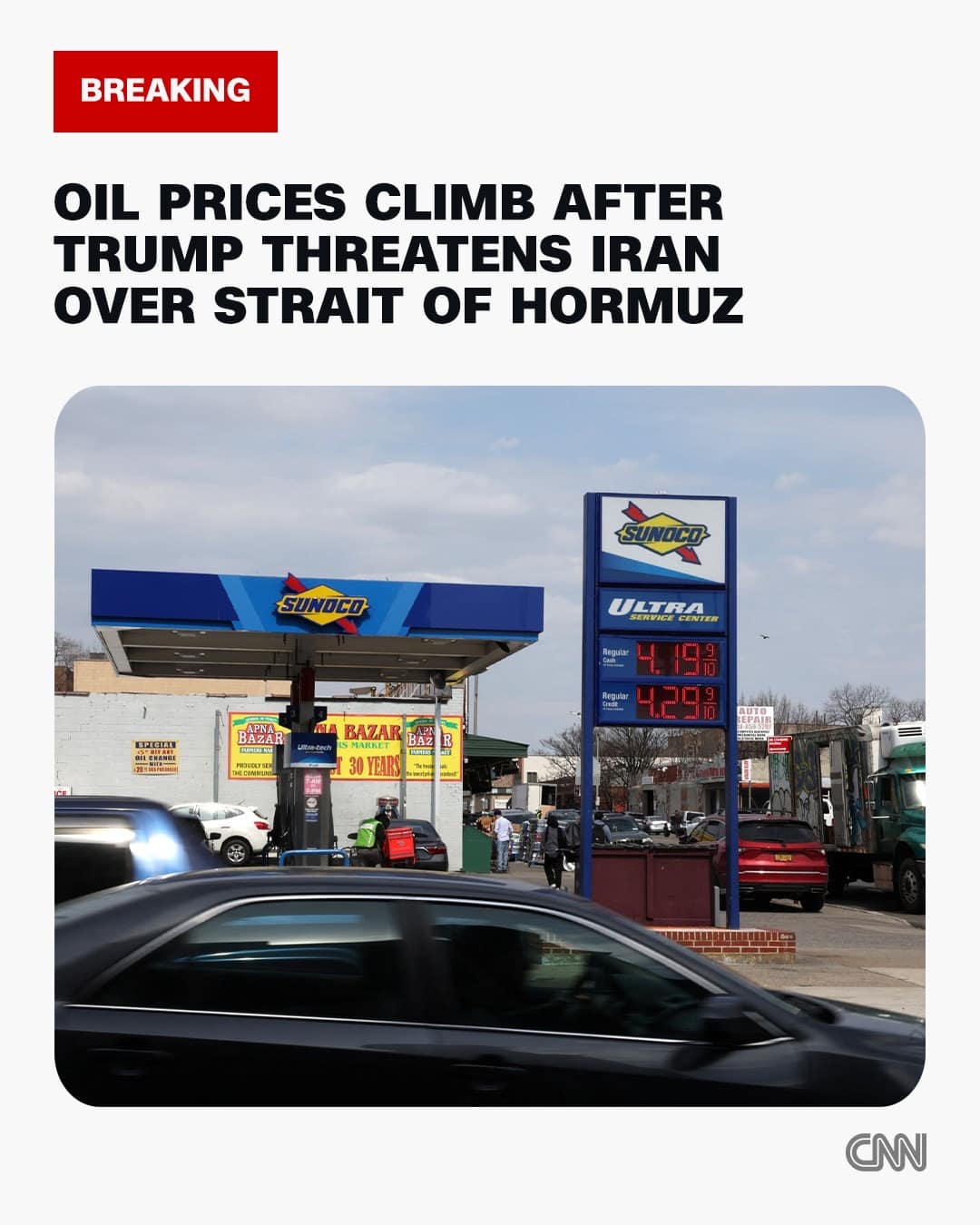
  • Oil prices climb after Trump threatens Iran over Strait of Hormuz

    Oil prices climb after Trump threatens Iran over Strait of Hormuz

    Tensions flared in the Middle East over the weekend as former President Donald Trump’s aggressive verbal threat against Iranian energy infrastructure triggered a sharp upward swing in global crude oil prices, amplifying existing market uncertainty and driving down stock futures. In an inflammatory post shared to his Truth Social platform Sunday morning, Trump issued an extreme ultimatum to Iranian authorities, warning that if the Strait of Hormuz—one of the world’s most critical chokepoints for global energy trade—remains closed, Iran will face devastating targeted attacks on its key power plants and bridge infrastructure. “Tuesday will be Power Plant Day, and Bridge Day, all wrapped up in one, in Iran. There will be nothing like it!!! Open the Fuckin’ Strait, you crazy bastards, or you’ll be living in Hell – JUST WATCH!” the post read.

    In an immediate response to the threat, a senior Iranian government official reiterated Sunday that the country will not reopen the strategic waterway until it receives full compensation for damages it sustained from previous conflicts. This latest exchange marks the second time Trump has issued a public ultimatum to Iran over the strait: an earlier deadline set on March 21 was extended to April 6, with no resolution reached by that date. The hardline stance also marks a notable shift from Trump’s claims just one week prior, when he asserted the United States had no critical reliance on the Strait of Hormuz for energy supplies.

    Diplomatic efforts to de-escalate the situation were already underway Sunday, with Oman’s foreign ministry confirming that Omani officials had convened talks with Iranian representatives to negotiate the resumption of unimpeded commercial shipping access through the waterway. On the same day, major oil-producing nations of the OPEC+ alliance held a virtual emergency meeting to address growing risks of attacks on global energy infrastructure. In an official statement released after the gathering, the bloc emphasized that repairing disruptions to global oil supply and restoring stable market demand is an extraordinarily costly process that requires extended timelines to complete. The meeting came just weeks after OPEC+ agreed to implement a modest daily production increase of 206,000 barrels starting in May, a move intended to cool rising prices.

    The sudden disruption to potential energy flows through the Strait of Hormuz—through which roughly 20% of the world’s daily oil shipments pass—has already pushed retail fuel prices in the United States to their highest level since 2022. Data from motoring group AAA released Sunday shows the national average price for a gallon of regular gasoline climbed to $4.11, representing an almost 38% increase since the outbreak of the latest regional conflict that triggered the strait closure.

    Beyond energy markets, the escalating geopolitical tensions rippled through global equity futures on Sunday, following a long weekend closure for U.S. markets. Dow Jones Industrial Average futures dropped 0.69%, equal to a 324-point decline, while S&P 500 futures fell 0.76% and Nasdaq 100 futures retreated 0.91%, signaling widespread investor risk aversion amid the growing uncertainty.
  • Magnitude 3.9 Earthquake Recorded Near Antigua and Barbuda

    Magnitude 3.9 Earthquake Recorded Near Antigua and Barbuda

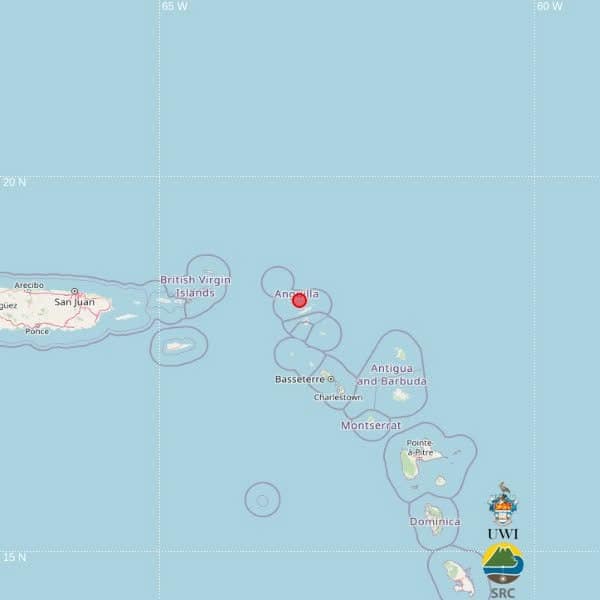
    A minor earthquake measuring magnitude 3.9 has been registered in waters north of the Caribbean nation of Antigua and Barbuda, according to the University of the West Indies (UWI) Seismic Research Centre.

    The seismic event struck at 4:12 p.m. local time on Sunday, with a calculated depth of 28 kilometers below the ocean surface. Geographical data pinpoints the epicenter at coordinates 18.35 degrees north latitude and 63.13 degrees west longitude, placing it around 198 kilometers northwest of St. John’s, Antigua and Barbuda’s capital. The epicenter is also situated roughly 124 kilometers north-northwest of Basseterre, the capital of St. Kitts and Nevis, and approximately 200 kilometers northwest of Brades, the administrative center of Montserrat. All measurements confirm the quake struck a significant distance from any populated landmass, in open offshore waters.

    As of the first official updates, there have been no public reports that the tremor was felt by residents across Antigua and Barbuda, nor have any casualties or structural damage been linked to the event.

    The UWI Seismic Research Centre has cautioned that the current magnitude and epicenter location data was produced automatically by computer algorithms. The readings are classified as preliminary, and will undergo further evaluation and adjustment if needed by the center’s team of seismic analysts before final confirmation.

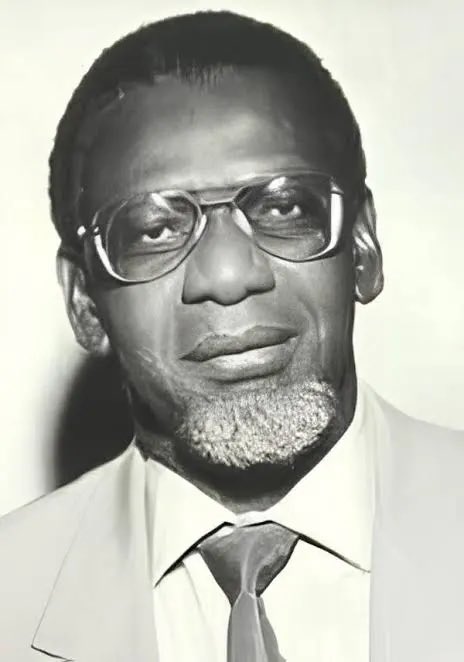
  • Ali, CARICOM Chairman mourn passing of former CARICOM secretary general Rainford

    Ali, CARICOM Chairman mourn passing of former CARICOM secretary general Rainford

    The Caribbean Community (CARICOM) is in mourning this weekend following the death of former Secretary-General Roderick Rainford, who passed away Saturday afternoon at his home in Jamaica. Leaders across the 15-nation bloc have paid tribute to the Jamaican diplomat, whose decades of service laid critical groundwork for the regional integration project that defines CARICOM today.

    Guyana’s President Irfaan Ali, whose country hosts the CARICOM Secretariat, joined CARICOM Chairman and St Kitts and Nevis Prime Minister Terrance Drew in honoring Rainford’s legacy on Sunday. Ali highlighted Rainford’s transformative leadership at the helm of the Secretariat during one of the most volatile eras for regional cooperation, noting his central role in advancing the Caribbean Single Market and Economy (CSME) — the framework that created a single market for goods, labor, and capital across member states.

    “His consequential role in laying the foundation for the Caribbean Single Market and Economy, in strengthening regional institutions, and in preparing the Caribbean for a future shaped by trade and economic liberalisation is part of his outstanding service to regionalism,” Ali said of Rainford, who led the organization from 1983 to 1992 after previously serving as Deputy Secretary-General.

    Drew recalled that Rainford assumed the top post at CARICOM amid a period of significant global upheaval: sky-high global oil prices, intensifying Cold War tensions that rippled through the Western Hemisphere, and the 1983 military invasion of Grenada that tested regional unity. In the face of these cascading challenges, Drew said Rainford’s calm demeanor, sharp analytical mind and deep diplomatic expertise allowed him to keep regional integration on a stable, forward trajectory.

    That steady leadership ultimately paved the way for the 1989 Grand Anse Declaration, the landmark policy document that formally set the course for the CSME by establishing the bloc’s Common External Tariff. Beyond trade and economic integration, Drew highlighted a long list of lasting achievements from Rainford’s tenure: the early framework for a regional stock exchange, negotiated terms for the Caribbean Investment Fund, the revival of the Caribbean Festival of Arts (CARIFESTA), and a sharpened regional focus on environmental stewardship.

    Under Rainford’s direction, CARICOM developed the bloc’s first uniform building code to standardize construction and infrastructure standards across member states, and consolidated or established key regional institutions including the Caribbean Environmental Health Institute (CEHI) and the Caribbean Disaster Emergency Response Agency (CDERA, now renamed the Caribbean Disaster Emergency Management Agency, CDEMA).

    A lifelong advocate for deepening economic and functional integration to lift living standards for all Caribbean people, Rainford was awarded the highest honor of the bloc, the Order of the Caribbean Community, in 2024 in recognition of his decades of public service.

    “Mr Rainford’s patience, equanimity, team spirit and analytical skills are fondly remembered by those who worked with him in the CARICOM Secretariat and across the Region,” Drew said. “Our community is stronger for his dedication and service. CARICOM conveys deepest condolences to his wife, Nesha, other family members and all who mourn his passing.”

  • Garrett defends Monde Mas amid foreign investment concerns

    Garrett defends Monde Mas amid foreign investment concerns

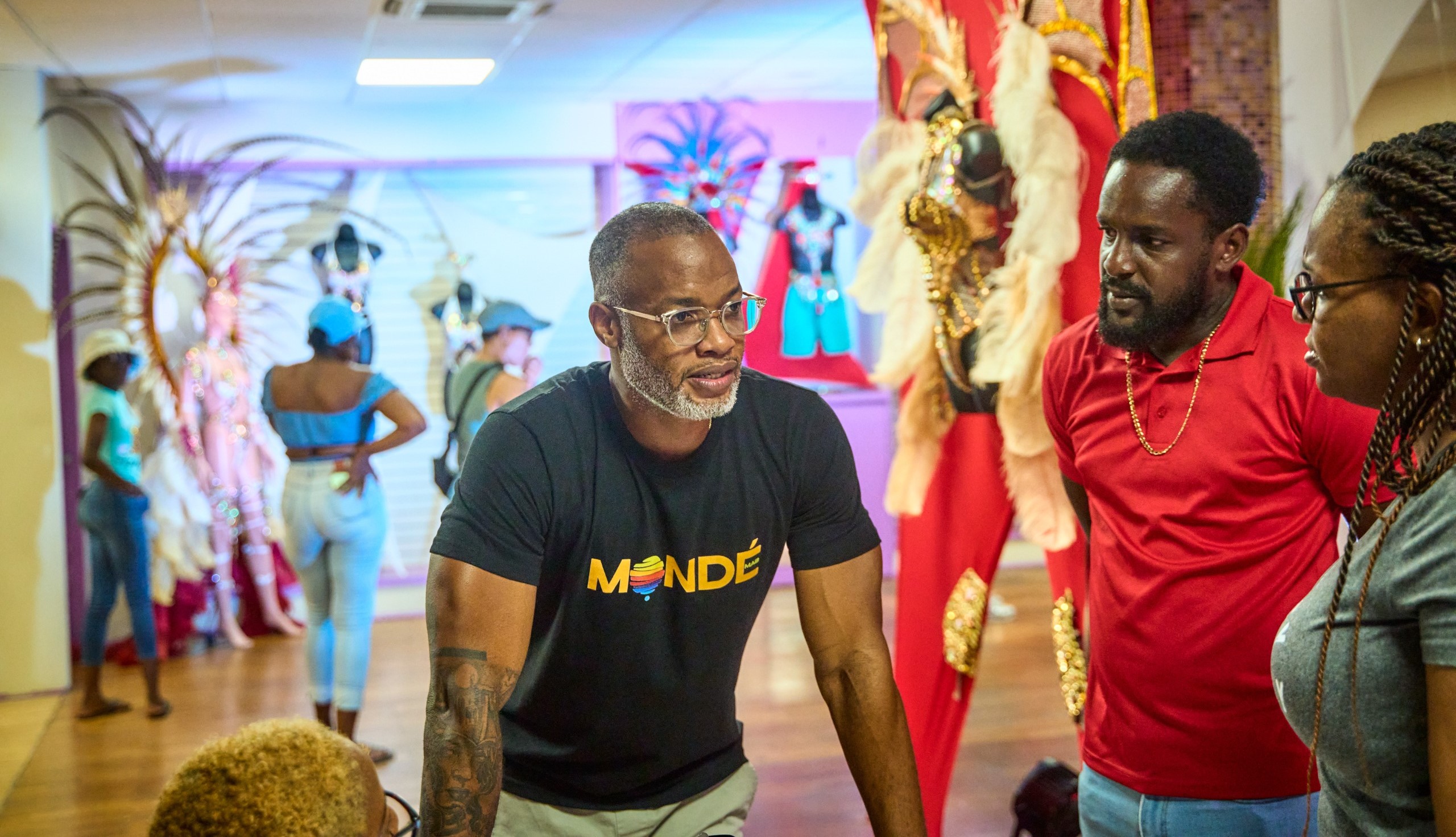
    As Barbados prepares to welcome the latest iteration of its iconic Crop Over festival, a new carnival band called Monde Mas has found itself at the center of local debate over outside involvement. Now, the group’s founder and managing director Corey Garrett is pushing back against public skepticism, emphasizing that the new band remains unshakably rooted in Barbadian culture and identity.

    In an exclusive interview with Barbados TODAY conducted at the band’s headquarters, located on the upper level of the Massy Stores building in Warrens, Garrett opened up about the band’s financing structure. He confirmed that Monde Mas has secured limited external investment from international partners – a portfolio that includes well-known Trinidadian soca stars Bunji Garlin and Fay-Ann Lyons. However, he was quick to clarify that this outside financial support does not dilute the band’s Barbadian core, nor does it shift its creative and operational direction.

    Far from being a compromise on local identity, Garrett explained that the decision to onboard international partners is a strategic step aligned with a far more ambitious goal: extending the global footprint of Barbados’ beloved Crop Over festival. For years, the festival has drawn visitors to the island, but Garrett and his team believe it has untapped potential to resonate far beyond Barbados’ borders.

    “We have assembled a team of forward-thinking industry insiders who share one big question: How do we grow Crop Over’s presence from a regional national festival into a globally recognized cultural event?” Garrett shared in the interview. He went on to acknowledge the significant work the Barbadian government has already done to elevate the festival’s international profile, but argued that private sector and independent cultural organizations have a critical role to play in boosting its global visibility.

    “From the earliest days of Monde Mas’ development, our leadership has fully embraced the vision of bringing Crop Over to audiences across the world, particularly to diaspora communities and emerging carnival markets,” he added. “This global outreach doesn’t just benefit Monde Mas – it puts Barbados front and center for cultural travelers, letting people know that the island is home to one of the most vibrant carnival experiences in the world, which they can only experience fully by visiting us.”

    Garrett doubled down on his assertion that despite the cross-border partnerships, the band’s foundation is entirely local. “At the end of the day, we are 100 per cent Bajan. The bulk of our funding is sourced locally, our core team is based in Barbados, and we are built on decades of local participation in Crop Over,” he said. “Our outside partners are simply helping us export our already established Bajan brand to new audiences around the world.”

    Looking beyond the conversation around foreign investment, Garrett also outlined the core philosophy that shapes Monde Mas’ approach to Crop Over and the festival’s Kadooment Day parade. He described the band as a deliberate fusion of decades of hands-on experience in the local festival industry and bold, new creative innovation, with the ultimate goal of reimagining what the Crop Over experience can be for participants and audiences.

    “This project is all about balancing fresh, forward-looking innovation with deep cultural roots and years of lived experience in Crop Over,” he explained. Every member of the band’s leadership team brings decades of active participation and organizational experience in the festival, giving Monde Mas a grounded understanding of what makes Crop Over uniquely Bajan.

    “We’ve taken all of those years of on-the-ground experience, combined it with new creative vision, innovation, our existing industry connections and long-standing community relationships, and molded all of that into something entirely new,” he said. “The birth of Monde Mas marks a new, exciting direction for Kadooment in Barbados, one that honors our culture while opening new doors for the festival’s future.”

  • Big refrigerator for Rupununi to push food supply – Ali

    Big refrigerator for Rupununi to push food supply – Ali

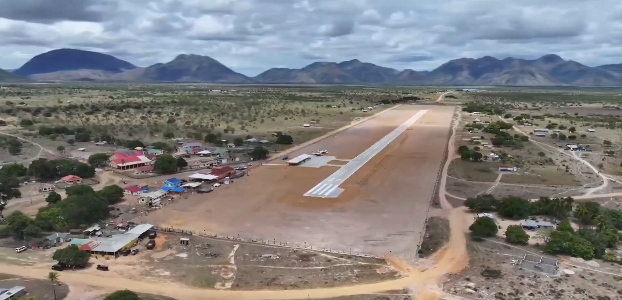
    Following the official inauguration of the upgraded Karasabai Airstrip in Guyana’s remote Region Nine on Saturday, President Irfaan Ali has announced a suite of targeted investments designed to turn the Rupununi region into a high-output agricultural hub, addressing long-standing logistical barriers that have stifled local economic growth for decades.

    The airstrip, which serves roughly 1,200 local residents, received a total investment of GY$1.53 billion for its expansion and modernization. Beyond enabling improved access to remote communities, the upgraded infrastructure is the cornerstone of the government’s plan to boost large-scale commercial agriculture in the area, which has already shown promising early output. President Ali confirmed that a 20-tonne industrial blast freezing refrigerator will be deployed to the region in the coming months to preserve fresh produce, meat, and other perishable goods before they are transported via air and road to markets in Georgetown and other population centers across Guyana.

    “Our goal is to maximize the economic value this new airstrip delivers to local communities,” Ali explained during the commissioning ceremony. “This 20-tonne unit will blast-freeze even locally produced meat, helping us build the cold storage capacity we need to reliably move fresh goods from Rupununi to national markets.”

    The government’s agricultural expansion strategy focuses on scaling up production of high-value crops including coffee, peanuts, ginger, and onions, in close partnership with smallholder farmers across Karasabai and surrounding areas. President Ali noted that the administration is actively facilitating private sector partnerships with local small farmers to turn agriculture into the region’s primary economic driver, unlocking sustained value from the upgraded airstrip infrastructure.

    Early results from existing commercial production in Rupununi already point to major untapped potential. Local Toka region is renowned for its large, high-quality watermelons: one farm produced 100,000 watermelons for shipment to Georgetown last year alone, with another 4,000 units shipped out just last week. Local tomato production has also hit industrial-scale output, reaching 20 kilogrammes of tomatoes per plant. For onion production, which Guyana first attempted to scale in the interior roughly 50 years ago, transportation bottlenecks have long derailed past efforts. Today, President Ali confirmed that full approval has been granted for large-scale onion cultivation, as long as local villages commit large tracts of land to the project. The government will centralize regional logistics and invest in purpose-built transportation vehicles to move onion harvests from Rupununi to national markets.

    “We’re not asking for anything more than for local villages to commit to production,” Ali said. “Follow the example of the successful watermelon farms and scale up output – that’s all we need to make this work.”

    Beyond agricultural development, the upgraded airstrip will also deliver critical public benefits to the remote region. President Ali announced that the government has reached an agreement with Jag’s Aviation to launch once-weekly scheduled commercial passenger flights to Karasabai, improving connectivity for residents. The expanded runway is also engineered to accommodate delivery drones, which will be used to transport emergency blood supplies from Lethem to Karasabai, cutting response times for critical medical emergencies.

    At the same time, the announcement leaves one key outstanding question unanswered: it remains unclear how large-scale agricultural operations will be protected against the widespread severe flooding that regularly impacts large swathes of the Rupununi region, a recurring natural challenge that could threaten crop stability and long-term output.

  • LISTEN:  UPP Accused of “Pretending” to Be United

    LISTEN: UPP Accused of “Pretending” to Be United

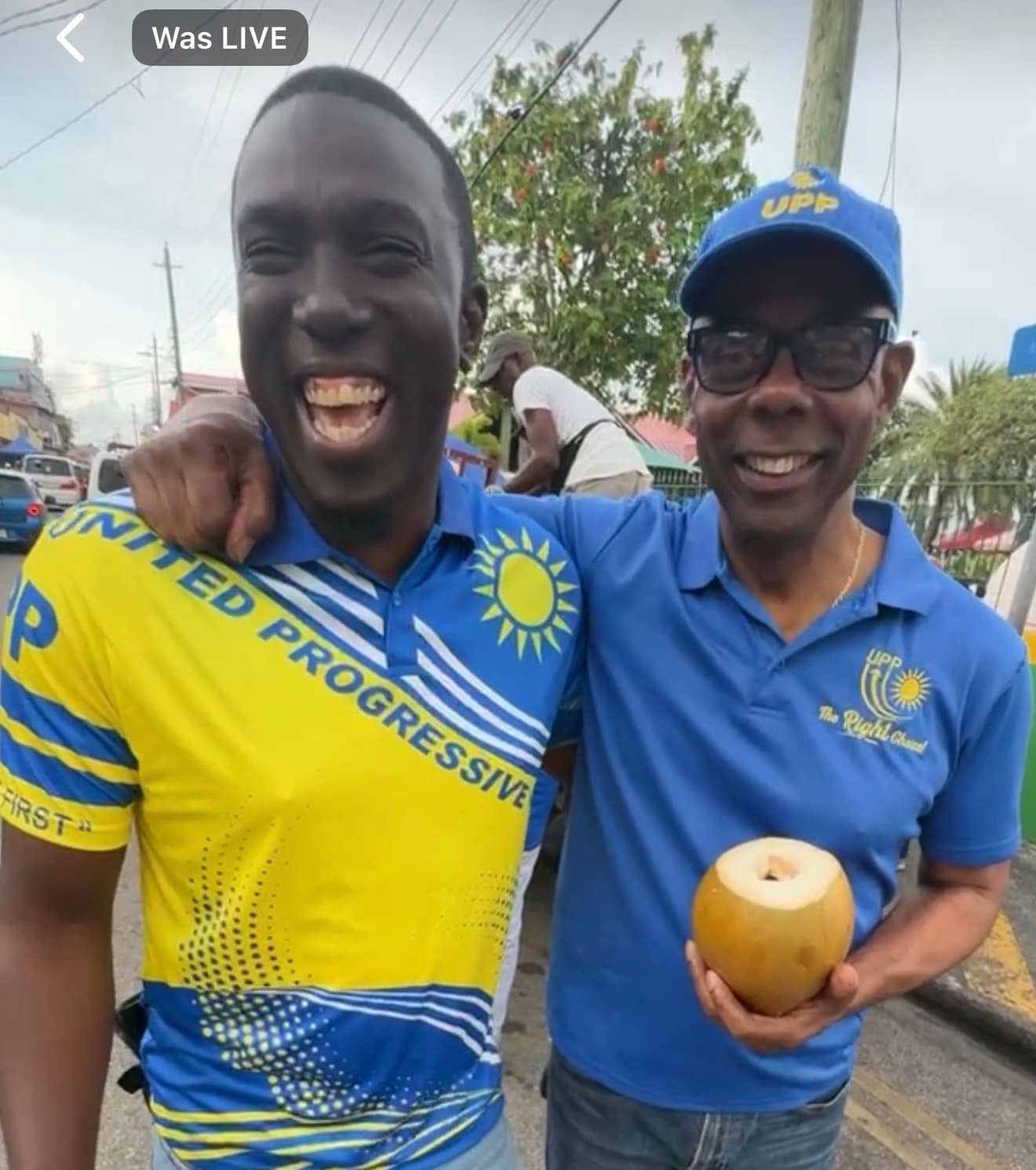
    As Antigua and Barbuda prepares for its upcoming general election, a sharp political clash has erupted, with sitting Prime Minister Gaston Browne calling into question the opposition’s public display of cohesion. During an interview on Pointe FM’s popular Browne and Browne Show, the incumbent leader made bold claims about the internal state of the opposition United Progressive Party (UPP), arguing that the unified front the party presents to voters is nothing more than a carefully constructed false narrative.

    Browne emphasized that despite the UPP’s coordinated public appearances and campaign messaging designed to project a united team to the electorate, the party is actually fractured by deep-seated internal rifts. “They are totally disunited but pretending as though they have a team,” Browne stated plainly during the live radio segment, directly challenging the opposition’s branding ahead of the polls.

    Beyond allegations of disunity, Browne also pointed to systemic coordination failures within the opposition bloc. He claimed that rather than operating as a cohesive, aligned political unit working toward shared campaign goals, individual UPP members prioritize their own independent agendas. This lack of aligned strategy, he argued, further undermines the opposition’s ability to present a viable alternative to his governing administration ahead of the upcoming vote.

  • St. John’s Rural West Candidate Shares Message of Hope and Repentance at Easter

    St. John’s Rural West Candidate Shares Message of Hope and Repentance at Easter

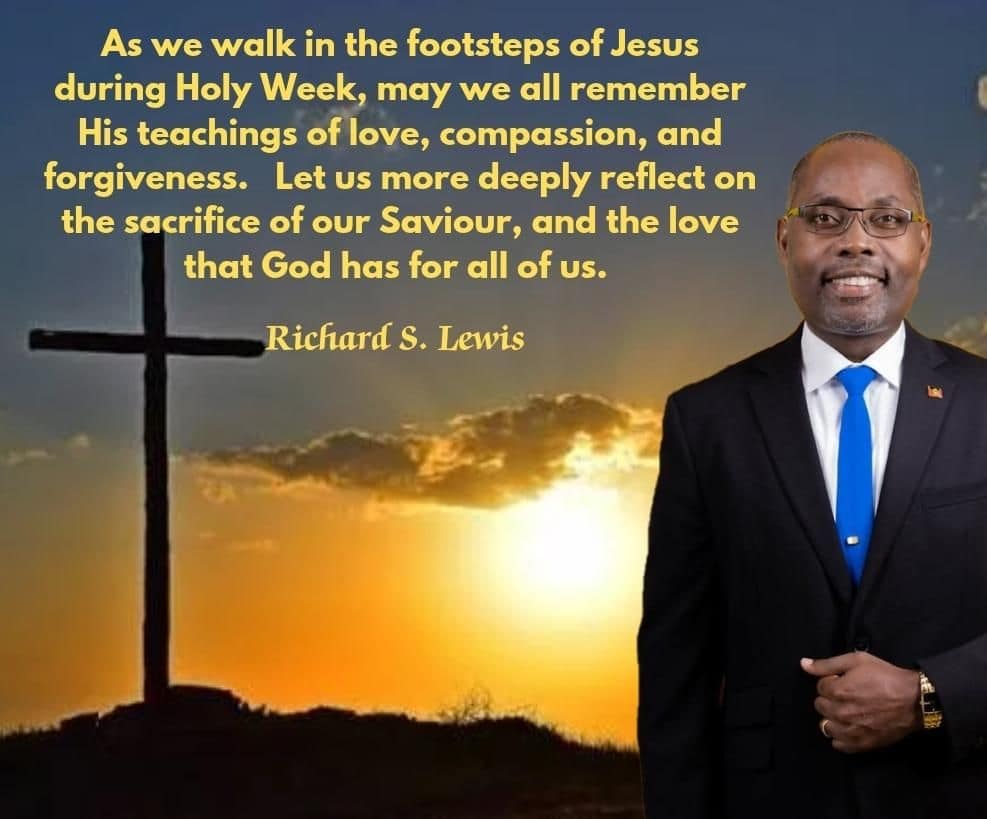
    Easter stands as one of Christianity’s most profound observances, a celebration centered on the core themes of life, renewed hope and spiritual rebirth. Rooted in the belief of Jesus Christ’s resurrection, the holiday frames this event as an ultimate triumph over death, and a tangible demonstration of divine love for humanity. Beyond traditional rituals and family gatherings, the occasion calls on believers to engage in intentional self-reflection and wholehearted repentance.

    As worshippers and celebrants contemplate the dual stories of Christ’s crucifixion and rising again, they are encouraged to embody the unconditional love that lies at the heart of the faith—love that fosters lasting peace and brings divided communities together. This calling asks people to align their lives and actions with the spiritual principles Christ taught, extending mercy and genuine compassion to every person they encounter.

    Even when hurt by others and when the instinct for revenge pushes for retaliation, the message of Easter calls for forgiveness. Setting aside resentment and extending grace to those who have caused pain is framed as the truest way to live out Christ-like values.

    Celebration of the Resurrection also honors the core promise of Christian faith: that all believers will share in new life after death. This season invites people to pause and appreciate the gift of divine grace, and to share the hope of Easter with those who need it most—including people grappling with grief, hardship, uncertainty, who are in need of comfort, support and encouragement.

    This holy Easter, as families, friends and local communities gather to share joy and find connection in one another’s company, the message reminds all to keep Christ’s love, kindness and sacrificial gift to humanity at the center of celebrations. It also calls on celebrants to prioritize mutual care and personal safety as they mark the holiday together.

    In closing, the message extends special Easter blessings to all people, with a particular note of goodwill to residents of the St. John’s Rural West Constituency. It closes with a prayer that the love and peace of Christ may remain rooted in all hearts and communities through the season and beyond.

  • Autism association strengthens services with new centre

    Autism association strengthens services with new centre

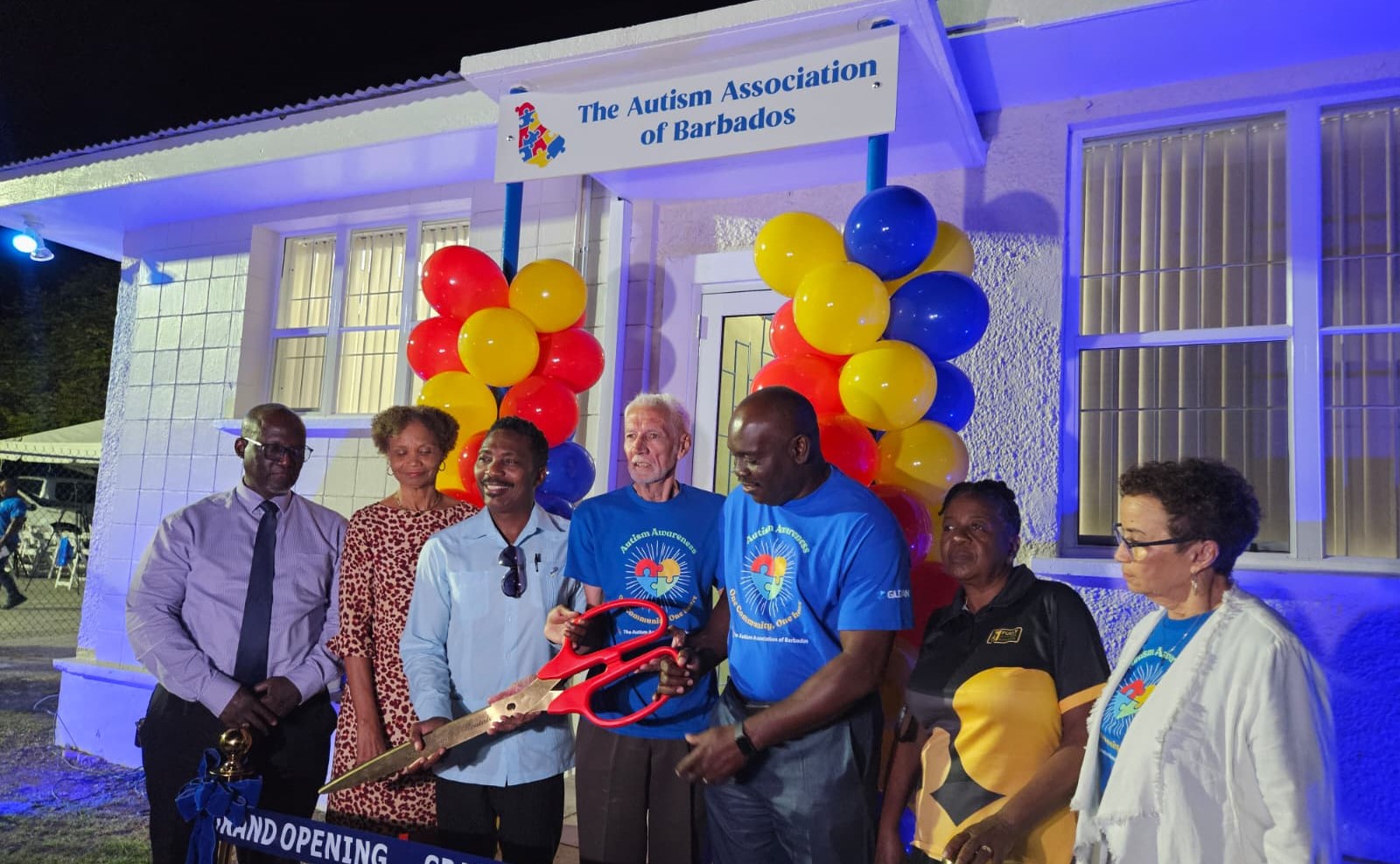
    After more than two decades of operating without a fixed base, the Barbados Autism Association (BAA) has finally opened the doors to its permanent headquarters and training center, marking a transformative milestone for autism support services across the Caribbean nation.

    The new multi-purpose facility, strategically located at the intersection of Dayrells Road and Garrison Road in St. Michael, celebrated its official opening on Thursday evening. Designed to serve dual purposes, the space will house the association’s administrative operations while also functioning as a dedicated life skills training hub, with a core mission of boosting independent living capabilities for autistic people of all ages.

    BAA President Frederick Johnson framed the milestone as the product of 21 years of relentless advocacy, made possible by consistent backing from the national government, community partners, private donors, and autistic people’s families. “This building is far more than concrete and walls. It is a sanctuary where autistic children, teens, and adults can feel safe, seen, and valued for their authentic selves,” Johnson shared in his opening address.

    Johnson emphasized a core shift in the association’s philosophy: autism is a neurodivergence to be understood, not a condition to be corrected. “Our role as a community and as family members is not to change autistic people. It is to build accessible spaces and equip them with the tools they need to contribute fully to society, alongside their loved ones,” he explained. He also acknowledged the longstanding fear shared by many parents of autistic children about their kids’ long-term future, noting that the new facility is the critical first step toward building a more robust system of lifelong care and independent support.

    Minister of People Empowerment and Elder Affairs Adrian Forde called the achievement a national win, forged through years of sustained collaborative advocacy. Echoing Johnson’s framing, Forde noted that autism should never be treated as an inherent limitation, arguing that autistic people can thrive when given the right support systems. “Autism is not a barrier to contribution. When we open the door to equal opportunity, the unique gifts of autistic people will shine through,” he said, reaffirming that access to quality care and support is a fundamental human right for all disabled Barbadians.

    Finance Minister Ryan Straughn added that the new center is part of a wider national policy shift toward integrated, family-centered support for disabled communities. He highlighted the Social Empowerment Agency’s ongoing work to deliver more cohesive, needs-aligned services, and revealed upcoming government plans to develop specialized trusts that will help families secure long-term care for their autistic children, with officials set to work with local stakeholders to finalize the framework in the coming months.

    Roseanne Tudor, Operations Manager of the Barbados Council for the Disabled, walked attendees through the BAA’s 21-year history, from its founding in 2004 through periods of uneven progress and inactivity, to its major revitalization in 2017. Tudor called the new center a testament to the community’s unwavering persistence, noting that “it is far more than a building – it represents stability, it represents new opportunity, and it represents dignity for autistic Barbadians.”

    Even amid the celebration, Tudor urged stakeholders not to mistake progress for completion. “Our work is far from done,” she said, calling for sustained advocacy to embed disability inclusion as a non-negotiable principle across every sector of Barbadian society.

    Looking ahead, the BAA will launch its first life skills pilot programme later this year, serving six autistic adults transitioning out of the formal school system. The programme will focus on building practical, daily living skills to support independent living, with plans to expand access to more participants based on community demand as the association continues scaling its support for autistic people and their families across Barbados.

  • Golden arm: Deshawn Smart rockets to CARIFTA glory

    Golden arm: Deshawn Smart rockets to CARIFTA glory

    On April 4, Grenada earned its inaugural gold medal at the 2026 CARIFTA Games, thanks to a standout performance from rising javelin star Deshawn Smart, who dominated the Under-17 Boys’ Javelin Throw competition to claim the top spot on the podium. Smart delivered a career-defining winning throw of 65.09 meters, setting a new personal best and earning Grenada its only medal by the close of the Games’ first day of competition.

    While Smart’s gold-medal-winning distance fell 3.76 meters short of the existing CARIFTA Games record of 68.85 meters set by Antigua and Barbuda’s Maliek Francis in 2024, the result cements the young athlete’s position as one of the most promising young track and field talents across the Caribbean region.

    Smart’s breakthrough victory at the 2026 CARIFTA Games is far from an overnight success; it is the end result of years of consistent, incremental improvement that spans his competitive career across primary and secondary school competitions. His trajectory of growth leaves no question of his rising potential:

    In 2023, Smart claimed his first major regional youth title at the GUT National Primary School Championships, taking home the Under-13 gold with a throw of 30.24 meters while representing St Patrick’s Branch. Just one year later, at InterCol 2024, he placed sixth with an improved best throw of 36.62 meters, a gain of more than six meters in just 12 months. By 2025, Smart’s rapid progression continued, as he set a new Sub-Junior national record with a throw of 58.54 meters at that year’s InterCol competition, jumping more than 21 meters from his 2023 personal best.

    In the lead-up to the 2026 CARIFTA Games, Smart carried his winning momentum into domestic competitions. At InterCol 2026, he claimed the Junior national title with a throw of 64.56 meters, a performance that helped his school, St Andrew’s Anglican Secondary School (SAASS), secure a historic sweep of both the boys’ and girls’ overall division titles. Just weeks before CARIFTA, Smart won the national Under-17 title at the 2026 ARIZA National Championships with a throw of 65.07 meters, coming within centimeters of his eventual CARIFTA-winning mark.

    As of the close of Day 1 competition, Smart’s 65.09-meter throw remains the top performance from the entire Grenadian delegation at the 2026 CARIFTA Games, marking a high note to start the country’s campaign at one of the Caribbean’s most prestigious youth athletic competitions.

  • Antigua and Barbuda invites Commonwealth, OAS and CARICOM observers ahead of general election announcement

    Antigua and Barbuda invites Commonwealth, OAS and CARICOM observers ahead of general election announcement

    The twin-island Caribbean nation of Antigua and Barbuda has taken a significant step toward reinforcing electoral transparency by formally inviting independent observer missions from three key international and regional bodies to oversee its forthcoming general election. The official invitation comes one week after the country’s Parliament was formally dissolved to clear the way for a national vote to select a new governing administration.

    In formal correspondence dated April 5, 2026, Prime Minister Gaston Browne notified three leading organizations – the Commonwealth, the Organization of American States (OAS), and the Caribbean Community (CARICOM) – of the April 1 dissolution of the national legislative body. Browne confirmed in his letters that he plans to officially publicize the official polling date just two days after the invitations were sent, on April 7.

    Addressed respectively to Commonwealth Secretary-General Shirley Botchwey, OAS Secretary General Albert Ramdin, and CARICOM Secretary-General Carla Barnett, each letter formally requests the deployment of independent observer teams to monitor every stage of the upcoming electoral process. “In these circumstances, the Government of Antigua and Barbuda would welcome the presence of a Commonwealth Observer Group,” Browne wrote in his correspondence to the Commonwealth chief, adding that matching invitations had been extended to both the OAS and CARICOM to ensure broad, multi-stakeholder oversight.

    The prime minister also gave a formal assurance that all standard logistical support, access, and diplomatic courtesies that are routinely extended to international electoral observation missions will be provided to each deployed team without exception.

    This targeted move to open the country’s electoral process to independent regional and international scrutiny underscores the Antigua and Barbuda government’s commitment to holding a free, fair, and verifiable election. Per the country’s foundational constitutional requirements, the general election must be convened and held no later than 90 days following the official dissolution of Parliament, putting the vote on track to take place before the end of June 2026.