博客

  • $10 Pills Could Now Mean $85 With Doctor’s Fees

    $10 Pills Could Now Mean $85 With Doctor’s Fees

    A new policy mandate from Belize’s Ministry of Health and Wellness requiring a doctor’s prescription for all hormonal contraceptives — including birth control pills, patches, and injections — has ignited fierce debate over reproductive health access across the country, scheduled to take effect ahead of 2026.

    In an official advisory released by the ministry, regulators framed the new requirement as a critical public safety measure. Officials argue that hormonal contraception carries meaningful physiological side effects and health risks, and mandatory medical oversight will ensure patients receive personalized guidance to use these products safely. The policy changes longstanding rules that allowed many hormonal contraceptives to be purchased over the counter without a physician’s approval.

    But the shift has drawn sharp pushback from longstanding reproductive health advocacy groups, who warn the rule will create crippling new barriers to care for the nation’s most vulnerable women and girls. Joan Burke, founding executive director of the Belize Family and Life Association (BFLA), an organization that has worked to reduce unintended adolescent pregnancy since 1985, called the policy a major step backward that could undo 40 years of progress expanding reproductive autonomy in Belize.

    Burke’s primary criticism centers on the new cost burden the rule imposes on patients. Where a month’s supply of birth control pills previously cost as little as $10 purchased over the counter, the added requirement of a paid doctor’s consultation pushes the total cost to $85 or more per cycle. For low-income women, those living in remote rural areas with limited access to affordable healthcare, and women in abusive or controlling relationships where they do not have independent access to funds, this cost increase is not just an inconvenience — it is an insurmountable barrier that will cut off access to contraception entirely.

    “Just imagine having to find $85 for a month, getting that $85 from the person who basically controls you every day,” Burke explained in an interview commenting on the new rule. She warned that cutting off widespread access to reliable contraception will lead to measurable public health harms: rising rates of unintended teen pregnancy, increased maternal mortality, and a spike in deaths linked to unsafe, unregulated clandestine abortions.

    Notably, Burke emphasized that the BFLA does not oppose medical consultations for contraception — in fact, the group actively encourages women to seek medical guidance before starting any new hormonal birth control method. The organization’s objection is to the government’s decision to make a prescription a mandatory legal requirement, rather than leaving access open for patients to choose to consult a provider on their own timeline.

    “But to have it that a prescription is required, I am not in favour of that. We are putting so many women and girls at risk by that decision,” Burke said. She also questioned whether the government conducted sufficient public consultation with reproductive health stakeholders before implementing the policy, calling on officials to revisit the rule. “For a decision such as that to be made, I don’t know what level of consultation was done. Let’s rethink this.”

  • Adhin bij rouwzitting Santokhi: Politiek moet buigen voor het mens-zijn

    Adhin bij rouwzitting Santokhi: Politiek moet buigen voor het mens-zijn

    On Friday, the National Assembly of Suriname (DNA) convened a special memorial sitting to honor the life and legacy of Chan Santokhi, a sitting member of the assembly who passed away suddenly on March 30.

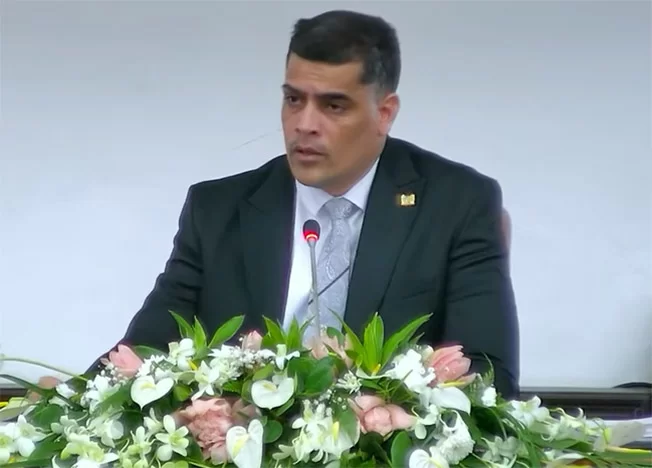
    Leading the tribute, DNA Speaker Ashwin Adhin delivered an address reflecting on Santokhi’s life, his public service contributions, and the lasting mark he left on Suriname’s political landscape. Adhin opened his remarks by noting that even in a chamber where political disagreements are a daily part of operations, the entire body had come together in collective reflection and mourning. “There are moments when politics must step aside, to let our shared humanity take center stage,” Adhin told the assembled lawmakers.

    The speaker emphasized that when a public figure passes, their legacy is not measured by the office they held or the power they wielded, but by the positive impact they had on fellow citizens and the broader development of the nation. He spoke on behalf of the entire National Assembly, pointing out that while differing political views are common within the body, these divisions are actually a core strength of Suriname’s democratic system.

    “Above all our differences, one unifying truth remains: we share the same nation, the same future, and the same responsibility to build it for the next generations,” Adhin said. He framed Santokhi’s life and career as an important chapter in Suriname’s modern national history, noting that every contribution to public life — whether made through periods of political struggle or national development — forms a key part of the country’s collective national narrative.

    Adhin closed his address by calling on all present lawmakers to carry on Santokhi’s legacy by continuing the work of governing with responsibility, mutual respect, and unwavering dedication to public service. “The story of Suriname does not stop. It demands that we keep building and keep serving for the good of the entire nation,” he stated. Finally, he extended the entire assembly’s deepest condolences to Santokhi’s widow Mellisa, daughter Shanylla, and the rest of his family, wishing them strength in the face of their loss.

  • U.S. moves to automatic military draft registration for eligible men starting December 2026

    U.S. moves to automatic military draft registration for eligible men starting December 2026

    A landmark shift is coming to the United States’ long-standing military draft registry system, with automatic nationwide enrollment for eligible men set to launch in December 2026. The change, first reported by CNN, comes from the Selective Service System (SSS), the federal agency tasked with maintaining a database of potential conscripts in the event of a national emergency requiring a draft.

    For decades, the SSS has relied almost entirely on voluntary self-registration by 18 to 25-year-old men, a requirement put into federal law by former President Jimmy Carter in 1980. While 46 U.S. states and territories already offered limited automatic registration tied to driver’s license applications, this patchwork system was never implemented uniformly across the country. Last month, the SSS formally submitted a proposal for full nationwide automatic enrollment to the Office of Information and Regulatory Affairs for final review, after the policy was included as a provision in the fiscal year 2026 National Defense Authorization Act, signed into law by President Donald Trump in December 2025.

    Under the new framework, the federal government will handle all registrations automatically by pulling verified information from existing federal databases, eliminating the need for individual action to meet the legal requirement. Administration officials frame the change as a cost-cutting and efficiency measure, designed to boost compliance rates and streamline the SSS’s administrative operations.

    The shift has reignited public debate around conscription amid rising global tensions, particularly the ongoing conflict with Iran. However, multiple official sources have emphasized that the new registration system is in no way linked to the current conflict, and the policy received bipartisan support months before hostilities with Iran escalated. Legal experts quoted by The Hill also note that even if the White House sought to activate a draft, President Trump cannot enact such a change unilaterally. Any reinstatement of active conscription would require explicit congressional legislation amending the Military Selective Service Act.

    The U.S. has not operated an active military draft since the end of the Vietnam War, when it transitioned to an all-volunteer military force in 1973. The U.S. Military’s official online portal confirms that no active draft is in place today, and the SSS registry only exists as a contingency for extreme national emergencies.

    Even without an active draft, registration remains a mandatory legal requirement for nearly all male citizens and male immigrants between the ages of 18 and 25, who must register within 30 days of turning 18 or entering the U.S., according to Time. Failure to comply carries severe penalties: it is a federal criminal offense that can result in fines up to $250,000, prison sentences of up to five years, and loss of access to federal benefits including student aid, job training programs, and government employment. Non-compliance can also jeopardize immigration status and applications for U.S. citizenship. Currently, the requirement still only applies to men; women are exempt from registration but eligible to enlist voluntarily.

    In late March, reporting from The Guardian argued that any actual reinstatement of the draft remains highly unlikely, framing it as a major political liability for President Trump ahead of upcoming elections. Trump himself publicly pushed back on speculation in a June 11 post on Truth Social, rejecting a Washington Post report citing a former defense department official that claimed he was considering mandatory military service. “The Story is completely untrue. In fact, I never even thought of that idea,” Trump wrote.

  • ECAB Donates to the Sir Richie Richardson 3rd Annual Charity Golf Day

    ECAB Donates to the Sir Richie Richardson 3rd Annual Charity Golf Day

    ST. JOHN’S, Antigua – Ahead of the upcoming 3rd Annual Sir Richie Richardson Charity Golf Day, regional financial institution Eastern Caribbean Amalgamated Bank (ECAB) has pledged a $6,000 contribution to support the event’s community-focused mission. Scheduled to tee off tomorrow, April 11, 2026, at Antigua’s iconic Cedar Valley Golf Club, the annual fundraiser is the brainchild of legendary West Indies cricketer Sir Richie Richardson, and has grown into a cornerstone of local charitable giving since its launch.

    This year, all proceeds from the tournament will be split between two high-impact local organizations: the Bright Minds Project, which delivers targeted support to children living with disabilities and youth from low-income, underprivileged backgrounds across Antigua and Barbuda, and the Striving for Excellence Antigua Golf Academy, a developmental program dedicated to nurturing young local golf talent.

    In a statement announcing the donation, ECAB representatives emphasized that the contribution reflects the bank’s longstanding commitment to advancing local community development. “The Sir Richie Richardson Charity Golf Day is far more than a simple sporting competition—it is a powerful, community-driven platform that creates tangible, life-changing change for people across our islands,” the statement read. “At ECAB, our core mission centers on investing in the future of the communities we serve, and this event aligns perfectly with our goal of expanding opportunities for youth development across Antigua and Barbuda.”

    Sir Richie Richardson expressed his gratitude for ECAB’s continued partnership, thanking the bank for its generous support of the 2026 iteration of the event.

    The 2025 tournament delivered impressive results, raising roughly $70,000 for beneficiary organizations. That success not only expanded the reach of the supported charities’ programming but also reinforced the critical value of cross-sector collaboration between corporate entities and local community groups to address pressing social and developmental needs. Organizers expect this year’s event to draw a large field of participants and spectators, building on past momentum to deliver even greater support for the two 2026 beneficiary groups.

  • Town Clerk, PPP Councillor distance themselves from lawsuit over Constabulary Training Complex

    Town Clerk, PPP Councillor distance themselves from lawsuit over Constabulary Training Complex

    A brewing ownership dispute over a prime Georgetown waterfront property has erupted into open controversy, with Georgetown’s top municipal administrator publicly distancing herself from an unauthorised High Court lawsuit filed against the Guyanese government and a private security firm.

    In a statement issued to Demerara Waves Online News on Friday, Town Clerk Candace Nelson clarified that court documents naming her as the applicant in the legal action against the Attorney General and RK Security do not carry her signature, nor do they reflect any formal decision by the Georgetown City Council. Nelson, who is currently on official leave, emphasized that the listing of her name on the filing is only a procedural legal convention that places council-related legal actions under the office of the Town Clerk, not an indication of her personal or official involvement.

    Nelson detailed that when she was first approached about the potential lawsuit last Thursday, she immediately flagged concerns about the validity of the claim and pushed for formal procedural steps to be followed. She instructed Councillors Clayton Hinds and Lelon to consult with Mayor Alfred Mentore, submit an official memorandum, and circulate a round-robin poll among council members to authorize another official to sign the required court documents. To date, that signed round-robin has never been delivered to her office, she said.

    “I never signed that document. I had nothing to do with it,” Nelson reiterated, noting she had already been formally recused from the matter after the council assigned another representative to handle related issues. The lawsuit, which was filed in the Town Clerk’s name, demands High Court orders and injunctions to force the government and RK Security to vacate the Water Street property that formerly housed the City Constabulary Training Complex, claims GY$5 million in damages, and alleges the defendants trespassed on land the council says it has owned since the 1800s.

    Nelson also directly disputed a key claim laid out in the court filings: that the Georgetown Municipality passed a formal resolution at an extraordinary March 27, 2026 meeting authorizing the mayor to pursue legal action to protect the council’s claim to the training complex. According to Nelson, the extraordinary meeting was convened exclusively to address the central government’s takeover of several municipal roads, and no resolution related to the Water Street training complex was ever approved by the full council. While the mayor briefly raised the property issue during the session, no vote or formal decision to proceed with litigation was taken, she said.

    The controversy has deepened with other council members also denying knowledge of the legal action. Don Singh, a People’s Progressive Party Civic (PPPC) representative on the city council, told reporters none of the PPPC councillors were notified of the lawsuit or received the round-robin poll for approval. “As a councillor of Georgetown, I have no knowledge of this. No action was taken by the council to officially vote, that I am aware of, to proceed with legal proceedings,” Singh stated.

    Attempts to reach acting Town Clerk Carlyn Joseph to ask whether she authorized or signed the court filing have been unsuccessful to date.

    The legal action was launched after Mayor Mentore discovered members of the Guyana Police Force and representatives of RK Security on the property on March 27, with a new official sign posted on the site’s perimeter fence. The dispute has roots in competing claims of ownership: Local Government Minister Priya Manickchand has recently affirmed that the property is state-owned, with title dating back to the colonial era, while Mentore maintains the city council holds formal documentation proving its ownership.

  • Caribbean countries strengthen prison intake systems

    Caribbean countries strengthen prison intake systems

    Thirteen Caribbean nations have united to advance correctional system reform, wrapping up a three-day intensive training workshop in Bridgetown, Barbados, focused on overhauling prison intake and assessment protocols to boost rehabilitation outcomes and reduce recidivism. Held from March 25 to 27 at the Lloyd Erskine Sandiford Centre, the workshop brought together prison and probation leaders from across the region, brought into being through a collaborative partnership between the United Nations Development Programme (UNDP) Partnership of the Caribbean and Europe on Justice (PACE Justice) initiative and EL PACCTO 2.0, the European Union’s flagship justice and security cooperation program.

    Participants represented Antigua and Barbuda, Barbados, Belize, Dominica, Guyana, St Kitts and Nevis, St Lucia, Trinidad and Tobago, The Bahamas, Grenada, St Vincent and the Grenadines, Jamaica and Suriname, all gathering to address longstanding gaps in the first critical step of the custodial process: intake assessment. Experts leading the workshop emphasized that rigorous, well-structured intake procedures lay the foundation for effective correctional policy from an individual’s first day in custody. When implemented correctly, these processes allow authorities to map an individual’s unique risks and needs early, streamline administrative decision-making around detention or community-based alternatives, cut costly bureaucratic delays, and set the stage for targeted rehabilitation work that supports long-term reintegration. Functional intake systems also address two of the Caribbean’s most pressing correctional challenges: prison overcrowding and unnecessary pre-trial detention.

    Vanessa Untiedt, PACE Justice Project Specialist with the UNDP, framed the work as a fundamental step toward breaking intergenerational cycles of crime. “A proper intake assessment process can significantly improve a prisoner’s experience within the facility and, ultimately, their reintegration into society. In short, it can help break the cycle of crime,” Untiedt said.

    Angela Dixon, Director of the Barbados Probation Service and President of the Caribbean Association of Probation and Parole, centered the conversation on the underrecognized role of probation services in building a holistic, person-centered intake system. Dixon noted that probation officers bring unique, irreplaceable insight to the assessment process, thanks to their ongoing connections to offenders and communities. “Probation’s defining value is continuity of knowledge about the individual. No other service carries the same depth of pre-existing relationship, community intelligence, and risk history,” Dixon explained.

    Luuk Bruijn, EL PACCTO 2.0’s Field Officer for the Caribbean, highlighted that cross-regional collaboration is key to building correctional systems that work for all Caribbean contexts. Bruijn explained that a shared regional framework does not erase local needs; rather, it creates a consistent foundation rooted in regional best practice that can be adapted to local contexts. “The development of a standard procedure for intake assessment in prisons allows for local adaptations to a regionally agreed framework, taking into account best practices and expertise from across the Caribbean, ultimately strengthening the overall management of penitentiary systems,” Bruijn said.

    By the close of the three-day workshop, participants reached a landmark agreement: a unified regional framework for prison intake and assessment that preserves flexibility for country-specific implementation. The agreement marks a major milestone toward establishing more consistent, fair, and effective correctional practices across the entire Caribbean region.

    Moving forward, the partnership will turn its attention to translating the high-level framework into actionable Standard Operating Procedures (SOPs) that frontline prison and probation staff can implement in daily work. Planners are also exploring development of a lightweight digital tool to streamline intake workflows, improve standardized record-keeping, and strengthen cross-agency information sharing. A core priority of the next phase will be deepening coordination between prison authorities and probation and parole services to ensure all decisions are rooted in robust, comprehensive evidence.

    This workshop is part of the PACE Justice project’s ongoing mission to support fair, effective, human rights-aligned correctional systems across the Caribbean. The initiative operates on the core principle that safer, more humane prison systems are the building blocks of safer, more resilient communities across the region.

  • Fire Rips Through Olympic Sports Facility in Brazil

    Fire Rips Through Olympic Sports Facility in Brazil

    In the pre-dawn hours of Wednesday, April 10, 2026, a significant fire broke out across the roof of the velodrome located at Rio de Janeiro’s iconic Olympic Park, triggering an urgent large-scale response from local fire authorities. Roughly 80 firefighters backed by 20 fire engines were deployed to the site within minutes of the emergency call, which came in just after 4 a.m. local time.

    Unlike standard competitive venues, this velodrome carries unique historical significance: it currently houses the official Olympic Museum dedicated to the 2016 Rio de Janeiro Summer Olympics, the first modern Olympic Games ever hosted on South American soil. The museum holds a vast collection of one-of-a-kind artefacts, interactive exhibits, and commemorative items from the landmark 2016 sporting event.

    Emergency response teams adopted a dual strategy to tackle the blaze, with crews attacking the fire from both the interior and exterior of the structure. A core priority for first responders was protecting the irreplaceable historical collections stored within the museum as they worked to contain the spread of the fire.

    Thankfully, early official updates confirm no casualties were reported from the incident. It is also not the first time the venue has faced fire risk: the velodrome suffered two separate roof fires back in 2016, both of which were traced to stray, falling sky lanterns that ignited flammable materials on the roof structure. As of the latest update, authorities have not yet released a new preliminary cause for the 2026 blaze.

  • Kamala Harris Says She Is ‘Thinking About’ 2028 Presidential Run in Candid Remarks

    Kamala Harris Says She Is ‘Thinking About’ 2028 Presidential Run in Candid Remarks

    At the 2026 National Action Network Convention on Friday, former U.S. Vice President and 2024 Democratic presidential nominee Kamala Harris delivered her most public and open comments on her political future to date, confirming that she is actively weighing a third run for the White House in the 2028 presidential election.

    When Rev. Al Sharpton, the host of the convention, directly asked whether she planned to launch another presidential campaign, Harris responded directly: “Listen, I might, I might. I’m thinking about it. I’m thinking about it.”

    Her latest remarks come amid growing political speculation about her next career move, which began after she published a campaign memoir in late 2025 and launched a cross-country book tour to promote the work. Per earlier CNN reporting, Harris is also scheduled to attend a series of Democratic Party events across four Southern states later this month, a itinerary that has further fueled chatter about her potential 2028 bid.

    This is not the first time Harris has hinted at another presidential run. In an August 2025 interview with CBS’ Stephen Colbert, she stated that she did not “want to go back in the system,” but just months later, she sent a clear signal of her possible return to national politics during a conversation with the BBC’s Laura Kuenssberg, saying simply: “I am not done.”

    The progressive convention, which has deep roots in the American civil rights movement, gave Harris a warm, enthusiastic reception. At multiple points during her appearance, attendees broke out in loud chants of “run again” that briefly paused her remarks.

    Expanding on her consideration of a 2028 campaign, Harris emphasized her firsthand experience in the nation’s highest office. “I served for four years being a heartbeat away from the presidency of the United States,” she said. “I spent countless hours in my West Wing office, footsteps away from the Oval Office. I spent countless hours in the Oval Office, in the Situation Room. I know what the job is. And I know what it requires.”

    Harris noted that over the past year, she has traveled extensively across the country, with a particular focus on Southern states. As a crowded Democratic primary field begins to take shape for 2028, she outlined the core driving force behind her potential candidacy: the failures of the current political order. “The one thing I’m really clear about also, is the status quo is not working, and hasn’t been working for a lot of people for a long time,” she added.

    Since leaving office at the end of the previous administration, Harris has remained an active and vocal critic of incumbent President Donald Trump. During her conversation with Sharpton, she singled out Trump’s foreign policy decisions for criticism, particularly the ongoing conflict with Iran, which she described as an unnecessary “choice” by the current administration.

    Harris also argued that Trump’s growing friction with traditional U.S. allies, especially NATO member states, carries real costs for American citizens and global partners alike. “It is harmful to the people of America, not to mention people in allied nations around the world,” she said, adding that the consequences of Trump’s foreign policy approach “keeps me up at night.”

    This report has been updated to include additional context and details of Harris’ remarks.

  • Caye Caulker Village Council Rejects Proposed Sale of Police Property

    Caye Caulker Village Council Rejects Proposed Sale of Police Property

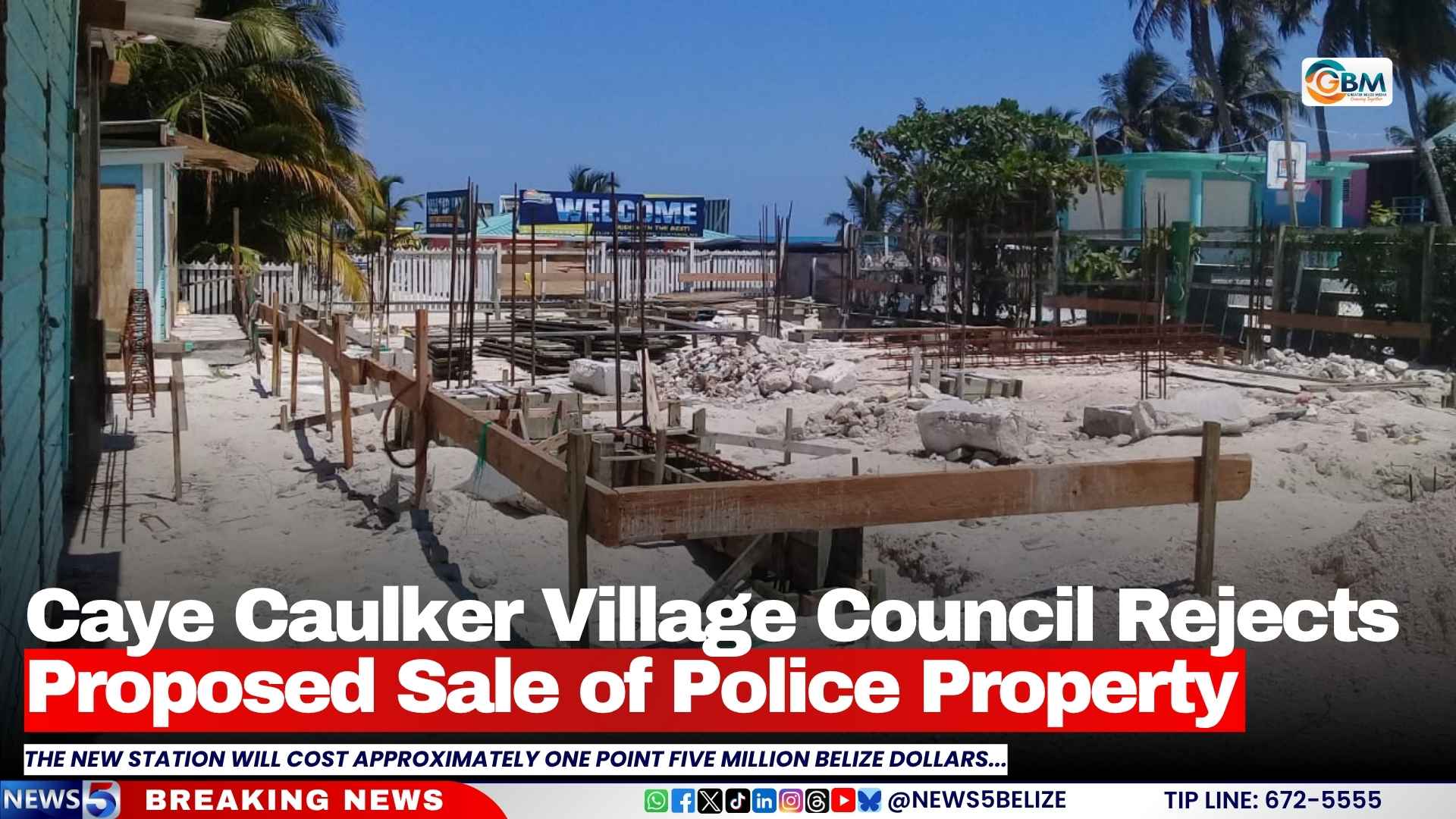
    On the popular island destination of Caye Caulker, Belize, a fierce public policy dispute has emerged over the fate of a key police-owned parcel of land, with the local Caye Caulker Village Council (CCVC) issuing a firm rejection of any proposed sale or transfer of the property to outside interests.

    Parcel 815, the plot in question, is categorized by the CCVC as an irreplaceable public asset that must remain in communal hands for public use. Local governing leaders argue that retaining the land under public control is non-negotiable for upholding the safety and security of the island’s permanent resident population, and they have ruled out any sale or handover for private or non-local development projects.

    A core point of contention for the village council is the complete absence of community engagement around the proposed land deal. The CCVC confirms that neither local elected leaders nor ordinary residents have been invited to participate in any discussions about the future of the property, a lack of transparency that has amplified local opposition to the proposal.

    The conflict unfolds against the backdrop of a national public safety improvement initiative already underway on the island. Months ago, the Belizean government unveiled plans to build a modern, upgraded police station to serve Caye Caulker’s growing community and tourism sector. In January 2026, the Ministry of Economic Transformation finalized a construction contract with Coleman Construction Limited for the project, with Police Minister Oscar Mira and Belize Rural South Area Representative Andre Perez in attendance as witnesses.

    The new Caye Caulker police station is part of the $60 million Belize Integral Security Programme (BISP), a nationwide security capacity-building effort backed by funding from the Central American Bank for Economic Integration. The BISP framework is designed to expand operational capabilities for the Belize Police Department and raise overall levels of citizen security across the country. The Caye Caulker facility carries a price tag of roughly 1.5 million Belize dollars, and will offer more than 3,500 square feet of purpose-built working space. Planned amenities include a dedicated domestic violence response unit, climate-controlled secure evidence storage, confidential private interview rooms, a specialized crime investigation suite, and a community meeting and conference space, all built to serve both long-term residents and the island’s fast-growing annual tourist population.

    Despite the widely supported goal of upgrading local policing infrastructure, the CCVC has raised urgent alarms about the risks tied to any transfer of the existing police land. Local leaders warn that losing control of the parcel would erase critical public space that currently hosts a range of community activities and youth engagement programs, delivering long-term harm to local quality of life.

    Now, the village council is demanding concrete action from national authorities: an immediate freeze on all ongoing land transfer processes, full public disclosure of all agreements related to the property, and inclusive, meaningful consultation with Caye Caulker residents before any final decisions are made about the land’s future.

  • Body Found Behind Port of Belize

    Body Found Behind Port of Belize

    Authorities in Belize have launched a criminal investigation following the grim discovery of a young man’s body early on the morning of April 10, 2026, in the area surrounding the Port of Belize, located in Belize City – the country’s former capital.

    Local law enforcement confirmed that they received reports of the remains shortly after daybreak, and have since secured the crime scene to begin processing evidence. According to multiple sources familiar with the preliminary investigation, the deceased has been identified as a young man who was a resident of Belize City. Preliminary examination of the body has revealed visible gunshot wounds, indicating the death is being treated as a suspected homicide.

    As the investigation remains in its early active phase, law enforcement has not yet released additional details about the victim’s identity, potential suspects, or the circumstances leading up to the discovery. Local outlet News 5 has confirmed that it will publish a full detailed report on the incident during its 6 p.m. live broadcast, once more information becomes available from investigating authorities.