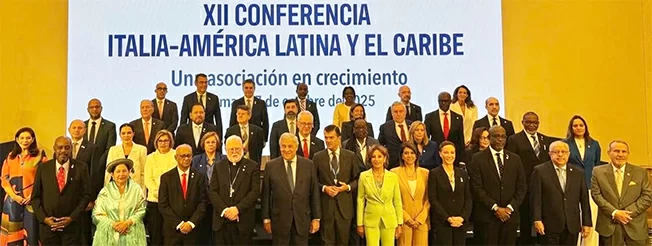
Suriname took center stage at the 12th bi-regional dialogue between Italy and the countries of Latin America and the Caribbean, held recently in Rome. The event, attended by over 35 nations, saw Suriname present its national vision for sustainable development and energy security. Leading the Surinamese delegation was Ambassador Miriam Mac Intosh, Director of Foreign Affairs at the Ministry of Foreign Affairs, International Trade, and Cooperation. In her address, Mac Intosh emphasized that energy security and safety are strategic priorities for the region. She stated, ‘Our primary objective must be to achieve this collectively,’ while also announcing that Suriname is finalizing its Third Nationally Determined Contribution. ‘This is not merely a document of goals but a declaration of our national identity—as a carbon-negative nation and a proponent of a just model for climate action.’ Suriname further introduced its Green Development Strategy as a national roadmap for a resilient, sustainable economy. The strategy integrates the utilization of new offshore energy resources with a swift transition to a carbon-free domestic economy, leveraging revenues from oil and gas to green the energy system. The participating countries also discussed cooperation in combating transnational organized crime, with Italy pledging to share its expertise in this area. The meeting concluded with the adoption of a 21-point Declaration, reaffirming the nations’ mutual friendship, collaboration, and shared commitment to sustainable development.
博客
-
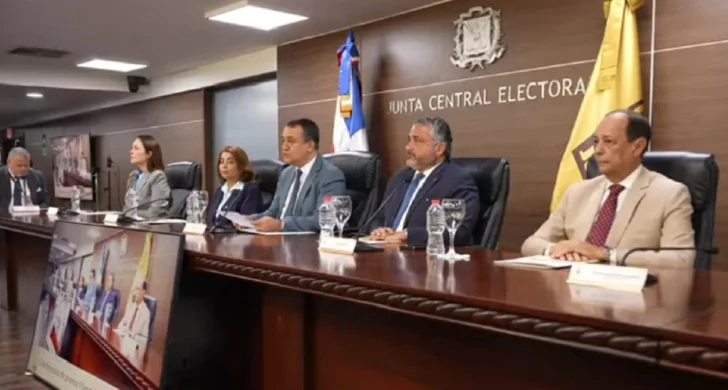
JCE guarantees transparency and security in issuance of new ID
The Central Electoral Board (JCE) of the Dominican Republic has reaffirmed its commitment to safeguarding the personal, biometric, and demographic data of its citizens during the upcoming issuance of new identity and voter cards. In a public statement, JCE President Román Andrés Jáquez Liranzo underscored the transparency, legality, and security of the entire process, from bidding to implementation. The EMDOC Consortium, awarded the contract on October 3, includes five companies—one Dominican, two Panamanian, and two German, with Bundesdruckerei GmbH being partially owned by the German Federal Government. The JCE clarified that none of the companies involved have Haitian origins or capital, countering earlier media reports. Jáquez Liranzo emphasized that the JCE remains the sole custodian of all data, with no external entities granted access. All ID renewal procedures will be handled exclusively by trained and certified JCE personnel, ensuring the integrity of the process and the protection of democratic principles. The tender process, initiated in April 2024, was widely publicized in four national newspapers, the New York Post, and El País, and has garnered support from various political parties.
-
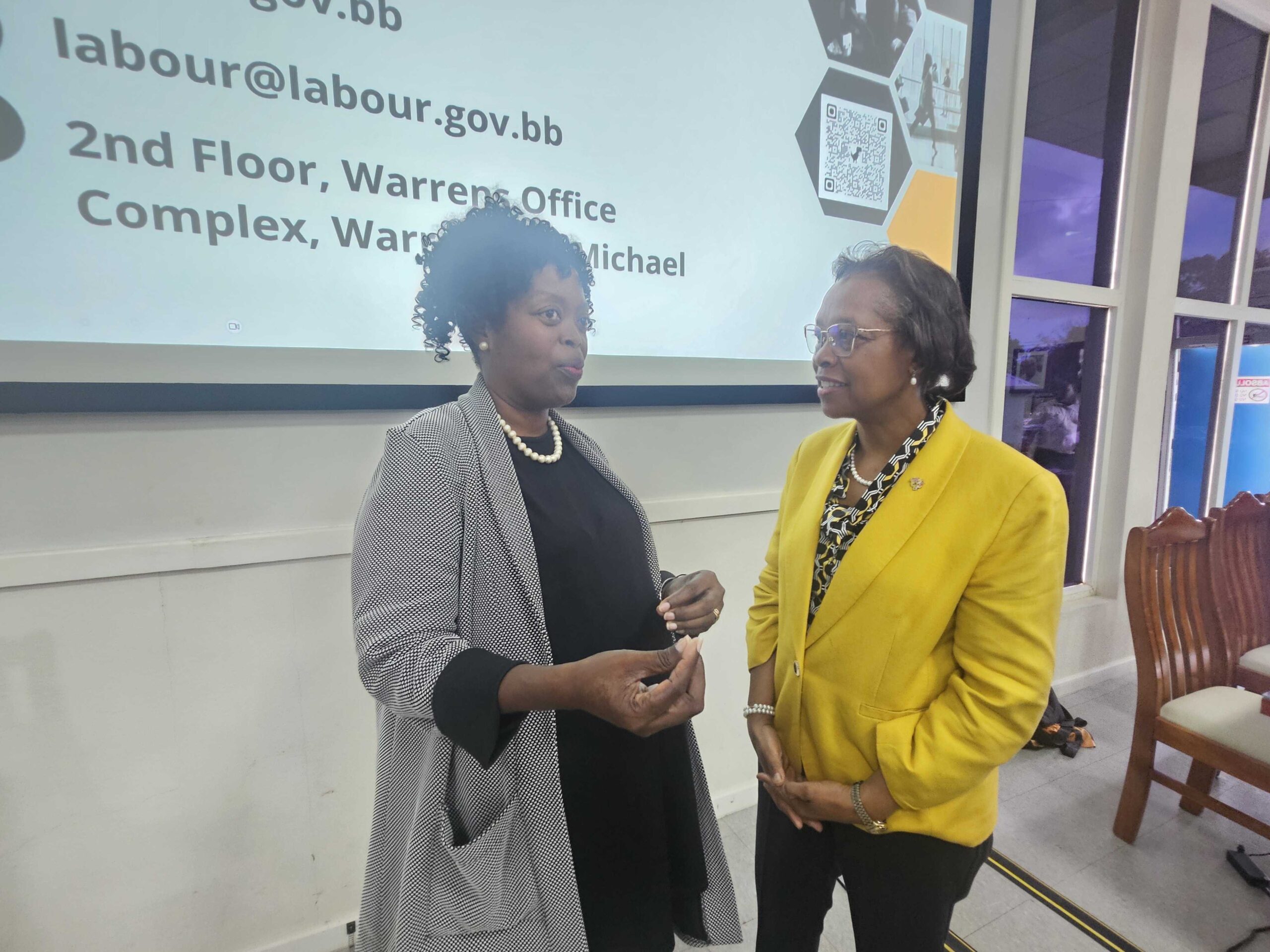
Education official urges proactive school safety management
Barbados’ Deputy Chief Education Officer, Julia Beckles, emphasized the critical role of proactive health and safety committees in schools during a recent awareness-building session at the Erdiston Teachers’ Training College. Addressing over 130 educators, Beckles highlighted the importance of resolving health and safety issues at the school level before escalating them to the Ministry of Education or unions. This call to action follows last year’s disruptions, where teachers staged walkouts over environmental and safety concerns, leading to temporary school closures and ministry intervention. Beckles stressed that while all schools have established health and safety committees as mandated by law, not all are functioning optimally. She urged schools to foster a culture of collaboration, ensuring that issues like rodent infestations and improper waste disposal are addressed internally through education and preventative measures. Beckles also underscored the ministry’s commitment to supporting these committees as part of Barbados’ broader education transformation efforts, aiming to modernize school environments with a focus on health and safety. The session coincided with Caribbean Safety Week, providing an opportune moment to renew efforts in creating safer school environments. Beckles encouraged participants to re-energize their teams and conduct regular, proactive assessments of school environments. The workshop also outlined key guidelines for workplace safety policies, including the establishment of safety committees, risk assessments, and employee consultation processes.
-
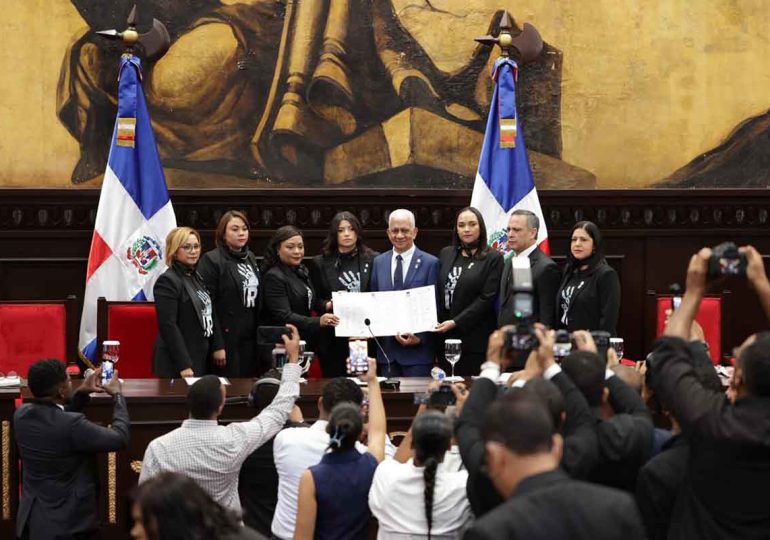
Dominican Congress presents “Let Her Go” Reform to fight violence against women and children
In a landmark session at the National Assembly of the Dominican Republic, Senate President Ricardo de los Santos and Chamber of Deputies President Alfredo Pacheco introduced the Comprehensive Reform ‘Let Her Go’ (Déjala Ir). This pioneering legislative initiative aims to significantly reduce femicides and filicides by 2030 and eradicate them entirely by 2035. The reform, championed by Representative Kimberly Taveras and supported by over 70 legislators from both chambers, was meticulously crafted over nine months to establish a national agenda focused on safeguarding lives and fostering family peace. Unlike traditional punitive approaches, the reform emphasizes prevention, protection, and the reintegration of victims, signaling a transformative shift in public policy and institutional modernization. Key components of the reform include the criminalization of vicarious violence, the establishment of specialized courts, the integration of emotional education and social workers in schools, and the implementation of a National Care System. Additionally, the initiative advocates for the disarmament of aggressors, the use of technology for monitoring and early warnings, and the coordination of policies across rural and border regions. Hailed as the largest women-led movement in the history of the Dominican Congress, the reform has garnered unanimous support from legislators across all political parties. During the session, participants read a manifesto declaring femicides and filicides a national emergency, urging all sectors of society—from the State and academia to media and civil organizations—to unite in collective action.
-
Govt targets overgrown lots with new fines from November
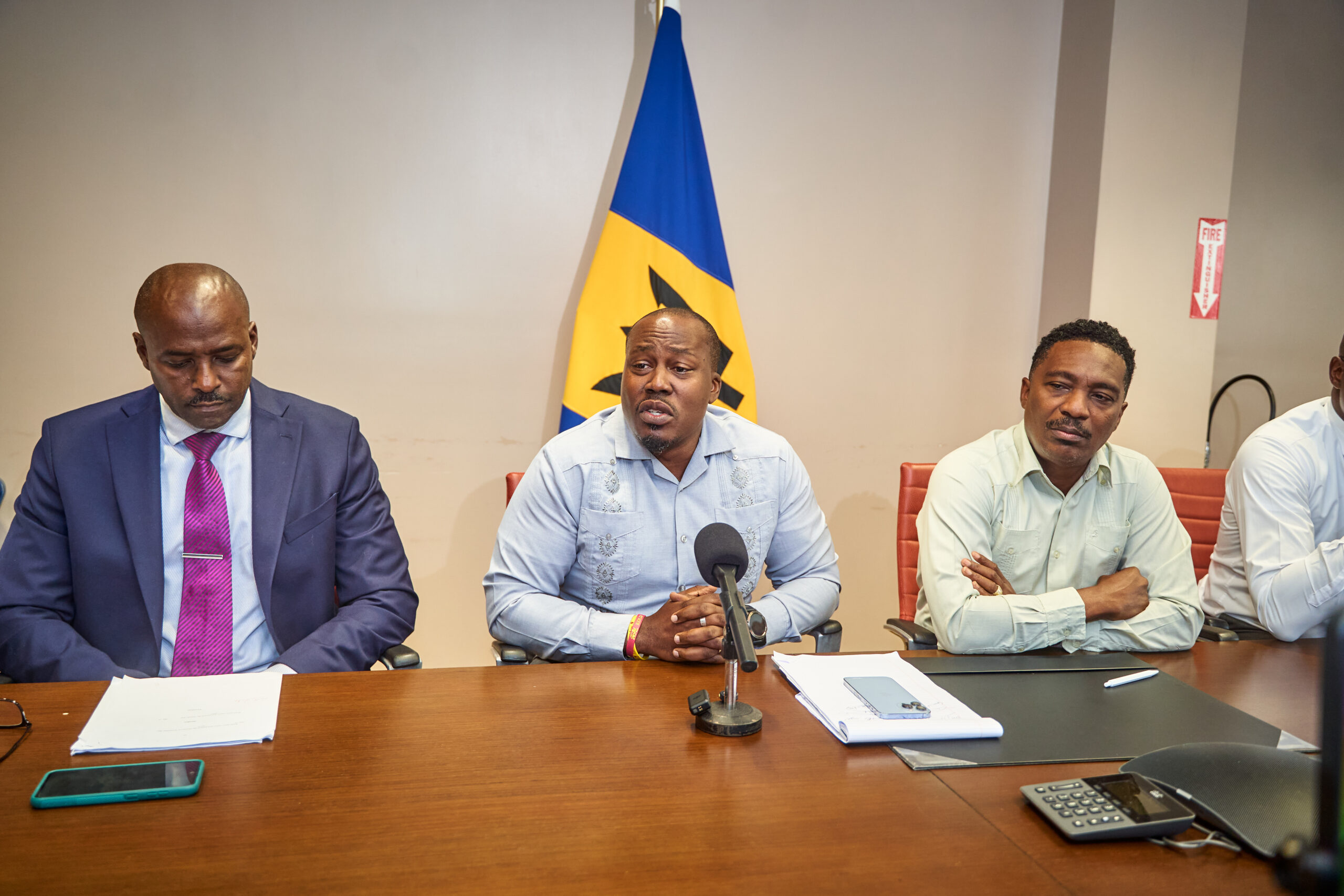
Barbados is taking a firm stance against neglected properties with the introduction of new regulations under the Health Services (Amendment) Act, set to take effect on November 1. Minister of the Environment Adrian Forde announced that property owners who fail to maintain their land will face financial penalties. The law targets overgrown and disused lots, which have become a growing concern across the island. Once notified, property owners will have 21 days to clean their lots. Failure to comply will result in an initial fine of $300, with an additional $10 charged daily until the property is cleaned. Minister Forde emphasized the importance of collective responsibility in preserving Barbados’ beauty and cleanliness, stating, ‘We cannot have the most beautiful island in the Western Hemisphere unless we equally have all of Barbados working together to achieve this clean and green philosophy.’ He expressed disappointment that legislation was necessary but stressed that the government must act to ensure accountability. Minister in the Ministry of Health Davidson Ishmael highlighted the public health risks posed by overgrown lots, particularly the breeding of mosquitoes, which can spread deadly diseases. He noted that the new law would address long-standing complaints from residents frustrated by neglected properties in their neighborhoods. Project leader Ronald Chapman explained that the new system would streamline the cleanup process and improve cost recovery. Environmental health officers will monitor communities daily, and a dedicated hotline will soon be launched to facilitate public reporting of overgrown properties. The initiative aims to foster a sense of civic duty and protect both the environment and public health.
-
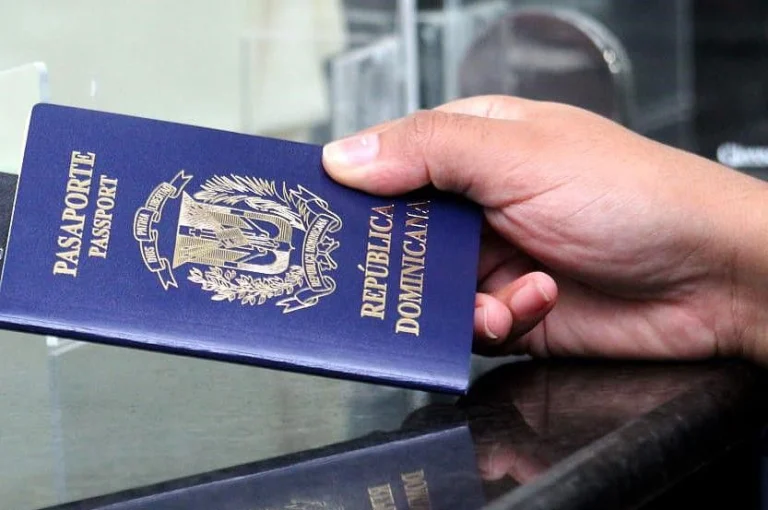
DGP ensures data security in new Electronic Passport system
The Dominican Republic has taken a significant step forward in safeguarding the personal and biometric data of its citizens with the implementation of the new Electronic Passport system. The General Directorate of Passports (DGP) has assured that the system adheres to the highest international standards in identification and cybersecurity, ensuring comprehensive protection of sensitive information.
Lorenzo Ramírez, Director General of the DGP, detailed that the entire process of capturing, processing, and encrypting passport data is conducted exclusively within DGP facilities. This process follows stringent guidelines set by the International Civil Aviation Organization (ICAO). Ramírez emphasized that passport booklets arrive in the country blank and are personalized locally using encrypted systems. This ensures that no foreign entity has access to the national passport database, and the Dominican State maintains full control over the system’s source codes.
The Electronic Passport project was awarded to the Franco-American consortium EMT, which includes Entrust (United States), Midas Dominicana, and Thales (France). These companies are globally recognized for their expertise in secure document and digital identity solutions. The DGP highlighted that this initiative represents a historic milestone in the modernization of national travel documents and enhances global trust in Dominican passports.
In accordance with Decree 438-22, the DGP also organized an inter-institutional technical roundtable involving security, civil aviation, and immigration authorities. This collaboration aimed to review the operational and logistical integration of the new system. Additionally, field visits to Las Américas and Punta Cana airports were conducted to validate the infrastructure for biometric passport processing and to ensure more efficient border control operations.
-
Government leads national reforestation effort using native species
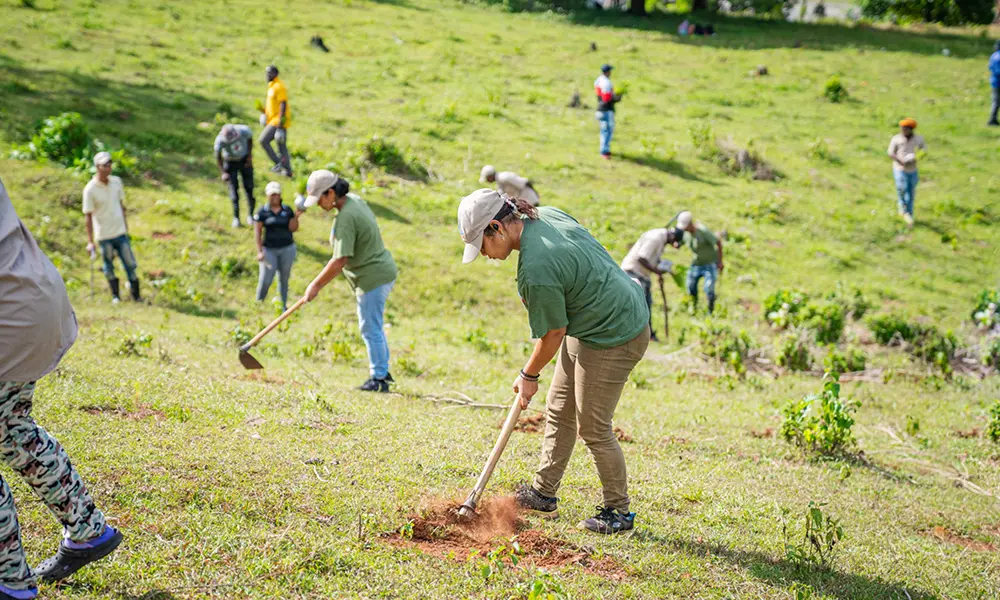
The Dominican Republic is spearheading an ambitious nationwide reforestation initiative this October, designated as Reforestation Month. Led by the Ministry of Environment and Natural Resources, the campaign is being executed through the Reforestation Directorate of the Vice Ministry of Forest Resources. Over fifty tree-planting events are planned across the country, with the goal of planting more than one million native and endemic seedlings on over 20,000 acres of land impacted by human activities. This effort is supported by a coalition of public institutions, non-governmental organizations, and private companies, all united in their mission to safeguard water resources and mitigate the adverse effects of climate change.
October was strategically chosen for the campaign due to the favorable conditions provided by the rainy season, which enhances seedling growth. Among the diverse species to be planted are Criollo and Caribbean pine, caracolí, white and red cedar, juniper, cabirma, mahogany, almond, and Creole oak. These species are selected for their ecological significance and adaptability to the local environment.
This initiative is a critical component of the National Plan for Reforestation and Restoration of Forest Ecosystems, which was launched by President Luis Abinader in June 2023. Now in its second phase, the plan focuses on restoring degraded forest areas, increasing tree cover, improving water quality, and enhancing carbon sequestration. The provinces most actively involved in the campaign include Dajabón, Santiago Rodríguez, San Juan, Elías Piña, La Vega, Monseñor Nouel, Peravia, Sánchez Ramírez, Santiago, San Cristóbal, Monte Plata, San Pedro de Macorís, and Hato Mayor.
The large-scale reforestation effort underscores the Dominican Republic’s commitment to environmental sustainability and climate resilience. By addressing deforestation and promoting ecosystem restoration, the initiative aims to create a healthier environment for current and future generations.
-
Converting into liquefied natural gas not a priority – ExxonMobil Guyana’s chief
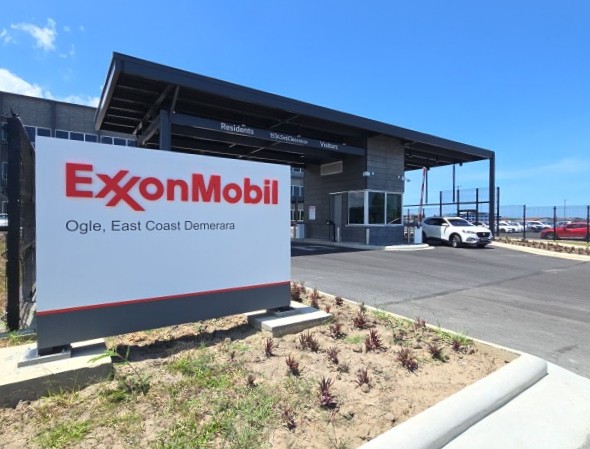
ExxonMobil Guyana’s CEO, Alistair Routledge, announced on Monday that the company’s focus in Guyana will be on utilizing natural gas for domestic growth rather than converting it into Liquefied Natural Gas (LNG) for export. This decision comes as ExxonMobil prepares to develop its first non-associated gas field at Longtail in the Stabroek Block. Routledge emphasized that the gas would primarily support power generation, data centers, and an alumina plant, aligning with Guyana’s broader economic development goals. While LNG conversion remains an option, the immediate priority is to maximize the gas’s value within the country. The company aims to complete environmental impact studies by late 2026 and submit a field development plan (FDP) to the Guyanese government. Initial production will focus on condensate, a liquid byproduct of natural gas, for global export. Gas reinjection into wells will also be employed to enhance condensate recovery, with natural gas extraction expected to begin 10 to 15 years after Longtail’s condensate production starts. ExxonMobil forecasts a daily production rate of over one billion cubic feet of natural gas from Longtail. In contrast, water reinjection will be used at the Hammerhead field, which contains heavier oil, with gas potentially exported to existing pipelines or the Liza Unity FPSO to boost oil recovery.
-

From Cuba, the voices of the left
This week, Havana is set to host two significant international events: the Third International Meeting of Theoretical Publications of Left-Wing Parties and Movements and the First Granma Rebelde Festival. Both events are dedicated to commemorating the centenary of Commander-in-Chief Fidel Castro Ruz. The first event will take place from October 15 to 17 at the Ñico López Party University, while the festival will run from the afternoon of October 17 until October 19 at Línea and 18 in Havana’s Vedado neighborhood. These closely linked events will bring together over 100 participants from more than 30 countries, focusing on collective strategies, critical issues, and promoting equality, solidarity, and participatory democracy. The Publications Meeting, convened by Cuba Socialista and co-sponsored by the Network of Intellectuals and Artists in Defense of Humanity and Casa de las Américas, will feature prominent intellectuals, activists, and political scientists, including Ignacio Ramonet, who will deliver the keynote address on the challenges posed to the left by quantum artificial intelligence. Other notable attendees include Mexican artist and philosopher Fernando Buen Abad, Cuban scholar Isabel Monal, José Luis Centella of the Communist Party of Spain, and Miguel Ángel Pérez Pirela, director of La Iguana TV. High-level delegations from China and Vietnam will also be present. The event will include simultaneous workshops and panels on topics such as new types of fascism, political communication, and youth for a better future. Additionally, there will be a presentation of books on the thinking of various leaders and the launch of the 2024-2025 issue of Cuba Socialista, summarizing the previous edition of the Meeting. The Granma Rebelde Festival, dedicated to the 60th anniversary of the Granma and Juventud Rebelde newspapers, as well as the centenaries of the first Communist Party and Fidel Castro Ruz, will feature media experiences from across the island and abroad. Prestigious artists and musicians will enliven the event, with activities open to the public on weekends from 10 a.m. to 7 p.m. These activities will include several panels, such as one on the figure of Fidel Castro, where journalists who knew him will exchange views.
-

UN celebrates 80 years with free fair in Santo Domingo
The United Nations System is set to mark its 80th anniversary with a vibrant public fair titled “UN Fair: 80 Years Building the Future!” The event will take place on October 17 and 18, from 10:00 a.m. to 5:00 p.m., at the Publishing Pavilion in the Plaza de la Cultura, Santo Domingo. Open to all, the fair aims to engage citizens, particularly youth and families, in exploring the UN’s global and national contributions through a variety of activities, including exhibitions, interactive spaces, and panel discussions. These will highlight eight decades of collaboration between the UN and the Dominican Republic, emphasizing themes such as peace, equality, sustainability, and human rights. The two-day celebration will feature a diverse program of artistic performances, storytelling, and interactive experiences designed to educate and inspire. The event is supported by key national institutions, including the Presidency of the Republic, the Ministries of Culture and Education, PLERD-MINERD, the UNESCO Associated Schools Network, and the Mayor’s Office of the National District. Additionally, private sector and civil society partners such as Mercasid Group, the Association of Multiple Banks (ABA), KahKow, “El Sistema de Punta Cana,” and FUNDARMONIARTES have joined the initiative. Julia del Carmen Sánchez, UN Resident Coordinator in the Dominican Republic, emphasized that the fair aims to empower citizens, especially young people, as agents of change while celebrating the enduring partnership between the UN and the Dominican Republic in fostering sustainable development and equal opportunities.