
As the election season gains momentum, the Castries Central constituency has emerged as a focal point of political intrigue following attorney-at-law Stanley Felix’s announcement to run as an independent candidate. Felix declared his candidacy on October 13 during a special broadcast on DBS Television, marking his dramatic return to politics after a decade-long hiatus. His campaign, symbolized by the color orange and the slogan ‘Let Castries Central Breathe Again,’ aims to transcend traditional party lines and address community disillusionment. Felix, a former Senate President under the Saint Lucia Labour Party (SLP), previously contested the seat in 2011, narrowly losing to Richard Frederick of the United Workers Party (UWP). This time, both Felix and Frederick will compete as independents, with Rosh Clarke representing the UWP. In his address, Felix emphasized his commitment to people over power, citing the neglect of community needs as his primary motivation. He spoke passionately about his deep ties to Castries Central, highlighting issues such as hunger, youth unemployment, and the marginalization of vendors and elders. Felix also shared personal experiences of betrayal in politics, framing them as refining rather than breaking him. His campaign, anchored in the slogan ‘Annou Viv Ansanm’ (Let us live together), promises to restore dignity, honesty, and hope through improved community safety, youth employment, and accountable governance. Felix clarified that his candidacy is self-driven, free from external political influence, signaling a bold new chapter in his political journey.
博客
-

Currency and Oneale lead Wildey to back-to-back titles
In a thrilling display of resilience and skill, Wildey Cricket Club emerged victorious against Superb Blend Gladiola, securing a 51-run win to retain their title in the 2025 Barbados Cricket Association (BCA) Elite/Division 1 Super Cup Championship. The match, held at the iconic Kensington Oval on Sunday, showcased Wildey’s ability to overcome early setbacks and deliver a dominant performance.
-

Campbell, Hope hit tons, but India poised for series sweep
India stands on the cusp of a series-clinching victory over the West Indies after a dramatic fourth day in the second Test match on Monday. Despite valiant centuries from John Campbell and Shai Hope, the West Indies suffered a catastrophic middle-order collapse, ultimately being bowled out for 390. This left India with a modest target of 121 runs for victory, which they began confidently, ending the day at 63 for one. With just 58 runs needed on the final day, India is poised to secure a 2-0 series win. The West Indies, resuming at 173 for two, had high hopes after Campbell notched his maiden Test century and Hope ended an eight-year drought with his third. However, their efforts were undone by a stunning collapse from 271 for three to 311 for nine in just 11 overs. India’s bowlers, led by Jasprit Bumrah (3-44) and Kuldeep Yadav (3-104), capitalized on the Windies’ fragility. Despite a late 79-run partnership for the tenth wicket, the West Indies could not recover. India’s openers, Yashasvi Jaiswal and Sai Sudharson, along with KL Rahul, have set the stage for a decisive final day.
-

PM Hails Outgoing Chinese Ambassador as “Extraordinary Diplomat”
Prime Minister Gaston Browne of Antigua and Barbuda has lauded outgoing Chinese Ambassador Zhang Yanling as an exceptional diplomat who significantly bolstered the relationship between the two nations during her tenure. Speaking at a farewell reception on Monday evening, Browne highlighted Ambassador Zhang’s professionalism, humility, and leadership, particularly during the challenging times of the COVID-19 pandemic. He acknowledged her pivotal role in securing vaccines and medical supplies from China, which were crucial for the Caribbean nation’s pandemic response. Browne also credited her with advancing key development projects, such as the Booby Alley Housing Redevelopment Project, and securing financial support for major international events, including the SIDS4 Conference and the OAS General Assembly. ‘It’s not very often that we hold farewell receptions for ambassadors,’ Browne remarked, ‘but this event speaks volumes about her impact and the affection she has earned.’ The Prime Minister’s tribute underscored the deep appreciation for Ambassador Zhang’s contributions to fostering stronger diplomatic and developmental ties between Antigua and Barbuda and China.
-
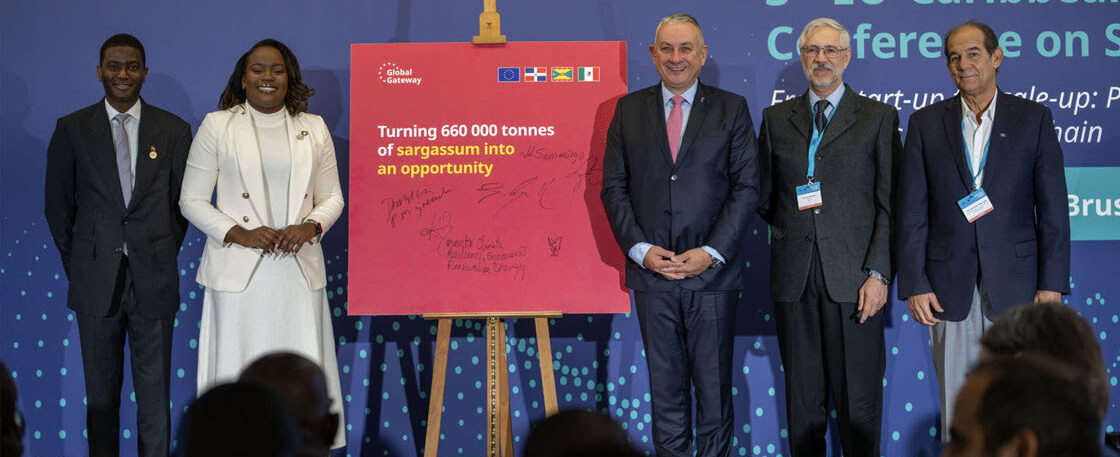
Global Gateway Forum: EU Collab to develop value chains, create employment opportunities in region with Sargassum
For over a decade, the Caribbean coastlines have been grappling with extensive sargassum seaweed blooms, severely impacting fishing, tourism, and local communities. These blooms have caused economic losses amounting to millions of dollars, according to a recent media statement. In a bid to address this environmental challenge, the European Union (EU), through its Global Gateway Investment Agenda, has joined forces with Team Europe and Caribbean partners to turn the crisis into an opportunity for cleaner beaches, job creation, and the growth of local enterprises. The third edition of the EU-Caribbean Global Gateway Conference, held recently, focused exclusively on sargassum, shifting from research and pilot projects to actionable solutions. The conference brought together representatives from governments, the private sector, academia, and international financial institutions to discuss sustainable management and economic utilization of sargassum. Jozef Síkela, the EU’s Commissioner for International Partnerships, highlighted the initiative’s potential to transform the crisis into a source of jobs, innovation, and clean energy. During the event, Grenada, the Dominican Republic, and Mexico pledged to collect and process a combined total of 660,000 tonnes of sargassum between 2026 and 2027. This ambitious commitment marks the first step toward creating a regional market for sargassum-derived products, supported by EU initiatives to attract investment and develop sustainable policies. The conference concluded with the announcement of a fourth EU-Caribbean Global Gateway Conference on Sargassum, to be held in Mexico, ensuring continued momentum in scaling up solutions across the Caribbean.
-
The CARICOM governance paradox: Building free movement in a region without privacy
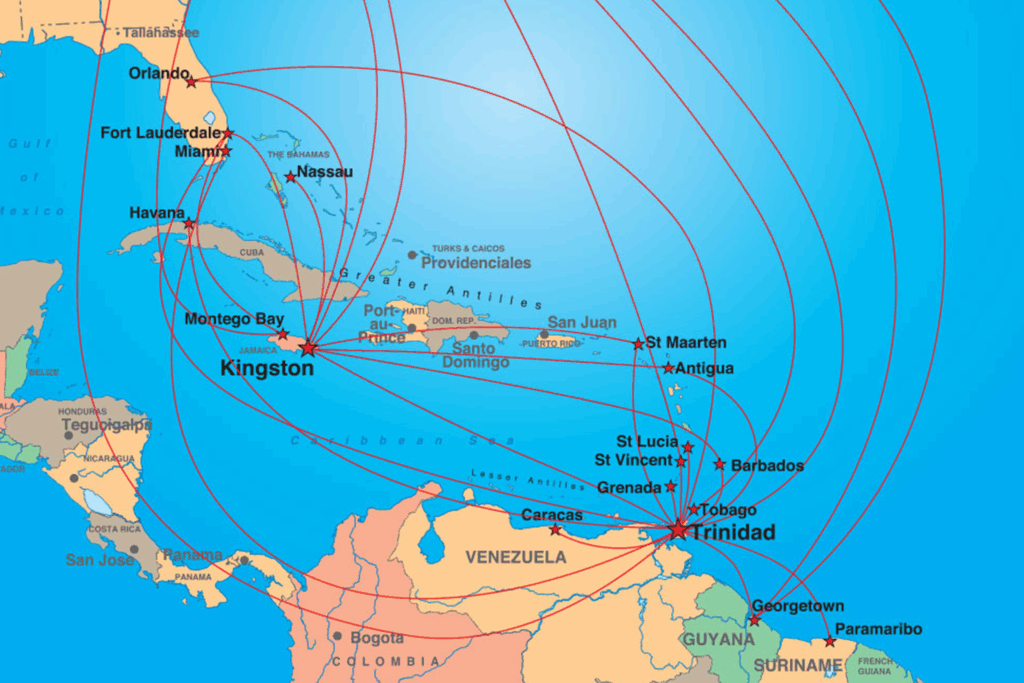
The recent announcement by CARICOM granting citizens of Barbados, Belize, Dominica, and St Vincent and the Grenadines the right to live and work freely across each other’s borders signifies a pivotal moment in the Caribbean’s long-standing vision of regional integration. However, this progressive step is overshadowed by significant structural challenges, particularly in the realms of data protection, privacy oversight, and the inconsistent definition of a ‘CARICOM citizen’ across member states.
-

Stichting 8 December 1982: Gratie voor onrecht is ondenkbaar
The Foundation December 8, 1982 has issued a sharp rebuke against statements made during the recent NDP commemoration event marking the 80th birthday of Desi Bouterse. The organization labeled the remarks regarding the December 8 trial as ‘a gross violation of the rule of law’ and ‘a blatant insult to the families of the victims.’ The Foundation emphasized that the verdict against the convicted individuals was reached after a meticulous and independent legal process, upheld by the highest judicial authorities, and thus remains legally incontrovertible and binding. It criticized attempts to portray the trial as a political conspiracy, undermining the rule of law. The Foundation also condemned efforts to downplay the crimes of December 8, 1982, as a ‘political process’ or to elevate the convicted to the status of ‘comrades.’ It stressed that political leadership must never be used to justify serious human rights violations or trivialize the suffering of victims and their families. The Foundation rejected the notion of a pardon request as a means to achieve impunity, stating that clemency should not be manipulated for partisan political interests but reserved for humanitarian grounds, which are absent in this case. It urged the President of Suriname to resist political pressure from those seeking to exploit the highest office for party gains, warning that such actions would undermine the presidency’s authority both nationally and internationally. The Foundation reiterated that the rule of law is non-negotiable, and truth and justice for the victims are paramount.
-
PM Browne Meets with The Antigua and Barbuda and Montserrat Bankers Association
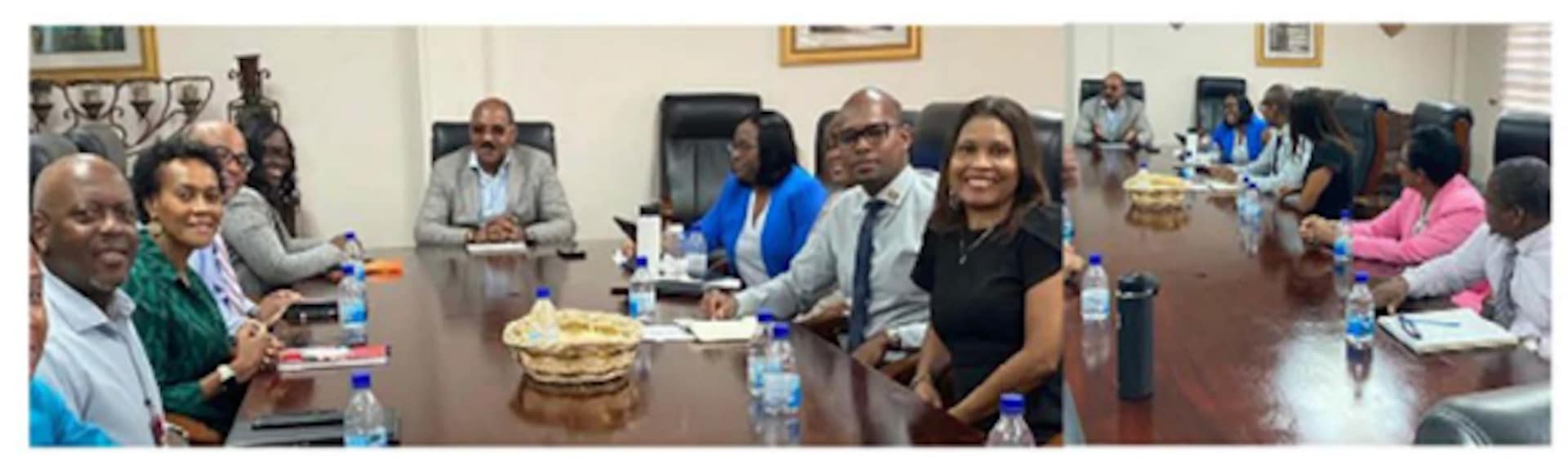
The Antigua and Barbuda and Montserrat Bankers Association (ABMBA) recently convened with Prime Minister Gaston Browne and senior officials from the Ministry of Finance and Corporate Governance to bolster collaboration on financial inclusion and sector resilience. The meeting, held in recognition of October as Financial Literacy Month within the Eastern Caribbean Currency Union (ECCU), emphasized the importance of integrating financial education into national school curricula.
Discussions centered on improving access to financial services for underserved and vulnerable groups, as well as enhancing business confidence across the nation. Both parties reaffirmed their commitment to developing innovative financial products and expanding credit access for small and medium-sized enterprises (SMEs). This initiative is part of a broader roadmap aimed at promoting economic empowerment and fostering long-term collaboration in the banking sector.
Addressing regional and local concerns, the ABMBA and the Ministry of Finance highlighted the rise in banking-related crimes. They urged the public to remain vigilant against scams and fraudulent schemes, agreeing to expand public awareness campaigns that promote responsible banking practices.
The Ministry of Finance and the ABMBA reiterated their dedication to building a secure, inclusive, and resilient financial system that supports the economic advancement of citizens across Antigua and Barbuda and Montserrat.
-
Hezekiah Parker Jr. Fined $10,000 for Cannabis Possession
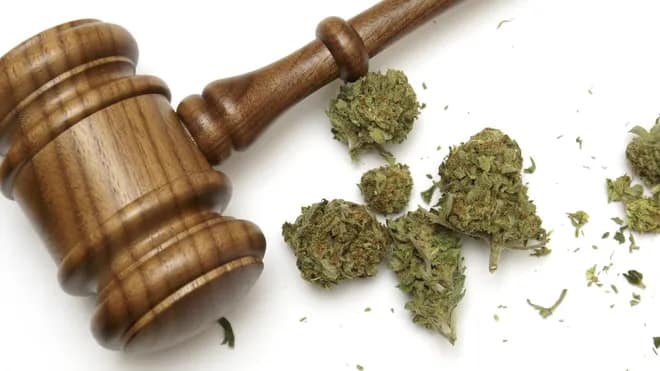
Hezekiah Parker Jr. has been sentenced to pay a $10,000 fine after pleading guilty to cannabis possession. The verdict was delivered on Monday, with Parker given a one-year deadline to settle the fine. Failure to comply will result in a one-year prison term. The case originated from a police operation on June 1, where officers executed a search warrant at Parker’s residence. During the search, authorities reportedly uncovered 127 grams of cannabis, valued at $1,270, alongside a sum of cash that was seized. Parker was subsequently arrested and charged. He had been on bail since his arrest and entered a guilty plea last month before Magistrate Ngaio Emanuel. This case highlights the ongoing legal repercussions of cannabis possession in the region, despite shifting attitudes toward the substance globally.
-
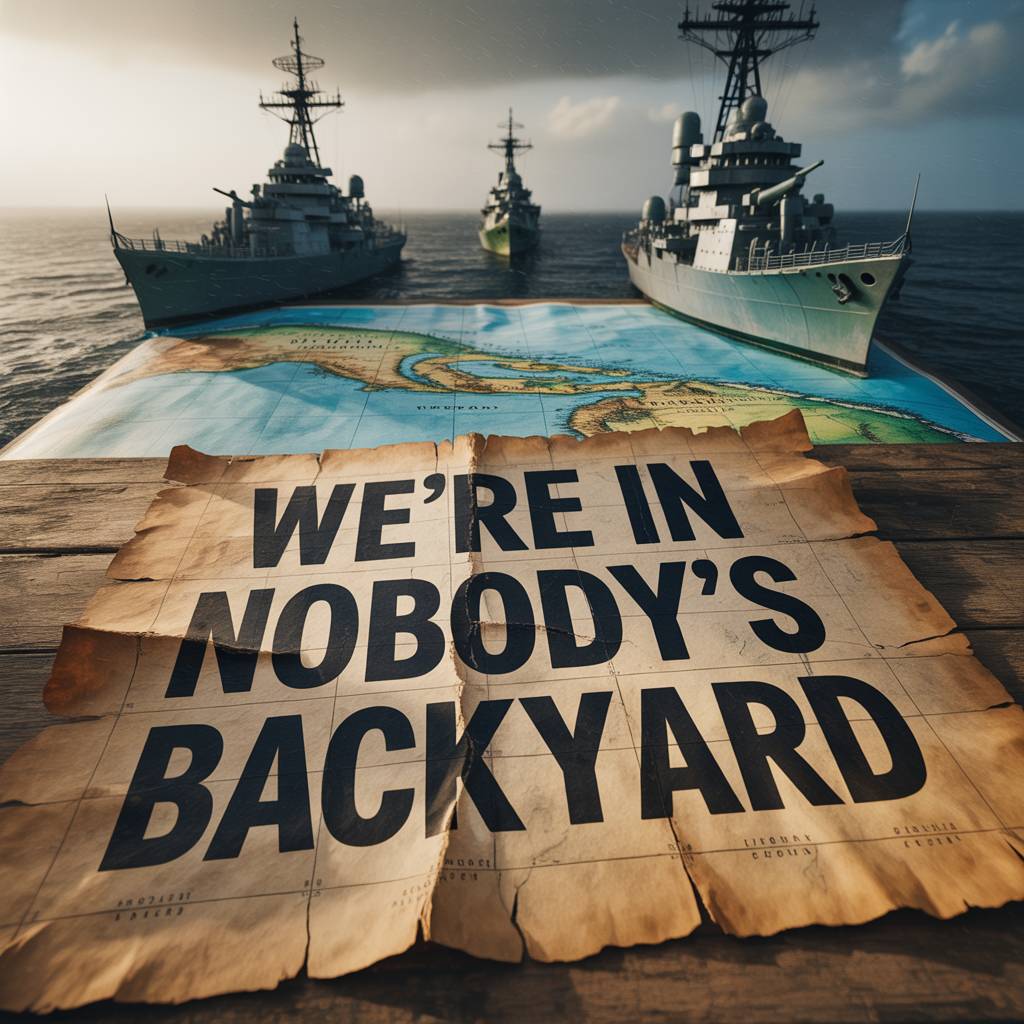
No longer anyone’s backyard
For decades, the Caribbean has been burdened by the metaphor of being ‘somebody’s backyard,’ a phrase often used by policymakers, diplomats, and even regional leaders. This imagery has perpetuated a narrative of passivity and subordination, where the sovereignty of small nations is overshadowed by the interests of global powers. However, as the geopolitical landscape shifts with the United States, China, and Europe vying for influence, the Caribbean is increasingly asserting its independence and strategic value. Recent developments, such as the US request to install military radar in Grenada, Guyana’s oil-driven economic boom, and China’s infrastructure investments, highlight the region’s growing geostrategic importance. Yet, the implications of this renewed attention are deeply felt in the daily lives of Caribbean citizens, from democratic struggles to economic challenges. The region’s leaders and grassroots movements are redefining the terms of engagement with external powers, negotiating with newfound confidence. The legacy of Maurice Bishop, Grenada’s former Prime Minister, who famously declared, ‘we are in nobody’s backyard,’ serves as a poignant reminder of the ongoing struggle for sovereignty and regional unity. The Caribbean’s history of resistance to imperial dominance, from the Monroe Doctrine to Cold War interventions, underscores its resilience and determination to chart its own course. Today, the region is navigating a complex web of global interests, from China’s Belt and Road Initiative to European colonial reparations debates, while addressing internal vulnerabilities such as public finances and political polarization. The Caribbean’s strength lies in its ability to build flexible coalitions, balancing relationships with competing powers while prioritizing the interests of its people, environment, and culture. As the 21st-century ‘Great Game’ unfolds over cyberinfrastructure, climate adaptation, and energy, the Caribbean’s strategic importance will only grow. The challenge is to remain vigilant against the transactional temptations of big-power deals while building robust institutions and policies that safeguard the region’s autonomy. The Caribbean is not and has never truly been anyone’s backyard. Its societies are mosaics of resilience, creativity, and irrepressible agency, determined to define their own destinies.