博客

  • Greene Defends Road Programme, Says Works in St. Paul’s Are Planned, Not Rushed

    Greene Defends Road Programme, Says Works in St. Paul’s Are Planned, Not Rushed

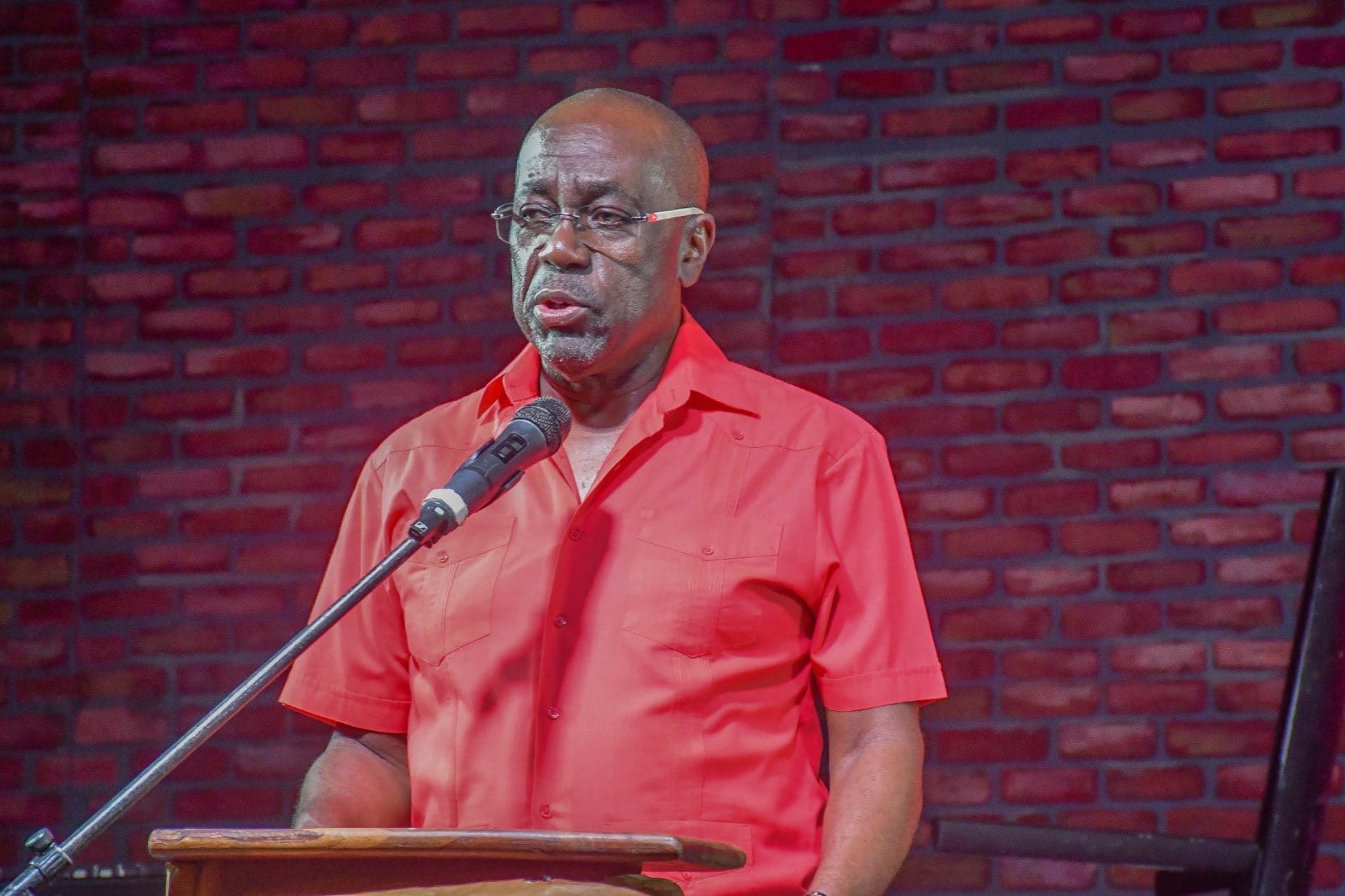
    Amid growing resident speculation that current road construction projects across St. Paul’s constituency are a rushed pre-election publicity push, Antiguan cabinet minister E. P. Chet Greene has pushed back against these claims, framing the ongoing works as a carefully designed, multi-year long-term infrastructure improvement strategy for the region and the entire country.

    Greene addressed constituent concerns directly during a recent community meeting, where local residents had raised questions about project timing, construction quality, funding transparency, and public safety alongside existing poor road conditions in some neighborhoods. Rejecting outright assertions that crews were rushing work to beat a potential election timeline, he emphasized that the entire programme follows a structured, phased rollout that has been in motion across Antigua for nearly two years.

    “This is not a rush job to check boxes ahead of a vote — we are rolling out projects according to a pre-set plan,” Greene explained. “Major improvements to the country’s core transportation network have been ongoing across the entire nation for the past 24 months, ranging from full upgrades of primary highways to critical arterial routes that connect communities and facilitate commerce.”

    The centerpiece of the current work phase in St. Paul’s is the long-awaited rehabilitation of All Saints Road, a project that Greene says will deliver transformative improvements to regional transportation connectivity. He confirmed that construction has already begun on the high-demand route, noting that the programme extends far beyond major thoroughfares to include incremental upgrades to secondary feeder roads and smaller neighborhood routes. These secondary upgrades are targeted at boosting access for both local residents and small businesses that rely on passable infrastructure for daily operations.

    To address constituent worries over the allocation and use of public funding for the projects, Greene offered explicit reassurance that all resources budgeted for roadworks are being dedicated exclusively to infrastructure development. “The money appropriated for this programme is going directly to fixing roads,” he said, confirming that long-term financing structures are already in place to support continued, incremental improvements across the constituency in coming years.

    In response to resident concerns about persistent poor road conditions and public safety hazards in under-upkept areas, Greene noted that the government’s approach prioritizes long-lasting, durable solutions over quick, low-quality fixes. To extend the functional lifespan of new and reconstructed roads, the ministry is utilizing more resilient, weather-resistant construction materials that can withstand heavy use and local climate conditions. He also called on local community members to partner with the government in preserving new infrastructure, urging residents to avoid actions that could cause premature damage to freshly completed road surfaces.

    Greene wrapped up his remarks by reaffirming that the St. Paul’s road programme forms one core pillar of a broader regional development agenda. He stressed that reliable, well-maintained transportation infrastructure is a foundational requirement for supporting sustained economic activity and improving quality of life for all residents of the constituency.

  • Three Writers from Antigua and Barbuda Named to 2026 Commonwealth Short Story Prize Longlist

    Three Writers from Antigua and Barbuda Named to 2026 Commonwealth Short Story Prize Longlist

    In a landmark moment for Caribbean literary talent, three writers from the twin-island nation of Antigua and Barbuda have secured a place on the longlist for the 2026 Commonwealth Short Story Prize, earning international recognition among the most promising emerging literary voices across the 56-nation Commonwealth bloc.

    The Commonwealth Foundation, the organization that stewards the prestigious annual award, publicly revealed the full longlist on April 14. This year’s competition drew a staggering 7,806 submissions from writers across all Commonwealth member states, making the cut to the longlist a rare and high-accomplishment milestone. Only under 200 entries advanced to this stage of the selection process, turning the longlist inclusion itself into a mark of exceptional creative achievement.

    The Antigua and Barbuda representatives joining the longlist are Ulah Wijnaldum, selected for his work *“A Story of Love and Betrayal,”* Jonella B. Solliegne, recognized for *“Under the Silk Cotton Tree,”* and Lester Simon, whose submission *“Viola Pan”* earned him a spot. While none of the longlisted stories will be published as part of the prize program, the Commonwealth Foundation has framed the three selected creators as “voices to watch” in the global literary landscape in the coming years.

    Established to elevate unrecognized creative talent, the Commonwealth Short Story Prize stands as one of the world’s most prestigious awards for unpublished short fiction. It attracts submissions from five global regions: Africa, Asia, the Caribbean, Europe, and the Pacific, serving as a critical launchpad for emerging writers. The longlist stage has long functioned as an early indicator of rising creative talent, often unlocking new regional and global opportunities for writers at every phase of their professional careers.

    For Antigua and Barbuda, the placement of three local writers on the longlist underscores the nation’s consistent, growing presence in global and regional literary spaces. It reflects the expanding body of dynamic creative work that continues to emerge from the small twin-island state, cementing its reputation as a source of compelling Caribbean storytelling.

    In the coming months, the competition will move to its next phase: the shortlist of finalists is set to be announced later this year, followed by the reveal of overall and regional award winners. The global literary community will now turn its attention to this next stage, watching closely to see if any of Antigua and Barbuda’s longlisted writers advance to compete for the top prize.

  • Government delivers RD$178 million for athletes ahead of XXV Central American and Caribbean Games

    Government delivers RD$178 million for athletes ahead of XXV Central American and Caribbean Games

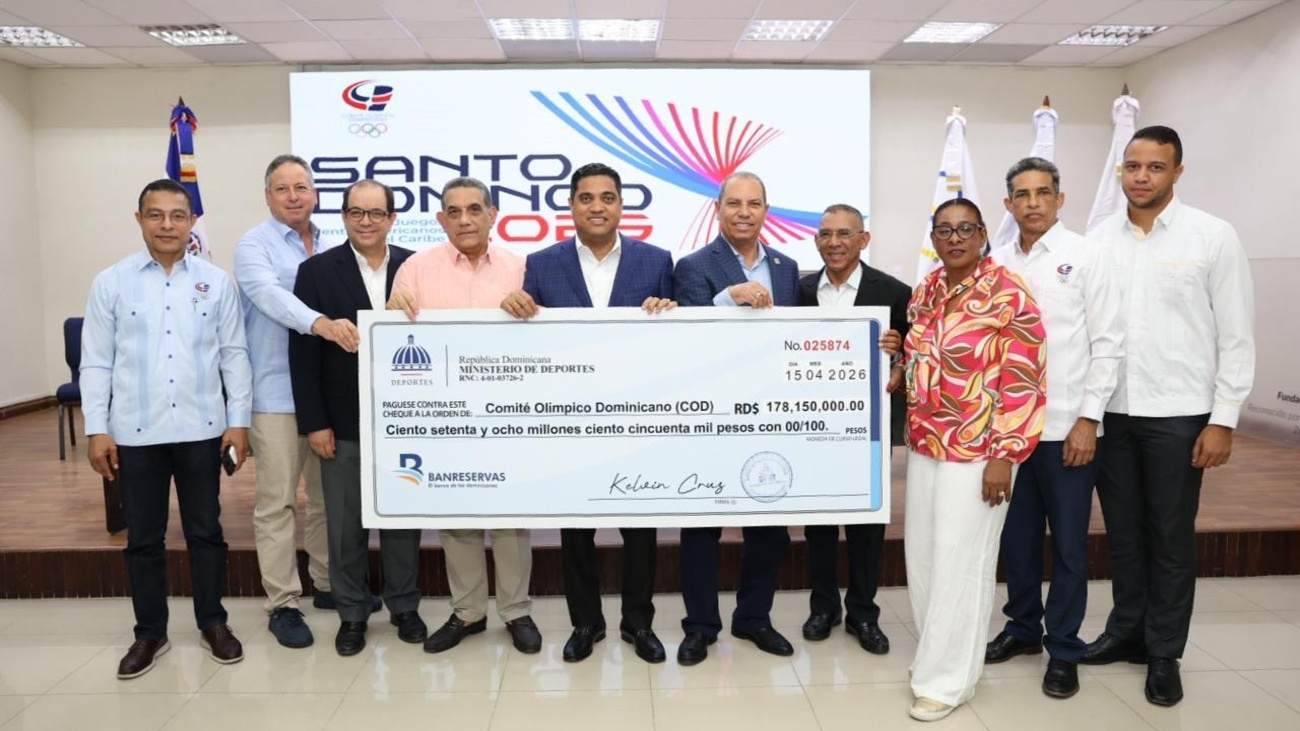
    SANTO DOMINGO — In a critical step forward for pre-event preparations, Dominican Republic’s Minister of Sports Kelvin Cruz has formally issued a fourth round of government funding to the Dominican Olympic Committee (COD) to support Dominican athletes training for the 2026 Central American and Caribbean Games, which will be hosted on local soil in Santo Domingo.

    The official handover ceremony, held at COD headquarters, saw Cruz transfer RD$178.1 million to Garibaldy Bautista, the president of the organization. With this latest allocation, the total government investment in the country’s preparations for the 2026 regional games has risen to RD$743.8 million, after three earlier disbursements that combined to more than RD$565 million.

    Speaking at the event, Cruz laid out how the new injection of capital will benefit the country’s athletic pipeline: the funds will be directed toward expanding and strengthening existing athlete training programs, as well as enabling the recruitment of high-caliber, specialized coaching staff from around the region. Cruz stressed that intentional, well-resourced preparation is the non-negotiable foundation for both successfully hosting the multi-sport event and delivering strong competitive results on behalf of the nation.

    He also drew attention to the unwavering commitment of Dominican President Luis Abinader to the project, noting that the administration has prioritized securing the resources needed to put on a well-organized, world-class competition and position Dominican athletes for success.

    Leadership at the COD has voiced strong approval of the timely government support, emphasizing that consistent, predictable funding is essential to keeping training on track and maintaining elite-level readiness among the country’s top athletes ahead of the 2026 games. COD representatives added that this sustained investment gives the organization the stability it needs to plan long-term and maximize Dominican chances of earning top finishes at the regional competition.

  • Cricket West Indies Plans Partnership to Grow T20 League in Canada

    Cricket West Indies Plans Partnership to Grow T20 League in Canada

    Cricket’s global reach continues to expand beyond its traditional strongholds, and the latest development comes from Cricket West Indies (CWI), which has announced a proactive plan to forge a new partnership aimed at growing the popularity and scale of T20 cricket leagues in Canada. The move marks a key strategic step for CWI as it taps into the fast-growing North American cricket market, where the shorter, high-energy T20 format has gained increasing traction among diverse fan bases over the past decade.

    Canada, home to a large and passionate diaspora of cricket fans from South Asia, the Caribbean, and other cricket-loving regions, has emerged as an untapped opportunity for professional T20 competition. CWI officials note that existing domestic T20 competitions in Canada have yet to reach their full commercial and audience potential, hampered by limited infrastructure investment, broadcast reach, and high-profile player participation. By leveraging CWI’s decades of experience in organizing world-class T20 events and its deep network of top-tier cricket talent, the planned partnership aims to address these gaps.

    The partnership is expected to bring multiple benefits to the Canadian cricket ecosystem. It will facilitate knowledge sharing between Caribbean and Canadian cricket administrators, help secure sponsorship and broadcast deals to increase the league’s visibility, and create pathways for young Canadian players to train and compete alongside experienced international professionals. CWI’s leadership also emphasized that the initiative aligns with global cricket’s push to grow the sport ahead of the 2024 T20 World Cup and cricket’s return to the Olympic Games in 2028, which will be hosted in Los Angeles, just south of the Canadian border.

    Industry analysts point out that this move fits into a broader trend of established cricket governing bodies from traditional cricketing nations investing in North American markets. With growing interest from global sports media and commercial sponsors in expanding cricket into new regions, the CWI-Canada partnership could serve as a model for future growth initiatives across North America.

  • Dominica draw with Antigua and Barbuda in Concacaf Women Qualifiers

    Dominica draw with Antigua and Barbuda in Concacaf Women Qualifiers

    The 2025/26 Concacaf W Qualifiers continued its Group B action on Tuesday at Saint Lucia’s iconic Daren Sammy Cricket Ground in Gros Islet, where two Caribbean underdogs—Dominica and Antigua and Barbuda—battled to an action-packed 1-1 draw that ended lengthy losing skids for both national women’s sides. After more than an hour of tight, physical defense that kept both offenses off the scoreboard, Dominica’s young forward Trinity Esprit made history in the 63rd minute, breaking the deadlock with a clinical close-range shot inside the box to put her nation up 1-0.

    The game remained locked in that scoreline deep into stoppage time, until Antigua and Barbuda earned a penalty in the 87th minute. Forward Kai Jacobs stepped up to the spot, cooly slotting the ball into the bottom right corner to level the score and secure a share of the points for her side.

    The result marks the end of Antigua and Barbuda’s 2025/26 qualifying campaign, wrapping up their run with a 0 win, 1 draw, and 3 loss record that leaves them sitting in fourth place in the five-team Group B standings. For Dominica, the draw lifts them to a 0-1-2 record so far in the tournament, and the side will look to climb out of the current fifth-place spot when they travel to face Nicaragua this coming Saturday.

    Beyond the final score, the match delivered multiple historic milestones for both teams and players. For Esprit, Tuesday’s strike was her first career goal in Concacaf W Qualifying history, and she becomes just the fourth different player to score for Dominica in a drawn qualifying match. She follows Sheena Bazil and Cassandra Delsol, who each found the net in a 2-2 draw with Grenada back in May 2006, and Romelcia Phillip, who scored in a 1-1 draw against Grenada in May 2018. This draw is also Dominica’s third drawn result all-time in Concacaf W qualifying, and it snapped two negative streaks for the side: a three-match losing run in qualifying and a three-match scoreless drought. Even with the positive result, Dominica extends its current winless run to four consecutive matches, with one draw and three losses in that stretch.

    For Jacobs, her equalizer carried its own historical weight. The penalty goal was Jacobs’ fourth career goal in Concacaf W Qualifying, and her first goal in the 2025/26 edition of the tournament. She previously notched one goal against Cuba in 2010, and two more in 2022 against Anguilla and Suriname respectively. This marks only the second time Jacobs has scored in a qualifying match and seen her team avoid defeat, following a 1-0 win over Anguilla in April 2022. The draw also ended Antigua and Barbuda’s own four-match losing streak in qualifying, though it extends their current winless run to five consecutive outings (one draw, four losses).

    This 1-1 result is just the second drawn match in Antigua and Barbuda’s qualifying history, coming 20 years after a 0-0 draw with Barbados in March 2006. Statistically, the result also marks the 20th all-time defeat for Antigua and Barbuda in Concacaf W Qualifying, bringing their all-time tournament record to 31 matches played, 9 wins, 2 draws, 20 losses, 22 goals scored, and 99 goals conceded across their history in the competition.

  • ABLP Launches New Website With Voter Tools and Volunteer Sign-Up Ahead of Election

    ABLP Launches New Website With Voter Tools and Volunteer Sign-Up Ahead of Election

    With the upcoming April 30 general election rapidly approaching, political organizations across Antigua and Barbuda are ramping up their digital-focused voter outreach strategies, and the Antigua and Barbuda Labour Party (ABLP) has taken a major step forward with the official launch of its dedicated centralized campaign website.

    Designed as a one-stop digital space for both party loyalists and undecided voters to connect with ABLP’s electoral efforts, the new platform packs a range of practical tools tailored to address pressing voter concerns ahead of polling day. One of its core features is a streamlined section that lets users quickly check and confirm their current voter registration status, eliminating confusion for citizens who may have updated their personal information or moved residences recently. The site also offers clear, step-by-step guidance for voters who need to replace expired electoral identification cards — an issue that has emerged as a top priority for parties this campaign cycle, as expired IDs are a common barrier to participation on election day.

    Beyond voter services, the platform includes an accessible volunteer sign-up portal that opens opportunities for community members to get involved in campaign activities across all 17 of the country’s electoral constituencies. This feature allows grassroots supporters to connect directly with local campaign teams and contribute to get-out-the-vote efforts, candidate outreach, and other key electoral operations.

    A full navigation of the website reveals a thoughtfully structured layout that organizes resources for visitors. Key functional sections are clearly labeled “Check Voter Registration,” “Renew Your Expired ID,” and “Volunteer,” aligning with the party’s focus on removing barriers to participation. Complementing these practical tools are additional content sections: a “Track Record” page that details the ABLP’s past accomplishments in governing, and a “Team Labour” section that introduces all of the party’s electoral candidates to voters. The website’s homepage leads with the slogan “Steady & Strong Leadership,” which echoes the party’s official campaign theme while ending with a call to action, urging all visitors to step forward and play an active role in the upcoming electoral process.

    The launch of this dedicated digital hub comes amid a broader trend of intensified digital outreach by all major parties ahead of the general election. As political organizers increasingly turn to online platforms to connect with voters, voter engagement and ID renewal have solidified their positions as the defining key issues of this 2025 campaign cycle.

  • Government announces first auction of assets seized from criminal networks

    Government announces first auction of assets seized from criminal networks

    In a groundbreaking step toward combating organized crime and redirecting illicit gains toward public welfare, the Dominican Republic is preparing to host its nation’s first-ever public auction of assets confiscated from transnational and domestic criminal networks. This unprecedented initiative, spearheaded by the National Institute for the Custody and Administration of Seized and Confiscated Assets (INCABIDE), is rooted in the country’s current legal framework, with a clear mission to turn illegally obtained property into sustainable funding for community-focused social programs.

    Slated to take place on May 13 at the Autonomous University of Santo Domingo, the upcoming auction features a diverse catalog of seized properties ranging from private aircraft and luxury yachts to residential and commercial real estate, high-end vehicles, and premium jewelry. All items up for bid have been definitively linked to serious criminal activities, including large-scale drug trafficking, cross-border money laundering, and public sector corruption, authorities confirmed.

    For individuals and entities interested in participating, the Dominican government has outlined clear registration requirements. All bidders must complete their registration in person by May 1 at INCABIDE’s headquarters located in Arroyo Hondo Viejo, and submit a non-refundable registration fee of 5,000 Dominican pesos (RD$). For high-value assets with a minimum valuation exceeding RD$5 million, participants are additionally required to put down a 10% deposit of the asset’s base value to secure their bidding eligibility.

    Officials leading the initiative have stressed that every asset included in the auction has completed the full legal adjudication process outlined under the country’s Law 60-23, guaranteeing that successful buyers will receive full, clear and unencumbered ownership of their purchases. Once the auction concludes, all net proceeds will be allocated exclusively to crime prevention initiatives and social compensation programs designed to support communities harmed by criminal activity.

    This landmark event is widely viewed as a pivotal milestone for the Dominican Republic’s anti-crime and governance reform efforts, demonstrating the government’s commitment to increasing institutional transparency and turning criminal assets into resources that deliver tangible benefits to the general public, rather than allowing illicit gains to remain in the hands of criminal networks.

  • Column: VAR, voedingsbodem voor manipulatie?

    Column: VAR, voedingsbodem voor manipulatie?

    For decades, major international football tournaments have been dogged by persistent rumors of third-party manipulation of match results. While high-profile scandals occasionally break that implicate players and match officials in match-fixing schemes, proving that final scores do not reflect on-pitch performance has long remained an enormous challenge. Many football fans accepted the disruptions and stoppages that came with the introduction of the Video Assistant Referee (VAR) system, clinging to the promise that the technology would deliver greater fairness to the sport. Now, that optimism has been exposed as unfounded: far from leveling the playing field, VAR has actually opened a new door for premeditated manipulation of matches, argues Dutch sports commentator Mireille Hoepel.

    In recent years, the evolution of VAR’s role in elite football has turned the system into the single most decisive factor in match outcomes, allowing results to be shaped long before the final whistle blows. Particularly controversial decisions during recent UEFA Champions League quarter-finals have fueled claims of off-field direction: critics suggest hidden regulators are dictating when and how matches will be influenced to fit a pre-planned narrative.

    Contrary to the core principle laid out when VAR was introduced, that the on-field referee would retain final authority over all decisions, the traditional on-pitch official has been reduced to little more than a figurehead for the VAR team. It is now common for referees to make an initial on-site call that no infraction has occurred, only to be pressured into reviewing the incident on the sideline monitor and ultimately adopting the decision preferred by the VAR team. Hoepel argues it is long past time for on-field officials to reassert their authority and break free from the influence of VAR.

    The idea that elite football matches can now be decided behind closed doors by VAR teams is nothing short of scandalous. Beyond stripping matches of their spontaneous, unpredictable energy that makes the sport beloved by millions, VAR now dictates to on-field referees on everything from whether a red card is justified to whether a goal should stand. Hoepel stresses that the entire role of VAR in top football is in urgent need of comprehensive review; without reform, the system will become fertile ground for match-fixing speculators, with devastating consequences for the sport.

    Football as a whole gains nothing when matches and tournaments become predictable pre-scripted events, decided not by brilliant team play or individual moments of genius, but by off-field decisions. With the FIFA World Cup rapidly approaching, there is no more urgent time to scale back VAR’s overreach and redefine its role to avoid negative disruption to match flow. The World Cup is meant to be a stage where emerging talents can showcase their skills to a global audience, even when that leads to the early elimination of pre-tournament favorites. This upcoming tournament must be a celebration of surprise and on-pitch talent, not a scripted production controlled by VAR.

  • Quiz : Did You Know ? #16

    Quiz : Did You Know ? #16

    In the 16th edition of its popular “Did You Know?” quiz series, published April 16, 2026, Haiti-based digital platform HaitiLibre has shared the inspiring legacy of Mary Jackson, the groundbreaking aerospace pioneer whose career redefined barriers for Black women in American science. The feature, pulled from the answer key of the platform’s “Famous Women 2.1” expert quiz, details Jackson’s decades-long fight against systemic racial segregation and gender bias to make her mark on the early U.S. space program.

    Jackson began her career at NASA’s predecessor, the National Advisory Committee for Aeronautics, working as a human computer in the racially segregated West Unit of Langley Research Center in Virginia. Eager to advance from mathematical computing to full engineering work, Jackson faced a major roadblock: the required advanced math and physics courses were only offered at a local all-white high school. Refusing to abandon her goal, she successfully petitioned the local court for special permission to enroll in the segregated evening classes, clearing the path for her promotion.

    In 1958, the same year NASA was founded, Jackson made history as the agency’s first Black female aeronautical engineer. As a leading specialist in fluid dynamics and wind tunnel testing, she spent decades analyzing flight test data to refine the aerodynamic design of early American space capsules, contributing directly to the success of the nation’s first human spaceflight programs. Far beyond her technical achievements, Jackson dedicated the latter half of her career to expanding opportunity within NASA, working to remove institutional barriers that blocked the hiring and promotion of other women and people of color at the agency.

    Jackson’s remarkable dual fight against racial and gender prejudice to reach the highest echelons of scientific achievement gained widespread mainstream recognition through the best-selling book and major feature film *Hidden Figures*, which brought her story to global audiences.

    In addition to sharing Jackson’s story, the HaitiLibre team used the quiz feature to invite readers from around the world to explore its expanding collection of free general knowledge content. The QuizHaitiLibre platform, which launched officially in 2025, hosts dozens of general knowledge quizzes covering topics ranging from Haitian history and culture to global news and science, with new content added to the platform every month. As of the latest April 2026 update, 28 new quizzes have been added to the site, which is completely free to access and requires no user registration. Quizzes are offered in both French and English, with three difficulty levels — normal, intermediate, and advanced — designed to suit casual learners and experienced trivia fans alike. Readers can access the full platform at https://quiz.haitilibre.com/en to test their knowledge and explore new topics.

  • Another April 16th in the daily battle for irrevocability

    Another April 16th in the daily battle for irrevocability

    April 16 returns once more, bringing with it the annual gathering that decades have not been able to erase, held at the iconic intersection of 23rd and 12th Streets in Havana. It is a moment etched deep into the collective memory of the Cuban people, for it was on this site that Fidel Castro publicly confirmed what many already felt in their hearts: the revolution born at Moncada, forged during the Granma expedition and nurtured in the Sierra Maestra and lowland campaign had always been a socialist revolution. This was no empty rhetorical flourish; it was a declaration of fact: Cubans were building something new, something entirely their own, a system that fit no pre-written foreign manual and answered to no outside political slogan.

    A false narrative peddled by critics who refuse to accept that a small, heavily blockaded sovereign nation has the right to chart its own independent course claims that Cuban socialism was imposed from outside. But this claim could not be further from the truth. Cuban socialism is the product of the organic, endogenous evolution of Cuban national consciousness, born on this island out of a urgent need to build a political and social order diametrically opposed to the decades of exploitation and foreign domination that defined colonial rule.

    Today, as Cuba navigates the deepest economic crisis it has faced in decades, compounded by a tightened U.S. blockade that has strained household budgets and tested national morale, some have questioned whether the choice to pursue an independent socialist path was a mistake. The author pushes back against this doubt, arguing that global capitalism’s current model of endless overconsumption is ecologically and socially unsustainable on a planetary scale. How many additional Earths would be required to sustain the reckless wastefulness of a system that measures human worth by how much an individual consumes? Even amid decades of blockade and hardship, Cuba stands as a living proof that another path is possible. This path is not perfect, nor is it a miracle cure for every challenge, but it is the only system that guarantees that every resource the nation has—whether little or much—is shared equitably across the entire population. It proves that a new global order built on cooperation and collective solidarity rather than exploitation is achievable.

    One of the core challenges facing contemporary Cuban socialism, the author argues, is reinterpreting Marxist thought to fit the daily lived experience of ordinary Cubans—translating its core principles into the language people use while waiting in bread lines, riding public buses, walking down neighborhood streets, and gathering with friends. If Cuba’s socialist model were truly a failure, it would never have survived decades of unrelenting, increasingly harsh pressure from a hostile foreign empire. While external enemies are a very real threat, the author stresses that Cubans must also be willing to look inward and acknowledge the internal weaknesses that have held the project back.

    From the revolutionary camp, which remains unwavering in its commitment to building a more just and prosperous Cuba, there are many internal ills that demand open confrontation. Suffocating bureaucratic bloat, widespread indolence, and a persistent tendency to prioritize low-effort shortcuts over long-term collective good are dangerous weaknesses that must be discussed openly. This is not an exercise in self-flagellation; it is a necessary correction: a socialism that refuses to engage in honest self-criticism is a socialism that stagnates, stops progressing, and in the face of aggressive global capitalism, stagnation is fatal.

    Currently, Cuba faces a sustained campaign of cultural hegemony aimed at pushing the nation toward restoring a dependent, predatory form of capitalism—one that turns popular need into a profit opportunity for elites and frames collective solidarity as a weakness. Yet despite this pressure, Cuba remains firm in its commitment to continue building an independent, distinctly Cuban form of socialism, one that does not reject the goals of shared prosperity and long-term environmental sustainability.

    Entrenching the irreversibility of the socialist project is not just an empty slogan to print on banners and ignore; it is a core mandate enshrined in Cuba’s 2019 constitution, ratified by popular vote, that must be re-earned every single day by ordinary Cubans: on factory floors, in agricultural fields, in school classrooms, in doctors’ offices, and in neighborhood grocery stores. Irreversibility is not a guaranteed state of grace; it is a daily battle against apathy, against discouragement, and against the false myth that all political and economic systems are equally good for the Cuban people.

    The path forward demands more open theoretical reflection, more robust public debate about the nature of Cuban socialism, and a renewed commitment to putting those ideas into transformative revolutionary practice. It requires rejecting the stigma attached to the word communism, which has been the target of decades of vicious enemy propaganda, and proving that the generation of Cubans who launched this project were not wrong to choose this path. Cubans must carry forward this work with the same passion that drove their ancestors on that April 16, when a people armed with nothing but their dignity declared that their future would not be shaped by capitalism.

    The author draws on personal experience to illustrate the human cost of abandoning socialism, having known many people whose lives were upended after the fall of the Berlin Wall and the dismantling of socialism in the German Democratic Republic, a nation far more economically developed than Cuba. Some of these people have fared better than others, but all share a common understanding: they lost the system they fought for and believed in, they discovered it was impossible to extract only the positive elements of competing systems, and they watched racism and systemic discrimination reemerge in their homeland. Professionals lost their standing: a prosecutor was forced into a position like a criminal defendant, a doctor refused to treat patients as paying customers, a university rector lost his academic position, even dissidents found their work lost purpose without the system they opposed. Many now feel like strangers in their own native country. The author warns that the pain of losing the socialist project Cubans built would be far deeper, given Cuban national identity, if the nation were to abandon its path.

    There is no use in self-deception: Cuba would not see the wealthy, developed form of capitalism enjoyed by wealthy Western nations if it abandoned socialism. Instead, it would be left with the same exploitative, unequal form of predatory capitalism that has left deep poverty and instability across Haiti, Central America, and much of the African continent, where stories of displacement and deprivation are far worse than what Cuba currently faces.

    That is why this April 16 remains as meaningful as ever: it is a yearly rendezvous with a history that is both a living part of the present and a blueprint for the future. This year, more strongly than ever, the Cuban people continue to choose their own brand of socialism: perfectible, open to improvement, but fundamentally just and humane. This is the same socialism proclaimed on that Havana street corner, successfully defended at the Bay of Pigs, and later enshrined as an irrevocable national project. It is the socialism that the Cuban Constitution guarantees all citizens the right to defend by arms if necessary, and it remains the only viable path for Cuba, here, now, and always.