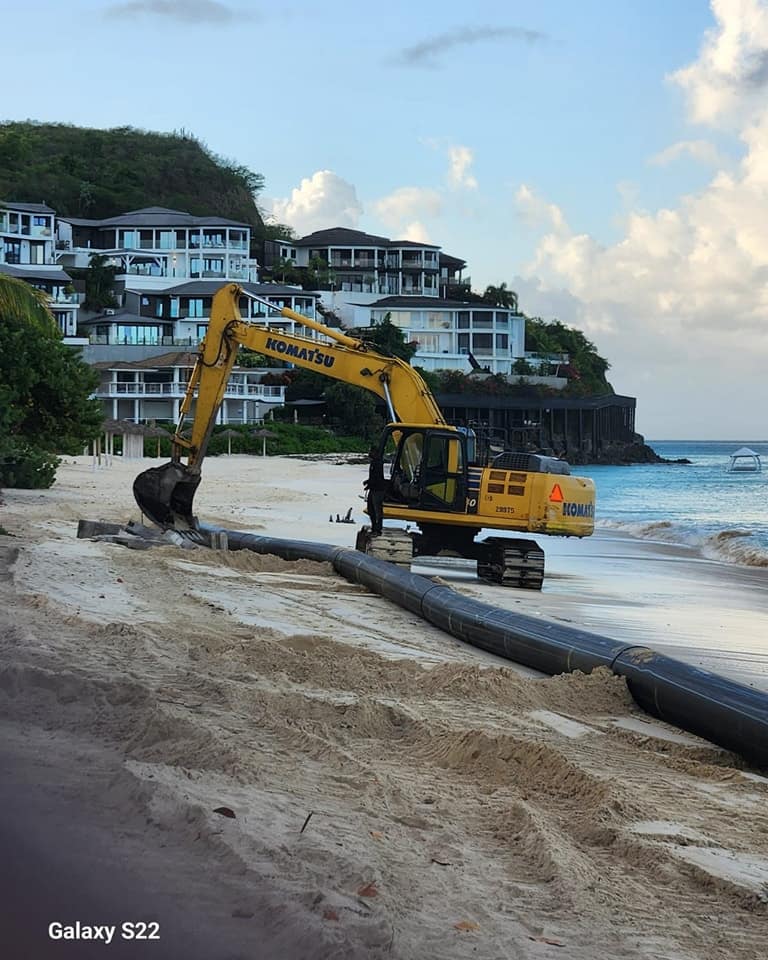
Officials with the Antigua Public Utilities Authority (APUA) have issued a public statement confirming that a member of the public recently suffered a fall near exposed coastal infrastructure, noting with relief that the incident did not result in any life-threatening or permanent serious injuries.
The structures in question — exposed underwater pipelines and heavy concrete anchor blocks — are critical pieces of infrastructure for the country’s desalination operations, which convert seawater into safe, drinkable water for communities across Antigua and Barbuda. These marine-laid components serve two key functions: drawing raw seawater into the desalination facility and flushing out concentrated brine, a mandatory byproduct of the desalination process, back into the ocean.
According to APUA, the visibility of these underwater assets follows consistent seasonal patterns. During extended periods of low tide, when coastal water levels recede further than usual, more of the pipeline and anchor infrastructure rises above the water line, making it far more noticeable to beachgoers and visitors than during high tide cycles.
To mitigate public safety risks, APUA has repeatedly installed bright buoy markers along the route of these underwater pipelines to clearly mark their location for anyone moving through the area. Regrettably, the authority reports that these safety markers have been repeatedly removed by unauthorized individuals, leaving the infrastructure unmarked during low tide events.
The statement comes as Antigua and Barbuda grapples with ongoing severe drought conditions that have significantly depleted the nation’s existing surface water reserves. In response to growing water scarcity, desalination has emerged as an increasingly vital pillar of the country’s national water supply network. Because of the nature of the desalination process, critical infrastructure including intake and discharge pipelines must be placed in the marine environment, with no feasible alternative location available for these components.
APUA officials welcomed the ongoing public discussion about coastal safety and desalination infrastructure, noting that transparency around the process of delivering potable water to thousands of residential and commercial customers across the nation is a key priority for the authority. The statement aimed to provide clear contextual information to help the public understand the purpose and necessity of the coastal infrastructure, as well as the challenges the authority faces in maintaining permanent safety markings.