博客

  • VIDEO: Grieving mother on murder charge arrives in court

    VIDEO: Grieving mother on murder charge arrives in court

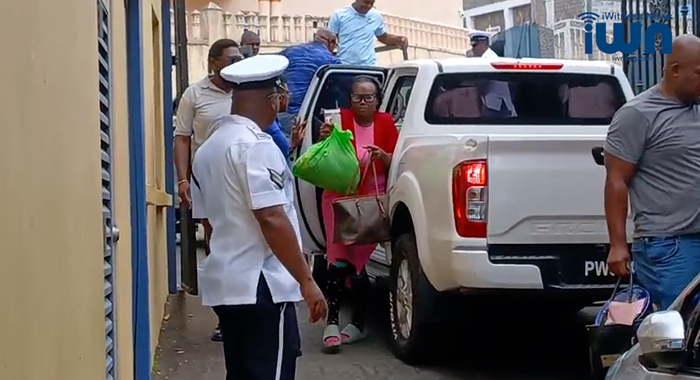
    A 46-year-old Layou security guard, grieving the fatal shooting of her son just seven days prior, has made her first court appearance alongside a 22-year-old local man, after the pair were hit with conspiracy and murder charges over the death of a 19-year-old labourer.

    Rosia John and Augustus Mathews, a Layou resident, face two formal criminal allegations connected to the killing of Perrance Mathews, a 19-year-old Layou-based labourer. Court documents outline that between April 10 and April 13, 2026, the two defendants conspired to carry out a plan that would have culminated in a murder. The second, more severe charge accuses them of intentionally and maliciously causing Perrance Mathews’ death by shooting him multiple times across his body.

    Authorities confirm the alleged crimes took place in Buccament, a coastal community in St. Vincent and the Grenadines. On Friday, April 17, 2026, John and Mathews appeared at Kingstown’s Serious Offences Court for the formal reading of their charges, an event that was captured on video by local media.

    The court appearance comes exactly one week after a double shooting in Kingstown’s Stoney Ground neighbourhood that claimed the life of John’s 29-year-old son, Enrique John, also known locally by the nickname Shoubu. Raheem Guy, 22, was also killed in that same April 10, 2026 attack. The overlapping timeline of the two violent incidents — the double killing that left Rosia John bereaved, followed just days later by her being charged in the murder of 19-year-old Perrance Mathews — has cast a spotlight on the surge of violent gun crime impacting the small Caribbean nation.

  • Deputy Prime Minister Hanley Meets with SKNOC on Transformative National Physical Education Initiative

    Deputy Prime Minister Hanley Meets with SKNOC on Transformative National Physical Education Initiative

    BASSETERRE, St. Kitts – In a landmark step toward reimagining youth development and education across the federation, St. Kitts and Nevis’ Deputy Prime Minister and Minister of Education Hon. Dr. Geoffrey Hanley held a strategic planning meeting Wednesday with senior leadership from the St. Kitts and Nevis Olympic Committee (SKNOC) to advance a groundbreaking national physical education transformation initiative. The proposed partnership, backed by regional sporting bodies, aims to embed high-quality physical training and Olympic values into the core of the nation’s school curricula over the next five years.

    The SKNOC delegation, headed by SKNOC President Dennis Knight, included Technical Director Lonzo Wilkinson and Brazil-based sports methodologist Léo Cursino, who contributed expertise to the program’s design. The comprehensive National School Physical Education Programme was developed in close collaboration with the Pan American Sports Organization (PASO), bringing regional resources and global best practices to the local education system.

    Slated to launch in August 2026 and roll out incrementally through August 2031 in two distinct phases, the initiative includes a wide-ranging set of interconnected components to build sustainable, long-term capacity for physical education across the country. Key provisions of the program include certified professional training for current and prospective physical education teachers, a standardized, licensed national physical education methodology aligned with international standards, a cloud-based digital platform to streamline lesson planning and student engagement, cutting-edge AI-powered pedagogical tools to personalize learning experiences, and a fully accredited undergraduate degree pathway specifically tailored for physical education educators to formalize professional qualifications.

    Beyond physical education infrastructure, the SKNOC also proposed integrating the International Olympic Committee’s global Olympic Values Education Programme (OVEP) into local school curricula. Knight explained that a locally customized OVEP syllabus would embed the three core Olympic values – excellence, friendship, and respect – into daily school activities, supporting holistic character development for students and strengthening grassroots sporting culture across St. Kitts and Nevis.

    Deputy Prime Minister Hanley praised the proposals as timely, visionary, and perfectly aligned with the government’s existing strategic priorities for education reform, youth empowerment, and community development. He expressed strong enthusiasm for deepening the ongoing partnership between the Ministry of Education and SKNOC to turn the outlined plans into actionable, on-the-ground programs for the nation’s youth.

    “These initiatives present a powerful opportunity to transform how we educate, inspire, and support our young people,” Hanley said in remarks following the meeting. “My Ministry looks forward to collaborating closely with the Olympic Committee to make these proposals a reality for the benefit of our students and our nation.”

    In the coming months, the Ministry of Education and SKNOC will hold a series of follow-up technical discussions to finalize formal implementation plans, secure resourcing, and prepare for the program’s launch in August 2026.

  • Hamilton Bank defends selection of St Mary’s for Penn relays debut

    Hamilton Bank defends selection of St Mary’s for Penn relays debut

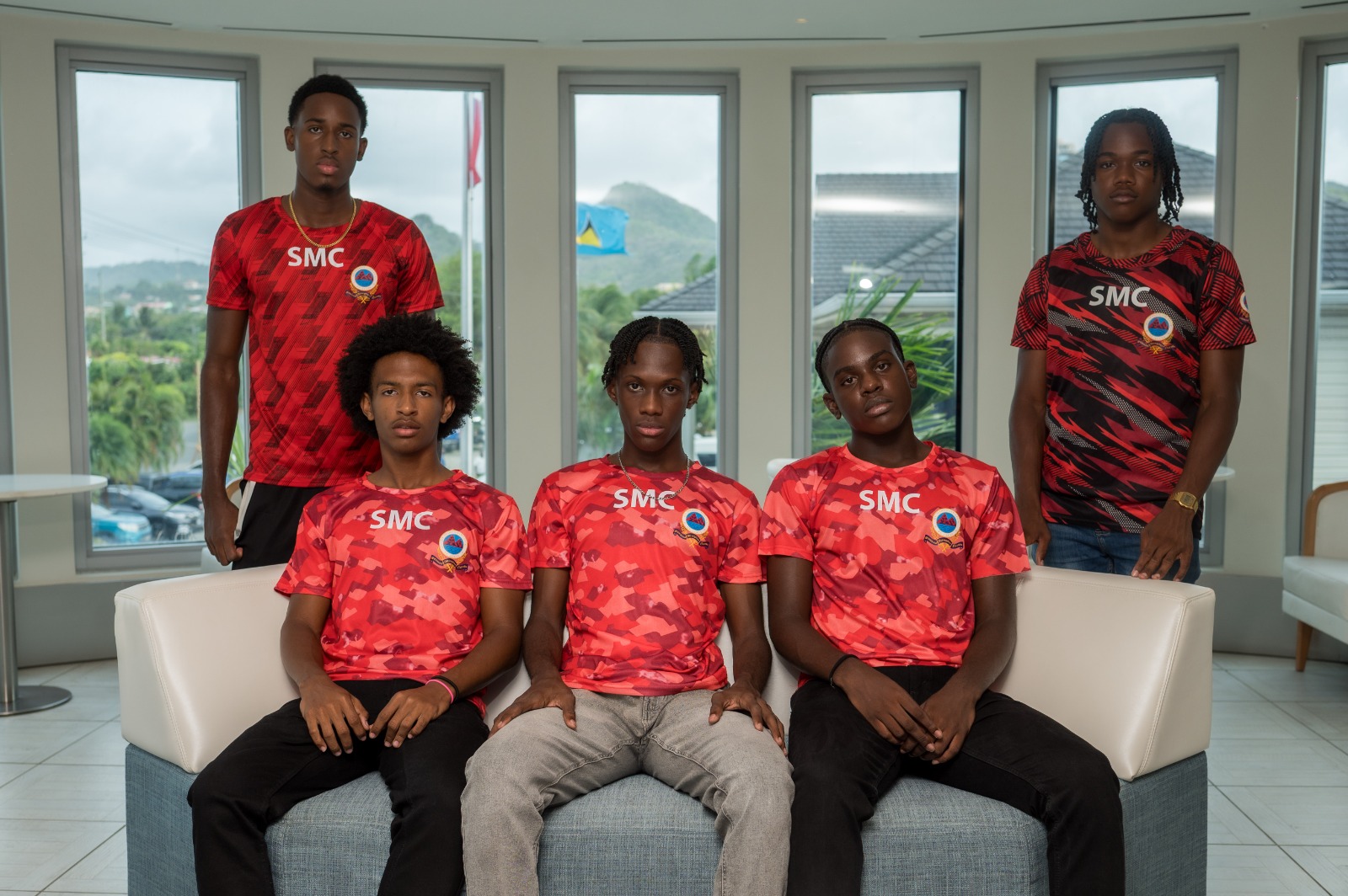
    For Saint Lucia, the 2026 Penn Relays marks a historic milestone – it will be the first time a team from the Caribbean island nation competes in the world-famous annual track and field event hosted in Philadelphia. But the road to this debut has been marked by online speculation and social media rumors questioning why St Mary’s College (SMC) was selected as the nation’s representative, prompting sponsoring organization Hamilton Reserve Bank to step forward and set the record straight.

    Hamilton Reserve Bank, the largest global bank headquartered in the Caribbean with more than $6 billion in total assets under management, is covering all travel and participation costs for SMC’s trip to the April 23–25 event. In response to growing public speculation about the selection process, bank representatives have repeatedly emphasized that the process was free, fair, and fully above board, with pre-planning that long predated key local competitions.

    Senior Relationship Banker Lauaina Dupres, who led the coordination for the bank’s sponsorship, shared details of the timeline in an exclusive interview with local outlet St Lucia Times. According to Dupres, the selection process was finalized at least two to three weeks before Saint Lucia’s annual Island Champs competition, which kicked off in early March. Contrary to viral social media claims that the bank overturned the meet’s results – which saw Vieux Fort Comprehensive Secondary School claim the boys’ team title over SMC – Dupres confirmed that the Island Champs outcome had no influence whatsoever on the final selection.

    Dupres explained that the requirements set out by Penn Relays organizers narrowed the field of eligible teams early on. Initially, event organizers requested that Saint Lucia field either an all-boys or all-girls squad, and all team members needed to secure valid travel visas to enter the United States in time for registration. To streamline the process, the bank reached out to Saint Lucia’s Ministry of Youth and Sports for recommendations, and the ministry put forward SMC as an eligible candidate. When the ministry followed up with information about Vieux Fort Comprehensive, the registration deadline had already passed, leaving only SMC positioned to meet all requirements.

    “This was something that happened so fast,” Dupres noted, adding that she was not even familiar with the Island Champs schedule when the initial selection was being finalized.

    Contrary to further speculation that this would be a one-time opportunity limited to a single team, Dupres shared that Hamilton Reserve Bank has long-term plans to expand sponsorship for Saint Lucian track and field at the Penn Relays. Unlike smaller Caribbean nations, established track powerhouses such as Jamaica and Trinidad & Tobago regularly send multiple teams to compete at the event, and the bank aims to grow Saint Lucia’s participation to match that level.

    “We are looking to do this again next year, to sponsor more schools, to have three or four teams from Saint Lucia,” Dupres said. “So it’s a trial process. We’re just trying this. It’s the first time that we’re doing something like that… We’re working towards getting some other students and other schools on board for next year.”

    Dupres added that bank leadership was caught off guard by the wave of negative public reaction that followed the sponsorship announcement in early April. Despite the unexpected pushback, the bank remains committed to deepening local partnerships with Saint Lucian educational and sports institutions to create more developmental opportunities for the nation’s young athletes.

    In the lead-up to the team’s departure for Philadelphia, Hamilton Reserve Bank and the St Mary’s College delegation are scheduled to hold a joint public press conference in the coming days to address further questions from the community.

  • Fiery ABC Highway crash hurts five; road safety chief urges caution

    Fiery ABC Highway crash hurts five; road safety chief urges caution

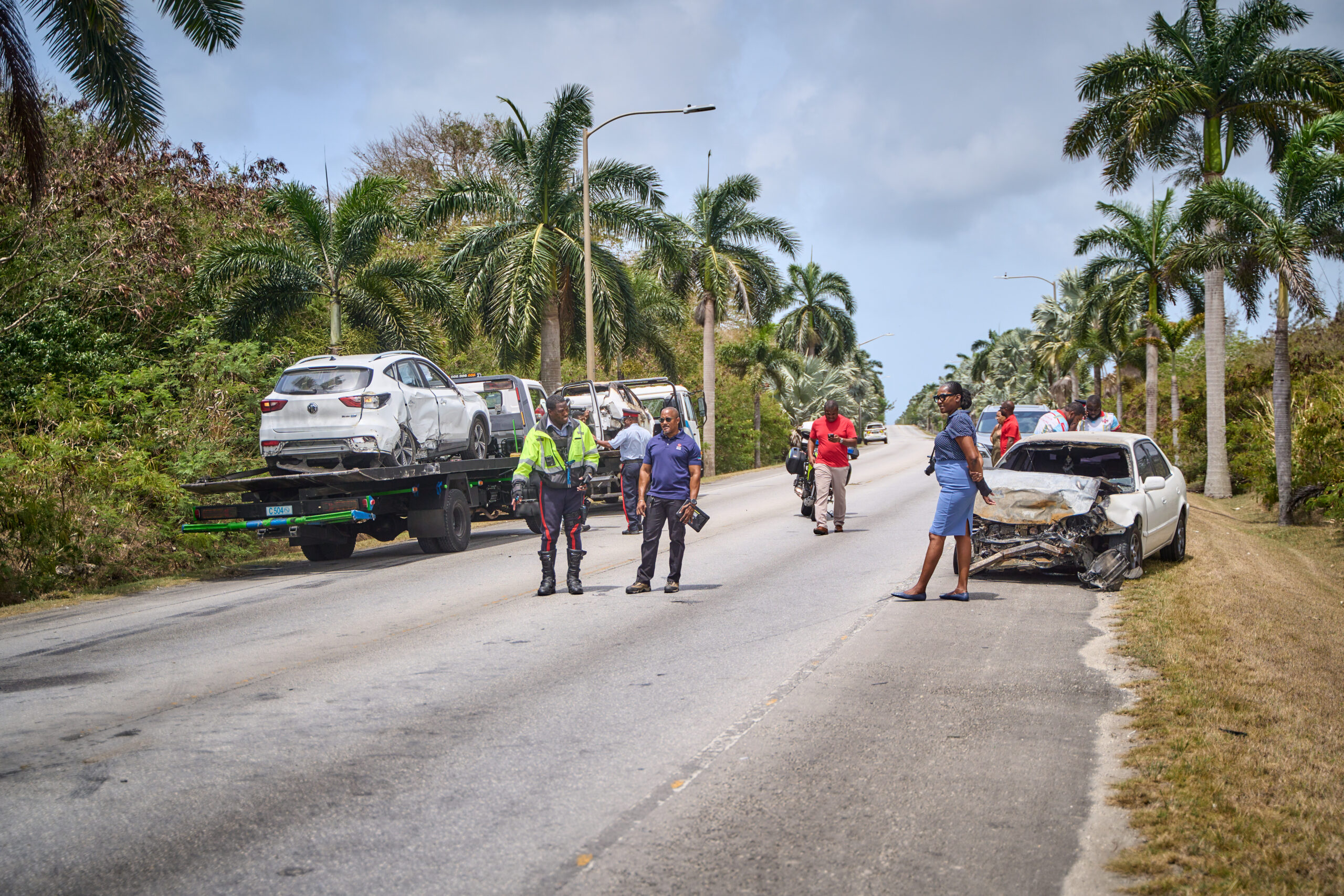
    A devastating early-morning collision involving four vehicles on Barbados’ ABC Highway left five people hospitalized on Thursday, after two of the involved cars burst into flames following impact. The crash unfolded at the height of the Thursday rush hour, around 7:30 a.m., along the stretch between the Kingsland junction near Deighton Griffith Secondary School and the Henry Forde Roundabout in Newton.

    Initial accounts of the incident confirm that three of the vehicles were traveling in the direction of Kingsland, while the fourth was moving along the opposite carriageway when the collision occurred. Emergency response teams rushed to the scene immediately after reports of the fire broke out, and all five injured casualties were quickly transported via ambulance to the Queen Elizabeth Hospital to receive urgent medical care. Local law enforcement has launched a full investigation into the crash, with no definitive findings on contributing factors released to the public as of yet.

    In the wake of the incident, the president of Barbados’ Road Safety Association, Roland Lowe, spoke exclusively to Barbados TODAY to renew urgent calls for heightened driver vigilance across the island, pointing to a troubling upward trend in road accidents in recent months. Lowe, who has personally observed the increasing frequency of both minor and serious collisions during his own travels, emphasized that the growing rate of incidents is a major cause for public concern.

    Lowe highlighted driver inattention as one of the most persistent, preventable causes of collisions across the country, singling out mobile phone distraction as a particularly common dangerous habit. “It only takes a split second of looking away from the road to cause a catastrophic crash,” he noted, urging all road users to remain fully focused on their surroundings behind the wheel.

    He also called out the rising trend of reckless risky overtaking, especially among less experienced drivers, warning that attempting to overtake multiple vehicles in unsafe conditions endangers not just the reckless driver, but every other person sharing the road. “There is no reason to take these unnecessary, dangerous risks,” Lowe stressed. Given Barbados’ small geographic size, he added, cutting corners behind the wheel to save a few minutes makes no sense: “If you have an appointment to keep, the simplest solution is to plan ahead and leave your home a few minutes early, rather than risking lives to make up time.”

    Lowe also flagged a relatively new potential hazard on Barbados roads: the growing fleet of electric vehicles. Having tested multiple electric models himself, Lowe noted that the sharp, instant acceleration of EVs catches many drivers new to the technology off guard, as the relationship between accelerator input and vehicle response differs significantly from traditional gasoline-powered cars. “Drivers who are not familiar with how EVs handle need to take extra time to adjust and exercise extra caution on the road,” he said. It remains unclear whether any electric vehicles were involved in Thursday’s ABC Highway crash.

    Closing his statement, Lowe reiterated his call for consistent patience, attentiveness, and responsibility from all drivers, framing these simple habits as the most effective tools to cut collision rates and make Barbados roads safer for everyone.

  • STATEMENT: Kalinago Council responds to Marigot MP Anthony Charles’ press release

    STATEMENT: Kalinago Council responds to Marigot MP Anthony Charles’ press release

    Tensions have erupted over a proposed mining operation to support Dominica’s new international airport project, with the Kalinago Council issuing a sharp official rebuke of a recent pro-development statement from Marigot Constituency Parliamentary Representative Anthony S. Charles. The conflict centers on mining activities planned at Deux Branches, an area adjacent to Kalinago traditional lands that holds deep cultural and ecological significance for the Indigenous community.

    In a public statement dated April 17, 2026, the Kalinago Council outlined its grave concerns about Charles’ April 15 press release, which argued that mining should proceed at Deux Branches with environmental safeguards and fair compensation. The council pushed back against Charles’ opening framing that the people of Marigot have always supported progress that balances development with citizen rights, arguing the wording implies the rights of Kalinago and Concord residents do not deserve the same respect.

    As the official governing body mandated to protect the welfare, cultural heritage, and long-term interests of the Kalinago people, the council emphasized the community’s centuries-long history of resilience amid systemic marginalization, cultural erasure, forced assimilation pressures, and near-genocidal policies. For the Kalinago, the Concord River near the proposed mining site is far more than a natural feature: it is a cultural lifeline that supports local tourism, sustains daily household needs for the community, and holds irreplaceable cultural significance. Any development that threatens the river’s integrity and the community’s access to clean water, the council argues, demands full transparency and rigorous scrutiny, not rushed advancement.

    A core point of contention is Charles’ claim that comprehensive environmental mitigation measures are already in place at the site. The Kalinago Council says Charles never held any consultations with the council, Kalinago residents, or Concord residents to disclose what these measures actually entail. Compounding this lack of engagement, the recently released Environmental and Social Impact Assessment (ESIA) for the project—never shared or discussed with affected communities before its publication—uncovers deeply alarming risks. The document confirms E. Coli contamination was detected in the Concord River as early as November 2025, a critical public health detail that was concealed from local residents who continue to rely on the river for daily use.

    Even more worrying are the ESIA’s findings of toxic heavy metal contamination: mercury deposits and arsenic levels measured at up to 500 times the safe limit set by the World Health Organization. The council notes these are not minor administrative oversights, but severe long-term public health hazards that increase residents’ risk of developing cancer and other chronic life-threatening conditions. The council condemns the deliberate withholding of this life-saving information from the community that faces the greatest risk from contamination.

    The already dangerous situation, the council points out, has already resulted in formal regulatory action. Dominica’s Development and Planning Corporation, acting under the Physical Planning Act, issued a formal Stop Order for all mining activities at Deux Branches on December 1, 2025, citing violations that threaten public health and safety. Against this legal background, the council calls Charles’ call to resume mining activities extremely disturbing, as it openly advocates for action that violates the existing laws of the Commonwealth of Dominica.

    The council also adds that alternate, suitable sources of aggregate and stone required for the airport project have already been identified at other quarries across the island. This eliminates any urgent justification for proceeding with mining at Deux Branches, which would bring unnecessary environmental and social disruption to Kalinago traditional lands.

    Beyond the environmental and legal risks, the council criticizes Charles’ failure to fulfill his representative duties. In his role as Parliamentary Representative, he has not made any meaningful effort to consult with or engage residents of Marigot or Concord on the proposed mining development. There has been no open dialogue, no outreach, and no demonstration of advocacy for the communities that would be most impacted by the project.

    The Kalinago Council reaffirms that the community will not remain passive in the face of decisions that threaten their health, natural environment, and cultural heritage. The council asserts the inherent right of the Kalinago people to be fully informed, consulted, and included in decision-making for any development that impacts their community and natural resources. The governing body remains committed to defending the integrity of Kalinago Territory and the well-being of its people, and says it remains open to constructive dialogue with Charles if he is willing to engage in good faith.

    In closing, the Kalinago Council calls for immediate transparency, full accountability, meaningful community engagement, and adherence to the laws of the Commonwealth of Dominica before any further activity is permitted at the Deux Branches mining site. The statement was signed by Kalinago Chief Anette Sanford and all members of the Kalinago Council.

  • CDB Approves EU-Backed Grant ?To Strengthen Regional Disaster Agency

    CDB Approves EU-Backed Grant ?To Strengthen Regional Disaster Agency

    BRIDGETOWN, Barbados – April 17, 2026 – In a major step to strengthen climate and disaster resilience across the Caribbean, the Caribbean Development Bank (CDB) has greenlit a $346,000 technical assistance grant for the Caribbean Disaster Emergency Management Agency (CDEMA), the regional body tasked with coordinating cross-country disaster risk reduction and emergency response under the CARICOM umbrella.

    The funding, backed by the European Union through the Intra-African Caribbean Pacific European Union Natural Disaster Risk Reduction Programme and delivered under CDB’s Caribbean Action for Resilience Enhancement (CARE) initiative, will support a full institutional assessment of CDEMA to refine its operational and organizational framework. Specialist consultants contracted through the grant will conduct a deep dive into the agency’s current structure, operating systems, staffing models, and skills gaps to deliver actionable recommendations for long-term effectiveness and sustainability.

    Beyond core organizational review, the consultancy will also audit existing human resources policies through a gender equity lens, resulting in a dedicated Gender Policy and Operational Strategy that will guide equitable practices across recruitment, employee retention, promotion, and compensation structures.

    As climate change drives an increase in the frequency and intensity of extreme weather events across the Caribbean, regional disaster coordination systems face mounting pressure to adapt and scale their response. CDB Projects Director O’Reilly Lewis emphasized that the investment comes at a critical moment for the region. “Climate change is driving more intense natural hazards across the Caribbean, and that reality places growing demands on regional disaster management systems,” Lewis explained. “CDEMA is integral to how countries prepare for and respond to emergencies, and this technical assistance will help ensure the Agency has the right structure, skills, and systems to deliver on its mandate today and into the future.”

    European Union Ambassador to Barbados, the Eastern Caribbean States, and the OECS Fiona Ramsey noted that the initiative aligns with the EU’s longstanding commitment to partnership with the Caribbean on climate resilience. This commitment was recently reaffirmed as a core priority in discussions between CARICOM Chair (at the time) Mia Mottley and European Commission President Ursula von der Leyen. “As climate-related challenges intensify, enhancing CDEMA’s institutional capacity is essential to safeguarding lives, livelihoods, and sustainable development across the Caribbean,” Ramsey said. “Together, we are advancing a shared vision of resilience through a reliable partnership.”

    For CDEMA, the assessment marks a key milestone in the agency’s ongoing organizational transformation, which is outlined in its 2022–2027 Strategic Plan. “This consultancy marks a pivotal step in CDEMA’s evolution as we position the Agency for both present demands and future challenges,” said CDEMA Executive Director Elizabeth Riley. “We are committed to transforming CDEMA into a stronger, more agile, and technically driven organisation, equipped with the skills and systems required to meet the growing complexity of disaster risk management in the Caribbean. We are proud to partner with the European Union and the Caribbean Development Bank on this game-changing initiative, which will modernise our organisational structure and enhance our capacity to serve Participating States with excellence, innovation, and impact.”

    This institutional assessment is the first phase of a broader reform agenda designed to put CDEMA on a more stable, sustainable long-term footing. Its findings will also inform parallel ongoing work led by the World Bank to create a Multi-Source Trust Fund that will provide consistent, long-term financing for the agency. Combined, these initiatives will strengthen CDEMA’s ability to deliver on its full comprehensive disaster management mandate, spanning mitigation, preparedness, emergency response, and post-disaster recovery across the region.

    Implementation of the technical assistance project is scheduled to launch in May 2026, and aligns directly with CDB’s newly launched 10-Year Strategic Plan for 2026–2035, which identifies strengthening regional institutions as a critical driver for building community resilience, accelerating inclusive economic growth, and advancing sustainable development across the Caribbean.

  • UK-Caribbean Partnership on clean energy: From untapped potential to regional powerhouse

    UK-Caribbean Partnership on clean energy: From untapped potential to regional powerhouse

    The global popular image of the Caribbean is dominated by idyllic postcard-perfect scenery: golden endless sunshine, crystal-clear turquoise waters, lush rolling mountain ranges, and gentle consistent trade winds. What many do not recognize, however, is that these same natural features – sun, wind, ocean, and geothermal heat – represent a largely untapped clean energy powerhouse waiting to be activated across the region.

    The United Kingdom has increasingly prioritized building strategic energy partnerships with Caribbean nations to convert these abundant natural assets into affordable, low-carbon energy, laying the foundation for clean, economically resilient, and long-term sustainable growth across the region.

    Energy analysts widely agree that the Caribbean holds enough renewable potential to generate far more clean power than the region consumes. Many individual island nations are fully capable of transitioning to 100% renewable electricity generation, with excess production available to export to neighboring countries. Some regional economies could even convert surplus renewable electricity into transportable low-carbon fuels, including green hydrogen, ammonia, and methanol for global markets.

    Despite this enormous natural advantage, the current energy landscape across the Caribbean remains heavily reliant on fossil fuels. Data shows that roughly 87% of the energy mix for the Caribbean Community (CARICOM) still comes from carbon-intensive fossil fuels, a dependence that has driven cripplingly high electricity prices for households. Many Caribbean families pay between two and nearly three times more for electricity than households in other parts of the world. This persistent reliance on imported fossil fuels also perpetuates systemic economic vulnerability, unsustainable national debt burdens, and widespread energy insecurity across the region.

    Since 2015, the UK has committed more than US$39 million in targeted funding to support the Caribbean’s energy transition. This support has spanned a range of high-impact initiatives: advancing geothermal resource development, installing utility-scale and distributed solar photovoltaic (PV) systems, completing energy efficiency retrofits for public buildings, and delivering targeted training programs to build local technical capacity across the Eastern Caribbean. The UK has also laid critical early groundwork to develop a regional offshore wind energy market.

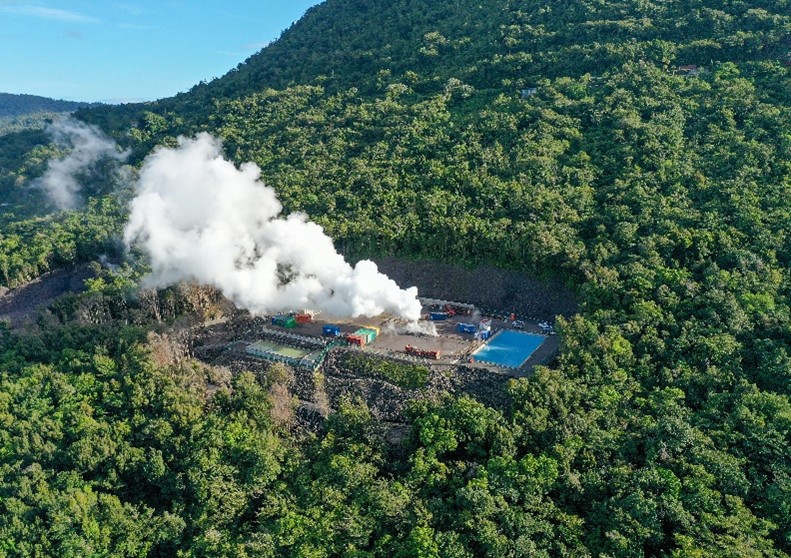
    One standout success of this partnership is the UK’s support for geothermal development in Dominica. UK funding helped de-risk the high upfront costs of exploratory drilling, giving private sector investors the confidence to commit to the project. Dominica is now on track to commission the first operational geothermal power plant in the English-speaking Caribbean in April 2026. This facility is expected to deliver transformative economic and energy benefits for the island nation, a milestone that required years of committed government leadership, coordinated collaboration, and flexibility from multiple international development partners. The UK is now working to replicate this success with ongoing geothermal projects in Grenada and St. Lucia.

    In St. Vincent and the Grenadines, UK support has delivered immediate tangible results: funding for energy-efficient street lighting upgrades and a new solar PV plant at the country’s main international airport has helped the government save millions of dollars in energy costs and avoid hundreds of tonnes of annual carbon dioxide emissions. Early work supported by the UK to map and assess the region’s offshore wind potential, while still in its early stages, holds enormous long-term development value for the entire Caribbean.

    Back in 2013, CARICOM set an ambitious regional target: to reach 47% of electricity generation from renewable sources by 2027. As of 2023, the region has only reached roughly 13% renewable energy penetration, meaning progress has fallen far short of projections. To hit the 2027 target, the pace of transition will need to accelerate dramatically across the bloc. Progress has also been deeply uneven: a small handful of countries have made meaningful strides in scaling solar, wind, and geothermal power, while many others continue to lag well behind regional goals.

    Like most Small Island Developing States (SIDS), the Caribbean faces unique structural barriers to rapid clean energy scaling. Small, isolated national grid sizes, prohibitive upfront capital costs, limited local technical capacity, and fragmented national markets that prevent economies of scale all slow deployment. Many regional countries also lack modernized grid infrastructure and updated regulatory frameworks – two core requirements for integrating variable renewable energy sources like solar and wind, which depend on flexible grid management.

    Despite these challenges, clear, actionable solutions exist to remove barriers and accelerate progress. Regional pooled procurement for clean energy equipment and aggregated project pipelines can lower per-unit costs and attract large-scale global institutional investors. Modernizing aging grid infrastructure and updating outdated energy regulatory frameworks can open the market to greater private sector participation. Blended finance and concessional lending can help governments overcome the prohibitively high upfront costs that have deterred many large projects. Finally, targeted investment in building local engineering and technical capacity ensures that clean energy projects deliver long-term, sustainable benefits for regional communities.

    All the resources the Caribbean needs to become a global clean energy leader are already within reach, and regional and international leaders argue there is no time to delay the transition. With decisive policy action, coordinated regional leadership, and strategic international partnerships, the region can convert its abundant natural renewable wealth into universal energy security, lower household electricity bills, and a more economically and climatically resilient future for all Caribbean people.

    The UK has reaffirmed its long-term commitment to partnering with the Caribbean on this transition. Through the Global Clean Power Alliance, the two sides have agreed to a concrete three-year Caribbean action plan covering 2026–2028. The plan will provide on-demand access to UK private sector capabilities and technical expertise to address key transition barriers and attract the billions in investment needed to scale up clean energy across the region.

    The natural resources are already in place. The global demand for low-carbon energy is growing. The moment for the Caribbean to unlock its clean energy potential is right now. This commentary was written by Ingrid Levine, Climate and Renewable Energy Adviser for the Caribbean Development Team at the UK Foreign, Commonwealth & Development Office.

  • Former government minister, Ian pinard, passes at 54

    Former government minister, Ian pinard, passes at 54

    Ian Pinard, a former government minister and long-standing public servant in Dominica with a decades-long career spanning electoral politics, party leadership and senior public administration roles, has passed away at his residence in the early hours of April 17, 2026. He was 54 years old.

    Pinard launched his electoral political career in the 2005 Dominican general election, when he won a seat in the national parliament representing the Soufrière constituency as a candidate of the Dominica Labour Party (DLP). He chose not to seek re-election in the 2009 vote, stepping back from frontline parliamentary politics for five years.

    In 2014, Pinard made his return to active electoral politics, successfully reclaiming his Soufrière constituency seat. Later that December, he was officially sworn into cabinet as the Minister for Public Works and Ports.

    His tenure in the cabinet came to an abrupt end in March 2016, when he resigned from his ministerial post following allegations of inappropriate conduct. A month later, he stepped down completely from his role as a Member of Parliament after he was arrested and subsequently released on bail. A by-election was called to fill the vacant seat, and DLP candidate Denise Charles won the contest with Pinard’s public endorsement and active campaign support.

    Even after leaving elected office, Pinard continued to contribute to Dominican public administration, taking on the role of acting general manager at Petro Caribe Dominica. He made a final return to senior political leadership in November 2024, when he was elected vice president of the DLP. Just a short time after that party leadership vote, he was appointed Chief Executive Officer of the Dominica Air and Seaport Authority (DASPA), succeeding Benoit Bardouille in the key infrastructure leadership post.

  • Flow Launches Riddim and Rewards 2.0 with Weekly Prizes and Grand Vacation Giveaway!

    Flow Launches Riddim and Rewards 2.0 with Weekly Prizes and Grand Vacation Giveaway!

    Telecommunications provider Flow has kicked off its highly anticipated Riddim and Rewards 2.0 customer loyalty campaign, rolling out a year-long lineup of giveaways, discounted plans, and in-store interactive experiences that run through June 30, 2026. The promotion is designed to reward both new and existing customers with multiple paths to win high-value prizes, alongside steep discounts on core mobile services.

    To enter the prize drawings, customers simply need to complete one of several qualifying actions: sign up for a new Flow prepaid service, top up their existing account with $25 or more, or activate an eligible 3-day, 7-day, or 30-day Always On or Student plan. Every qualifying action earns one entry into ongoing weekly giveaways, with brand-new Chromebooks up for grabs every week throughout the campaign. Additionally, every entry automatically enters customers into the grand prize draw scheduled for June 30, 2026, where one lucky winner will score an all-expense-paid weekend getaway for two at the luxurious Galley Bay Resort & Spa.

    Beyond the giveaways, the campaign brings substantial value to customers looking to start or upgrade their Flow mobile service. New prepaid customers who activate a 30-day plan can purchase a $5 SIM card packed with 6GB of data and 600 minutes, or opt for a discounted smartphone priced at $199.

    To add a fun, community-focused element to the promotion, Flow is hosting weekly Riddim Hour events at its Market Street and Friars Hill store locations. These in-store experiences bring a lively, energetic atmosphere for shoppers, featuring interactive games including raffles, lucky dips, “Pop the Balloon,” and “Pick a Prize” that let customers score extra deals and surprises while they browse Flow’s service offerings.

    With the campaign running for more than two years, customers have ample opportunity to participate multiple times and boost their chances of taking home a top prize. But the end date is fixed, so the brand encourages mobile users to take advantage of the discounted plans and entry opportunities before the campaign wraps up in 2026.

  • OP-ED 1of 5: [The Big Push Series] Growth is not enough. The Caribbean needs a push that reaches everyone

    OP-ED 1of 5: [The Big Push Series] Growth is not enough. The Caribbean needs a push that reaches everyone

    In January 2023, on the 40th anniversary of the Eastern Caribbean Central Bank (ECCB), Governor Timothy Antoine posed a question that would reframe the region’s development trajectory: what would it take to double the size of the Eastern Caribbean Currency Union (ECCU) economies over the next 10 years? He dubbed this goal the Big Push. Now, three years later, the ECCB has embedded this ambition into its official 2026-2031 Strategic Plan, titled Collective Action for Shared Prosperity — and the region is being called to move beyond empty applause and cynical dismissal to deliver the clear, honest assessment this critical moment requires.

    This new article series is not presented as a pre-packaged set of solutions. Instead, it serves as an urgent, open invitation to a region-wide conversation that includes private sector stakeholders, civil society organizations, and ordinary citizens from all corners of the Eastern Caribbean. The series aligns with the ECCB’s overarching ambition, but rejects the dangerous myth that ambition alone, or even gross growth alone, is enough to deliver meaningful change.

    The Eastern Caribbean has experienced periods of economic expansion before. What it has never achieved is growth that reaches and lifts marginalized groups: the young person stuck in informal work with no upward mobility, the woman navigating an economic system never designed to accommodate her, and communities that watch wealth flow through their islands without ever taking root. Growth that fails to lift these groups is not transformation — it is merely a rearrangement of existing wealth and power.

    ## A Shifting Global Order That Leaves No Room for Passivity

    The post-Cold War liberal international order that shaped Caribbean development for decades is collapsing in real time, and no major global power is building its replacement with Eastern Caribbean interests in mind. New actors have emerged as major players in the region: China has established itself as a significant development partner, while Gulf states are expanding their footprint through sovereign wealth fund investments in local assets. Meanwhile, the United States frames its engagement through security frameworks that tie financial aid to strict policy compliance.

    No outside power will come to secure the Eastern Caribbean’s future on the region’s own terms. The choice facing the bloc is not between global engagement and isolation — it is between actively shaping the terms of that engagement, or passively accepting terms set by others. In this new global context, the Big Push is far more than a development strategy: it is a core strategy for protecting the region’s survival and national sovereignty.

    ## Growth Is Necessary — But Inclusive, Transformative Growth Is The Only Goal That Matters

    To illustrate the gap between official growth metrics and lived economic reality, the series highlights the story of 24-year-old Dwayne from Kingstown, St. Vincent. After completing secondary school and two short vocational training programs, Dwayne applied for 47 formal jobs over three years. He received just three interviews and no job offers. Today, he drives a taxi he does not own, earning as little as EC$40 on a slow week and no more than EC$150 on a good week.

    Official labor statistics classify Dwayne as “self-employed informal” — not unemployed. His fare earnings are counted in gross GDP calculations, but those numbers ignore the reality of his life: he has no pension, no health insurance, no access to affordable credit, and no reason to believe the formal economy will ever create a place that needs him. Dwayne is not just another economic statistic — he is the true test of the Big Push. If this initiative cannot improve his life and prospects, it has failed, no matter how impressive the official GDP growth numbers may look.

    Between 2000 and 2019, the Organization of Eastern Caribbean States (OECS) recorded positive economic growth in most years. Yet even amid that expansion, male participation in tertiary education declined steadily, youth unemployment remained stuck at persistently high levels, and soaring energy import bills drained household budgets across the region. The informal sector grew not because workers preferred informal work, but because the formal economy offered no viable alternative for millions. Unfocused growth, the series argues, is like rain that falls on bare soil: it runs off quickly before it can nourish deep, long-lasting change.

    The Big Push must explicitly target inclusive, multi-dimensional growth across four interconnected priorities, according to the author. First, it must prioritize integrating men into the formal economy: this is not a symbolic political gesture, but an economic necessity, as a region that loses a large share of its male population to violence, informality, and emigration operates at a fraction of its full productive potential. Second, it must advance gender equity in access to opportunity, asset ownership, and economic leadership — decades of evidence confirm that broader, more equitable participation drives faster growth and fairer wealth distribution. Third, it must embed environmental sustainability: an economy built on fossil fuels in a region facing intensifying hurricanes and mass coral bleaching is not building wealth — it is borrowing from a future it is actively destroying. Fourth, it must advance economic sovereignty: the ability to make independent development choices on the region’s own terms, not the terms set by outside actors bringing capital. These four priorities are not competing — they are different angles of the same core goal.

    The series will focus on three key sectors that advance all four priorities at once: sports, creative industries, and renewable energy.

    ## The Unanswered Question Facing The Region’s Dominant Tourism Industry

    Any honest conversation about Eastern Caribbean economic transformation must confront the role of the region’s largest industry: tourism. The Eastern Caribbean is one of the world’s top cruise tourism hubs, hosting millions of visitors every year. But the vast majority of revenue generated by this sector flows to foreign multinational corporations, and local economic linkages — through local food supply, crafts, culture, and professional services — remain far weaker than they should be after decades of development efforts.

    The series poses two urgent questions that the sector must answer: Can international hotel chains build genuine, accessible career pathways that allow local Caribbean workers to advance from entry-level roles all the way to management and business ownership? Can the tourism sector lead the transition to renewable energy, which would cut the sector’s own operating costs while reducing the crippling energy import burden that weighs on every household across the islands? These are not rhetorical questions — they are the opening of a negotiation that the Eastern Caribbean has long been too deferential to start.

    ## Confronting The Region’s Long-Standing Implementation Deficit

    The series does not shy away from a long-standing pattern that has derailed past development efforts in the Caribbean: excellent policy frameworks are drafted, launched with fanfare at international conferences, endorsed by regional governments, then filed away on a shelf alongside every previous “excellent framework.” The gap between policy and practice in the Caribbean is not a failure of intelligence or ambition — it is a failure of accountability.

    Without a robust, independent accountability framework to match its analytical ambition, the Big Push will end up in the same development graveyard as all past initiatives, the author warns. What is needed is public, quarterly tracking dashboards for key metrics, mandatory parliamentary debates on progress, and independent civil society audit mechanisms with the authority to publish public reports when implementation falls short. Without these safeguards, this new conversation will end the same way so many regional conversations end: with a closing communiqué, a commemorative photo, and almost no real change.

    ## An Open Invitation, Not A Final Verdict

    This series is not written by someone claiming to have all the answers. Instead, it is rooted in evidence-based belief that the systemic conditions that have held back Eastern Caribbean development can be changed. What critical questions are we not asking today? Which communities are being excluded from this conversation? What does the tourism sector need to hear, and what does it need to share, to build a genuine, mutually beneficial partnership? These questions cannot be answered by a single series alone. They require the participation of churches, trade unions, diaspora organizations, young athletes on training grounds, small business women operating on credit, and all other segments of society — all at the table, all recognized as architects of the future, not just passive audience members.

    No outside power will build this future for the Eastern Caribbean on the region’s own terms. But if all stakeholders come together with the honesty this moment demands, we can build a future that lasts. The first installment of the series will focus on sport as a formal economic industry, and readers and stakeholders are invited to attend the ECCB’s 10th Annual Growth and Resilience Dialogue — Big Push Conference, held April 22-24, 2026. This article is written by Prof. C. Justin Robinson, Pro Vice-Chancellor and Campus Principal of The University of the West Indies Five Islands Campus, Antigua and Barbuda, and does not represent the official views of Duravision Inc. or Dominica News Online.