博客

  • PM doubles down on need to import skilled workers

    PM doubles down on need to import skilled workers

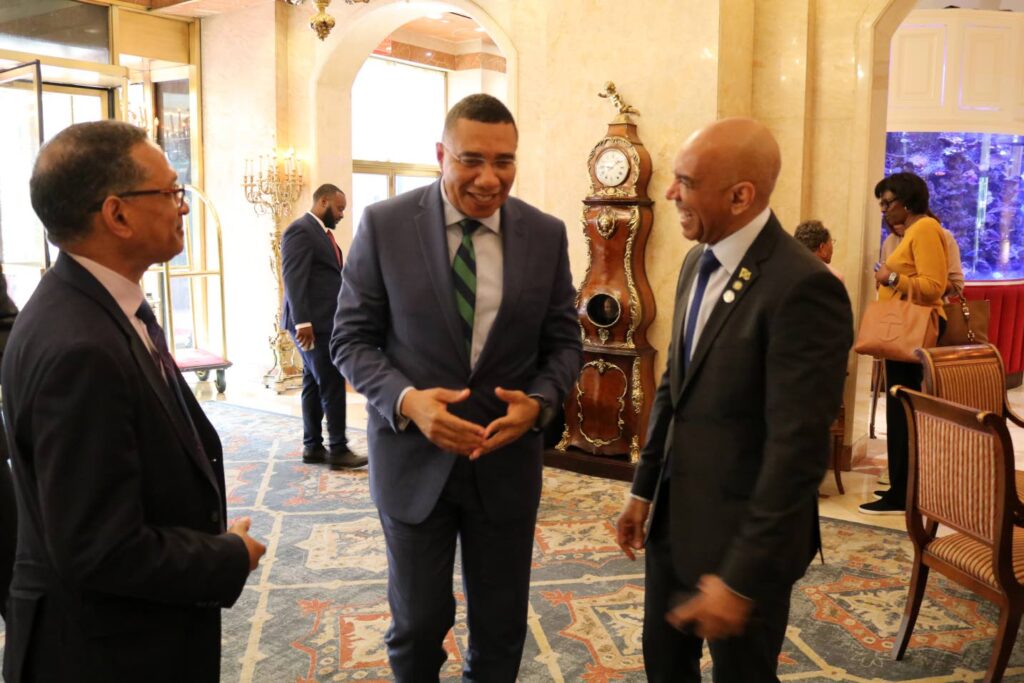
    Jamaica’s Prime Minister Dr. Andrew Holness has publicly reaffirmed that the Caribbean nation is actively considering bringing skilled workers from international markets to address a critical labor gap that threatens to derail the country’s post-disaster reconstruction and long-term economic growth agenda after Hurricane Melissa.

    Speaking at the one-day Recover Better Conference, hosted by Jamaica’s Consulate General in New York last Thursday, Holness framed the incoming labor question not as a matter of if Jamaica would turn to overseas workers, but when. The gathering was convened to unite Jamaican diaspora members and key industry stakeholders to mobilize cross-border capital, professional expertise, and collaborative partnerships to support recovery efforts after the Category 5 storm that swept across portions of the island last October, leaving widespread destruction in its wake.

    One of the conference attendees, David Mullings, founder and CEO of Blue Mahoe Capital – a leading Jamaican housing developer with active projects across the island – laid bare the severity of the skilled labor shortage for the country’s construction and development sectors. Mullings, whose firm raises capital from U.S. investors, recently completed a 700-unit residential development in Old Harbour, St. Catherine, valued at US$17.5 million, and is currently preparing for an initial public listing on the Nasdaq stock exchange.

    Mullings told the audience that he recently polled one of Jamaica’s largest affordable housing developers on the single biggest barrier to scaling operations, even with unlimited access to new capital. The overwhelming answer, he confirmed, was a lack of available skilled workers. “No matter how much capital we inject into the market, even if we have all the construction materials, all the structural steel, all the operational systems we could need, we still can’t move projects forward at the pace we need,” Mullings added.

    In response, Prime Minister Holness outlined the structural context driving the labor shortage: Jamaica currently holds a 3.5% national unemployment rate, meaning the country has effectively reached full employment – a historic milestone that has been sustained for nearly a decade. Even with this record low unemployment, the national labor force participation rate sits at roughly 67%. Holness explained that the gap does not reflect a lack of working-age people, but rather structural barriers: many working-age adults remain out of the workforce to fulfill unpaid care responsibilities for family members, while a large share of unemployed workers lack the specialized skills required for open construction and development roles.

    “This is the first time we have hit this mark in our history, and it is not a temporary blip – we have maintained near-full employment for almost 10 years, which means labor scarcity is a persistent, structural challenge we have to address,” Holness told delegates. “We do have people who can work, but many are tied up in the unpaid care economy, staying home to care for family, or are not choosing to enter the formal labor market. At the same time, we still have a large group of people who are out of work or unemployable specifically because they do not have the specialized training that industries need. Our first job is to bring those people into training programs to prepare them for these roles.”

    Holness emphasized that the Jamaican government will put local workers at the center of all policy planning around labor, even as it moves forward with plans to allow targeted overseas labor inflows. “There is a vigorous national debate around importing labor right now, so let me be perfectly clear: the government’s top priority is upskilling and empowering Jamaican workers first. But we cannot afford to turn down critical economic opportunities while we train our local workforce. While we scale up training programs, we may need to adopt strategic, targeted measures to let industries access the skilled labor they need to keep operating and growing.”

    If overseas workers are brought in, Holness mandated that any scheme must include a mandatory skills transfer component, to ensure local workers learn new specialized skills from incoming laborers and can eventually fill the gaps permanently. “This is not a plan to bring foreign workers in to permanently take local jobs,” he explained. “It is a temporary measure to keep projects moving while we train our own people to step into those roles over time.”

    Looking beyond the immediate post-hurricane recovery, Holness argued that Jamaica’s long-term development vision cannot be achieved with the country’s current population of 2.8 million. To build a thriving nation that attracts people to live, raise families and retire, Holness said Jamaica should plan to grow its population to between 5 and 7 million, which will require proactive immigration and labor policies paired with investments in governance, public safety, healthcare, and infrastructure. “That is the future we are building. But we always remember: we build first for Jamaicans, so that Jamaicans can thrive. It is that prosperity and happiness that creates the open, welcoming culture that lets us embrace new people who come to join our nation.”

    Holness closed by reaffirming the government’s commitment to scaling up local skills training, but stressed that delaying action on the skilled labor gap would cost Jamaica critical economic growth opportunities that cannot be recovered. “We are ramping up our training efforts, but we cannot keep passing up the economic opportunities that are right in front of us just because we lack skilled workers in key sectors right now,” he said.


  • Clarendon Jerk Fest delivers on fun

    Clarendon Jerk Fest delivers on fun

    Jamaica’s Clarendon parish welcomed a vibrant new community tradition over the Easter weekend, as the inaugural Clarendon Jerk Fest drew enthusiastic crowds to Woodleigh Estate, blending iconic local flavors, family-friendly entertainment and charitable impact despite scattered rain showers.

    Organized by returning resident Lance Roache, the full-day celebration kicked off in the late afternoon, designed to cater to guests of all ages. Young attendees jumped into a lineup of interactive games, while adult visitors grooved to curated musical sets from popular DJ iKon. Media personality and event host Talia Soares-Brown kept energy high throughout the afternoon, engaging the crowd with sponsor-provided giveaways that added extra excitement to the day.

    One of the festival’s most anticipated highlights was a star-studded celebrity cookoff, which brought together prominent local figures from across different sectors. Participants included Orrett Wallace, principal of Foga Road High; Suzette Camille Buchanan, CEO of Bellevue Hospital; well-known comedian and digital content creator Evert “Evy Royal” Johnson; and Eugena Clarke James, CEO of May Pen Hospital. Wallace ultimately took home the top prize in the friendly competition, partnering with local favorite Murray’s Fish and Jerk Hut to craft a crowd-pleasing rasta pasta paired with signature jerk chicken.

    Beyond food and fun, the festival carried meaningful community purpose: a portion of all proceeds will benefit May Pen Hospital, which serves approximately 300 patients daily from Clarendon and surrounding neighboring communities. Clarke James emphasized the importance of the event for her institution, noting that participating in the first edition of the festival held huge value for the hospital and the communities it supports.

    Corporate partner The Best Dressed Chicken, one of the event’s key sponsors, echoed that commitment to community connection. Brand manager Arielle Oliver noted that the festival aligned perfectly with the company’s core values, offering an ideal platform to connect with local residents and give back to the Clarendon community while celebrating the things that bring Jamaicans together: great food, shared joy, and family-focused fun.

    As daylight faded and evening fell, the festival’s main stage opened for a stacked lineup of comedic and musical performances. Comedy duo Apachie Chief and Sarge kicked off the evening entertainment, followed by sets from rising recording artists Deizzle, Pipelyne, Inpha Reblitive and Ching Boss, before headlining acts Shane O and Ding Dong took the stage to cap off the night.

    In addition to the celebrity cookoff, the festival hosted two competitive categories for local food vendors: Kevin “Antsman” Smith claimed the title of Best Pan Jerk Chicken, while local favorite Lorraine’s Kitchen won the award for Best Jerk Vendor.

    Roache, the festival’s host and organizer, shared that he was pleased with the outcome of the first staging, even with multiple other events happening across the parish and the wider region over the Easter weekend that split potential crowds. Despite that, he called the turnout a strong showing for the new festival, praising all participating performers from local up-and-coming acts to the big-name headliners for delivering standout sets that kept the crowd engaged. Even sporadic light rain throughout the day failed to dampen attendees’ enthusiasm, with guests staying to sample the wide range of jerk and local food offerings and enjoy every moment of the celebration.

  • Lost In Paradise finds home in Kgn

    Lost In Paradise finds home in Kgn

    Last Friday, the verdant, sprawling gardens of Jamaica Pegasus Hotel underwent a stunning transformation, reborn as a dreamlike floral oasis to host Lost In Paradise – an all-inclusive premium fete that has injected a bold, playful new energy into Jamaica’s annual Carnival lineup.

    Originating as a beloved signature event from Barbados’ world-famous party circuit, Lost In Paradise made its highly anticipated Jamaican debut via an innovative collaborative partnership with local Carnival powerhouse Xodus Carnival. This cross-island collaboration delivered a seamless blend of distinct Caribbean cultural energies, crafting a one-of-a-kind elevated celebration that brought island synergy to vivid life.

    From the moment guests crossed the entrance, they were enveloped in a sensory-driven atmosphere crafted to delight and enchant. Whimsical, oversize floral installations stretched across the grounds, soft romantic lighting cast a warm glow over the space, and carefully crafted photo backdrops turned every corner into a shareable moment. The event’s aesthetic struck an effortless balance between refined elegance and unapologetic playfulness, ensuring every attendee left with lasting memories and a camera roll full of stunning shots.

    The entire night hummed with electric energy, powered by a stacked lineup of top-tier Caribbean musical talent. Virgin Islands soca star Adam O kicked off the live performances with a high-octane set led by his popular track *Warming Up*, getting the crowd on their feet from the first note. Following his set, Trinidadian DJ Major Penny surprised attendees by bringing soca heavyweights Voice, V’ghn, and Skinny Fabulous to the stage for an unplanned, high-energy collaborative set that kept the crowd dancing and amplified the venue’s electric vibe through the final hour of the event.

    A core highlight of the experience was its premium open bar offering, headlined by luxury cognac brand Courvoisier. The brand’s signature smooth profile and reputation for sophistication became a foundational part of the event’s upscale identity, adding a refined touch to every guest’s night of indulgence. The curated bar service ensured a steady flow of expertly crafted high-quality cocktails, perfectly matching the event’s elevated, chic ambience.

    Dominic Bell, Communications Manager at J Wray & Nephew Ltd., shared insight into the event’s core vision following its successful run: “Lost In Paradise was always about creating a specific feeling – something soft, beautiful, and fully immersive, yet undeniably vibrant. Partnering with Xodus Carnival to bring this Bajan staple to Jamaica was a natural fit, and the public response exceeded every one of our expectations.”

    With its wildly successful first run in Kingston, Lost In Paradise has already cemented its place as a standout new addition to the Jamaica Carnival calendar. The event offers a refreshing reimagining of the traditional Caribbean fete experience, blending chic aesthetic, unbridled energy, and cross-cultural collaboration to create an unforgettable experience for attendees.

    As the last song faded and guests departed Friday night, one thing became abundantly clear: Paradise has found a new permanent home in Kingston.

  • Bartlett: Task force to make large events safer

    Bartlett: Task force to make large events safer

    MONTEGO BAY, St James — Just days after a shooting at the 2026 Carnival Big Wall Revolution after-party left three people injured, Jamaica’s Tourism Minister Edmund Bartlett has unveiled plans for a dedicated special task force to upgrade security protocols for large entertainment gatherings across the country.

    Bartlett made the announcement Thursday on the sidelines of the Jamaica Youth Tourism Summit, an event organized by students from the University of the West Indies, Mona, Western Jamaica Campus, held in Montego Bay. He confirmed that the new security initiative will be led by the Linkages Network, a specialized body within the Ministry of Tourism that already oversees high-profile national events including Jamaica Carnival and the annual Coffee Festival, both of which draw thousands of international and local visitors each year.

    “Across all our major events, we must constantly re-evaluate our approaches to reinforce safety and add long-term value. Our goal is to make the Jamaica Carnival experience one that guests remember for all the right reasons — joy, celebration, and peace of mind, not violence,” Bartlett told reporters following the summit.

    The newly formed task force will conduct full reviews of existing safety frameworks across all major tourist-facing events hosted by the ministry, implementing targeted updates to prevent similar violent incidents from occurring in the future, he confirmed. “This body’s core mandate is to strengthen every layer of security planning to ensure that the unfortunate incident we saw on Sunday is never repeated,” Bartlett added.

    Despite the shooting, Bartlett emphasized that the 2026 Jamaica Carnival season has delivered a powerful global statement about the nation’s resilience, vibrancy, and unshaken confidence moving forward. The 2026 staging came on the heels of Hurricane Melissa, a natural disaster that disrupted travel and event planning across parts of the island, making this year’s turnout even more notable.

    This year’s carnival drew roughly 11,000 registered participants, hosted 70 individual celebratory events — the highest number of activities in the history of Jamaica Carnival — and saw record levels of local spectator support. All indicators point to 2026 being one of the strongest carnival seasons the island has ever hosted, according to the minister.

    While a full formal economic analysis of the 2026 event is still ongoing, Bartlett noted that early projections point to total economic impact staying close to 2025’s benchmark figures. For context, the 2025 Carnival generated an estimated JMD 7.7 billion in direct visitor expenditure, with a total overall economic contribution of JMD 165.7 billion. Matching or nearly matching that figure in 2026 would mark a major milestone for Jamaica’s ongoing tourism recovery post-hurricane, Bartlett said.

    He added that the 2026 event’s underlying success reinforces a core truth about Jamaica’s cultural economy: when the nation’s unique cultural offerings take center stage, the economic benefits spread across every sector from hospitality to transportation to small local businesses.

    Looking ahead, Bartlett stressed the critical importance of maintaining the positive momentum of Jamaica’s tourism and events sector, and protecting the global reputation of “Brand Jamaica” as a safe, world-class travel destination.

    “That reputation is our most valuable asset, so we have to be intentional about protecting it,” Bartlett said. “I have formally tasked the Linkages Sub-Committee with a full review of safety and emergency response protocols ahead of the 2027 Carnival season. Our goal is to ensure this iconic product continues to grow stronger, safer, and more competitive on the global stage.”

  • Hanover hosts first youth entrepreneur competition

    Hanover hosts first youth entrepreneur competition

    HANOVER, POINT — A pioneering initiative aimed at unlocking the entrepreneurial potential of young Jamaicans has officially launched in the parish of Hanover, bringing transformative opportunities for 48 ambitious student business owners and aspiring founders. Dubbed the Youth Entrepreneur Programme (YEP) Competition, the first initiative of its kind across Jamaica, is the result of a collaborative partnership between the Social Development Commission (SDC) and Infiniti Co-operative Credit Union, with additional support from local political leadership. The launch ceremony was hosted Wednesday at the Grand Palladium Hotel, drawing attendees from across the education, finance and public sectors.

    The programme draws participants from four of Hanover’s six high schools: Rusea’s High, Green Island High, Merlene Ottey High, and Knockalva Technical High. The 12-week competition will run through to a final judging and awards event scheduled for June 10, giving young founders time to launch and scale their ideas. Every approved participant — whether entering as an individual or a small team — will receive JMD $10,000 in seed capital, deposited directly into a dedicated Infiniti Co-operative Credit Union youth savings account. To secure a spot in the competition, all submitted ventures were required to meet three core criteria: they must address an unmet need in the participants’ school or local community, feature a clear element of innovation, and demonstrate viable potential for long-term operation beyond the programme timeline.

    For many participating students, the programme offers a critical stepping stone to grow ideas they have already begun building from scratch. Jessica Gray, a ninth-grade student at Rusea’s High, already runs a small successful business operating across neighboring St James and Hanover, supported initially by family, friends and community members. Speaking to reporters at the launch, Gray shared her excitement for the opportunity to scale her venture, noting that the seed funding will allow her to purchase additional inventory to better serve her growing customer base. Beyond her business ambitions, Gray plans to pursue a career in law, building her enterprise alongside her academic studies.

    Other students are launching new ventures tailored to gaps they have observed in their own school communities. Orlando Hylton, an upper-sixth-form student at Green Island High, is launching a stationery business to address the absence of an on-campus bookstore for students. Open about the inherent risks of entrepreneurship, Hylton said the programme’s support gave him the confidence to move forward with his idea. Like many participants, Hylton balances his business goals with long-term professional plans: he aims to work as an airline pilot and operate a livestock farm in his spare time, and has already made plans to pass the stationery business on to a classmate if he chooses not to continue running it long-term.

    Kamachia McBean, a 10th-grade student at Merlene Ottey High, already runs a thriving cookie business that draws strong support from her peers and generates solid profits. She has already mapped out how she will use her seed funding: expanding her product line to include doughnuts and assorted snacks to grow her customer base. McBean’s long-term career plans include nursing as her primary goal, with flight attendant and professional chef as alternate paths, but she emphasized that she intends to keep running her food business regardless of which career direction she chooses.

    Beyond seed funding, the programme includes a robust structure of ongoing support and recognition for all participants. Every contestant will receive comprehensive training and mentorship in core business skills including general entrepreneurship, marketing strategy, and social media marketing. Business expos will be hosted at each participating high school, giving students a platform to showcase their products and services to peers, school staff and local community members. When the competition concludes in June, top-performing participants will receive additional grant funding to scale their ventures: first place will take home a trophy, certificate and JMD $90,000 business grant, second place earns a trophy, certificate and JMD $60,000 grant, and third place receives a trophy, certificate and JMD $30,000 grant. Special school-level awards will also be distributed, and every participant will receive a certificate of participation to acknowledge their work.

    Tova Trench-Anderson, SDC Parish Manager for Hanover, emphasized the transformative long-term impact the programme aims to deliver. “We commend these schools for answering the call and taking the bold step to invest in their students’ entrepreneurial potential,” she said. “By the end of this programme, we expect our participants to demonstrate increased confidence, stronger leadership skills, improved financial discipline, and practical experience in running a business. More importantly, they will have laid a solid foundation for future entrepreneurial pursuits.”

    Infiniti Co-operative Credit Union has contributed nearly JMD $1 million in total funding to the programme, in addition to providing expert mentorship for participants. Conroy Ward, Regional Sales Manager for Infiniti Co-operative Credit Union, outlined the practical guidance the credit union’s team will provide to young founders. “We are going to guide the students along the way, giving information on how to budget, how to save, how to create a cash flow and how to create a network,” Ward explained.

    Local MP for Hanover Eastern Andrea Purkiss also announced at the launch that she would be adding extra funding to the programme’s prize pool, after being impressed by the quality and creativity of the students’ business ideas. “I am really delighted that the children are so creative in Hanover. I sat in that room and I listened to the business concepts, the names of the businesses that they came up with on their own,” Purkiss said. She also noted that in the wake of Hurricane Melissa, which recently impacted the region, building portable, income-generating skills for young people is more important than ever, giving students a reliable source of income they can depend on amid economic uncertainty.

  • ‘Keep Jamaica open’

    ‘Keep Jamaica open’

    The ongoing geopolitical tensions in the Middle East have sent global oil and petroleum product prices on a sustained upward trajectory, pushing Jamaica to the brink of a severe energy crisis that has sparked a public disagreement between the nation’s energy leadership and its largest small business advocacy group.

    Speaking at a post-Cabinet media briefing earlier this week, Energy Minister Daryl Vaz outlined the growing fiscal strain facing the Jamaican government amid skyrocketing global energy costs. For months, the administration has enforced a $4.50 per litre weekly cap on price increases for fuel produced by state-owned oil refinery Petrojam, a policy designed to shield consumers from the full force of global price hikes. Between March 12 and April 8, 2026 alone, the full average increase in transport fuel hit $49.20 per litre, with just $18 passed on to consumers. Petrojam has absorbed the remaining $31.20 per litre, accumulating a total of $1.3 to $1.4 billion (US$8.6 million) in losses over this period to cushion household and business costs.

    Vaz warned that this policy is no longer financially feasible. If the cap remains in place through June 2026, he projected the total cost to the government would reach $11.8 billion – equal to two-thirds of the current budget year’s total revenue, an amount he labeled “unaffordable and unsustainable.” Price increases for Jamaican consumers could come as early as next week, he confirmed. Beyond lifting the price cap, Vaz floated potential policy adjustments to cut national fuel demand, including reinstating a COVID-19-style hybrid work-from-home order to reduce road traffic. He emphasized that no final decisions have been made, but urged the public to begin conserving fuel immediately, noting that widespread traffic on Jamaican roads suggests many residents have not grasped the severity of the crisis tied to the Middle East conflict.

    That suggestion has drawn fierce pushback from Garnett Reid, president of the Small Business Association of Jamaica (SBAJ), the nation’s oldest and largest business membership organization. Reid flatly rejected any proposal to curtail commercial activity or mandate widespread remote work, arguing the move would devastate a small business sector that has already endured repeated crises in recent years.

    “Many small businesses have not even recovered from the damage of recent hurricanes, first Beryl in 2024 and then Melissa in 2025,” Reid told the Jamaica Observer. “Doors are just starting to open again after those disasters – we cannot force them to close now.” He added that widespread work-from-home policies are unworkable for the vast majority of Jamaica’s small and medium-sized enterprise (SME) sector, pointing out that frontline and in-person workers – from fire fighters and nurses to supermarket operators, tailors, barbers, and gas station attendants – cannot perform their jobs remotely.

    The SME sector serves as the backbone of the Jamaican economy, Reid noted, accounting for roughly 80 percent of total national employment and contributing billions in annual tax revenue. Already, small businesses are grappling with overlapping headwinds: high interest rates, devaluation of the Jamaican dollar, ongoing food price instability, and soaring utility costs. Any additional disruption to commercial activity would push countless vulnerable SMEs to close permanently, leaving them left behind in the nation’s economic recovery, he warned.

    Instead of imposing movement restrictions, Reid called on the government to pause all policy decisions and convene urgent talks with key private and public stakeholders to craft a collaborative solution. He also called for cross-party cooperation between the ruling government and opposition to address the crisis without damaging the economy.

    Reid did back some demand-reduction measures, voicing support for encouraging carpooling to cut fuel consumption, noting that shared commutes cut both fuel and toll costs for working Jamaicans. He also called on major utility providers, including the Jamaica Public Service Company (JPS), to absorb additional costs rather than passing further rate hikes onto consumers. He pointed out that Jamaican ratepayers just approved a seven percent electricity rate increase and recently provided JPS with a US$150 million loan, arguing the company has room to absorb higher energy costs to protect struggling households and small businesses.

    Long-term, Reid urged Jamaicans to transition to solar energy to reduce the nation’s reliance on volatile imported petroleum. While upfront installation costs are high, he noted that multiple financial institutions offer low-interest loans for solar conversion, and over time households can cut their monthly electricity costs to between $4,000 and $5,000, creating long-term financial stability even amid global energy volatility. Reid also joined calls for a rapid end to the Middle East conflict, which is the root cause of the current price spiral, noting that Jamaica is facing consecutive crises from hurricanes to geopolitical energy shocks, with the 2026 hurricane season set to begin in just months.

    As of April 9, ex-refinery fuel prices in Jamaica stood at $176.88 per litre for E10-87 gasoline, $184.32 for E10-90 gasoline, $189.25 for automotive diesel, and $196.09 for ultra low sulphur diesel. Prior to the escalation of Middle East tensions, Brent crude traded steadily near US$70 per barrel. Prices rose above US$100 in early March and peaked above US$119 later that month, but saw a sharp drop on Friday following an announcement from Iran’s foreign minister that the Strait of Hormuz – a critical chokepoint for global oil shipping – would remain fully open to commercial traffic for the duration of the current ceasefire. Following the announcement, Brent crude fell back to below US$90 per barrel, while NYMEX light sweet crude, the U.S. benchmark, also posted significant losses.

  • Driver damages fresh concrete as road works continue in Bathlodge

    Driver damages fresh concrete as road works continue in Bathlodge

    An act of disregard for construction zone safety has thrown a wrench into ongoing road improvement works in Bathlodge, after a motorist intentionally broke through clearly marked barriers and drove across uncured, freshly poured concrete. The incident has left infrastructure teams dealing with unexpected damage, pushed back project timelines, and driven up costs for the public works initiative.

    This road upgrade project forms a small part of a nationwide infrastructure program designed to revitalize road networks across multiple communities. From the start of works in Bathlodge, construction teams put in place clear warning signage and physical barriers to block off the section of fresh concrete, which needs sufficient time to fully harden before it can bear vehicle weight.

    In an official public statement, local authorities confirmed that the motorist deliberately crossed the restricted boundary, causing irreversible damage to the uncured surface. Construction officials emphasized that even if a newly paved surface appears dry to the naked eye, it has not finished the curing process and cannot withstand vehicle traffic. Relying on visual inspection alone to judge a surface’s readiness, they noted, often leads to preventable damage like the incident in Bathlodge.

    In the wake of the damage, road work crews have issued an urgent call to all road users—both motorists and pedestrians—to respect all safety protocols at active construction sites. They are urging the public to stick to clearly marked detour routes, follow all posted road signs, and adhere to instructions from on-site construction workers at all times.

    The damage has already forced a delay to the completion of the Bathlodge section of the project, adds unplanned extra costs to the initiative, and disrupts the carefully mapped progress of the wider infrastructure upgrade. Despite this setback, authorities have expressed gratitude for the general public’s ongoing patience and cooperation as they work to complete upgrades that will benefit the community’s road network long-term.

  • Hero Rat Honoured with World’s First Statue in Cambodia

    Hero Rat Honoured with World’s First Statue in Cambodia

    On the eve of 2026 International Day for Mine Awareness, a historic ceremony in Cambodia’s Siem Reap province revealed a one-of-a-kind tribute: the world’s first statue honoring a landmine-detecting rodent, Magawa, the extraordinary African giant pouched rat whose life-saving work made large swathes of the Southeast Asian nation safer.

    Over his five years active service, Magawa’s sharp nose helped locate more than 100 buried landmines across an area of contaminated land spanning more than 141,000 square meters, a plot roughly equal to 20 soccer fields. Trained by APOPO, the Belgian non-profit organization that develops detection animals for humanitarian mine clearance, Magawa leveraged unique biological advantages that set him apart from human-led demining teams. His small, light frame never weighed enough to trigger the sensitive explosives he sniffed out, allowing him to cross dangerous minefields without risk, and he could clear an area the size of a tennis court in just 20 minutes, a task that would take a human deminer many hours to complete.

    Magawa’s groundbreaking contributions earned him a spot in humanitarian history in 2020, when he became the first rat ever awarded the PDSA Gold Medal, the prestigious honor recognizing animal bravery and devotion to duty in saving human lives. After a career marked by consistent, life-saving work, Magawa retired from active duty in 2021 and passed away in 2022 at the age of 8, an advanced lifespan for his species.

    Today, as Cambodia works toward its national goal of eliminating all landmines from its territory by 2030, Magawa’s legacy continues. A new generation of APOPO-trained HeroRATS continues his mission, clearing contaminated land to allow communities to return to farming, building homes, and using land that has been off-limits for decades. This new permanent statue ensures that Magawa’s extraordinary contribution will not be forgotten, standing as a reminder that the most impactful heroes often come in the most unexpected packages.

  • Iran kondigt heropening Straat van Hormuz aan na staakt-het-vuren in Libanon

    Iran kondigt heropening Straat van Hormuz aan na staakt-het-vuren in Libanon

    On April 17, a fragile 10-day ceasefire between Israel and the Iran-backed militant group Hezbollah in Lebanon came into force, triggering a chain of developments that have sent ripple effects across global energy markets and international diplomacy. A day after the truce took effect, Iranian Foreign Minister Abbas Araqchi announced that the Strait of Hormuz — one of the world’s most critical energy chokepoints — would reopen to all commercial shipping traffic for the full duration of the ceasefire. The US-brokered ceasefire marks the first major de-escalation of cross-border violence that erupted between the two sides in early March.\n\nA senior anonymous Iranian official clarified that all commercial traffic will be restricted to designated safe shipping corridors, with military vessels barred from accessing the waterway during the truce. Around 20% of the world’s total oil and liquefied natural gas supplies pass through the 21-mile-wide strait, making its closure earlier this month a shock to global energy systems that sent crude prices soaring to record multi-year highs and sparked widespread anxiety across international financial markets. Within hours of Araqchi’s announcement, global crude prices dropped 11% and major stock indexes around the world extended upward gains as investor fears of prolonged energy supply disruptions eased.\n\nDespite the positive market reaction, major global shipping firms have adopted a cautious approach to resuming transit through the strait. German shipping giant Hapag-Lloyd announced it would pause transits through the waterway indefinitely while it assesses ongoing security risks, while the Norwegian Shipowners’ Association has highlighted lingering hazards including unmarked naval mines and unpredictable security conditions in the region.\n\nThe volatility around the strait has already impacted broader global economic projections: the International Monetary Fund revised down its 2024 global growth forecast earlier this week, warning that a prolonged escalation of Middle Eastern tensions would significantly increase the risk of a global recession, driven largely by energy supply disruptions tied to the strait’s closure.\n\nWhile the truce has cleared the way for the strait’s reopening, the US military blockade of commercial vessels bound for Iranian ports remains in full effect. US President Donald Trump confirmed via social media that the blockade will stay in place until a comprehensive broader agreement is reached with Iran, noting that most core negotiating points have already been settled and he expects a final deal to come together quickly. Trump added that while talks were originally scheduled to potentially take place this weekend, logistical hurdles have made that timeline increasingly unlikely.\n\nIranian officials have confirmed that significant disagreements remain between the two sides, most notably over the future of Iran’s nuclear program. During Friday prayers in Tehran and Isfahan, senior Iranian clerics emphasized that Iran would not accept any negotiating terms that amount to national humiliation, rejecting the current US proposal out of hand. Behind the scenes, however, Pakistani-mediated negotiations have reportedly made quiet progress. An anonymous Pakistani diplomatic source told reporters that a preliminary memorandum of understanding could be signed in the coming days, with a full comprehensive agreement targeted within 60 days. A senior Iranian official has also confirmed that the preliminary deal includes provisions to unfreeze billions of dollars in Iranian assets held in overseas accounts.\n\nThe most intractable sticking point in the nuclear negotiations remains the timeline for a pause in Iran’s enrichment activities. The US has proposed a 20-year moratorium on high-level uranium enrichment, while Iran has offered to accept a three to five year pause. Iran continues to demand the full lifting of all international sanctions, and has so far refused to agree to the complete removal of its stockpiles of highly enriched uranium, though diplomatic observers have noted early signals that a compromise on this issue could be possible.\n\nTrump has repeated his previous claims that US forces have already destroyed Iran’s stockpiles of highly enriched uranium, a claim that Iranian state media has flatly denied, adding that Iran has never entered into negotiations to transfer its nuclear material to the US.\n\nTurning back to the ceasefire between Israel and Hezbollah that paved the way for the strait’s reopening, the truce has largely held so far despite scattered reports of minor violations by Israeli forces. The cross-border conflict reignited on March 2, after Hezbollah launched rocket attacks into northern Israel, prompting a full-scale Israeli military offensive into southern Lebanon that Lebanese authorities confirm has killed more than 2,000 people to date. Israel has not yet issued an official response to the ceasefire announcement as of Friday.\n\nEven with the temporary truce in place, displaced Lebanese residents have begun returning to their homes in southern Beirut’s suburban districts, a small sign of tentative normalization after weeks of deadly conflict.

  • CARIFTA Champion Deshawn Smart to train with Anderson Peters

    CARIFTA Champion Deshawn Smart to train with Anderson Peters

    Fresh off a dominant gold medal performance at the 2026 CARIFTA Games, rising Grenadian javelin prospect Deshawn Smart is poised to enter a transformative new phase of his athletic career. The 17-and-under standout, who claimed the top spot on the podium with a 65.09-meter throw just 3.75 meters off the event’s long-standing record, will now train alongside two-time world champion Anderson Peters under the tutelage of Paul Phillip, Grenada’s most decorated track and field coach.

    For most young Caribbean athletes, a CARIFTA title represents the crowning achievement of their early careers. For Smart, however, the win looks to be just the starting point of what experts predict could be a historic trajectory. The athletic community has already drawn comparisons between Smart and his new training partner: when Peters claimed CARIFTA U17 gold in 2012, he recorded a winning throw of 60.50 meters, five meters shorter than Smart’s 2026 winning mark. Peters himself has confirmed that Smart is already five meters ahead of where he was at the same age.

    To nurture this once-in-a-generation talent, Niade Simon, head coach of Smart’s home team Altitude Track Academy, made the proactive decision to move Smart into the St David Track Blazers Camp — Grenada’s most successful and proven javelin development program. This is the same program where Phillip coached Peters to global stardom, including a 2024 Olympic bronze medal.

    “Deshawn has continued to show dominance and consistency, but he still has to improve on his technical abilities,” Simon explained. “For now, it’s back to the lab.”

    The arrangement reflects a collaborative, community-centered approach to athlete development: Smart will retain his membership with Altitude Track Academy while training full-time under Phillip, bridging the foundation of his early success with the elite coaching needed to reach his full potential. “It’s always hard to let go of someone that you’ve invested in,” Simon admitted. “But I trust Coach Paul to do what’s best for his development.”

    Born and raised in the small community of Hermitage, St Patrick, Smart’s rise to prominence stems as much from his relentless work ethic as it does from his natural physical talent. A student at St Andrew’s Anglican Secondary School, Smart’s discipline has stood out to coaches throughout his development; Simon often gave up his own lunch breaks to lead extra training sessions, which Smart never missed.

    Despite Smart’s clear elite potential, his path to future competition podiums faces significant practical and financial barriers. His daily commute between Hermitage and St David, paired with the costs of elite nutrition and specialized athletic equipment, creates a heavy financial burden for the young athlete and his team. Simon has issued a public call for support from both the Grenadian government and local private sector, arguing that a talent of Smart’s caliber should not be held back by a lack of resources. “The talent is evident. The guidance is proven,” Simon said.

    As Smart settles into his new training regime under Phillip, the entire nation is watching closely. What began as the emergence of a promising young teenager is now shaping up to be the evolution of a potential future world champion. If Smart continues on his current trajectory, Grenada’s already legendary javelin legacy will not just be preserved — it will be redefined for a new generation.