The 2026 Atlantic hurricane season officially launched on Friday across the Dominican Republic, running through the end of November as scheduled, according to the country’s national weather authority, the Dominican Institute of Meteorology (Indomet).
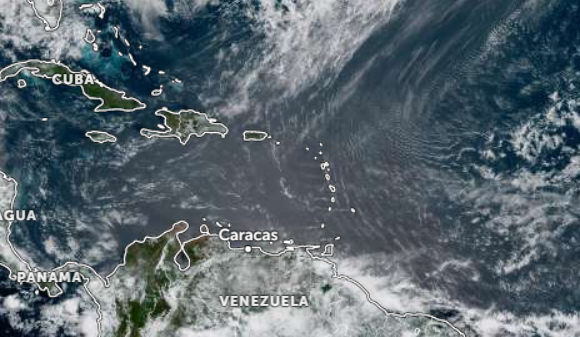
For the opening days of the season, forecasters say the Dominican Republic’s weather will be shaped by two dominating atmospheric features: a broad dry air mass and thick plumes of Saharan dust moving across the region. This combination is projected to suppress widespread precipitation across most of the nation, leaving the majority of areas to experience persistently sunny, sweltering conditions through the early days of the season.
Even with the overall dry pattern across the country, two active weather systems are expected to bring limited localized precipitation. A tropical wave positioned south of neighboring Haiti, paired with a low-pressure trough located northwest of Hispaniola, will bring scattered light showers to stretches of the Dominican Republic’s Caribbean coastline during morning hours. As daytime heating builds through the afternoon, the systems are forecast to spark isolated heavy downpours and thunderstorms across elevated terrain and northern parts of the country, including sections of the Central Mountain Range, the northwest region, and border provinces. The specific areas at highest risk for afternoon severe convection are La Vega, Santiago Rodríguez, Elías Piña, Valverde, and Dajabón.
Beyond rain and storm risks, Indomet has issued a public warning about elevated heat and air quality concerns tied to the current weather setup. Concentrations of Saharan dust in the lower atmosphere, combined with standard seasonal warming, will push daytime temperatures well above comfortable levels for most of the country. Local authorities have issued clear public guidance to help residents stay safe during the period: they advise all people to maintain steady hydration, wear loose, light-colored clothing that reflects sunlight, limit extended time spent outside during peak sun hours, and stay in cool, well-ventilated spaces as much as possible. For people with respiratory sensitivities or other conditions that make them vulnerable to dust particles, officials have emphasized the importance of following existing public health guidelines and staying up to date with official forecasts throughout the 2026 hurricane season.