
博客

  • Benjamin Promises More Support for Elderly, Including Daycare and Recreation

    Benjamin Promises More Support for Elderly, Including Daycare and Recreation

    As Antigua and Barbuda prepares for its upcoming general election on April 30, Dr. Philmore Benjamin, the Antigua and Barbuda Labour Party (ABLP) candidate for the St Mary’s North constituency, has laid out a bold multi-part plan to transform elder care across the region, positioning improvements to senior support services as one of his top policy priorities if elected.

    Drawing from decades of experience as a medical practitioner, Benjamin argues that the current system of elder care focuses too heavily on treating acute illness, and fails to address the full spectrum of needs that seniors have to thrive. In his view, holistic care must center on preserving dignity, encouraging social connection, and nurturing both physical and mental wellness, rather than just managing health conditions.

    At the core of his proposal is the introduction of purpose-built adult day care facilities, spaces designed specifically to give older adults a dedicated community hub to gather, connect with peers, and engage in group activities. Benjamin explains that regular social interaction in these age-friendly spaces helps seniors maintain sharper cognitive function, reducing the risk of isolation that often contributes to mental health decline among older populations.

    Beyond social spaces, Benjamin is pushing for expanded accessible recreational programming tailored to seniors’ varying ability levels. He notes that even low-impact, non-competitive physical activities can deliver meaningful improvements to seniors’ quality of life, and structured recreational opportunities deliver dual benefits by boosting both physical fitness and social connection. “There’s no real limit for you to be doing something recreational,” Benjamin emphasized, noting that consistent gentle activity can keep seniors engaged and active longer.

    The candidate’s plan also addresses key structural barriers to senior participation: transportation and public space accessibility. He has pledged to upgrade infrastructure and transit services to ensure that seniors with limited mobility can easily access community programs and public spaces, allowing them to remain active participants in local life rather than being pushed to the margins of community activity. For Benjamin, this inclusion is a core goal of the reforms: these initiatives are designed to help seniors “feel a part of the livelihood” of the constituency, rather than being sidelined as they age.

    Elder care reform is just one plank of Benjamin’s broader campaign platform, which also includes pledges for systemic healthcare reform across Antigua and Barbuda, expanded youth development programs, targeted infrastructure upgrades across St Mary’s North, and strengthened community-focused constituent representation. With voting day just weeks away, the candidate has made clear that improving outcomes for the country’s aging population is a personal as well as political priority, noting “I have a passion to improve elderly care in this country.”

  • Fevrier makes Six Star marathon history for Saint Lucia

    Fevrier makes Six Star marathon history for Saint Lucia

    On April 22, 42-year-old runner Ava Fevrier etched her name into Caribbean athletics history by crossing the finish line of the Boston Marathon, securing her place among an exclusive global group of endurance athletes and claiming the prestigious Six Star Medal for completing all six Abbott World Marathon Majors.

    Since the accolade was first introduced in 2016, fewer than 25,000 runners across the globe have earned this distinguished honor. Fevrier, a native of the Saint Lucian coastal town of Dennery, is not just the first woman from her island nation to claim this achievement—she also ranks among fewer than 50 Six Star medalists from the entire English-speaking Caribbean.

    Fevrier’s journey to this historic milestone began unexpectedly in the wake of the COVID-19 pandemic. After watching urban marathon events on YouTube during global lockdowns, she developed a passion for road running, and over just two years, she checked off all six major races: Tokyo, Boston, London, Berlin, Chicago, and New York City. She completed the 2026 Boston Marathon in a time of 4:17:10, capping off her incredible run of achievements. While she already holds the Saint Lucian national women’s marathon record of 3:48:41 set at the London Marathon, Fevrier said her only goal for Boston was simply to cross the finish line intact.

    Reflecting on her experience at the 2026 Boston Marathon, Fevrier shared that race weekend was overwhelmingly positive. “The whole weekend in Boston has been pretty amazing, just very relaxed and a lot of people so that just has made the environment exciting. The weather was perfect for racing, and the bottom line was to have a good race, to feel strong the entire race, which I did until like maybe the last three miles,” she explained in an interview with local outlet St Lucia Times.

    She added that she approached the hilly Boston course with a deliberate strategy: “I really started this race not thinking about time. I just wanted to celebrate everything I’ve done, but I also just wanted to have a strong race, especially knowing that there were all these hills coming up the last half. So, it really was a tactical race to make sure that I could survive the last half, knowing there are all these hills, and I ran every single hill. I never walked up a hill. I never stopped on the hill.”

    Fevrier gave public credit to her training and racing teammates for their unwavering support throughout her Six Star journey, noting that they ran alongside her for parts of the Boston course, stopping only to greet cheering spectators and pick up a Saint Lucian national flag from a local cheer station. For Fevrier, this achievement carries a unique weight that her national record does not.

    “Yeah, this one is different,” she stated. “The records are pretty impressive, but all records can be broken, right? The goal is for us to find those fast people and shatter those records that I’ve put in place. But that Six Star, being the first female Six Star, no one can take that away from me. It will always be there. It will always be something that others would hopefully follow. So it’s nice that that’s just stamped in its place and no one can actually remove it.”

    While Fevrier frames her national record as a milestone meant to be surpassed, she says she is “over the moon” to have earned her place in the Six Star Hall of Fame. She follows compatriot Nitin Sharma, who became the first Saint Lucian man to earn the Six Star Medal in 2025 before going on to complete the extra Seven Stars distinction by adding the Sydney Marathon to his resume. Fevrier says she now plans to pursue that same seven-race achievement next.

    In the broader eastern Caribbean region, Fevrier is only the second woman to hold the Six Star honor, joining Philomena Robertson of Grenada, who completed her set at the Tokyo Marathon earlier this year. By 2027, two more Saint Lucian runners—current Five Star holders Pamella Edward and Che Odlum-De Vivenot—could join the exclusive group.

    Fevrier now hopes her historic achievement will inspire more people across her home island to take up endurance running. In a message to local runners, she said, “I just want people to give it a try. Start with that 5K, start with that 10K, and build up to a half and then build up to a marathon. It’s something I’m hoping people become more interested in, and I’m starting to see some of that. There’s one runner we found through the running community in the States, and he’s started running 10-milers.”

    She emphasized that elite endurance marathon running is an attainable goal for Saint Lucian athletes, even if it requires significant commitment: “And that’s kind of the idea, to kind of help people see that this is attainable… Endurance running is attainable, and it does take training just like the middle distances or the sprints. It does take as much work as track and field. We are working our butts off, all through the seasons. And even getting to the majors itself is a feat. It takes a lot of work, scheduling, finance, training, travelling, so it’s a lot, but I just want people to try. See if you like it, and hopefully we can find people who will really build up this part of the sport.”

    For Fevrier, the sport has already transformed her life for the better, after she first discovered it by chance during pandemic lockdowns. She shows no signs of slowing down now, with new goals that extend beyond her own racing: she is focused on growing the local running community in Saint Lucia and encouraging more local athletes to follow in her footsteps and claim their own Six Star Medals.

  • Grotto set for major overhaul

    Grotto set for major overhaul

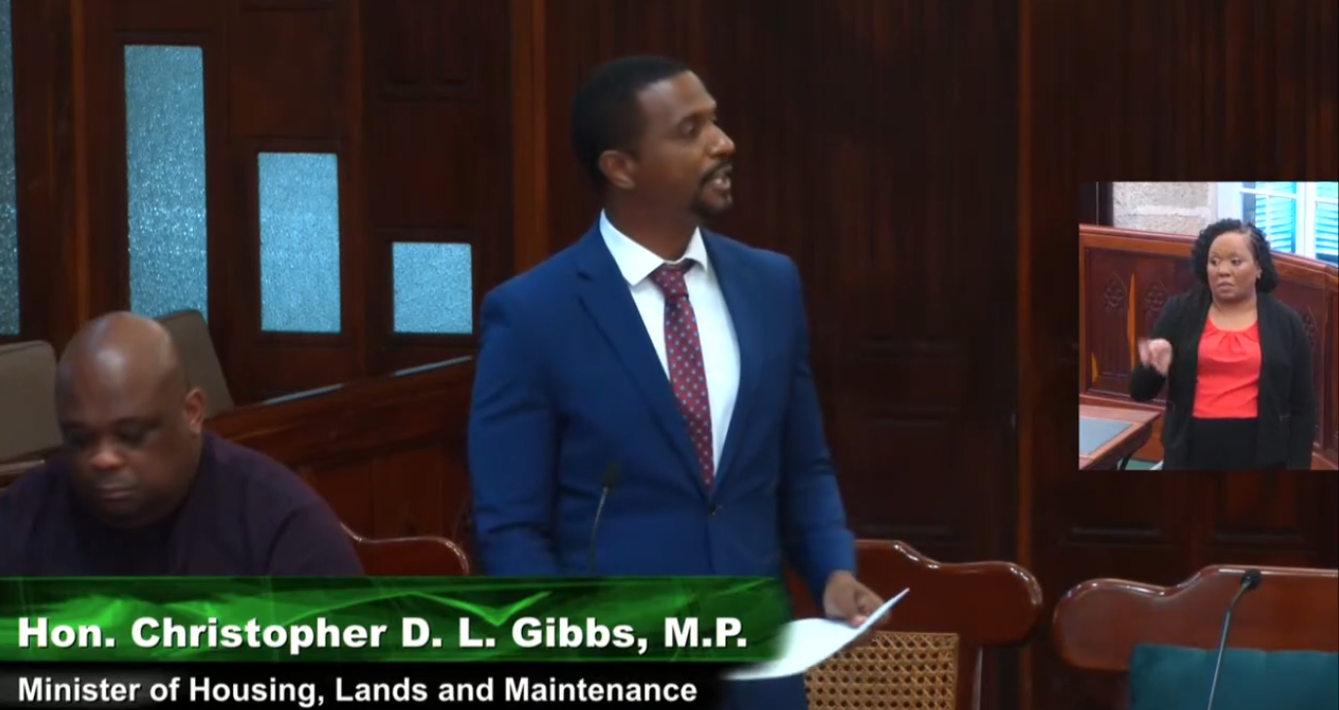
    After years of unaddressed safety complaints from residents of the decade-old Grotto housing complex in Beckles Road, Barbados, the national government has greenlit urgent intervention, with repair work set to kick off almost immediately. The announcement from Housing, Lands and Maintenance Minister Chris Gibbs comes in direct response to mounting resident pressure, who have long labeled the 76-unit high-rise a public safety hazard. Speaking exclusively to Barbados TODAY on the sidelines of Wednesday’s Pendry Hotel topping-off ceremony, Gibbs confirmed that the National Housing Corporation (NHC) has received full funding to resolve the structural and infrastructure failures that have upended daily life for the complex’s tenants.

    While the minister declined to share the exact dollar amount allocated for the Grotto upgrades, he outlined the core problems the funding will resolve: long-running severe water leaks that have penetrated living spaces and compromised electrical systems, and widespread gaps in basic security that have left residents feeling vulnerable. Gibbs confirmed that project planning is already complete, including selection of the specialized sealant needed for the leaking roof that has been the complex’s most persistent complaint. “The money has been allocated, so we’ll be starting that project almost immediately,” the minister stated.

    The commitment arrives at a breaking point for Grotto residents, who recently detailed their years-long struggle with unsafe living conditions to Barbados TODAY. Tenants Uwine and Charmaine Dominique explained that during rainstorms, they are forced to line floors with towels and catch water that drips directly onto electrical panels – a serious electrocution risk that has gone unaddressed for years. Beyond water damage, many residents, particularly women living alone, have reported traumatic experiences navigating the complex after dark. Outdated site design leaves few parking spots close to building entrances, forcing residents to walk long distances through poorly lit areas that attract vagrants and would-be intruders.

    Gibbs openly acknowledged that the original development design failed to account for the modern needs of the people who call the complex home. “The parking was not optimised to the amount of residents there. We are looking at solutions there, because when you come home and there is no parking for you, you might have to park a ways off and then people have some concerns based on security. You can understand it,” he admitted. In addition to critical roof repairs, the government will also upgrade the complex’s failed lighting system, a gap that has allowed unwanted trespassers to operate with impunity according to residents.

    The minister also used the announcement to signal a broader policy shift within the Ministry of Housing, moving toward a more proactive, professional model of public property management that frames tenants as key stakeholders rather than just occupants. “I look at our residents as our clients. We definitely have to make sure that not only are their units safe and secure, but that we have audits periodically so that we can get ahead of issues before they present themselves,” Gibbs explained.

    The Grotto upgrades are drawn from the $13.3 million earmarked for the NHC in the upcoming fiscal year’s total $137.5 million national housing budget. This funding is part of a wider national infrastructure modernization push, which also includes a $56 million Resilience and Regeneration Fund focused on climate-proofing publicly owned properties across the country.

    While the repairs will deliver immediate relief to Grotto tenants, longer-term, transformative change is also on the horizon for the St. Michael development. Under the recently passed State Acquisition and Vesting of Property Bill, eligible Grotto residents may eventually transition from being public housing tenants to full homeowners. The landmark legislation is designed to cut through decades of bureaucratic gridlock, and will ultimately grant full property ownership to close to 3,900 qualifying tenants across 27 public housing estates nationwide.

    For the immediate future, however, the government’s focus remains on resolving urgent safety issues and carrying out preliminary beautification work that will start in the coming weeks. “We will also be doing beautification across the estates as well, and The Grotto is included in that too,” Gibbs confirmed.

  • St. Kitts economic citizen wanted by United States

    St. Kitts economic citizen wanted by United States

    U.S. law enforcement and diplomatic authorities have launched a new push to apprehend a convicted fugitive tied to one of the largest transnational cryptocurrency fraud rings in recent years, announcing a $4 million reward Thursday for any information that leads to the arrest of Daren Li, a Chinese national who holds economic citizenship in the Federation of St. Kitts and Nevis.

    The reward was officially announced through the Transnational Organized Crime Rewards Program (TOCRP), administered by the State Department’s Bureau of International Narcotics and Law Enforcement Affairs, in a public statement released April 23, 2026. Li was already convicted and sentenced on federal money laundering charges by the U.S. District Court for the Central District of California, but he has evaded custody and remains at large years after his conviction.

    According to official details released by U.S. law enforcement, Li played a central role in laundering hundreds of millions of dollars in illicit proceeds generated by large-scale scam operations based across Southeast Asia. Court records formally list Li as a dual citizen of China and St. Kitts and Nevis, and investigators confirm he has previously resided in three countries: China, Cambodia, and the United Arab Emirates.

    Prosecutors outline that Li pleaded guilty to conspiracy charges, admitting he worked with a broad criminal network to launder funds stolen from thousands of global victims through fraudulent cryptocurrency investment schemes and associated financial frauds. U.S. State Department officials emphasized that transnational fraud rings like the one Li worked with depend heavily on professional money launderers to move illicit funds across international borders while avoiding detection by global anti-money laundering frameworks, with cryptocurrency offering these criminal groups an extra layer of obfuscation.

    Investigative records detail that Li coordinated with his co-conspirators to set up hundreds of U.S. bank accounts registered under fake shell companies, then personally oversaw the movement of stolen funds through both domestic U.S. and cross-border wire transfers. Authorities have traced a minimum of $73.6 million in funds stolen from fraud victims through accounts connected to Li and his criminal network, with nearly $60 million of that illicit sum passing through shell company accounts based in the United States.

    This reward announcement is the latest step in a sweeping, ongoing U.S.-led crackdown on transnational cybercriminal networks that operate cross-border fraud and associated criminal activity. In recent months, U.S. authorities have brought charges against multiple other individuals tied to scam compounds operating in Myanmar and Cambodia, alongside coordinated enforcement actions targeting the online infrastructure and financial networks that these criminal groups use to facilitate fraud, money laundering, and even human trafficking.

  • Grenfin Swim Club claims 29 medals

    Grenfin Swim Club claims 29 medals

    From April 9 to 12, 17 athletes from Grenada’s Grenfin Swim Club turned in a standout performance at the 26th RHAC Invitational hosted by Rodney Heights Aquatic Centre in St. Lucia. Competing against 30 other elite swim clubs from across the Caribbean, the small Grenadian team outperformed expectations to claim 29 total medals, cementing 7th place in the overall team rankings, with the men’s squad finishing 4th and the women’s squad taking 8th. The team not only claimed multiple podium positions across age-group championship divisions but also set new competition records, marking a historic showing for the non-profit organization.

    Multiple Grenfin swimmers delivered career-defining races at the four-day event. Leading the charge was Kaleb Williams, a competitor in the boys’ 15–17 age group, who claimed three gold medals and smashed two meet records that had stood since 2023. Williams obliterated the previous 400m individual medley mark of 5:53.05, clocking a new record time of 5:35.54. He also broke the 200m breaststroke record, finishing in 2:42.02 to beat the old time of 2:58.28. Beyond his three golds, Williams added three bronze medals to his haul in the 50m breaststroke, 100m butterfly, and 200m individual medley.

    In the boys’ 9–10 division, Keshon Cobb delivered an equally impressive performance, securing third place overall in the age-group championship. Cobb claimed gold in the 50m butterfly, four silver medals in the 50m backstroke, 50m freestyle, and 400m freestyle, and four additional bronze medals in the 200m freestyle, 200m individual medley, 100m backstroke, and 50m breaststroke. He also finished second overall in both the 25m and 50m sprint challenge events for his age group.

    Other Grenfin athletes also earned podium finishes across their divisions. In the girls’ 11–12 age group, Evie Twum-Barimah took silver in both the 800m and 1500m freestyle, plus bronze in the 200m and 50m butterfly. Teammate Llewella Bernard added another bronze to the club’s count in the girls’ 11–12 800m freestyle. For the older boys’ 15–17 division, Mark Mitchell claimed a silver in the 50m freestyle and two third-place finishes in the 25m and 50m sprint challenges, while Tariq Bethel rounded out individual results with a silver in the 50m breaststroke and bronze in the 50m butterfly.

    The club’s success extended to relay competition as well. The 15-and-over boys’ relay team, made up of Williams, Mitchell, Reuben Bernard, and Bethel, claimed three silver medals in the 400m freestyle relay, 200m medley relay, and 200m freestyle relay.

    In a remarkable team-wide achievement, every single Grenfin swimmer set new personal best times across multiple events throughout the invitational. In total, 93% of all swims recorded by the team resulted in new personal bests, a statistic that head coach Gerson Escobar highlighted as one of the meet’s biggest wins. Escobar, who accompanied the team alongside participating parents, praised the squad’s grit and progress over the four days of competition.

    “I am very happy with the performance of all 17 swimmers,” Escobar said. “They achieved 93% personal best times and several competition records. It is important for swimmers to have the opportunity and exposure at regional and international levels. We will continue to work on their competition readiness. I applaud them for their achievements.”

    Based in Grenada, Grenfin Swim Club is a non-profit organization that serves swimmers of all skill levels, from introductory learn-to-swim programming to elite competitive training. For more information about the club, interested parties can reach out via email at [email protected]

  • BARP: Fines alone not enough

    BARP: Fines alone not enough

    As Barbados moves forward with landmark legislation to protect the rights and well-being of its aging population, the island nation’s leading advocacy group for retired people has offered a measured welcome: praising the bill as a long-overdue milestone while cautioning that robust implementation and enforcement will determine its real-world impact. \n\nThe Older Persons (Care and Protection) Bill, which was tabled before Barbados’ lawmakers this week, marks a historic shift in how the country frames the value of its senior citizens, according to Marilyn Rice-Bowen, president of the Barbados Association of Retired Persons (BARP). In comments on the proposed legislation, Rice-Bowen emphasized that the bill fills a critical gap in national policy, finally enshrining in law the principle that older Barbadians deserve full state protection as they enter their later years. \n\n“This bill challenges the harmful, outdated narrative that seniors are a societal burden or an economic liability,” Rice-Bowen explained. “Ageing is a natural stage of life that we can only hope to reach, and it comes with a lifetime of contribution to our nation. The legislation recognizes that reality. It moves us past the dehumanizing idea that older people are a drain on resources, and instead affirms their role as living reservoirs of intergenerational knowledge and cultural experience.”\n\nAt its core, Rice-Bowen said, the bill is about honoring the decades of work and sacrifice that current seniors gave to build modern Barbados. “Every older person in this country gave their time, their labor, and their love to our communities and our families over a full lifetime. This legislation isn’t just a set of rules—it’s a promise that they can age with dignity, financial security, and a sense of purpose, knowing the state has their back.”\n\nBut while BARP has welcomed the framework laid out in the proposed law, the organization’s leader stressed that good legislation is only as useful as its enforcement. The bill includes financial penalties for elder mistreatment, which Rice-Bowen said serve an important deterrent purpose—but penalties without follow-through and resourcing will not deliver meaningful change. \n\n“Penalties send a clear signal that elder abuse is unacceptable, but laws on paper don’t protect anyone if they aren’t enforced,” she noted. “Effective implementation depends on so much more than just passing legislation: it requires consistent, long-term funding for the social agencies that will support vulnerable seniors, it requires hiring and training a dedicated workforce to respond to reports of abuse, and it demands sustained public education to shift cultural attitudes. Without those investments, even the most carefully written bill will achieve very little.”\n\nRice-Bowen also reflected that the need for punitive measures in elder protection is a disappointing sign of shifting social norms in Barbados. “It’s a poor reflection on where we are as a society that we have to put stiff fines in law just to make sure people treat their elders with basic respect,” she said. “Our ultimate goal should be a return to the cultural values that once defined our communities: a Barbados where elders are revered, cared for, and loved within extended families, where abuse never happens at all, so we never need to punish anyone for it.”\n\nTo get to that point, Rice-Bowen argued, the country must first be open and honest about the problem of elder mistreatment, rejecting vague language and euphemisms that hide abuse and protect perpetrators. She called for clear, explicit definitions of all forms of elder abuse, saying direct language is the foundation of public awareness and accountability. \n\n“We can’t afford to cloak abuse in soft, fancy terms,” she contended. “When someone talks about ‘unfairing’ a senior, we need to call that what it is: abuse. Naming it correctly is the first step to making sure everyone recognizes it, and it sends an unambiguous message that this behaviour will not be tolerated. Euphemisms don’t help victims—they only help the people who are harming seniors get away with it. Plain language is what protects vulnerable older people.”\n\nOutlining the key pillars that will make the bill effective once enacted, Rice-Bowen reiterated that implementation requires intentional planning and resourcing. She said the law must include clear, accessible reporting mechanisms for people to report suspected abuse, adequate sustained funding for frontline social services, specialized training for personnel who work with older populations, and widespread public outreach to educate both seniors and caregivers about their respective rights and responsibilities under the new framework.\n\nsummary: “This news covers the reaction of the Barbados Association of Retired Persons (BARP) to the newly tabled Older Persons (Care and Protection) Bill. BARP President Marilyn Rice-Bowen praises the bill as a long-overdue step that affirms the dignity of older Barbadians and rejects harmful narratives that frame seniors as societal burdens. However, BARP stresses that the legislation’s success depends entirely on robust enforcement, adequate funding for social services, trained personnel, public awareness, and clear, direct definitions of elder abuse, noting that unimplemented laws will deliver little meaningful protection for vulnerable seniors.

  • Antigua and Barbuda to host Caribbean Travel Marketplace for the second year running in May

    Antigua and Barbuda to host Caribbean Travel Marketplace for the second year running in May

    The twin-island nation of Antigua and Barbuda is gearing up to welcome 500 global tourism stakeholders for the 44th annual Caribbean Hotels and Tourism Association (CHTA) Caribbean Travel Marketplace, a landmark industry gathering set to run from May 12 to 15, 2026 at the American University of Antigua’s purpose-built conference facility.

    This repeat hosting marks the second year in a row Antigua and Barbuda has been selected to welcome the event, a clear vote of confidence that cements the nation’s standing as a leading Caribbean tourism hub and boosts its growing reputation as a top-tier destination for the Meetings, Incentives, Conferences, and Exhibitions (MICE) sector.

    Honourable Charles Fernandez, Minister of Tourism, Civil Aviation, Transportation and Investment of Antigua and Barbuda, emphasized that CHTA’s decision to bring the Caribbean Travel Marketplace back to the country speaks to the industry-wide trust in the nation’s ability to deliver a premium, high-caliber event. He added that the repeat hosting further solidifies Antigua and Barbuda’s position as a go-to destination for large-scale conferences and major global tourism gatherings.

    Colin C. James, CEO of the Antigua and Barbuda Tourism Authority, highlighted the unique strategic importance of this 2026 international gathering for the nation, noting that event organizers are leaving no detail overlooked to replicate and build on the resounding success of the 2025 Marketplace. As the host nation, Antigua and Barbuda has rolled out a coordinated cross-sector collaboration led by three key bodies: the Ministry of Tourism, Civil Aviation, Transportation and Investment, the Antigua and Barbuda Tourism Authority, and the Antigua and Barbuda Hotels and Tourism Association (ABHTA).

    Beyond core industry business sessions, the 2026 event will introduce a dedicated Responsible Tourism Day on May 14. This special track will give attending delegates a first-hand look at Antigua and Barbuda’s ongoing sustainable tourism development and local environmental conservation initiatives, bringing the region’s sustainability commitments to life for global industry leaders.

    Another fan-favorite feature returning to the 2026 Marketplace is the Direct Booking Summit, scheduled for the final day of the event, May 15. The summit will gather C-suite and senior leaders from across the global tourism space to share actionable insights into shifting industry trends and the disruptive innovations that are driving modern tourism growth, with a specific focus on stakeholders across Antigua and Barbuda and the broader Caribbean region.

    The event is already drawing widespread interest from major media outlets across all of Antigua and Barbuda’s key source markets, a dynamic that will significantly boost the destination’s global visibility and brand recognition ahead of and during the gathering. Conveniently, the 2026 Caribbean Travel Marketplace also aligns with Antigua and Barbuda’s annual Culinary Month, giving attending business delegates the chance to experience the nation’s rich, vibrant local food culture alongside their industry networking and business activities.

    For full event details and registration information, interested parties can visit the official Caribbean Travel Marketplace 2026 event homepage managed by CHTA.

  • Fernandez Lists Roads, Water and Clinic Upgrades as Top Priorities in Rural North

    Fernandez Lists Roads, Water and Clinic Upgrades as Top Priorities in Rural North

    As the April 30 general election draws near, the tight race for the St. John’s Rural North parliamentary seat has put basic public services and infrastructure at the center of campaign discourse. Incumbent candidate and current Tourism Minister Charles Fernandez laid out his constituency’s most pressing unmet needs in a recent “Know Your Candidate” interview, confirming that road networks, potable water access, and community healthcare remain the top three priorities for area residents, even as ongoing work addresses longstanding gaps.

    Fernandez emphasized that transportation infrastructure tops the list of resident concerns, a challenge his team has prioritized throughout his current term. He pointed to active upgrade and repair projects across multiple communities in the constituency, including Yorks, Cedar Grove and Mount Pleasant — regions where some neighborhoods still lacked fully paved roads before current works got underway. To speed up delivery of these projects, Fernandez confirmed that additional construction resources and financing are on the way. A third paving machine will soon be deployed to expand work capacity, while new funding will allow crews to extend upgrades to more neighborhoods across the constituency.

    A reliable, consistent potable water supply is the second core issue dominating Fernandez’s agenda. He noted that the national government has already channeled major investments into expanding water production and distribution, including upgrades to reverse osmosis treatment facilities and overhauls of existing pipeline networks. These investments have already delivered measurable results: daily water output across the area now sits at roughly 11 million gallons, and that number is projected to climb further as new treatment capacity comes online in the coming months. Even with this progress, Fernandez acknowledged that legacy infrastructure challenges persist, noting that aging pipes and outdated control valves continue to cause service disruptions in some neighborhoods. “It is still a challenge in some areas… it’s not perfect,” he said, confirming that full system modernization remains a key goal for a new term.

    On the healthcare front, Fernandez highlighted improving community-level access to care as a non-negotiable priority. The core of this push, he explained, is expanding service offerings at local clinics to reduce the need for residents to travel longer distances for routine care. He publicly backed plans to extend clinic operating hours and increase the number of full-time doctors assigned to local facilities, changes designed to accommodate residents who cannot attend appointments during standard daytime working hours. “That is something that I welcome immensely… and something I think is needed,” he said of the proposal.

    Fernandez confirmed that if voters return him to office, these three core priorities will continue to guide his work, with an unwavering focus on delivering the basic public services that shape daily life for every constituent in St. John’s Rural North. With the race widely expected to be one of the most closely contested contests in the upcoming general election, the outcome will likely hinge on candidates’ ability to convince voters they can deliver tangible progress on these high-priority infrastructure and service issues.

  • Ministry of Agriculture suspends issuance of open burn permits

    Ministry of Agriculture suspends issuance of open burn permits

    The Caribbean nation of Grenada has enacted an immediate, indefinite suspension on all open burning license approvals, announced Friday by the country’s Ministry of Agriculture, Lands and Forestry. The sweeping policy change comes as officials confront rising seasonal and long-term threats, from heightened wildfire risk during the annual dry period to worsening environmental degradation and widespread public health hazards tied to unregulated open burning.

    Public health and environmental experts have long documented the severe harms of widespread open burning: the practice releases large volumes of harmful particulate matter and toxic pollutants into the atmosphere, driving poor air quality that exacerbates asthma, chronic obstructive pulmonary disease and other life-threatening respiratory conditions. Beyond health impacts, out-of-control open fires pose constant risks to private property, commercial agricultural operations, and the island’s fragile native ecosystems, which support unique biodiversity and draw millions in tourism revenue each year.

    Ministry officials emphasized that the suspension is not an isolated policy, but a core component of a national initiative to advance more sustainable land stewardship and boost Grenada’s overall climate resilience. As extreme weather and prolonged dry seasons become more frequent due to global climate change, curbing unregulated burning is seen as a critical step to reduce the island’s vulnerability to destructive, large-scale wildfires.

    To support affected groups in transitioning away from open burning, the government is offering free practical guidance and technical support to farmers, private landowners, construction contractors, and general community members. Alternative, low-impact methods for land clearing and organic waste management are being promoted, including composting, organic mulching, and mechanical land clearing. Assistance is available through the Ministry’s local Extension District Offices, the national Forestry Department, and the Fire Department under the Royal Grenada Police Force.

    Enforcement of the new policy will also be ramped up: the Fire Department and partnered regulatory agencies will increase patrols and monitoring across the island to detect unauthorized open burning. Any individual caught conducting unapproved burning will face fines and other legal penalties outlined in Grenada’s existing environmental and public safety regulations.

    In closing, the Government of Grenada issued a public appeal for cooperation, framing the policy as a collective effort to protect the island’s natural environment and safeguard the health and safety of all residents. A disclaimer from local publication NOW Grenada notes that the outlet is not liable for opinions or content shared by external contributors, and invites users to report any abusive content via official platform channels.

  • Kandidaten VN-chef beloven hervormingen en herstel vertrouwen

    Kandidaten VN-chef beloven hervormingen en herstel vertrouwen

    As the United Nations prepares to select a new leader to succeed incumbent Secretary-General António Guterres in 2027, four early candidates took center stage this week at public hearings with UN member states and civil society groups, all pledging to embrace sweeping institutional reforms to reverse the global body’s declining credibility and restore its central role in international cooperation.

    Founded in the aftermath of World War II to prevent catastrophic global conflict and advance shared development, the UN has faced growing criticism in recent years over eroding authority and public trust. Deepening geopolitical rifts between major powers have strained the organization’s ability to respond to global crises, while its sprawling institutional structure has led to calls for cost-cutting and greater efficiency, putting pressure on the 193-member body to prove its ongoing relevance in a shifting world order.

    Among the candidates is Rebeca Grynspan, 70, a former vice-president of Costa Rica and current head of the UN Conference on Trade and Development (UNCTAD), who identified UN peacekeeping operations as her top priority if selected. She sounded the alarm over falling global confidence in the organization, urging bold, decisive action to update its structures. “Defending the United Nations today means having the courage to change it,” Grynspan stated during her hearing.

    She is joined on the candidate list by another former regional leader, 74-year-old Michelle Bachelet, ex-president of Chile and former UN High Commissioner for Human Rights. If either candidate wins, they will make history as the first woman to lead the UN. Bachelet used her hearing to emphasize her longstanding commitment to advancing gender equality and women’s rights globally, though her candidacy has drawn backlash from conservative U.S. politicians over her public support for abortion access.

    Former Senegalese President Macky Sall, 64, is also in the race, campaigning on a platform of rigorous institutional management. Sall has pledged to streamline coordination across the UN’s dozens of independent agencies and eliminate redundant work practices. “This is the moment to deliver better performance with fewer resources,” he argued, outlining a vision of a revitalized UN whose most impactful work still lies ahead.

    The fourth early candidate is Rafael Grossi, 65, an Argentine diplomat who has served as head of the International Atomic Energy Agency (IAEA), the UN’s nuclear watchdog, for six years. Grossi framed ongoing institutional reform efforts as a necessary starting point for the organization, but stressed that significant work remains to address the UN’s structural challenges.

    The winning candidate will secure a five-year term, with an option to renew for a second five-year term. Compared to the 2016 selection cycle that ultimately elevated Guterres from a field of 13 contenders, the current candidate pool is far smaller at this early stage, though the door remains open for new contenders to join the race in the coming months.

    By longstanding convention, the secretary-general role is not filled by a national of the UN Security Council’s five permanent members — China, France, Russia, the United Kingdom, and the United States — a rule designed to prevent an unhealthy concentration of power among the world’s major nuclear-armed states. Even so, the backing of these permanent powers remains a critical factor in the complex, closed-door selection process, which requires Security Council endorsement before a candidate is confirmed by the General Assembly.

    Against a backdrop of overlapping global crises, from intensifying armed conflicts to accelerating climate change and widening global inequality, the next UN secretary-general will face one of the most daunting leadership jobs in the world: rebuilding public and multilateral trust in the UN, and reasserting the organization’s place as the central platform for collective global problem-solving.