博客

  • The watchman has walked off the wall

    The watchman has walked off the wall

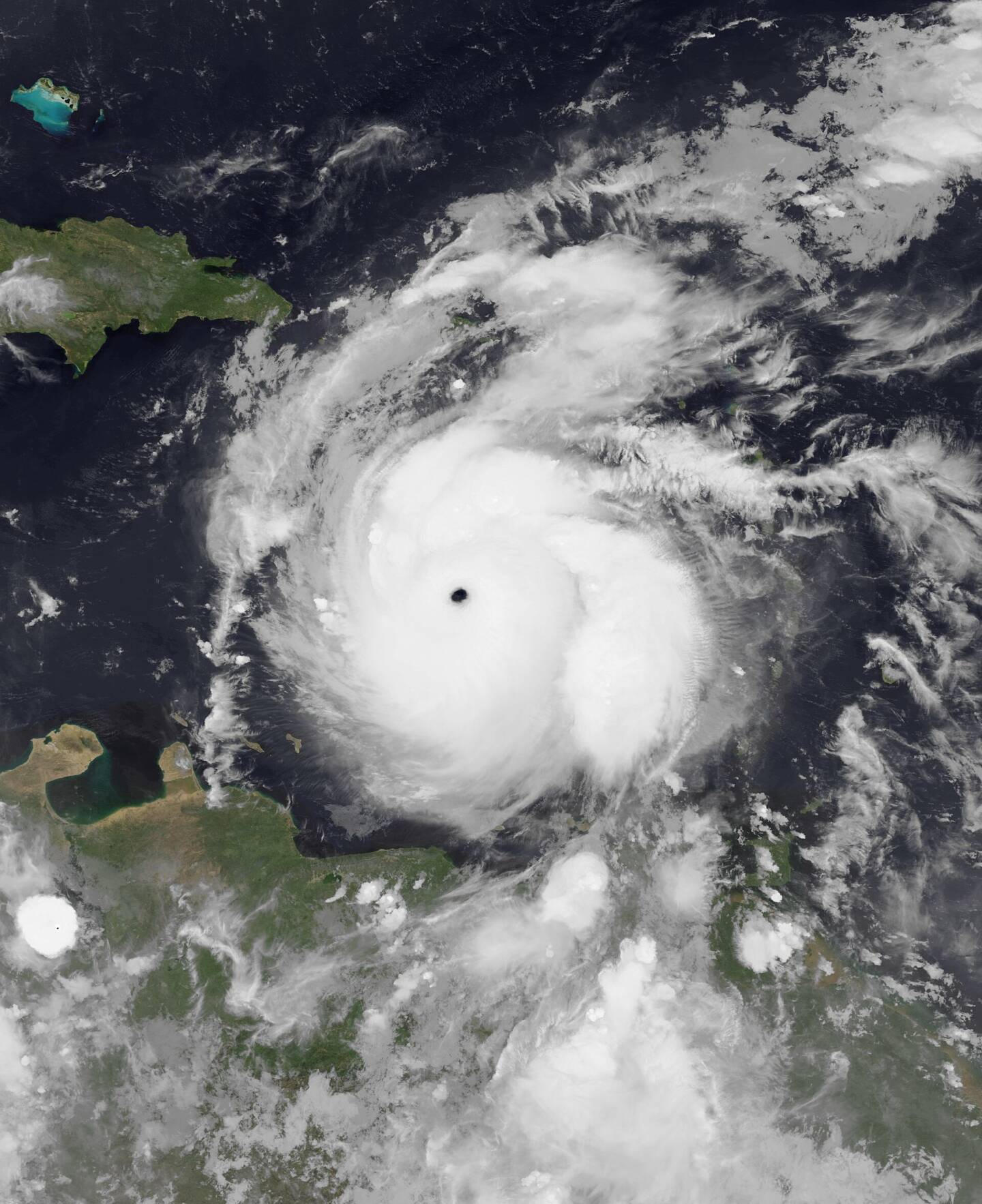
    As June 2026 ushers in another Atlantic hurricane season, the ritual of preparation for Caribbean communities has changed in form but not in stakes. For generations, islanders have marked the season with old rhymes and quiet urgency: June too soon, July standby, August a must, September remember, October not yet over. Where once communities huddled around radios to catch storm coordinates from distant forecasters, today they track storm cones on social media. But one unchanging truth remains: hurricanes are spotted first by others, and early detection is the line between a disrupted week and a tragic funeral. Today, U.S. policy choices have made that early detection far harder.

    The human cost of this vulnerability is not a new statistic — it is etched into the displaced lives of Caribbean people. I still recall Hurricane Lenny, the 1999 off-season storm that struck Chateaubelair from an unexpected western direction, tearing away a fishing boat one man named Joseph had spent seven years of skipped lunches and mended nets paying off. When the storm cleared, only frayed ropes remained tied to the shore. Joseph never rebuilt his life on St Vincent; a month later, he left to work on a cruise ship out of Miami, and has come home just four times in 25 years. Hurricanes do not always kill. They force you to live out the rest of your life on someone else’s terms.

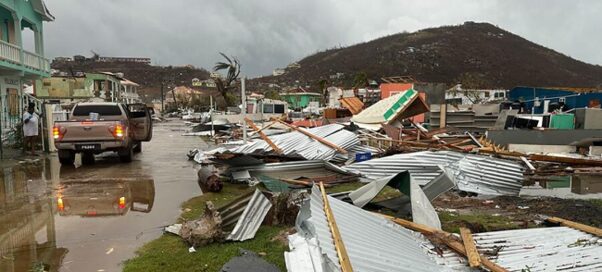
    That same violence visited the Grenadines just two years ago, in July 2024. Hurricane Beryl, the earliest Category 5 Atlantic storm ever recorded, destroyed 90% of homes on Union Island and stripped every roof from buildings on Mayreau. Three weeks after the storm, I met a mother named Celia who had sheltered with her two young children in a stone church. When the eye of the storm passed over, her four-year-old son Malachi looked up and asked, “Mummy, is God angry at us?” Celia reassured him no, but never shared that the church walls were shaking, that stained glass was exploding into a horizontal rain of colored shards. When they emerged, only one wall of their home remained standing. Pinned to that wall, where their kitchen once stood, was Malachi’s baby photograph — a small, fragile miracle that will likely cross oceans before Celia ever sees a cent of compensation from global climate loss and damage funds.

    The warming of Caribbean waters by nearly 2°F since 1980 is not an abstract climate number. It is why Beryl intensified to Category 5 in July, when storms of that strength almost never form before September. For Caribbean nations, hurricanes are never just weather events — they are reverse development, erasing decades of progress in a single night. When Hurricane Maria hit Dominica in 2017, it destroyed 226% of the country’s annual GDP, 90% of its housing stock, and its entire power grid. Poverty rates were projected to jump to 43%, and with no emergency reserves to draw on, Dominica was forced to borrow against its children’s future to replace infrastructure the country had already paid for once.

    The statistics never tell the full story. Maria hit just two years after Tropical Storm Erika had already gutted the island. A teacher in Roseau described 12-year-old students who had already lost three homes since 2015. Three childhood homes, one single childhood. Caribbean communities are hit again before they can finish rebuilding, mortgaging the same schools and clinics twice in one generation, and forced to pay interest on the debt. We call repeated trauma “resilience” because admitting we have failed these children is too unbearable to face. But these children are not resilient — they are exhausted.

    This year, forecasters at the U.S. National Oceanic and Atmospheric Administration (NOAA) are predicting a below-average hurricane season, and many are breathing a sigh of relief. But Caribbean communities know better than to celebrate. Every forecaster attaches the same critical warning: it only takes one storm to destroy a life, a community, a country. A “quiet” season just means fewer chances that the catastrophic storm will miss your island.

    The question today is, who is watching the sky for us? The answer has been deliberately altered by Washington. In February 2024, the U.S. administration revoked the official legal finding that greenhouse gases endanger human health — even as the U.S. National Academies of Sciences confirmed that the evidence for climate harm is stronger than ever. Far from refuting the science, the administration simply side-stepped it. A cabinet secretary publicly declared that carbon dioxide was never a pollutant. Can we imagine that: a politician sitting in a temperature-controlled office declaring carbon harmless, while the people of Mayreau dig through the wreckage of their homes around a collapsed church? That politician will never have to bury a neighbor killed by a storm he helped make more dangerous. He lives in a world where climate bills are always sent elsewhere — to small islands that contributed almost nothing to global emissions, but will pay almost the full price.

    This climate denial has tangible, deadly consequences. Washington has cut hundreds of jobs from the U.S. National Weather Service and proposed defunding the Miami-based forecasting laboratories that refine storm track predictions for the entire Caribbean. Experts warn this could cut forecasting accuracy by as much as 40%. For a mother in Basseterre, Bridgetown, Castries, Kingstown, Kingston, St George’s or St John’s, that 40% drop in accuracy is the difference between evacuating your grandmother in time and leaving her behind because the forecast said the storm would turn north. That is not an abstract modeling error — that is the difference between a family gathering for the holidays and a search party combing the shoreline. The storms themselves are fueled by ocean waters warmed by the very carbon emissions Washington now calls harmless. The storm cone that tells a family when to board up their home comes from Miami. When Washington blinds its own forecasting system, it blinds us too.

    Caribbean thinkers have long understood our regional reality as a legacy of colonialism: our economies structured to benefit distant powers, and the systems meant to protect our people always held in someone else’s hands. That has not changed. The U.S. has pulled out of the Paris Agreement, abandoned the board of the UN Loss and Damage Fund, and walked away from its global climate pledges. When wealthy nations decide science is negotiable, small island states do not get a vote. We only get the bill and the graves to dig. The colonial mindset did not disappear — it was repackaged as domestic budget cuts, sold to voters as “putting your country first,” while the cost is passed to us.

    But failure is not limited to Washington. Earlier this year, when Pacific island nation Vanuatu brought a landmark International Court of Justice climate ruling to the UN General Assembly, asking member states only to affirm their legal duty to protect vulnerable climate-hit nations, one of our own Caribbean neighbors — Trinidad and Tobago — was absent from the vote. Not opposed, not abstaining, simply not there, while a fellow small island spoke up for all of us. We cannot demand global solidarity if we do not practice it among ourselves.

    This 2026 hurricane season is not a season to endure and then forget. The U.S. president who rolled back climate protections and cut forecasting funding will hold office for this season and two more, but the damage he has done will not expire when he leaves office. A community’s climate resilience takes a decade to rebuild, and can be destroyed in one storm. When we say the Caribbean cannot wait, we mean it: we face three full hurricane seasons with a warning system that has been deliberately weakened on purpose. Our lives are on the line, and waiting is nothing less than betting our people’s lives on good luck.

    We refuse to make that bet. Lament must turn to action, because despair is just dependency dressed in darker clothes. We are not starting from nothing. We already have a regional disaster agency that responded effectively to Beryl, a regional insurance facility that disburses funds within days, and a Caribbean meteorological institute in Barbados that trains our own forecasters. What these institutions lack is scale, sustainable financing, and the global and regional commitment to make them work.

    Now is the time to find partners and build our own regional systems. We need our own independent satellite reception, free from the budget cycles and political whims of foreign governments. We need our own regional forecasting center, free to issue warnings without needing approval from Miami. We need our own regional disaster bond facility, funded by a small levy on the tourism industry that profits from our beautiful beaches — while we bear all the risk of climate disaster.

    Let us set clear, binding deadlines: by the 2029 hurricane season, we will have a fully Caribbean-owned regional forecasting capability. By 2030, we will have a fully regionally capitalized disaster bond facility to cover emergency response costs. This work does not need Washington’s permission. It only needs our own collective resolve.

    We build this for the people who actually call this region home: for Celia and Malachi, for the 12-year-old children in Roseau who have lost three homes before they even hit puberty.

    I think of the faces of my childhood, gathered around the radio, straining to hear a distant voice that could see the storm before they could. That voice is being switched off now, by choice, in another hemisphere. The watchman has walked off the wall and called it freedom. But the wall is still ours. Our children are standing behind it. We have to hold it ourselves. No one is coming to save us.

  • Peters shares Diamond League lead after 2nd-place finish in Rome

    Peters shares Diamond League lead after 2nd-place finish in Rome

    The 2026 Wanda Diamond League men’s javelin competition is halfway through its preliminary qualifying stage, and two elite throwers now share the pole position after back-to-back meets in Rabat and Rome. Two-time world champion and 2024 Olympic bronze medalist Anderson Peters has climbed to 15 total qualification points after a solid second-place finish at the Rome Diamond League meeting held on June 4, 2026, putting him level at the top of the standings with Sri Lanka’s Rumesh Tharanga Pathirage.

    Peters kicked off his 2026 Diamond League campaign in strong form on May 31, taking the top spot on the podium at the Rabat stop with an 86.08-meter throw that earned him the maximum 8 points for a first-place finish. He carried that momentum to Rome one week later, where he delivered a consistent 83.91-meter throw to secure seven additional points for second place. The day’s win went to Pathirage, who set a new meeting record with a world-leading 92.62-meter throw, also collecting 8 points to match Peters’ total 15-point count.

    For the 2026 season, the men’s javelin discipline will hold its preliminary qualifying competitions across five Diamond League stops: Rabat, Rome, Doha, Lausanne, and Zurich. The top six athletes in the overall qualification standings will earn an automatic spot in the prestigious Diamond League Final, scheduled to take place in Brussels on September 4 and 5. Under the circuit’s standard scoring system, first place earns 8 points, with each subsequent rank from first through eighth earning one fewer point, down to 1 point for eighth place.

    A decorated veteran of the circuit, Peters is no stranger to top-level success on the Diamond League stage. He claimed the Diamond League Final javelin title in 2024, and currently holds the second spot on the circuit’s all-time men’s javelin performance ranking thanks to his historic 93.07-meter throw in Doha back in 2022. After the Rome meet, Peters offered a measured take on his second-place finish, emphasizing the steady rhythm of elite track and field competition. “Second place with 83.91m is pretty good. I won in Rabat, this time I came second — you win some and you lose some, this is athletics,” he said.

    While the wider Diamond League circuit heads to Stockholm, Sweden for its next meeting on June 7, Peters will next compete in the javelin discipline at the Doha Diamond League stop on June 19. There, he will look to build on his strong early-season form, extend his consistent performances, and break the deadlock for sole possession of first place in the qualification standings ahead of the final in Brussels.

  • Nine trophies for Adrenaline Rush at BCIC RB26

    Nine trophies for Adrenaline Rush at BCIC RB26

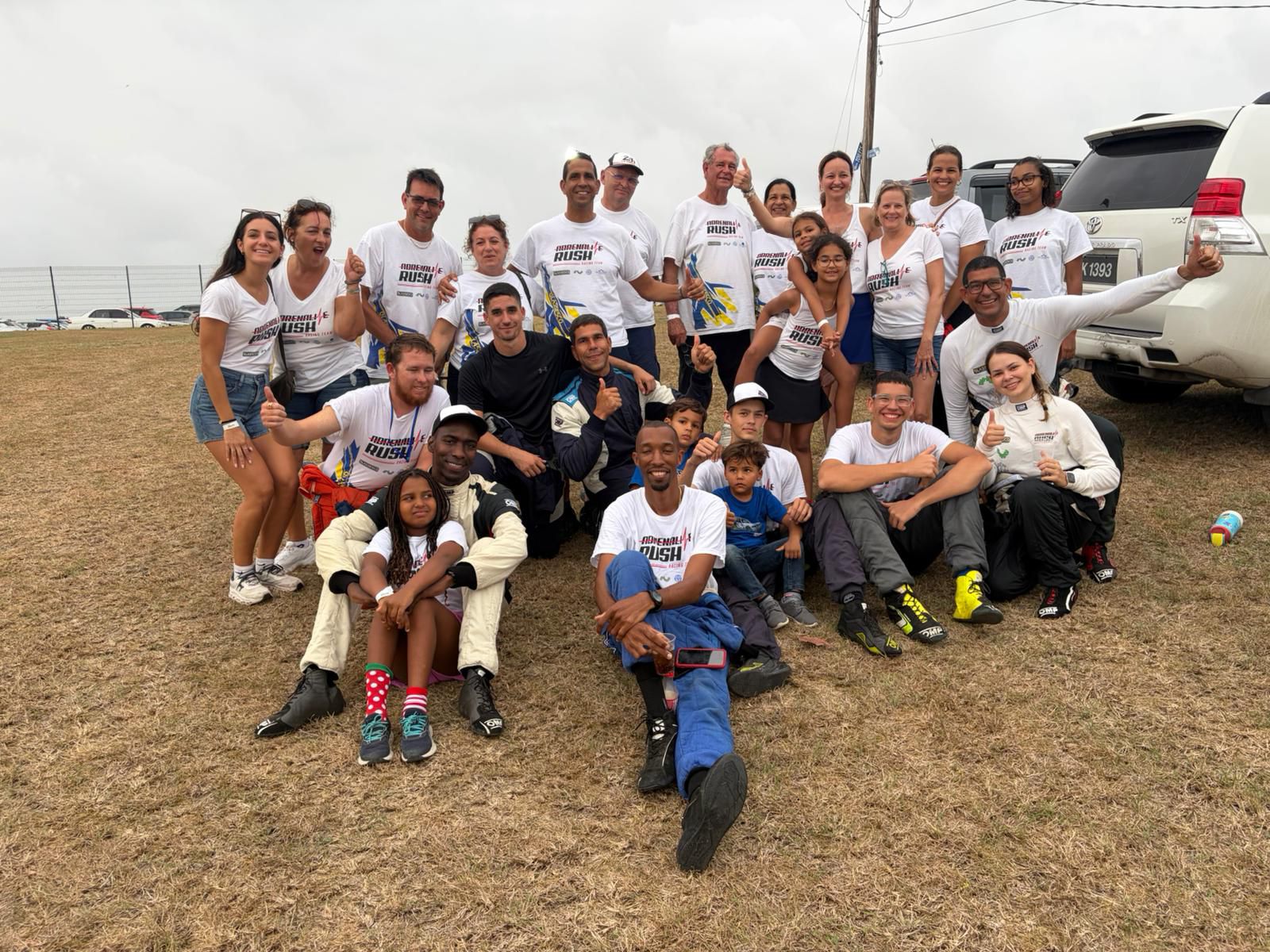
    For over three decades, Adrenaline Rush Racing has built its legacy as a family-owned motor sport institution, starting when founder Peter “DuctTape” Thompson launched the team back in 1993. Now, the squad is marking a historic milestone after turning in a series of standout displays at the recently wrapped BCIC Rally Barbados, bringing home an impressive haul of silverware from the event’s prize-giving ceremony held June 1 at Bridgetown’s iconic The Boatyard venue.

    Eight drivers and co-drivers representing the team walked away with class honors from the competition, headlined by a breakthrough win for rookie recruit Chloe Mustor, who claimed the title of highest-placed female co-driver across the entire event. Currently fielding six competing cars under the team banner, general manager Kurt Thompson — son of founder Peter — called the 2024 running of Rally Barbados one of the squad’s most successful outings in recent memory.

    “This year required months of grueling preparation, and the rally itself threw no shortage of challenges our way, but every single member of this team stepped up and pulled together to get across the finish line,” Thompson shared in comments following the award ceremony. “None of this would be possible without the constant, unwavering support of my entire family behind the scenes, and we will always be grateful to our sponsors for partnering with us for another year of racing.”

    The highest-finishing member of the Adrenaline Rush squad was Mark Thompson, Kurt’s younger brother, who notched a 10th-place overall finish in just his third start competing in the FIA R5 category. Mark made his debut behind the wheel of his new Citroen C3 Rally2 at this year’s Rally Barbados, making the jump up from the Modified 4 (M4) class where he competed in previous seasons. “Getting to push this new car to its limits, learn what it can do, and build confidence behind the wheel was an incredible experience,” Mark said. “I’m already hungry for the next event and can’t wait to keep competing at this level.”

    Kurt Thompson himself turned in a resilient performance despite early setbacks, finishing second in the RB26 class and 22nd overall. A spin during Saturday’s opening stages and persistent differential issues cost him valuable time early on, and even a strong comeback push on Sunday couldn’t close the gap to secure the class win. However, his recovery drive was enough to not only climb the overall rankings but also help co-driver Chloe Mustor secure her top female honors, passing the Scottish pairing of Peter Stewart and Rachel Matheson in the final day of racing in his Mitsubishi Lancer Evo IX — a car with which he won the M4 class in each of the past two seasons.

    The only Adrenaline Rush entry that failed to finish the event was that of eldest brother Neil Thompson and co-driver Neil Gilkes, who were forced to retire after a gearbox failure sidelined their Evo IX early in the competition. Their DNF was far from an isolated incident: drivetrain issues plagued a number of local and international entries across the event, and the 10-car M4 class ultimately saw only five drivers cross the finish line.

    Two more Adrenaline Rush drivers added to the team’s trophy haul in the M2 class, with Jermin Pope and Pierre Clarke taking home second-place class honors. Pope, a former circuit racing champion and three-time Rally Barbados class winner, turned in an impressive 31st-place overall finish this year after upgrading to a newer Honda Civic following a string of disappointing results in previous events.

    The team’s rising junior talent also turned in notable performances in the Clubman 2 category, where cousins Sebastian Thompson and Jayden Thompson — sons of Neil and Kurt Thompson, respectively — compete in BimmaCup machinery. Sebastian, who earned the Barbados Rally Club’s 2025 Rookie of the Year title, claimed third place in class alongside co-driver Noah White. For Jayden, who shared a car with co-driver Jacob Mustor, a fourth-place finish marked a welcome redemption after he was forced to retire on the very first stage of last year’s rally following a collision with the Bushy Park Rallycross bridge.

  • Bushfire in Salisbury causes crop and infrastructure losses, ministry urges greater fire safety

    Bushfire in Salisbury causes crop and infrastructure losses, ministry urges greater fire safety

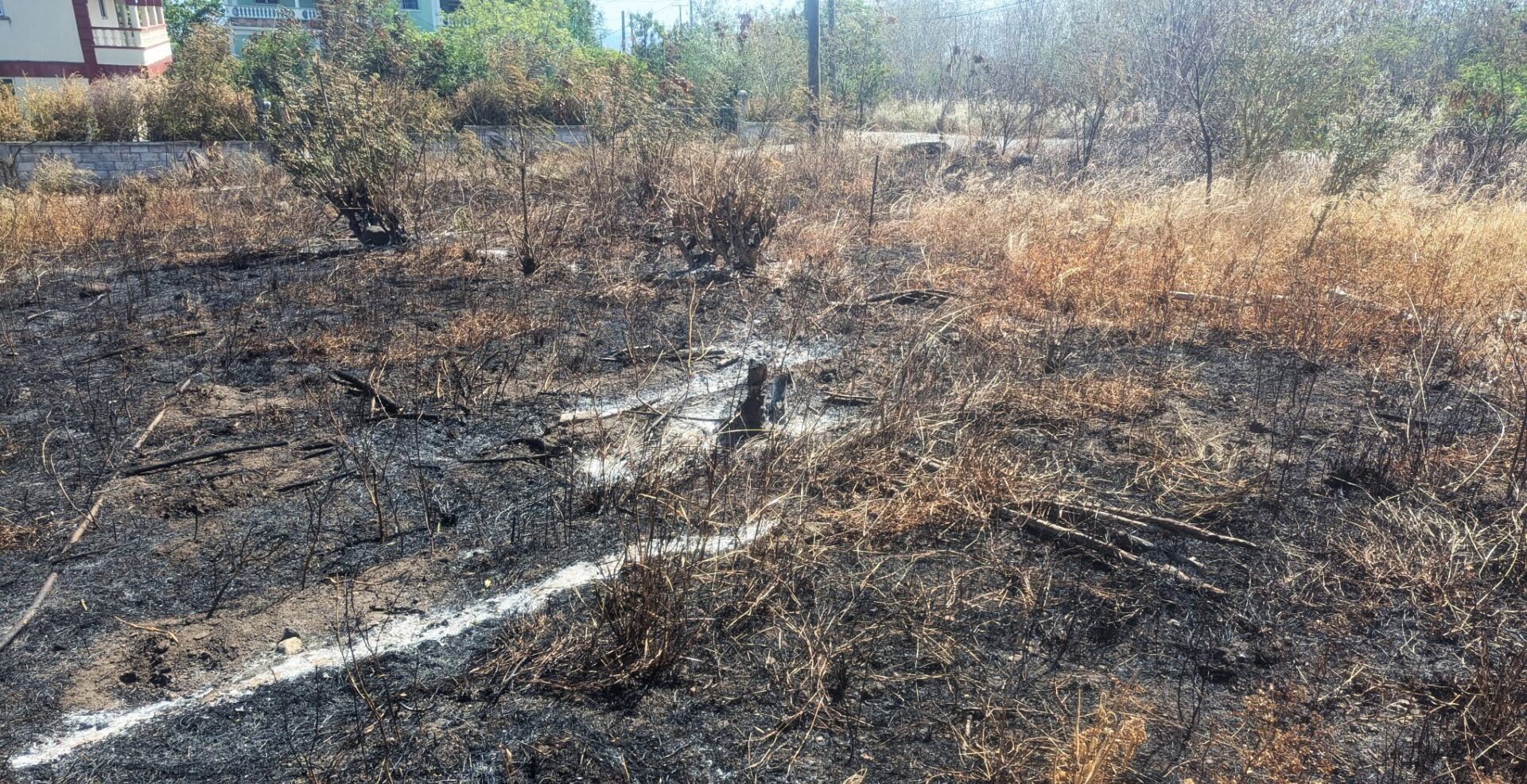
    On June 3, a fast-spreading bushfire tore through the Grand Savanne district of Salisbury, leaving a trail of destruction across farmland and critical agricultural infrastructure in the country’s West Agricultural Region. The Ministry of Agriculture, Fisheries, Blue and Green Economy has since issued an official statement confirming the extent of the damage and voicing deep concern over the incident’s impact on local farming communities.

    Preliminary damage assessments carried out by the ministry’s technical teams confirm that roughly 2.5 acres of active cultivated land was consumed by the blaze. One of the hardest-hit producers is local farmer Olivia Benjamin Vidal, who lost her entire growing season of high-value crops including watermelons, pumpkins, eggplants and bell peppers. Vidal’s farm, which relied on a modern drip irrigation system to sustain production, also suffered major losses to critical water infrastructure: two large storage tanks with a combined capacity of 2,500 gallons were destroyed by the fire, cutting off the farm’s primary water supply and bringing all agricultural operations to a halt.

    Within hours of receiving initial reports of the fire, senior ministry officials including the Director of Agriculture and the full West Region Extension Team traveled to Grand Savanne to conduct on-site evaluations and meet directly with impacted farmers to discuss their immediate needs. The ministry confirmed that additional follow-up assessments will be conducted in the coming days to determine what level of financial or material support will be required to help producers rebuild. In its official statement, the ministry extended its deepest sympathy to all farmers and landowners affected by the blaze, recognizing that the destruction of crops, infrastructure and years of on-farm investment has created severe financial and operational hardship for the local community.

    Beyond the immediate aftermath of this incident, the ministry is using the event to draw renewed attention to longstanding risks linked to unsafe land management practices across the region. Specifically, officials warned that the common practice of using open fire to clear vegetation or dispose of agricultural waste dramatically increases the chance of blazes escaping control and spreading across large swathes of farmland, as seen in the Grand Savanne incident.

    In response to growing bushfire risks, the ministry is launching a renewed outreach campaign urging all residents, farmers and private landowners to exercise extreme caution when managing vegetation and agricultural waste. The department is actively promoting alternative waste management methods including composting and mulching, noting that these approaches deliver dual benefits: they cut the risk of accidental out-of-control fires while also improving long-term soil health, locking in critical nutrients and boosting the soil’s ability to retain moisture for growing crops.

    For cases where farmers determine that controlled burning is unavoidable to manage land, the ministry has issued clear new safety guidance. All individuals planning controlled burns are required to coordinate with the national Fire and Ambulance Service in advance, and to closely monitor current and forecast weather conditions – particularly wind speed and direction – before igniting any fires. These proactive steps, officials emphasize, are critical to minimizing the risk of fires spreading beyond intended boundaries.

    The ministry reaffirmed its ongoing commitment to supporting the national agricultural sector, noting that it will continue to invest in outreach, training and support to help farming communities adopt practices that protect the natural environment, safeguard private and public property, and build long-term resilience against climate and wildfire risks.

  • OP-ED: Is the Caribbean paying for a climate crisis it didn’t create?

    OP-ED: Is the Caribbean paying for a climate crisis it didn’t create?

    For generations, Caribbean households have honed a quiet, collective instinct when a major storm approaches. Before the meteorologist finishes their emergency broadcast, mothers are already inventorying non-perishable food in the pantry, children are filling every available container with fresh water, elders are checking emergency lighting, and fathers stand on porches scanning the horizon, passing down generations of storm-watching knowledge. No words need to be spoken: the whole community knows a hurricane is on its way.

    Once, catastrophic hurricanes were once-in-a-generation events seared into collective memory as singular disasters. Hurricane Gilbert in 1988 was exactly that – a terrifying force that tore through the Caribbean, leaving widespread destruction, loss of life, and lasting psychological trauma that communities still recount decades later. But today, that pattern has shifted drastically. Since 2016, devastating Category 5 hurricanes have become a grim, recurring normal for the region.

    The roll call of destruction stretches across the last decade: In 2016, Hurricane Matthew made landfall in Haiti as a Category 4 storm with 150-mile-per-hour winds – the strongest system to hit the country in more than 50 years. It killed more than 500 people, wiped out 90% of the nation’s crops, and left more than 120,000 families homeless. Three years later in 2017, Category 5 Hurricane Maria erased 226% of Dominica’s total gross domestic product in a matter of hours, rolling back decades of hard-won development. In 2019, Category 5 Hurricane Dorian stalled over the Bahamas for days, wiping the town of Marsh Harbour off the map and leaving families searching for missing loved ones for weeks after the waters receded.

    The pace of destruction accelerated sharply in recent years. In July 2024, Hurricane Beryl made history as the earliest-forming Category 5 storm ever recorded in the Atlantic, forming before the official hurricane season had even fully begun. It hit Carriacou as a Category 4, stripping the island of nearly all infrastructure, destroying crops across Jamaica, and leaving the entire region reeling from the shock of yet another unprecedented disaster. Just 15 months later in 2025, Category 5 Hurricane Melissa became the strongest Atlantic hurricane ever recorded, packing 185-mile-per-hour winds that claimed 95 lives and earned its name a permanent retirement from the list of cyclone identifiers.

    This rise in catastrophic storms is not a random coincidence – and it is not a crisis the Caribbean created. The region contributes less than 0.1% of global greenhouse gas emissions, yet it bears the worst brunt of a climate crisis driven by two centuries of fossil fuel dependency driven by the world’s largest economies. While the global north reaped the economic benefits of carbon-intensive development, small island states in the Caribbean are left filling water buckets, rebuilding shattered homes, and burying their dead after every storm.

    The science behind this trend is clear: hurricanes draw their energy from warm ocean water. Decades of carbon pollution have trapped excess heat in the atmosphere, and 90% of that extra heat has been absorbed by the world’s oceans. Today, the Caribbean Sea is far warmer than historic averages, giving every passing storm more destructive power than the one that came before it. Rapid attribution analysis from Climate Central confirms that climate change directly strengthened Hurricane Melissa’s winds, and human-caused carbon emissions made the record-warm ocean temperatures that powered the storm hundreds of times more likely.

    The cumulative toll across the region is immeasurable. When Maria hit Dominica in 2017, then-Prime Minister Skerrit documented the disaster in real time from his storm-battered home, his roof torn away and floodwaters rising around him as the “Nature Island” of the Caribbean fell apart. When Dorian stalled over the Bahamas for two days, entire communities on Abaco and Grand Bahama were completely erased from the map. Beryl damaged or destroyed 90% of all structures on Carriacou, including homes, schools, and the fishing fleets that feed local families. When Melissa made landfall, outer rainbands triggered catastrophic landslides in Haiti, Cuban authorities evacuated 735,000 people in a single night, and western Jamaica was flattened – leaving crops submerged for the second time in less than two years. Time and again, critical infrastructure – hospitals, roads, food supply chains that communities have rebuilt again and again – take another devastating blow.

    Caribbean communities and frontline climate activists have shown extraordinary resilience in the face of repeated ruin, a level of fortitude most of the world will never be forced to demonstrate. But resilience is not a substitute for justice. You cannot rebuild a destroyed hospital with resilience alone, and it is unfair to ask a region to keep “bouncing back” while the fossil fuel policies that create these disasters remain unaddressed. Too often, praise for Caribbean resilience becomes a distraction from the critical question: who is responsible for the unending burden these communities are forced to bear?

    That question is at the heart of the global fight for climate justice, which demands that the world’s wealthiest highest-emitting nations honor their long-overdue climate finance commitments as a legal and moral debt owed, not optional charity to be given or withheld. In a major step forward for the region, the United Nations General Assembly voted in May 2026 to endorse an advisory opinion from the International Court of Justice (ICJ) on climate change, a resolution co-sponsored by Caribbean nations including Barbados and Jamaica. The opinion clarifies that all states have binding international legal obligations to protect the global climate system, and that nations that fail to meet those obligations can be held liable for damages and forced to pay reparations to affected states.

    Turning this historic legal victory into meaningful change requires concrete action. It means delivering loss and damage funding to small island developing states as outright grants, not predatory loans that deepen existing debt. It means guaranteeing the Caribbean a full, equal seat at every global table where climate policy is negotiated. It requires all major emitting nations to follow through on the ambitious, actionable emissions cuts they promised in their Paris Agreement Nationally Determined Contributions, and to deliver on those commitments on time.

    For Caribbean communities and advocates, the work continues. Citizens must stay resolute in grassroots advocacy, using their voices to demand justice for the region. Beyond educating themselves on the link between hurricanes and human-caused climate change, they must hold their own leaders accountable to push the international community to act, and support the grassroots and regional organizations fighting for climate justice every day.

    The Caribbean did not create the climate crisis that is destroying our communities, but our experience is more than a warning to the rest of the world. It is irrefutable evidence of the human cost of climate inaction. And the most powerful thing we can do today is refuse to stay silent.

  • SLFA to stage 40th congress this weekend

    SLFA to stage 40th congress this weekend

    The Saint Lucia Football Association (SLFA) is preparing to convene its landmark 40th Annual Ordinary Congress this Saturday, June 6, bringing together representatives from all its member leagues at the Bay Gardens Hotel in the northern district of Gros Islet. Unlike extraordinary general assemblies that often feature leadership contests, this session will follow standard procedural protocols, meaning no elections for association board positions will take place during the gathering. The timing of the annual congress is strategically placed just weeks before the highly anticipated third iteration of the Saint Lucia Semi-Professional Football League, which is scheduled to kick off its new campaign later this month. Beyond domestic club competition, the Caribbean nation’s football governing body is gearing up for a packed second half of the year that will see three of its national youth and senior representative teams take the international stage. Those commitments include the senior men’s national side competing in the Concacaf Nations League, the country’s male Under-14 squad participating in the Caribbean Football Union regional Tournament, and the female Under-15 team contesting the Concacaf Under-15 Championship. The core business of this weekend’s meeting centers on laying out the SLFA’s strategic roadmap for the coming 12 months, covering both domestic development initiatives and international competition planning, alongside a series of required organizational reports. Lyndon Cooper, the sitting SLFA president and chairman of the organization, will deliver opening and keynote remarks to attending delegates, before the 2025 National Executive Report is formally presented for discussion. Delegates will also cast votes on several key administrative items: the approval of the SLFA’s 2025 Audited Financial Statements, the 2026 Programme of Activities, and the association’s official 2026 operating budget. Additional agenda items include the formal appointment of independent external auditors and the selection of trustees to oversee the association’s governance structures, wrapping up the full day of procedural and strategic discussions.

  • Florida school expands horizons for students with autism through Jamaica trip

    Florida school expands horizons for students with autism through Jamaica trip

    For far too long, young people on the autism spectrum have been sidelined from the kind of transformative international travel experiences that their neurotypical peers often take for granted. Now, one specialized charter school in South Florida is working to close that gap, launching a landmark four-day educational trip to Jamaica designed to build independence, boost confidence, and give autistic students access to the same life-enriching opportunities available to other young travelers.

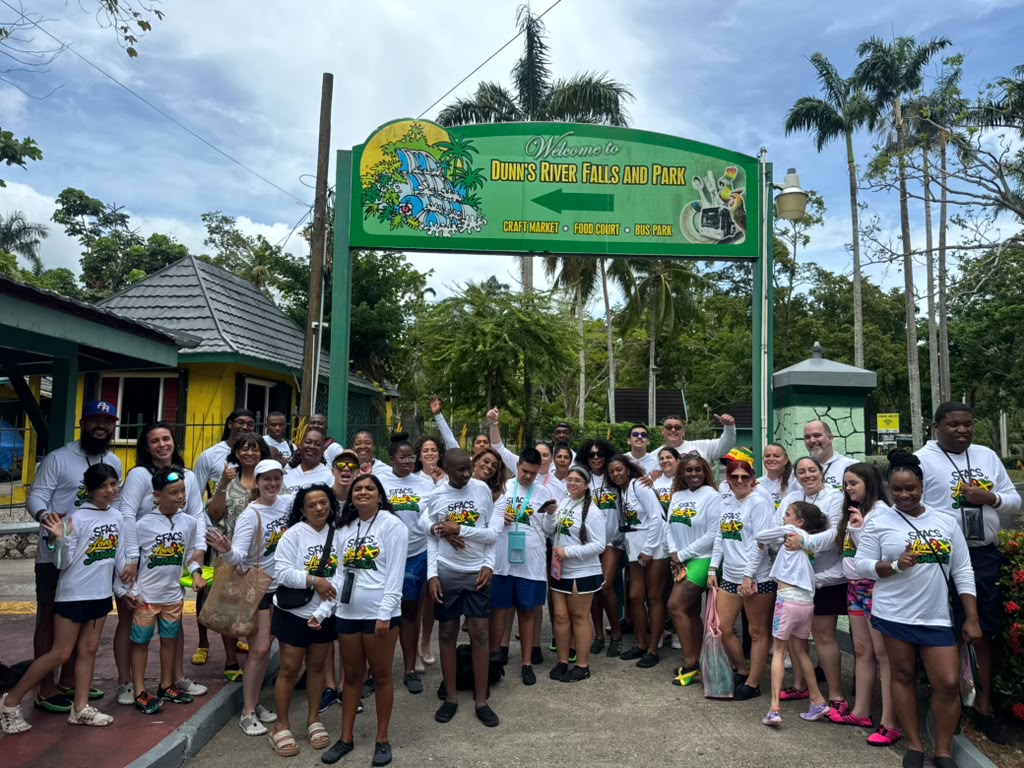
    The trip, which touched down on Jamaican soil on Friday, brings together a group of 20 students, their family members, and staff members from the South Florida Autism Charter School (SFACS). Over the course of their stay, the group will be hosted at Iberostar Resort, where they will get to explore many of Jamaica’s most iconic attractions, including the world-famous Dunn’s River Falls in Ocho Rios, St. Ann, where the group posed for photos on Saturday, June 6, 2026.

    Dr. Tamara Moodie, founder of SFACS and a Jamaica native, shared the core vision behind the unique initiative in an interview with Observer Online. She explained that the trip addresses a longstanding barrier for autistic youth and their families: travel is often dismissed as too challenging due to common sensory sensitivities, behavioral needs, and complex logistics that come with planning a trip outside of one’s routine. As a result, many autistic students rarely get the chance to travel internationally, while their parents rarely get the chance to slow down and enjoy quality time with their children in a new, welcoming setting.

    Moodie noted that the selection of Jamaica as the trip destination was no accident. For many of the participating students, this trip marks their first ever international journey, and for some, it is even their first time traveling on an airplane. Jamaica’s geographic proximity to South Florida made the logistics of travel far more manageable for students with support needs, while still offering all the cultural enrichment and excitement of visiting a new country.

    Beyond geography, Moodie pointed to Jamaica’s well-earned reputation for warm, patient hospitality as a key draw. As someone who has traveled back to the island regularly with her own family, she has long experienced the welcoming culture of Jamaican people firsthand. She trusted that the island’s tourism industry would provide the level of care, acceptance, and accommodation that her students and their families needed to feel comfortable and supported throughout their trip.

    The initiative was originally planned several months in advance, but organizers had to postpone the departure date following the arrival of Hurricane Melissa. The delay ended up shrinking the group size significantly from initial plans – the original group was nearly three times larger than the current cohort – but Moodie expressed relief and excitement to finally turn the long-planned idea into a reality for the participating families.

    For Moodie and the SFACS community, this trip is far more than a simple vacation. It is a chance to challenge misconceptions about what autistic young people can achieve, by giving them the space to step outside their daily routines, explore a new culture, meet new people, and build lasting shared memories with their families. Most importantly, it is an opportunity to prove that autistic students can thrive in international travel experiences that many once assumed were out of their reach.

  • Sabrina Dockery, Jodean Williams run sub-11 in Texas

    Sabrina Dockery, Jodean Williams run sub-11 in Texas

    At the USATF Lone Star Grand Prix, a top-tier World Athletics Continental Tour Gold competition hosted at Texas’ Cushing Stadium this past Saturday, Jamaica’s sprinting dominance once again took center stage. Two rising Jamaican sprint stars, Sabrina Dockery and Jodean Williams, delivered career-best performances that pushed both across the elusive 11-second threshold in the women’s 100-meter dash, cementing Jamaica’s status as a global powerhouse in short track sprinting.

    This historic showing brings the total number of Jamaican women who have run sub-11-second 100m this year to 11, an unprecedented milestone that highlights the depth of talent emerging from the Caribbean nation’s elite sprint development programs.

    Dockery, a former standout sprinter at Jamaica’s Lacovia High School who now trains out of Florida, pulled off a stunning upset against a deeply competitive international field to claim the 100m gold. The World Athletics Under-20 Championships relay gold medalist clocked a massive personal best of 10.92 seconds with a legal 1.6 m/s tailwind, knocking 0.13 seconds off her previous top mark of 11.05 seconds set earlier in 2024.

    Behind Dockery, Jodean Williams — who earned a world gold medal as part of Jamaica’s women’s 4x100m relay squad at the 2024 World Relays in March — also secured her own place in history with a third-place finish. She clocked 10.97 seconds, the same time as runner-up Audrey Leduc of Canada, and improved on her prior personal best of 11.00 seconds. Two other Jamaican sprinters also competed in the final: Niesha Burgher crossed the line in seventh place with 11.27 seconds, while former World Athletics Under-20 sprint double champion Briana Williams finished eighth in 11.32 seconds.

    The success of Jamaica’s sprint contingent was not limited to the women’s 100m. In the women’s 100m hurdles, Demisha Roswell claimed another win for the country, edging out fellow Jamaican rising star Ackera Nugent to finish first. In the field, Romaine Beckford took top honors in the men’s high jump, while Navasky Anderson closed out the successful meet for Jamaica with a win in the men’s 800-meter run.

    Saturday’s results underscore the continued strength of Jamaican track and field, with a new generation of young talent emerging to carry on the country’s legendary sprinting legacy ahead of upcoming major global championships.

  • 65,000 customers remain without water supply, says Samuda

    65,000 customers remain without water supply, says Samuda

    KINGSTON, Jamaica — A full day after a widespread islandwide power outage swept across Jamaica overnight Friday and into early Saturday morning, approximately 65,000 domestic and commercial customers connected to the National Water Commission (NWC) still lack running water, accounting for 12 percent of the utility’s total customer base across the country.

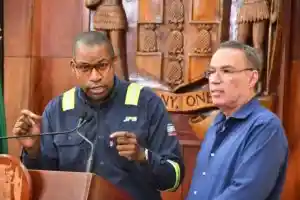
    The update was delivered Saturday afternoon by Minister of Water, Environment and Climate Change Matthew Samuda during a joint press briefing held at the headquarters of the Jamaica Public Service (JPS), the nation’s primary electricity provider. Energy, Transport and Telecommunications Minister Daryl Vaz joined Samuda for the briefing on ongoing recovery efforts.

    Samuda outlined the core reason behind the lingering water access gaps, explaining that water system recovery follows a far slower timeline than power restoration. “The timing associated with charging an electricity line is a much shorter period than the timeline associated with backfilling water lines that ran dry because of the power outages that affected our power systems,” he told reporters.

    Initial damage and system assessments completed Saturday confirmed that the country’s largest water treatment facilities and primary pumping stations have successfully resumed operations, Samuda confirmed. However, full service restoration in multiple communities will be held up by residual electrical issues that continue to impact water infrastructure located in the parishes of Clarendon, St Elizabeth, and St James. Even though JPS managed to restore power to nearly all customers by early Saturday, unexpected inclement weather later that day triggered new, localized power outages in several regions, complicating recovery work.

    “While primary production facilities are rebounding quickly, our immediate priority is maintaining backup power systems and mobilising localised maintenance support to safely restart other systems and rebuild critical storage capacity in the lagging parishes,” Samuda said, adding that the government is prioritizing targeted support to hard-hit areas to speed up service returns.

    The minister also released a detailed, parish-by-parish breakdown of the current status of water infrastructure across the country:

    – Kingston and St Andrew (KSA): All major water systems are fully operational
    – St Catherine: Most regional networks are back online, with the key Spanish Town Treatment Plant running normally. The Old Harbour network has been hit by a secondary power outage that is disrupting service to both Old Harbour and New Harbour communities.
    – Manchester: Core water production facilities are operational, and storage and distribution tanks are currently being refilled. Gradual service restoration is expected for the Ingleside, New Green, Pusey Hill and Warwick re-lift stations, as well as the Perth Estate storage facility.
    – Clarendon: Persistent water outages remain in effect across southern parts of the parish, impacting residents in New Town, Preddie, Kemps Hill, Milk River and Longville Park.
    – St James: The Great River water system has been fully restored, while Terminal Reservoir and Appleton Hall tanks are in the process of being refilled. Temporary service disruptions are reported in Torado Heights, Rhyne Park, Cornwall Courts, Ironshore, Norwood, and Farm Heights.
    – Trelawny: The Martha Brae water system is fully operational.
    – St Elizabeth: All core systems have been restored, including the Benlomonds, Union, Bogue, Burnt Savannah, Hounslow, Content, and Southampton networks.
    – St Ann: The Bogue and Harrison Town networks are back online, while the Minard plant is still undergoing assessment after experiencing an electrical trip during the blackout.
    – Hanover: Maintenance crews are currently on-site carrying out repairs to the Shettlewood water system.
    – Portland: The Grant’s Level system is operating at just 30 percent of its normal output, running on temporary generator power. Minor secondary facilities are scheduled for maintenance work.
    – St Mary: Localized service disruptions are limited to the Iterboreale and Annotto Bay areas.
    – St Thomas and Westmoreland: Full on-site field assessments are still ongoing, with formal updates to be released once evaluations are complete.

  • JPS assessing unexpected ‘cascading effect’ that caused blackout

    JPS assessing unexpected ‘cascading effect’ that caused blackout

    KINGSTON, Jamaica — A sudden strike of lightning sparked an unforeseen cascading system failure that left the entire island of Jamaica without power from late Friday into Saturday morning, and the national power provider has launched a full probe to pinpoint the root causes of the unprecedented outage, company leadership confirmed Saturday.

    During a press conference held at the Jamaica Public Service (JPS) headquarters, Hugh Grant, JPS president and chief executive officer, detailed the sequence of events that led to the total grid shutdown. The initial lightning strike knocked out five critical transmission lines connected to a major substation serving Jamaica’s corporate area. Instead of being contained to the affected zone, the disruption spread uncontrollably through the power network in a cascading effect, which eventually shut down power generation facilities across the entire island, bringing the full national grid offline.

    Grant emphasized that this widespread cascading shutdown was an event the utility never anticipated. “This is not an outcome we expected to see from a localized lightning strike,” he said. “Our priority right now is unpacking exactly what went wrong to allow this cascade to spread across the entire grid. That is the key lesson we need to capture moving forward.”

    Despite the severity of the total blackout, Grant noted that backup contingency systems performed as designed. Within an hour of the grid going down, JPS technical crews were able to execute manual “black start” procedures to restart key power generators, restoring electricity to priority areas almost immediately. Phased restoration work continued through the overnight hours, and all customers had their service reconnected by late Saturday morning.

    Energy, Transport and Telecommunications Minister Daryl Vaz previously described the full island outage as “unacceptable” as JPS launched its phased restoration work. Speaking alongside Vaz at Saturday’s briefing was Water, Environment and Climate Change Minister Matthew Samuda, signaling the government’s close attention to the high-impact incident.

    Grant said the company would now move into a formal investigatory phase to map out every step of the outage, document key takeaways from the event, and implement concrete corrective actions to lower the risk of a similar widespread outage happening again. “We will not stop working until we get to the bottom of this incident,” Grant stated. “We are committed to full transparency around our findings, the lessons we learn, and the changes we will make to improve grid resilience going forward.”