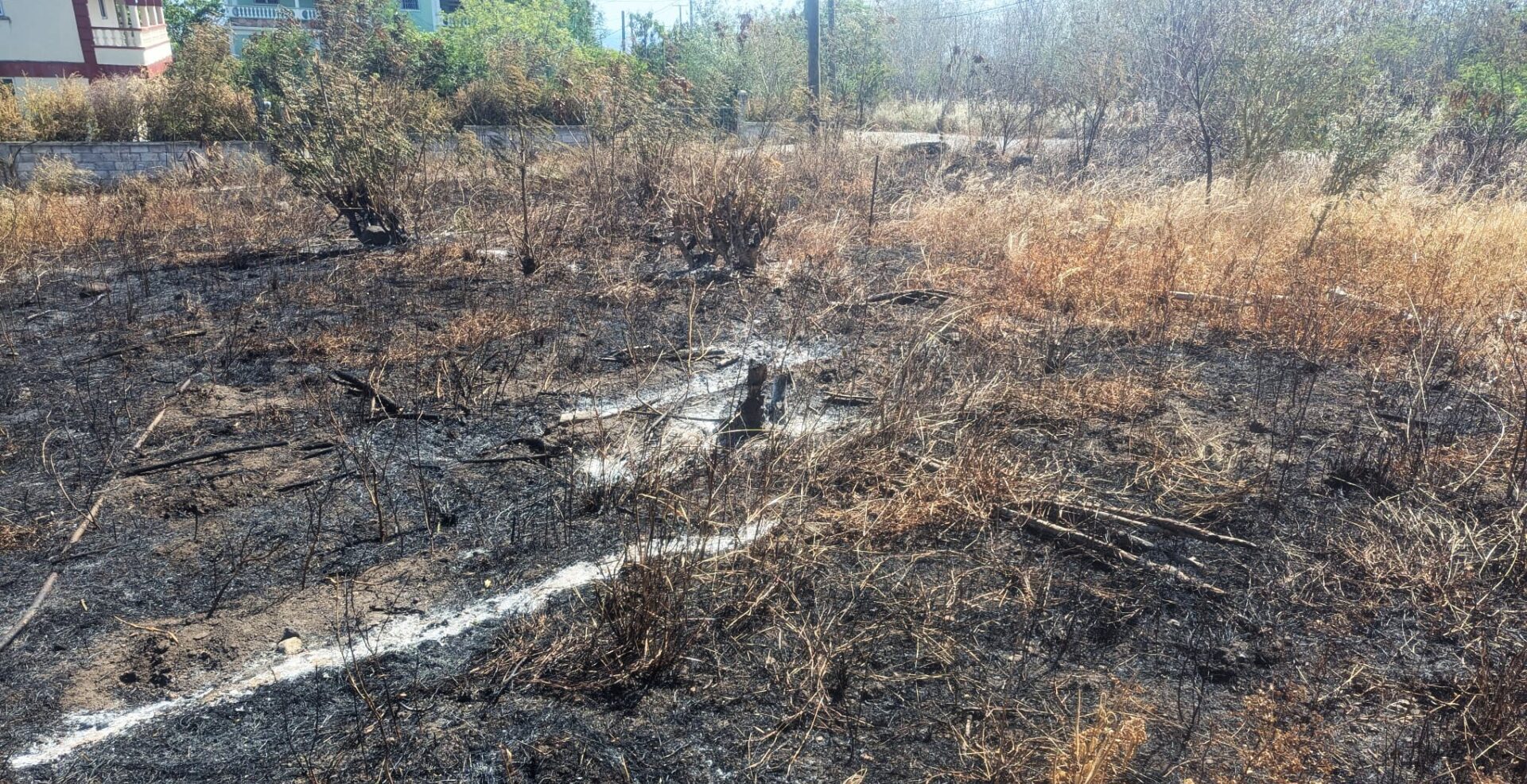
On June 3, a fast-spreading bushfire tore through the Grand Savanne district of Salisbury, leaving a trail of destruction across farmland and critical agricultural infrastructure in the country’s West Agricultural Region. The Ministry of Agriculture, Fisheries, Blue and Green Economy has since issued an official statement confirming the extent of the damage and voicing deep concern over the incident’s impact on local farming communities.
Preliminary damage assessments carried out by the ministry’s technical teams confirm that roughly 2.5 acres of active cultivated land was consumed by the blaze. One of the hardest-hit producers is local farmer Olivia Benjamin Vidal, who lost her entire growing season of high-value crops including watermelons, pumpkins, eggplants and bell peppers. Vidal’s farm, which relied on a modern drip irrigation system to sustain production, also suffered major losses to critical water infrastructure: two large storage tanks with a combined capacity of 2,500 gallons were destroyed by the fire, cutting off the farm’s primary water supply and bringing all agricultural operations to a halt.
Within hours of receiving initial reports of the fire, senior ministry officials including the Director of Agriculture and the full West Region Extension Team traveled to Grand Savanne to conduct on-site evaluations and meet directly with impacted farmers to discuss their immediate needs. The ministry confirmed that additional follow-up assessments will be conducted in the coming days to determine what level of financial or material support will be required to help producers rebuild. In its official statement, the ministry extended its deepest sympathy to all farmers and landowners affected by the blaze, recognizing that the destruction of crops, infrastructure and years of on-farm investment has created severe financial and operational hardship for the local community.
Beyond the immediate aftermath of this incident, the ministry is using the event to draw renewed attention to longstanding risks linked to unsafe land management practices across the region. Specifically, officials warned that the common practice of using open fire to clear vegetation or dispose of agricultural waste dramatically increases the chance of blazes escaping control and spreading across large swathes of farmland, as seen in the Grand Savanne incident.
In response to growing bushfire risks, the ministry is launching a renewed outreach campaign urging all residents, farmers and private landowners to exercise extreme caution when managing vegetation and agricultural waste. The department is actively promoting alternative waste management methods including composting and mulching, noting that these approaches deliver dual benefits: they cut the risk of accidental out-of-control fires while also improving long-term soil health, locking in critical nutrients and boosting the soil’s ability to retain moisture for growing crops.
For cases where farmers determine that controlled burning is unavoidable to manage land, the ministry has issued clear new safety guidance. All individuals planning controlled burns are required to coordinate with the national Fire and Ambulance Service in advance, and to closely monitor current and forecast weather conditions – particularly wind speed and direction – before igniting any fires. These proactive steps, officials emphasize, are critical to minimizing the risk of fires spreading beyond intended boundaries.
The ministry reaffirmed its ongoing commitment to supporting the national agricultural sector, noting that it will continue to invest in outreach, training and support to help farming communities adopt practices that protect the natural environment, safeguard private and public property, and build long-term resilience against climate and wildfire risks.