博客

  • Nevis’ Leadership in Renewable Energy Transition Highlighted at National Roadmap Workshop

    Nevis’ Leadership in Renewable Energy Transition Highlighted at National Roadmap Workshop

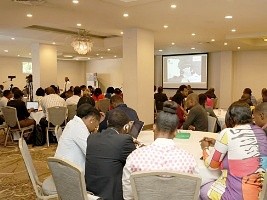
    Between June 3 and 4, 2026, the Caribbean federation of St. Kitts and Nevis launched a landmark collaborative workshop to develop its national 100% renewable energy transition roadmap, with the island of Nevis emerging as a key leader in shaping the federation’s clean energy future. Hosted at the Nevis Marriott Resort, the kickoff meeting was organized jointly by the United Nations Development Programme (UNDP) and the Greening The Islands Foundation (GTI), drawing cross-sector participation from government officials, national utility providers, climate technical specialists, and international energy development partners. The core goal of the gathering was to co-design a structured, actionable strategic framework to guide the federation’s full shift away from fossil fuels to renewable power sources.

    Leading the Nevis Electricity Company Limited (NEVLEC) delegation at the event, General Manager Nelson Stapleton delivered the opening remarks on day one, where he outlined the dual economic and national security benefits of a rapid clean energy transition for the small island federation. Stapleton reaffirmed NEVLEC’s full institutional commitment to supporting the development of the national roadmap, drawing particular attention to the utility’s ongoing geothermal energy exploration and development project. He framed the geothermal initiative as a transformative effort that could put the federation well on track to meet its bold 100% renewable energy target far ahead of schedule.

    Throughout the two-day workshop, Stapleton emphasized that energy system resilience must be the central priority of the entire transition process. He noted that the roadmap process represents a once-in-a-generation opportunity to build a reliable, low-carbon energy infrastructure that will serve current and future residents of Nevis and St. Kitts. On the first day of technical sessions, NEVLEC Project Coordinator Naftalie Errar presented a comprehensive update on the utility’s geothermal development program and other related clean energy projects, offering clear evidence of Nevis’s years of ongoing work to unlock its abundant underground geothermal resources and cementing the island’s role as the driving force behind the federation’s clean energy goals.

    Day two of the workshop shifted focus to the practical technical challenges of integrating high levels of renewable energy into the existing national grid. Stapleton joined counterparts from the St. Kitts Electricity Company Limited (SKELEC) to deliver a joint overview of the federation’s current electricity infrastructure, planned modernization upgrades, and the core challenges of grid integration that come with scaling up variable renewable energy generation. NEVLEC’s contributions were particularly critical to discussions around how base-load geothermal power can complement intermittent solar and wind projects, maintaining overall grid stability while ensuring a consistent, reliable supply of electricity for homes and businesses across both islands.

    By the close of the workshop, all participating stakeholders reached formal agreement on clear next steps for advancing the roadmap development process, including formalizing governance structures, outlining individual stakeholder responsibilities, and mapping out the full timeline for implementation. NEVLEC’s high-profile, substantive contributions to the kickoff workshop underscore Nevis’s longstanding commitment to advancing geothermal energy development and supporting the entire federation’s shared vision of a resilient, energy-secure, and fully sustainable clean energy future.

  • Property Tax Payment Deadline Extended to September 30 in Nevis

    Property Tax Payment Deadline Extended to September 30 in Nevis

    CHARLESTOWN, Nevis – In an official announcement issued June 8, 2026, the Nevis Inland Revenue Department (IRD) has confirmed a three-month extension for 2026 annual property tax payments, pushing the original June 30 deadline to September 30 for all property holders across the island.

    The regulatory adjustment comes directly in response to the ongoing island-wide General Property Valuation Exercise, a comprehensive upgrade project the IRD is currently carrying out to modernize Nevis’ outdated property tax framework. Department officials explain that the overhaul is designed to bring greater accuracy, transparency, and fairness to property assessments by aligning all evaluated values with current real estate market conditions across Nevis.

    To address public concerns over potential valuation increases that could lead to higher tax burdens, the Nevis Island Administration (NIA) has confirmed it will roll out targeted relief measures to soften impacts, with a specific focus on protecting lower- and middle-income property owners.

    Once the valuation project is finalized, every property owner will receive an official Certificate of Valuation detailing their updated assessment. Under local tax regulations, taxpayers will be granted a 30-day statutory window to file formal objections or request additional clarification if they dispute the assigned valuation.

    The IRD notes that 2026 property tax demand notices will be distributed to all owners well ahead of the new September 30 payment deadline. Notices will be sent via traditional postal mail, and digital copies will also be accessible through the department’s official online platform. Property owners are strongly encouraged to pre-register for an account on the IRD’s E-Government Portal at www.sknird.com to enable quick, convenient digital access to their tax bills as soon as they are released.

    Multiple payment channels remain available for taxpayers to complete their 2026 property tax obligations:
    – Direct deposit to the designated Eastern Caribbean dollar account at The Bank of Nevis, account number 226316
    – Wire transfer to the same Eastern Caribbean dollar account at The Bank of Nevis
    – In-person payments including cheques made out to the Nevis Island Administration, credit card, debit card, and cash transactions at the IRD’s Payment Division

    The IRD extended gratitude to the Nevis public for their patience and ongoing cooperation throughout the multi-stage revaluation process, which is expected to create a more equitable tax system for the island long-term.

    Residents with additional questions about the valuation process, new deadline, or payment procedures are invited to contact the IRD’s Property Valuation Division via phone at (869) 469-5521 (extensions 5015 or 5017), mobile at (869) 667-3125, or WhatsApp at the same mobile number.

  • St. Kitts And Nevis Youth Summit officially launched, signaling a new era of youth engagement and national dialogue

    St. Kitts And Nevis Youth Summit officially launched, signaling a new era of youth engagement and national dialogue

    BASSETERRE, St. Kitts and Nevis – On June 3, 2026, the long-awaited 2026 St. Kitts and Nevis Youth Summit officially kicked off during a live broadcast on Freedom FM’s popular Issues Programme, opening a new chapter of structured youth engagement in the Caribbean federation.

    During the on-air launch, members of the Summit Planning Team laid out their ambitious vision, core objectives, and detailed programming for what organizers describe as far more than a one-time gathering: a national movement to center young voices in conversations shaping the country’s future. The initiative is built around five critical policy and social domains that touch the daily lives of young citizens across the islands: Education, Governance, Economy, Health and Well-being, and Culture and Identity.

    “This summit is an investment in our nation’s most valuable resource: our young people,” shared planning team members during the broadcast. “It is a structured space where ideas can flow freely, existing perspectives can be constructively challenged, leadership skills can be nurtured, and actionable solutions can be co-created. When young people are empowered to participate in national discourse, they do not just inherit the future—they become the architects who build it.”

    Open to young people aged 7 to 21 from across both islands of the federation, the summit will deliver a multi-week series of interactive activities, facilitated discussions, skills-building workshops, and collaborative learning projects all rooted in the five core focus areas. Beyond topical conversations, the program is designed to equip participants with the confidence, ethical framework, and sense of purpose needed to lead their communities long after the summit concludes. Attendees will also have the opportunity to dive into pressing national and regional challenges, bringing on-the-ground youth perspectives to issues that impact their daily lives.

    A centerpiece of the pre-summit outreach is a nationwide school tour, which will introduce the initiative to students across the country, collect their input to shape summit programming, and build grassroots excitement ahead of the official Summit Week. The tour is intentionally designed to keep youth leadership at the heart of both planning and implementation, ensuring the summit responds to the actual needs and priorities of young people rather than top-down assumptions.

    Unlike many fragmented youth engagement efforts, the summit centers intentional dialogue across differing perspectives, framing diversity of thought not as a barrier to progress but as an opportunity for mutual learning and stronger collective outcomes. Through shared experiences and structured conversation, participants are encouraged to move beyond division and cultivate the values of unity, mutual respect, and shared responsibility for national development.

    As St. Kitts and Nevis navigates an increasingly complex, interconnected global landscape, this initiative reflects a deliberate investment in preparing the next generation to serve as informed citizens, visionary leaders, and active contributors to sustainable national growth. The Planning Committee extended public thanks to Freedom FM for partnering to host the official launch and extend the conversation to audiences across the federation.

    Further updates, including details on the school tour schedule, summit activity agendas, registration information, and upcoming announcements will be released through official national communication channels in the coming weeks. Organizers say the 2026 St. Kitts and Nevis Youth Summit is set to become a landmark event that celebrates the unique brilliance, creativity, and resilience of the nation’s youth while laying the groundwork for a stronger, more inclusive future for all residents of the federation.

  • Cuban jurists: A commitment to justice and the nation

    Cuban jurists: A commitment to justice and the nation

    On June 8, 2026, Cuba comes together to observe Jurist’s Day, a national commemoration honoring the foundational contributions of legal professionals across every corner of the country’s justice ecosystem. This year’s celebration carries extra weight, as it aligns perfectly with the 49th founding anniversary of the National Union of Jurists of Cuba, known locally by its Spanish acronym UNJC. For nearly five decades, UNJC has served as the unifying body for Cuban legal practitioners, spearheading initiatives that boost professional growth, advance evidence-based legal research, and expand public understanding of legal rights and frameworks across the island nation.

    Cuba’s rich legal tradition draws enduring inspiration from iconic historical figures who shaped the country’s commitment to justice. Foremost among these is Ignacio Agramonte Loynaz, a 19th-century revolutionary and legal thinker whose reputation for uncompromising integrity, fierce patriotism, and forward-thinking legal ideas remains unmatched in Cuban history. Tied closely to the nation’s early struggles for independence and equitable governance, Agramonte Loynaz’s legacy continues to guide and motivate new cohorts of law students and practicing jurists generation after generation.

    Another towering influence for Cuban legal professionals is Commander-in-Chief Fidel Castro Ruz, a trained lawyer who turned his legal expertise into a weapon for defending marginalized communities and advancing national interests from his early career onward. Castro’s lifelong work and ideological framework left a lasting imprint on Cuban legal thought, embedding core lessons about the centrality of justice and the inherent dignity of all people into the country’s legal culture.

    Beyond speeches and historical tributes, Jurist’s Day serves as a moment to center the everyday work of legal practitioners across Cuba: from judges and prosecutors in courtrooms to public defenders, private legal consultants, academic researchers, and policy advisors working in state and civil society institutions across the country. Every day, these professionals work to implement, refine, and strengthen Cuba’s legal system, advancing the core goals of a socialist state grounded in the rule of law and widespread social justice.

    To mark this year’s observance, a range of commemorative activities have been organized across all regions of Cuba. These events are designed not only to celebrate the contributions of the thousands of men and women who have dedicated their careers to the study and practice of law, but also to reaffirm the Cuban legal community’s shared commitment to the non-negotiable principles of ethical practice, professional accountability, and service to the public — values that will guide the profession as it confronts the evolving challenges of Cuba’s present and future.

  • Another shipment of aid donated by Mexico and Belize arrived in Cuba

    Another shipment of aid donated by Mexico and Belize arrived in Cuba

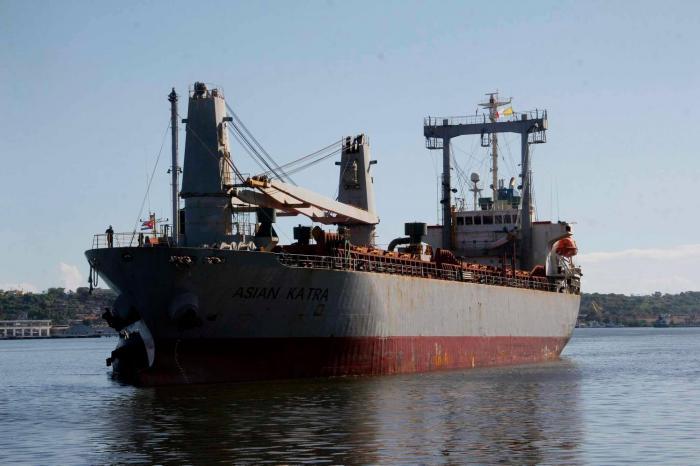
    HAVANA, June 9 – A major new solidarity shipment carrying 1,700 tons of food and essential basic necessities has reached the Port of Havana, arriving from Mexico in a joint aid effort between Mexico and Belize that offers a critical lifeline to Cuba amid escalating U.S. pressure. The cargo vessel, which departed from a Mexican port, was formally welcomed by senior Cuban government officials Sunday, who extended explicit gratitude to the presidents of both Mexico and Belize for their continued support.

    Speaking to reporters following the ship’s arrival, Betsy Díaz Velázquez, Cuba’s Minister of Domestic Trade, highlighted the profound meaning of the donation at a moment of unprecedented uncertainty for the Cuban people. With the United States having ramped up restrictive measures and implemented a second new executive order targeting Cuba, Velázquez noted that the ongoing display of solidarity from other nations sends a powerful message that Cuba does not stand alone in facing external pressure.

    Velázquez also addressed the logistical challenges the country has navigated to distribute incoming aid, noting that the U.S.-imposed energy blockade has slowed many operational processes. To counter these barriers, Cuban authorities have pursued innovative alternative strategies to speed up distribution, including integrating non-state economic actors into the logistics chain. This adaptation is designed to ensure the donated supplies reach Cuban communities and households as quickly as possible to meet critical needs.

    Beyond addressing immediate needs on the ground, the joint aid shipment reinforces longstanding cooperative ties between Cuba, Mexico and Belize, deepening people-to-people and diplomatic bonds across the three nations. The arrival of the donation comes as the Cuban government continues to push back against U.S. sanctions, while building out collaborative partnerships with countries that maintain solidarity with its sovereignty.

  • Cuba will not surrender! Cuba persists and resists! And that persistence is intolerable to the empire!

    Cuba will not surrender! Cuba persists and resists! And that persistence is intolerable to the empire!

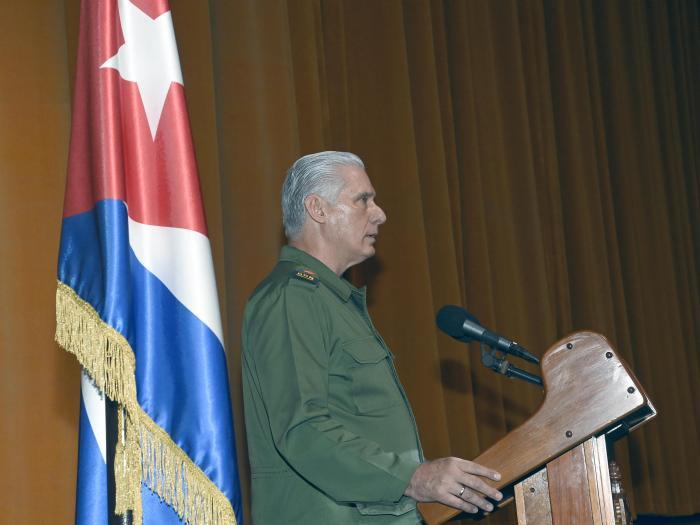
    On June 5, 2026, at Havana’s Karl Marx Theater, Cuban President and First Secretary of the Communist Party of Cuba Central Committee Miguel Mario Díaz-Canel Bermúdez delivered a keynote address marking two landmark moments of national revolutionary significance: the 95th birthday of Army General Raúl Castro Ruz, leader of the Cuban Revolution, and the 65th anniversary of the founding of the Cuban Ministry of the Interior (MININT). The event, held on Cuba’s National Defense Day, unfolded against the backdrop of escalating unilateral coercive measures imposed by the United States government, which Díaz-Canel framed as a genocidal campaign against the Cuban people.

    Díaz-Canel opened by extending official congratulations to Raúl Castro on behalf of Cuba’s Party, government, civil society organizations and entire population, emphasizing that the dual commemoration is far more than a coincidental alignment of dates on the revolutionary calendar. It reflects the deep, inseparable bond between Raúl Castro’s decades-long revolutionary legacy and the founding of MININT. The origins of MININT, formally established on June 6, 1961, trace directly to the guerrilla command structures built during Cuba’s revolutionary war, specifically the Secret Service Corps of the 26th of July Revolutionary Army General Staff in the liberated territories of the Frank País Second Eastern Front. The order creating that rebel security unit was signed by a 27-year-old Raúl Castro, then commander of the Second Front.

    Historical records preserved in Raúl Castro’s Selected Works reveal the young commander’s early strategic insight: he mandated the security body identify and counter “everything that could affect, compromise, or endanger the security of our rebel forces.” This foundational commitment to perpetual vigilance, proactive threat assessment, and unwavering defense of revolutionary gains and the Cuban people has defined Raúl Castro’s entire revolutionary career, Díaz-Canel noted. Alongside Fidel Castro, Raúl has served as a lifelong mentor and inspiration for MININT combatants and members of the Revolutionary Armed Forces (FAR).

    In response to recent baseless slander and unlawful attacks against Raúl launched from anti-Cuban extremist networks based in Florida, Díaz-Canel highlighted the viral spread of the phrase “Raúl is Raúl” across Cuban social media and public life. Adapted from a phrase Raúl himself once used to describe Fidel, the slogan underscores Raúl’s irreplaceable role in Cuban history: a pillar of the nation’s unyielding dignity in the face of U.S. hegemony, who has never lowered Cuba’s flag, abandoned its revolutionary ideals, or surrendered to external pressure. “Raúl is Cuba, and Cuba is untouchable,” Díaz-Canel declared, noting that as long as a single Cuban stands to defend the nation, it will remain unbroken.

    Beyond national leadership, Díaz-Canel celebrated Raúl’s far-reaching contributions to global diplomacy and justice for the Global South. Raúl was the architect of the historic Proclamation of Latin America and the Caribbean as a Zone of Peace, a framework that today faces direct assault from the current U.S. administration’s resuscitation of the Monroe Doctrine and interventionist warmongering. He also served as a successful mediator in the Colombian peace process that produced the landmark 2016 peace agreement between the Colombian government and the FARC, and facilitated the first high-level meeting between the Catholic Church and the Russian Orthodox Church after centuries of division. Most notably, Raúl patiently guided the opening of normalized relations between Cuba and the United States in the 2010s—a path unilaterally cut off in 2017 by anti-Cuban factions in Washington that now push for dangerous military confrontation.

    Díaz-Canel also highlighted Raúl’s personal character: a devoted family man, loyal friend, and consistent leader who retains his proverbial wisdom and guidance for the Cuban people at 95. On Raúl’s behalf, he conveyed gratitude to the Cuban people for the outpouring of solidarity and affection that greeted Raúl’s birthday, a response that directly pushed back against imperialist smears, as well as to international friends who have stood with Cuba amid threats of reprisal for their support. “No hatred, no lie will ever be able to stand against his moral strength and the high symbolic value of the revolutionary work that he has led with exemplary firmness,” Díaz-Canel said.

    Turning to the 65th anniversary of MININT, Díaz-Canel paid tribute to founding leader Ramiro Valdés Menéndez, a revolutionary commander whose legacy has shaped the institution from its inception. Over more than six decades, MININT has operated alongside the FAR as an unyielding bulwark against constant aggression from U.S. imperialism, which has deployed every tactic imaginable against Cuba: armed infiltration, sabotage, terrorism, biological warfare, assassination plots, economic subversion, media manipulation, and ideological warfare, all directed and funded by U.S. intelligence agencies. Despite decades of relentless, undeclared war, Díaz-Canel noted, the Revolution remains standing, in no small part because of MININT’s service as tireless sentinels of the homeland. Each generation of MININT combatants has distinguished itself by unwavering loyalty and courage in the face of even the harshest challenges.

    Díaz-Canel highlighted the bravery of recent MININT fallen heroes: 32 MININT members killed in Venezuela in January, who fought with ferocity against a surprise attack even when outnumbered and outgunned, leaving a legacy of courage that demonstrates how all Cubans will defend the homeland if attacked. Shortly after that attack, five Border Guard Troops members defeated a 10-person terrorist infiltration team armed with a large cache of weapons, neutralizing the plot even as the vessel commander fought on despite grave wounds. Beyond national security, MININT has also stood with the Cuban people during times of natural disaster, including high-risk rescue operations during the severe flooding caused by Hurricane Melissa that remain fresh in the national memory. “To all of them, the profound admiration and infinite gratitude of the Cuban people,” Díaz-Canel said.

    Addressing all compatriots, Díaz-Canel stressed that Cuba is currently facing its most intense period of threat from U.S. imperialism, which seeks to subdue the Revolution and destroy Cuban independence through a campaign that meets the definition of genocide and a crime against humanity. After implementing a total energy blockade via executive order on January 29, which cut off 39 of 40 requested fuel shipments to Cuba in the first five months of 2026, the U.S. further tightened sanctions on May 1 in retaliation for a massive popular demonstration of support for the Cuban Revolution. The new sanctions impose harsh fines, asset seizures, and threats on any company, bank, or individual that trades with Cuba or supplies even basic goods like food, medicine, and hygiene products. Díaz-Canel noted that the recent wave of companies exiting Cuba is a direct result of these coercive measures, which rely on a fabricated smear campaign against Cuba’s state enterprise system (GAE) that lacks any evidence to back its claims of corruption. The attack on GAE is intentional: the system has proven remarkably effective at sustaining Cuban development amid the decades-long blockade, just as earlier attacks on Cuba’s renowned international medical collaboration relied on falsehoods to cut off a vital source of funding for Cuba’s free universal public healthcare system.

    Díaz-Canel condemned the United States’ brazen denial of its crimes against the Cuban people, noting that the current U.S. ruling clique cannot even defend its lies to its own Congress, where its corruption and plunder of public funds has been exposed. Resorting to classic Nazi-era disinformation tactics and modern hybrid warfare strategies, the U.S. spreads lies to confuse global public opinion, fabricate pretexts for aggression, and invert responsibility for Cuba’s economic challenges: blaming a “failed socialist state” for problems that are directly caused by the blockade. Díaz-Canel emphasized that Cuba does not ignore its own shortcomings, but a nation cut off from access to food, medicine, fuel, international finance, and credit cannot be expected to function normally. The shortages of essential goods, prolonged blackouts, transportation crises, and tourism declines all stem directly from the U.S. blockade, not from failures of the socialist system. “What the empire calls a failed state is, in reality, a state under attack and refusing to surrender,” he declared to applause.

    Cuba has no intention of surrendering its independence, Díaz-Canel stressed. The Cuban people will not yield to U.S. pressure to become a client state of the United States, and their unyielding persistence is what makes them intolerable to the imperial project. Cuba continues to seek peaceful coexistence and mutual understanding with the United States despite political differences, but will not hesitate to respond with legitimate self-defense if the homeland is attacked. “If they try to enter, let there be no doubt: There will be a decisive and resolute fight,” he said.

    Díaz-Canel closed by recalling that 65 years ago, just days after MININT was founded, the newly formed agency dismantled a CIA plot codenamed “Patty” that aimed to assassinate Raúl Castro in Santiago de Cuba and stage a false-flag attack on the Guantánamo Naval Base to justify a full U.S. military invasion. The successful counter-operation, codenamed “Candela,” was one of MININT’s first major victories, saving Raúl’s life and exposing U.S. aggression. Today, as old plots against the Revolution are reinvented, Díaz-Canel affirmed that Cuba’s resolve and confidence in victory remains undiminished.

    Closing with the traditional revolutionary slogans, the address ended with chants of “Homeland or Death! We shall overcome! Long live Fidel and Raúl! Long live the Ministry of the Interior! Long live socialism! Long live a free Cuba!”


  • Column: Feest van voetbal, schaduw van oorlog

    Column: Feest van voetbal, schaduw van oorlog

    As the global community counts down to the 2026 FIFA World Cup, the world’s most-watched sporting spectacle, a far grimmer, less-reported narrative is unfolding alongside the excitement. The stark divide between the celebratory joy of elite football and the brutal reality of ongoing war, displacement and humanitarian crisis has never been more visible than in the lead-up to this year’s tournament.

    At the center of this tension is Iran’s national team, which has overcome significant barriers to secure its place at the competition. Even amid a bitter geopolitical conflict with the United States – one of the 2026 World Cup’s host nations – and crippling international sanctions that have gutted daily life for ordinary Iranians, the squad has pushed through visa obstacles and political friction to take the field. For the Iranian people, this tournament is far more than a series of football matches: it is a quiet fight to preserve national identity, dignity and collective hope in the face of widespread chaos and instability. Millions of Iranians are pinning their pride and aspirations on their players, who carry the resilience of a nation that has refused to be broken onto the global stage.

    Half a world away, in the South American nation of Suriname, the local football side fell just short of qualifying for the 2026 tournament in the final round of qualifying. While the national campaign ultimately ended in disappointment, it united the Surinamese people in shared pride for their home team. Now, with the tournament just days away, local fans have turned their support to global fan favorites: many back neighboring giants Brazil or Argentina, while others cheer for the Netherlands or Germany. In the coming weeks of the tournament, local employers across Suriname have already signaled they will turn a blind eye to late arrivals after late-night matches, a small reflection of the country’s contagious excitement for the global game.

    But this air of joyful anticipation is not shared across every corner of the globe. While fans in stable, peaceful nations prepare to gather around televisions to cheer on their favorite teams, active conflicts and humanitarian emergencies continue to threaten the lives of millions across the world. Unrest and human suffering across large swathes of Africa, Asia and the Middle East will not pause for the roars of football fans.

    For hungry and vulnerable communities in Sudan and Somalia, nations that have been torn apart by years of persistent violence and grinding poverty, the World Cup will remain a distant, irrelevant event. Their daily fight is not for goals and trophies, but for scarce food supplies and basic survival. In other nations impacted by escalating tensions between the U.S. and Iran, including Afghanistan and Sri Lanka, daily life is defined by fear, food insecurity and an uncertain future that overshadows any dream of sporting celebration.

    This sharp contrast between the world’s biggest football celebration and the overlapping crises unfolding simultaneously on the global stage serves as a sharp reminder of the deep divides that continue to separate our world. While the World Cup is often celebrated as a unifying force that brings people of all nations together, these ongoing crises reveal how far the global community remains from achieving universal peace and justice for all.

    Yet even amid this stark divide, there remains room for hope. It is precisely in this tension that sport’s unique power shines through: its ability to build bridges across conflict lines, and to center human stories that transcend borders and political divides. The 2026 World Cup will no doubt be a celebration of elite athletic talent and global competition, but it also reminds us of our shared humanity, and our collective responsibility to work toward a world where every person can live in safety and freedom.

    As the tournament kicks off this Thursday, the author urges audiences to engage with the event not just as casual spectators, but as global citizens: to enjoy the skill and drama on the pitch, while also acknowledging the lives and struggles unfolding far beyond the stadium walls. Behind every player, every national flag and every goal lies a human story – sometimes one of hope, and often one of quiet, unyielding struggle. It is up to us as global audiences to see the whole picture, as we celebrate the beautiful game.

  • Regering in lastige positie bij zoeken oplossing asfalteringsproject Van ’t Hogerhuysstraat

    Regering in lastige positie bij zoeken oplossing asfalteringsproject Van ’t Hogerhuysstraat

    A months-long legal impasse over a stalled Surinamese road asphalt project has moved into a new phase, with government representatives and contractor Baitali N.V. launching constructive negotiations to find a mutually workable solution, according to Baitali CEO Farsi Khudabaks.

    The conflict centers on the asphalt project for Van ’t Hogerhuysstraat and Slangenhoutstraat, part of a larger infrastructure initiative fully funded by the Inter-American Development Bank (IDB). After the government awarded the construction contract to rival firm Kuldipsingh N.V., Baitali launched legal action, arguing it had been wrongfully disqualified from the original tender process.

    The cantonal court ultimately ruled in Baitali’s favor, ordering the government to withdraw the existing award, re-evaluate Baitali’s bid, and re-run the tender process in line with judicial standards. The ruling did not order the contract to be automatically reissued to Baitali, but it did invalidate the unsubstantiated grounds used to exclude the firm from consideration initially. What followed, however, was an unexpected standoff: the IDB has threatened to pull all funding for the project if the government complies with the court’s order, putting the administration in an impossible bind between upholding judicial rulings and retaining critical infrastructure financing.

    To ramp up pressure on the government to enforce the original ruling, Baitali launched a new summary proceeding, asking the court to increase the daily astreinte (conditional fine) for non-compliance from SRD 5,000 to SRD 1 million. No ruling has been issued in this second case yet, but for the first time since the dispute began, both sides are now talking outside the courtroom.

    Khudabaks confirmed that while no binding resolution has been put forward yet – including no agreement to withdraw Baitali’s latest legal claim, though that remains on the table as a possible outcome of talks – the shift to negotiation is a marked improvement after years of confrontation solely through legal channels. “The government has acknowledged mistakes were made in the original tender process, and both sides are now working to identify a path that corrects the unfair outcome for Baitali without triggering the IDB’s funding withdrawal,” Khudabaks explained in a statement.

    He emphasized that the dispute is not with Kuldipsingh N.V., which secured the contract through the contested process. “We have never had any issue with Kuldipsingh. This conflict is about the integrity of the tender process and compliance with judicial orders, not any dispute with the current awarded contractor,” he said.

    Still, key questions remain unresolved, particularly the IDB’s conflicting stance on the impasse. While the IDB’s president has publicly stated the organization respects national judicial process, the threat to pull funding if the ruling is implemented remains in place, continuing to complicate government negotiations.

    Khudabaks stressed that a fast resolution is critical for the public. The project can only move forward during the upcoming dry season, so all parties need to reach a deal quickly to avoid further delays. “At the end of the day, the only people who lose from this standoff are local residents and commuters who rely on these badly upgraded roads every day,” he noted. “That’s why urgent clarity and a resolution are so important.” For now, he called the resumption of talks “an important breakthrough” after a long period of deadlock.

  • Urban security and territorial planning in Haiti

    Urban security and territorial planning in Haiti

    Against a backdrop of escalating instability driven by armed criminal groups and unregulated urban expansion, Haiti’s national and local governance stakeholders gathered this week for the 10th iteration of “Territories Thursday,” a landmark forum focused on examining how strategic land-use planning can counter rising urban insecurity across the Caribbean nation.

    The event brought together a cross-sector lineup of experts, policymakers, and international partners to unpack the deep links between haphazard urban development, criminal encroachment on national territory, and systemic governance failures that have eroded public safety. Leading opening presentations were David Telcy, an agronomist who coordinates the Quality and Methodology Unit at Haiti’s National Center for Geospatial Information (CNIGS), and Wadelène Coriolan, a computer engineer and Deputy Mayor of the commune of Gressier. Additional insights were shared by Christine Stephenson, Executive Technical Secretary of the Interministerial Committee for Land-Use Planning (CIAT), and Denoil Anténor, a trained lawyer and graduate of the École Normale Supérieure who serves as President of the National Federation of Haitian Mayors (FENAMH).

    Supplementing the domestic stakeholder perspectives were technical and evidence-based contributions from two specialized experts: anthropologist and sociologist Derinx Petit Jean, and Juan Marquez, Deputy Country Director for the United Nations Office on Drugs and Crime (UNODC). The pair delivered data-backed analysis of shifting urban population dynamics and the unique security challenges that have left Haiti grappling with widespread instability.

    Leveraging geospatial maps and curated statistical datasets, panelists collectively emphasized the grave security risks that stem from unplanned, unregulated urbanization. They also drew sharp attention to how transnational criminal networks have exploited weak territorial governance to occupy and misuse Haitian land for illicit activities. According to the forum’s collective findings, these criminal encroachments do not only amplify national instability: they also undermine institutional control over territory, block inclusive local economic development, and fuel the growth of illegal markets that continue to erode quality of life for Haitian citizens.
    Speaking on behalf of the Haitian government, Secretary of State for Local Government Sharina Lochard opened the event by praising the productive collaboration between Haiti’s Ministry of the Interior and Territorial Communities (MICT) and the International Council for Territorial Development that made the forum possible. She acknowledged the extraordinary complexity of the work facing local authorities in Haiti’s current crisis context, noting that municipal and communal leaders are on the front lines of efforts to control, manage, and organize national territory amid widespread violence.

    Lochard reaffirmed the Haitian government’s core strategic priorities: restoring national security, stabilizing governance, advancing economic recovery, and moving forward with long-delayed democratic elections. She stressed that strengthening decentralized local governance is a non-negotiable prerequisite to improving land management practices and building cities that are safer, more resilient, and better organized to serve residents.

    For the event’s organizing bodies, the 10th edition of “Territories Thursday” is part of an ongoing, collective effort to advance public and institutional dialogue around the policy and planning mechanisms needed to build well-governed territories and secure urban spaces across Haiti. Closing the forum, Lochard reaffirmed the central role of intentional planning in advancing national stability, noting: “Land-use planning is a key lever for strengthening local governance and sustainably improving the living conditions of our people.”

  • «D-5» 2026 World Cup : The Government calls on all Haitians

    «D-5» 2026 World Cup : The Government calls on all Haitians

    Half a century after Haiti’s last appearance on football’s most prestigious global stage, the Caribbean nation is set to make a historic return to the FIFA World Cup in 2026 — and the Haitian government is calling on every citizen, at home and abroad, to rally behind the national team as the country prepares for this momentous occasion.

    Haiti’s men’s national football team, affectionately known as the Grenadiers, secured their qualification for the 2026 tournament on November 18, 2025 — a date deliberately echoing the 1803 Battle of Vertières, the revolutionary conflict that secured Haiti’s independence and gave the team its iconic name. For the administration of Prime Minister Alix Didier Fils-Aimé, this qualification is far more than a landmark sporting achievement: it is a beacon of hope for a nation that has navigated persistent challenges, and a powerful reminder of what collective perseverance can deliver.

    In an official statement, the government praised the squad for embodying the very values that defined Haiti’s founding revolution. The historic battle cry “Grenadiers to the assault!” has carried through two centuries of Haitian history, and today it echoes in the grit and determination of the players who fought through qualifying to claim their spot at the World Cup. “This qualification represents a powerful symbol of hope, perseverance, and confidence in the future of the Haitian Nation,” the statement reads, noting that the team’s journey mirrors the resilience of Haiti’s revolutionary ancestors, who turned the aspiration for freedom into a historic victory.

    Beyond the pitch, the government frames this World Cup run as a unique opportunity to bridge societal, political and geographic divides, uniting all Haitians under a single national banner. Just as sporting success is built on cohesion, discipline and collective faith, the government argues, national progress depends on these same foundational principles. Football, in this moment, becomes a unifying force that strengthens national pride, boosts Haiti’s international standing, and reaffirms a shared sense of national community.

    The Grenadiers will compete in Group C, with all three of their group-stage matches hosted across the United States. Their campaign kicks off on June 13, 2026 at Boston’s Gillette Stadium, where they will face Scotland at 9:00 p.m. local (USA/Haiti) time. Next, they will take on five-time World Cup champions Brazil at Philadelphia’s Lincoln Financial Field on June 19, also kicking off at 9:00 p.m. Their final group-stage match will be against 2022 World Cup semi-finalists Morocco at Atlanta’s Mercedes-Benz Stadium on June 24, with kickoff scheduled for 6:00 p.m. USA/Haiti time. The group is widely regarded as a challenging draw: Morocco currently ranks as Africa’s top national team, while Scotland is known for its physical, robust style of play, and Brazil remains one of the tournament’s perennial favorites.

    The official roster of players called up to represent Haiti at the 2026 World Cup is available via the HaitiLibre portal, where fans can also access full coverage of the team’s pre-tournament preparation, including a recent 4-0 friendly win over New Zealand, a run-down of qualifying matches, and government-led initiatives to support national viewing events for the public. The government extended its call for unity to the millions of Haitians living in the diaspora as well as citizens across all 10 of Haiti’s domestic departments, urging everyone to stand behind the Grenadiers throughout the competition.

    “This success illustrates the immense potential of our youth and the ability of our people to accomplish great things when they move forward together,” the statement notes. The government’s message is clear: the 2026 World Cup is more than a sporting event — it is a chance to show the world that Haiti stands tall, resilient and unified, capable of turning collective dreams into historic reality.