博客

  • Caribbean trade & development thoughts: Part 1

    Caribbean trade & development thoughts: Part 1

    For generations, small open economies across the Caribbean have grappled with a persistent, defining question: How can these nations move beyond overreliance on tourism to build diversified, resilient economic foundations? While that question remains as relevant as ever, rapid shifts in the global trading system have rewritten the terms of the conversation. Today, some of the world’s most valuable cross-border exchanges no longer require containerization, ocean shipping, or port clearance—they flow seamlessly across borders through digital networks. This transformation unlocks an unprecedented opportunity for Caribbean economies, but the core challenge is not merely adopting more digital technology. Instead, it is leveraging digitalization to build competitive, high-value export sectors that can compete on the global stage.

    Breaking geographic barriers to trade
    Small island developing states have long faced structural disadvantages rooted in limited geographic scale. Domestic consumer markets are small, production runs are constrained by low demand, and steep shipping costs push up the price of physical exports for customers in major North American and European markets. These geographic realities have been difficult, if not impossible, to overcome through traditional trade strategies. Digital trade, however, upends this equation.

    A knowledge worker based in Grenada can now deliver accounting services, business consulting, graphic design, custom software development, market research, online education, digital marketing, and a host of other professional services directly to clients in Canada, the United Kingdom, or any other market—without relocating or shipping physical goods across the Atlantic. This is not just a convenient use of technology; it is international trade in its fastest-growing modern form. A September 2026 joint report from the World Trade Organization, Inter-American Development Bank, and World Bank finds that exports of digitally delivered services across Latin America and the Caribbean have grown fivefold over the past 20 years. Even so, the entire region accounts for just 2% of global digitally delivered service exports today, leaving massive room for growth. The report projects that targeted digital expansion and policy reforms could boost the region’s digitally deliverable service exports by an average of 4.5% per year—a projection that demands urgent attention from Caribbean policymakers.

    Services take center stage as the new global trade frontier
    The global economy has undergone a quiet structural shift, and it is now overwhelmingly a services-driven economy. Data from UN Trade and Development shows that services made up 27% of all global exports in 2025, with digitally deliverable services growing an average of 7.1% annually over the past decade. Today, these digital services account for 56% of all global services exports. This is no marginal trend—it signals a permanent reshaping of global trade composition. For centuries, international trade has been defined by physical goods: manufactured products, agricultural commodities, raw materials, and merchandise. Today, however, countries increasingly trade intangible value: expertise, data, creativity, specialized professional knowledge, and technology. This shift is uniquely promising for Caribbean economies. These nations have never suffered from a lack of talented, skilled workers. The longstanding challenge has been converting that existing talent into exportable economic value that reaches global customers.

    Bridging the gap between digital access and export capacity
    It is critical to draw a clear line between basic digital access and the capacity to export digital services. A country can have widespread smartphone penetration, general consumer internet access, and high social media adoption, and still capture almost no economic value from international digital markets. Digitalization alone does not automatically generate new export sectors. For Caribbean businesses to succeed as global digital exporters, they need a range of enabling foundations: reliable high-speed digital connectivity, affordable cross-border payment systems, clear and supportive regulatory frameworks, accessible financing for small and medium enterprises, specialized digital skills, robust cybersecurity protections, access to global market intelligence, and the tools to reach customers outside national borders.

    The WTO’s latest regional assessment of digital trade echoes these priorities, identifying digital infrastructure, regulatory policy, cross-border payments, export promotion, firm-level capabilities, digital skills, and access to capital as core determinants of successful participation in digital trade. This makes clear that digital trade is not just an issue for information and communications technology ministries—it is fundamentally a trade policy priority that requires coordinated, cross-government action.

    Unlocking Caribbean digital export potential
    The range of possible digital exports from the Caribbean is far broader than many regional leaders and business owners assume. From accounting and architecture to legal support, software development, digital marketing, graphic design, research and data analysis, online education, creative content, financial services, consulting, and technical support, there is a wide spectrum of knowledge-based services that Caribbean professionals can offer global clients. Beyond these existing talent pools, the Caribbean also holds a vastly underutilized asset in its global diaspora. For decades, the diaspora has primarily been viewed through the lens of remittance inflows, but its economic potential extends far beyond that. Diaspora members can act as international clients, investors, mentors, business partners, and market connectors that open doors to foreign customers. A forward-thinking Caribbean export strategy must therefore expand beyond asking “What physical goods can we produce?” to also ask “What knowledge and expertise can our people sell to the world?”

    The critical, underdiscussed role of data and measurement
    Another key issue that has been largely overlooked in regional conversations is accurate trade measurement. If policymakers lack clear data on what digital services Caribbean firms are exporting, which global markets they are accessing, how much revenue they generate, and what barriers they face, it is impossible to design effective, targeted export policies. Improved services trade statistics are not just a technical concern for statisticians—they are a core component of national economic strategy. UN Trade and Development has repeatedly emphasized that better measurement of services trade is critical to understanding how services drive competitiveness, economic diversification, and long-term development. For small economies, any economic activity that is not measured is easily sidelined in policy prioritization.

    Leveraging regional cooperation to overcome scale limits
    Caribbean nations must also look beyond individual national borders to build competitive digital export sectors. A single small island economy lacks the scale to independently develop every digital platform, training program, professional network, and export promotion initiative needed to compete with larger global players. Regional cooperation offers a solution to this constraint. Caribbean nations can work together to harmonize digital standards, mutual recognition of professional qualifications, build shared cross-border payment systems, coordinate regional cybersecurity frameworks, develop joint skills training programs, host regional business matchmaking events, and launch collective services export promotion campaigns.

    The WTO’s recent regional study also highlights that deepening intra-regional digital trade remains a largely untapped opportunity. Current intra-regional digital trade volumes across the Caribbean are far lower than in other major global regions. For decades, Caribbean regional integration has focused almost exclusively on trade in physical goods, but the next chapter of regional integration will increasingly center on services, data, talent mobility, and digital transactions.

    AI amplifies the urgency of action
    The rapid rise of artificial intelligence adds a new layer of urgency to this conversation. AI has the potential to cut the cost of delivering many professional services and dramatically boost worker productivity, which could be transformative for small Caribbean economies looking to enter global markets. But AI also risks widening existing digital divides. UN Trade and Development has warned that developing economies with inadequate digital infrastructure, persistent skills shortages, and gaps in digital productive capacity could fall further behind as the global digital economy evolves. This makes clear that the Caribbean cannot afford to treat digital policy as a simple matter of expanding consumer internet access. The next critical challenge is building the productive capacity to turn digital connectivity into export value.

    Shifting from digital consumers to digital exporters
    The core question facing the Caribbean today is no longer whether the region will participate in the digital economy—every country in the region is already integrated into digital networks as consumers. The critical question is how the region will participate: Will it remain largely a consumer of foreign technology, foreign platforms, and foreign digitally delivered services? Or will it emerge as an exporter of Caribbean knowledge, creativity, professional expertise, and intellectual capital? For small states, digital trade offers an opportunity that traditional trade has long made out of reach: the chance to compete globally without first achieving massive domestic economies of scale. But this advantage will not materialize on its own. It requires intentional, coordinated policy action: digital infrastructure must be paired with workforce skills, skills must be connected to affordable financing, financing must be linked to export opportunities, regulation must balance innovation support with consumer protection, and regional integration must move from rhetoric to practical collaboration.

    The next generation of Caribbean trade policy must move beyond the traditional priorities of goods exports, tourism promotion, and general investment attraction. It is time to ask a more ambitious question: What can Caribbean people sell to the world when geography is no longer the primary barrier to trade?

    The answer could become one of the most transformative economic diversification opportunities available to small Caribbean economies. Digital trade is not just about getting more people connected to the internet. It is about building more competitive, resilient, and diversified economies that can deliver sustained growth for decades to come.

    *This commentary is by Kamisha L. Redhead, a Grenadian international trade and development professional focused on trade policy, sustainable transport, small-state development, and economic resilience. The views expressed are the author’s alone and do not represent those of her employer or any affiliated institutions. NOW Grenada is not responsible for content contributed by external commentators.*

  • Antigua and Barbuda Elected Vice-President of PAHO’s 63rd Directing Council

    Antigua and Barbuda Elected Vice-President of PAHO’s 63rd Directing Council

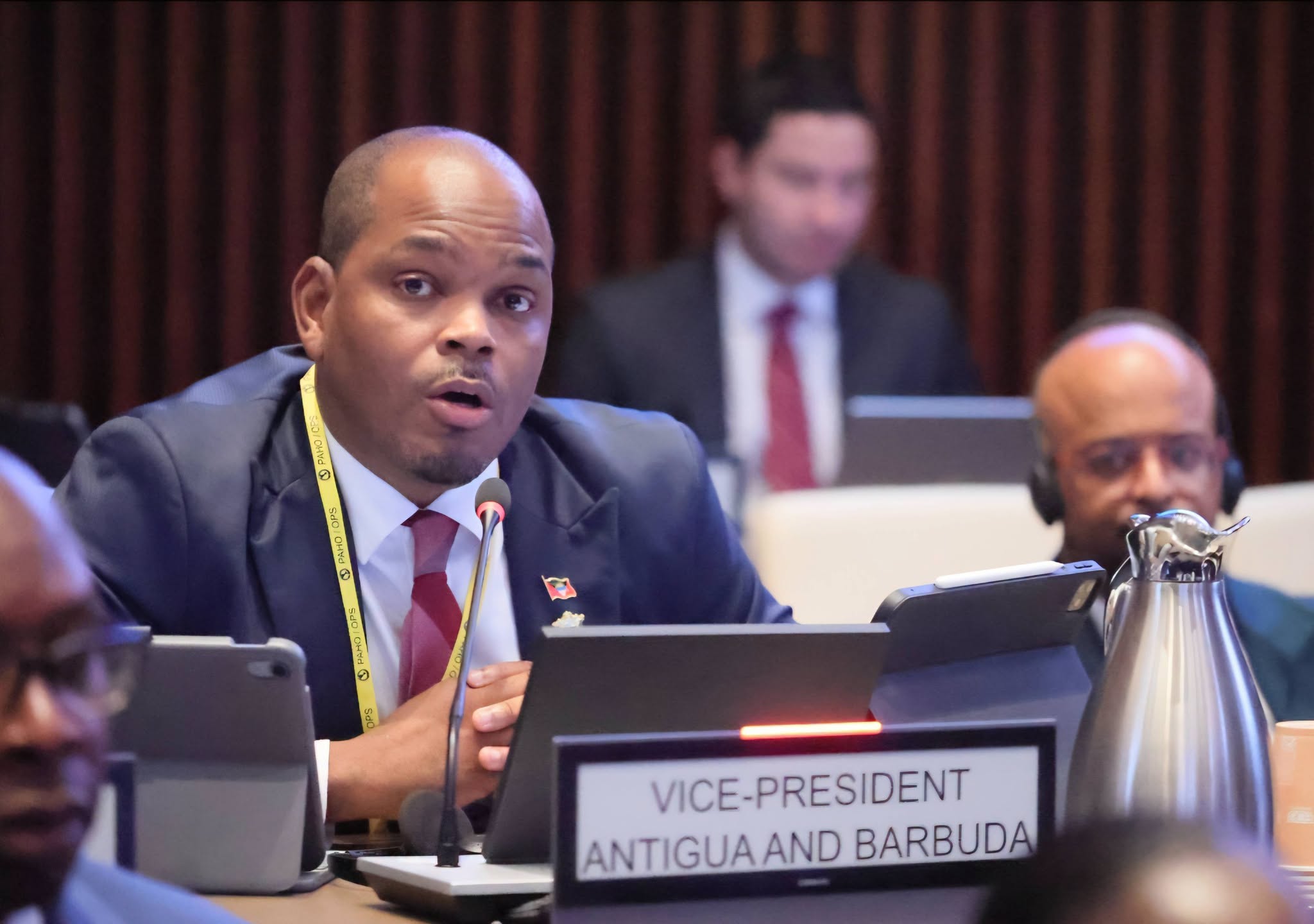
    In a significant milestone for Caribbean regional health engagement, Antigua and Barbuda has been elected Vice-President of the 63rd Directing Council of the Pan American Health Organization (PAHO), marking a major expansion of the small island nation’s role in shaping regional health policy and high-level decision-making. The nation’s delegation at the Washington D.C.-based meeting, which runs from September 28 to October 2, 2026, is led by Honorable Michael Joseph, Minister of Health, Wellness, Environment and Civil Service Affairs, who formally took on the vice-presidential role during the opening proceedings of the assembly.

    The annual PAHO Directing Council convenes health ministers and senior public health leaders from every country across the Americas, creating a collaborative platform to tackle shared regional health challenges, align priorities, and deepen cross-border coordination in public health. During the session, Minister Joseph delivered Antigua and Barbuda’s official statement under Agenda Item 3.2, where he offered formal recognition of PAHO Director’s annual report, titled *Delivering Health Gains across the Americas through Resilience and Innovation*.

    In his address, Joseph spotlighted the longstanding and multifaceted technical support PAHO has extended to Antigua and Barbuda across a wide range of public health domains. This critical assistance includes foundational support for developing the nation’s National Strategic Plan for Health 2026–2031, targeted disease elimination programs—most notably efforts to eradicate cervical cancer, and sustained work to maintain the region’s hard-won status of eliminating mother-to-child transmission of HIV and syphilis. Additional areas of partnership include strengthening national pandemic preparedness frameworks, expanding access to mental health services, and rolling out the WHO-led HEARTS Initiative to reduce the burden of cardiovascular disease.

    Joseph also specifically praised PAHO’s Revolving Fund for Access to Vaccines, which has been instrumental in shoring up Antigua and Barbuda’s Expanded Programme on Immunization at a time of growing global challenges: rising public vaccine hesitancy and soaring international transportation costs that have strained supply chains for many small island developing states. Other ongoing collaborations include support for implementing the Global School-based Student Health Survey and Global Youth Tobacco Survey to generate evidence for youth health policy, upgrading national laboratory capacity through the global Pandemic Fund, and integrating the Information Systems for Health framework to boost the country’s disease surveillance capabilities.

    A core priority Antigua and Barbuda will emphasize during its vice-presidential tenure is strengthening global and regional investment in health workforce development and health infrastructure, which Joseph framed as non-negotiable foundations for advancing sustainable development and universal health coverage across the Americas. The minister closed by reaffirming Antigua and Barbuda’s deep gratitude for PAHO’s enduring partnership, and restated the nation’s unwavering commitment to advancing health equity, building systemic public health resilience, and improving health outcomes for all populations across the region.

    For Antigua and Barbuda, the elevation to the vice-presidency of PAHO’s governing body is more than a ceremonial honor: it grants the small island nation a formal seat at the table to shape regional health strategy, contribute its unique perspective as a small developing state to key council deliberations, and advance collaborative progress on the shared health priorities that unite countries across the Americas.

  • Mighty Pe’lay remembered on 15th anniversary of his death

    Mighty Pe’lay remembered on 15th anniversary of his death

    Fifteen years following the death of one of Saint Lucia’s most celebrated cultural icons, legendary calypsonian The Mighty Pe’lay, the newly formed Calypso Review Committee (CRC) has honored his enduring legacy with a special curated exhibition and official commemoration ceremony at Castries’ Constitution Park this Monday.

    Born Jeff Pe’lay Elva and widely nicknamed “Mr. Consistency” for his consistent artistic excellence, the iconic performer passed away on September 28, 2011, at the age of 67, leaving behind a decades-long body of work that shaped Caribbean calypso and Saint Lucian national identity.

    Widely regarded as one of the most prolific songwriters in the island nation’s history, Pe’lay built his reputation on sharp, incisive social commentary, quick-witted political satire, and infectious party anthems that resonated with audiences across generations. His competitive career boasts an extraordinary list of achievements: he claimed the coveted Calypso Monarch title six times, won the Road March competition twice, and made history as Saint Lucia’s very first Soca Monarch when the inaugural competition launched in 1997.

    Beyond his performance accolades, Pe’lay’s creative output was staggering: he composed more than 300 original tracks for both his own performances and fellow artists, and broke new ground in Caribbean music when he released the region’s first full-length Christmas album in 1977. Perhaps his most lasting contribution to national life is penning Saint Lucia’s official National Pledge of Allegiance, a text that remains a core part of the country’s civic identity to this day.

    Pe’lay’s life story was marked by resilience in the face of devastating adversity. Born in Vieux Fort, he moved to the United States in the 1970s to pursue a degree in aeronautical engineering, a career path that was cut short when a serious car accident left him paralyzed from the waist down. Rather than abandoning his ambitions, he pivoted to the calypso stage, where he built a legendary career from his wheelchair, proving that his impact and determination far outstripped his physical limitations.

    Speaking at Monday’s event, CRC Chair Caron Tobiere framed the tribute exhibition as a small but meaningful celebration of Pe’lay’s life and work, noting that the event forms part of a much larger initiative to preserve and promote Saint Lucian calypso for future generations. “We saw this as a fitting tribute to celebrate him, but this is part of a bigger project,” Tobiere explained. “The CRC has come together to establish an organisation which will manage the music of carnival moving forward. We hope to do so pretty soon and this is one of the projects which we have undertaken.”

    That larger initiative will culminate in a comprehensive national calypso exhibition scheduled for November 22, which will trace the full history and evolution of the beloved genre across Saint Lucia. Lorna Lubron, a former president of the Saint Lucia Calypso Association, praised the CRC’s work organizing the Pe’lay tribute, emphasizing the late performer’s foundational role in building the island’s calypso community. “Pe’lay was certainly one of our leading calypsonians, and back in 1975 when the Saint Lucia Calypso Association was formed, he was an integral part of it along with Lord Jackson, Carro and others who made it happen,” Lubron said.

    Chris Norville, a relative of Pe’lay who addressed attendees at the ceremony, shared that his own Christmas Day birthday has created a special personal connection to Pe’lay’s pioneering Christmas album. “Although he is gone, that memory will always remain and I must say he carried our culture in his music,” Norville said.

    Ian Sanchez, a longtime music promoter and close friend of the late calypsonian, reflected on Pe’lay’s own prediction of his posthumous legacy. “I remember a few months before he died, he said … ‘when I die then you will all see how great I am,’” Sanchez recalled. “He was so right; although we became close, after he passed I learned so much more about him and the immense work he did. I am truly blessed to have known Jeff Elva and I will treasure those memories for the rest of my life.”

    Dozens of prominent current and former calypsonians attended the tribute, including Blaze, Invader and Jackson, with celebrated performer TC Brown delivering a moving special musical tribute to Pe’lay during the ceremony.

    In addition to his artistic contributions, Pe’lay was a revered advocate for people living with disabilities, and his lifetime of service and artistry earned him numerous national honors. He was appointed a Member of the Order of the British Empire (MBE) in 2009, awarded the Les Piton Medal and the Belgrave Medal for Lifetime Achievement, and was an early inductee into the Saint Lucia Music Hall of Fame.

  • AT&LU Accuses Public Works Management of Frustrating Workers Into Leaving Their Jobs

    AT&LU Accuses Public Works Management of Frustrating Workers Into Leaving Their Jobs

    The president of Antigua and Barbuda’s largest trade union has leveled serious allegations of workplace mistreatment against senior leadership at the country’s Public Works Department, claiming systemic harassment is pushing vulnerable contract workers out of their jobs.

    Bernard de Nully, leader of the Antigua and Barbuda Trades and Labour Union (AT&LU), made the claims during his keynote address at the union’s 87th Annual Delegates’ Conference, where he centered his remarks on growing systemic social injustice and the erosion of fundamental labor rights across the nation’s public sector.

    According to de Nully, the targeted harassment campaign specifically impacts hundreds of non-established workers – a group that includes young laborers, single mothers working to support their families, and individuals who have been granted second chances to rebuild their lives through steady employment. He claims management has deliberately used tactics of frustration and intimidation to create a hostile work environment that leaves these workers with no choice but to stop reporting for their shifts.

    “These are young people, single parents, and folks who have worked hard to get back on the right track and turn their lives around,” de Nully told delegates. “They are being pushed so far by constant mistreatment that they simply cannot bring themselves to come back to work anymore.”

    Once workers step away from the hostile workplace, de Nully alleges that department management intentionally mislabels their departure as voluntary job abandonment. In reality, he argues, the intentional creation of an unworkable environment amounts to constructive dismissal – a clear-cut case of unfair termination under labor law.

    De Nully emphasized that every worker, regardless of employment classification or job role, is inherently entitled to dignity and respectful treatment on the job. “A member of the cleaning staff deserves the exact same level of respect as a departmental general manager,” he stated, noting that this basic standard of human dignity must be upheld for all workers, whether they are employed in the public or private sector.

    In his address, the union president did not name individual affected workers or share specific documented cases of the alleged constructive dismissal. His claims are part of a broader critique of long-unresolved labor grievances across Antigua and Barbuda’s entire public sector. De Nully closed his remarks by urging all workers across the country to stand in collective unity to demand that their fundamental employment rights are respected and upheld.

  • Fire service ‘still 25 to 30 short’ despite new recruits

    Fire service ‘still 25 to 30 short’ despite new recruits

    The Barbados Fire Service continues to grapple with a persistent staffing gap, remaining 25 to 30 trained officers short of its fully authorized operational strength even after 20 new full-time recruits graduated from training last week, according to Deputy Chief Fire Officer Henderson Patrick.

    Speaking to journalists on Health and Open Day, a core event of the island’s annual Fire Service Week held at the Barbados Fire Service Headquarters at the Cadogan, Mayers, Marshall Emergency Services Complex in the Pine, Patrick emphasized that understaffing has been a long-running challenge for the organization. For years, the service has depended on temporary auxiliary staff to fill gaps in frontline response, a stopgap measure that has been necessary until more full-time recruits could be trained and deployed.

    Last week’s 42nd passing out parade marked a key milestone for the service, as all 20 graduates entered the force as fully accredited full-time fire officers, rather than temporary auxiliary staff. While this new cohort has grown the service’s total ranks, Patrick confirmed it has not been enough to close the pre-existing staffing deficit. “They have added to the complement, but they have not given us as yet the establishment that we have for the service,” he explained, noting that the service is still actively recruiting to fill the remaining 25 to 30 vacant positions.

    In an open call to eligible Barbadians, Patrick encouraged people who meet the service’s entry requirements and have a passion for public service to consider a career with the fire department. “We are looking for committed individuals and individuals who are ready to serve the public to become a part of this wonderful organisation,” he said.

    The Health and Open Day event that hosted Patrick’s announcement was designed to serve dual purposes: expanding public access to no-cost health screenings and assessments, and educating community members on how to make proactive, informed choices about their personal wellness. “We are hoping that members of the public will come and have their free checks, assessments, and get to become more intimate with information that is pertinent to their personal health,” Patrick said, adding that the public health-focused event was particularly well-timed amid the ongoing high prevalence of non-communicable diseases across the Caribbean.

    Health and Open Day is just one of the activities scheduled for this year’s Fire Service Week. The calendar also includes the first ever Wayne Vaughan Memorial Fun Day, set to take place this Saturday at the Lears cricket ground in St Michael. The new event honors the life and service of late Divisional Officer Wayne Vaughan, who passed away on June 14.

  • Goud blijft onder druk door olieprijs en hogere Amerikaanse rente

    Goud blijft onder druk door olieprijs en hogere Amerikaanse rente

    Global commodity markets are facing major cross-currents this week, with gold hovering near its lowest level in more than seven weeks after a sharp sell-off on Monday. The slump and subsequent stagnation come as investors weigh conflicting pressures: growing geopolitical tension around Middle Eastern energy supplies that stoke inflation fears, and a simultaneous shift in expectations that the U.S. Federal Reserve will keep interest rates higher for longer.

    On Monday, spot gold hit an intraday low of $4,110.55 per troy ounce, its weakest point since August 5. It closed the trading session at $4,136.81, while U.S. gold futures finished 3.5% lower at $4,168.40. Markets saw limited stabilization on Tuesday, with spot gold trading around $4,124.57 per ounce in early dealings and U.S. gold futures dipping an additional 0.3%. Through the rest of the trading day, gold held steady near $4,130, remaining close to the previous session’s multi-week low.

    A primary driver of recent market volatility has been shifting conditions in global oil markets, spurred by escalating tensions between the United States and Iran. Uncertainty around the Strait of Hormuz, a critical chokepoint for global oil shipments, has sparked widespread concerns over potential supply disruptions from the Middle East. Oil prices jumped 3% on Monday after U.S. President Donald Trump rejected an Iranian proposal to de-escalate the conflict, amplifying fears that energy supplies could face prolonged disruption.

    Market sentiment shifted in a more mixed direction on Tuesday. Brent crude fell 54 cents to settle around $104.74 per barrel, while U.S. West Texas Intermediate crude dropped 77 cents to $91.83 per barrel, according to Reuters data. The news outlet also reported that Middle Eastern oil exports rose to 12.8 million barrels per day in September, the highest volume recorded since February. Resumed operations at key infrastructure including Saudi Arabia’s Yanbu port and the East-West Pipeline have partially eased supply concerns, though the overall outlook remains tightly tied to both military and diplomatic developments. Mediators continue to work toward an agreement between Washington and Tehran to end hostilities and reopen the Strait of Hormuz, but no breakthrough has been achieved to date.

    For gold markets, the reaction in global bond markets has been the most impactful factor. Unlike interest-bearing assets such as government bonds, gold generates no yield or dividend returns for holders. When U.S. Treasuries offer increasingly attractive returns, the opportunity cost of holding non-yielding gold rises sharply, dragging down its appeal.

    The Federal Reserve raised its benchmark policy rate by 25 basis points at its September 15–16 meeting, bringing the target range for the federal funds rate to 3.75% to 4%. The recent run-up in oil prices has refocused attention on the risk that higher energy costs will make inflation more persistent. That dynamic limits the central bank’s room to cut interest rates, explaining why investors are now pricing in a longer period of restrictive monetary policy. Market pricing also reflects growing expectations for another rate hike before the end of 2025, though the exact timing and size of any additional increase will depend on upcoming inflation, labor market, and growth data.

    The sell-off extended across the entire precious metals complex on Monday. Silver fell between 4.5% and 4.7% to close around $61.39 per ounce, while platinum dropped 2.8% to $1,727.88. Palladium recorded a 3.6% decline to settle at $1,220.65. Most precious metals remained under selling pressure on Tuesday, with silver trading around $60.6, platinum near $1,700, and palladium around $1,209 per ounce in early updates.

    At first glance, the recent price action may appear counterintuitive: gold is traditionally viewed as a safe-haven hedge against inflation and geopolitical uncertainty, so rising geopolitical risk and higher inflation pressures would typically support higher gold prices. But the current market environment shows multiple competing forces acting on commodity valuations simultaneously. When higher oil prices push inflation up, central banks are more likely to keep interest rates elevated, which lifts Treasury yields and makes non-yielding gold less attractive by comparison. Additionally, a stronger U.S. dollar makes gold more expensive for buyers purchasing the commodity in other currencies, creating additional downward pressure.

    For the moment, the combination of a stronger dollar, rising Treasury yields, and shifting interest rate expectations is outweighing gold’s traditional role as an inflation and crisis hedge. This does not mean gold has lost its safe-haven status entirely; it simply demonstrates that short-term gold prices are driven by a complex mix of overlapping factors, including geopolitical risk, oil prices, inflation expectations, interest rate policy, and dollar valuation.

    Looking ahead, investor attention is now turning to upcoming U.S. economic data and further signals around the Federal Reserve’s interest rate path, while the situation around Iran and the Strait of Hormuz remains a key source of uncertainty for both energy and financial markets. If oil supplies continue to normalize and inflation pressure eases, that could take pressure off U.S. interest rates and remove a key headwind for gold. Conversely, a further escalation of the Middle Eastern conflict or new energy supply disruptions could push oil prices and inflation fears higher again, keeping upward pressure on interest rates. For now, gold remains caught between two opposing forces: geopolitical uncertainty that typically supports safe-haven assets, and higher interest rates and dollar strength that act as significant drags on prices.

  • AT&LU Calls for ABS Workers to Be Paid Long-Outstanding Overtime

    AT&LU Calls for ABS Workers to Be Paid Long-Outstanding Overtime

    At the 87th Annual Delegates’ Conference of the Antigua and Barbuda Trades and Labour Union (AT&LU), union president Bernard de Nully has brought long-simmering public-sector labor grievances back into the spotlight, placing urgent focus on the years-long dispute over unpaid overtime for workers at the ABS facility.

    De Nully emphasized that despite a clear legal ruling already ordering the disbursement of owed overtime payments to the ABS workforce, the case has dragged on for years without any tangible resolution for the affected employees. He noted that these workers have continued to fulfill their professional duties in good faith throughout the prolonged delay, but mounting frustration has become overwhelming for many of them. “Payments to ABS workers should be paid forthwith. Right is right and wrong is wrong,” de Nully stated firmly during his address to conference delegates.

    The ABS overtime dispute is far from an isolated case, according to the union leader. He detailed that a host of unresolved labor complaints have plagued public-sector workers across the twin-island nation, with some outstanding issues remaining unaddressed for anywhere between 10 and 20 years. Past worker protests at three major public institutions — the Central Board of Health, the Solid Waste Management department, and the Sir Lester Bird Medical Centre — serve as stark examples of the unrest stemming from these unaddressed grievances, he added.

    De Nully used the conference, held this year under the unifying theme of “developing stronger workers for a stronger future,” to urge the union’s membership to maintain solidarity in their push for resolution. He warned that internal divisions among workers would erode the hard-won gains that have been secured through decades of collective bargaining, undermining the labor movement’s ability to advocate for fair treatment.

    Representing more than 10,000 workers across Antigua and Barbuda, the AT&LU remains one of the most prominent organized labor voices in the country, and its annual conference serves as a key platform to surface and push for action on systemic workplace issues affecting public and private sector employees alike.

  • Puerto Plata Cable Car renovation to begin October 3 with US$20 million investment

    Puerto Plata Cable Car renovation to begin October 3 with US$20 million investment

    One of the Dominican Republic’s most beloved high-profile tourist destinations is set to undergo a major transformation, as the long-awaited full-scale renovation of the Puerto Plata Cable Car is scheduled to kick off this Saturday, October 3. Backed by a $20 million investment, this comprehensive modernization initiative is designed to address longstanding capacity constraints, cut travel times, and bring the iconic attraction’s operational and safety infrastructure up to 21st-century standards.

    The project was officially unveiled jointly by José Ignacio Paliza, Minister of the Presidency, and David Collado, the nation’s Minister of Tourism. Funding for the rehabilitation effort will be split between the Ministry of Tourism (Mitur) and the Dominican Institute of Civil Aviation (IDAC), marking a coordinated public sector investment to boost the country’s tourism sector.

    The upgrade delivers sweeping changes across every core part of the cable car system. Most notably, the cable car cabins will undergo a full modernization that will more than double their passenger capacity, jumping from 18 passengers per cabin to 50. Project planners anticipate this expanded capacity will cut down on lengthy visitor wait times during peak travel periods and let the popular attraction accommodate far more tourists annually, supporting broader tourism growth in the Puerto Plata region.
    Travel speed will also see a significant improvement. With the installation of an all-new high-performance electromechanical system capable of operating at 10 meters per second, the one-way trip to the summit of the mountain will shrink from the current eight minutes to just five minutes, creating a more efficient and convenient experience for guests.
    The renovation work will be rolled out in three distinct phases to minimize disruption and ensure quality control: the first phase will cover pre-construction engineering studies and detailed design work, the second will focus on on-site renovation construction, and the third and final phase will involve the assembly and testing of the new cable car system. To support the upgraded infrastructure, the project also includes the build-out of a dedicated new electrical supply line that will ensure reliable power for the expanded system.
    The full-scale modernization comes after the Puerto Plata Cable Car has been closed to the public since June 2024, when it was shut down for failing to meet required mandatory safety certification standards for public operations. Following the closure, Dominican authorities moved quickly to develop a plan to rehabilitate and upgrade the attraction, rather than simply repairing the existing system. The competitive bidding process for the construction contract was finalized earlier this year, clearing the final regulatory and administrative hurdle for work to get underway as scheduled.
    When completed, the modernization project is expected to revive one of Puerto Plata’s flagship tourist draws, delivering a safer, more efficient, and higher-capacity experience that meets the needs of growing visitor numbers to the region, while supporting local tourism-dependent businesses and communities.

  • OECD study outlines measures to strengthen public integrity in Dominican Republic

    OECD study outlines measures to strengthen public integrity in Dominican Republic

    In an official ceremony hosted in Santo Domingo that was presided over by Dominican Republic President Luis Abinader, the Organisation for Economic Co-operation and Development (OECD) has officially launched a landmark public integrity assessment report, produced in collaborative partnership with the Dominican Republic’s General Directorate of Ethics and Governmental Integrity (DIGEIG). The core mission of this comprehensive study is to systematically map existing progress, identify unaddressed risks, and highlight critical gaps in the country’s current public governance frameworks.

    Elsa Pilichowski, OECD Director of Public Governance, used the public event to extend formal recognition to the Dominican Republic for the measurable headway it has made in building robust institutional foundations centered on public sector integrity. She emphasized that the country’s ongoing commitment to strengthening governance aligns with global best practices established by the international community.

    The assessment puts forward a targeted set of actionable recommendations designed to reinforce five key pillars of public integrity: more robust protection for whistleblowers who report misconduct, enhanced systems for identifying and mitigating integrity risks across public bodies, stronger investigation and disciplinary sanction mechanisms for violations, greater proactive transparency around government activities, and expanded avenues for direct citizen participation and independent oversight of public administration.

    President Abinader reaffirmed the Dominican government’s commitment to implementing reform during his address at the launch. He noted that the OECD’s independent assessment provides a valuable opportunity for domestic public institutions to benchmark their current operational practices against widely accepted international standards, and laid out a clear plan to convert the study’s recommendations into tangible, actionable policy changes across government.

    José Ignacio Paliza, Dominican Minister of the Presidency, echoed this commitment, stressing that principles of integrity must be embedded into every level of public administration, from frontline local government services to senior national leadership. He formally pledged full administrative and political support for the full rollout of all recommended reforms outlined in the study.

    This new OECD assessment is not a standalone initiative: it forms a core foundational component of the Dominican Republic’s recently launched National Public Integrity Strategy (ENIP) 2026–2036. The 10-year strategy is designed to translate the study’s findings into a structured, long-term national roadmap, complete with clear strategic objectives, concrete implementation measures, defined institutional responsibilities, and measurable accountability indicators to track progress over the coming decade.

  • Dominican shipping association calls for long-term national maritime strategy

    Dominican shipping association calls for long-term national maritime strategy

    In a pivotal gathering held at the Ministry of Foreign Affairs Convention Center, industry leaders, government policymakers, and cross-sector stakeholders have united to address the future of the Dominican Republic’s maritime and trade ecosystem, with a clear call for a unified, long-term national maritime vision to underpin projected economic and foreign trade expansion. The first ever Maritime Vision 2026 forum, convened by the Dominican Republic Shipping Association (ANRD), brought together representatives from maritime transport, port operations, logistics, manufacturing, and public administration to lay out a roadmap aligned with the Dominican government’s ambitious growth target: doubling the size of the national economy by 2036. ANRD chairman Jaak Rannik opened the forum by outlining the Dominican Republic’s existing competitive strengths that position it as a growing regional trade hub. These advantages, he noted, range from the country’s strategically advantageous geographic location, already upgraded modern port and transport infrastructure, and well-established international connectivity, to consistent inflows of private sector investment and a rapidly expanding national logistics platform. Over the past decade, Rannik explained, the country has built a vibrant, dynamic port and logistics network that has supported steady trade and economic growth. However, he emphasized that incremental, sector-by-sector adjustments are no longer sufficient to keep pace with the coming wave of expansion. To meet the rising demand that will accompany a doubling of the national economy, the country must shift from fragmented, ad-hoc responses to a centralized, coordinated national strategy that proactively addresses future needs across critical areas: infrastructure development, digital and physical connectivity, logistics efficiency, skilled human capital development, and long-term environmental sustainability. Forum participants dedicated sessions to analyzing how the 2036 economic doubling target will reshape key sectors tied to maritime activity, including cross-border imports and exports, domestic manufacturing, free-trade zone operations, the country’s core tourism industry, energy supply chains, and integrated logistics networks. ANRD’s proposal frames a formal National Maritime Strategy as a unifying framework to align public sector policy and private sector investment, breaking down silos that currently slow coordinated development. The association argues that this unified approach will not only strengthen the country’s overall trade competitiveness but also drive targeted improvements in infrastructure expansion, workforce development, and climate-resilient environmental sustainability for the maritime sector. Stakeholders in attendance broadly supported the initiative, noting that proactive long-term planning is critical to ensuring the Dominican Republic can capitalize on its natural advantages and capture emerging opportunities in global trade in the coming decades.