博客

  • US sanctions are ‘collective punishment,’ says Cuba during May 1 marches

    US sanctions are ‘collective punishment,’ says Cuba during May 1 marches

    HAVANA, CUBA – Fresh economic sanctions imposed on Cuba by former United States President Donald Trump have sparked fierce condemnation from Cuban officials, who label the new measures an act of collective punishment against the island’s civilian population. The sanctions took effect Friday, coinciding with Cuba’s annual May 1 celebrations that drew tens of thousands of demonstrators marching to the US Embassy in Havana under the rallying cry of “Defend the Homeland.”

    Geopolitical tensions between Washington and Havana have stretched across more than six decades. Ever since Fidel Castro led a communist revolution that seized power in 1959, the US has maintained a near-continuous trade embargo against the island nation, which sits just 90 miles off the coast of Florida. Prior to rolling out the new sanctions, Trump had publicly mused about the possibility of taking full control of Cuba.

    Under the executive order signed Friday, the Trump administration expanded sanctions coverage to target any individual linked to major sectors of Cuba’s state-controlled economy. The new measures apply to actors operating in energy, national defense and materiel production, metal and mining, financial services, and public security, as well as any other economic segment deemed relevant by the US. The order also targets Cuban government officials accused of involvement in serious human rights violations and systemic corruption.

    Cuba’s top diplomat Foreign Minister Bruno Rodriguez immediately pushed back against the new measures. In a public post on X, written in English, Rodriguez stated: “We firmly reject the recent unilateral coercive measures adopted by the #UnitedStates government. These actions demonstrate an intention to impose, once again, collective punishment on the Cuban people.” In a follow-up Spanish-language statement, he further characterized the sanctions as both illegal and abusive.

    For Cuba, the new sanctions come as the country already grapples with a deep and prolonged economic crisis that has been compounded by recent US pressure. A US fuel blockade implemented in January has drastically cut the country’s access to energy imports, with only a single Russian oil tanker successfully reaching Cuban ports since the blockade went into effect. Chronic supply shortages and routine rolling blackouts have become daily realities for most Cuban citizens, and tourism — long the country’s highest-revenue industry — has collapsed to historic lows.

    Notably, the new sanctions were announced just weeks after a significant diplomatic shift: senior US officials traveled to Havana for bilateral dialogue in April, raising tentative hopes of reduced tensions between the two nations.

    Friday’s mass rally outside the US Embassy was led by Cuba’s sitting President Miguel Diaz-Canel and former revolutionary leader Raul Castro, drawing massive crowds of Cuban citizens who turned out to demonstrate against US policy. The day before the rally, Diaz-Canel had already called on all Cubans to mobilize against what he described as “the genocidal blockade and the crude imperial threats to our country.”

    Throughout the rally, Cuban officials announced that more than six million signatures had been collected across the country over the past six weeks as part of a “for the homeland and for peace” campaign opposing US policy. Cuban opposition figures have, however, raised public questions about the transparency and methodology of the signature collection process.

    State-run Cuban television broadcast parallel mass gatherings in cities across the island, showing thousands of additional protesters turning out to voice opposition to the new sanctions.


  • Why Radio Endures: Jamaican execs point to cost, connection and listener loyalty

    Why Radio Endures: Jamaican execs point to cost, connection and listener loyalty

    Against a backdrop of sweeping digital transformation that has upended traditional media ecosystems around the globe, Jamaican radio has stood out as a surprisingly resilient medium, industry leaders say, crediting its unique accessibility, low cost, deep cultural integration and unrivaled public trust for its steady performance against struggling legacy competitors.

    The 2023 All Media Survey confirms that while radio has experienced a modest dip in overall listenership, its audience retention remains far stronger than that of television and print media, two other long-standing traditional platforms that have faced far steeper declines amid shifting consumer media habits.

    Industry executives made the case for radio’s enduring strength during a Thursday panel discussion titled *Why Radio still Wins*, hosted at the IMPACT x Mystique marketing conference held at Kingston’s AC Hotel.

    Brian Schmidt, acting managing director of popular Jamaican station Irie FM, emphasized that radio is far more than a media platform in Jamaica—it is interwoven into the fabric of the nation’s cultural identity. “We have an oral society and an oral tradition, and because of that, radio is interwoven into our society in a way that no other media has been, and that’s very, very important,” Schmidt explained during the discussion.

    D’Adra Williams, general manager of Zip 103 FM, echoed that perspective, noting that radio has carved out a permanent, unassuming space in the daily routines of Jamaican listeners. “[Radio] is a thing that’s [always] in the background, it’s a thing that people rely on, and it’s not so much something that we think of,” Williams said. “We’re interwoven into what we do in our daily space. And we may not be the new girl in town, but we are still very much there.”

    Beyond deep cultural roots, the medium’s low barrier to access has been another core driver of its stability. Unlike streaming platforms or social media that require mobile data or Wi-Fi connectivity, AM and FM radio comes pre-installed in nearly all vehicles at no extra cost, and can be accessed without any internet connection at all.

    Schmidt pointed to the aftermath of Hurricane Melissa, which devastated large swathes of western Jamaica, as a stark demonstration of this unique accessibility advantage. “The only thing that was serving the west was [radio] because everything else went,” he said.

    Trust, industry leaders add, is another foundational pillar of radio’s resilience. Citing recent research, Schmidt noted that 87% of consumers trust radio as a news and information source—making it the most trusted media platform in Jamaica, while social media trails as the least trusted, with approval ratings below 50%. “That’s a big part of the resilience,” Schmidt said.

    Dahlia Harris, head of radio business at the RJR Communications Group, echoed that finding, arguing that radio’s greatest strength lies not in raw reach and frequency of content, but in its unmatched influence built on public confidence. “Radio is not so much about reach and frequency as it is about trust and influence,” Harris said. “When people tune into radio, they believe what they hear, they trust what we tell them, and we impact the decisions they make more than anything else.”

    Even with its relative stability, radio has not escaped the pressure of digital competition, which has chipped away at the medium’s overall market share in recent years. But forward-thinking Jamaican radio networks have adapted to the new digital landscape by integrating podcasting and streaming into their offerings, turning the digital boom into a growth opportunity rather than a threat.

    Jheanelle Hughes-Headley, sales and marketing manager at Nationwide News Network (NNN), explained that her outlet has expanded far beyond traditional over-the-air broadcasting to build a multi-platform presence. “We are streaming live visually on Youtube, our audio is on our website and also on our app; so, when you come to Nationwide, you’re just not getting airplay, you’re getting multi-platform reach,” Hughes-Headley said, adding that on-demand streaming has exponentially expanded the network’s overall reach. “Unlike just radio, where you have to be listening to catch it, when it streams, you can go back on, rewatch it, share it, and so the reach expands.”

    For marketers looking to tap into radio’s unique influence, Schmidt advised leaning into long-term brand building campaigns, a strategy he says many modern brands have abandoned to their detriment. “Brand awareness is very critical, and I see that a lot of marketers are not doing brand awareness campaigns anymore and you see it reflected in the results of their companies,” Schmidt said. “One of the important things you always want to get is top of mind … no matter what category of business. Marketing is competing for people’s head space… It’s something you should do perpetually.”

  • GHN launches global campaign to support primary education initiative

    GHN launches global campaign to support primary education initiative

    In a major push to tackle systemic educational inequity for young learners across Jamaica, US-headquartered non-profit Global Humanity Network Inc (GHN) has kicked off a worldwide fundraising campaign to back its flagship education program, Beyond the Backpack. The initiative is crafted specifically to break down long-standing barriers that prevent thousands of Jamaican primary school students from accessing consistent, quality learning opportunities.

    GHN is extending a call to action to a broad coalition of supporters: individual donors, private sector corporate partners, established philanthropic organizations, and members of the large Jamaican diaspora spread across the globe. Unlike many one-off charity drives, the project is framed as a long-term, structured intervention that moves beyond temporary band-aid solutions to create lasting change for vulnerable communities.

    The project is a collaborative effort, led jointly by GHN vice-president Dr Binzie Roy Davidson – who also serves as an advisor to the Global Jamaica Diaspora Council – and the local advocacy group A Collision With Purpose Movement. For GHN’s top leadership, the initiative marks a deliberate departure from the short-term charitable aid that has long dominated development work in the region.

    “This initiative reflects the power of aligned leadership and global collaboration. It is a movement built not only on vision, but on execution,” noted Dr Laxley W Stephenson, GHN’s president and CEO, who was born and raised in Jamaica. Speaking on the core gaps the program seeks to fill, Stephenson emphasized that the supports provided by Beyond the Backpack are not optional extras for low-income students, but non-negotiable basics. “These are not luxuries. These are necessities. No child’s future should be determined by the absence of these basic supports,” he added.

    Beyond the Backpack targets a set of interconnected, often overlooked barriers that drag down student attendance and academic performance: a lack of reliable transportation to school, inability to afford required school uniforms, consistent food insecurity, and the absence of adult guidance and mental health support. To address these needs holistically, the program has designed a three-year structured support pathway for participating students, covering everything from transportation stipends and essential school supplies to daily nutrition access, one-on-one mentorship, professional psychosocial support, and youth leadership development training.

    For Dr Davidson, the campaign also serves as a critical rallying cry to activate the Jamaican diaspora to turn awareness of domestic educational challenges into tangible action. “This is a call to move beyond awareness and into action. When we invest in a child’s education, we strengthen families, communities, and the future of our nation,” he explained.

    To streamline participation for donors, GHN has established clear sponsorship tiers ranging from $2,000 USD to $10,000 USD and higher, with a commitment to tracking and publishing measurable outcomes for every investment made. The initiative will launch first in four Jamaican parishes: Westmoreland, Trelawny, St Elizabeth, and Hanover. Organizers have laid out long-term plans to expand the program across the entire island of Jamaica before scaling to other underserved communities around the world.

  • Lebanon says 13 killed in Israeli strikes in south

    Lebanon says 13 killed in Israeli strikes in south

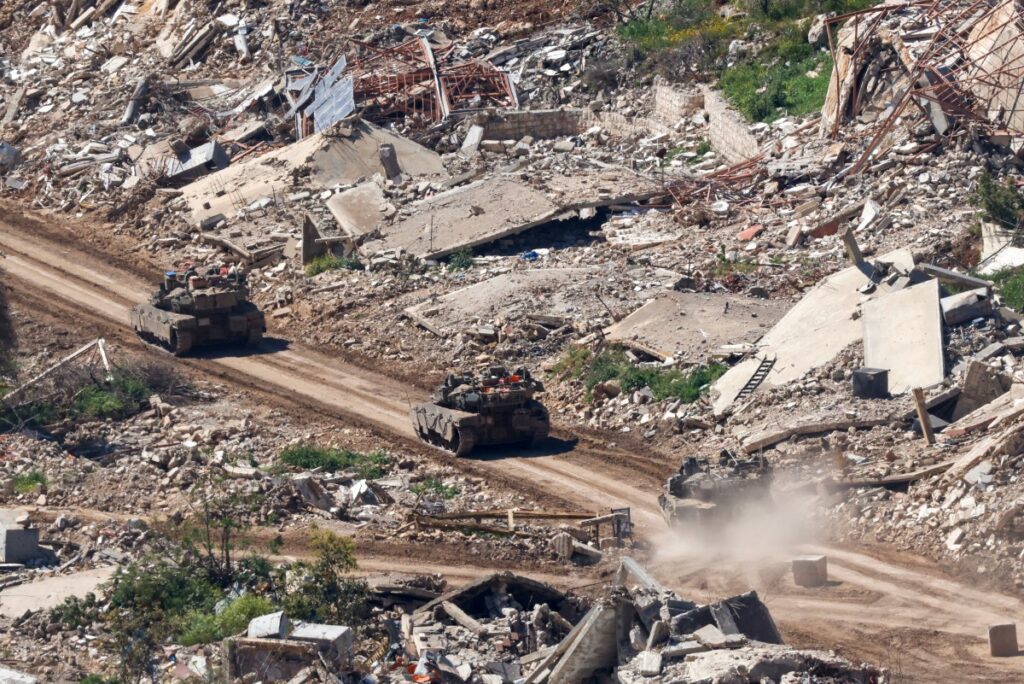
    BEIRUT, LEBANON – Fresh Israeli airstrikes across southern Lebanon have killed 13 civilians and wounded dozens more on Friday, in attacks carried out even after a regional ceasefire was meant to de-escalate months of cross-border violence between Israeli forces and the Iran-backed militant group Hezbollah. Lebanon’s Ministry of Public Health updated casualty figures, confirming that eight people – including one child and two women – died in strikes on the town of Habboush, where the Israeli military had issued an urgent evacuation order to residents just hours before the bombing. The updated death toll marked an increase from initial lower estimates, with 21 additional people left injured in the Habboush attacks. Separate strikes in the southern Lebanese town of Zrariyeh killed four more people, two of whom were women, and left four others wounded, according to the health ministry. A third strike in Ain Baal, a town located near the coastal Lebanese city of Tyre, killed one person and wounded seven others. An Agence France-Presse photographer on the ground in Habboush observed thick plumes of smoke billowing into the sky shortly after the raids concluded. Lebanon’s state-run National News Agency (NNA) confirmed that Israeli warplanes launched a sustained wave of heavy strikes on the town less than 60 minutes after the evacuation order was issued. The Israeli military had announced prior to the attacks that it would respond with force to what it described as repeated ceasefire violations by Hezbollah, ordering all Habboush residents to evacuate to areas at least one kilometer away from the town’s built-up zones. NNA also reported additional Israeli airstrikes and artillery shelling across other locations in southern Lebanon, including the outskirts of Tyre. Even after the April 17 ceasefire deal that was negotiated to end more than six weeks of open conflict between Israel and Hezbollah, Israeli forces have continued to carry out lethal strikes across southern Lebanon. The text of the ceasefire agreement explicitly allows Israel to take military action in response to planned, imminent, or ongoing attacks against its territory. Currently, Israeli military personnel are operating inside the so-called “Yellow Line,” a buffer zone extending roughly 10 kilometers into Lebanese territory along the shared border, where they have carried out large-scale controlled detonations and demolition of residential and public structures. NNA reported that Israeli troops carried out controlled blasts in the southern town of Shamaa, and demolished a monastery and a school operated by a local religious order in the town of Yaroun, after earlier detonating residential homes, commercial shops, and public roads in the same area. In a response to Friday’s strikes, Hezbollah announced it had carried out a series of coordinated attacks on Israeli military positions and troops across southern Lebanon, framing the operations as retaliation for Israeli violations of the ceasefire. The militant group first pulled Lebanon into the broader ongoing Middle East conflict in March, when it launched rocket attacks against Israeli territory to avenge the US-Israeli killing of a top Iranian official aligned with Supreme Leader Ali Khamenei. As of Friday, Lebanon’s health ministry has raised the total death toll from Israeli strikes across the country since March 2 to more than 2,600 people. That toll includes 103 emergency responders and paramedics who have been killed while carrying out rescue operations. Xavier Castellanos, under-secretary general for national society development and coordination at the International Federation of Red Cross and Red Crescent Societies (IFRC), spoke to reporters near Beirut this week, noting that Lebanese Red Cross volunteers face constant mortal danger every time they deploy on a rescue mission. Two Lebanese Red Cross paramedics are among the more than 2,600 people killed in Israeli strikes to date. “That a person that is trying to save lives, is trying to alleviate human suffering, might be targeted, might be killed… this is something that I found absolutely unacceptable,” Castellanos told reporters. The ongoing violence has deepened humanitarian crisis across southern Lebanon, with tens of thousands of residents displaced from their homes and medical services stretched beyond capacity.

  • Jamaica welcomes Porter Airlines new direct service to MoBay

    Jamaica welcomes Porter Airlines new direct service to MoBay

    KINGSTON, Jamaica — Jamaica’s tourism sector has secured a major boost with Canadian low-cost carrier Porter Airlines announcing three new non-stop routes linking major Canadian population centers to Montego Bay, set to launch ahead of the 2026–27 winter travel season. The new service will connect Montego Bay’s Sangster International Airport directly to Toronto Pearson International Airport, Ottawa International Airport, and John C. Munro Hamilton International Airport, marking the first time any airline has offered non-stop service between Hamilton and the popular Jamaican resort destination.

    Edmund Bartlett, Jamaica’s Minister of Tourism, has praised the expansion as a landmark win for the country’s tourism industry, highlighting the years of targeted work to grow airlift connectivity with Canada, one of Jamaica’s largest and most consistent source markets for winter travel. “This new airlift from Porter Airlines is a powerful affirmation of Jamaica’s standing as Canada’s premier winter sun destination,” Bartlett said in an official statement following the announcement at JAPEX 2025, Jamaica’s major annual tourism trade exhibition. “Connecting Montego Bay directly to Toronto, Ottawa and — for the first time for Porter— Hamilton opens our island to an even wider circle of Canadian visitors. Jamaica is open, vibrant and ready to welcome every traveller who steps off these new flights.”

    Porter, one of Canada’s fastest-expanding commercial airlines, has laid out a clear operating schedule for the new routes, pending final regulatory approval. Starting November 23, 2026, the carrier will run up to five weekly flights from Toronto Pearson. The Ottawa route will launch two days later on November 25, with two weekly flights, while the pioneering Hamilton service will commence on December 20, 2026, also with two weekly flights.

    The addition of these Jamaican routes forms a core part of Porter’s broader strategic expansion into warm-weather winter getaways, which will grow the airline’s sun destination network by more than 150% year-over-year, adding four new countries and over 15 new routes across its Canadian domestic network. This aggressive growth reflects the unmet demand for non-stop access to Caribbean destinations from mid-sized Canadian markets that have previously relied on connecting flights through major hubs like Toronto.

    For Jamaica, the Hamilton route is particularly transformative: the airport serves the Greater Golden Horseshoe, a densely populated region of southern Ontario that has never before had direct access to the island. Donavan White, Director of Tourism at the Jamaica Tourist Board, noted that the new routes will open Jamaica’s world-famous beaches, vibrant culture, and signature hospitality to a far broader base of Canadian travelers. “Canada consistently ranks among Jamaica’s most important source markets, and this announcement from Porter Airlines reinforces why,” White said during a media breakfast at JAPEX 2025 held in Montego Bay. “Three new non-stop gateways to Montego Bay give Canadian travellers unprecedented ease of access to our island.”

    Angella Bennett, Regional Director for Canada at the Jamaica Tourist Board, echoed that sentiment, noting that sustained strong demand from Canadian travelers for Jamaican vacations has driven this industry growth. “Canadian travellers have a deep and enduring love for Jamaica, and demand from markets like Toronto, Ottawa and southern Ontario has never been stronger,” Bennett said. “Porter’s decision to add Montego Bay to its winter network — including that pioneering Hamilton route — reflects the confidence the airline community has in Jamaica as a destination that delivers. We will be working with Porter and our trade partners across Canada to ensure these seats fill quickly and that every passenger arrives in Jamaica ready to experience everything the island has to offer.”

    Industry analysts note the expansion is a win-win for both sides: it meets growing Canadian demand for accessible winter sun travel while providing Jamaica with a steady stream of new visitors that will support the island’s $6 billion tourism industry, which accounts for roughly a third of the country’s total GDP.

  • TAJ says intermittent issues affecting eMVRC transactions

    TAJ says intermittent issues affecting eMVRC transactions

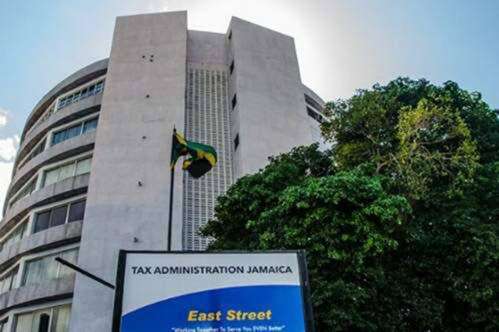
    KINGSTON, Jamaica — Tax Administration Jamaica (TAJ) has announced that its dedicated platform for electronic motor vehicle registration certificate (eMVRC) transactions is currently facing an unexpected partial service disruption. In an official press statement issued this Friday, the agency confirmed that some motorists and vehicle owners attempting to access or finalize eMVRC-related services are running into technical difficulties. The tax authority clarified that the outage is not widespread across the entire system, meaning only a limited group of users are currently encountering access interruptions. According to the release, the organization’s technical service partners have already been alerted to the glitch, and engineering teams are working around the clock to fully restore normal system operations as quickly as possible. For users who cannot load the payment portal or get stuck during the payment step of the application process, TAJ is advising them to visit their closest local tax office to get in-person support to complete their transactions. For another group of users who have already successfully submitted their applications and completed online payment but still cannot generate their digital eMVRC, TAJ has noted that agency staff will manually complete the certificate generation process on behalf of applicants, eliminating the need for any extra steps from the user. Once the certificate is ready to access through the Certificate Generation Distribution System (CGDS) online portal, applicants will receive an automatic email notification alerting them to the completed process.

  • Guyana remains confident of victory in its border dispute with Venezuela

    Guyana remains confident of victory in its border dispute with Venezuela

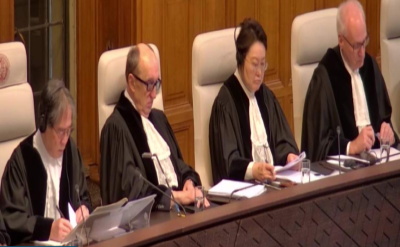
    GEORGETOWN, Guyana — As the International Court of Justice (ICJ) prepares to open public oral hearings on a decades-long territorial dispute between Guyana and Venezuela, the Guyanese government has issued a clear statement of unwavering confidence in the strength of its legal case, days ahead of the proceedings scheduled to begin in The Hague on Monday.

    The long-simmering border conflict traces its origins back to the 1899 Arbitral Award, which established the formal boundary between the two neighboring South American nations. That ruling stood unchallenged for more than six decades, until Caracas formally declared the award null and void in 1962 and reactivated its territorial claim to the 159,000-square-kilometer Essequibo region, a resource-rich territory that makes up roughly two-thirds of Guyana’s total land area.

    In accordance with the terms of the 1966 Geneva Agreement, which lays out a framework for peaceful negotiation of the dispute, the two nations held years of bilateral talks aimed at reaching a mutually acceptable resolution. When those diplomatic efforts failed to produce a breakthrough, the United Nations Secretary-General referred the matter to the ICJ for binding adjudication. Guyana formally brought the case before the court in 2018, requesting a formal ruling confirming the full legal validity of the 1899 border award.

    The ICJ has already cleared two key procedural hurdles for the case, twice upholding its jurisdiction to hear the merits of the dispute in rulings issued in December 2020 and April 2023. The court also granted two provisional measures orders at Guyana’s request, requiring Venezuela to refrain from interfering in Guyana’s lawful governance and administration of the disputed territory while proceedings remain ongoing.

    Oral hearings on the core legal merits of the case are scheduled to run from May 4 to May 8, with a possible extension into the following week, according to Guyana’s Attorney General and Minister of Legal Affairs Mohabir Anil Nandlall. Both sides will present their full legal arguments before the court during these proceedings.

    In its official statement released Friday, the Guyanese government reaffirmed its optimistic stance ahead of the hearings. “Guyana approaches these hearings with full confidence in the strength of its case, which is supported by the historical record and the applicable legal principles relating to the binding nature of arbitral awards, the sanctity of treaties, the respect for the rule of law and the stability of boundaries,” the Ministry of Foreign Affairs and International Cooperation said.

    The long-running dispute has spilled into public diplomacy in recent weeks, sparked by a small but symbolic controversy surrounding a brooch worn by Venezuela’s Acting President Delcy Rodriguez during talks with the heads of government of Barbados and Grenada earlier this month. The brooch featured a map of Venezuela that explicitly included the Essequibo region as part of Venezuelan territory.

    Guyanese President Dr. Irfaan Ali publicly expressed “grave concern” over the display, and the 15-member Caribbean Community (Caricom), a regional bloc that has repeatedly backed Guyana’s position, also noted its objection to the public presentation of material asserting Venezuela’s territorial claim during an official regional engagement.

    Rodriguez dismissed the concerns during an anti-sanctions rally held at the Municipal Theatre of Valencia in Venezuela’s Carabobo state, insisting that Caracas would not back down from its long-held claim. She framed the criticism as an overreaction, saying, “You know that the president of Guyana is now causing a scandal because I always wear the pin with the map of Venezuela. The only map I have ever known. Now they are even bothered by how I dress.”

    Moving forward, Rodriguez said Venezuela would use its time before the ICJ to reaffirm its longstanding position, which she framed as aligned with international law and the terms of the 1966 Geneva Agreement. “We will soon be at the International Court of Justice (ICJ) in the coming days to reaffirm our historic position, which is international law and respect for the Geneva Agreement. It is outrageous when Venezuela is attacked, and that is why we are undertaking this entire process of spiritual revitalisation for the good of our nation,” she added.

  • Lacey Gordon appointed director of sponsorship at JTTA

    Lacey Gordon appointed director of sponsorship at JTTA

    KINGSTON, Jamaica — A new chapter is unfolding for Jamaica’s table tennis community, as lifelong sports enthusiast Lacey Gordon has stepped into the key leadership position of director of sponsorship at the Jamaica Table Tennis Association (JTTA), turning her decades-long passion for athletic pursuits into tangible action for the nation’s sporting growth.

    Though Gordon built her core career in the real estate sector, she brings a robust, transferable skill set that positions her perfectly to drive the JTTA’s partnership and fundraising goals. Her professional background has honed sharp strategic planning abilities, disciplined project execution, and a proven talent for cultivating long-term, mutually beneficial professional relationships — all assets that are widely expected to strengthen the association’s work in building impactful collaborations with external partners. Driven by her genuine love for sports, Gordon has made clear that her work will center on creating shared value that lifts up both Jamaican table tennis athletes and the stakeholders that partner with the association.

    Across every level of the sport, from local grassroots development programs that introduce young Jamaicans to table tennis to high-profile commercial partnerships that raise the profile of elite competition, Gordon is committed to supporting sustainable growth for athletes, teams, and the JTTA as a whole. Her professional experience in real estate has given her a unique results-driven mindset that she plans to leverage to expand the association’s sponsorship reach.

    In her new role, Gordon will prioritize building intentional connections between the JTTA, global and local brands, potential investors, and key industry stakeholders. She has outlined a vision that balances two critical goals: ensuring all sponsorship partnerships deliver long-term financial stability for the association, while also aligning with the core mission of growing the sport’s reach and visibility across Jamaica and the Caribbean. Her approach is rooted in intentional purpose, unwavering professionalism, and a long-term outlook focused on creating lasting impact rather than short-term gains.

    Aubyn Henry, chief strategy and development officer at the JTTA, expressed strong confidence in Gordon’s ability to deliver results in the new role. “This role requires a unique combination of vision, dedication, and an understanding of both people and opportunity,” Henry noted. “Lacey embodies all of those qualities. She brings energy, sharp insight, and relentless focus to this work, which puts her perfectly in position to help the JTTA build durable, mutually beneficial partnerships that will serve our community for years to come.”

  • WATCH: Truck overturns in Mammee Bay

    WATCH: Truck overturns in Mammee Bay

    On Friday afternoon, a highway crash disrupted travel along one of Jamaica’s key arterial routes, after a truck carrying bulk bottled water lost control and overturned near Mammee Bay, St Ann, along the North-South highway. Local law enforcement has moved quickly to assess the scene, with the Jamaica Constabulary Force’s Communication Network confirming that the incident has not resulted in any major harm to road users. While first responders have not reported life-threatening casualties, the crash has created significant travel headaches for motorists passing through the area. As of the latest updates, traffic has built up behind the crash site, leading to delays for commuters and commercial drivers traveling along the route. Investigative authorities have not yet released any details on what led to the overturn, noting that the cause of the accident remains under active review as officials work to clear the roadway and restore normal traffic flow.

  • Liberty Business partners with Jill Stewart MoBay City Run to advance educational recovery in western Jamaica

    Liberty Business partners with Jill Stewart MoBay City Run to advance educational recovery in western Jamaica

    MONTEGO BAY, Jamaica — A major regional business entity is stepping up to support community resilience and educational renewal in western Jamaica, with Liberty Business announced as an official partner for the 2025 Jill Stewart MoBay City Run. The sponsorship deepens the firm’s longstanding dedication to cross-sector collaboration, local community advancement, and sustainable growth across the western region of the island.

    Scheduled for Sunday, May 3 at Montego Bay’s scenic Harmony Beach Park, the Jill Stewart MoBay City Run has grown from a local community gathering into one of Jamaica’s most high-profile annual charity road races. For years, the event has channeled public participation and fundraising into impactful philanthropic projects across the country, building a reputation for turning collective enthusiasm into tangible public good.

    Unlike previous years, 2025’s iteration of the race will direct all generated proceeds to educational recovery efforts for schools across western Jamaica that suffered severe damage when Hurricane Melissa swept through the region. Funds raised will go toward repairing infrastructure, replacing damaged learning materials, and supporting students and educators as they work to rebuild stable, effective learning environments.

    “Western Jamaica is a dynamic, core driver of our national economy, fueled by hardworking residents, tight-knit vibrant communities, and enormous untapped potential,” shared Charles Manus, Senior Director at Liberty Business, in a statement ahead of the event. “We are incredibly proud to stand behind the Jill Stewart MoBay City Run because it embodies the very best of Jamaican spirit: people uniting to overcome shared challenges, restore hope to vulnerable communities, and invest directly in the future of our children.”

    Liberty Business has long framed expanded access to quality education as one of the most foundational catalysts for upward economic mobility and broad national progress. By supporting the recovery of hurricane-damaged campuses, the firm says it is helping guarantee that local students retain access to safe, functional learning spaces where they can build the critical skills needed to succeed, and ultimately contribute to the long-term economic growth of their home communities.

    The company also offered public praise to the MoBay City Run organizing committee for building a durable, effective platform that consistently converts widespread public goodwill into measurable, life-changing impact for working families across western Jamaica. Event organizers note that the race’s community-focused model has allowed it to adapt to emerging local needs year after year, and this year’s focus on educational recovery resonates deeply with both long-time participants and new partners.

    As the countdown to race day continues, Liberty Business is calling on Jamaicans across the island to get involved — whether by registering to run, making a direct donation to the recovery fund, or showing public solidarity with the schools and students working to rebuild after Hurricane Melissa. Organizers report that registration numbers are already tracking above last year’s levels, signaling strong public support for this year’s recovery-focused mission.