博客

  • From PEP to peril

    From PEP to peril

    Last week, as students across Jamaica sat down to begin their high-stakes Primary Exit Profile (PEP) Grade 6 examinations, the parents, teachers and school administrators gathered to support them carried far more than just the usual worry about academic performance. Hanging over the moment was a deep, shared anxiety about what comes after the test: the transition to high school, amid a spate of well-publicized violent incidents that have shaken public confidence in campus safety.

    Recent high-profile attacks have put school violence at the top of Jamaica’s public conversation. In one case, a student at Seaforth High was fatally stabbed by a peer following an off-campus dispute that escalated; in another, a graphic video showing Jamaica College students assaulting a classmate went viral across social media. Jamaica’s Ministry of Education has publicly condemned both events, reaffirming its long-held zero-tolerance policy for campus violence and restating its commitment to building and maintaining safe learning environments. But this official reassurance has done little to ease the fears of caregivers gearing up to send their children to secondary school.

    On the opening morning of last Thursday’s PEP assessments, multiple parents and school leaders at Portmore primary schools, located in St Catherine, shared their concerns with the Jamaica Observer. Ongoing reports of violence have left them uneasy, they said, and many are now actively restructuring how they select high schools for their children: academic excellence is no longer the sole priority, with campus safety now weighing equally heavily in their decisions.

    For 11-year-old Liam Richards, one of the sixth-graders preparing to move to high school, the anxiety is personal. He has already begun mentally preparing to navigate a campus plagued by bullying and violence, and he issued a direct plea to older students: end the violence to build safer learning spaces for incoming students. Speaking about his own approach, the quiet, unassuming student said he expects to adjust his personality to avoid becoming a target, toughening up to deter bullies. While guidance counselling has helped him understand that many bullies act out due to unaddressed personal trauma, he stressed that hardship never justifies harm. Instead of engaging in physical retaliation, he encouraged targeted students to fight back by reporting incidents to administrators and excelling academically.

    Reverend Dr Alvin Bailey, chairman of the board at Kensington Primary, argued that the scope of the crisis is being deliberately understated. He called on high school leaders to stop hiding incidents to protect institutional reputations, saying transparency is the only way to implement meaningful, targeted interventions to curb violence. Bailey also highlighted a underreported dimension of the crisis: violence directed at teaching staff, an issue he said demands urgent, targeted action.

    Official data obtained by the Sunday Observer from Jamaica’s National Children’s Registry, a division of the Child Protection and Family Services Agency (CPFSA), paints a sobering picture of the scale of bullying in recent months. Between January 1 and March 26 of this year alone, 49 bullying incidents were officially recorded across the country: 22 in January, 11 in February, and 16 in March. Between January 2022 and January 2023, the Ministry of Education and Youth received 55 mandatory critical incident reports, the vast majority linked to campus violence. Of those 55 incidents, 35 occurred at high schools and 15 at primary schools, dispelling the myth that violence is exclusively a secondary school problem. The 2023 Jamaica Violence Against Children and Youth Survey (VACS) further underlined the scope of gang activity in schools: among school-attending children and youth aged 13 to 24, one in four females and one in three males reported knowing of active gang presence on their campus.

    For Janice Richards, mother of a sixth-grade student with a seizure disorder that can be triggered by physical stress or attack, the crisis is a source of constant panic. She has already removed any high school with a documented history of violence from her shortlist of options, a choice she says is the only way to reduce her son’s risk of harm. “They always tell you that when you’re going into high school you are going to get roughed up, but I think nowadays these kids are taking it to a different level,” she told the Sunday Observer.

    Mario-Lyn Anderson, a sixth-grade teacher at Greater Portmore Primary, confirmed that this shift in priority is widespread among parents at her school. “To some extent, parents are saying, ‘I don’t want my child to go to that school because of what I am seeing in the news or because of what I have known over the years,’ so with school selections parents were very careful in how they selected their schools,” she explained. Anderson also shares the widespread anxiety, noting that while some students are confident and able to defend themselves, many vulnerable, sheltered children face far greater risk as they transition. She also raised urgent questions about the lack of clear protocols for teachers facing violence from students, pointing out that educators are caught between conflicting expectations: if they walk away from an attack they are labeled weak, but if they defend themselves they face disciplinary action from school leaders or the ministry.

    Many parents have turned to early character education as a first line of defense. Warren Walford, a member of Ascot Primary School’s Parent-Teacher Association and a parent of a PEP candidate, stressed that caregivers must instill strong values in children long before they reach high school, and build open lines of communication so children feel comfortable reporting problematic incidents. Parents Ricardo Duckett and Kemeshia Grant Swaby have already adopted this approach. Duckett, who leads a local youth group, hosts regular community events to encourage positive development, and teaches his son to refuse to bully others and to report bullying immediately to school leaders. For Grant Swaby, whose daughter attends Kensington Primary, her approach is rooted in faith; she says it is “heart-wrenching” to see the violence unfolding in Jamaican schools, but she relies on prayer to ease her anxiety as her daughter prepares to transition.

    Kensington Primary Principal Christine Hamilton acknowledged that parents’ fears are well-founded, and noted that violence and bullying are not limited to high schools — they are increasingly present in primary education as well. Her school has prioritized early intervention, working closely with parents and teachers to identify behavioral challenges early, before students transition to secondary school. The school also hosts regular information sessions for parents to help them prepare their children for the social and safety challenges of high school.

    Jamaican education officials have implemented a range of interventions to address the crisis. In October 2023, the Ministry of Education launched BullyProofJA, a national digital campaign designed to reduce bullying across schools and communities. The government’s Safety and Security Policy guides ongoing interventions, including counselling for at-risk students, development of campus emergency response plans, clear role assignment for students, parents and community stakeholders, and training in constructive conflict resolution. Under the national Safe Schools Programme, trained school resource officers are also assigned to campuses to address violence, truancy and antisocial behavior. Jamaica is also a signatory to the United Nations Convention on the Rights of the Child, whose Article 19 enshrines children’s right to protection from all forms of violence, and requires state parties to implement legislative and social measures to prevent abuse, support victims and build safe, inclusive learning environments.

    Despite these official efforts, Bailey remains unconvinced that enough is being done at the high school level. “I’m not convinced that the high schools are doing all to contain and to eradicate violence out of the schools, because they are trying to protect their reputation and maybe their supporters, and because of that they hide the practices and the deviances that are taking place in the high schools, especially the negative practices,” he said. Bailey argued that the public only sees the “tip of the iceberg” of campus indiscipline, and that repeated incidents only prompt short-term, knee-jerk policy reactions rather than sustained, systemic change to address root causes. He stressed that lasting change will require full transparency and collective commitment from all education stakeholders to end the culture of hiding violent incidents.

  • Zorgsector onder druk door braindrain; buitenlandse krachten nodig

    Zorgsector onder druk door braindrain; buitenlandse krachten nodig

    Suriname’s healthcare system is grappling with intense systemic pressure driven by a steady exodus of trained healthcare personnel, a crisis that Health Minister André Misiekaba has publicly acknowledged in official remarks. According to Misiekaba, the shortage of specialized nursing professionals is particularly acute, creating a bottleneck that prevents the country from fully utilizing critical healthcare infrastructure, including operating theaters and intensive care units.

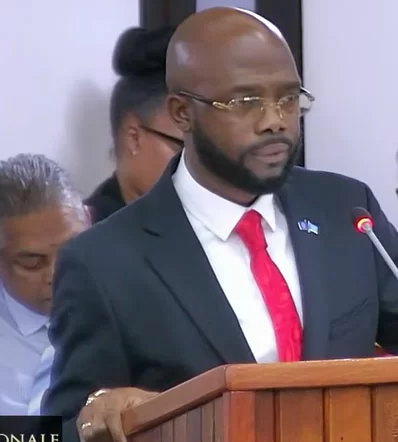
    Speaking before the National Assembly of Suriname, Misiekaba emphasized that the nation cannot resolve its immediate staffing gaps without support from foreign healthcare workers. Currently, around 70 Filipino medical staff are already working at the Academic Hospital Paramaribo, where they have been deployed specifically to offset critical staffing deficits across the facility.

    To expand this short-term relief, the Ministry of Health is currently in active negotiations with a United States-Canadian recruitment firm. The proposed partnership would see the company supply qualified physicians, medical specialists, and specialized nurses to multiple healthcare facilities across Suriname, including the Mungra Medical Center and regional public hospitals that have also reported crippling staff shortages.

    Beyond addressing immediate gaps with foreign personnel, the government is pursuing long-term measures to retain local healthcare workers and grow the domestic workforce. One key priority is rolling out a revised salary scale for nurses, designed to boost compensation for local medical staff and bring their earnings in line with a more sustainable, reasonable income level. The government is also exploring targeted housing solutions to reduce the financial burden on nursing professionals, another step to improve retention of locally trained staff.

    To grow the domestic talent pipeline, the government also plans to expand existing nursing and medical training programs. In addition to upgrading current training offerings, the ministry will launch a pilot nursing education program in the Marowijne district, aimed at training new generations of local healthcare workers to meet the country’s long-term care needs.

  • Belize Just Lost its Most Affordable Flight to the US

    Belize Just Lost its Most Affordable Flight to the US

    On May 2, 2026, low-cost carrier Spirit Airlines abruptly ceased all global operations, bringing an immediate end to the most affordable air route connecting Belize to the United States just six months after the service launched. The sudden shutdown, which came after last-minute negotiations for a $500 million U.S. government bailout fell apart, left thousands of passengers stranded and eliminated the budget-friendly travel option that had been hailed as a major win for Belize’s tourism industry.

    Officials at Philip S. W. Goldson International Airport, Belize’s main air hub, released an official public statement shortly after Spirit’s shutdown confirming that all of the airline’s scheduled flights had been canceled with no advance warning, and all customer service channels for the carrier are now permanently offline. “All Spirit flights have been cancelled, and customer service is no longer available,” the airport’s notice read, echoing Spirit’s own immediate halt to all operations.

    Spirit’s collapse was the culmination of months of mounting financial turmoil that stretches back to mid-2025. The airline first filed for Chapter 11 bankruptcy protection in August 2025, driven by two major pressures: a failed merger deal that would have consolidated its position in the ultra-low-cost carrier market, and skyrocketing global fuel costs that eroded already thin profit margins. Even in bankruptcy, the airline pushed forward with expansion into the Belize market, launching three weekly nonstop flights between Fort Lauderdale, Florida and Belize City in November 2025 with an introductory one-way fare of just $85.

    At the time of the route’s launch, Belize’s Minister of Tourism Anthony Mahler celebrated the new service as a transformative development for the country’s travel sector. By introducing a low-cost competitor to existing carriers serving the route, Mahler noted that Spirit would put downward pressure on ticket prices across the board while giving budget-conscious travelers a much-needed new option. “This will keep them a bit honest and give travellers an option at least,” Mahler said in November 2025.

    That budget option disappeared entirely over the weekend of May 2, as bailout negotiations between the Trump administration and Spirit’s bankruptcy stakeholders collapsed. U.S. Transportation Secretary Sean Duffy confirmed that administration officials had explored a potential rescue package, but President Donald Trump signaled caution ahead of the final talks, telling reporters on Friday that “I guess we’re looking at it. If we could do it, we do it, but only if it’s a good deal.” That deal ultimately never materialized, leading to the airline’s immediate shutdown.

    Travel officials have issued urgent guidance for passengers who held existing bookings on Spirit: anyone with upcoming travel plans on the carrier is advised not to travel to their departure airport, and should rebook their travel on a different airline as soon as possible. For Belize’s tourism industry, the loss of Spirit’s low fares is expected to create immediate headwinds, as the country relies heavily on U.S. travelers for a large share of its tourism revenue.

  • Pierre encouraged by T&T talks

    Pierre encouraged by T&T talks

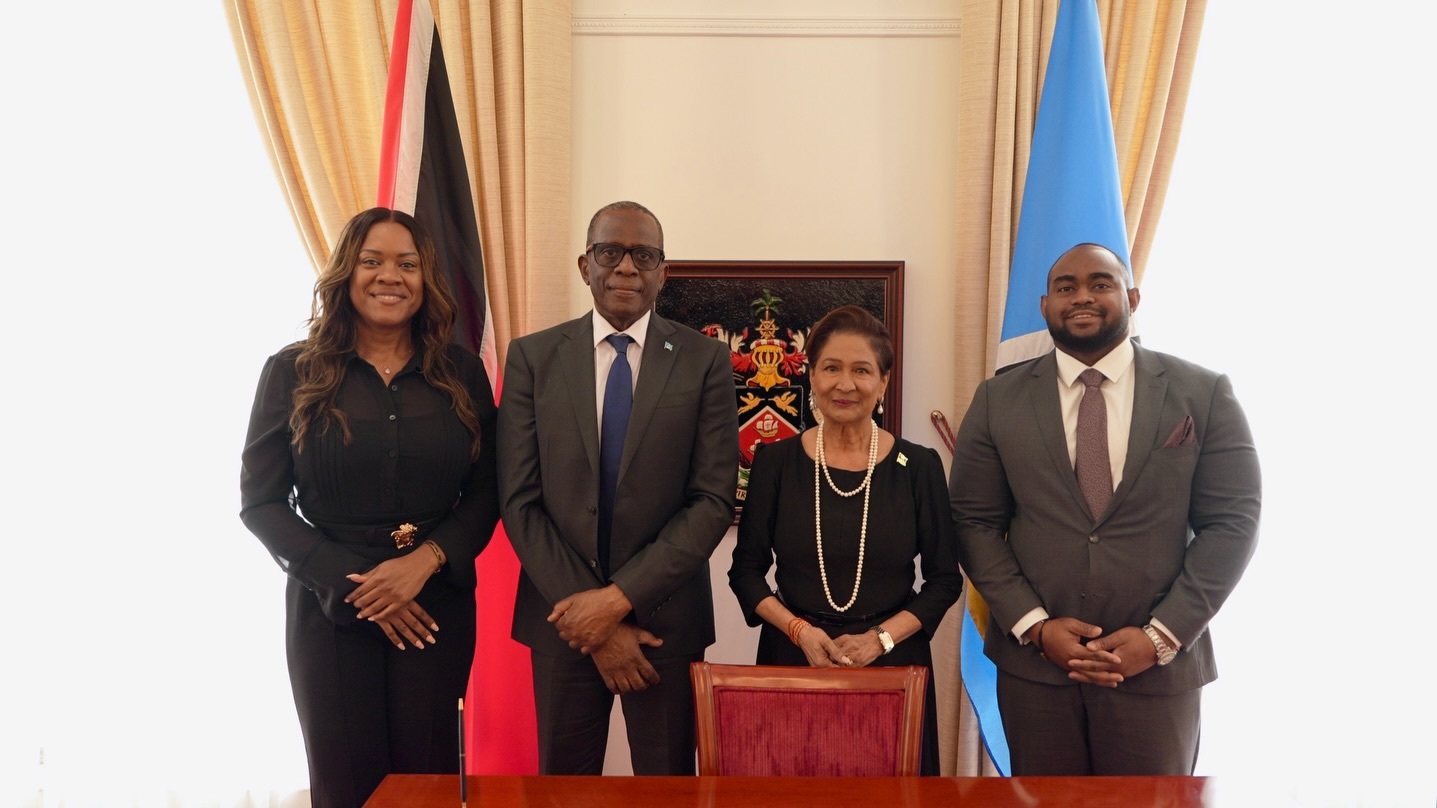
    In a diplomatic meeting held Friday on the soil of the twin-island republic of Trinidad and Tobago, top leaders of two Caribbean nations have wrapped up constructive bilateral discussions, with Saint Lucia Prime Minister Philip J Pierre praising the collaborative spirit that defined the high-profile engagement.

    The talks come against a backdrop of growing regional attention: recent public friction has emerged between Trinidad and Tobago Prime Minister Kamla Persad‑Bissessar and the Caribbean Community (CARICOM), the 15-nation regional integration bloc. Meanwhile, Pierre is just weeks away from taking over the rotating chairmanship of CARICOM, set to assume the post on July 1. Ahead of the meeting, Pierre has long maintained that open dialogue is the simplest and most effective path to resolving the interconnected challenges facing the regional bloc, noting that many common hurdles “can be addressed by just talking to each other.”

    Official details released by the Office of the Prime Minister of Trinidad and Tobago confirm that the discussions centered on two core priorities: boosting bilateral ties between the two island nations, and unlocking new pathways for collective advancement across CARICOM. On his official Facebook page, Pierre’s team framed the meeting as a reaffirmation of the deep, long-standing bond between the two sister countries, a relationship rooted in shared colonial history, reciprocal respect, and an aligned vision for equitable regional growth.

    During the talks, the two leaders mapped out plans to expand joint work across a slate of high-impact sectors, including cross-border energy trade, tourism promotion, public health collaboration, cultural exchange, and digital development through information and communications technology. They also held a broad exchange of perspectives on advancing deeper regional integration and strengthening CARICOM’s collective ability to withstand global economic and geopolitical shocks, at a moment when the international landscape grows increasingly unpredictable.

    In closing remarks after the meeting, Pierre emphasized that the entire engagement was guided by a shared commitment to progress. Both leaders left the talks united in their pledge to deepen bilateral collaboration, delivering tangible benefits to their respective populations and supporting broader prosperity across the entire Caribbean region.

  • API head sent on leave over ‘genuine error with malicious intent’

    API head sent on leave over ‘genuine error with malicious intent’

    Five months after a historic transfer of power in Saint Vincent and the Grenadines, a administrative misstep at the country’s official public information agency has sparked political controversy and led to the immediate placement of its acting director on administrative leave.

    The chain of missteps began on a Tuesday earlier this month, when the Agency for Public Information (API) distributed an unsigned media advisory inviting reporters to a press conference hosted by newly elected Prime Minister Godwin Friday, leader of the New Democratic Party (NDP). But in a startling mix-up, the advisory incorrectly labeled longtime former Prime Minister Ralph Gonsalves — who had left office five months prior after the NDP’s election win — as the sitting prime minister. Gonsalves, who led the country for 24 and a half years from March 2001 through November 2025, now serves as leader of the opposition Unity Labour Party (ULP).

    Within hours, the API issued a second email asking media outlets to discard the original advisory. In that follow-up, acting director Nadia Slater made an unusual public admission that amplified the controversy: she described the mistake as “a genuine error with malicious intent” — a phrasing that immediately sparked widespread backlash. The agency quickly issued a third, formal press release-style correction to walk back the comment, clarifying that the blunder was purely an accidental administrative oversight. “There was NO disrespect, political motive, or malicious intent whatsoever,” the third statement emphasized.

    The series of missteps, quickly dubbed a “comedy of errors” by observers, went viral on social media after local outlet iWitness News and other independent media organizations broke the story of the gaffe. As of Monday, the NDP administration has not issued any formal public comment on the incident or subsequent personnel action. However, multiple unnamed government and industry sources confirmed to iWitness News that just days after the incident, Slater was placed on paid administrative leave. One source added that Slater is unlikely to retain her leadership role at API under the current NDP administration, and will likely be reassigned to an equivalent-level position within the broader public service, consistent with civil service protocols.

    The incident has reignited questions about the NDP administration’s decision to retain Slater as acting head of the sensitive government communications agency five months after taking power. One anonymous source familiar with internal government discussions told iWitness News that the choice to keep Slater in the role has long puzzled insiders, pointing to her well-documented partisan ties.

    “It is not just that she campaigned openly for the Unity Labour Party during the 2025 election. Her actions after the election showed a particular disdain for the new government, even as she was head of the agency responsible for portraying the government in a positive light,” the source said, speaking on condition of anonymity as they were not authorized to address the media on the matter.

    The source also noted that even the ULP, the party Slater openly supported, never appointed her to the permanent director role, passing her over for promotion at least three times in favor of external hires. Among those external appointees was Sean Rose, a former NDP hopeful who crossed party lines after an unsuccessful 2020 bid for the South Central Windward parliamentary seat, and went on to publicly back the ULP.

    “These people include Sean Rose, who began supporting the ULP after his failed bid to become the NDP’s candidate in South Central Windward in the 2020 general election. Nadia was skipped over at least three times under a government that she supported but the NDP government kept her in the sensitive communication post for five months after they won,” the source added.

  • Feeling the pinch? Belizeans are Running Out of Optimism

    Feeling the pinch? Belizeans are Running Out of Optimism

    As households across Belize grapple with mounting financial pressures, the country’s consumer optimism has hit its sharpest monthly decline in nearly a year, according to fresh data released by the Statistical Institute of Belize. The latest national Consumer Confidence Index (CCI), a key metric tracking public sentiment toward personal finances and big-ticket spending, recorded a 4.5% drop in March 2026, sliding from 47.8 to 45.7 — the steepest month-on-month fall since June 2025.

    Every core segment of the closely watched index weakened over the period, signaling broad-based economic unease across the country. Forward-looking expectations for future financial conditions fell by 4.9%, while assessments of current economic circumstances dropped 4.2%. Most notably for broader economic growth, consumer willingness to commit to major purchases — including property, vehicles, and large household furniture — declined by 4.3%, a trend that could dampen demand across multiple key sectors in the coming quarters.

    The report also reveals stark divides in how different demographic and geographic groups are experiencing the current economic climate. Urban residents have borne the brunt of fading optimism, with city-based consumer confidence plummeting 9.2% month-on-month, compared to a marginal 0.7% dip among their rural counterparts.

    At the district level, the Belize District recorded the most dramatic drop in consumer sentiment. Among age groups, young Belizeans between 18 and 24 years old saw the largest single-month decline, with their confidence index falling a staggering 13.9% — a reading that points to growing economic anxiety among the country’s emerging working population.

    Against this national downward trend, the Stann Creek District stood out as the only outlier. Bucking the nationwide slump, consumer confidence in Stann Creek jumped 12.6% in March, pushing the district’s index into positive, optimistic territory for the first time in recent quarters. Analysts are yet to release detailed breakdowns of what is driving the regional divergence, but the disparity highlights uneven economic conditions across Belize’s different regions as households navigate ongoing cost-of-living challenges.

  • Trinidad and Tobago Prime Minister Kamla Persad-Bissessar congratulates PM Gaston Browne on re-election

    Trinidad and Tobago Prime Minister Kamla Persad-Bissessar congratulates PM Gaston Browne on re-election

    In the wake of Antigua and Barbuda’s decisive general election that locked in a fourth consecutive term for Prime Minister Gaston Browne, regional neighboring leader Kamla Persad-Bissessar, the sitting Prime Minister of Trinidad and Tobago, has issued an official statement celebrating Browne’s win and the landslide victory of his political bloc.

    Persad-Bissessar directed her first congratulations to Browne personally, framing his re-election as a clear-cut, decisive achievement that secures his fourth mandate leading the twin-island Caribbean nation. She extended the same recognition to Browne’s governing party, the Antigua and Barbuda Labour Party (ABLP), which she noted secured a commanding majority in the national vote that consolidated the party’s long-running grip on national governance.

    In her written public message, Persad-Bissessar emphasized what this renewed popular mandate signals: the overwhelming trust and confidence that the people of Antigua and Barbuda place in both Browne’s individual leadership and the governing agenda of the ABLP. Beyond personal and party recognition, she framed the election outcome as a powerful, clear validation of the robustness of democratic processes in Antigua and Barbuda.

    The statement closed with warm well wishes for the incoming administration, as Persad-Bissessar expressed her hope that Browne’s fourth term will deliver continued inclusive growth and national progress for Antigua and Barbuda, and that the long-standing positive ties between the two Caribbean nations will deepen over the coming years.

  • Liba kwie op beurs:  waarde toevoegen aan een onderbelichte vissoort

    Liba kwie op beurs: waarde toevoegen aan een onderbelichte vissoort

    Suriname’s annual Agricultural Trade Fair, organized by the country’s Ministry of Agriculture, Livestock and Fisheries (LVV), opened its doors to visitors on Friday, running through Sunday May 3, with a standout innovative exhibit that is turning heads and challenging long-held local beliefs about a native aquatic species. At the heart of the buzz is a new smoked fish sausage product drawing crowds of attendees eager to sample the offering. When asked to guess what type of fish the sausage is made from, most visitors stammer out guesses ranging from kandratiki to bang bang and tukunari, none coming close to the actual ingredient: the liba kwie, a fish long viewed by local communities as a destructive pest. The surprise reveal always draws gasps from the crowd, as few have previously considered the invasive-feeling species as a viable food source.

    Developed through a collaborative public-private partnership between the LVV and local food entrepreneurs, the liba kwie sausage has proven to be a hit with fairgoers, sparking widespread public interest in the novel product. LVV Minister Mike Noersalim explained in an interview that this initiative serves a dual purpose: adding economic and culinary value to a fish that has long been maligned for the damage it causes by burrowing holes in critical dam infrastructure across the country. Minister Noersalim noted that his team has worked closely with counterparts from the Ministry of Public Works and Spatial Planning to identify long-term solutions to reduce the species’ negative environmental and infrastructure impacts, and turning it into a popular food source emerged as a win-win outcome.

    Testing and product development confirmed that liba kwie is not only safe and palatable for human consumption, but also versatile enough to be processed into a range of popular products, from fish balls to the smoked sausage that is wowing fair attendees. Compounding this benefit is the fact that liba kwie populations are abundant across Suriname’s waterways. Turning the species into a mass-market food product delivers three interconnected advantages: it reduces the pressure of overpopulation that causes damage to dam walls, expands local food output, and strengthens the nation’s core goal of food security.

    Food security and expanded domestic food production are the central themes of this year’s Agricultural Trade Fair, a focus echoed by Suriname’s President Jennifer Simons during her opening address to attendees and sector stakeholders. President Simons acknowledged that efforts to grow and modernize the country’s agricultural sector have faced setbacks and inconsistent progress in past years. To address these challenges, she emphasized that greater investment and attention must be directed to pre-production planning, targeted research, and every link along the entire agricultural production chain. She stressed that transforming the sector is not a one-year project, but a gradual, step-by-step process that can eventually grow agriculture into one of Suriname’s strongest core economic sectors.

    “ We truly have all the potential we need to feed ourselves, ” President Simons told the crowd. She pointed not only to future export opportunities for Surinamese agricultural products, but centered her remarks on the urgent priority of national food sovereignty. According to President Simons, Suriname must ramp up production of its own food to reduce reliance on imported goods. “ We need to be absolutely certain that if supply ships don’t arrive, Surinamese people will still have enough to eat, ” she said, underscoring the critical importance of expanding local production.

    President Simons called on all agricultural sector stakeholders – from smallholder farmers to large producers, private businesses, and government agencies – to commit their full efforts to lifting the sector to a new level of productivity over the next 12 to 24 months. Once Suriname achieves full domestic food sovereignty and works out the early growing pains in production and processing infrastructure, she explained, the country will be ready to make the strategic shift to expanding agricultural exports to global markets.

    For the LVV, public-private partnership is far more than a policy buzzword: it is a concrete, practical tool to strengthen the country’s entire agricultural production sector. Minister Noersalim added that the national government is also working to strengthen cross-ministerial collaboration to speed up sector development, breaking down bureaucratic silos that have slowed progress in past years. “ By giving entrepreneurs space to showcase their innovations and new products to both investors and the general public, we are building up the economic backbone of Suriname together, ” Noersalim said. “ This trade fair is proof that we achieve more when we work together. Our goal is clear: Suriname will build a modern, productive, and competitive agricultural economy that works for all of our citizens. ”

  • CARICOM Election Observation Mission to the General Elections of Antigua and Barbuda

    CARICOM Election Observation Mission to the General Elections of Antigua and Barbuda

    At the official invitation of the Government of Antigua and Barbuda, the Caribbean Community (CARICOM) organized a six-person international election observation mission led by CARICOM Secretary-General Dr. Carla Barnett to oversee the country’s 30 April 2026 general election. The mission brought together seasoned electoral experts from six CARICOM member states: Barbados, Dominica, Jamaica, Saint Lucia, Suriname, and Trinidad and Tobago. According to the mission’s deployment schedule, the chief of the observer team and all other members arrived in Antigua and Barbuda in phases between 23 April and 27 April 2026, with their departure scheduled for 3 May 2026.

    Prior to election day, the mission held extensive consultations with a diverse cross-section of Antiguan and Barbudan stakeholders, spanning civil society groups, political actors, and electoral administrators. On the day of voting, mission observers deployed across 16 of the country’s 17 electoral constituencies, accessing 182 of the nation’s 185 total polling stations to monitor every stage of the electoral process. Observers arrived at their assigned polling locations well before opening time to document the pre-voting preparations.

    The mission’s on-site observations identified multiple strengths of the electoral process. All polling sites were secured by adequate, professional police presence, all required election materials arrived on schedule, and every polling station had two accredited polling agents from each competing political party in attendance as mandated. Required voter notices and procedural instructions were clearly posted at all sites, and polling staff followed all official opening protocols step-by-step. As a result, every polling station opened promptly at 6:00 a.m., and voters were able to cast their ballots in an atmosphere of calm and order, with lines of voters already waiting when observers arrived at many sites.

    During the voting period, mission observers confirmed that voter rolls were clearly displayed in prominent locations for electors to verify their registration details. Information clerks were on hand at all visited stations to assist voters with checking their registration and directing them to the correct voting booths. Polling staff demonstrated solid training, professional courtesy, and a consistent commitment to impartiality, going out of their way to support elderly and disabled voters needing assistance. Voter turnout followed an expected pattern, with peak participation in the early morning and in the final hours before polls closed, and a predictable lull in voting through the midday period. Throughout the entire voting day, staff maintained consistent focus on their duties, ensuring that all eligible voters were able to exercise their right to vote in line with the Electoral Commission’s official guidelines.

    Observers stayed at their assigned stations to monitor the closing of polls at 6:00 p.m. While most stations had no remaining lines of voters at closing time, any electors still waiting were permitted to cast their ballots in accordance with electoral regulations. The mission also observed post-closing procedures, including the sealing of ballot boxes and the secure transportation of ballots to central counting centers. At counting sites, observers documented that all counting procedures were followed as required: ballot boxes were opened in the presence of polling agents and other authorized observers, and ballots were counted per established protocol.

    In its overall interim assessment, the CARICOM Election Observer Mission found that the 2026 Antigua and Barbuda general election allowed voters to exercise their democratic franchise in a peaceful, orderly process free of major disruptive incidents. The mission commended polling staff for their high level of professionalism and the national police force for their effective, impartial maintenance of law and order at polling sites, noting that security personnel interacted professionally with both voters and all other stakeholders. The mission extended formal congratulations to the Antigua and Barbuda Electoral Commission for its competent administration of the entire electoral process, as well as to all competing political parties, their on-site agents, and supporters for conducting themselves in a peaceful manner throughout election day.

    The observer team also expressed gratitude to CARICOM’s Secretary-General for extending the invitation to field the mission and providing the logistical and operational support needed for the team to fulfill its mandate, as well as to all individuals and organizations that met with mission members to share perspectives. This release represents the mission’s interim preliminary assessment; a comprehensive final report containing full findings and actionable recommendations will be submitted to CARICOM’s Secretary-General in the coming weeks. CARICOM reaffirmed its longstanding commitment to continuing to support Antigua and Barbuda’s democratic development and the country’s efforts to build a peaceful, unified, and prosperous future for all its citizens.

  • Antigua and Barbuda to swear in new ministers on 5 May

    Antigua and Barbuda to swear in new ministers on 5 May

    The Eastern Caribbean twin-island nation of Antigua and Barbuda is preparing to mark a critical milestone in its post-election democratic process this week, with the official swearing-in ceremony for its new cabinet of government ministers scheduled to take place Tuesday, May 5. The event will be hosted at the AUA Conference Centre, located along Jabberwock Drive, according to official invitations distributed by Government House to expected guests.

    Per the details laid out in the official correspondence, the formal ceremony will kick off at 5:00 p.m. local time, with Governor General Sir Rodney Williams presiding over the proceedings alongside Sandra Lady Williams. This ceremonial event comes directly on the heels of the country’s recent general election, and will formally seat the incoming administration’s ministerial team, officially launching the new government’s full term in office.

    Organizers have outlined clear protocols for attendees, requiring all guests to adhere to a business attire dress code for the formal constitutional occasion. Invited attendees have also been provided with a dedicated contact point to confirm their participation ahead of the event.

    As a foundational step in the parliamentary democratic process, swearing-in ceremonies carry significant constitutional weight. It is during this formal ritual that incoming ministers officially take their oath of office, a binding step that allows them to formally assume all the powers and responsibilities of their government roles.