博客

  • Sealy strikes more squash gold in Canada

    Sealy strikes more squash gold in Canada

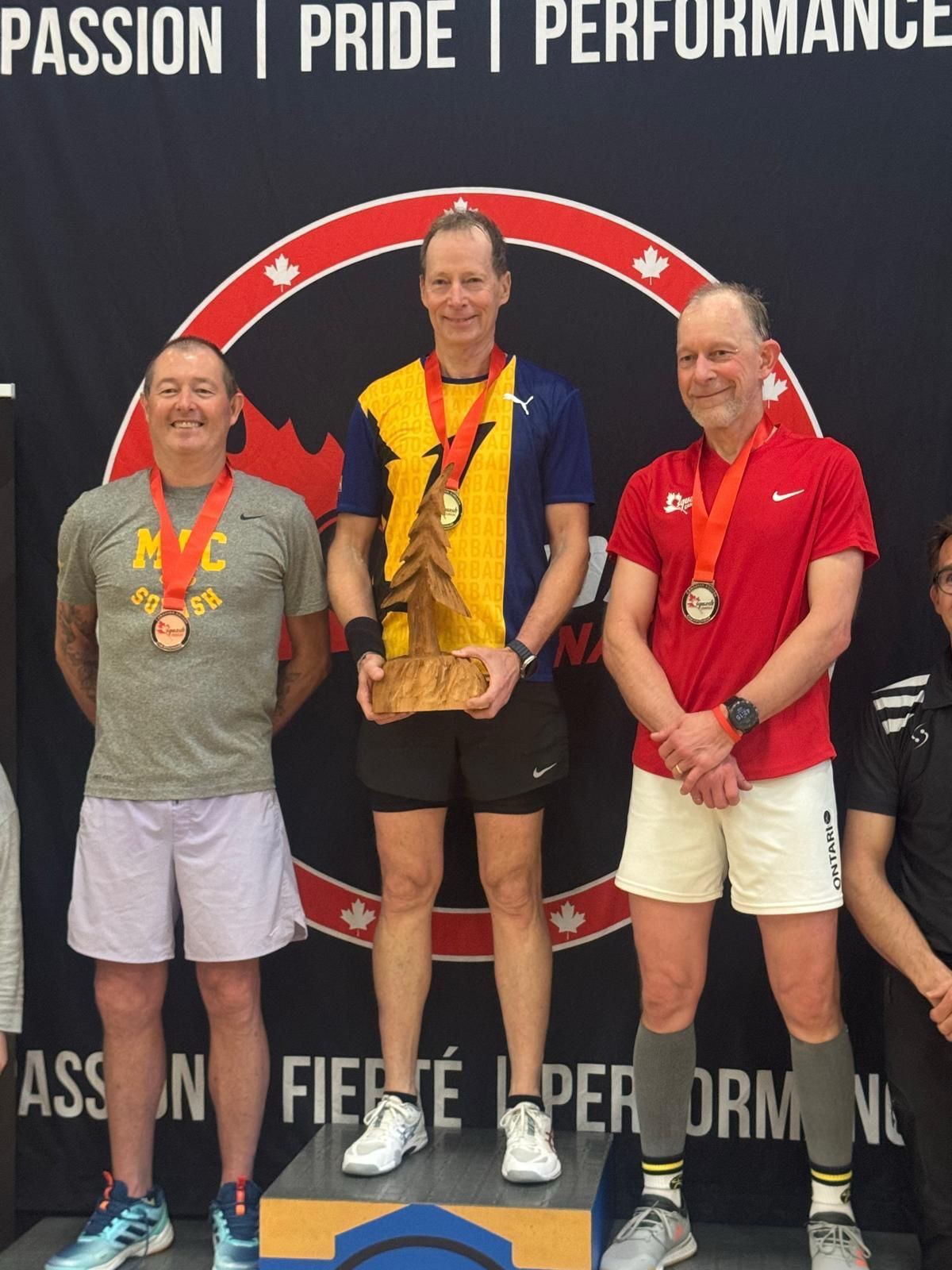
    Just one month after lifting the trophy at the USA Masters in New York, veteran squash star Mark Sealy extended his incredible winning streak to claim another major regional title, taking top honors in the 60+ division at the Canadian Masters over the weekend. The tournament, hosted at Vancouver’s iconic Arbutus Club, saw the world-ranked number one seed enter the competition with a first-round bye in the round of 16, setting up an early showdown with Quebec’s Yves Tremblay that Sealy dominated in straight sets with final scores of 13-11, 11-7, 11-3.

    Moving into the semi-final round, Sealy faced another tough competitor from Quebec: fourth-seeded hard-hitting left-handed player Marion Gagnon. The Barbadian-born athlete once again showcased his polished form, dismissing Gagnon in another straight-set victory with scores of 11-6, 11-4, 11-5 to earn a spot in the championship match. The final was a highly anticipated rematch of the 2025 title game, pitting Sealy against Ontario’s second-seeded fan favorite Trent Hasse.

    Sealy came out swinging in the opening two games, catching Hasse off-balance with precise placement that exploited gaps in his opponent’s court movement. He took both games comfortably with 11-6 and 11-5 scores, putting him one game away from the title. But Hasse refused to surrender, adjusting his own footwork and mounting a comeback in the third game. An off-kilter Sealy struggled to find his usual rhythm, allowing Hasse to take the third set 11-4 and force an extended match.

    Regrouping during the break between games, Sealy reset his strategy and reclaimed his control of the court in the fourth set. He dominated every rally from the opening point, closing out the match 11-4 to secure his fifth career Canadian Masters title. Post-match, Sealy reflected on the momentum shift of the game: “I played really well in the first two but lost my length in the third, tried to attack too early and he took advantage. So in the break, I told myself I have to hit higher to the back and then attack to the front. I was pleased to take an early lead and close it out in four games.”

    This victory marks a historic milestone for Sealy: it is the first time he has claimed both the USA Masters and Canadian Masters titles in a single competitive season. Reflecting on the achievement, Sealy shared his excitement: “I’m really happy to have won both. Been putting in a lot of movement training and improved my racket work so really pleased to get the results.” He also extended gratitude to his entire support team, including coaches Peter Nicol, Nicol Bunyan, Karen Meakins, Shawn Simpson, and wellness partners Red Zen Pilates and Surfside Wellness, who backed him throughout the season. Sealy is scheduled to return to his home island on Tuesday.

  • Belize’s Journalism Prize Is a Reminder of Why It Matters

    Belize’s Journalism Prize Is a Reminder of Why It Matters

    On the eve of World Press Freedom Day 2026, the University of Belize’s annual Investigative Journalism Prize ceremony unfolded at the iconic Belize City House of Culture, drawing together media practitioners, government representatives, and civil society leaders to celebrate impactful investigative work and shine a spotlight on the escalating threats facing journalists worldwide.

    Opening the event, United Nations Development Programme (UNDP) Deputy Resident Representative Michael Lund delivered a stark, thought-provoking address that framed press freedom not as a distant ideological concept, but as a foundational pillar of functional democracy and sustainable national development. Lund used the platform to sound the alarm on the growing crisis confronting journalists across every region of the globe, noting that media professionals increasingly face a cascade of threats: from targeted harassment and intimidation campaigns to crippling legal action and persistent economic instability that erodes their ability to hold power to account.

    Since 1993, World Press Freedom Day, marked every year on May 3, has served as a global collective reminder that both governments and civilian societies bear a shared responsibility to protect and defend the right to freedom of expression—a right explicitly codified in the United Nations’ Universal Declaration of Human Rights. This year’s ceremony carried extra weight, coming as independent media outlets across Latin America and the Caribbean face growing pressures to soften coverage of corruption, human rights abuses, and official misconduct.

    The night’s top honor, a $10,000 grand prize, was awarded to the team from 7 News/Tropical Vision Ltd. for their explosive investigation *Taken: The Budna Abduction and the Police Cover-Up*. The three-person reporting team—Jules Vasquez, Brian Castillo, and Denver Fairweather—was recognized for their months-long work exposing a case of official malfeasance that had previously been hidden from public view.

    Two other investigative teams were named finalists and awarded $5,000 each for their outstanding work. Greater Belize Media’s News Five outlet earned recognition for *Stella Maris Child Drowning*, an investigation led by senior reporter Paul Lopez, with contributions from Hipolito Novelo, Darrel Moguel, George Tillett, Joel Wesbey, and Marion Ali. The third finalist came from independent outlet Climate Spotlight, where reporters Marco Lopez and Andre Habet were honored for their deep dive into marine conservation policy, *Marine Protected Areas Are Everybody’s Business*, which examined public access to and stewardship of Belize’s critical coastal ecosystems.

    Organizers also confirmed that the fifth iteration of the annual prize ceremony will be held on May 8, 2027, extending the initiative’s commitment to supporting independent investigative journalism in Belize for another year.

  • TAMCC students participate in film casting and lighting workshop

    TAMCC students participate in film casting and lighting workshop

    A groundbreaking cross-border film collaboration between creative teams from Grenada and New York is bringing transformative, on-the-job film industry training to emerging local creatives and students at Grenada’s T.A. Marryshow Community College (TAMCC), marking a major step forward for skills development and cultural exchange in the Caribbean island’s growing creative sector.

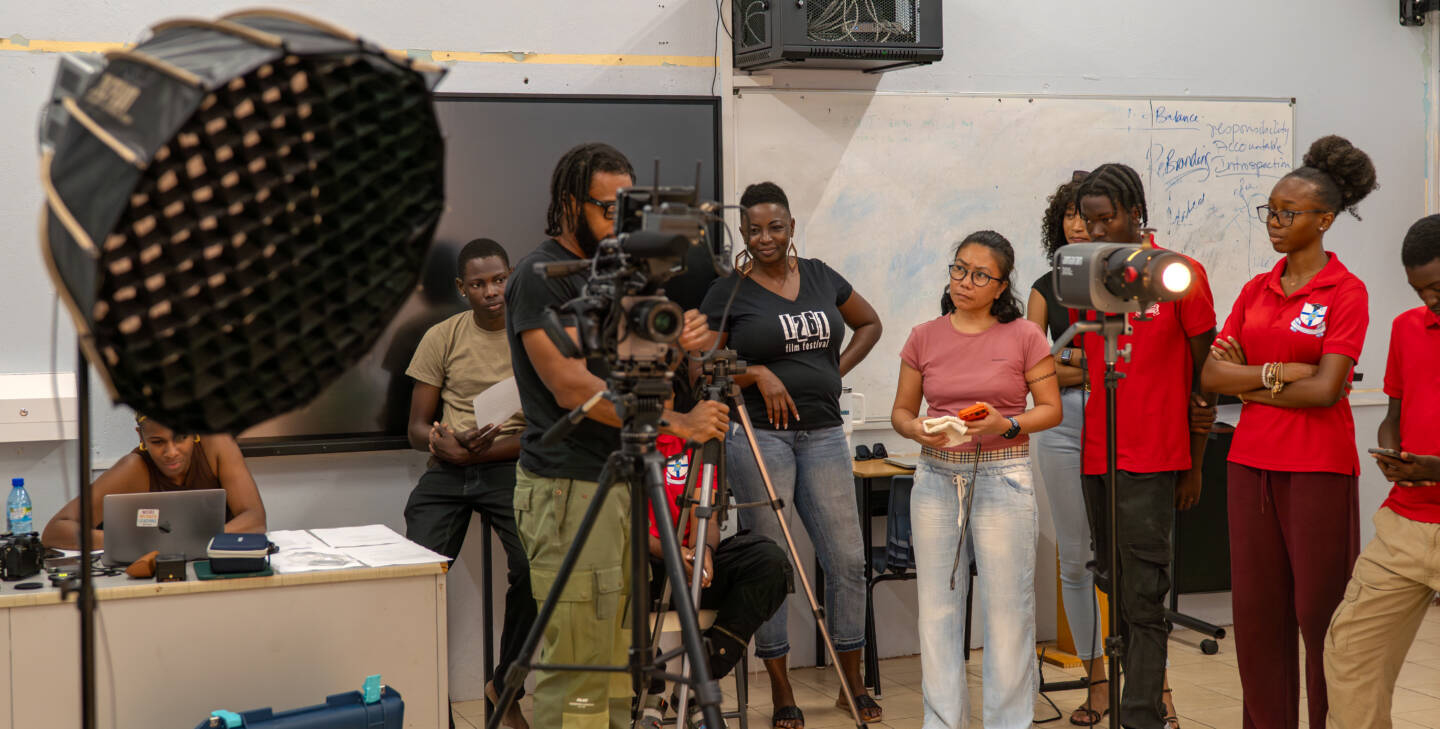
    Hosted on the TAMCC campus on April 27, the inaugural combined casting call and production lighting workshop drew roughly 25 participants, spanning TAMCC arts students and early-career film production practitioners based in Grenada. Unlike traditional classroom-based training sessions, this event was structured as a fully functional working production set, merging hands-on technical instruction with live, real-time casting activity to give participants an immersive look at actual industry workflows.

    Throughout the workshop, attendees got direct access to professional-grade camera and lighting equipment, working side-by-side with experienced filmmakers to set up gear for acting auditions. This practical approach allowed participants to build skills that go far beyond textbook learning, giving them tangible experience that many emerging creatives in small creative ecosystems rarely get access to early in their careers. One participant, J. Mitchell, shared enthusiastic feedback after the session, noting, “I would definitely recommend this to my friends, and if there is an opportunity in the future to come back and showcase my skills, I would absolutely return.”

    The workshop was far more than a standalone training event: it served as an integrated introduction to end-to-end filmmaking. Participants got the chance to light auditioning talent, observe on-set direction from industry professionals, and learn how different production roles collaborate to bring a project to life. By the end of the session, attendees walked away with a holistic working overview of the entire filmmaking process, from performance direction to technical execution.

    Leading the workshop was Karl Bigby, a New York-based cinematographer and filmmaker with Faceless Studios, who brought years of international industry experience to guide local participants. The full initiative is organized through a partnership between multiple regional and international groups: MProjekts Creative Group, helmed by Grenadian creative leader Meschida Philip, took point on coordinating the program and building the partnership with TAMCC’s Department of Arts, Humanities, and General Studies, while the Forrester Creative Renaissance Fund provided coordination and community engagement support. All core producing partners share deep personal and cultural ties to Grenada, a choice that anchors the entire project in authenticity and a commitment to long-term growth for the island’s creative community, rather than a one-off extractive production.

    The workshop is just the first phase of a broader co-production collaboration between the Forrester Creative Renaissance Fund, Faceless Studios, MProjekts Creative Group, and the Grenada Film Company. The partnership is currently supporting two original short films, *Cutting Dead Ends* and *Sunday*, which are now in active pre-production. Both projects center Grenadian actors and creatives, with a mixed local and international crew bringing the stories to life.

    The collaboration will run through April to July 2026, spanning pre-production, principal photography, and structured on-set shadowing and paid internship opportunities exclusively for TAMCC students. This extended engagement ensures that local emerging creatives get ongoing learning opportunities across every stage of the production process, building a pipeline of skilled talent for Grenada’s future film sector.

  • Rising debt burdens disproportionately impact women in developing countries, UN study finds

    Rising debt burdens disproportionately impact women in developing countries, UN study finds

    As sovereign debt levels continue to climb across low- and middle-income economies, new research from the United Nations Development Programme (UNDP) has revealed a stark, underreported truth: women in developing countries are bearing the overwhelming brunt of fiscal austerity measures triggered by rising debt repayment obligations. The findings, drawn from three decades of data collected across 85 nations, paint a clear picture of how existing gender inequalities are amplified by economic strain, with global geopolitical tensions set to push this crisis even further.

  • NCSA ex-manager Tessa Chadderton-Shaw dies

    NCSA ex-manager Tessa Chadderton-Shaw dies

    The Caribbean public health and advocacy community is mourning the loss of one of its most influential leaders, Tessa Chadderton-Shaw, a long-serving mental health and substance abuse educator who died Sunday at Queen Elizabeth Hospital following a short, unexpected illness.

    Chadderton-Shaw leaves behind an unmatched legacy of public service spanning more than three decades, across roles in non-profit leadership, academia, and regional governance. Most notably, she helmed Barbados’ National Council on Substance Abuse (NCSA) for 14 years, serving as the organization’s manager from August 1996 through March 2010, guiding the body through critical expansion of its public education and prevention mandates.

    Beyond her transformative work at NCSA, Chadderton-Shaw built a reputation as a dedicated educator and skilled project leader across multiple regional institutions. For over 13 years, she held a lectureship at the University of the West Indies’ Cave Hill campus, where she taught courses spanning business administration, project management, and language arts, shaping the careers of hundreds of emerging Caribbean professionals. Her resume also includes senior roles such as special projects coordinator at Barbados Conference Services Limited, project manager for the CARICOM Secretariat, and executive director of the Caribbean Regional Anti-Doping Organization (RADO), demonstrating her versatile ability to drive progress across diverse public sectors.

    Current NCSA manager Betty Hunte, who began her career working under Chadderton-Shaw’s leadership, paid heartfelt tribute to her former mentor this week, highlighting her unyielding commitment to public service. Hunte described Chadderton-Shaw’s leadership style as defined by relentless tenacity and unshakable determination, noting that once the trailblazing leader set a goal, no obstacle could stop her from delivering results.

    “When something was decided, we knew it would be done come hell or high water,” Hunte recalled, emphasizing that Chadderton-Shaw was the office’s go-to problem-solver, capable of steering even the most complex, high-stakes initiatives to success. One of her most enduring contributions to Barbados public health, Hunte shared, was a 1990s/2000s fundraising campaign to launch a groundbreaking school-based drug education program. Chadderton-Shaw led the drive to raise $250,000 for the initiative, which created a mobile drug education classroom housed in a converted bus that traveled to every primary school across Barbados. The program remains the only one of its kind in the country decades later, reaching generations of young Barbadians with life-saving prevention information.

    Hunte also recalled Chadderton-Shaw’s relentless work ethic, noting that staff often received calls from her at all hours of the day and night as she clarified details, refined project documents, and pushed to advance the NCSA’s core mandate to reduce substance abuse across Barbados. Even after her retirement from the council, Chadderton-Shaw remained connected to the organization she built: when NCSA celebrated its 21st anniversary, she joined the festivities to be honored for her foundational contributions, an occasion current staff still cherish.

    Chadderton-Shaw is survived by her husband Anthony Shaw and their two daughters, Miah and Haylee. Tributes continue to pour in from across the Caribbean public health and academic communities, honoring a leader whose work transformed substance abuse prevention and education across the region.

  • 59 schools to audition for Calypso and Soca Competition

    59 schools to audition for Calypso and Soca Competition

    One of Saint Lucia’s most anticipated annual youth cultural celebrations is about to kick off, with 59 educational institutions across the island stepping into the spotlight to compete in the National Schools Calypso and Soca Competition’s qualifying auditions.

    Organizers have revealed the full breakdown of participating schools across categories and education levels. For the iconic Calypso genre, a total of 40 schools earned audition spots: 26 from the primary school sector and 14 secondary institutions. The high-energy Soca category draws 23 competing schools, made up of 14 primary schools and 9 secondary schools, all vying for a limited number of places in the grand finals.

    The two-day audition process is scheduled to kick off on Monday, May 5, and wrap up on Tuesday, May 6. During this qualifying stage, each school’s performing group will take the stage to present their act before an expert panel of judges, who will evaluate performances to select which contenders advance to the final competition.

    A diverse cross-section of primary schools from every corner of Saint Lucia will feature in the Calypso category, including well-known campuses like Fond Assau Primary, Vide Bouteille Primary, Les Etangs Combined, Canon Laurie Anglican Primary, and Ave Maria Girls Primary. For the primary school Soca division, participating institutions include Vide Bouteille Primary, Les Etangs Combined, Ciceron RC Combined, Gros Islet Primary, and Carmen Rene Memorial Primary, among others.

    At the secondary education level, multiple top schools are set to compete across both genres. Sir Ira Simmons Secondary, St Joseph’s Convent, Babonneau Secondary, Choiseul Secondary, Ciceron Secondary, and St Mary’s College will field teams in both Calypso and Soca. Additional participating secondary schools include Entrepot Secondary and Leon Hess Comprehensive Secondary, rounding out the roster of competing institutions.

    Following the conclusion of auditions, all advancing finalists will gain access to specialized training workshops designed to help them hone their performances, refine their stage presence, and polish their acts ahead of the main competition.

    The schedule for the final events splits competition by education level. The National Primary Schools Calypso and Soca Competition will kick off at 10:00 a.m. local time on Wednesday, June 3, while the Secondary Schools Competition will follow two days later on Friday, June 5. Both the primary and secondary final competitions will be hosted at Saint Lucia’s iconic Mindoo Philip Park.

    Ticketing information for the final events has already been released, with discounted pricing for student attendees set at 10 Eastern Caribbean dollars, and general admission tickets priced at 20 Eastern Caribbean dollars.

    Organizers have urged all interested attendees and community members to keep up to date with any adjustments to event schedules, ticketing availability, and connected carnival-related activities by following official competition social media and communication channels. This annual event has long served as a key platform for nurturing young local musical talent and celebrating Saint Lucia’s rich calypso and soca cultural heritage, drawing large crowds of community supporters each year.

  • FM Four Pillars dominate BFA Youth Awards

    FM Four Pillars dominate BFA Youth Awards

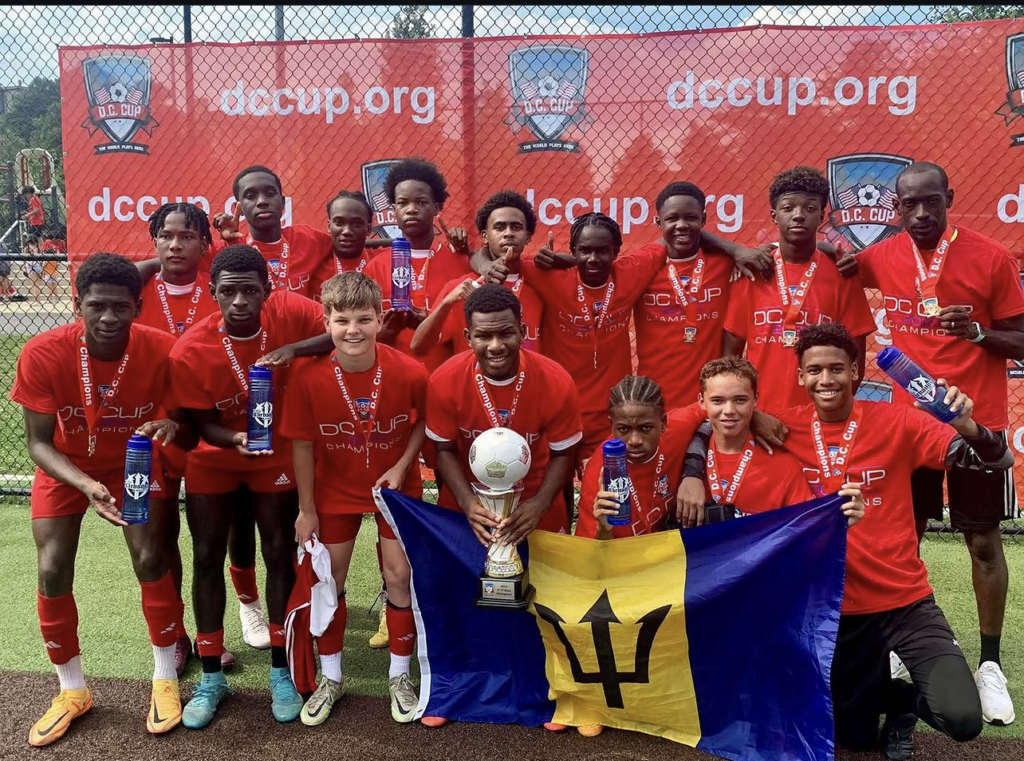
    The Barbados Football Association’s annual Youth Awards ceremony, held this past weekend, saw one academy emerge as the undisputed standout of youth football across the country: FM Four Pillars. The program claimed top honors in two of the three age-group divisions, sweeping a majority of individual accolades alongside its team titles.

    In the Under-15 division, FM Four Pillars took home the overall championship title, and dominated the individual awards category for the age bracket. Nikolai Mapp earned the distinction of Best Goalkeeper, while Leemar Murray claimed Best Defender. Azario Stoute of the academy secured two of the night’s most coveted honors: the award for Most Goals and the overall Most Valuable Player (MVP) title. The only individual Under-15 award to go to another club was Best Midfielder, which went to Dimiko Jordan of Kickstart Premier.

    FM Four Pillars repeated its winning streak in the Under-17 division, earning the crown of league champions. Mavericks Heat took second place in the division, while Technique rounded out the top three. Once again, FM Four Pillars players claimed nearly all individual awards for the age group. Jarrell Prescod was named Best Goalkeeper, with teammate Kiron Padmore taking home Best Defender. Fellow academy member Ashaun Grecia earned two honors: Best Midfielder and MVP. The only non-Four Pillars award went to Jamarco Johnson of Kickstart Rush, who claimed the Most Goals title.

    The Under-13 division saw a different club take the top spot, with Whitehall claiming the overall age-group title. Kickstart Premier finished in second place, while the National Sports Council team secured third. Whitehall also dominated the individual awards for the division: Jelani Sealy was named Best Goalkeeper, Andre Spencer claimed Best Defender, and Zion Green took home both Best Midfielder and MVP. The Most Goals award went to Tabarry Chandler of United Stars Alliance.

    In an interview with Barbados TODAY following the awards sweep, FM Four Pillars Academy head coach Fabian Massiah attributed the program’s successful year to collective effort across the entire organization. “I was happy with this success, but kudos to all the coaches, the players and the management teams,” Massiah said. Looking ahead to 2026, the coach noted that the academy’s core priority remains long-term player development rather than trophy collection. “We just plan to continue developing. I always tell the boys that if they continue to do the right things, the success will come and it’s not always matched by trophies; we set our eyes on getting to a particular level,” he explained.

    Massiah also shared that the academy has adjusted its traditional summer programming for this year, canceling its planned summer tour. The trip, which was scheduled to go through the United States, was scrapped due to overlapping with the FIFA World Cup and spiking travel costs. “There is no summer tour this year because of the football World Cup and ticket prices to the US were pretty high. We have postponed everything till either later in the year, probably December and if not December, then next summer,” he added.

  • Police Investigate Homicide at Mirabeau, St Andrew

    Police Investigate Homicide at Mirabeau, St Andrew

    The Royal Grenada Police Force (RGPF) has launched an active investigation into the unexplained death of 66-year-old Melva Wharwood, whose body was discovered in the St Andrew parish community of Mirabeau earlier this month. According to official details released by the Office of the Commissioner of Police, law enforcement officers received an anonymous tip relating to the incident on Sunday, 3 May 2026. Acting on the provided intelligence, officers were immediately dispatched to the Mirabeau area, where they located Wharwood’s unresponsive body on open ground. Once at the scene, a licensed medical professional conducted an on-site examination of the remains and formally pronounced Wharwood dead at the location. To advance the ongoing probe, law enforcement officials are issuing a public appeal for community assistance. Any member of the public who holds even minor information that could help investigators piece together the circumstances surrounding Wharwood’s death is strongly encouraged to reach out to authorities. Tips can be submitted directly to the Criminal Investigation Department via the dedicated phone line 440-3921, the Grenville Police Station at 442-7224, the national 911 emergency police line, or any closest local police precinct. All reports can be made anonymously, and law enforcement has confirmed that any incoming information will be handled with strict confidentiality as the investigation progresses. In a formal statement following the discovery, the Commissioner of the RGPF and all serving members of the force extended their sincere condolences to Wharwood’s family, friends, and loved ones as they navigate this devastating loss. This update was issued as part of official police communications, with NOW Grenada disclaiming responsibility for third-party contributed content and inviting users to report any abusive or inappropriate content via its designated reporting portal.

  • For My Children

    For My Children

    As thousands of Barbadian students prepare to sit for a range of critical national and regional exit examinations this assessment cycle, the Group of Concerned Parents of Barbados has extended its solidarity and well-wishes to young test-takers and their families, while pressing for long-overdue reforms to address deep-rooted systemic inequities in the country’s education sector.

    The group’s spokesperson and coordinator Paula-Anne Moore extended targeted encouragement to the youngest cohort of examinees, who are currently undertaking the 11-Plus Barbados Secondary Schools’ Entrance Examination, alongside students completing vocational qualifications, Caribbean Examinations Council (CXC) Caribbean Secondary Education Certificate (CSEC) and Caribbean Advanced Proficiency Examination (CAPE) assessments, and students at the Barbados Community College (BCC).

    To 11-Plus candidates, Moore extended a message of comfort, urging young people to approach their exams with calm focus and steady confidence. She also acknowledged the intense stress felt by parents and guardians across the country, advising caregivers to avoid transferring their own anxiety to their children during this high-stakes period. Reminding students that their worth extends far beyond a single test score, she emphasized that these assessments represent just one milestone in a lifelong journey, not a final judgment of their potential. “Your success does not depend on these results alone,” Moore said in her message. “Trust that your best effort is enough, and that the best chapter of your story is still ahead of you.”

    Beyond extending well-wishes, Moore used the moment of national exam season to shine a light on structural failures that have created unfair barriers for low-income students across Barbados. As the government moves forward with national education transformation initiatives, she argued that resolving systemic inequities must be at the top of the policy agenda. Most notably, she called out the widespread expectation that families must pay for private tutoring — whether for 11-Plus preparation or CXC assessments — to secure strong exam results. This norm, Moore argued, is inherently unjust: it places disproportionate, crippling financial burdens on low-income households and deepens the disadvantages that marginalized students already face. “Privileged families take access to extra support for granted, but our education system should not compound the unfairness that already shapes life for children born into poverty,” she said.

    Moore also addressed the proposed transition to digital and hybrid CXC exam formats, noting that the shift to e-testing for multiple-choice Paper 1 sections and hybrid testing for Paper 2 must be paused until full infrastructure readiness is achieved across all Barbadian schools. She said it is unreasonable to push forward with digital testing until every school has sufficient WiFi connectivity, functional devices, and robust IT capacity, and until all students and teachers have completed adequate training to use the new systems. Any rushed transition, she warned, would only create new barriers for under-resourced schools and deepen existing inequities.

    Finally, Moore highlighted a key demographic shift that could create an opportunity for targeted education improvement: this year’s 11-Plus cohort is nearly 300 students smaller than the 2024 cohort, a decline that the group attributes to Barbados’ falling national birth rate. If this downward trend continues, Moore said, it will free up unused school capacity that can be reallocated to provide targeted learning support for students who require extra assistance, a shift that would help advance equity across the system.

    Closing her statement, Moore reiterated the group’s prayer for all Barbadian students, urging them to approach their exams with confidence and reminding them that the entire community is rooting for their success.

  • 22 Electric Vehicles handed over to public sector – What comes next

    22 Electric Vehicles handed over to public sector – What comes next

    A landmark step in sustainable transport development is underway in the Caribbean island nation of Saint Lucia, as 22 new electric vehicles have been fully allocated to key government and public sector institutions, marking the official operational launch of a demonstration pilot under the Nationally Determined Contributions Technology (NDC-TEC) Project.

    The core mission of the initiative is to showcase the practical benefits and real-world feasibility of integrating electric vehicles into public sector operations, while advancing the country’s nationally mandated targets for low-carbon economic and social development. Vehicle distribution, which kicked off in early March, concluded last week with the final batch of EVs assigned to 12 critical public service entities, including the Saint Lucia Postal Service, Customs and Excise Department, Royal Saint Lucia Police Force, National Fire Service, ministries of Education and Health, the Ministry of Infrastructure, Air and Sea Ports Authority, and Sir Arthur Lewis Community College.

    Dr. Madgerie Jameson-Charles, Principal of Sir Arthur Lewis Community College, emphasized the dual value of the institution’s newly received electric vehicle. Beyond meeting daily operational needs, she noted, the EV acts as a hands-on learning tool that connects classroom climate education to real-world action. She also commended the Government of Saint Lucia and its implementing partners for translating national climate policy into tangible on-the-ground action, adding that the inclusion of an educational institution in the pilot underscores the critical role of learning and research institutions in the country’s just transition to a low-carbon future.

    The first wave of handovers, held on March 4, delivered four EVs to the Ministry of Infrastructure, the Water and Sewerage Company (WASCO), and the national police force. The entire pilot initiative is financed by Germany’s International Climate Initiative (IKI) and implemented by the Deutsche Gesellschaft für Internationale Zusammenarbeit (GIZ), in close partnership with Saint Lucia’s Department for Sustainable Development, with additional regional backing from the Caribbean Community (CARICOM).

    Ina de Visser, Head of the NDC-TEC Programme for GIZ in Saint Lucia, highlighted that the entire vehicle selection process was rooted in collaborative consultation with public sector stakeholders. “We are grateful for the close cooperation and openness of the government services, who shared detailed operational data to help us source the most suitable vehicles aligned with their specific needs,” de Visser explained. She emphasized that this pilot extends far beyond simply replacing gasoline-powered vehicles; it forms a core pillar of broader efforts to embed sustainability across the country’s transport and energy sectors, while also advancing collective climate action goals across the CARICOM region.

    De Visser added that the pilot will generate critical practical experience that brings the government’s formal target of 30% electric vehicles in the national public fleet by 2030 closer to reality. An official public commissioning ceremony for all 22 EVs is scheduled to take place later this year.

    GIZ officials note that the pilot also holds global significance: even with Saint Lucia’s challenging mountainous terrain, which demands high performance from vehicles on high-mileage routes, the project will prove that electric vehicles can meet these operational demands without compromising on functionality. Beyond the core vehicle rollout, the initiative outlines four key strategic objectives that set a replicable model for small island developing states.

    First, the project projects significant long-term fiscal benefits for the government. Compared to comparable internal combustion engine (ICE) vehicles, the EV fleet is expected to cut combined fuel and maintenance costs by a minimum of 30%. The data collected over the pilot period will be used to quantify exact savings and build a scalable model for national fleet electrification.

    Second, the pilot leverages data to inform evidence-based future planning. Every one of the 22 EVs is fitted with advanced telematics systems that track real-time energy use, battery performance and health, and total mileage. GIZ and the Saint Lucia government will analyze this data to produce actionable insights, including projected national greenhouse gas emission reductions, required grid capacity upgrades to support broader EV adoption, and refinements to the national fleet transition strategy.

    Third, the initiative invests in local technical capacity and green job growth. Alongside the vehicle handovers, specialized training programs have already been delivered to local automotive mechanics, emergency first responders from the police and fire departments, and public fleet managers. This training builds the local expertise needed to maintain a growing electric fleet, while creating new skilled job opportunities in the emerging green economy.

    Finally, the project prioritizes circular economy principles to address end-of-life battery sustainability. Aligned with Saint Lucia’s national commitment to circular economic development, the initiative has developed a framework for second-life repurposing of EV batteries. Once batteries can no longer power vehicles, they will be repurposed for secondary energy storage applications before being exported for professional recycling, ensuring no hazardous battery waste is left on the island.

    The NDC-TEC project draws on support from a broad network of regional and international development partners. Beyond GIZ and the Government of Saint Lucia, implementing partners include the Caribbean Centre for Renewable Energy and Energy Efficiency (CCREEE), a CARICOM specialized institution focused on sustainable energy, the Caribbean Development Bank (CDB), the University of the West Indies (UWI) which provides research and analytical support, and Climate Analytics, a global science and policy organization focused on climate action.