博客

  • Placencia’s Sargassum Battle: ‘It Keeps Coming’

    Placencia’s Sargassum Battle: ‘It Keeps Coming’

    As the 2026 Caribbean tourist season approaches, coastal communities across Belize are locked in a grueling, uneven battle against an unprecedented surge of sargassum that continues to roll in from open waters, overwhelming local cleanup efforts and threatening the region’s critical tourism industry.

    By mid-April, crews working on Placencia Beach had already hauled away 15 full dump truck loads of the dense brown seaweed from the popular shoreline. Yet despite consistent daily cleanup work, vast mats of sargassum still cover nearly the entire stretch of beach, with new batches washing ashore with every high tide. Local municipal council officials confirmed that the influx shows no sign of slowing, stating that cleanup teams will continue working around the clock to remove as much of the seaweed as possible, even as the volume outpaces their capacity.

    Placencia is far from alone in facing this crisis. Neighboring Hopkins Village has also seen massive sargassum accumulations on its shores, while popular island destinations Ambergris Caye and Caye Caulker have reported entire shorelines blanketed by the invasive seaweed. The sargassum surge is not an isolated issue for Belize: the entire Caribbean basin is facing an extraordinary spread this season, with sargassum mats battering coastlines from Mexico’s Yucatan Peninsula all the way down to Belize’s 240-mile shoreline.

    For local residents, the constant influx has become a daily nuisance and public health concern. Many have taken to social media to vent their frustration, highlighting the putrid, rotten odor that lingers over coastal neighborhoods as decaying sargassum builds up on beaches. One Placencia resident noted that the smell has been unbearable, calling for long-term solutions to prevent the recurring crisis from devastating the community.

    The biggest impact of the sargassum invasion falls on Belize’s tourism sector, which drives a large share of the national economy and supports tens of thousands of local jobs. Tourists visiting high-traffic coastal destinations have cut back on water activities, with many reporting that dense mats of seaweed make swimming and snorkeling nearly impossible. A visitor to Placencia who traveled to the region last month shared that her party only managed to enter the ocean twice during their trip due to the severe sargassum bloom, though she added that the group still enjoyed their time in Belize despite the disruption.

    Local cleanup crews say they are fighting a losing battle against the seaweed. Daily manual removal efforts barely put a dent in the constant incoming volumes, and communities report they lack the specialized tools, trained staff, and heavy equipment needed to process the thousands of tons of sargassum washing ashore this season.

    Belize’s national government has already taken initial steps to address the crisis. Earlier this year, authorities allocated BZD$250,000 in emergency cleanup grants to coastal communities to support immediate removal efforts. Officials also launched an ambitious BZD$50 million long-term project that aims to convert collected sargassum into usable fuel, turning a costly environmental nuisance into an energy resource. Despite these interventions, climate and ocean scientists are forecasting record-breaking sargassum levels across the Caribbean by the height of summer 2026, leaving coastal communities bracing for even more severe inundation in the coming months.

  • Suriname, diaspora en de toekomst: drie lijnen voor duurzame ontwikkeling

    Suriname, diaspora en de toekomst: drie lijnen voor duurzame ontwikkeling

    At the PSA Diaspora and Investor Dialogue held in Amsterdam on Sunday, Ashwin Adhin, Speaker of the National Assembly of Suriname, laid out a comprehensive, long-term vision for strengthening ties between the South American nation and its global diaspora community, outlining three interconnected pillars to guide Suriname’s development through 2050.

    Decades of institutional disconnection have shaped the relationship between Suriname and its diaspora: since the country gained independence from the Netherlands in 1975, hundreds of thousands of Surinamese people living abroad have fallen outside Suriname’s formal legal framework, losing their official citizenship status despite retaining deep cultural and emotional connections to their homeland. Adhin argues this long-standing gap requires a fundamental shift in policy framing.

    For generations, Adhin noted, Suriname has approached its diaspora primarily through the lens of potential investment, rather than recognizing community members as full members of the Surinamese nation. To reverse this dynamic, Adhin proposed four legislative priorities he will bring back to the capital Paramaribo for formal consideration. These include practical adjustments such as extending existing PSA resident status and expanding residency rights, as well as more sweeping reform: a new Law of National Connection that would allow Surinamese people living abroad to restore their formal legal ties to Suriname without being forced to renounce their current citizenship. Additional proposals include a new “PSA-plus” status that grants broad rights to diaspora members without full citizenship, and a constitutional amendment to permanently enshrine the relationship between Suriname and its diaspora, preventing future governments from weakening these protections.

    The second pillar of Adhin’s vision centers on economic development, with a specific focus on the country’s emerging oil and gas sector. Suriname is preparing to enter a transformative new phase, with commercial oil production from the country’s large GranMorgu field slated to begin in 2028. Projected revenues from the sector are expected to reach billions of dollars, representing an unprecedented opportunity for national growth.

    Despite this potential, Adhin issued a clear warning against overreliance on fossil fuel extraction. Oil is not an end goal, he emphasized, but rather a tool to finance broad-based economic transformation. Overdependence on the sector would leave Suriname dangerously vulnerable to global oil price volatility and growing international pressure to transition away from fossil fuels.

    To avoid this trap, Adhin introduced the “Oil & Gas Plus” strategy, which would channel oil revenues into developing six key non-extractive sectors to build a diversified economy: agriculture and food production, water economy, gold value chain expansion, carbon credit development and forest management, medical tourism, and ecotourism. Adhin added that the diaspora is uniquely positioned to drive growth in these new sectors, as many Surinamese people living abroad hold specialized expertise in high-demand fields including healthcare, information technology, finance, and education.

    The third and final pillar lays out Adhin’s 2050 long-term vision, which aims to reposition Suriname from a commodity-dependent economy to a strategic regional hub. This shift would move Suriname from a “resource-based” national identity to a “network-based” identity, with four core focus areas: a regional financial hub with modern banking regulation and a regional stock exchange, a logistics hub with upgraded ports, aviation infrastructure and cross-border connections, a digital hub with investments in data centers, cybersecurity and digital infrastructure, and an educational hub that serves as a regional center for advanced training and higher education. Under this plan, the services sector would become the largest contributor to Suriname’s GDP by 2050, creating thousands of new jobs in technology, consulting, and financial services.

    A core throughline of Adhin’s address was the recognition that the Surinamese diaspora is already a major economic force, not just a potential source of future investment. Diaspora members currently send hundreds of millions of dollars in remittances back to Suriname each year, making them current financial partners in the country’s development rather than distant future investors. Adhin called for expanded structural support to grow this role, highlighting existing opportunities including tax incentives and access to international financing through institutions such as Afreximbank for diaspora entrepreneurs looking to launch businesses in Suriname.

    As Speaker of the National Assembly, Adhin emphasized that his role is not to implement policy directly, but to advance these priorities through legislative action, pushing for long-stalled dossiers to finally receive parliamentary consideration and enshrine the diaspora relationship in permanent law. He also stressed the critical importance of bilateral cooperation with the Netherlands, including updates to existing bilateral treaties, noting that mutually agreed bilateral arrangements are the only way to reach a sustainable, widely accepted solution to nationality and rights issues for diaspora members.

    Closing his address, Adhin framed Suriname’s future as a collective choice for all Surinamese, whether they live within the country’s borders or abroad. The country must decide whether to remain dependent on finite natural resources, or build a resilient, diverse economy rooted in knowledge, strong institutions, and cross-community collaboration. The diaspora, he emphasized, is not just a source of capital – it is a core partner in building Suriname’s future for generations to come.

  • US–Iran Tensions Flare as Fighting Resumes in Strait of Hormuz

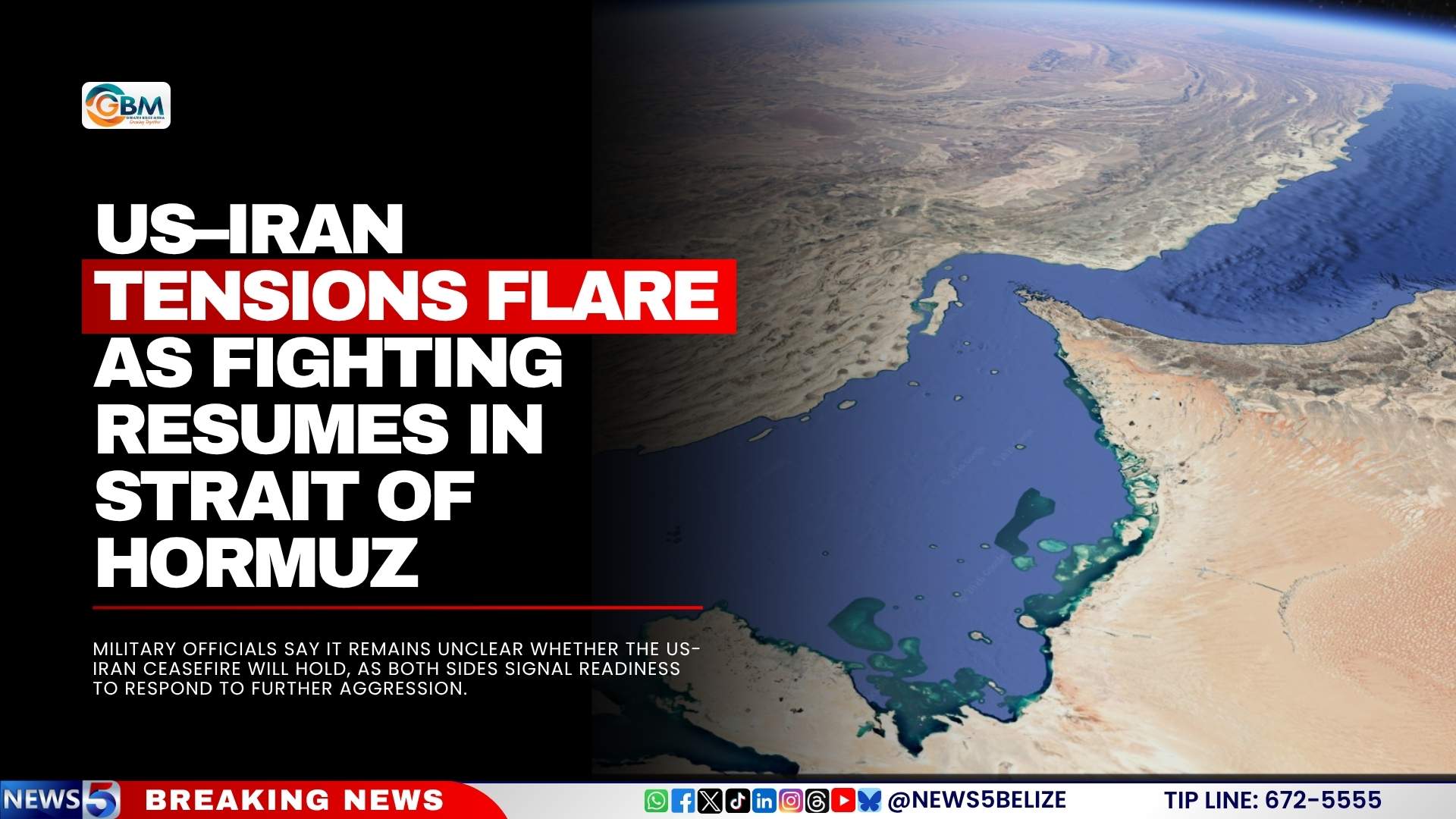
    US–Iran Tensions Flare as Fighting Resumes in Strait of Hormuz

    The narrow Strait of Hormuz, one of the world’s most critical chokepoints for global energy trade, has once again become a flashpoint for escalating confrontation between the United States and Iran, as resumed fighting has thrown a previously negotiated fragile ceasefire into serious jeopardy. The outbreak of hostilities has sparked urgent international alarm over both regional stability and the security of global energy supply chains that millions of consumers and businesses depend on daily.

    According to statements released by US Central Command, the clash unfolded when Iranian forces launched a coordinated attack involving cruise missiles, unmanned aerial drones, and fast-attack small craft targeting US naval vessels and passing commercial shipping transiting the waterway. In response, the US military says it destroyed six Iranian boats involved in the assault, framing the operation as a purely defensive measure designed to safeguard free and open maritime navigation through the strait. Tehran has immediately pushed back against the US account, dismissing the claims of Iranian aggression as entirely baseless in official statements.

    The return of open hostilities has already sent ripples through global financial and commodity markets. Investors rushed to price in heightened risk of a full-blown disruption to shipping through the strait, which carries roughly 20% of the world’s daily oil consumption. By early trading following the incident, benchmark oil prices had climbed sharply, while major global stock indices dipped on the news. Energy market analysts warn that if security conditions in the strait continue to deteriorate, consumers around the world could face dramatic spikes in retail fuel prices in the coming weeks.

    Tensions have already spilled beyond the immediate confines of the Strait of Hormuz into other parts of the Gulf region. In the United Arab Emirates, national security authorities confirmed they intercepted incoming missiles, and a drone attack targeting an Emirati oil facility left three people injured. Multiple commercial vessels have also sustained damage in nearby Gulf waters. In a development that highlights the deepening web of regional security cooperation, an Israeli-built air defense system deployed in the UAE successfully intercepted an incoming Iranian missile during the attack.

    The broader regional cold war between Iran and Western-aligned states continues to simmer across multiple front lines. Along the Lebanon-Israel border, clashes have resumed between the Israeli military and Iran-backed Hezbollah, even though a fragile ceasefire had largely held the area for months.

    As of the latest updates, military officials from both sides have issued stark warnings that they stand ready to respond forcefully to any further acts of aggression from the opposite camp. There remains significant uncertainty over whether the original US-Iran ceasefire can be salvaged, with many regional analysts warning that the current escalation could be the final blow to the already shaky truce.

  • Caribbean Court of Justice strengthens judicial cooperation through high-level European knowledge exchange visit

    Caribbean Court of Justice strengthens judicial cooperation through high-level European knowledge exchange visit

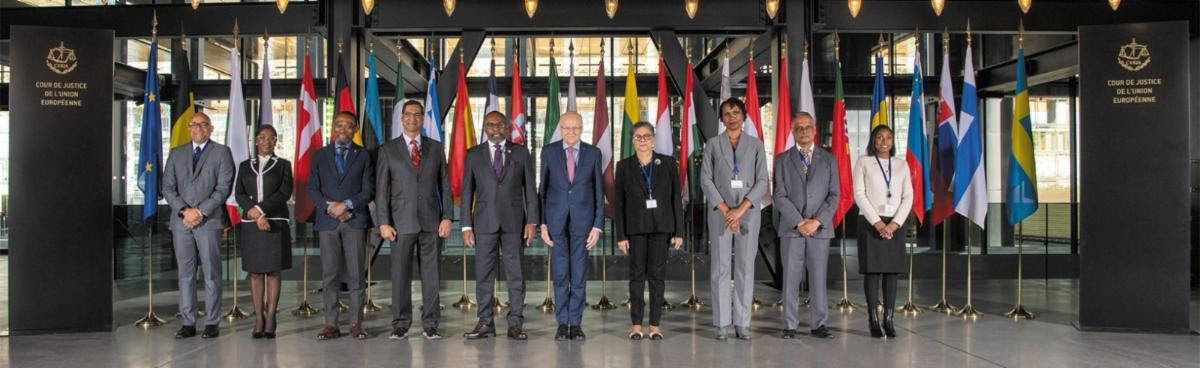
    Between April 27 and 30, 2026, a delegation led by Caribbean Court of Justice (CCJ) President Winston Anderson wrapped up a high-impact four-day knowledge-sharing and collaboration tour of key European judicial institutions, built to strengthen cross-regional judicial capacity and foster long-term institutional partnerships. Funded by the European Union through the 11th European Development Fund, the mission marked a deliberate step to connect two major regional judicial systems and exchange actionable insights on modern court operations.

    The CCJ delegation’s itinerary centered on three of Europe’s most influential international legal bodies, starting with the Court of Justice of the European Union (CJEU) based in Luxembourg. There, the team was officially received by CJEU President Koen Lenaerts and Vice President Marc van der Woude, holding structured high-level discussions before observing ongoing court proceedings. Beyond formal dialogues, the delegation gained exclusive behind-the-scenes access to the CJEU’s core administrative functions, from digital case management infrastructure and communications protocols to specialized judicial library services. This hands-on exposure allowed the CCJ team to study the CJEU’s tested approaches to boosting operational efficiency and embedding innovation into daily court work.

    From Luxembourg, the delegation traveled to Strasbourg, France—a global hub recognized for advancing international human rights law and intergovernmental legal cooperation—to meet with leadership from the European Court of Human Rights (ECtHR) and the Council of Europe. The CCJ team held judicial dialogues with ECtHR judge Arnfinn Bårdsen and members of the court’s Section V registrar team, and President Anderson also paid a formal courtesy call to Council of Europe Secretary General Alain Berset.

    Across all Strasbourg engagements, participants centered talks on three defining priorities for modern regional courts: upholding unwavering judicial independence, advancing effective regional integration through law, and clarifying the critical role that supranational judicial bodies play in defending democratic values, the rule of law, and fundamental human rights. For the CCJ, these dialogues reinforced its long-standing commitment to continuous institutional improvement and mutually beneficial global judicial collaboration.

    Unlike one-off diplomatic visits, this mission was designed as a two-way exchange: while the CCJ delegation drew on decades of European experience in supranational judicial governance to identify opportunities for refining its own operations, CCJ officials also shared their unique perspective on adjudicating disputes within a developing regional integration framework. The EU’s funding for the initiative underscores the bloc’s ongoing investment in strengthening rule of law institutions across the Caribbean, and lays the groundwork for future joint initiatives, training programs, and collaborative research between the CCJ and its European partner institutions.

  • Guyana Battles Venezuela at World Court Over Oil-Rich Essequibo

    Guyana Battles Venezuela at World Court Over Oil-Rich Essequibo

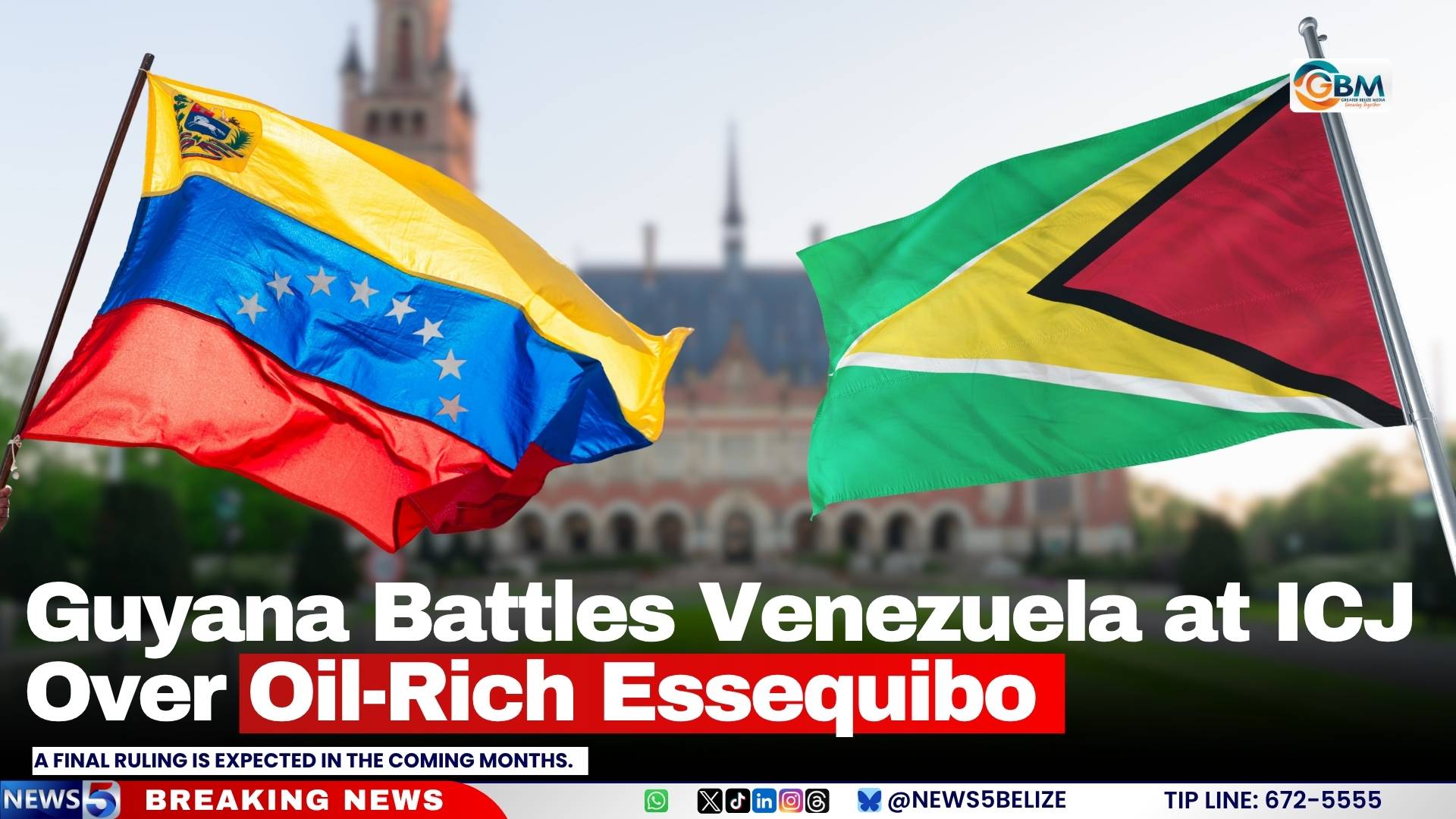
    The decades-long territorial dispute between Guyana and Venezuela over the resource-rich Essequibo region has moved into formal public hearings at the United Nations’ highest judicial body, the International Court of Justice (ICJ), opening in The Hague this week. The proceedings mark a major turning point in a conflict that has simmered for more than a century, with energy reserves at the heart of rising geopolitical tensions in South America.

    Guyana’s Foreign Affairs Minister Hugh Todd opened his country’s arguments before the 15-judge panel on Monday, framing the case as a straightforward yet high-stakes battle for the nation’s core sovereignty. At issue is the legal fate of the 1899 boundary arbitration award that first established the modern border between the two neighboring countries, granting Guyana control over the 159,000-square-kilometer Essequibo region. This territory makes up more than 70% of Guyana’s current total land area and holds massive untapped reserves of oil, gold, and timber—resources that have driven major foreign investment and economic growth in Guyana over the past decade.

    Todd emphasized that the 1899 ruling has enjoyed international recognition and formal acceptance from both states for more than 100 years. Under established principles of international law, he argued, Venezuela’s decades-late challenge to the award is legally invalid. He also called out Venezuela for escalating tensions in recent years, pointing to increased military deployments along the shared border and repeated attempts by Caracas to assert administrative and economic control over parts of the disputed territory.

    Venezuela, for its part, has rejected Guyana’s framing and maintains that the 1899 agreement was inherently flawed and legally void from its inception. Caracas points to a 1966 bilateral treaty signed with Guyana ahead of the country’s independence, which requires both nations to pursue a negotiated solution through direct talks rather than binding arbitration at the ICJ. Hearings are scheduled to run through May 11, with Venezuela set to lay out its full legal arguments starting midweek.

    The ICJ previously ruled that it holds formal jurisdiction to adjudicate the dispute, rejecting Venezuela’s preliminary challenges. While the court’s final rulings are legally binding under international law, it lacks an independent enforcement mechanism to compel compliance from either state. A final decision on the merits of the case is expected to be issued in the coming months.

    The Guyana-Venezuela dispute is one of two active high-profile territorial conflicts being adjudicated by the ICJ involving Latin American states. The court is also processing a long-running territorial, maritime, and insular dispute between Belize and Guatemala. In a recent development in that case on March 19, 2026, the ICJ ruled that Guatemala may participate as a non-party intervener in a separate ongoing dispute between Belize and Honduras over the Sapodilla Cayes, after the court recognized that Guatemala holds a legitimate legal interest in the outcome of that case. The court has since set procedural deadlines for Guatemala to submit its formal position, while the main Belize-Guatemala border dispute continues to move forward, with a final judgment expected in the next few years.

  • Jules scores late winner for defending champs

    Jules scores late winner for defending champs

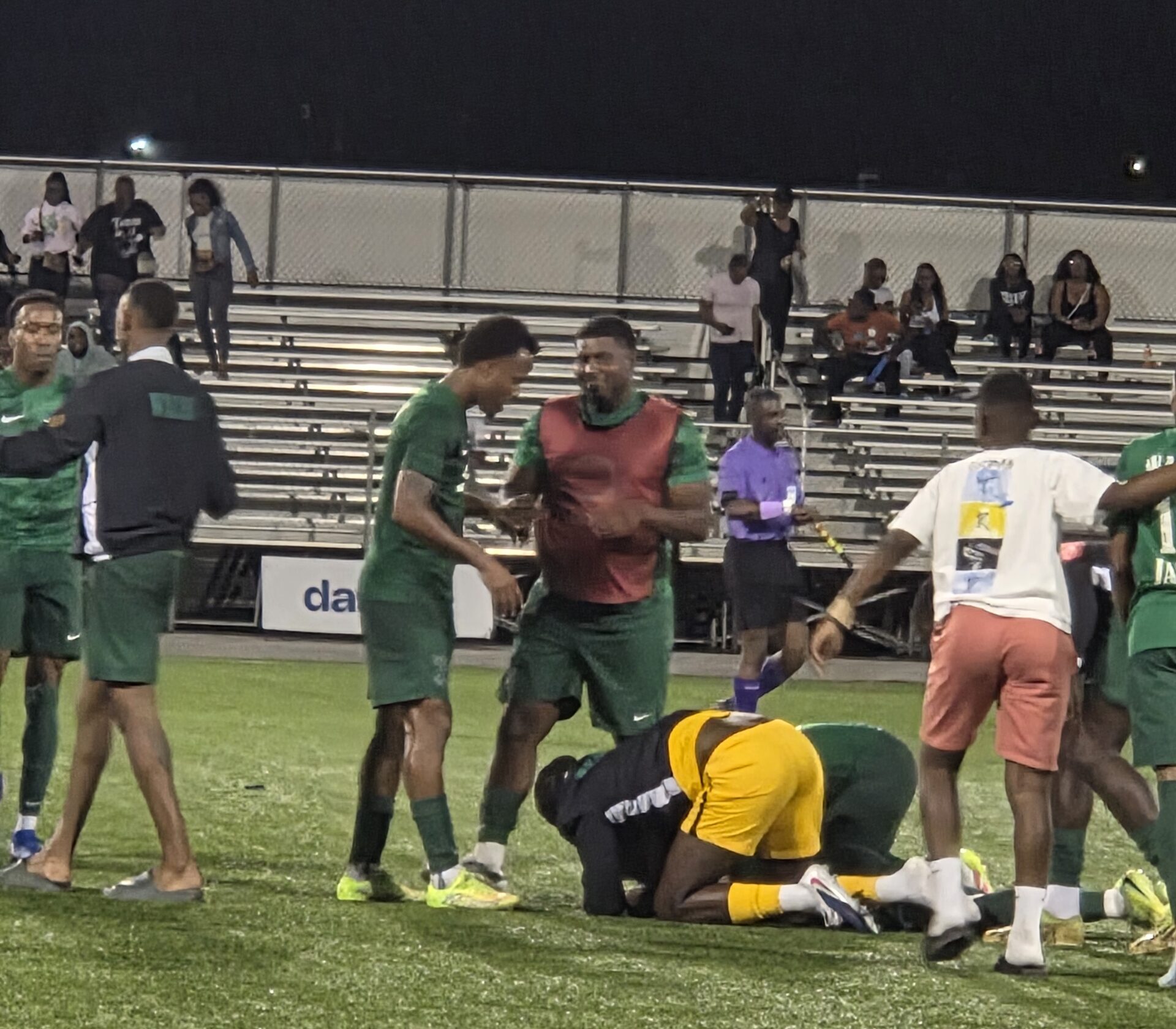
    The Barbados Football Association Premier League delivered another riveting weekend of action Sunday, as defending champions Weymouth Wales pulled off a last-gasp 2-1 victory over their long-time rivals Ellerton, courtesy of a stoppage-time winner from former national captain Rashad Jules. The dramatic result came after title challenger Paradise had earlier rocketed to the top of the table with a lopsided 11-2 destruction of bottom-side Wotton, putting immediate pressure on Wales to respond at the BFA Technical Centre ground.

    Wales got off to a flying start inside the opening 10 minutes, when Ellerton’s Javon Austin was called for a foul on Jules just inside the 18-yard box. Midfielder Ackeel Applewhaite stepped up to take the spot kick, slotting a low shot into the left corner beyond the reach of Ellerton goalkeeper Kerry Holder to put his side ahead 1-0. For the next hour, Wales dominated possession and territorial control, but neither side managed to carve out a clear-cut goalscoring chance until the 66th minute. That was when Ellerton captain Shakille Belle latched onto a precision through ball, shrugged off a challenge from defender Rashad Smith, and rounded Wales goalkeeper Kishmar Primus to slot home the equalizer, setting up a frantic final stanza.

    The closing 25 minutes saw both teams throw bodies forward in search of a winning goal, and Ellerton came agonizingly close to snatching the win in the 90th minute. Belle delivered a pinpoint cross from the right wing that beat Primus, leaving substitute Anson Barrow with a simple tap-in from just five yards out. In a moment that would ultimately cost Ellerton all three points, Barrow failed to make any contact with the ball, wasting the golden opportunity. Just three minutes into stoppage time, Jules made no mistake for the second match running. The former captain powered his way through Ellerton’s defensive line, turned quickly outside the penalty area, and fired a thunderous left-footed strike that flew into the back of the net, sparking wild celebrations among the Wales squad and supporters. Remarkably, this was the second consecutive match that Jules netted a 93rd-minute winning goal, having also hit a late winner against Brittons Hill in the previous round of fixtures.

    Speaking to reporters from Barbados TODAY after the final whistle, Jules credited his teammates and coaching staff for the result, noting that he had endured a challenging season by his own high standards. “It was a relatively productive night. Like you guys would have seen for the whole season, we just need to do a little better in the final third, but for the most part the guys have been keeping the ball, and at least trying to play a Wales style of football, regardless of the results that we’ve been getting,” he said. “I feel as though coming to Wales the staff put a lot of confidence and support in me. They know I’ve been struggling all season, but they kept me on and I just think that I had to prove them right.”

    The opening match of the matchday brought its own decisive result, as Eyre’s Meatshop Pride of Gall Hill secured a critical 1-0 win over UWI Blackbirds to move further clear of the relegation zone. Shakarie Mottley scored the game’s only goal in the 86th minute, lifting Gall Hill to sixth place in the table on 15 points, while UWI Blackbirds stayed in seventh position three points behind.

    In the headline early match, Paradise put on a goalscoring masterclass against Wotton, who were forced to play the entire 90 minutes with club president Rasheed Belgrave standing in as goalkeeper. Paradise ran riot in the first half, taking a 7-0 lead into halftime before making a raft of substitutions that disrupted their attacking rhythm in the second half. Despite the one-sided scoreline, Wotton refused to let their heads drop and grabbed two late consolation goals from Tre Byer and Jayden Benjamin, marking the most lopsided result of the 2024 season so far. Tyrel Rayside Demendonca and Shamari Harewood both scored hat tricks for Paradise, while Sheran Hoyte and Kamol Griffith added two goals each, and Christian Gill rounded out the scoring with one goal.

    The 11-2 win put Paradise temporarily top of the league on 33 points, boosting their goal difference considerably and piling the pressure on Weymouth Wales to respond later in the day. Paradise head coach Mario Harte expressed satisfaction with the three points and the goals, but conceded he was disappointed to concede two soft goals. “Yeah great result, always good to get some goals on the board, but conceding two rubbed me a little on the wrong side, but yeah grateful for the three points most of all,” Harte said. “While I would rather we held onto the top spot, I can’t complain about where we are right now in the table.” Jules’ late winner ultimately saw Wales retake the top position by a single point, keeping the title race finely poised as the BFA Premier League approaches its business end.

  • $3 Diesel Subsidy to “Keep Buses on the Road” for Students Nationwide

    $3 Diesel Subsidy to “Keep Buses on the Road” for Students Nationwide

    In a policy response to widespread financial pressure on student transportation that culminated in a industry-wide protest, the Belizean Ministry of Education (MOE) has announced a new BZ$3.00 per gallon diesel subsidy for all domestic school bus operators. The emergency financial relief program is designed to address crippling fuel costs that have threatened consistent transit access for more than 14,000 students and education staff across the country.

    The subsidy program will be retroactively applied to operations starting April 13, 2026, and will provide support for 278 active daily school bus routes. Officials from the MOE emphasized that the targeted intervention is critical to maintaining consistent student access to education: “By easing fuel costs, this subsidy keeps buses on the road, students in school, and families confident in a reliable education system.”

    Over the 11-week run of the program, total government spending is projected to reach approximately BZ$233,755.55, with all costs drawn from the MOE’s existing annual recurrent budget. Administrators calculated the subsidy framework using a standard efficiency average of seven miles per gallon, applied uniformly across the total distance of all registered school routes.

    Alongside the school transportation subsidy, revised maximum fare rates for all public bus services officially went into effect on May 4, 2026, after formal approval from the Belizean Ministry of Transport. The updated rates adjust fares by 50 cents for short-distance trips, with the largest increase capped at BZ$1.00 for longer intercity routes.

    Both policy changes come directly in response to a bus operator blockade held the previous Monday, when transportation providers shut down access to the Tower Hill Bridge in the Orange Walk District to protest unsustainable fuel costs. The demonstration prompted emergency negotiations between operator representatives, Transport Minister Dr. Louis Zabaneh, and the Office of the Prime Minister, which resulted in the finalized agreement that produced both the subsidy and adjusted fare structure.

    Phillip Jones, president of the Belize Bus Association, noted that the negotiated fare increase was structured to prioritize the needs of everyday commuters and the general public while addressing operators’ rising operating costs.

  • Pringle Calls for Unity and Respect for Workers at ABWU Labour Day Rally

    Pringle Calls for Unity and Respect for Workers at ABWU Labour Day Rally

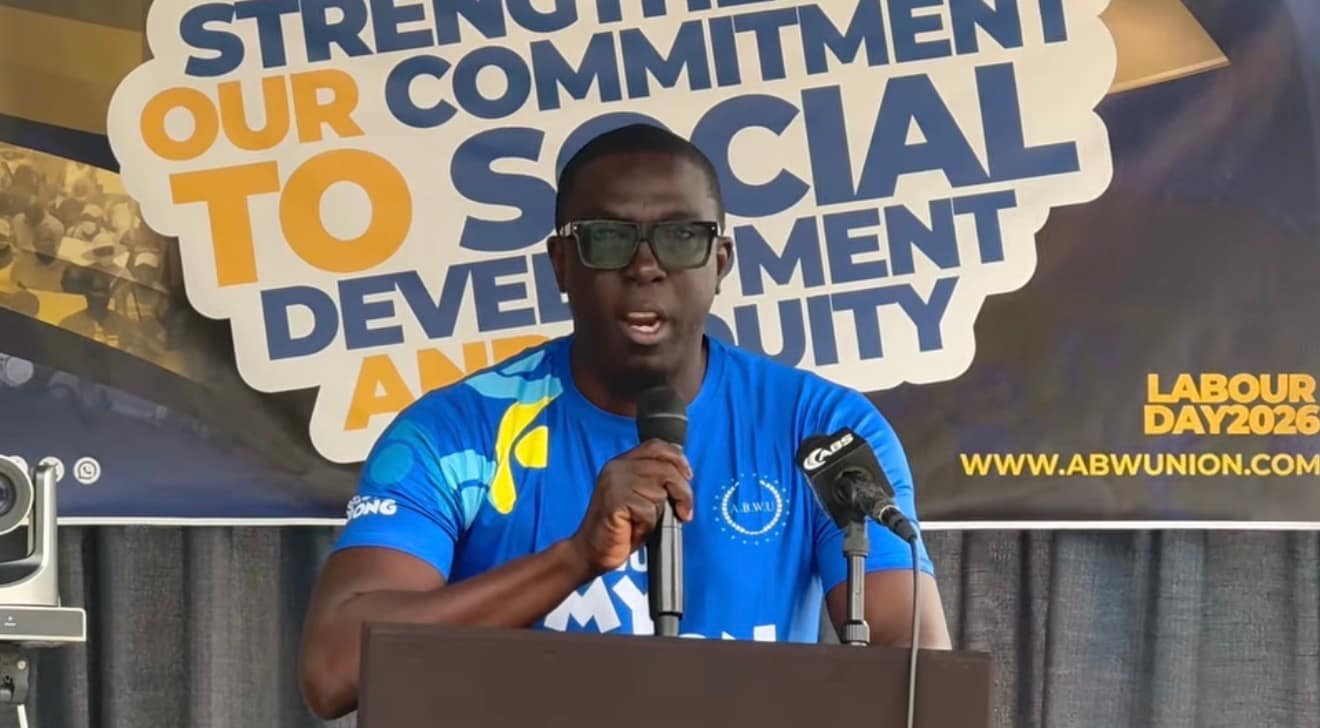
    On Labour Day in Antigua and Barbuda, United Progressive Party (UPP) Leader and opposition head Jamale Pringle delivered a keynote address to crowds gathered at the Antigua and Barbuda Workers’ Union (ABWU) rally, centering his remarks on honoring working people and pushing for cross-group unity to drive national progress. Opening his speech with formal greetings to the union’s executive branch, president, and general secretary, Pringle first extended his sincere praise to all members and organizers who dedicate their time and effort to sustain the union’s operations in service of the working class. Pringle emphasized that Labour Day carries far deeper meaning than a simple day off from work. He framed the annual observance as a living tribute to the generations of effort and sacrifice that workers across every sector of the country have poured into national growth. “Labour Day is not just a holiday. It is a celebration of dedication, skill, and the countless hours that keep our industries, businesses, and neighborhoods thriving,” he told the gathered crowd. Going beyond purely economic contributions, Pringle highlighted the far-reaching social impact of working people’s daily labor. He noted that workers’ effort does more than boost national output—it lays the foundation for strong families, nurtures individual and collective dreams, and builds the long-term future of Antigua and Barbuda. In his remarks, Pringle also acknowledged the persistent daily challenges that working people across the country face, while commending their consistent resilience in navigating and overcoming those barriers. A core policy-focused point of his address centered on workplace justice, with the UPP leader stressing that fair, respectful treatment must be non-negotiable for every worker. “Every worker deserves respect, fair treatment, and opportunity,” he stated, reaffirming his party’s commitment to advancing worker rights. The central throughline of Pringle’s speech was a urgent call for national unity, framing collective action as the only sustainable path toward meaningful national progress. “Progress is made together… we have to be united,” he told attendees, urging workers, union members, and political allies to align around shared goals for national development. Closing his address, Pringle reiterated unwavering solidarity between his party, the national labor movement, and all working people, closing with three rousing declarations of support: “Long live the United Progressive Party. Long live the working class. Long live the Antigua Barbuda Workers Union.”

  • Guyana fragments Venezuela’s “mishmash” memo for claim to Essequibo at World Court

    Guyana fragments Venezuela’s “mishmash” memo for claim to Essequibo at World Court

    On Monday, at landmark merit hearings held at the International Court of Justice (ICJ) over the decades-long Essequibo Region territorial dispute, legal representatives for Guyana delivered a sweeping rebuttal of Venezuela’s core foundational claim, dismantling a decades-old document that has underpinned Caracas’ territorial assertion for more than half a century. The long-simmering dispute centers on the 1899 Arbitration Tribunal boundary award, which granted Guyana sovereignty over the 159,000-square-kilometer Essequibo Region rich in oil and mineral resources. Venezuela has contested the award’s validity since 1962, relying on a posthumously released memorandum written by Severo Mallet-Prevost, former secretary to the 1899 tribunal. The document alleges the final award was the product of backroom collusion between the United Kingdom and Imperial Russia, engineered through pressure from tribunal president Friedrich Martens.

    Appearing before the ICJ in The Hague, prominent international law professor Philippe Sands, lead counsel for Guyana, dismissed the Mallet-Prevost memorandum as a baseless, unsubstantiated compilation of unreliable anecdotes. The memo was privately circulated after Mallet-Prevost’s death in 1948, and transferred to the Venezuelan government by American jurist Otto Schoenrich in 1949, laying the groundwork for Caracas to revive its territorial claim. Sands told the full bench of the ICJ that for more than 60 years, Venezuela has weaponized the memorandum to create unsubstantiated controversy, rather than illuminate the factual record of the 1899 award.

    Sands characterized the core allegation of a secret Anglo-Russian power-sharing deal as outlandish, noting the document’s overwhelming reliance on speculation and total lack of verifiable fact. Long on fantasy and short on empirical evidence, the memorandum lay dormant for 13 years after it was first published, he added. No credible independent evidence exists to confirm the off-the-record conversations Mallet-Prevost described, and nothing in the document supports Venezuela’s claim that the 1899 award is legally void, Sands argued. Describing the memorandum as a “giant red herring,” he told the court that the document does nothing to validate Venezuela’s challenge to the 1899 award, and instead only confirms that the entire challenge is rooted in fiction rather than fact.

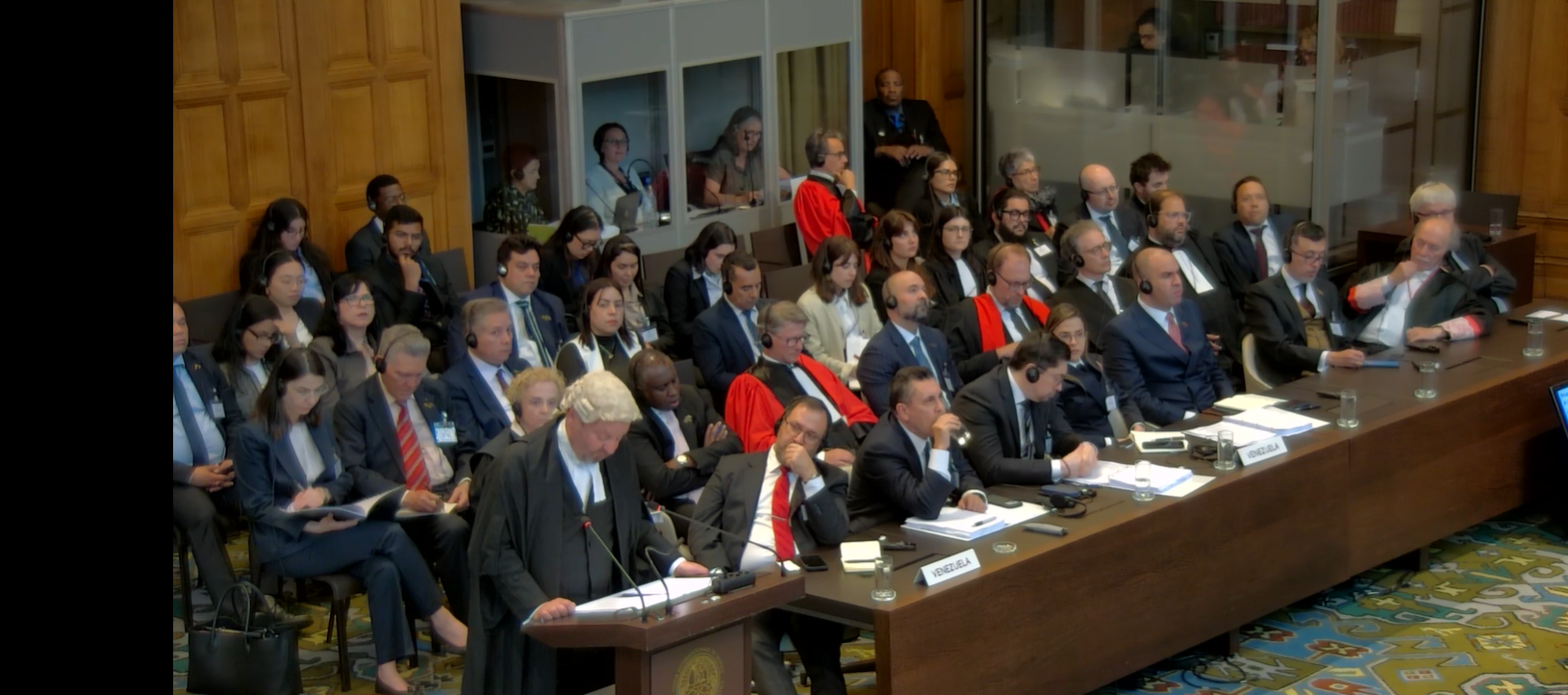
    Sands also questioned the document’s provenance, noting it was published nearly half a century after the conversations it claims to document, and that Mallet-Prevost was a known, publicly recognized advocate for Venezuela’s territorial claims. “Venezuela has opened a world of theater and fiction, not law, not fact,” Sands told the court. “This is the stuff of a novel. It is not the stuff of a pleading before this court.” Photographs from the hearing showed Venezuela’s delegation, led by Foreign Minister Yvan Gil, listening to Sands’ rebuttal without interruption.

    In addition to dismantling Venezuela’s core evidentiary claim, Guyana’s legal team has also asked the ICJ to impose formal consequences on Venezuela for violating two earlier provisional measures orders issued by the court. In December 2023, Venezuela held a national referendum that approved constitutional amendments to formally claim Essequibo as Venezuelan territory, established new administrative districts for the region, moved to register local residents to vote in Venezuelan national elections, and designated the area a national defense zone. All of these actions directly violated the ICJ’s prior orders requiring Venezuela to refrain from altering the status quo of the disputed region, Guyana argues.

    Edward Craven, another member of Guyana’s legal team, told the court that Venezuela’s actions represented a clear, intentional violation of the ICJ’s binding provisional measures. Craven requested that the ICJ issue a formal declaration that Venezuela violated the court’s orders, and compel Caracas to revoke all domestic laws, executive decrees and administrative actions that purport to incorporate Essequibo into Venezuelan territory, and extend Venezuelan legislative, executive and judicial jurisdiction over the region. Guyana is also demanding that Venezuela withdraw and destroy all official maps that incorrectly depict Essequibo as part of Venezuelan territory. “These measures are requested because Venezuela is under the obligation, by way of reparation for its breaches of the provisional measures, to re-establish the situation which would in all probability have existed if those breaches had not been committed,” Craven told the court.

    Venezuela is scheduled to present its oral arguments on the merits of the territorial dispute before the ICJ on Wednesday. The hearing marks a key milestone in a dispute that has raised regional tensions over the past two years, following the discovery of massive new oil reserves in the Essequibo offshore shelf that have turned Guyana into one of the world’s fastest-growing oil producers.

  • SPHS: ‘Senior Prank Went Too Far’

    SPHS: ‘Senior Prank Went Too Far’

    In the wake of rapidly spreading online rumors that left San Pedro High School (SPHS) mired in false claims of widespread institutional chaos, school administrators have stepped forward to set the record straight, addressing viral speculation that has circulated across social media platforms in recent days.

    False claims circulating widely online asserted that the Southern California high school had been brought to a standstill after the entire teaching body failed to report to their scheduled duties, leaving the campus in “complete disarray.” But in an official public statement released to the school community via Facebook, SPHS administrators firmly rejected these assertions, confirming that every member of the teaching staff arrived for work on schedule as planned.

    The clarification was prompted by a user-shared video that went viral across multiple social platforms, showing one on-campus classroom in a state of severe disarray. Footage from the video captured overturned student desks and loose papers scattered haphazardly across the entire floor space of the room, a visual that fueled unfounded rumors about broader institutional dysfunction at the school.

    According to official investigations carried out by school administration, the damage captured in the viral video is the direct result of an end-of-year senior prank that crossed acceptable boundaries. “The situation in question was the result of a senior prank that unfortunately went too far and led to damage on campus,” the official statement read.

    School leaders acknowledged that lighthearted end-of-year traditions are a longstanding, common practice for graduating senior classes across the country, including at SPHS. But the administration emphasized that any student action that results in destruction of school or personal property will not be tolerated, and will be addressed with full disciplinary procedures. The statement confirmed that all students found to be involved in the prank will face appropriate consequences for their actions.

    In closing, the school called on community members and social media users to prioritize verified information over unconfirmed viral speculation. “We encourage everyone to seek the facts and continue supporting our school community with honesty, respect, and accountability,” the statement added.