博客

  • Washington Signals Bigger Role in Caribbean Affairs

    Washington Signals Bigger Role in Caribbean Affairs

    In a significant diplomatic development, the United States has formally indicated its intention to deepen engagement with Caribbean nations. The announcement followed the conclusion of the fiftieth CARICOM Heads of Government meeting in Saint Kitts and Nevis, where U.S. Secretary of State Marco Rubio’s unexpected presence generated considerable attention among regional leaders.

    Belize’s Prime Minister John Briceño, in exclusive post-meeting revelations, disclosed that closed-door discussions centered on three critical areas: migration patterns, transnational criminal networks, and regional development initiatives. The high-level dialogue marks a notable shift in Washington’s foreign policy priorities toward the Caribbean basin.

    During bilateral talks, Prime Minister Briceño delivered an urgent security appeal to Secretary Rubio, highlighting the escalating threat posed by Mexican cartels expanding southward into Belizean territory. The Prime Minister specifically identified the Caborca Cartel as having established operational presence along Belize’s northern border with Mexico’s Quintana Roo region.

    “Our nation faces unprecedented vulnerability to narco-trafficking operations,” Briceño stated. “We require immediate assistance in equipment provision, intelligence sharing, and specialized training rather than delayed support that might arrive too late to prevent fundamental transformation of our society.”

    While addressing travel concerns following recent security advisories for Mexico, Briceño emphasized that cross-border relations remain strong despite security challenges. He advised cautious travel practices while reaffirming Mexico’s status as a vital regional partner.

    The Secretary of State’s personal attendance at the CARICOM gathering signals the Trump administration’s renewed focus on Latin American and Caribbean affairs, with diplomatic sources suggesting this engagement represents a strategic counterbalance to growing extra-hemispheric influence in the region.

  • The Dominican Republic has recorded 31 cases of dengue so far in 2026.

    The Dominican Republic has recorded 31 cases of dengue so far in 2026.

    Santo Domingo’s Ministry of Public Health has released its sixth epidemiological bulletin for 2026, revealing a controlled dengue situation with 31 confirmed cases and zero fatalities recorded during the initial weeks of the year. Health authorities characterize the dengue transmission as remaining “within successful and safe zones of the endemic channel,” indicating minimal viral circulation with just one confirmed case reported this week.

    The epidemiological landscape presents a more complex picture regarding other diseases. Leptospirosis cases demonstrate a low-to-moderate incidence pattern with a concerning upward trajectory, showing 2, 4, 5, and 6 cases in recent reporting periods.

    Influenza A (H3N2) continues to exhibit persistent and widespread circulation across most epidemiological weeks, maintaining prolonged transmission patterns that began in the final four months of 2025. This sustained activity contrasts sharply with the more defined, shorter peaks observed for influenza subtypes A(H1N1)pdm09 and Influenza B.

    The report highlights a challenging scenario of simultaneous co-circulation involving H3N2, respiratory syncytial virus (which typically surges in the latter half of the year), SARS-CoV-2, and other respiratory pathogens, creating sustained multiple transmission dynamics.

    In response, health officials have intensified epidemiological and virological surveillance measures while expanding diagnostic and hospital capabilities. The ministry has prioritized influenza vaccination for vulnerable groups and enhanced health system resilience to reduce transmission and prevent severe outcomes.

    The bulletin also notes concerning mortality statistics, including 10 maternal deaths (70% occurring among Haitian nationals) and 38 infant deaths cumulatively. Health facilities reported numerous case notifications including twelve instances of upper respiratory tract febrile disease, twelve hemorrhagic febrile cases, ten viral parotitis, nine eruptive febrile cases, eight lower respiratory tract febrile diseases, seven meningitis cases, five acute diarrheal diseases, three conjunctivitis cases, three febrile disease instances, and three chickenpox occurrences.

  • Learning From Jamaica’s Anti‑Gang Playbook

    Learning From Jamaica’s Anti‑Gang Playbook

    The recently concluded CARICOM meeting exposed significant fractures within the regional bloc while simultaneously fostering cooperation on critical security matters. Belize’s Prime Minister John Briceño revealed his nation’s intention to seek Jamaica’s expertise in combating escalating gang violence, following candid discussions with Jamaican leader Dr. Andrew Holness.

    Prime Minister Briceño disclosed to News Five that Jamaica’s successful strategies in tackling gang-driven violence present a valuable model for Belize. “Prime Minister Holness was remarkably frank during our caucus,” Briceño stated. “He emphasized the critical importance of addressing gang issues before they become entrenched and powerful enough to resist intervention.”

    The Belizean leader indicated plans for potential knowledge-exchange missions, saying, “We would probably want to send our people to Jamaica or if I can go myself to examine their approach, particularly how they’ve equipped police with appropriate technology and resources for effective crime fighting.”

    Meanwhile, the summit witnessed notable tensions as Trinidad and Tobago’s Prime Minister Kamla Persad-Bissessar delivered sharp criticism of CARICOM’s solidarity mechanisms. She accused the bloc of failing to support member states during crises, specifically referencing her country’s standoff with Venezuela, and announced Trinidad’s withdrawal from support of CARICOM’s free-movement agenda.

    Prime Minister Briceño offered a robust rebuttal to these claims, asserting that Persad-Bissessar’s criticism was “one hundred percent wrong.” He detailed multiple instances of regional support for both Trinidad and Guyana regarding the Venezuela border disputes, emphasizing CARICOM’s consistent backing of established treaties and boundaries.

    The humanitarian crisis in Cuba emerged as another focal point, with leaders addressing the island’s severe food shortages and the impact of U.S. sanctions. Despite divergent viewpoints on approaching Havana’s leadership, CARICOM members unanimously agreed that both the United States and Cuba must engage in dialogue. The bloc has committed to pooling resources to deliver urgent food assistance to Cuban citizens and has offered to serve as an impartial mediator between the longstanding adversaries.

  • Sugar planters prepare for first cut

    Sugar planters prepare for first cut

    Barbados is poised to commence its 2026 sugar cane harvest in early March, with comprehensive preparations underway to ensure operational readiness across the industry. Agriculture Minister Dr. Shantal Munro-Knight confirmed the imminent start while addressing journalists during the Agrofest agricultural exhibition at Queen’s Park on Friday.

    The minister revealed that operational assessments are currently in progress, including a personal inspection of Portvale Factory’s facilities to verify complete preparedness for the upcoming season. “Within another week and a half, we will be officially starting the sugar crop,” Dr. Munro-Knight stated, adding that a specific commencement date would be formally announced shortly.

    This year’s harvest forms part of a broader strategic initiative to modernize Barbados’ agricultural sector while maintaining respect for traditional practices. The minister emphasized the critical balance between technological innovation and preservation of historical knowledge, advocating for a resilient agricultural value chain that incorporates both elements.

    The Barbados Sugar Industry Limited (BSIL) has confirmed its members’ readiness for the harvesting season. Chairman Mark Sealy reported that associated cane farmers have completed essential preparatory work, including equipment maintenance and insurance arrangements, awaiting only the official start signal.

    According to industry projections, BSIL-affiliated farmers are expected to yield approximately 66,000 tonnes of sugar cane this season. The modernized industry—which has evolved from its historical roots in enslaved labor through various phases of agricultural development—now operates with complete mechanization, eliminating manual cane cutting entirely.

  • Ex-BTL Workers Bring Protest to Chairman Mark Lizarraga’s Doorstep

    Ex-BTL Workers Bring Protest to Chairman Mark Lizarraga’s Doorstep

    Former employees of Belize Telemedia Limited (BTL) intensified their demonstrations on February 27, 2026, shifting their protest venue from corporate headquarters to the personal business establishment of Board Chairman Mark Lizarraga. The Belize Communication Workers for Justice (BCWJ) organized the midday gathering at Lizarraga’s Southside Meat Shop on Albert Street West, where retired workers marched with placards under the intense midday sun, significantly disrupting local traffic flow.

    The escalation follows collapsed negotiations and what organizers characterize as manipulative public relations tactics from BTL management. Emily Turner, a primary organizer, accused the company of exploiting former workers’ circumstances during a recent press conference rather than addressing their legitimate financial claims. “They would never have watched these people – and some of these people you can see, they cannot, they should not be out here,” Turner stated, emphasizing the physical strain on elderly protesters.

    Central to the dispute is a contentious six percent payment that BCWJ maintains is owed to former employees. The fundamental disagreement concerns the interest calculation timeline: BTL asserts obligations commenced from the Caribbean Court of Justice’s November 2025 ruling, while retirees demand back-payment from their individual departure dates from the company.

    Protest organizers revealed BTL has initiated individual outreach to former employees, a strategy perceived as attempting to fragment collective bargaining efforts. Former employee Michael Augustus cautioned colleagues against isolated negotiations, stating: “Don’t swallow their pill. They want to pull you in without a group behind you.”

    The movement has announced plans to expand demonstrations to other board members’ residences and businesses, with Union Senator Glenfield Dennison confirming forthcoming protests targeting individual directors. For many participants who dedicated decades to BTL, the protest transcends financial compensation, representing a fundamental struggle for dignity and recognition of their contributions to Belize’s telecommunications infrastructure. Retirees traveled from distant regions including Punta Gorda and Corozal to participate, demonstrating nationwide solidarity among former telecom workers.

  • Government outlines achievements in health, sees there is a revolution

    Government outlines achievements in health, sees there is a revolution

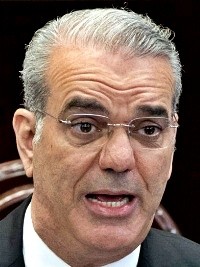
    In a landmark address to the National Congress, President Luis Abinader showcased the Dominican Republic’s transformative achievements in national healthcare, marking a new era of medical excellence and accessibility. The government’s comprehensive strategy has yielded significant improvements across key health indicators, including substantial reductions in maternal and infant mortality rates as well as dengue fever incidence.

    The cornerstone of this healthcare revolution is an unprecedented infrastructure investment exceeding RD$2.659 billion, resulting in the delivery of 30 state-of-the-art medical facilities throughout 2025. This extensive network includes newly constructed hospitals, modernized primary care centers, and advanced diagnostic complexes. Among the flagship projects is the nation’s largest regional hospital in San Francisco de Macorís, a cutting-edge surgical clinic within the Ciudad Sanitaria complex, and a fully equipped modern hospital in Dajabón.

    Technological advancement represents another critical dimension of this transformation, with over RD$3.778 billion allocated to cutting-edge medical equipment. The public healthcare network now features comprehensive diagnostic capabilities including CT scanners, advanced mammography units with revolutionary three-dimensional digital tomosynthesis technology—a first in the public sector—along with sophisticated imaging systems, neonatal incubators, and patient monitoring equipment.

    An additional RD$632 million investment equipped 92 health centers with modern technology, significantly enhancing diagnostic capacity nationwide. This infrastructure expansion has dramatically increased healthcare delivery, with 7,781,502 consultations provided in 2025—an increase of 619,000 since 2019. Laboratory analyses reached 28,383,336 procedures, while diagnostic imaging nearly doubled from 2.45 million to 4.34 million studies.

    The government’s National Health Insurance (SeNaSa) program has achieved remarkable enrollment success, providing extensive coverage including subsidized high-cost medications for vulnerable populations. Complementing these efforts, the Home Care Program conducted approximately 600,000 visits to serve the needs of medically vulnerable citizens, demonstrating the administration’s commitment to comprehensive, accessible healthcare for all Dominicans.

  • PM Says BCWJ Exploiting Dispute, Urges End to Standoff

    PM Says BCWJ Exploiting Dispute, Urges End to Standoff

    Belize City, February 27, 2026 – A protracted severance dispute between Belize Telecommunications Limited (BTL) and former employees has escalated to involve the highest levels of government, with Prime Minister John Briceño calling for immediate resolution while accusing the Belize Communication Workers for Justice (BCWJ) of exploiting the situation.

    The conflict centers on outstanding severance payments and accumulated interest for former BTL workers. Prime Minister Briceño emphasized that BTL has already committed to paying the base severance amounts, regardless of potential court outcomes, but expressed concern over the BCWJ’s insistence on six percent interest payments dating back to a Caribbean Court of Justice (CCJ) ruling.

    “I do believe that the BCWJ is taking advantage of the situation and demanding the six percent interest,” stated Briceño during a phone interview. “BTL has offered to settle with any qualified employees who provide evidence of eligibility, including severance plus six percent interest from the CCJ ruling date. I consider this fair and urge the group to settle.”

    Meanwhile, negotiations between BCWJ and BTL have collapsed, prompting the workers’ group to seek the Prime Minister’s direct intervention. BCWJ organizers Michael Augustus and Emily Turner contend that while they have compromised during negotiations, BTL has remained inflexible. They argue that as the government appoints BTL’s board members, the administration bears responsibility for resolving the standoff.

    Turner highlighted the financial dimensions of the dispute: “BTL calculated the amount owed beyond six years at approximately $4.8 million. Even doubling that figure remains under $10 million—a manageable sum for the company.”

    The impasse has raised questions about BTL’s priorities, with Union Senator Glenfield Dennison criticizing the company’s preference for legal battles over settlement. “They appear willing to pour money into legal fees rather than compensate the hardworking Belizean people who built BTL,” Dennison remarked, suggesting the company might be making either an intentional miscalculation or demonstrating incompetence.

    With both sides entrenched in their positions, the dispute continues to highlight tensions between corporate governance, worker rights, and government oversight in Belize’s telecommunications sector.

  • Convicted San Pedro Teacher Seeks Bail Pending Appeal

    Convicted San Pedro Teacher Seeks Bail Pending Appeal

    In a significant legal development in Belize, convicted educator Alex Jason Noralez has petitioned the court for bail pending appeal of his recent sexual assault convictions. The 47-year-old San Pedro teacher, with over twenty years of teaching experience, appeared before the Chief Magistrate exactly one month after being found guilty on two counts of sexual assault against a student.

    The proceedings took an unusual turn when the Chief Magistrate ordered the courtroom closed to media representatives, requiring court reporter Anita Nembhard to await developments outside while attorneys presented arguments privately. Noralez’s defense counsel, prominent attorney Richard ‘Dickie’ Bradley, asserted his client’s constitutional right to appeal and expressed confidence in overturning the convictions, particularly highlighting Noralez’s acquittal on a third charge involving another student.

    The prosecution, represented by a police prosecutor, urged judicial caution in considering bail for the convicted educator. Meanwhile, Noralez’s family appealed to the court to consider his health conditions during deliberations. The judicial decision regarding Noralez’s temporary release pending appeal is scheduled for March 24th, which will determine whether the educator remains incarcerated or is granted conditional freedom during the appeals process.

  • Dominican Republic : Births by Haitian mothers down 41%

    Dominican Republic : Births by Haitian mothers down 41%

    A stringent immigration verification protocol implemented by the Dominican Republic has precipitated a dramatic 41% reduction in births to Haitian mothers within its public healthcare facilities. Enacted on April 21, 2025, the policy mandates status checks in hospitals, fundamentally altering access to maternity services for the Haitian community.

    Official data reveals a stark decline from 32,967 recorded births to Haitian mothers in 2024 to just 19,434 in 2025. This represents a drop of 13,533 births across the nation’s 33 public hospitals. The policy’s impact was immediate and profound; within its first full month of implementation (May 2025), births plummeted to 849, a figure that remained consistently low throughout the year. Monthly totals for the remainder of 2025—including 886 in June, 902 in July, and a peak of just 1,430 in September—demonstrated a reduction of more than fifty percent compared to pre-protocol figures.

    The downward trajectory has persisted into 2026. January 2026 saw 1,114 births, a number drastically lower than the 3,048 recorded in January 2024 and also below the 3,023 births that had been projected for that month prior to the policy’s enactment.

    Geographic analysis of the data indicates a concentration of remaining births in border regions experiencing significant migration flows. Hospitals in Verón (La Altagracia province) recorded 628 Haitian births, followed by Rosa Duarte in Elías Piña (406), and Elio Fiallo in Pedernales (342). Conversely, numerous provinces—including La Vega, María Trinidad Sánchez, Monte Plata, and Santo Domingo—now report very low rates of births to Haitian mothers, signaling the widespread effectiveness of the border control measure.

  • Mother Says Police Ignoring Son’s Near‑Fatal Pursuit

    Mother Says Police Ignoring Son’s Near‑Fatal Pursuit

    A Belize City mother is expressing grave concerns for her seventeen-year-old son’s safety following a violent pursuit that nearly turned fatal, while simultaneously accusing local police of inadequate response and procedural delays. The incident, captured on surveillance footage from the West Collet Canal area on Monday night, depicts the teenager fleeing for his life as two men and a woman emerged from a vehicle and gave chase.

    The mother attributes the attack to an ongoing territorial rivalry within the community. Despite promptly filing an official police report and attempting to pursue legal recourse, she claims to have encountered nothing but bureaucratic obstacles and uncooperative authorities. She reports being given inconsistent instructions, told to return on different days due to officer unavailability, and ultimately faced with what she describes as a complete lack of investigative progress.

    In an emotional account, the victim recounted jumping from his bicycle to escape, losing his phone and bicycle in the process—items which were later discarded into a drain by the assailants. The mother’s fear is palpable as she describes the morning after the incident, terrified that missed calls might have conveyed the worst news imaginable.

    The Belize Police Department has provided a brief statement to news outlets confirming that an investigation into the matter is currently ongoing, though specific details regarding timeline or progress remain undisclosed.