博客

  • From US to Singapore, cruise passengers are being monitored for hantavirus

    From US to Singapore, cruise passengers are being monitored for hantavirus

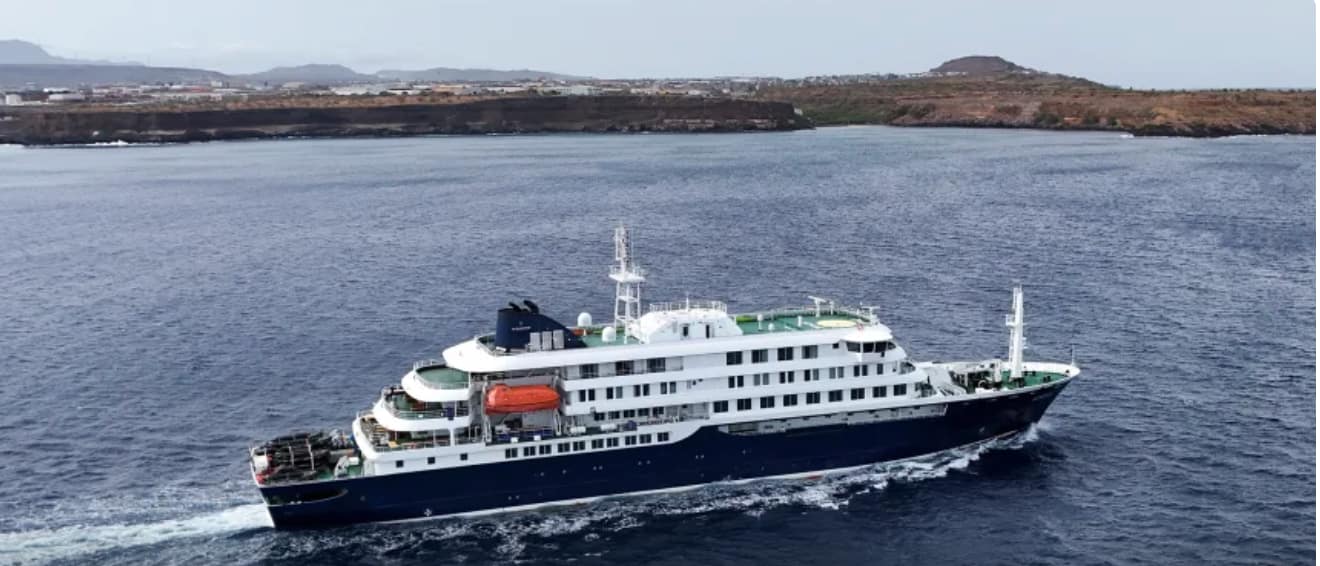
    A hantavirus outbreak linked to the expedition cruise vessel MV Hondius has triggered an international public health response, with the World Health Organization (WHO) confirming five confirmed infections among people connected to the ship and three deaths recorded as of Thursday. Health agencies across more than half a dozen countries are racing to trace contacts and contain the spread of the rare Andes strain of the virus, after passengers and crew dispersed globally before the outbreak was fully detected.

    The first suspected case emerged in mid-April, shortly after the ship departed Argentina on a cruise late last month. South Africa’s Department of Health confirmed the initial patient was a 70-year-old Dutch man who developed sudden symptoms including fever, headache, abdominal pain and diarrhea while on board, and died on the vessel on April 11. Two more fatalities followed: a second Dutch national and a German citizen.

    As of Thursday, 146 people from 23 different countries remain on the MV Hondius under strict precautionary quarantine protocols, according to the ship’s operator, Netherlands-based Oceanwide Expeditions. Roughly 30 passengers disembarked at the remote South Atlantic territory of Saint Helena in late April, and several critically ill patients were airlifted to Europe for urgent medical care earlier this week. The remaining people on board are scheduled to arrive at Tenerife in Spain’s Canary Islands around noon local time Sunday, per updates from Spanish public health authorities. Once they dock, all passengers and crew will be repatriated via chartered flights to their home countries.

    Health systems across multiple nations are now managing active monitoring and treatment for people linked to the outbreak. In the Netherlands, three evacuated patients are currently receiving hospital care: a British national, a 65-year-old German citizen, and a 41-year-old Dutch crew member. Two of the three are in serious condition, while the third, who remains asymptomatic, is also under medical observation as a precaution. Separately, a KLM airline crew member is currently undergoing testing at an Amsterdam hospital after potential exposure to a deceased passenger who died in South Africa. If her test returns positive, she will be the first person infected with the virus outside of the ship’s passenger and crew roster. Infectious disease specialists at Amsterdam University Medical Center expect to receive test results by the end of Thursday.

    In South Africa, the second confirmed hantavirus case – a British passenger who fell ill on April 27 – remains in intensive care at a private Johannesburg hospital, though the WHO reports his condition is improving. Switzerland confirmed one additional positive case Wednesday: a passenger who returned home from the cruise is currently receiving treatment in Zurich. UK health authorities report seven British nationals disembarked at Saint Helena on April 24, two of which are isolating at home as a precaution, while four remain on the island and contact tracers are still locating a seventh who has not yet returned to the United Kingdom. U.S. public health officials are monitoring three repatriated asymptomatic passengers: two in Georgia and one in Arizona, with additional American passengers reported to have returned to Texas and Virginia. Singapore’s Communicable Diseases Agency confirmed two Singaporean men in their 60s who were on the cruise are self-isolating and undergoing testing, one with a mild runny nose and the other with no symptoms.

    The situation has drawn widespread international attention, with many observers drawing comparisons to the early, unmanaged spread of COVID-19, as passengers had already dispersed across the globe before the full scope of the outbreak was understood. Oceanwide Expeditions confirmed Thursday it is working closely with global health authorities to map the full travel history of all passengers and crew who boarded or disembarked the MV Hondius at any stop after March 20.

    Public health officials have stressed that the outbreak is tied to the Andes strain of hantavirus, a rare pathogen that can spread between humans through close prolonged contact, though it does not easily transmit at a population level. While the WHO acknowledges additional cases are likely to emerge in the coming weeks as contact tracing continues, the organization stressed it does not expect a large-scale global epidemic similar to COVID-19, and there is currently no evidence of widespread community transmission risk.

    Investigators are still working to pinpoint the origin of the outbreak, but the WHO is working under the leading hypothesis that the two deceased Dutch passengers were infected before they ever boarded the MV Hondius, during pre-cruise sightseeing in Argentina. WHO Director-General Tedros Adhanom Ghebreyesus told reporters Thursday that the first two infected patients completed a bird-watching tour through Argentina, Chile and Uruguay that included stops at locations where rat species known to carry hantavirus are endemic. Because hantavirus has an incubation period of between one and six weeks before symptoms appear, public health officials explain that patients often become infected weeks before they start showing signs of illness.


  • Bicar charged in fatal Micoud stabbing

    Bicar charged in fatal Micoud stabbing

    A fatal street violence incident in the Saint Lucian district of Micoud has led to formal murder charges against a local man, following a week-long investigative process that concluded early this month. Thirty-five-year-old Jeremy Bicar stands accused of the killing of 44-year-old Lensley Samuel, who died moments after a violent altercation on Duke Street in Micoud on April 30.

    Law enforcement officials confirmed that Bicar was taken into police custody on the same day the stabbing occurred, and he remained in detention as investigators worked to piece together the full circumstances of the deadly encounter. On May 5, one week after the incident, a full post-mortem examination was carried out by forensic officials. The examination’s findings left no room for ambiguity: Samuel’s death was directly caused by multiple penetrating stab wounds to the chest.

    Hours after the post-mortem results were finalized, law enforcement upgraded Bicar’s initial holding to a formal murder charge. He made his first public court appearance at the Second District Court on Wednesday following the charge filing, where a judge ordered him to be remanded into custody at the Bordelais Correctional Facility to await his upcoming trial. No additional details about the motive for the stabbing or the prior relationship between Bicar and Samuel have been released by police as the investigation remains ongoing.

  • Omari Lewis to Be Buried Today as Antigua and Barbuda Mourns Teen’s Death

    Omari Lewis to Be Buried Today as Antigua and Barbuda Mourns Teen’s Death

    The small Caribbean nation of Antigua and Barbuda will come together Thursday as communities, loved ones, and ordinary residents unite to lay to rest 17-year-old Omari Lewis, a promising young life cut short by a fatal shooting in the Villa neighborhood that sent shockwaves across the country earlier this year.

    Lewis’ funeral service is scheduled to begin at 2 p.m. local time at the Beacon Light Nazarene Church, after which he will be formally interred. The teenager was killed on March 26, only a handful of days before he was set to celebrate his 18th birthday — a senseless loss that triggered overwhelming, nationwide grief and pushed long-simmering worries about gun violence and youth involvement in violent crime back to the forefront of national conversation.

    In the weeks following the shooting, messages of condolence and remembrance flooded in from across the island. Classmates, close friends, and extended family have recalled Lewis as a young person brimming with potential, poised to build a bright future. A formal funeral notice released by his family framed his too-short life as “a blessing” and the legacy he left behind as “a treasure” to all who knew him.

    Organizers and community leaders anticipate large crowds will turn out for Thursday’s service, as Antiguans and Barbudans from all walks of life come together to stand in solidarity with Lewis’ grieving family, who are navigating an unthinkable loss.

  • Young Swimmers Shatter Records at Wadadli Invitational

    Young Swimmers Shatter Records at Wadadli Invitational

    Over a three-day competition window spanning Friday to Sunday, Antigua and Barbuda’s most promising young swimming talents gathered at the 10th Wadadli Aquatic Racers Developmental Invitational Swim Meet, where they delivered a series of stunning performances that redefined the country’s youth swimming record books. From seasoned competitors to first-time participants, athletes across all divisions delivered standout results: long-standing national records toppled, hundreds of swimmers hit new personal best times, and the emerging next generation of Antiguan and Barbudan swimmers put clear, widespread improvements in speed and race strategy on full display.

    Many of the meet’s top performers carried forward the momentum they built at the recent CARIFTA swimming competition, where they had already turned heads with strong form. That winning streak translated seamlessly to the invitational, with club teams from across the country claiming multiple record-breaking honors. The Vipers Swim Club saw three of its athletes claim new records: Madison MacMillan secured a new national title in the 50-metre backstroke, while teammate Anya DeGannes set a new age-group benchmark in the 200-metre freestyle. Teammate Alessandro Bazzoni turned in a grueling, consistent performance in the 400-metre individual medley — one of the sport’s most physically demanding events — to take another national age-group record.

    While these impressive feats dominated the list of weekend highlights, it was 14-year-old rising star Isabel Nicholas of the host Wadadli Aquatic Racers who delivered the most spectacular performance of the entire meet. Competing across six different events, Nicholas left her mark in five, breaking five separate national age-group records: 50-metre butterfly, 100-metre butterfly, 100-metre backstroke, 200-metre backstroke, and 200-metre butterfly. Her across-the-board wins, which spanned both sprint and mid-distance events, confirmed her rapid improvement and status as one of the country’s most exciting young swimming prospects.

    For coaches, federation leaders and spectators in attendance, the weekend’s results were not just a collection of new records — they were a clear indicator that Antigua and Barbuda’s youth swimming program is on an upward trajectory. Nelson Molina Fojo, head coach of Wadadli Aquatic Racers, shared that he felt immense pride in every swimmer who competed, regardless of whether they took home a medal or broke a record, noting that the sheer number of new personal bests achieved across the meet was a victory in itself. That positive outlook was echoed by Edith Clashing, President of the Antigua and Barbuda Swimming Federation, who praised the high competitive standard on display throughout the three days. Clashing emphasized that the most encouraging takeaway from the meet was that the vast majority of participating swimmers shaved time off their previous personal bests, a promising sign as the competitive swimming season continues to build momentum. She also added that it was particularly rewarding to watch new, young swimmers get their first taste of competitive action and begin their journey in elite swimming.

  • PM moving ahead with dev’t bank despite IMF objection

    PM moving ahead with dev’t bank despite IMF objection

    Prime Minister Godwin Friday of St. Vincent and the Grenadines (SVG) is holding firm to his administration’s flagship plan to launch a national development bank (NDB), pushing forward despite explicit warnings and opposition from the Washington-based International Monetary Fund (IMF). The proposal, a core campaign promise of Friday’s New Democratic Party (NDP) that won a landslide 14 out of 15 parliamentary seats in the November 2025 general election, is framed by the prime minister as a critical intervention to reverse years of economic stagnation and address the country’s soaring public debt crisis.

    Speaking on NBC Radio this Thursday, Friday — who also holds portfolios for finance, legal affairs and justice, economic planning, and private sector development — explained that the NDB is designed to solve long-standing structural barriers that block small and non-traditional businesses from accessing affordable credit. SVG currently carries a public debt load equivalent to 113% of its gross domestic product, and Friday warned that without bold policy changes, that figure could climb to 145% or higher within five years, a trajectory he calls completely unacceptable.

    While the prime minister acknowledges that the country’s debt profile is severe and requires careful management, he argues that accelerating inclusive economic growth is the fastest route out of the current crisis. He noted that even in discussions with IMF officials, the fund has agreed that growth is the most effective way to reduce debt burdens over time. The IMF has projected that SVG’s economic growth will moderate to 3.7% in 2025 as post-pandemic tourism and construction rebounds fade, and decelerate further to a medium-term average of 2.7% between 2026 and 2027 amid high global oil prices and a weaker global economic outlook. For Friday, this slow growth forecast makes the NDB a more urgent priority, not a less necessary one.

    “This is the way we get out of the difficult situation that we are in, and we have to transform our economy,” Friday said. “We have to unleash the creative and business potential in our economy and make it available to ordinary people to start doing things to grow our economy.”

    The IMF’s opposition, outlined by mission chief for SVG Sergei Antoshin in an April 28 statement, centers on three key concerns: risks to debt sustainability from adding a new quasi-fiscal institution to an already heavily indebted economy, the potential for contingent liabilities that could force the government to inject emergency public funds down the line, and the risk of political interference in lending decisions that has plagued regional development banks in the past, leading to high rates of non-performing loans. Antoshin also referenced a history of underperformance among similar institutions across the Caribbean.

    Critics have also framed the new NDB as a revival of a failed 1970s-era development bank launched by a previous administration, which was eventually absorbed into the National Commercial Bank after being deemed a stillborn, unsuccessful experiment. Friday rejected these claims, emphasizing that the project is not rooted in ideology or a bid to redeem old failed political initiatives. Instead, he argued that continuing with the status quo of fragmented lending support has not worked, and the NDB is a pragmatic solution to the proven problem of limited credit access.

    “Everybody identifies the problem, and we come back to the same thing — is to try to deal with what we have as if that is the perfection that we’re seeking. It doesn’t work. That’s what we have seen,” Friday said. “What we’re saying is what is the best way in which to achieve this, and that is why we are pursuing this objective, because we believe that, properly managed, properly established, that it can meet that need.”

    Friday confirmed that his administration will take the IMF’s concerns into account during the institutional design phase to avoid the pitfalls that derailed past projects. He noted that well-governed development banks across the Caribbean have delivered tangible economic benefits, proving that successful operations are not an impossibility. When asked about the risk of political lending — where loans are approved based on party affiliation rather than viable business plans — Friday said the bank’s long-term survival depends on strict, consistently applied lending standards.

    “For it to survive, for it to achieve its objective, it has to function on set principles that everybody understands,” he said. “You want to be generous and supportive of small investors and so forth… but the only way you can sustain that is if you’re also rigorous in terms of the standards that are applied to the lending of the money and the ways in which they are monitored and required to pay back. If you’re going to do it on a political basis, then you are not serious about the development of the country.”

    Unlike commercial banks, Friday said the NDB’s success will not be measured by profit maximization, but by the growth and performance of its borrowers. Currently, scattered government lending and support schemes for underserved groups operate across multiple separate entities, including the Farmer Support Company and the National Student Loan Company, which serve borrowers that commercial banks routinely reject. Friday framed the NDB as a way to consolidate these fragmented functions, introduce professional management, cut overhead costs, and improve overall efficiency. Beyond lending, the new bank will also provide ongoing business support services to help borrowers succeed, rather than just disbursing funds and leaving borrowers to sink or swim.

    On the topic of capitalization, Friday said the government has already identified initial seed funding in the national budget and has received positive feedback from external partners approached for support. The administration has reallocated approximately EC$1.5 million in seed funding to the project, and plans to grow the bank’s capital base over time without relying on expensive high-interest borrowing. Proceeds from the government’s upcoming citizenship by investment programme, which is set to launch soon, will also contribute to the bank’s capital, as these funds come with no interest obligations. The government targets raising at least EC$10 million in capital by the end of the year, a goal Friday calls entirely feasible.

    “What we can’t do is borrow money at 5, 6 and 7% and then put in the bank and you have to lend [at] 12%. That is not going to work,” he added.

  • Price of electricity with geothermal: expected medium term price drop but short term fluctuation

    Price of electricity with geothermal: expected medium term price drop but short term fluctuation

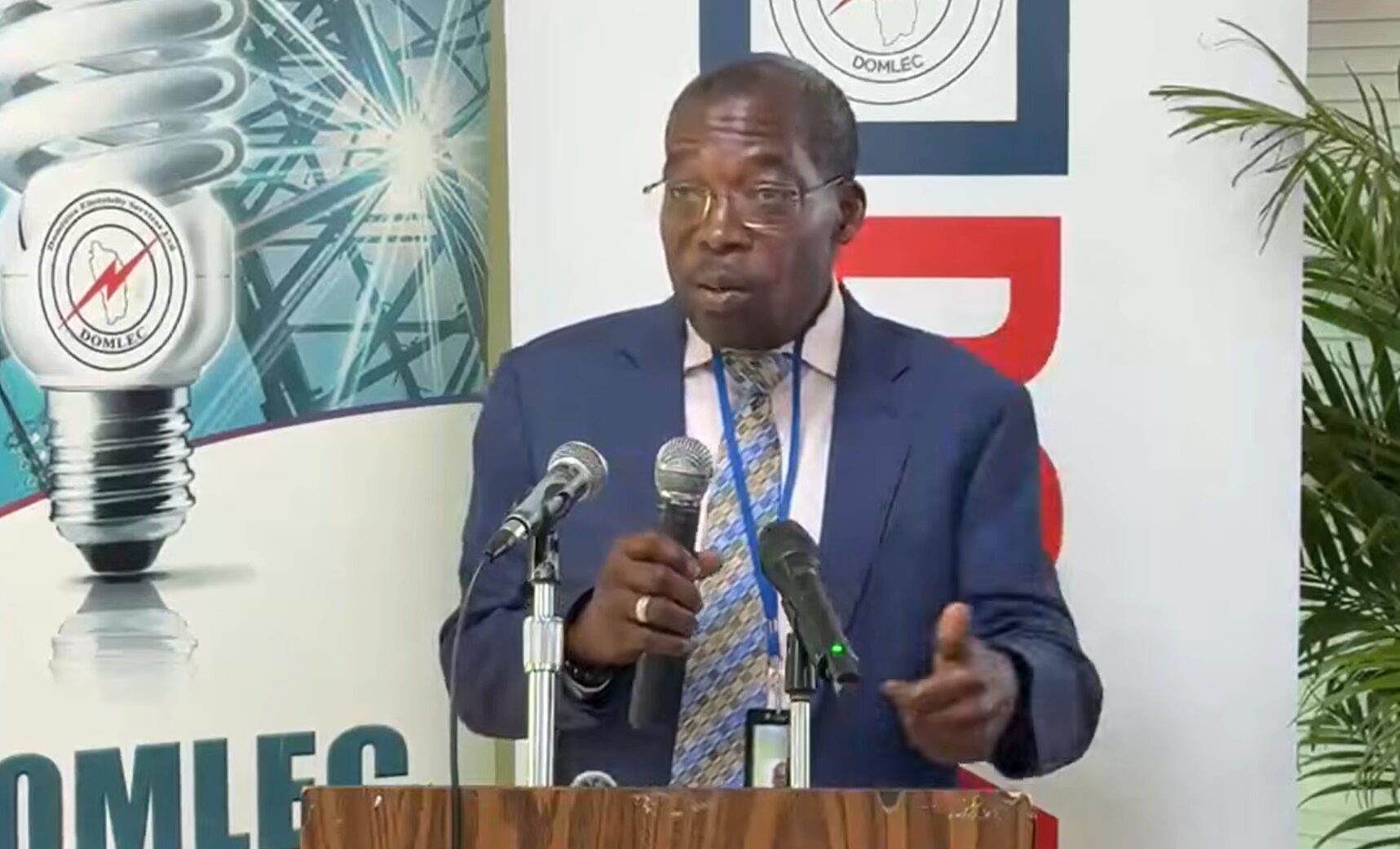
    Dominica Electricity Services (DOMLEC) board member Samuel Raphael has announced upcoming tiered electricity price reductions for all customer groups, a policy shift driven by the recent launch of the island’s new geothermal power facility. Speaking at a public press conference on Wednesday, Raphael laid out a clear breakdown of savings tailored to different consumption levels: residential and small-scale users will see their bills drop by up to 17%, small business owners will enjoy a 12% reduction, and larger commercial operations will benefit from a 10% cut. To illustrate the tangible impact for average households, Raphael offered a simple example: a customer currently paying $100 monthly for electricity would see their monthly payment fall to $83, translating to $17 in monthly savings.

    While the long-term trajectory for energy costs is downward, Raphael cautioned that short-to-medium term prices will likely see fluctuations driven by ongoing volatility in global crude oil markets. This instability, he noted, stems from escalating geopolitical tensions between the United States and Iran, which have pushed international oil prices upward in recent weeks. Currently, DOMLEC’s energy mix still relies on diesel for 25% of its total generation, leaving the grid exposed to swings in global fossil fuel pricing. As the market stabilizes over time, Raphael emphasized, the full cost benefits of geothermal power will take full effect, bringing consistent, lower prices.

    The new 10-megawatt geothermal plant has now been fully operational for approximately one month, injecting clean, renewable energy into DOMLEC’s supply grid. When combined with the island’s existing hydroelectric power infrastructure, renewable energy now accounts for 75% of DOMLEC’s total generation capacity. Raphael, who is also a private business owner and a stakeholder in Dominica’s key eco-tourism sector, expressed particular enthusiasm for this milestone. The shift to majority renewable energy not only brings down long-term consumer costs, he added, but also aligns with the island’s sustainability goals that underpin its eco-tourism brand.

    Even with the progress achieved, Raphael acknowledged that the remaining 25% dependence on fossil fuels means the utility will continue to face external price pressures until renewable capacity can be further expanded. No exact timeline for the full rollout of the permanent price cuts was shared during the press briefing, but Raphael confirmed that the utility is working toward implementing the reductions as soon as market conditions allow.

  • Antigua and Barbuda Ranked Among CARICOM States With Lowest Maternal Mortality Rate

    Antigua and Barbuda Ranked Among CARICOM States With Lowest Maternal Mortality Rate

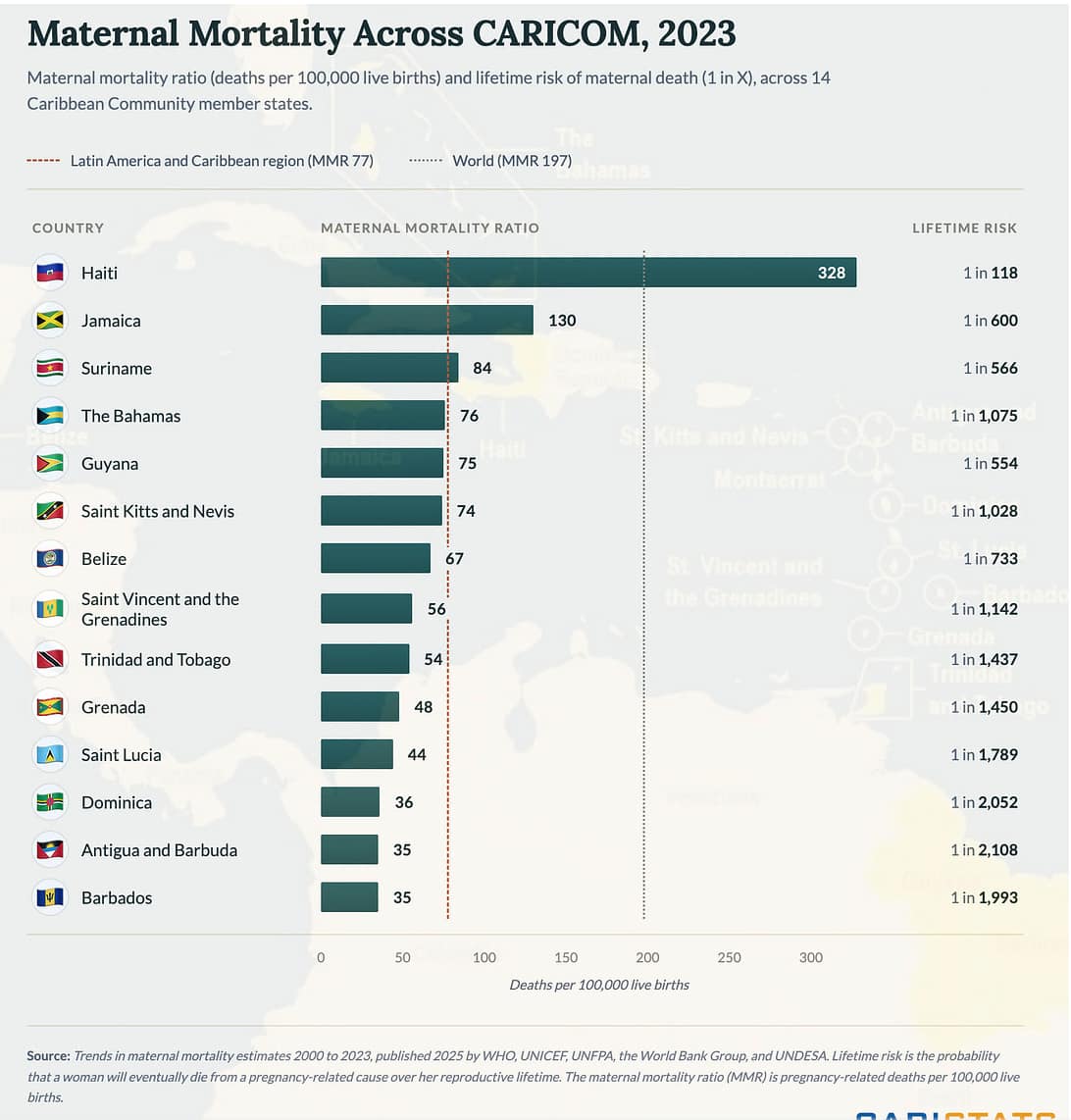
    The latest 2025 joint report from the United Nations, compiled by the World Health Organization, UNICEF, UNFPA, the World Bank Group and UN Department of Economic and Social Affairs, has painted a mixed picture of maternal mortality progress across the 14 CARICOM member states, documenting decades of broad gains but a concerning slowdown in improvements over the last eight years.

    The 2023 estimates included in the report highlight dramatic disparities in lifetime risk of pregnancy-related death across the bloc, which brings together Caribbean nations to foster regional integration and cooperation. At the highest end of risk, Haiti faces a grim lifetime maternal mortality risk of 1 in 118, while Antigua and Barbuda boasts one of the lowest risks in the region at 1 in 2,108. Most CARICOM nations fall between these two extremes, with lifetime risks ranging from 1 in 500 to 1 in 2,100 – a better outcome than the global average lifetime risk of 1 in 272, and on par with the broader Latin America and Caribbean regional average of 1 in 789.

    When tracking change across the 23-year period from 2000 to 2023, progress has been far from uniform across the bloc. Five nations – Suriname, Guyana, Saint Kitts and Nevis, Saint Lucia, and Dominica – have achieved remarkable gains, cutting their maternal mortality rates by 40% or more since 2000. Haiti and several other CARICOM nations have also recorded net reductions over the full 23-year timeline. However, the report identifies three notable outliers: Jamaica, The Bahamas, and Grenada, all of which saw higher maternal mortality levels in 2023 than they recorded in 2000.

    Beyond the uneven national results, the data confirms a clear slowdown in maternal mortality reduction across the region over the most recent eight-year period, mirroring a broader trend across Latin America and the Caribbean as a whole. Between 2000 and 2023, Latin America and the Caribbean recorded the smallest overall reduction in maternal mortality of any world region, at just 16.8%.

    Even amid these challenges, the report notes a key bright spot: eight out of the 14 measured CARICOM countries have already hit the United Nations Sustainable Development Goal target for maternal mortality, which calls for fewer than 70 maternal deaths per 100,000 live births by 2030.

  • IShowSpeed livestream in Jamaica amasses over 2.8 million views

    IShowSpeed livestream in Jamaica amasses over 2.8 million views

    A high-profile livestream shot by popular American content creator IShowSpeed from Jamaica’s capital Kingston on Friday has delivered staggering viewership numbers, cementing the broadcast as one of the creator’s most successful on-location productions to date. The stream pulled in more than 2.8 million total views, with a concurrent peak audience of 194,805 live viewers tuning in to watch the creator’s exploration of the island nation. Beyond raw view counts, the interactive stream generated 696,349 live chat messages from engaged audiences around the globe, and earned IShowSpeed more than 34,000 new subscribers in the process. Minutes after the stream wrapped, the creator’s cameraman shared the milestone metrics on the social platform X with a simple, triumphant caption: “Good stream.”

    The Kingston stop is the latest leg of IShowSpeed’s ongoing Caribbean tour, which has focused on highlighting local culture, landmarks and creative communities across the region. During his time in Kingston, the streamer visited a lineup of the city’s most iconic cultural and historical sites, including Emancipation Park, the world-famous Bob Marley Museum, the historic Devon House estate, and Jamaica’s National Stadium.

    The day’s tour opened at Emancipation Park, where former Miss Jamaica Universe Yendi Phillipps led a personalized educational session on Jamaican history. Phillipps walked IShowSpeed through the legacies of the country’s most revered national heroes, giving the creator and his global audience a foundational introduction to Jamaican heritage. The opening event also included a chance for IShowSpeed to join local students in a traditional Kumina dance, an immersive cultural experience that was shared live with his viewers.

    Later in the day, the streamer met with Jamaica’s Culture Minister Olivia Grange, and connected with a roster of the island’s most prominent musical artists, including Jesse Royal, Sean Paul, Beanie Man, Shenseea, Ding Dong, Naomi Cowan and Gyptian. The meetings and casual collaborations gave IShowSpeed’s global audience a front-row look at Jamaica’s world-renowned, vibrant music scene, deepening the creator’s engagement with local cultural stakeholders during his visit. The on-location stream also included special experiences for the creator, including a drone show and a meeting with the viral “Jamaican Spider-Man,” a local personality that gained viral attention online in recent months.

  • WATCH: Two alleged gunmen fatally shot by police in Mandeville

    WATCH: Two alleged gunmen fatally shot by police in Mandeville

    MANDEVILLE, JAMAICA – A fatal police operation in central Jamaica left two men dead and a handgun recovered Friday evening, following an alleged armed exchange between law enforcement and the individuals in the Mandeville neighborhood of Willowgate.

    According to initial official accounts, the incident unfolded shortly after 8 p.m. local time, when a team of officers began tracking a silver Toyota Axio traveling along Manchester Road. When police moved to intercept the vehicle, a shootout broke out between the occupants of the car and the law enforcement team.

    The sound of repeated gunfire sent dozens of area residents and bystanders fleeing for safety, with many scrambling to take cover behind nearby structures and parked vehicles to avoid stray rounds. Multiple law enforcement units responded to the scene, including operatives from the Area Three Fugitive Apprehension Team, a specialized unit tasked with capturing wanted suspects across the region.

    In the aftermath of the exchange, the two men inside the intercepted vehicle were pronounced dead at the scene, and a single illegal firearm was recovered by investigators. The entire stretch of Manchester Road near the Willowgate intersection was cordoned off by police immediately after the shooting to allow crime scene technicians to process evidence, with a photo of the closed-off area captured by photojournalist Kasey Williams.

    Local authorities have not yet released the identities of the two deceased men, nor have they confirmed whether the pair were wanted on outstanding criminal charges ahead of the Friday operation. Investigations into the incident are ongoing, per standard protocol for police-involved shootings in Jamaica.

  • Spirit exit likely to lead to higher US airfares, experts say

    Spirit exit likely to lead to higher US airfares, experts say

    When Spirit Airlines, the pioneering ultra-low-cost carrier that reshaped U.S. air travel for 32 years, ceased all operations on May 2, it left behind more than thousands of rebooked passengers and empty route slots: industry analysts and economists broadly agree that its exit will add significant new upward pressure on already climbing U.S. airfares.

    Founded in 1992, Spirit built its legacy on the so-called “Spirit Effect”, a market phenomenon that turned affordable air travel from a luxury into an accessible option for millions of consumers who had previously been priced out of flying. Its stripped-down business model — which eliminated free checked bags, complimentary in-flight meals, and other non-essential extras to keep base fares as low as possible — earned it a reputation as the industry’s most disruptive competitive force. This impact was so significant that the U.S. Department of Justice (DOJ) highlighted it in 2023, when regulators moved to block Spirit’s proposed merger with JetBlue, arguing that losing Spirit’s independent presence would harm consumer competition.

    Official DOJ data underscores just how much Spirit shaped market pricing: when the carrier entered a new route, average fares across all competing airlines on that route dropped by an immediate 17%, and when it exits a market, fares jump by an average of 30%. That historical trend has left experts bracing for broad fare increases as the aviation industry absorbs Spirit’s exit.

    The timing of Spirit’s collapse could not be worse for consumers, who are already facing rising ticket costs driven by skyrocketing jet fuel prices tied to ongoing conflict in the Middle East. New data from the U.S. Department of Transportation released this week confirms that U.S. airline jet fuel costs surged 56% in March compared to February, and are up 30% from the same period one year ago.

    While many carriers have moved quickly to fill the gap left by Spirit, with low-cost peers including Frontier, Breeze and Avelo adding capacity and new routes to capture Spirit’s former customer base, all of these existing competitors already price their tickets slightly higher than Spirit did. Frontier, the largest of Spirit’s ultra-low-cost rivals, has announced plans to add nine new routes this summer and 15 extra daily departures across 18 former Spirit routes, a move the airline projects will boost its key revenue metric by 3 to 5% and grow its total capacity by 6 to 8%.

    Even as existing carriers maintain the basic economy fare tiers that major airlines originally launched specifically to compete with Spirit and other budget carriers, experts say those low-cost options will likely become less attractive for consumers. Jan Brueckner, emeritus economics professor at the University of California, Irvine, noted that while basic economy tickets are not expected to disappear entirely, airlines will almost certainly raise their prices. “They might be less attractive” to budget-focused travelers, Brueckner explained.

    Aviation analysts broadly echo this assessment. “There’s no question in some markets fares will probably increase,” said Richard Aboulafia, an aviation expert at consultancy AeroDynamic. Richard Masler, head of analysis for the Centre for Aviation, pointed out that for more than a decade, Spirit’s disruptive presence forced legacy major airlines to cut their own fares and adopt more granular pricing models to stay competitive.

    Bradley Akubuiro, a partner at advisory firm Bully Pulpit International, noted that Spirit’s exit will not make air travel entirely unavailable to consumers, but it will eliminate the industry’s most powerful check on excessive pricing. “The likely consequence for passengers is not that air travel suddenly becomes unavailable,” he said. “It’s that the cheapest version of air travel becomes immediately harder to find in some markets.” Over time, he added, fares will continue to creep upward because “a meaningful check on the system is now gone.”