博客

  • Caribbean Airlines to fly daily non-stop from Guyana to Canada

    Caribbean Airlines to fly daily non-stop from Guyana to Canada

    On Wednesday, June 17, 2026, Trinidad-based regional air carrier Caribbean Airlines made a major expansion announcement that will reshape air connectivity between Canada and Guyana. Starting July 1, the airline will introduce a new daily non-stop flight route linking Toronto, Canada’s largest travel hub, and Georgetown, Guyana’s capital, just ahead of the year’s peak summer travel season.

    The launch of this daily service comes in direct response to sustained, rapid growth in travel demand between the two countries. Three key segments have driven this upward trend: expanding business ties that require regular cross-border travel, a booming leisure travel market drawing Canadian visitors to Guyana’s unique landscapes and cultural attractions, and strong demand from the large Guyanese diaspora community based in Canada, who frequently travel to reunite with family and friends back home.

    Acting Chief Executive Officer Varma Khillawan emphasized that Guyana holds a top strategic position for the carrier, ranking among its most important and fastest-expanding markets. “Adding this daily route is more than just a schedule adjustment—it’s a concrete demonstration of our commitment to matching our customers’ growing needs and deepening connectivity between Guyana and the North American market,” Khillawan said in the announcement. “Whether passengers are traveling for work, vacation, study, or to reconnect with loved ones, they will now enjoy far greater flexibility and convenience that extends well beyond the summer travel rush.”

    Beyond improving passenger experience, the expanded service is expected to deliver tangible economic benefits for both countries. The additional flight capacity will open new opportunities for cross-border trade, boost Guyana’s growing tourism sector, and support the country’s ongoing rapid economic expansion by strengthening its international connectivity. As the leading airline in the Caribbean region, Caribbean Airlines notes that this route expansion is part of its broader long-term strategy to invest in its route network and fleet, with the goal of delivering reliable, seamless travel connections across the Caribbean, North America and South America.

    Travelers looking to book seats on the new route have multiple booking options available, including the official Caribbean Airlines website, the carrier’s mobile app, the reservations call center, physical ticket offices, and registered travel agents.

  • Tased three times, man still escapes from police

    Tased three times, man still escapes from police

    On Tuesday, a chaotic altercation between police and a mentally ill man in Penal ended with the suspect escaping custody, after law enforcement deployed a taser three times and the man assaulted one officer. The encounter was not a random stop: it began when the man’s family reached out to emergency medical technicians, who in turn requested police support to respond to the situation. Officers already knew the man from previous interactions and arrived with the goal of encouraging him to take his prescribed medication.

    What started as a routine intervention quickly escalated. When officers attempted to talk through the medication plan, the man responded with aggressive, obscene language. Police moved to place him under arrest for the public order offense related to his language, but as an officer reached to secure his right hand, the man pulled away with violent force. Officers formally added a charge of resisting arrest as the situation spun out of control.

    As additional officers stepped in to de-escalate and detain the man, he began throwing wild punches at the responding team. One punch landed directly on the head and face of a serving officer. Refusing to comply, the man continued to advance with physical intent to harm, prompting one officer to draw and use a conducted energy taser to subdue him. Even after three separate taser deployments and blunt strikes to his knees from officers, the device and defensive tactics had little to no slowing effect on the man. He managed to break through the officers’ hold and break into a run, fleeing into the local area.

    Police launched an immediate foot chase across neighborhoods in Penal, but the suspect managed to evade capture by slipping into a dense, bushy access track. Extensive initial searches of the area failed to locate him. For the injured officer who was struck in the head, emergency transport was arranged to the Siparia District Health Facility, where the officer received required medical attention for their injuries.

  • This is Cristiano Ronaldo’s Last Shot: Can He Finally Win the World Cup?

    This is Cristiano Ronaldo’s Last Shot: Can He Finally Win the World Cup?

    The 2026 FIFA World Cup is officially underway, and for Portuguese football legend Cristiano Ronaldo, this tournament is far more than just another stop on a decades-long iconic career—it is the final, do-or-die chance to claim the only major prize that has evaded his trophy cabinet. On Wednesday morning, Portugal launched their World Cup run with an opening match against the Democratic Republic of the Congo at Houston’s NRG Stadium, marking the start of Ronaldo’s historic sixth World Cup appearance, an unprecedented achievement for any men’s international footballer.

    Long before the first whistle blew, hundreds of adoring supporters packed the sidewalks outside the Texas stadium, nearly all clad in Ronaldo’s instantly recognizable number 7 Portugal jersey, all waiting for a glimpse of the 41-year-old superstar ahead of kickoff. For fans and analysts alike, this moment has been years in the making: Ronaldo’s career is already littered with countless records, multiple domestic league titles across three top European leagues, five Ballon d’Or awards, and a European Championship trophy with Portugal. The one gap that remains on his legendary resume? A World Cup winner’s medal.

    The timing of Ronaldo’s 2026 debut adds an extra layer of narrative weight to his quest, coming just 24 hours after his long-time rival, Argentina’s Lionel Messi, took the field for his own World Cup opener. Messi, who already sealed his own World Cup legacy by leading Argentina to the 2022 title in Qatar, added another historic milestone to his career on Tuesday, netting a hat-trick in Argentina’s dominant 3-0 win over Algeria at Kansas City Stadium that pushed him to the top of the tournament’s all-time active goalscoring charts.

    Entering the 2026 tournament, Ronaldo boasts a strong World Cup track record across his five previous appearances: 22 matches played, 8 goals scored, and a host of unforgettable moments that are already etched into tournament history. His most iconic individual performance came during the 2018 World Cup in Russia, where his last-minute free-kick against Spain earned Portugal a dramatic draw and cemented his reputation as a big-game player capable of changing the course of a match single-handedly.

    Unlike some earlier campaigns where Portugal entered the tournament ranked as long shots, the 2026 Portuguese squad is widely regarded as one of the genuine title contenders in the expanded 48-team field, backed by a mix of seasoned veteran leadership and emerging young talent. For Ronaldo, who has defied all expectations of age-related decline to maintain his fitness and form at 41, the pieces are finally in place for him to complete his legacy. The question that has dominated football headlines around the world heading into this tournament remains unanswered: Will 2026 finally be the year that Cristiano Ronaldo lifts the World Cup trophy?

  • Op-Ed – The Best Investment a Nation Makes

    Op-Ed – The Best Investment a Nation Makes

    When Antigua and Barbuda Prime Minister Gaston Browne proposed extending and broadening the country’s existing windfall tax to direct all new revenue toward education, the idea sparked urgent national conversation. As the head of the University of the West Indies (UWI) Five Islands Campus — an institution that already draws support from the current windfall tax — I could easily throw my full weight behind directing every new dollar to our growing tertiary institution. Instead, I am making the opposite case: if we truly view education as a core pillar of nation-building, we must invest in the entire education pipeline, not just its highest peak, and embed strict accountability to keep the public informed every step of the way.

    Let us start not with the mechanics of the tax, but with the transformative outcome it can buy. Education is the only societal investment that delivers compounding returns across every sector of national life. A child taught to read in primary school can grow into a compassionate nurse supporting anxious patients, a dedicated educator lifting the next generation, a skilled technician keeping local industries running, or an ambitious entrepreneur launching a new business that creates jobs. National education systems are not an unwelcome drain on public finances; they are the workshop where a country forges its long-term future.

    This reality makes education far more than the sole responsibility of a national education ministry. Every household, local employer, and community has a direct stake in a strong system. A family with a child working toward a brighter future depends on a well-resourced local school. A business seeking skilled, reliable workers and stable communities depends on classrooms that prepare students to succeed. Asking the citizens and enterprises that have profited most from national growth to contribute to strengthening this foundational public good is not punishment — it is an exercise in shared responsibility for collective prosperity.

    To date, most public debate around the proposal has focused on tertiary education, a natural focus given the extraordinary growth of UWI Five Islands Campus: from fewer than 200 students in 2019 to nearly 1,500 today. This growth is a meaningful milestone, but a university is only the peak of a broader education pyramid. A peak can never rise higher than the foundation beneath it can support.

    If a primary school student leaves without mastering fluent reading, no amount of tertiary funding can reverse that gap when they reach 19. If secondary schools lack the resources to challenge, support, and stretch their students, universities will only inherit the gaps created by under-investment earlier in the pipeline. If the Antigua & Barbuda College of Advanced Studies (ABCAS) — a critical hub for technical training, vocational skills, hospitality education, continuing learning, and second chances for adults who left school early — remains under-resourced, we lose one of the most vital bridges between education and the workforce.

    Invest only in the tertiary peak, and we will continue to create gaps that cost the public a fortune to fix later. Invest in the entire pipeline: from infant schools building early learning foundations, to primary schools prioritizing literacy, to overstretched secondary schools expanding capacity, to ABCAS offering second chances, to UWI Five Islands supporting our brightest students through doctoral study, and we build an inclusive society, not just a symbolic showpiece for international observers.

    The structure of this new education fund is critical to its success. It must be distributed across all education levels, designed with full transparency, and guided by strict fiscal discipline. Allocations should be split to prioritize four core priorities: a share for early childhood and primary literacy programs, a second share for secondary education quality improvement, student retention initiatives, and teacher professional development, a third share to expand ABCAS as the national bridge between secondary school, work, and tertiary learning, and a continuing share for UWI Five Islands to allow more Antiguans and Barbudans to pursue higher education and research close to home.

    None of this framework will work, or earn the trust of the Antiguan and Barbudan public, without rigorous accountability. If the public contributes to a shared fund for a shared national good, the public is owed a clear, accessible paper trail that tracks every dollar. To deliver this accountability, I propose two core guardrails.

    First, we need a public education performance dashboard. This should not be a glossy, forgettable annual report filed away and ignored. It should be a plain-language, regularly updated public resource that breaks down how much revenue is raised, where every dollar is allocated, and what measurable outcomes have been achieved as a result. It should publish key metrics: primary reading proficiency, school attendance rates, CSEC and other national exam results, vocational program completion rates, ABCAS student progression to work or higher education, and university enrolment, retention, and graduation rates. All data should be public, even when the results show gaps that demand improvement.

    Second, we need to embed reciprocity between public investment and student responsibility. Across the Caribbean, community service has long been a core part of student life, rooted in the understanding that a publicly supported education carries an obligation to give back to the public that invested in you. We should formalize this requirement across our entire system, from secondary school through ABCAS and UWI Five Islands. Documented community service hours should become a standard requirement for progression. Students can tutor younger learners, clean public beaches, restore community spaces, support local elders, or volunteer at libraries, clinics, sports programs, and youth organizations. This requirement turns students from passive recipients of public investment into active contributors to national public life.

    This proposal is about far more than just generating new revenue for education. It is an opportunity to strike a new national bargain: those who can afford to contribute more will step up, those who benefit from public education will give back to their communities, and the institutions that receive funding will clearly and publicly demonstrate the impact of that investment. None of this is out of reach for Antigua and Barbuda. A society that invests broadly in education lifts all of its people broadly. This plan will leave fewer children behind, strengthen more working families, help local businesses find the skilled workers they need, and give more young people a reason to build their future at home.

    As the celebrated Caribbean scholar Lloyd Best taught, a people must build and own the institutions that shape their future, rather than waiting for external rescuers. No foreign donor, no former colonial power, no outside benefactor will educate our children for us — we cannot expect others to do the work we are unwilling to do for ourselves. Prime Minister Browne has opened the door to a transformative national investment. It is up to all of us to walk through that door with ambition and discipline. We must carry forward a plan that supports not just one campus, but the entire pipeline from the first child learning to read to the first graduate earning a doctoral degree, from trade certifications to professional qualifications. And we must keep the receipts to prove this public investment paid off for all Antiguans and Barbudans.


  • “Seven Councillors vs 700 Delegates, I Take the Delegates”: Allan Pollard Files for City Mayor

    “Seven Councillors vs 700 Delegates, I Take the Delegates”: Allan Pollard Files for City Mayor

    On June 17, 2026, Belize City political landscape gained a new contender for the top municipal seat, as Allan Pollard formally submitted his mayoral candidacy paperwork surrounded by a crowd of enthusiastic grassroots supporters. What made his candidacy filing stand out was the stark absence of backing from his fellow city councillors – a sharp contrast to the scene just days earlier, when incumbent-endorsed candidate Eluide Miller submitted his own nomination last Friday, flanked by a majority of sitting city council members.

    When reporters pressed Pollard on whether the lack of fellow councillor endorsements signals widespread doubt about his leadership capacity among current municipal leadership, the candidate firmly pushed back on that narrative. Centering his campaign on people-powered support, Pollard argued that delegate backing from the base far outweighs the approval of a small group of sitting councillors. In a memorable soundbite that captured the core of his campaign framing, Pollard declared: “Seven councillors versus 700 delegates. I take the delegates.”

    Pollard emphasized that the support of ordinary party delegates and city residents is the only validation his campaign needs. “I have the support of the people, and that’s all that matters,” he told reporters gathered among his supporters after filing his paperwork.

    The candidate also addressed lingering public questions about the family connection between incumbent Mayor Bernard Wagner and Miller, who Wagner has publicly endorsed. Pollard made clear that he holds no ill will toward the sitting mayor for his decision to back his opponent. “The mayor cannot deny my capabilities or me as a candidate, but he has the right to support who he wants to support, and we respect that,” Pollard said, striking a conciliatory tone amid the growing intra-party contest for the mayoral nomination.

  • Daryll Matthew Says He Recently Fell Victim to Electronic Crime, Backs Tougher Powers for Investigators

    Daryll Matthew Says He Recently Fell Victim to Electronic Crime, Backs Tougher Powers for Investigators

    A push to strengthen national electronic crime legislation has resulted in new punitive measures for uncooperative digital service providers, sparked by a personal account of cyber victimization from a sitting government minister.

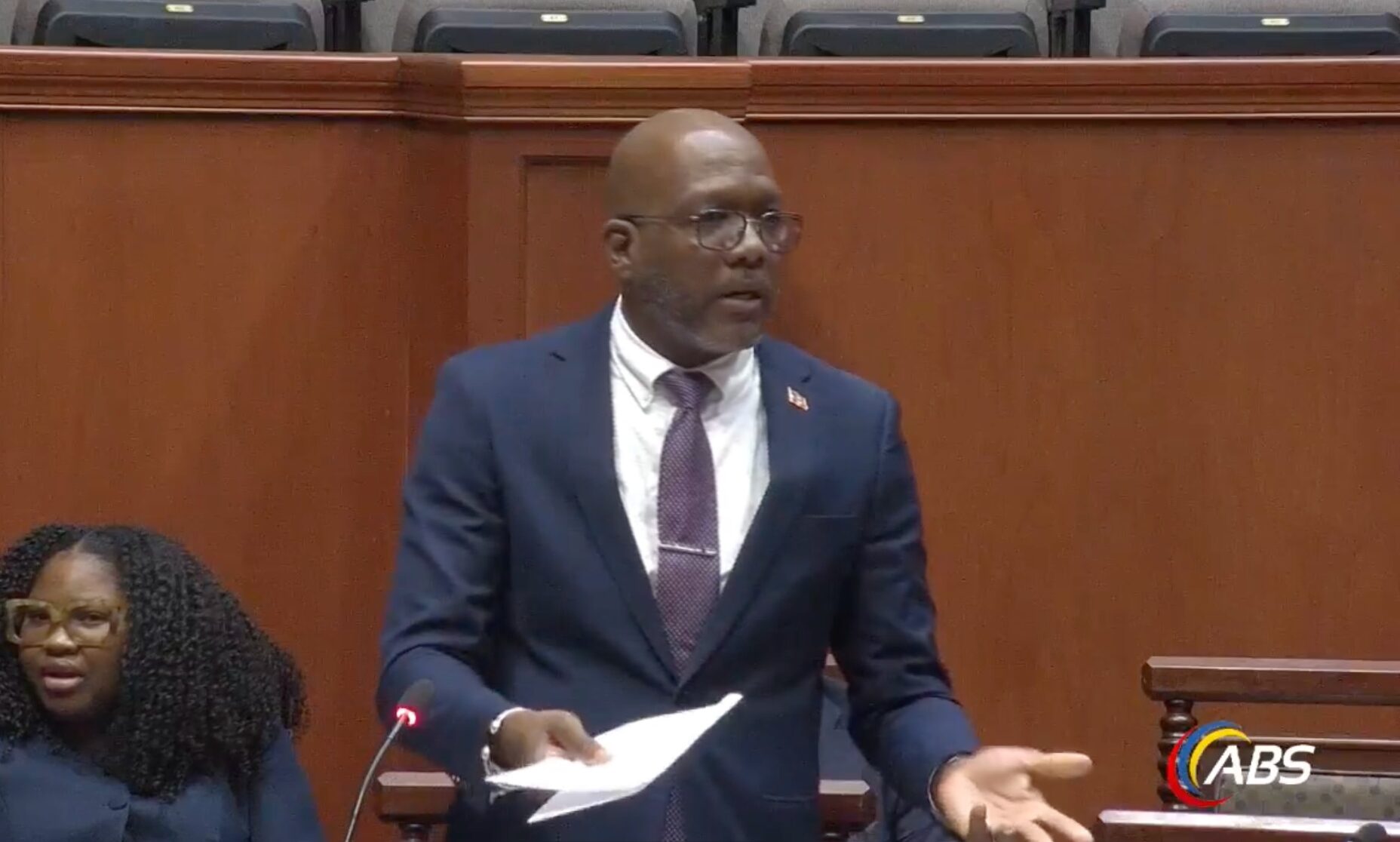
    During parliamentary debate on the 2026 Electronic Crimes (Amendment) Bill, Education Minister Daryll Matthew – who also represents the St. John’s Rural South constituency – told lawmakers he had recently fallen victim to financial cybercrime just days before the discussion, with his bank currently working to resolve the incident. Matthew used his personal experience to emphasize the urgent need for more robust legal tools to combat rapidly evolving cyber threats, arguing that artificial intelligence has left law enforcement playing catch-up with criminal actors.

    “With the advent of artificial intelligence, it’s becoming almost impossible to discern what is real and what is fake,” Matthew told the chamber. “The criminals always seem to be one step ahead.” To address persistent delays in obtaining critical electronic evidence from service providers during criminal probes, Matthew proposed a system of escalating, daily financial penalties for companies that fail to comply with court-ordered information requests within a set timeframe. He argued that ongoing delays put the public at risk, justifying immediate and cumulative consequences for non-compliance.

    “I would love to see a daily penalty included for every day that the service provider, or whoever the request is made to, does not comply with the request,” Matthew said. “After that period no compliance is forthcoming, then you charge daily because we need to protect our people. We need to protect society.”

    The proposal received swift backing from Attorney General Sir Steadroy Benjamin during the bill’s committee stage, and parliamentarians ultimately voted to incorporate Matthew’s recommendation into the final amended legislation. Under the new rules, telecommunication firms and other relevant service providers are granted a maximum of 21 days to fulfill court-ordered production requests for electronic evidence. For every day they remain out of compliance after this window, they can be fined up to $5,000.

    Government officials confirmed the new penalty structure was a direct response to consistent challenges law enforcement investigators have faced when trying to access electronic records held by private service providers. In addition to the new daily penalties, the amended bill expands the scope of data that can be requested under production orders to include information stored via cloud-based services, and formally adds the Office of National Drug and Money Laundering Control Policy to the list of agencies authorized to use the law’s investigatory powers.

    Matthew framed the package of reforms as a critical incremental step to safeguard Antigua and Barbuda’s citizens and businesses from the growing threat of financial fraud and other electronic crimes. “We need to do as much as we can and I believe this really is a step in the right direction,” he said.

  • Electronic Crimes Bill Compels Telecom Companies to Hand Over Digital Evidence

    Electronic Crimes Bill Compels Telecom Companies to Hand Over Digital Evidence

    In a landmark bipartisan move to modernize the nation’s legal framework against digital-era crime, Antigua and Barbuda’s Parliament has approved landmark amendments to the country’s Electronic Crimes Act, introducing new mandatory compliance obligations for telecommunications and digital service providers alongside harsher penalties for non-cooperation with criminal investigations.

    Approved on Tuesday, the 2026 Electronic Crimes (Amendment) Bill significantly expands the legal authority of domestic law enforcement bodies to compel service providers to turn over critical electronic data and digital records during active investigations. Attorney General Sir Steadroy Benjamin told the legislative chamber that the updates were not arbitrary—they were born from repeated roadblocks that investigators have faced for years when attempting to access digital records held by private providers, records that can make or break criminal cases.

    Under the terms of the new law, any service provider operating in Antigua and Barbuda can be legally ordered to produce electronic data, computer-generated records and other digital information when requested by police or other authorized law enforcement entities, as long as the request is backed by a formal court order. A key update to the original legislation addresses the rapid shift toward cloud storage: the bill explicitly expands the scope of accessible information to include data held on cloud-based platforms, a change legislators say is critical to keeping the country’s investigative powers aligned with the evolution of digital technology.

    During the committee review stage, parliamentarians added an adjustment to the bill to explicitly include the Office of National Drug and Money Laundering Control Policy (ONDCP) in the definition of authorized law enforcement agencies, codifying the body’s right to seek digital evidence under the new law. The most impactful change for telecom providers, however, comes in the form of drastically increased penalties for firms or individuals that refuse to comply with court-ordered data production requests. The new legislation allows for fines of up to $100,000 for non-compliance, alongside possible imprisonment for responsible parties. It also introduces a progressive daily penalty of up to $5,000 for ongoing non-compliance, which kicks in after a 21-day grace period for providers to gather and produce the requested information.

    Government lawmakers defended the strict new measures, noting that a small number of service providers have a documented history of delaying or outright resisting requests for information from investigators. St. Peter Member of Parliament Rawdon Turner emphasized that the bill gives law enforcement a much-needed new tool to tackle increasingly sophisticated criminal activity, including a wide range of digital scams that have defrauded both local businesses and individual residents.

    Multiple legislators shared anecdotal and official examples of fraudsters exploiting modern telecommunications networks and digital platforms to run scams, noting that timely access to user and transaction records is often the only way to quickly identify suspects and stop them from committing additional offenses. The bill also includes safeguards to protect privacy and confidentiality: it requires service providers to uphold strict secrecy around any court-ordered data production requests when directed to do so by the courts, balancing law enforcement needs with the protection of user privacy.

    In a rare show of cross-party unity on regulatory reform, the bill passed with full bipartisan support. Both government and opposition legislators agreed that stronger mandatory cooperation between digital service providers and law enforcement is an urgent necessity to combat the growing threat of modern, technology-enabled crime.

  • Overheid werkt aan gezamenlijke aanpak voor kwikvrije goudwinning

    Overheid werkt aan gezamenlijke aanpak voor kwikvrije goudwinning

    On June 17, multiple government ministries and public agencies in Suriname gathered to strengthen cross-sector collaboration focused on cutting mercury use in the country’s large artisanal and small-scale gold mining (ASGM) sector. The interdepartmental meeting, held as part of the global planetGOLD Suriname project, centered on co-developing coordinated policy frameworks designed to transition the national gold industry toward a more sustainable, productive, and ecologically responsible model.

    The convening comes amid growing global and national momentum to eliminate mercury use in ASGM, a practice that has long imposed severe costs on both environmental health and human communities across Suriname. Mercury, a toxic heavy metal widely used by small-scale miners to separate gold from ore, poses persistent risks to surrounding ecosystems, contaminates water and soil supplies, and triggers chronic health conditions for miners, their family members, and residents of nearby mining communities.

    Jerrel Pinas, Engagement Specialist for the planetGOLD Suriname project, outlined the initiative’s long-term vision: the total elimination of mercury from the country’s small-scale gold mining sector. Pinas acknowledged that a full phase-out will be a gradual, incremental process, but emphasized that the ongoing project is laying critical foundational infrastructure for lasting sustainable change. “By introducing improved extraction methods and proven mercury-free alternative technologies, we are not only working to reduce environmental harm,” Pinas explained. “We are also creating pathways to higher production yields and better long-term development opportunities for small-scale miners and their families.”

    During the meeting, participating stakeholders received a comprehensive update on the project’s progress to date and held detailed discussions on mechanisms to deepen inter-agency coordination moving forward. Attendees split into working groups to draft concrete proposals to reduce mercury reliance and expand the adoption of sustainable mining practices across the sector.

    Key topics addressed in the working group sessions included the widespread rollout of mercury-free extraction technologies, alignment of national mining practices with international environmental standards, implementation of responsible water management protocols, protection of vulnerable regional ecosystems, reduction of overall mining-related pollution, and targeted efforts to strengthen the economic stability and social position of small-scale artisanal miners.

    Maureen Bottse-Brewster, project director at Suriname’s Ministry of Natural Resources, stressed that a just and successful transition to a sustainable gold sector is only achievable through coordinated action across government departments. “The challenges facing our gold sector cut across multiple policy domains simultaneously,” Bottse-Brewster noted. “That is why cross-ministerial collaboration is absolutely essential. Each ministry brings unique specialized expertise and regulatory authority that can contribute to an equitable, sustainable development of the sector.”

    The recommendations and policy proposals developed during the June 17 meeting will be integrated into the next phases of the planetGOLD Suriname project and will inform the development of future national mining and environmental policy. The broader planetGOLD program is a global international initiative that supports countries around the world in reducing and eliminating mercury use in artisanal and small-scale gold mining. In Suriname, the project is implemented by the Ministry of Natural Resources in partnership with the United Nations Development Programme (UNDP), with core funding provided by the Global Environment Facility.

  • Police launch internal probe on alleged refusal to take report

    Police launch internal probe on alleged refusal to take report

    On Wednesday, June 17, 2026, the Guyana Police Force announced it had opened a formal internal investigation into allegations that officers turned away a member of the public who attempted to file an official police report at multiple stations.

    The incident traces back to a mix-up of checked luggage at Cheddi Jagan International Airport, after which the affected passenger approached police to file a report to enable follow-up action on their case. According to the public complainant, officers at more than one station refused to accept their report, prompting the formal complaint that triggered the inquiry.

    In an official statement, the law enforcement body confirmed that the officers named in the complaint have already been reassigned pending the outcome of the probe. “The ranks identified in the complaint have since been rotated for developmental and administrative purposes while the matter is being reviewed,” the statement read.

    The force’s Office of Professional Responsibility (OPR), the unit tasked with overseeing officer conduct and policy compliance, has been assigned to lead the investigation. OPR has been directed to thoroughly examine all surrounding circumstances of the allegation, and determine whether any of the involved officers violated the force’s official policies, operating procedures, or mandatory professional conduct standards.

    The Guyana Police Force used the announcement to reaffirm its long-standing rules for accepting public reports, clarifying that no individual seeking to file a report should ever be turned away at a police station. The force emphasized that even if an incident falls under the jurisdictional authority of a different police precinct, the station receiving the visitor must still accept and formally document the report before routing it to the correct precinct through established internal police channels.

    In closing, the service reiterated its public commitment to delivering professional, accountable policing, and upholding the principle that all community members seeking police assistance must be treated with courtesy, fairness, and respect.

  • 6 months in jail is nothing, criminal caught in the act says

    6 months in jail is nothing, criminal caught in the act says

    In a startling exchange that has drawn public attention to attitudes toward criminal punishment, a offender who was apprehended in the middle of committing an offense has publicly downplayed his upcoming six-month jail term, claiming the penalty amounts to little more than a minor inconvenience.

    The defendant, whose identity has not been released pending final court proceedings, made the unapologetic remark immediately after a judge handed down the sentence at a local courthouse last week. Multiple witnesses in the courtroom confirmed that when the sentence was announced, the man shrugged off the ruling and told reporters waiting outside the building that six months behind bars would not impact him in any meaningful way.

    Legal analysts say the comment exposes a troubling disconnect between some offenders and the severity of criminal penalties, particularly for repeat offenders who have become accustomed to short stints in correctional facilities. Local law enforcement representatives have also weighed in, noting that comments like this highlight ongoing debates over whether short prison sentences deliver sufficient deterrence to prevent repeat offenses.

    Community advocacy groups have raised further concerns, arguing that the casual attitude displayed by the suspect underscores deeper systemic issues. Many point out that for offenders who cycle in and out of the criminal justice system, short sentences often fail to address the root causes of criminal behavior, from addiction and unemployment to lack of access to social support services, leaving many inmates to reoffend shortly after their release.

    At present, court officials have not issued any formal response to the defendant’s comment. The case is set to conclude in the coming weeks as the offender begins serving his sentence at a nearby minimum-security correctional facility.